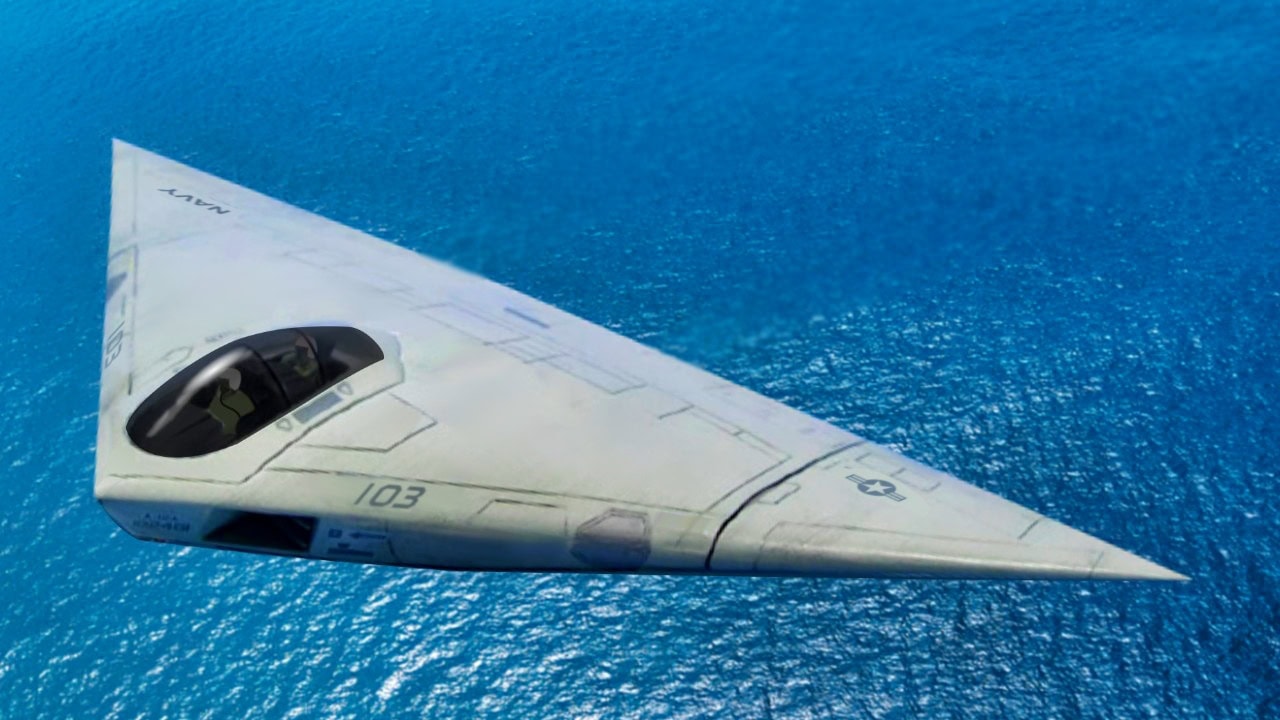
Summary and Key Points: The A-12 Avenger II was designed by McDonnell Douglas and General Dynamics to replace the A-6 Intruder as a deep-strike, all-weather stealth bomber.
-Despite its revolutionary “Flying Wing” design—intended to be stealthier than the F-117—the program collapsed under the weight of 8,000 extra pounds, an 18-month delay, and a budget that spiraled $1 billion into the red.
-Secretary of Defense Dick Cheney canceled the project in January 1991, citing a lack of confidence in the contractors to deliver on a $4.8 billion fixed-price deal, marking a rare moment where Washington prioritized fiscal reality over bureaucratic momentum.
8,000 Pounds Overweight: The Mechanical Crisis That Killed the U.S. Navy’s A-12 Avenger II Stealth Bomber
It was known as the “Flying Dorito,” and it looked more like something from H.G. Wells’ War of the Worlds than it did a United States military program.
But that was precisely what the A-12 Avenger II program was: a next-generation warplane optimized for deep-strike missions with low observability.
In fact, it was supposed to be stealthier than the F-117 Nighthawk concept, with even greater payload and range than the F-117.
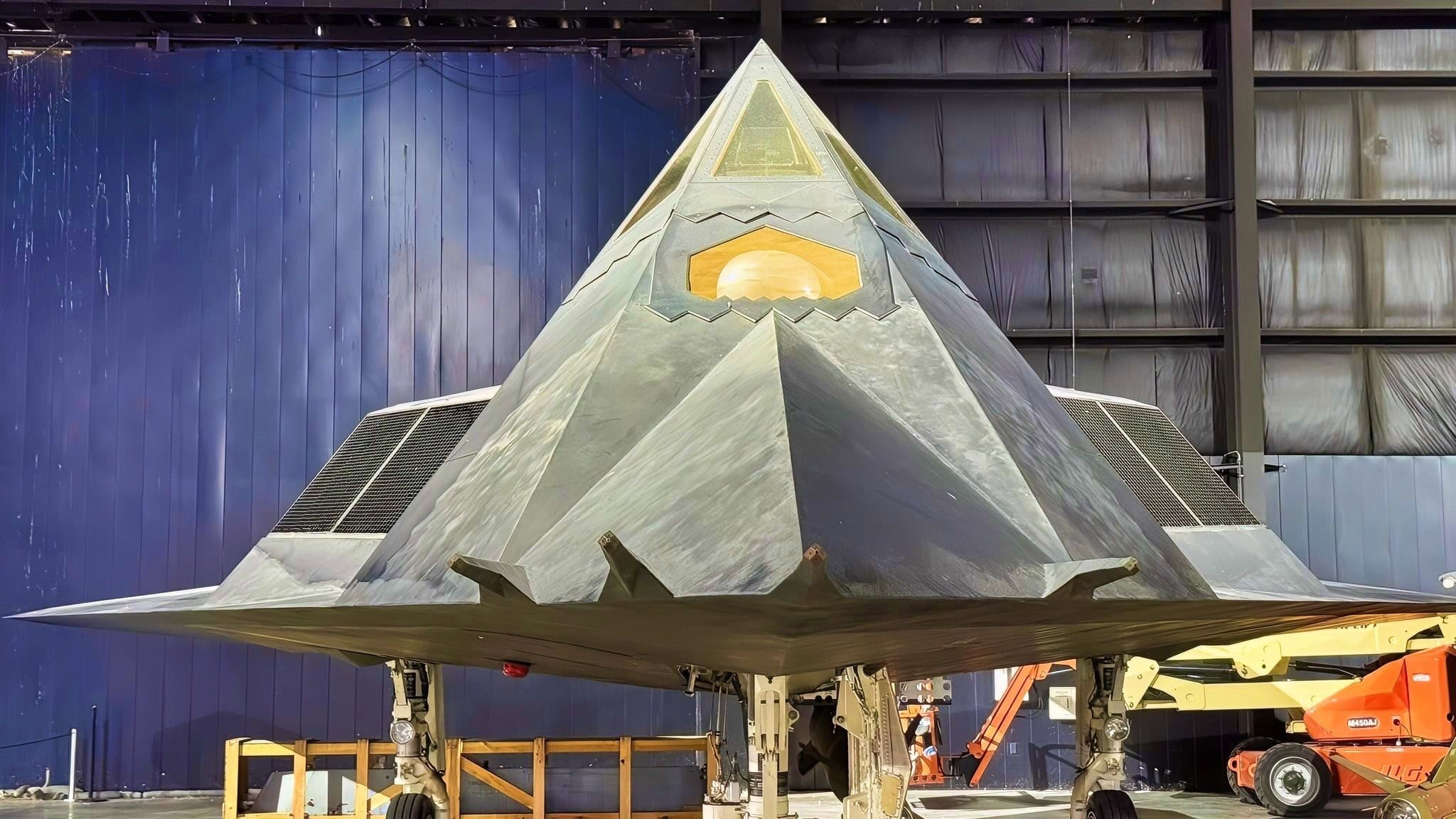
F-117 Nighthawk Stealth Fighter Harry Kazianis Photo from the U.S. Air Force Museum back in July of 2025.
The Navy’s Billion-Dollar Stealth Gamble
The program envisioned a very large purchase—in the hundreds—of A-12 Avenger II aircraft. Indeed, this program was the Navy’s top modernization priority throughout the 1980s.
But its existence was doomed almost from its inception.
It was the victim of the Pentagon’s glut, a fantastical delusion of the Beltway defense contractors who saw dollar signs rather than the American flag when they thought up this project.
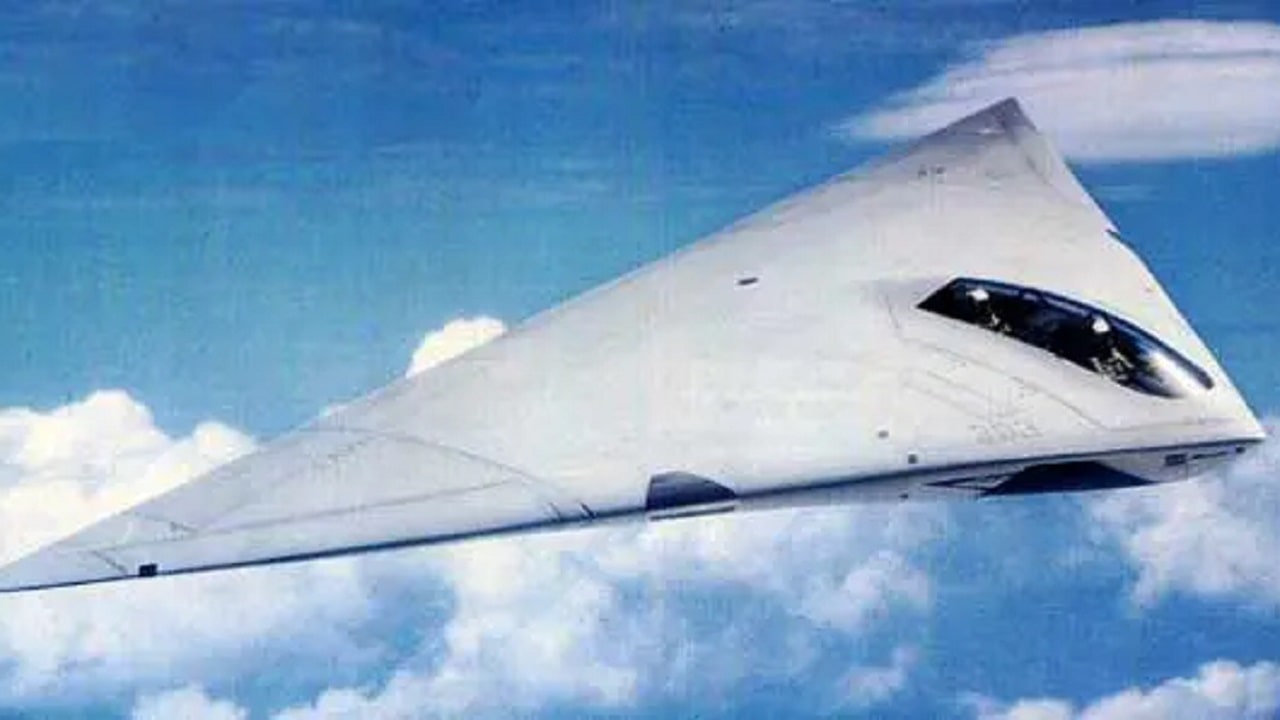
A-12 Avenger. Image Credit: Creative Commons.
By the end of the A-12 project, the plan was reported to be nearly 8,000 pounds overweight and around 18 months behind schedule. This delay meant that the “Flying Dorito” would have been a sunk cost for the Navy, which planned to use this plane to land on its carriers. To achieve that, though, having a plane as heavy and cumbersome as the prototype turned out to be would have made carrier landings impossible.
When Reality Crushed the PowerPoint
Due to the bird being overweight and overscheduled, costs blew past expectations. Air & Space Forces magazine highlights how the project was at least $1 billion over budget when the crisis in confidence in this project arose among the Pentagon’s leadership. Especially because the deal the US government made to purchase the A-12 Avenger IIs was predicated upon a $4.8 billion fixed-price development deal.
And that fixed-price structure, which was viewed as an important step toward protecting the American taxpayer, turned out to be a major problem.
You see, the fixed-price structure encouraged designers to make optimistic assumptions, and the progress-payment structure created the illusion of milestones rather than real improvements.
During the initial design phase, Pentagon experts detected problems with the “Flying Dorito.” But the bureaucracy badly wanted this new plane.
So, the problems noticed early during the A-12’s development were soft-pedaled or buried. What’s more, reporting on these possible problems became highly informal. Meanwhile, key oversight was avoided, allowing this costly and complex plan to continue moving forward (even though the project no longer reflected the realistic needs of the US Navy).
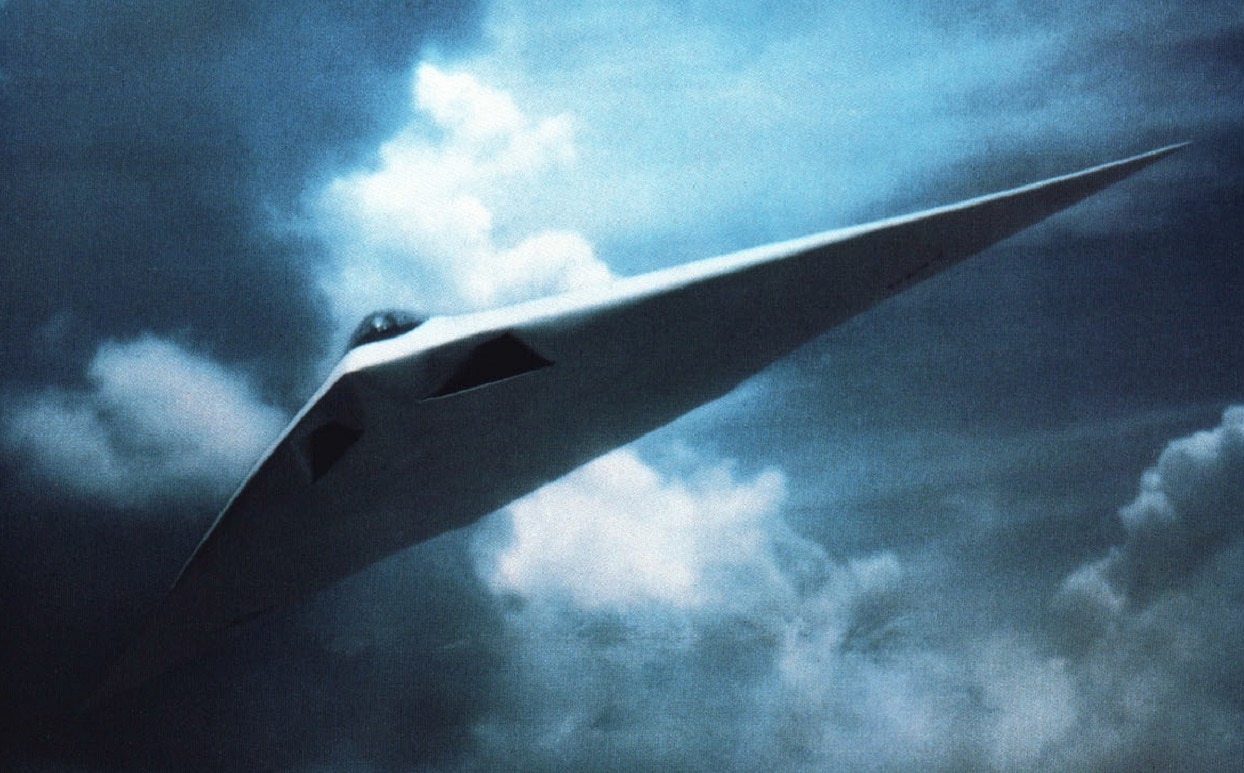
A-12 Avenger II. Image: Creative Commons.
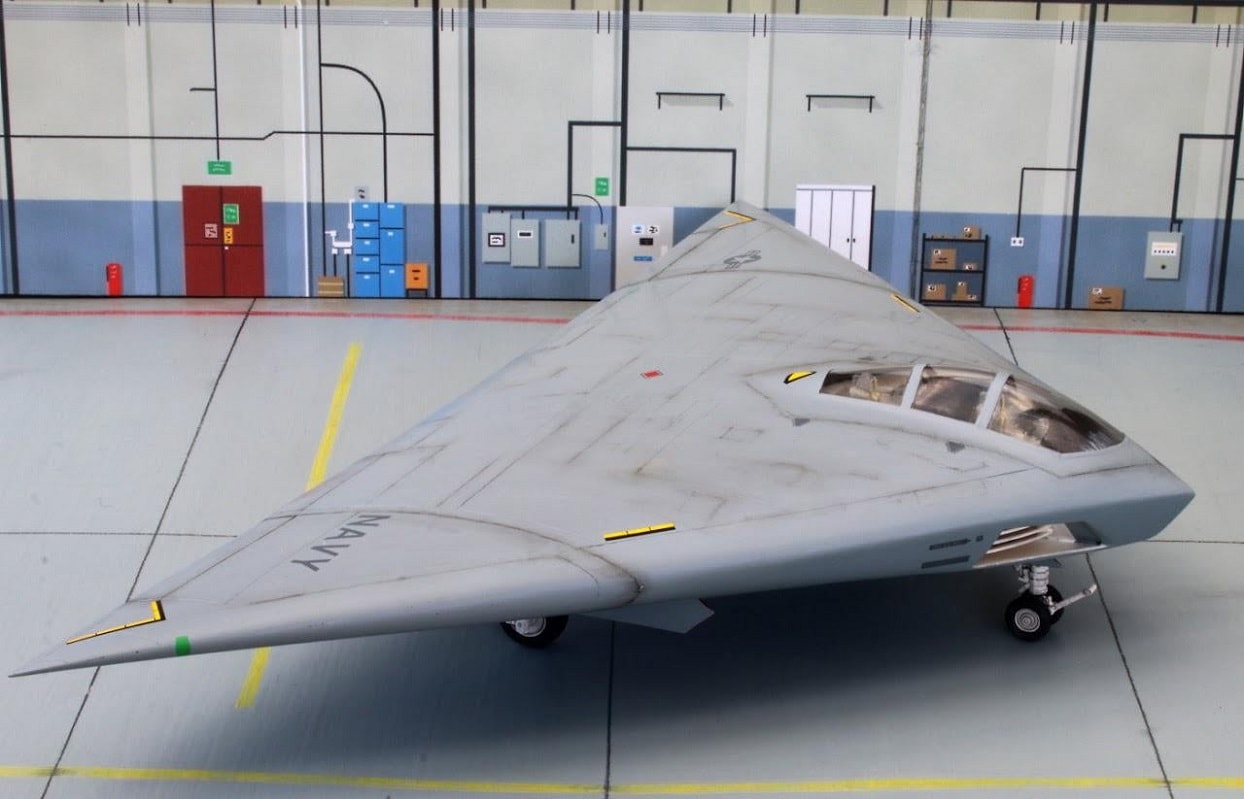
Artist Rendering of A-12 Avenger II. Image: Creative Commons.
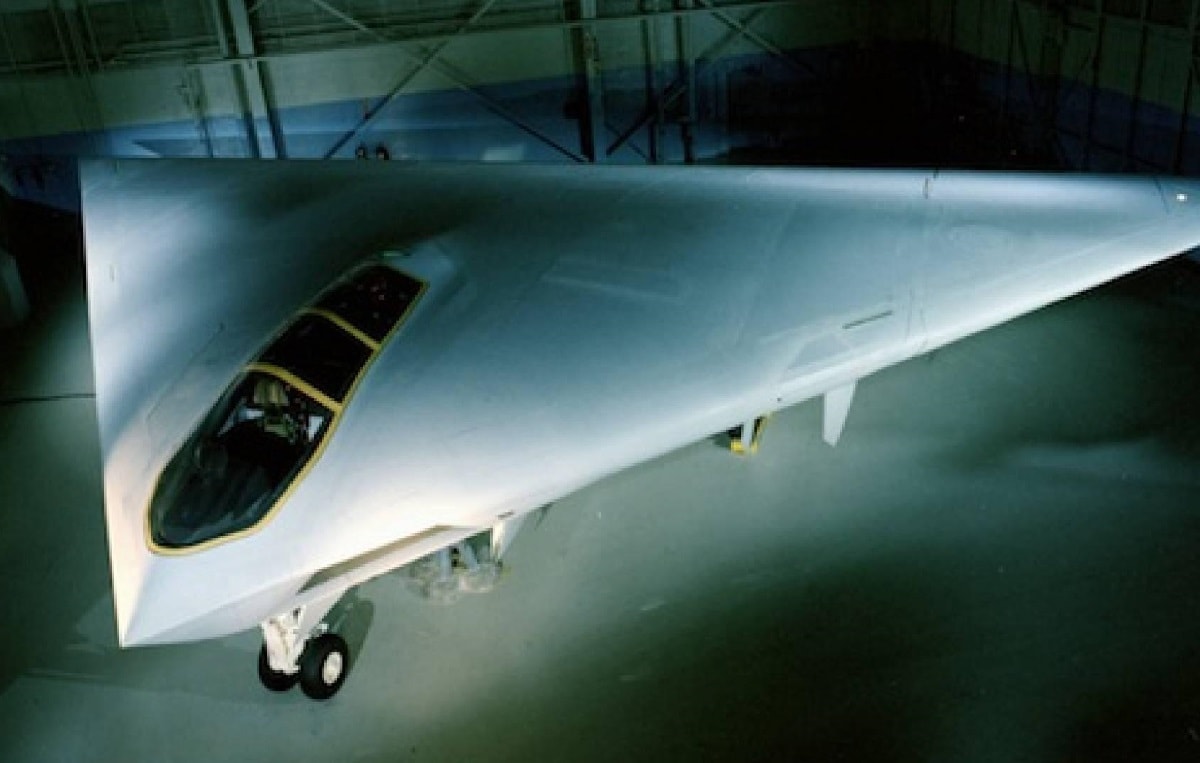
A-12 Avenger II. Image: Creative Commons.
Because this was an early stealth plane, there were numerous problems that today would have been easily worked out with the plane. For starters, there were major concerns about the advanced composite materials, specifically with the design, tooling, fabrication, and parts flow. Then there was the added problem of the ambitious schedule that completely misread the capabilities of the defense industrial base to produce these planes.
Cheney Axes the A-12 Avenger II
By the time that the A-12’s life was on the line, Dick Cheney was the United States Secretary of Defense in the George H.W. Bush administration. Cheney came across as a skeptic of these planes, and he acted accordingly.
As Secretary of Defense, Cheney refused the usual procurement move of purchasing fewer planes, stretching timelines, all so that the Pentagon could ask Congress for more (and keep repeating the pattern until the nation’s coffers have been totally depleted).
Cheney did not think that this plane would fly, and if it did, it would not live up to its lofty expectations.
More importantly, though, was the sudden end of the Cold War and the rejiggering of America’s entire strategic priorities. With the loss of the USSR as a real enemy, the US military could no longer justify its Cold War-era size and support.
Cutbacks needed to be made.
Secretary of Defense Cheney sought to better align with Congress’s calls for a shrinking military budget in the wake of the Cold War.
After intensive internal debate within the George H.W. Bush administration, Cheney terminated the project by cutting off funding.
The Navy disagreed and pleaded for a financial bailout.
No such luck came their way.
Once the project was shut down, the cascading woes of resignations and firings, ruined lives, and so many other related efforts were affected by Cheney’s snap decision to terminate the project.
Cold War Ends—and So Does the A-12 Program
America’s foes didn’t kill the A-12 Avenger II. It was terminated by the same thing that threatens America’s military edge today: a defense bureaucracy addicted to complex systems that promise revolutionary capabilities while delivering nothing more than spiraling costs and major delays. The Navy wanted a stealthy carrier strike bomber that could dominate future battles.
Instead, the Navy got a program so technologically ambitious, industrially sensitive, and politically absurd that reality couldn’t keep up with the PowerPoint. When the aircraft ballooned in weight, shattered its schedule, and devoured billions of US tax dollars—without producing a single jet—Dick Cheney did what Washington rarely does: he pulled the plug.
Whenever the Department of Defense bets on a small number of hyper-expensive, bleeding-edge platforms built on optimistic assumptions about technology, manufacturing, and budgets, it risks repeating the A-12 fiasco.
Strategy requires capabilities now, not perfect someday.
A military that chases boutique marvels instead of a scalable, sustainable force structure risks waking up one day with highfalutin’ concepts and nothing to deploy when the shooting starts.
About the Author: Brandon J. Weichert
Brandon J. Weichert is the Senior National Security Editor at 19FortyFive.com. He was previously the senior national security editor at The National Interest. Weichert is the host of The National Security Hour on iHeartRadio, where he discusses national security policy every Wednesday at 8 pm Eastern. He hosts a companion show on Rumble entitled “National Security Talk.” Weichert consults regularly with various government institutions and private organizations on geopolitical issues. His writings have appeared in numerous publications, among them Popular Mechanics, National Review, MSN, and The American Spectator. And his books include Winning Space: How America Remains a Superpower, Biohacked: China’s Race to Control Life, and The Shadow War: Iran’s Quest for Supremacy. Weichert’s newest book, A Disaster of Our Own Making: How the West Lost Ukraine, is available for purchase wherever books are sold. He can be followed via Twitter/X @WeTheBrandon.