
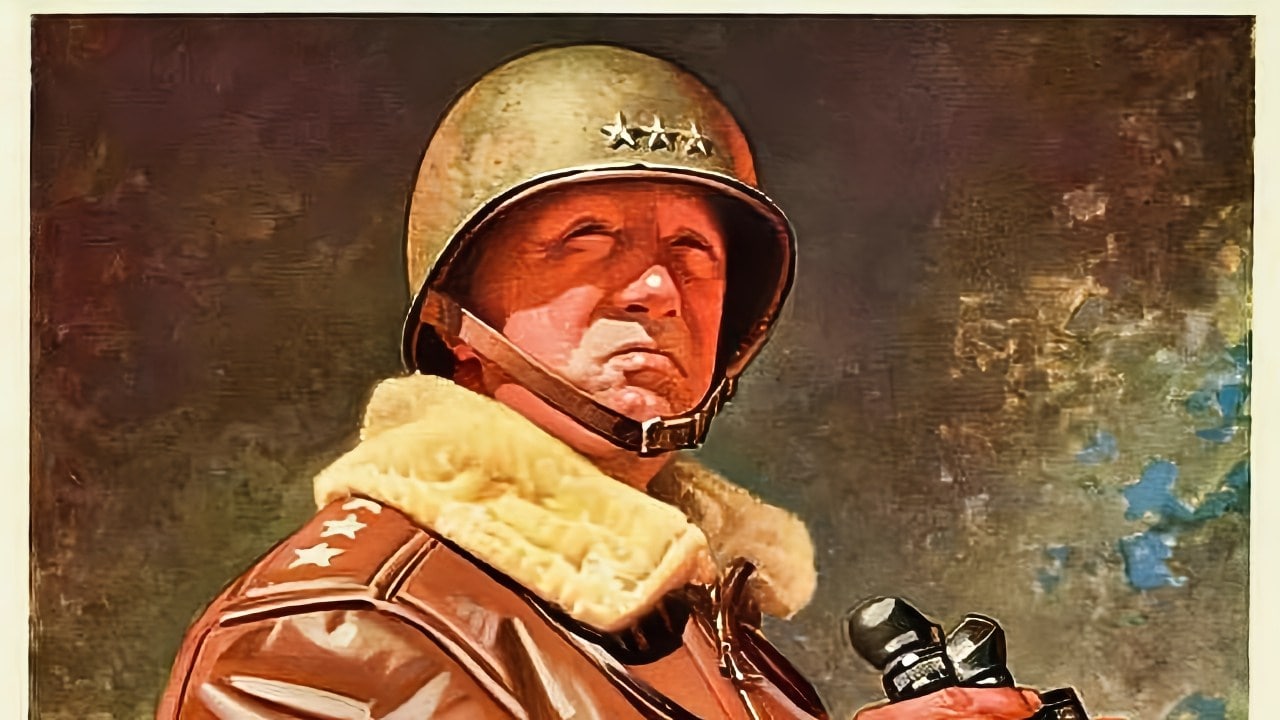
Summary and Key Points: A famous quote by General George S. Patton proved he believed wars are decided less by weapons than by the spirit of leaders and the men who follow them.
-Long before he became a battlefield icon, Patton struggled with dyslexia and learned through intense oral instruction—especially from Aunt Nannie, who read him classics like Plutarch and Xenophon and sparked a lifelong obsession with history.
-That fixation included studying enemies, notably Erwin Rommel’s Infantry Attacks.
-Patton’s rise in North Africa, highlighted by El Guettar, later became a Hollywood legend. He also entertained a striking belief in reincarnation—convinced he had fought wars before and would again.
Military Quote of the Day: Patton’s Secret Weapon Was History, Not Hardware
“Wars may be fought with weapons, but they are won by men. It is the spirit of men who follow and of the man who leads that gains the victory.” – General George Patton, U.S. Army
The above quote is one of the many nuggets of wisdom shared by iconic U.S. Army General George Smith Patton Jr.
Patton was a soldier but also a hardcore history buff. Indeed, one could say that the flamboyant general was outright obsessed with history—an obsession that included a thorough study of his enemies. He undoubtedly would have thoroughly agreed with two truisms: First, “Those who do not learn from the experience of history are doomed to repeat it;” and second, “No Intelligence, No Victory. Know Intelligence, Know Victory.” (I read the second on a desk placard belonging to a U.S. Air Force intelligence officer I worked with on the Threat Working Group at HQ Air Mobility Command.)
Patton’s Childhood Education: Aunt Nannie’s Impact
Young Georgie struggled with dyslexia, and he didn’t learn to read or write until age 11.
However, thanks to his innate intelligence, drive, and determination, Georgie adapted, improvised, and overcame. The kid took to heart his father’s exhortation to “do your damnedest always.”
His father, George Smith Patton, ensured that his son was well educated via oral instruction.
He read to his son the works of Homer and imbued the lad with an appreciation for the martial tradition in the family history.
The paternal grandfather and uncle were both officers in the Confederate Army during the American Civil War, losing their lives at Battle of Opequon (Third Battle of Winchester) and the Battle of Gettysburg (during Pickett’s Charge no less), respectively.
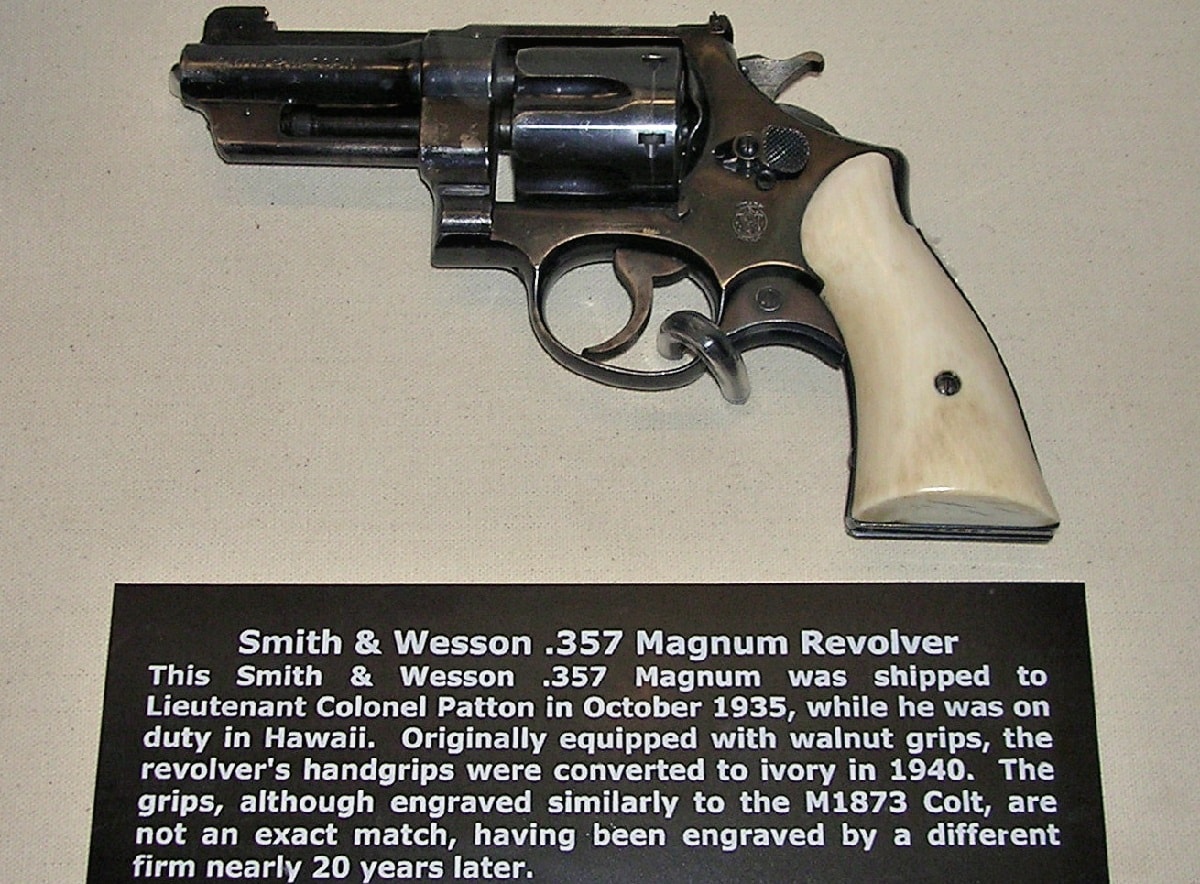
Patton’s well-known custom ivory-handled revolver.
However, it was Georgie’s Aunt Nannie who arguably had the biggest early influence on Patton’s interest in history. As Glen Jeansonne, Frank C. Haney, and David Luhrssen noted for Warfare History Network: “Having decided that George was ‘delicate,’ began reading aloud to him classics such as Plutarch’s Lives and The March of Xenophon and stories about Alexander the Great and Napoleon.”
Reading Rommel
Field Marshall Erwin Rommel’s book Infantry Attacks, which the Desert Fox wrote in the mid-1930s when he was still a lieutenant colonel, was based on Rommel’s experiences in World War I.
The book remains in print today and was very influential in its time.
George Patton was reportedly among the leaders who took its lessons to heart.
Patton’s first significant battlefield triumph as a World War II general took place at the Battle of El Guettar—part of the Tunisia Campaign—from March 23, 1943 to April 3, 1943. Barely a month earlier, the U.S. Army had suffered a humiliating defeat in the Battle of Kasserine Pass. However, thanks to Patton’s fiery, hard-charging leadership, the sting of that humiliating defeat was soon alleviated. As noted by Stephen L. Moore for Military History Now, “For George Patton, it would prove to be his first big victory, and the U.S. Army’s first major triumph against the German army in World War Two.” The U.S. Army’s reputation and confidence were restored.
And this is where Patton’s readership of Rommel came into play. The battle is dramatized in the 1970 Oscar-winning film Patton. The general, observing the drubbing of the Wehrmacht troops though his binoculars, triumphantly grins and exclaims, “Rommel, you magnificent bastard, I READ YOUR BOOK!!!”
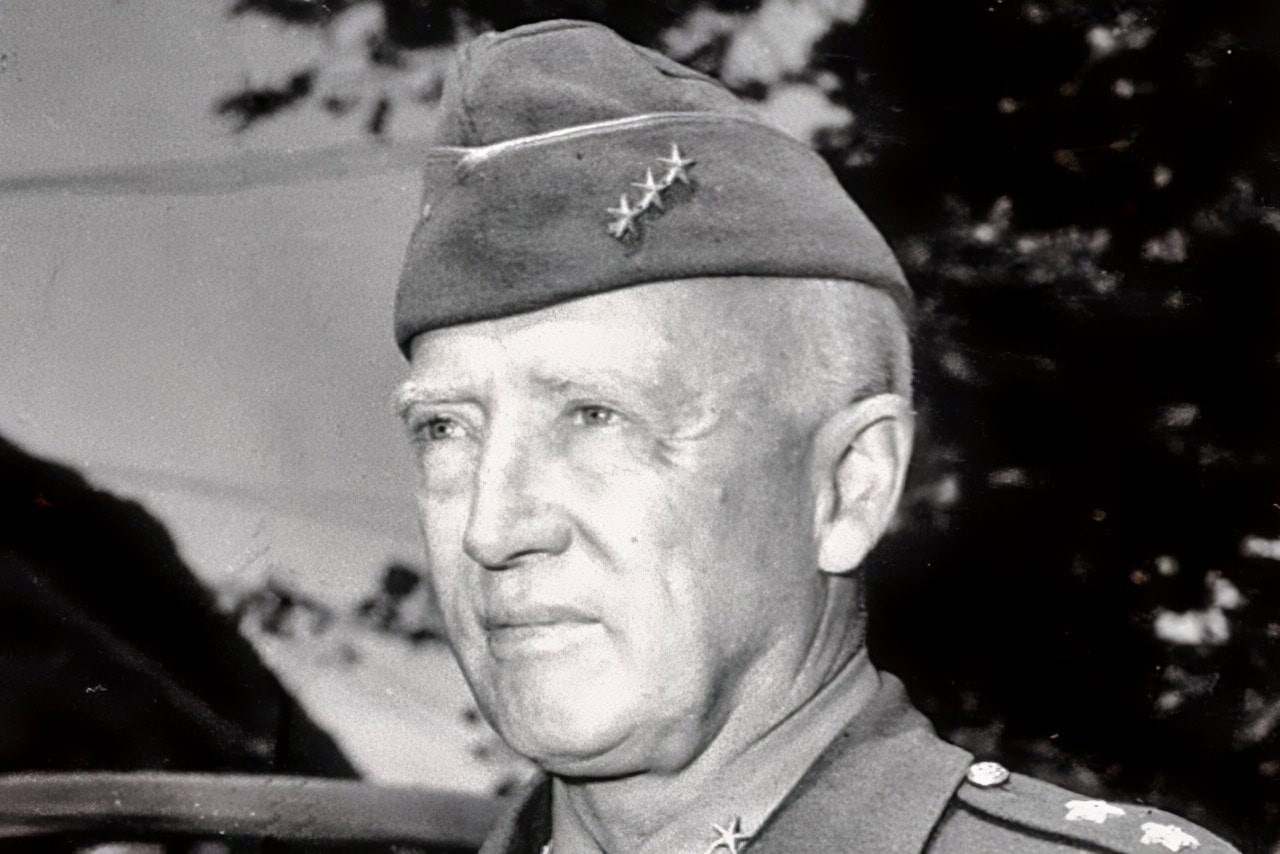
George S. Patton Quote of the Day. Creative Commons Image.
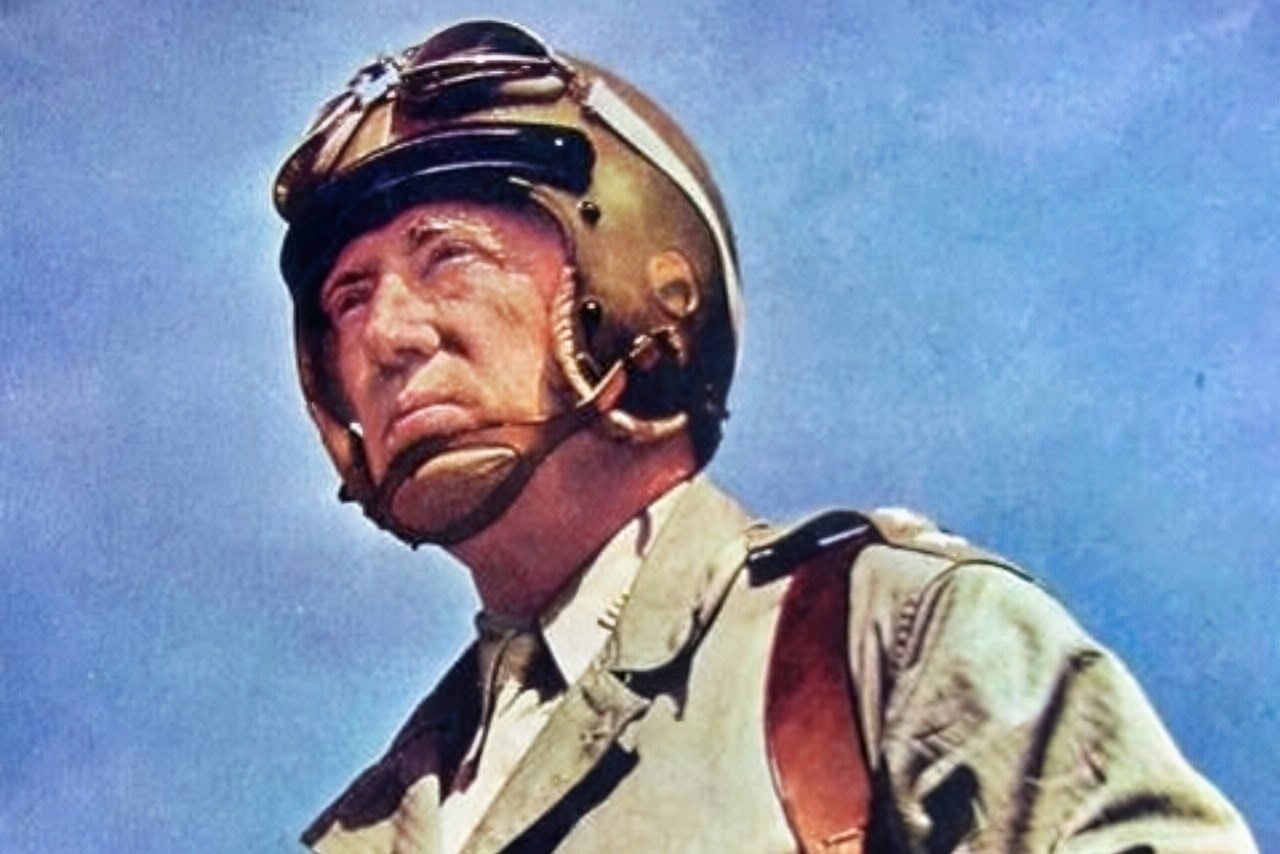
General George Patton of the U.S. Army. Image Credit: Creative Commons.
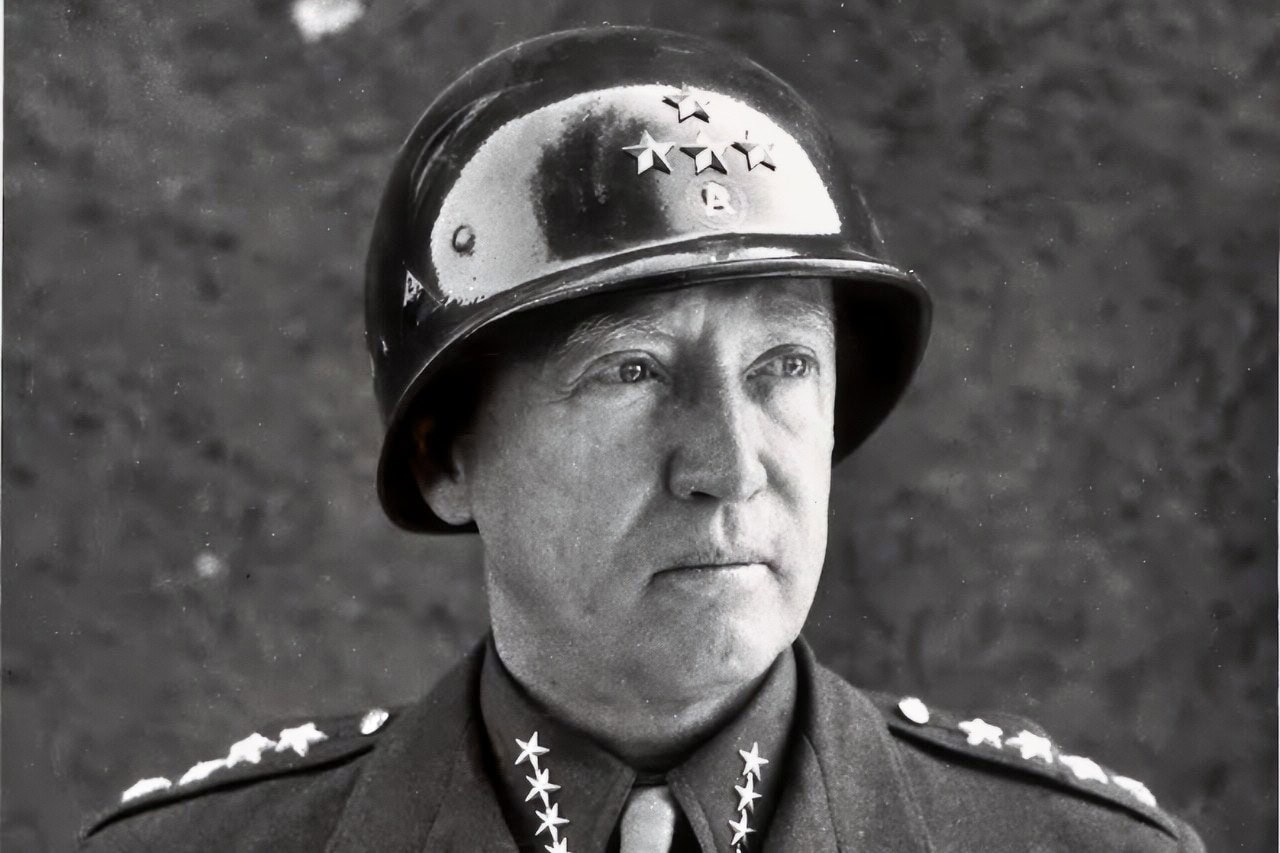
U.S. Army General George Patton
However, as is typical of Hollywood historical pieces, even the best pictures embellish some things and miss others. Prior to the El Guettar battle scene, the book shown on Patton’s nightstand is The Tank in Attack, which Rommel had planned to write but never completed. Hhe was forced to commit suicide due to his suspected involvement in a failed assassination attempt of Adolf Hitler.)
Patton on Reincarnation
Another aspect of Patton’s enthusiasm for history that is dramatized in the 1970 flick was his belief in reincarnation.
Christopher Klein elaborated in an article for History.Com that “Patton claimed he had seen combat many times before in previous lives, including as a Roman legionnaire and as part of the 14th-century army of John the Blind of Bohemia.
Before the 1943 invasion of Sicily, British General Harold Alexander told Patton, ‘You know, George, you would have made a great marshal for Napoleon if you had lived in the 19th century.’ Patton replied, ‘But I did.’ The general believed that after he died he would return to once again lead armies into battle.”
If and when the United States finds itself fighting World War III, hopefully George Patton’s bold prognostication will come true.
About the Author: Christian D. Orr, Defense Expert
Christian D. Orr is a Senior Defense Editor. He is a former Air Force Security Forces officer, Federal law enforcement officer, and private military contractor (with assignments worked in Iraq, the United Arab Emirates, Kosovo, Japan, Germany, and the Pentagon). Chris holds a B.A. in International Relations from the University of Southern California (USC) and an M.A. in Intelligence Studies (concentration in Terrorism Studies) from American Military University (AMU). He is also the author of the newly published book “Five Decades of a Fabulous Firearm: Celebrating the 50th Anniversary of the Beretta 92 Pistol Series.”