
90% Casualties: Why Napoleon’s Invasion of Russia Was Worse Than Waterloo
“You must not fight too often with one enemy, or you will teach him all your art of war.”—Napoleon Bonaparte
For all of his smashing victories, Napoleon also suffered his fair share of crushing defeats—a sharp contrast to, say, Alexander the Great, who was undefeated in battle.
His three biggest defeats were the Battle of Leipzig, which resulted in his first exile, to the Tuscan island of Elba; the Battle of Waterloo, which resulted in his second exile, and death, at St. Helena; and his Russia Campaign, which did not end in exile but in some ways was his most disastrous defeat.
Napoleon’s Best Laid Plan: How It Began
In this campaign, Napoleon’s French Empire was allied with Austria, Prussia, Denmark, and the German client-states of the Confederation of the Rhine. This sizable coalition still was not enough to defeat the Russian forces under the commander of Tsar Alexander I.
As noted by Kevin Eberle of History Chronicler, “Napoleon was counting on a quick victory, aiming to catch and decisively defeat the Russians in a major battle. Instead, the Russian generals Kutuzov and Barclay de Tolly avoided major battles and retreated eastward, drawing the French deeper into Russia.
The Russians planned to exhaust the French, banking on the harsh winter and the scorched-earth policy to weaken the invaders.”
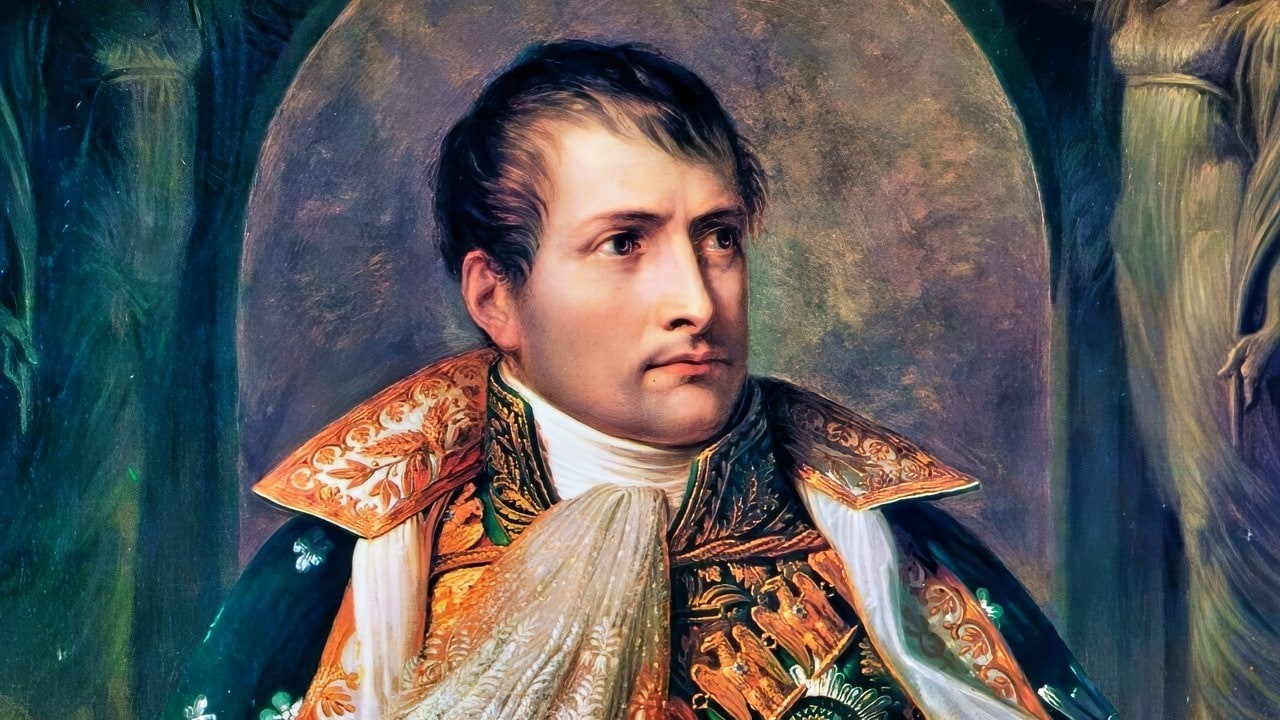
Napoleon Painting. Image Credit: Creative Commons.
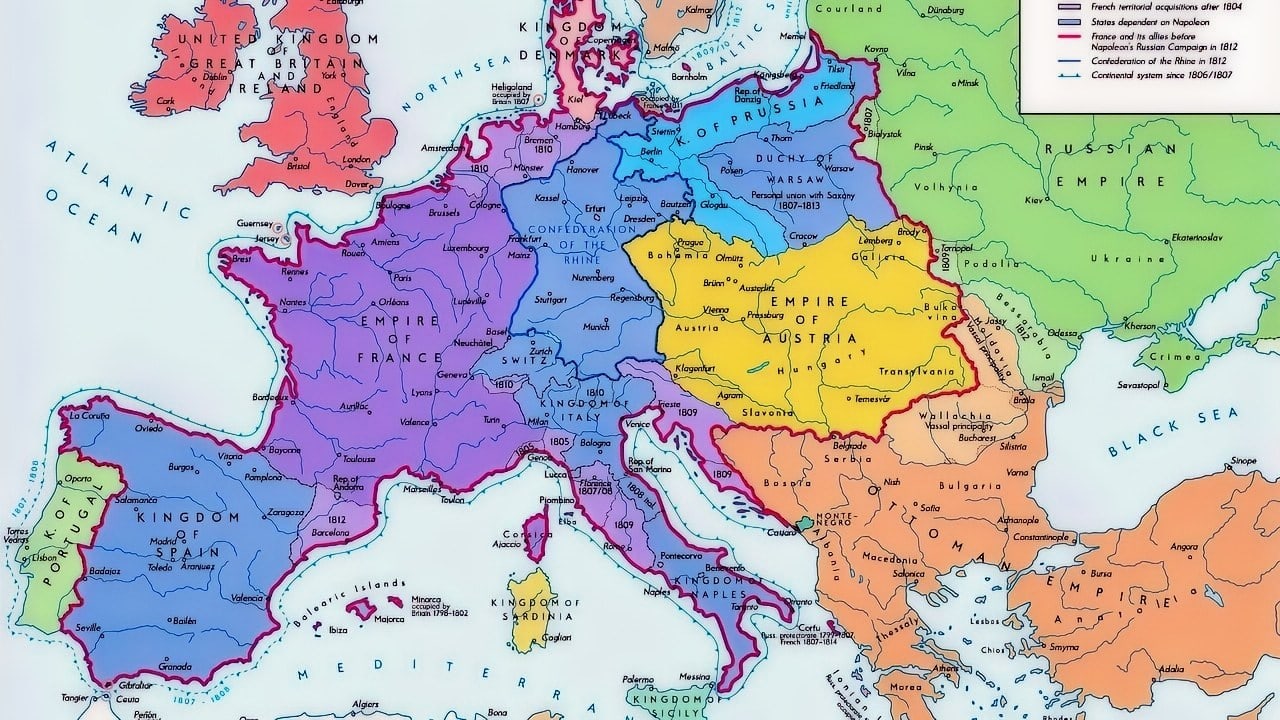
Map of Napoleon’s Empire. Image Credit: Creative Commons.
Battle of Borodino (September 7, 1812) and Moscow Finale
General Mikhail Kutuzov did engage the French in one major battle. The fight took place in the village of Borodino, in the present day Mozhaysky District of Moscow Oblast.
According to the History Skills website, “The battlefield stretched across open terrain that was fortified by Russian redoubts, including the Bagration flèches and the Great Redoubt, which formed a series of defences.
“Napoleon was determined to break Russian resistance before winter and began the attack at dawn.”
The French started with a modest manpower advantage, 130,000 troops vs 120,000. Napoleon’s men had some initial success, with Marshal Michel Ney and Marshal Louis-Nicolas Davout launching repeated attacks on the Russian left, and they eventually overran the flèches. However, these limited ground gains came at the price of heavy casualties suffered by the French artillery and infantry during repeated assaults on Russian strongpoints. When they conducted the final assault on the Russian center at the Great Redoubt, their losses were even worse.
Napoleon committed some elements of the Imperial Guard, including artillery and Young Guard units, but he held his elite Old Guard in reserve, wanting to keep them fresh for future fights. Uncertain of Kutuzov’s remaining troop strength, Napoleon did not pursue, and by evening the Russians had withdrawn and kept most of their army intact.
The Kutuzov/de Tolly strategy received its ultimate vindication when the French troops finally arrived in Moscow later that month. The city was ablaze and almost empty, and Napoleon was forced to order a humiliating retreat. The Grande Armée began to suffer in October from frostbite, hunger, and Russian attacks, which cumulatively wiped out an utterly gut-wrenching 90 percent of Napoleon’s 600,000 troops.
By contrast, his respective casualty rates at Waterloo and Leipzig were roughly 37 percent and 19 percent. (That’s only counting killed and wounded, not prisoners of war or desertions and defections).
History Repeats Itself: Germany in the World Wars
Thirteen decades later, Adolf Hitler would fail to heed the painful lessons of Napoleon’s experience. He launched Operation Barbarossa, the invasion of the Soviet Union, in June 1941, and initially, it was a smashing success for the Wehrmacht, Luftwaffe, and Waffen-SS.
But it all came crashing to a halt during the Battle of Stalingrad from August 1942 to February 1943, during which the combination of fierce Russian resistance and the Russian winter devastated the 6th Army under the command of Friedrich Paulus.
Examples that more explicitly illustrate Napoleon’s quote at the beginning of this article include the unrestricted submarine warfare waged by Kaiser Wilhelm II’s Imperial Germany in World War I and Hitler’s Nazi Germany in World War II.
In both cases, the Unterseeboote inflicted grievous losses on Allied shipping. But in the first case, the sinking of the ocean liner RMS Lusitania drew the United States into the conflict, which ultimately hastened the Kaiser’s defeat.
In the second case, improved convoy tactics, antisubmarine weapons such as Hedgehog and Squid rockets, and warplanes like the Short Sunderland turned the tide of the Battle of the Atlantic.
The result was the sinking of 785 Kriegsmarine U-boats and a mind-numbing 75 percent casualty rate for their crews.
About the Author: Christian D. Orr, Defense Expert
Christian D. Orr is a Senior Defense Editor. He is a former Air Force Security Forces officer, Federal law enforcement officer, and private military contractor (with assignments worked in Iraq, the United Arab Emirates, Kosovo, Japan, Germany, and the Pentagon). Chris holds a B.A. in International Relations from the University of Southern California (USC) and an M.A. in Intelligence Studies (concentration in Terrorism Studies) from American Military University (AMU). He is also the author of the newly published book “Five Decades of a Fabulous Firearm: Celebrating the 50th Anniversary of the Beretta 92 Pistol Series.”