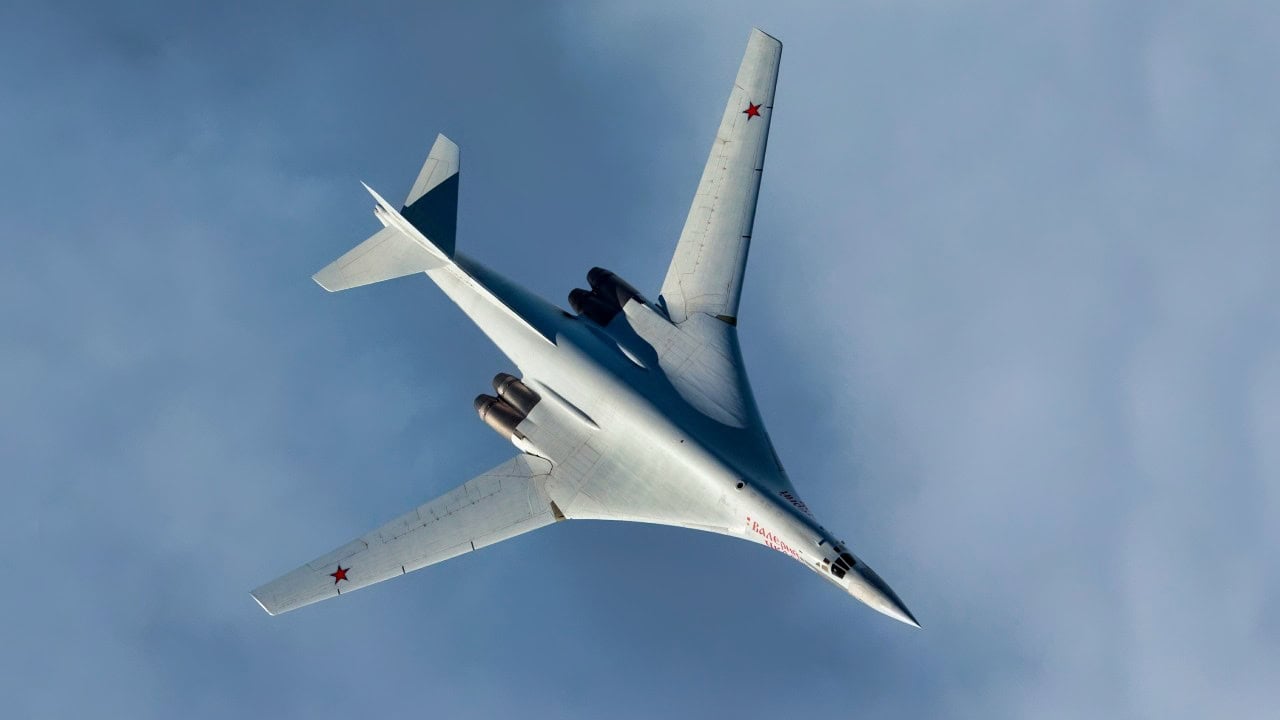
Synopsis: Facing delays with its next-gen PAK DA stealth bomber and the demands of the war in Ukraine, Russia has restarted full serialized production of the Tu-160M “White Swan” at the Kazan Aviation Plant.
-Unlike previous upgrades, these are new airframes built from scratch, designed to serve as high-speed “missile trucks” capable of launching Kh-101 stealth cruise missiles and future hypersonic weapons from standoff ranges well outside Ukrainian air defenses.
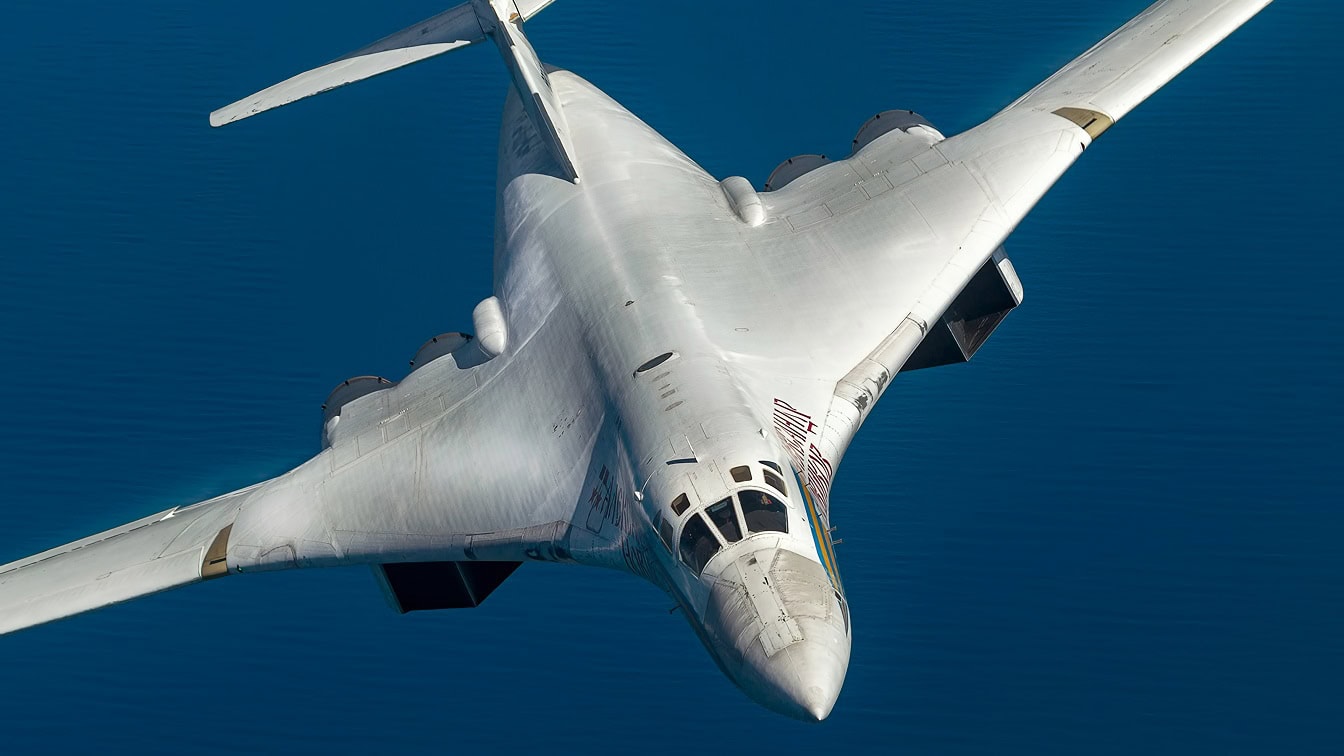
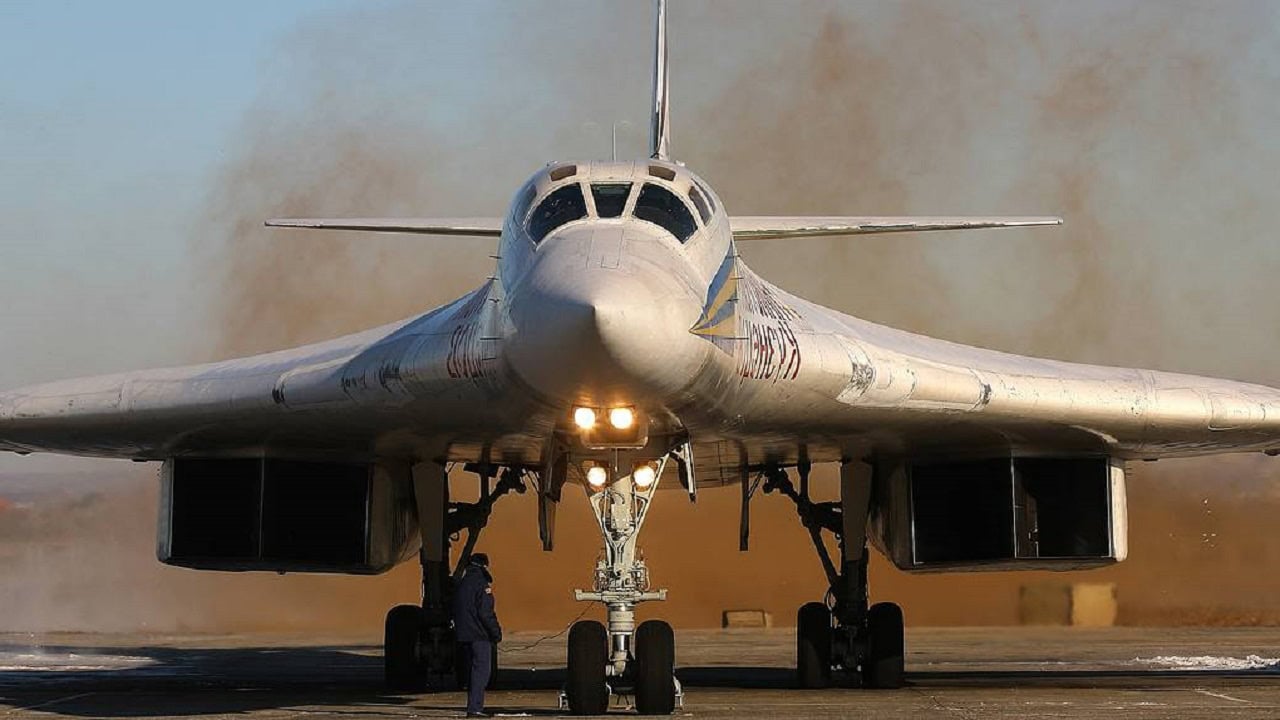
Tu-160 Bomber. Image Credit: Creative Commons.
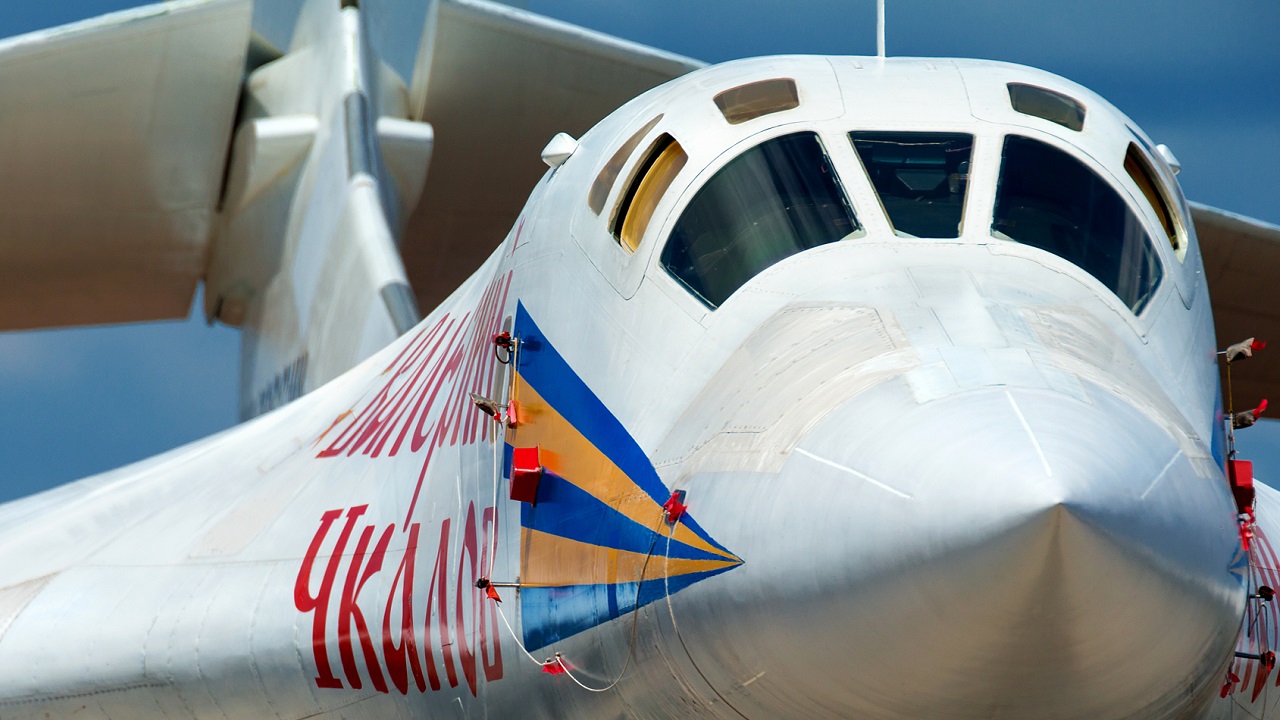
Tu-160. Image Credit: Creative Commons.
The Return of the Tu-160M, Russia’s Long-Range Missile Truck
As the Russians were invading their neighbor, Ukraine, in 2022, the Russian Air Force welcomed the return of the production line for the iconic Tupolev Tu-160M “White Swan” long-range nuclear-capable bomber.
The White Swan Returns (Just In Time For War)
After years without producing new airframes, the Russians assessed that they needed these legendary Cold War-era bombers. So, Kazan Aviation Plant began producing modernized airframes from scratch rather than simply upgrading existing Tu-160M airframes. The purpose was to ensure that the Russians had a reliable long-range strike capability.
Full serialized production of this plane restarted just in time for the Ukraine War. In 2023, a year after the Ukraine War’s initiation, four new Tu-160Ms were promised to the Russian Aerospace Forces. Defense Magazine reports that only two were actually delivered, sending “ripples” across Russia’s aerospace defense industry.
While Russia’s defense industrial base has honed its ability to mass-produce weapons of war, there are still bottlenecks, particularly with more complex systems, such as the Tu-160M. So, it appears that the Tu-160M is a victim of this painful reality (like the T-14 Armata Main Battle Tank).
A Standoff Strike Platform Ukraine Can’t Easily Stop
The Tu-160M is one of the few Russian platforms capable of carrying a massive payload across long distances—this includes cruise missiles and even nuclear weapons. Modernized T-160Ms serve as a standoff strike platform, capable of launching precision missiles from outside contested airspace.
This is a key feature that aids the Russian war effort in Ukraine, as the Ukrainian Armed Forces have been very effective in deploying NATO-provided advanced air defenses, making traditional bombing runs over Ukraine a dangerous proposition for the Russian Aerospace Forces. Without these standoff attack capabilities, the Russian war machine would have been stymied early in the war.
PAK DA’s Delays Make the Tu-160M Indispensable
One primary purpose behind the T-160Ms revitalization was that the much-ballyhooed Russian stealth bomber, the PAK DA, has been in Development Hell for years. There are many steps, even today, that the designers of the PAK DA stealth bomber have to go through to make that plane a flying reality.
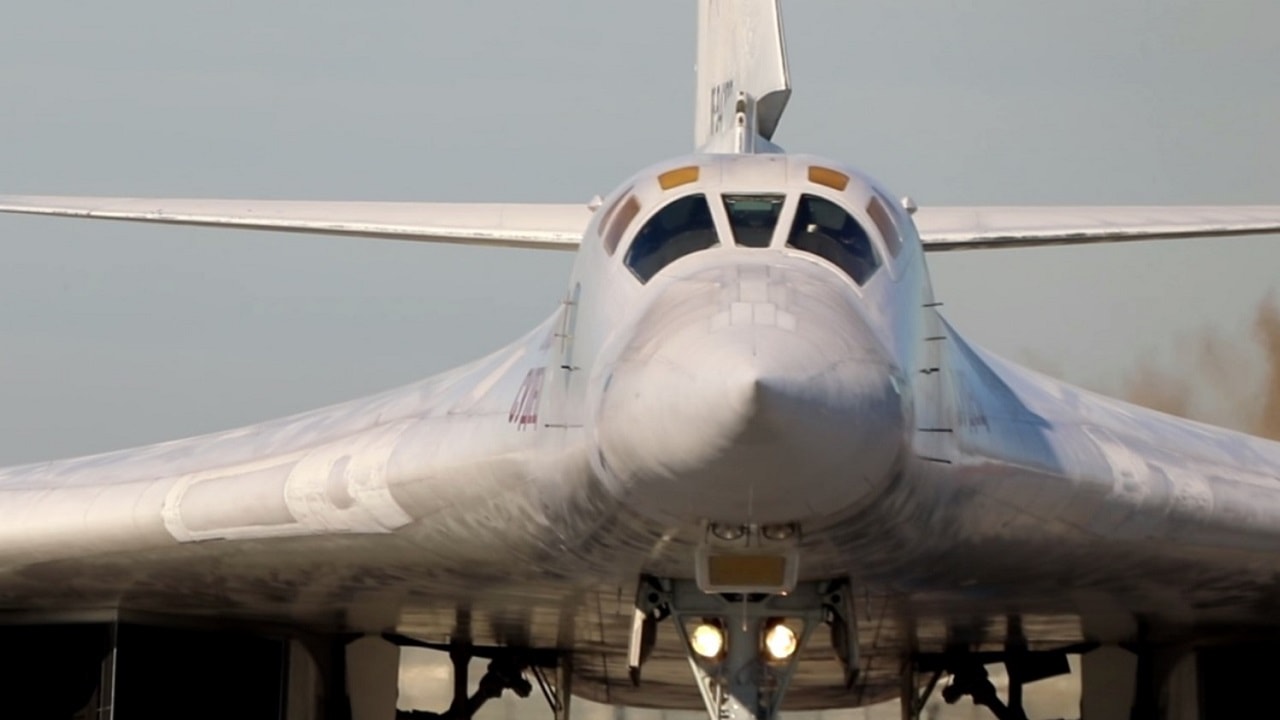
Tu-160. Image Credit: Creative Commons.
Tu-160 bomber about to take off. Image Credit: TASS.
Until that program advances, the Tu-160Ms ensure that Russia maintains a heavy bomber force capable of strategic missions, rather than allowing a strategic gap to form in Russia’s defenses.
Why Ukraine and NATO Want These Bombers Destroyed
In fact, the Tu-160Ms are among some of the most important bombers in Russia’s modern arsenal. This is why the Ukrainians attempted to destroy these birds at their home bases in the Russian Far East last year with a drone attack.
The attempt ultimately failed.
But Kyiv and its NATO partners recognize the key role that the Tu-160Ms play in Russia’s ability to wage war in Ukraine. By depriving Russia of these planes—even for a short while—the air force’s standoff capabilities would be stunted.
Inside the Tu-160M
The Tu-160M has a crew of four (pilot, co-pilot, navigator, weapons systems officer) and a length of 177 feet. Its wingspan is 116.8 feet; when those wings are extended, they reach 187.2 feet. Maximum takeoff weight is around 606,000 pounds, meaning this bird can fly far, carry much, and launch a devastating fusillade from afar.
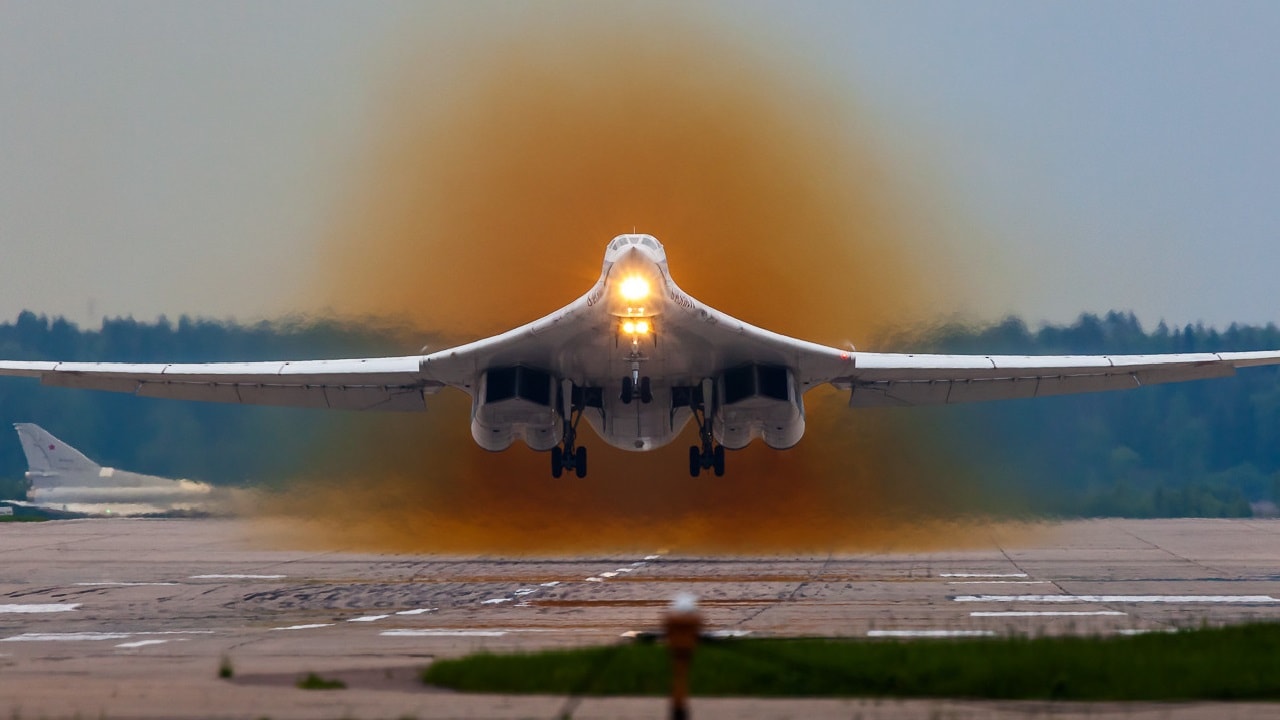
Russian Air Force Tupolev Tu-160 (RF-94113) takes off from Kubinka.
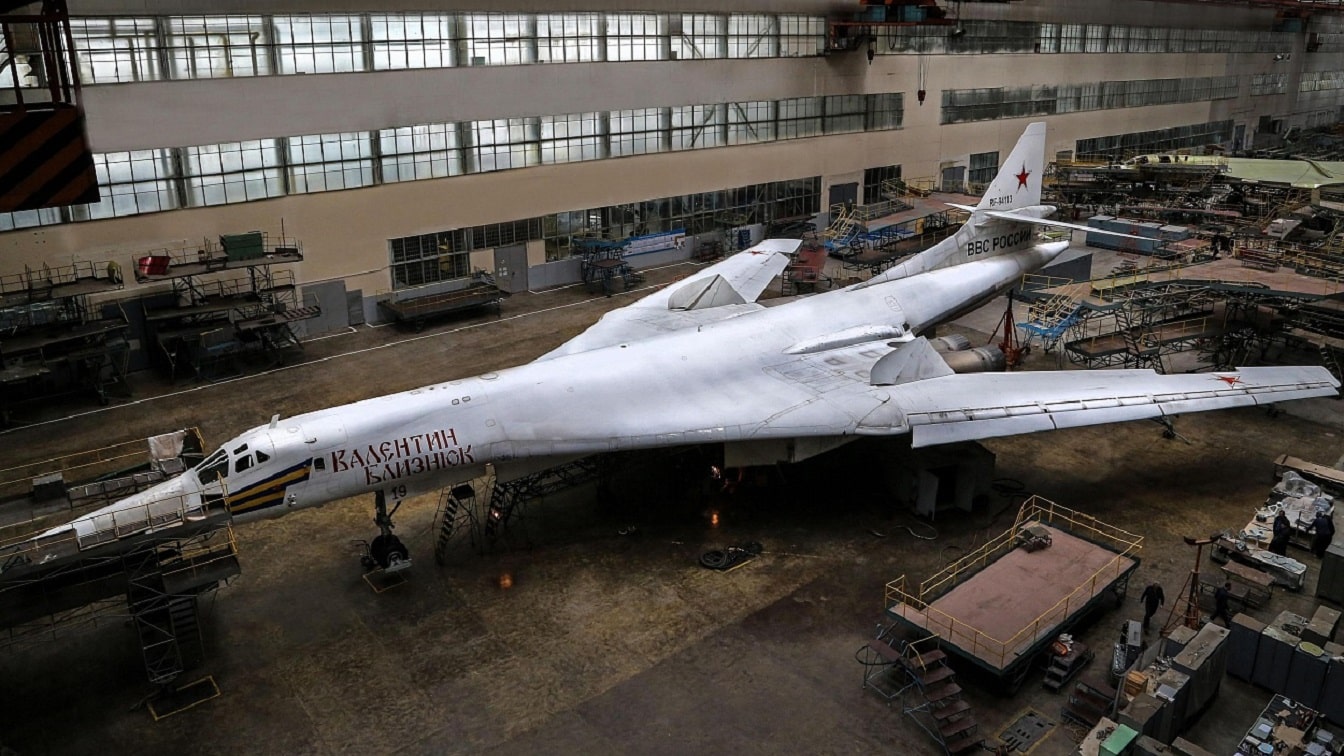
Tu-160 Bomber. Image Credit: Russian Government.
These planes are powered by four Kuznetsov NK-32-02 afterburning turbofans, providing a maximum speed of around 1,367 miles per hour (2,200 kilometers per hour). These newer engines allow the plane to burn less fuel while enjoying higher thrust. This plane has a service ceiling of 52,500 feet and a range of 7,600 miles.
There are massive internal weapons bays with two rotary launchers. The primary missile types the Tu-160M carries are the Kh-101/Kh-102 stealth cruise missiles and the Kh-55SM/Kh-555 cruise missiles, and the plane is reportedly on a streamlined integration path toward fielding Russia’s powerful hypersonic weapons arsenal. Typical loadouts consist of 12-16 long-range cruise missiles (nuclear or conventional configurations).
Because the Tu-160Ms are entirely new airframes, they come with updated systems. New digital glass cockpits, modern navigation and flight-control computers, updated radar, and terrain-following systems. New electronic warfare (EW) suites, more secure datalinks and satellite communications, and improved defensive countermeasures have ensured that the Tu-160M will have a long service life in this century as it did in the previous one.
Russia’s High-Speed Strategic Sledgehammer
Indeed, the new airframes are built using modernized metallurgy and tooling to ensure they have a minimum 30-year service life.
Russia’s Tu-160M is a high-speed missile truck. It is one of the most formidable long-range strike aircraft in the world, especially in an era dominated by standoff cruise missiles and hypersonic weapons. It is yet another example of how well the Russians have adapted to the demands of the modern battlefield.
About the Author: Brandon J. Weichert
Brandon J. Weichert is the Senior National Security Editor at 19FortyFive.com. He was previously the senior national security editor at The National Interest. Weichert is the host of The National Security Hour on iHeartRadio, where he discusses national security policy every Wednesday at 8 pm Eastern. He hosts a companion show on Rumble entitled “National Security Talk.” Weichert consults regularly with various government institutions and private organizations on geopolitical issues. His writings have appeared in numerous publications, among them Popular Mechanics, National Review, MSN, and The American Spectator. And his books include Winning Space: How America Remains a Superpower, Biohacked: China’s Race to Control Life, and The Shadow War: Iran’s Quest for Supremacy. Weichert’s newest book, A Disaster of Our Own Making: How the West Lost Ukraine, is available for purchase wherever books are sold. He can be followed via Twitter/X @WeTheBrandon.