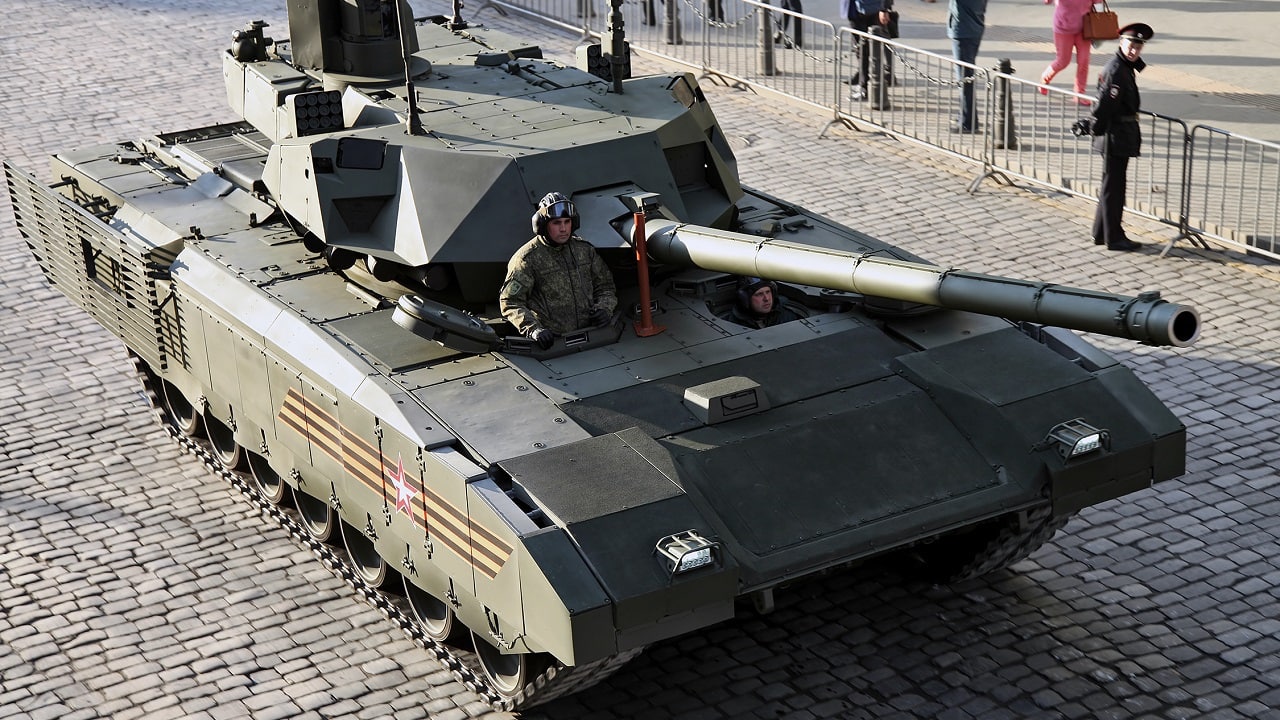
Summary and Key Points: Russia’s next-generation T-14 Armata is not a technological failure or a “parade prop,” but rather a casualty of the shifting nature of warfare.
-The Main Battle Tank (MBT) has lost its status as the “king of battle,” relegated to a mobile artillery support role by the prevalence of drones and long-range strikes.
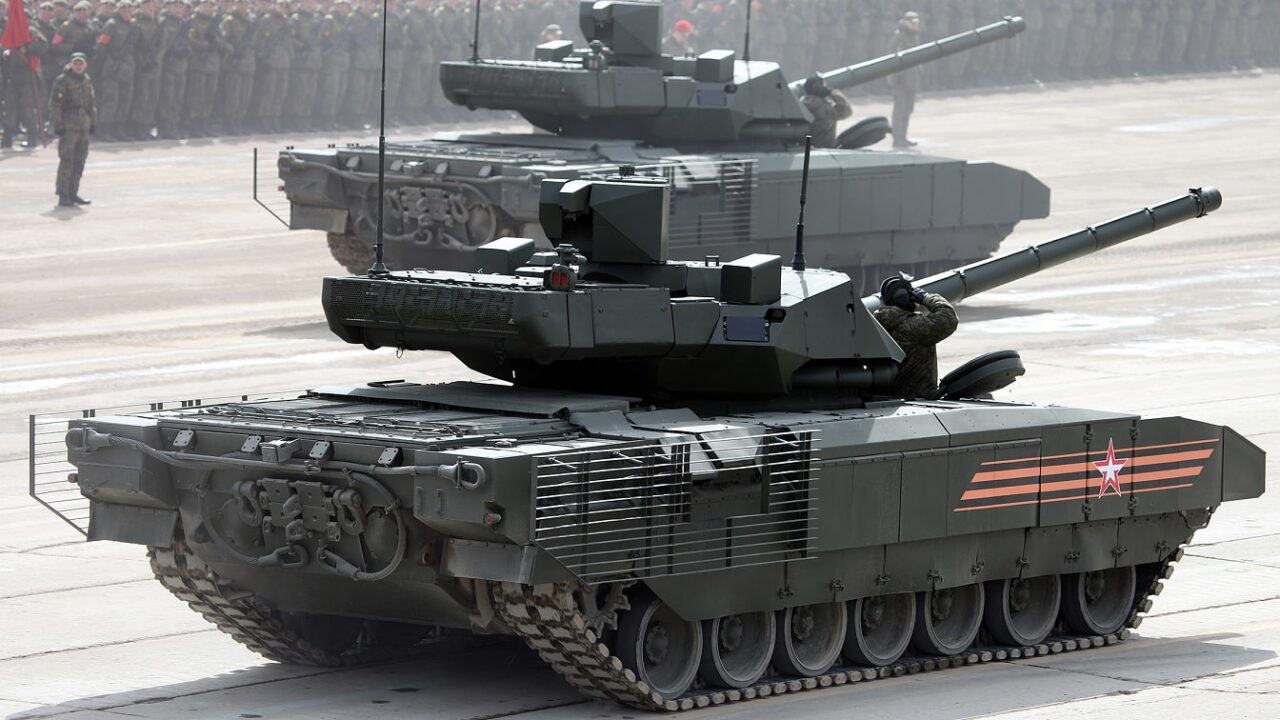
Main battle tank T-14 object 148 on heavy unified tracked platform Armata.
-With a unit cost of $5 to $9 million, the T-14 is deemed too expensive and scarce to risk in the attrition-heavy conflict in Ukraine.
-Instead, Russia has prioritized “efficiency, simplicity, and quantity,” favoring the rugged and replaceable T-72 over the complex Armata, rendering the T-14 a “developmental cul-de-sac” in an era that favors mass over high-tech prestige.
The Age of the Tank is Over: Why the T-14 Armata Missed Its Moment
Met with great fanfare when it was first unveiled, Russia’s next-generation T-14 Armata Main Battle Tank (MBT) has essentially failed to live up to its promise. The real question is whether that failure to live up to its promise is due to fundamental flaws in the tank’s design or to circumstantial factors, such as the Russian Army’s current full engagement in a war of attrition in neighboring Ukraine?
Russia’s Wonder Tank Meets Battlefield Reality
I contend that the T-14 Armata is more than merely a “parade prop,” as one Western military analyst derided it in an off-the-record conversation with me months ago. The issue is the nature of war itself, which has changed in just the last four years, since the start of the Ukraine War.
Frankly, MBTs, while they still have a role, are nowhere near as important for a successful ground campaign as they once were.
Why the Main Battle Tank is No Longer King
Here’s the reality these complex—wildly expensive—tanks face: the MBT is no longer the king of battle.
It’s become very much akin to the battleship in the Second World War. These lumbering behemoths, heavily armored and armed, are no longer essential for breaching enemy lines or stymying enemy advances.
Beyond-visual-range (BVR) airstrikes, drone swarming attacks, and massive artillery barrages from mobile artillery units can do the trick far better (and cheaper) than tanks in general can do.
That might sound shocking to you.
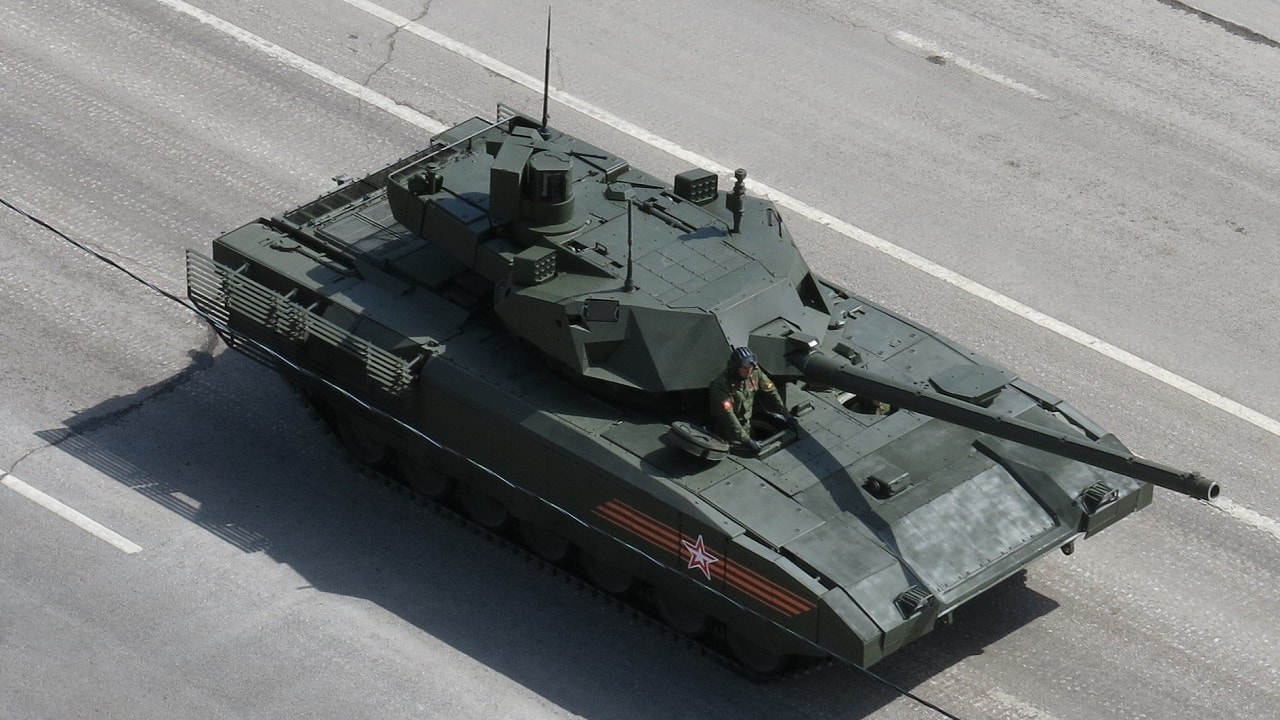
Russian Armata T-14 Tank Prototype from above.
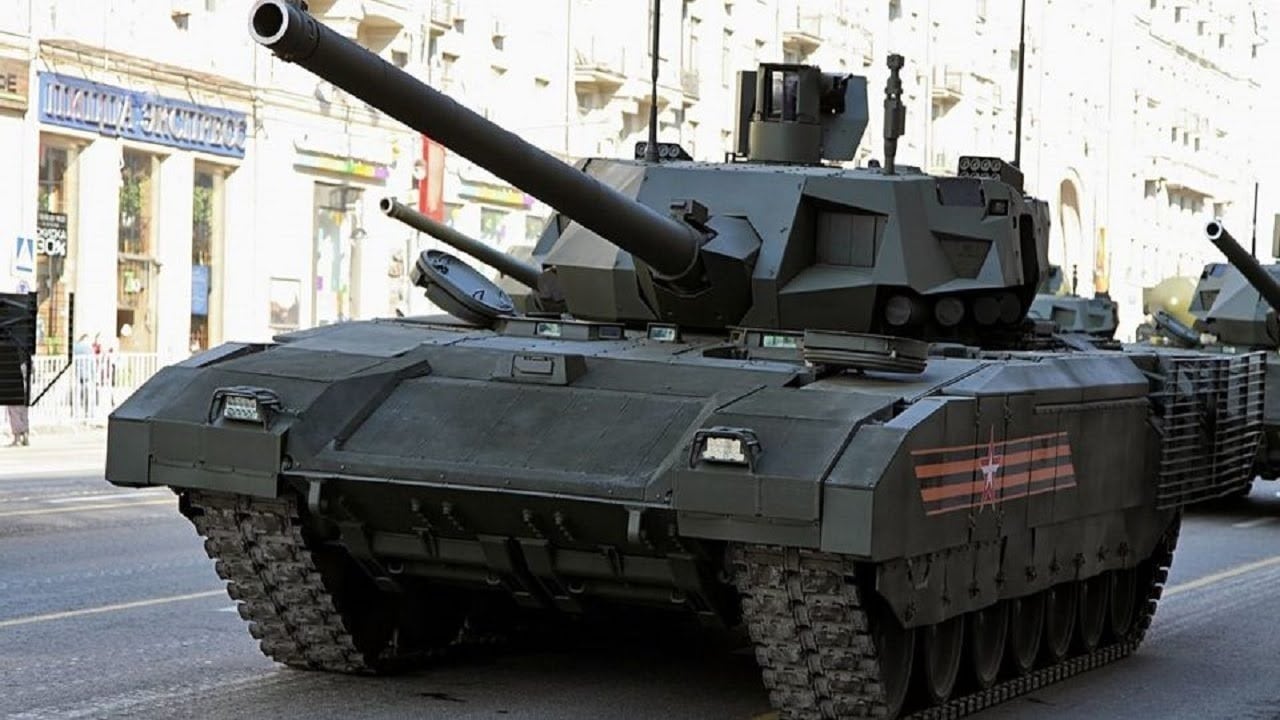
T-14 Armata. Image Credit: Creative Commons.
From Breakthrough Weapon to Mobile Artillery Piece
But this isn’t coming only from me. Retired US Army Lt. Col. Daniel L. Davis, host of the popular Deep Dive w/ Daniel L. Davis on YouTube, joined me last December on my show National Security Talk, where he explained how the primary attack role of the tank had fundamentally changed.
According to Davis, who spent his military career in armored units (including, famously, as part of the US Army’s legendary armor thrust into Kuwait during Desert Storm), the MBT has been relegated to a support role. It is now more like a heavy, moving artillery piece rather than how tanks have been used in the past.
With that in mind, it begs the question: why would it ever be necessary to build these wildly expensive and sophisticated MBTs if their role is to sit on the periphery of a battlefield and pick apart enemy forces advancing from afar?
Cheap, Numerous, Replaceable: The New Formula for Victory
A cheaper, older system, like the T-72, would be just as good as the T-14 Armata—and if these units were lost, the damage to Russia’s defense budget would not be as onerous as if they had lost a T-14 in combat.
A single unit of the T-14 Armata costs between $5 and $9 million.
While it’s true that the Russians have deployed their handful of T-14s in limited engagements throughout the Ukraine War, as of now, Moscow has drawn them out of the warzone and kept them within Russia. They’re too expensive to risk in the grisly, close-quarters, drone-infested battlefields of the Ukraine War.
The Real Reason the T-14 Got Yanked from Ukraine’s Battlefields
This is not an indictment of the T-14’s operational performance. It’s an acknowledgement by the Russian Army that they don’t need the glitzy T-14 to be effective in combat against NATO-backed Ukraine.
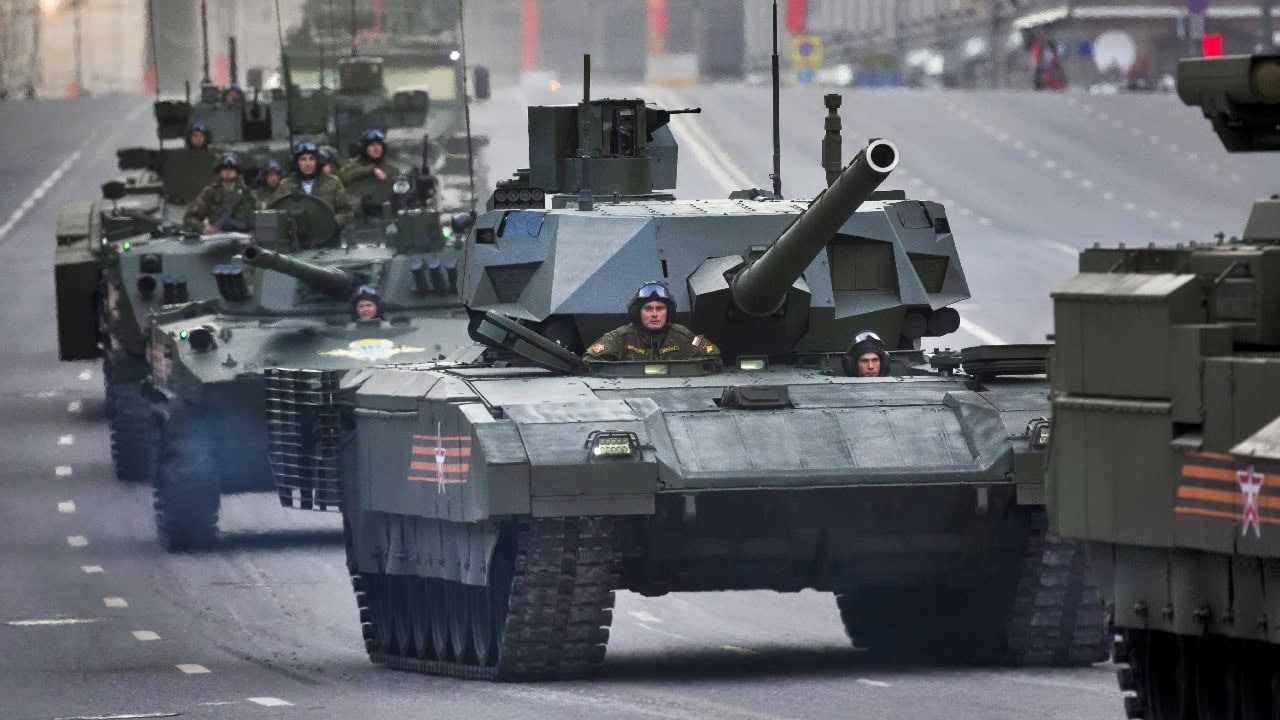
T-14 Armata Tank from Russia. Image Credit: Creative Commons.
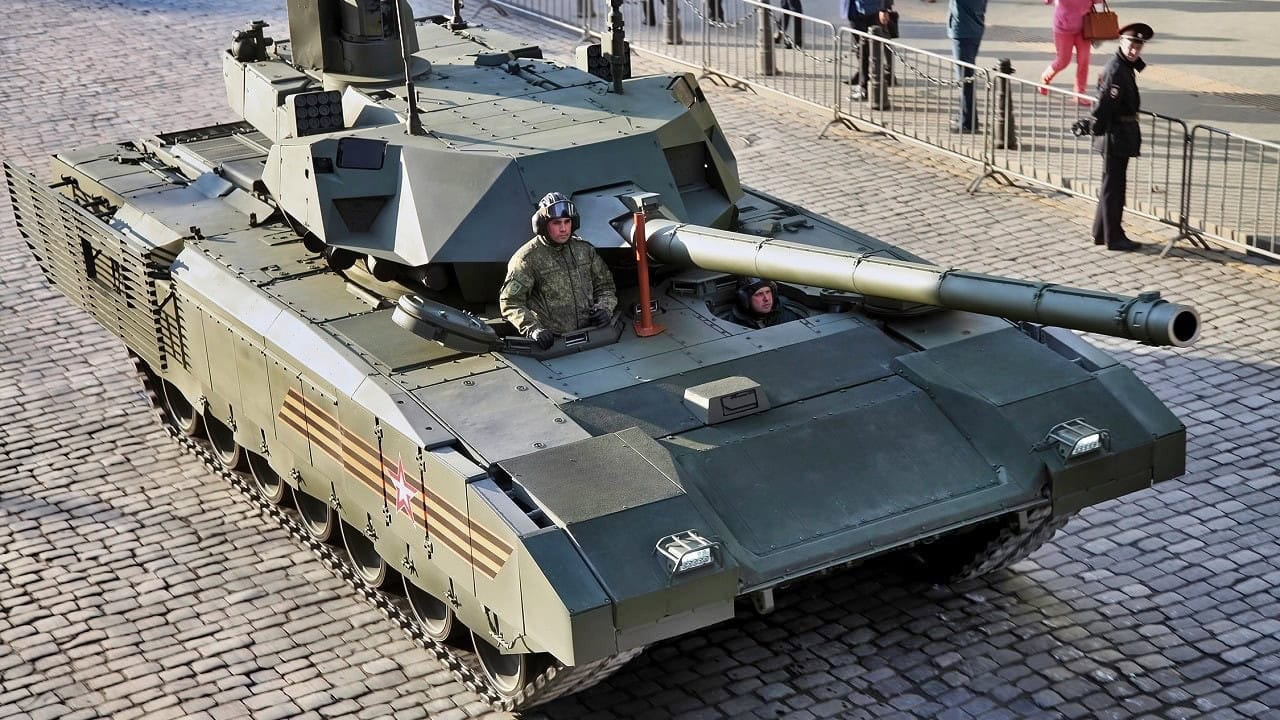
T-14 Armata Tank.
Currently, the Russian defense industrial base is churning out more weapons, ammunition, and platforms every three months than NATO’s defense industrial base produces in an entire year, per NATO Secretary General Mark Rutte.
The Russians prize efficiency, simplicity, and quantity over the complexity of the glamorous T-14s—especially given the high attrition rate of all MBTs in the ongoing Ukraine War for both sides (after all, the much-ballyhooed tank deliveries to Ukraine three years ago have amounted to little when it comes to the Ukrainian Armed Forces beating back the Russians).
Industrial Wars of Attrition Favor Quantity Over Quality
Even the T-90 and T-90M MBTs, which are more advanced than the T-72 but less advanced than the T-14s, are not being used as much as are the less advanced, older, and cheaper T-72s.
Losing a T-14 will inevitably be more devastating to Russia than losing ten T-72s in combat with the Ukrainians. The T-72s are ruggedized and easy to mass-produce (and replace). Until the Ukraine War is over and the Russian General Staff can formulate how best to proceed, one can anticipate the T-14s will not see any significant combat.
This is not because the tanks are useless or overhyped, far from it. It is simply because the demands placed on the Russian defense industrial base by the war make stylized, complex war machines not worth the cost or trouble of producing.
Without many of these systems available, any loss of the T-14 will be permanent.
The Russians are unlikely, in fact, to invest any further in developing their T-14, given their experience in Ukraine, which indicates that cheap and scalable systems are far preferable to expensive and unique platforms like the T-14.
So, think of the T-14 not as an overhyped failure but as a victim of the changing times; a developmental cul-de-sac that will inevitably see the Russians favoring older, cheaper MBTs, like the T-72, to use as combat support systems, and artillery, as well as drone swarms rather than spending the time and money building more T-14s.
About the Author: Brandon J. Weichert
Brandon J. Weichert is the Senior National Security Editor at 19FortyFive.com. He was previously the senior national security editor at The National Interest. Weichert is the host of The National Security Hour on iHeartRadio, where he discusses national security policy every Wednesday at 8 pm Eastern. He hosts a companion show on Rumble entitled “National Security Talk.” Weichert consults regularly with various government institutions and private organizations on geopolitical issues. His writings have appeared in numerous publications, among them Popular Mechanics, National Review, MSN, and The American Spectator. And his books include Winning Space: How America Remains a Superpower, Biohacked: China’s Race to Control Life, and The Shadow War: Iran’s Quest for Supremacy. Weichert’s newest book, A Disaster of Our Own Making: How the West Lost Ukraine, is available for purchase wherever books are sold. He can be followed via Twitter/X @WeTheBrandon.