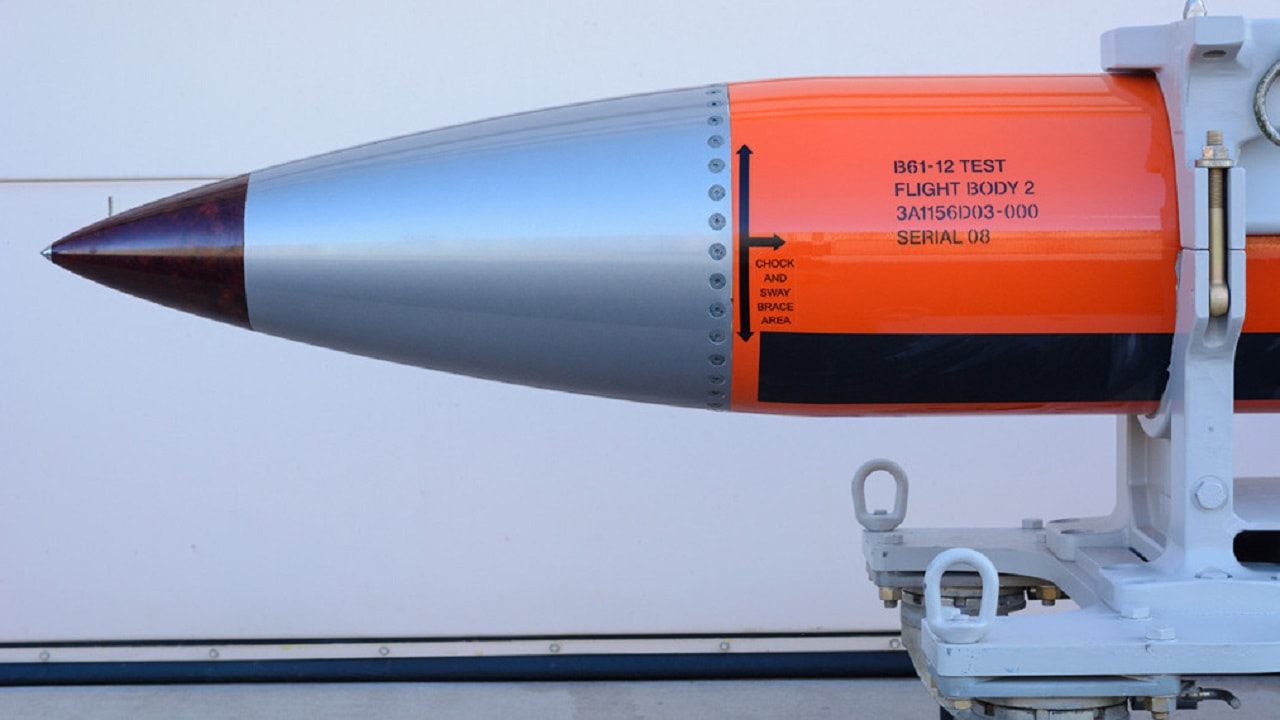
Summary and Key Points: Polish President Karol Nawrocki has signaled a major shift in Warsaw’s defense posture by calling for Poland to join the “nuclear project.”
-Amidst the ongoing conflict in Ukraine and Belarus’s role as a Russian proxy, Poland is reconsidering its reliance on conventional forces.
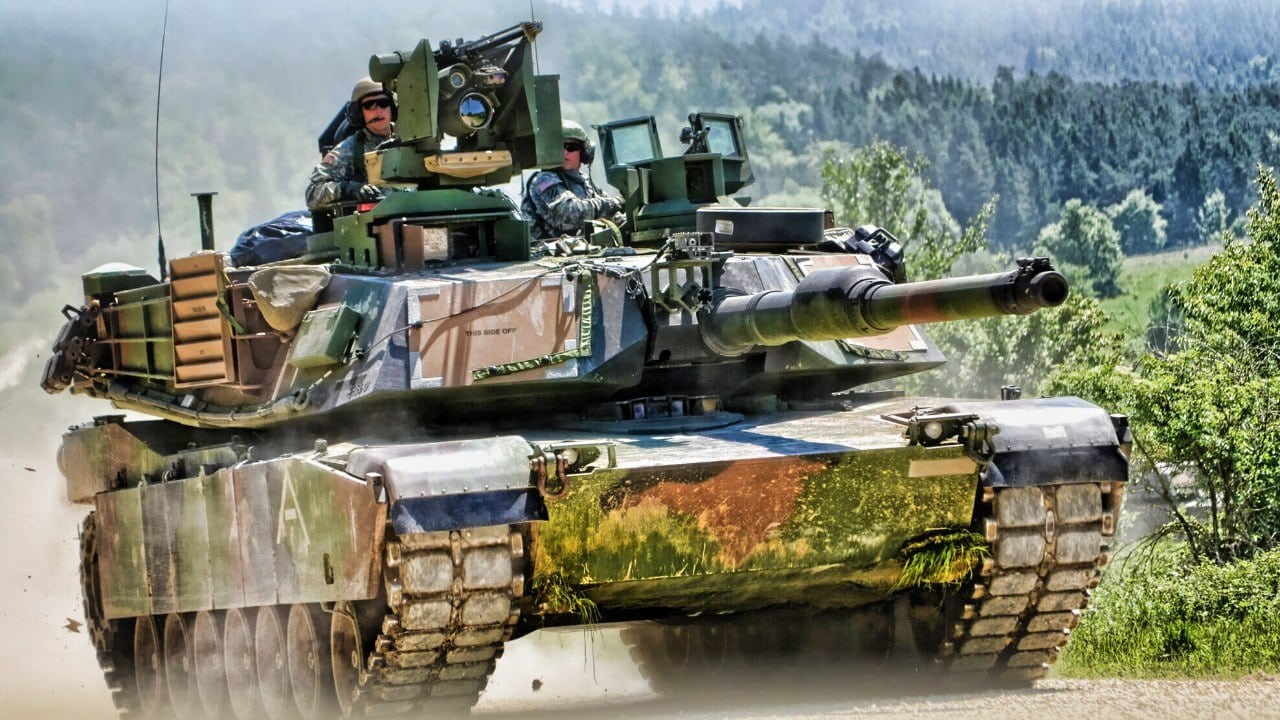
Poland M1 Abrams Tank. Image Credit: General Dynamics.
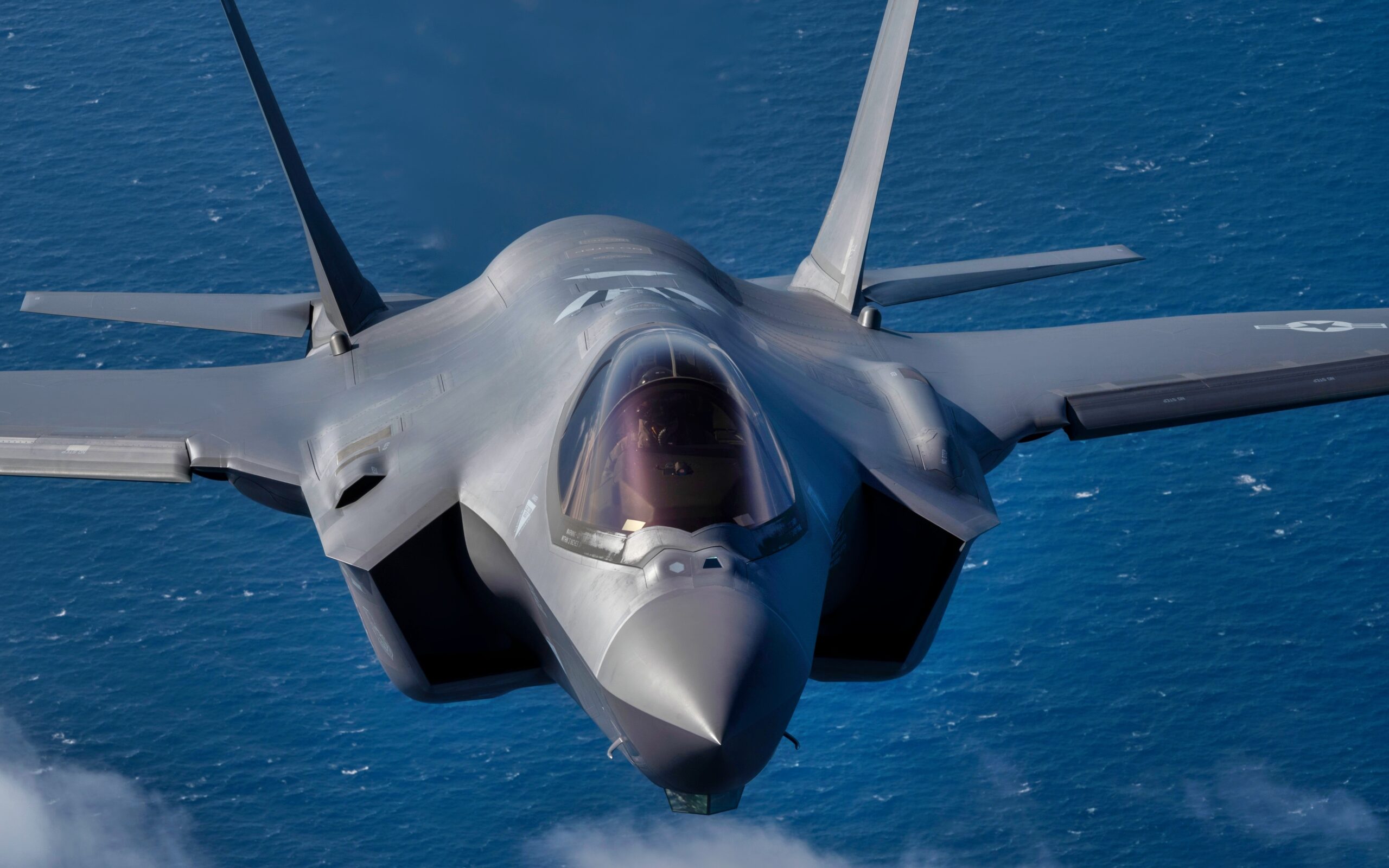
A U.S. Air Force F-35A Lightning II participating in NATO exercise Ramstein Flag 24 flies over the west coast of Greece, Oct. 4, 2024. Over 130 fighter and enabler aircraft from Greece, Canada, France, Hungary, Italy, Poland, Portugal, Romania, Spain, Sweden, United Kingdom and United States are training side by side to improve tactics and foster more robust integration, demonstrating NATO’s resolve, commitment and ability to deter potential adversaries and defend the Alliance. (U.S. Air Force photo by Tech. Sgt. Emili Koonce)
-Options range from joining NATO’s nuclear-sharing arrangement (hosting U.S. B61 bombs) to a controversial homegrown weapons program.
-While domestic development would violate international treaties, Polish experts increasingly favor an independent deterrent to avoid a repeat of 1939’s failed guarantees.
-Moscow’s reaction remains a volatile, unpredictable variable in this 2026 strategic recalculation.
Russia’s Red Line: How Moscow Might React to a Nuclear-Armed Poland
Polish President Karol Nawrocki said a few days back that he was a “strong supporter of Poland joining the nuclear project.
“This path, with respect for all international regulations, is the path we should take,” Nawrocki said in an interview with Polsat television.
Nawrocki was then asked whether his statement meant joining Germany and Belgium in NATO’s nuclear-sharing arrangements, or whether he was advocating that Poland begin developing its own domestic nuclear weapons program. The Polish head of state did not reply to this issue or offer any specifics.
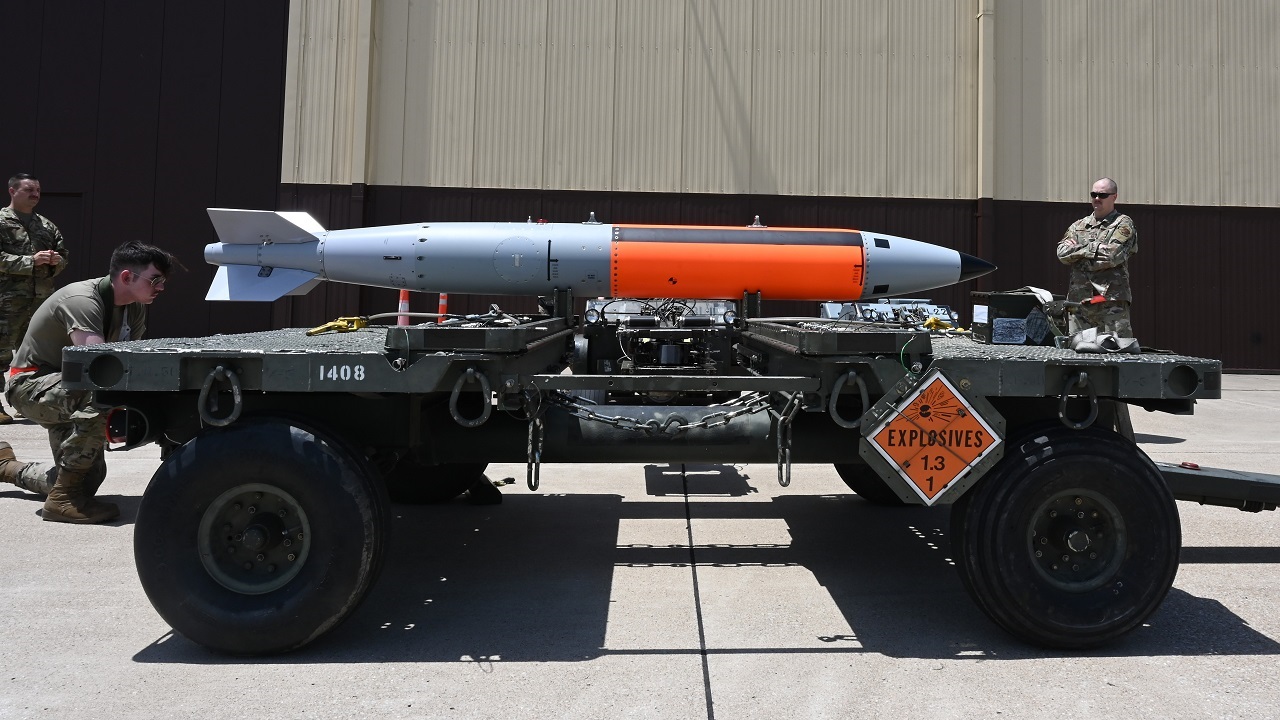
The 72nd Test and Evaluation Squadron test loads a new nuclear-capable weapons delivery system for the B-2 Spirit bomber on June 13, 2022 at Whiteman Air Force Base, Missouri. The 72nd TES conducts testing and evaluation of new equipment, software and weapons systems for the B-2 Spirit Stealth Bomber. (U.S. Air Force photo by Airman 1st Class Devan Halstead)
“We are a country right on the border of an armed conflict,” Nawrocki said, referring to the war in neighbouring Ukraine that began with Moscow’s invasion in February 2022.
Poland shares a 330-mile-long border with Ukraine, plus a 260-mile-long with Belarus, Russia’s close ally that effectively acts as an extension to Moscow’s foreign policy.
“The aggressive, imperial attitude of Russia toward Poland is well known,” added Nawrocki.
Nuclear Arsenal Debate
His comments add to a growing debate in European capitals on the issue of strengthening nuclear deterrence in response to the Russian invasion of Ukraine and continued bellicose statements from Moscow about widening the war. Added to these worries are growing concerns about Washington’s continued reliability as an ally and security guarantor.
Poland engaging in the nuclear-sharing arrangement is not a new idea—the proposal was raised almost a decade ago.
A senior Polish defense official told Polish TV on December 6, 2016 that the country was actively working on joining NATO’s nuclear-sharing arrangements.
However, the Polish Ministry of National Defense at the time denied the country was “engaged in any work aimed at joining” those arrangements, and a clarification the next day appeared to walk back the statement by then-Deputy Defense Minister Tomasz Szatkowski.
The Defense Ministry said Szatkowski’s comments “should be seen in the context of recent remarks made by serious Western think tanks, which point to deficits in NATO’s nuclear deterrent capability on its eastern flank.” The Ministry added that some of these think tanks have recommended expanding the number of countries that base U.S. nuclear weapons on their soil.
NATO’s nuclear-sharing program is believed to comprise 200 tactical B61 gravity bombs stored on the territory of five NATO members: Belgium, Germany, Italy, the Netherlands, and Turkey. Most of these countries’ air forces also have aircraft that can deliver the weapons, as well as the needed on-board avionics and delivery equipment.
Poland’s Nuclear Options
A June 2025 analysis from RAND explained that if acquiring a nuclear deterrent, “Poland and its nuclear-armed allies might choose among three options. It could try to acquire its own nuclear arms. Poland might join NATO’s nuclear sharing program as a basing country. And Warsaw might seek nuclear protection from France and the United Kingdom.”
Protection from France or the UK would be the easiest and least expensive option. But Polish officials have long memories and are not anxious to see a repeat of 1939, when Anglo-French security guarantees did nothing to stop invasions by Nazi Germany and the Soviet Union.
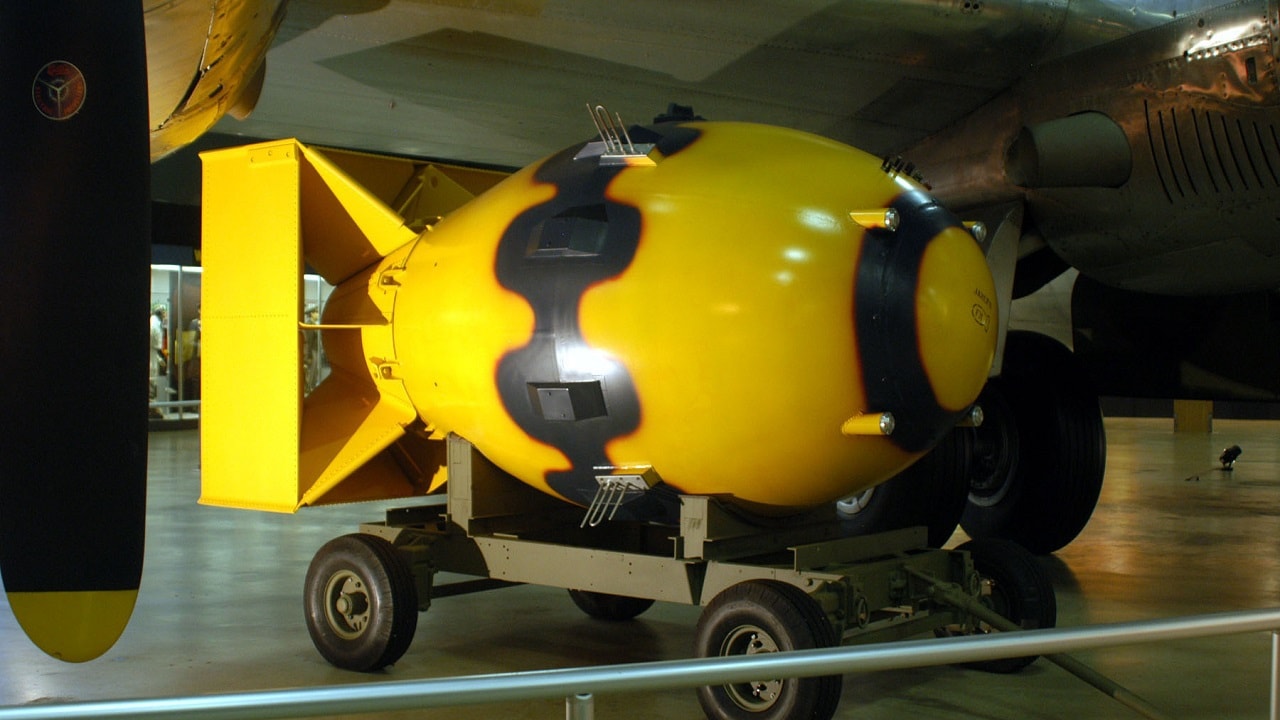
DAYTON, Ohio — “Fat Man” atomic bomb at the National Museum of the United States Air Force. (U.S. Air Force photo)
Western nations would oppose Poland developing its own nuclear arsenal. To do so would be in violation of commitments made under the nuclear nonproliferation treaty that is signed by 191 states and is long-regarded as guarding against the widespread development of nuclear weapons.
But discussions with Polish defense and security experts over the past decade reveal growing support for the idea that Poland should have a homegrown program. Poland could even cooperate with other nations, such as Japan, that feel similarly threatened by nuclear-armed nations, to develop these weapons jointly.
Should this come to pass, the question is how Moscow would react to having another NATO member-state on its doorstep with an independent atomic-weapons capability. That reaction is unpredictable, said the Polish president, which is one reason to consider the nuclear-sharing program.
When asked how Moscow might respond to a potential Polish nuclear program, Nawrocki said Russia “can react aggressively to anything,” and therefore it is important for Poles “to feel safe.”
About the Author: Reuben F. Johnson
Reuben F. Johnson has thirty-six years of experience analyzing and reporting on foreign weapons systems, defense technologies, and international arms export policy. Johnson is the Director of Research at the Casimir Pulaski Foundation. He is also a survivor of the Russian invasion of Ukraine in February 2022. He worked for years in the American defense industry as a foreign technology analyst and later as a consultant for the U.S. Department of Defense, the Departments of the Navy and Air Force, and the governments of the United Kingdom and Australia. In 2022-2023, he won two awards in a row for his defense reporting. He holds a bachelor’s degree from DePauw University and a master’s degree from Miami University in Ohio, specializing in Soviet and Russian studies. He lives in Warsaw.