
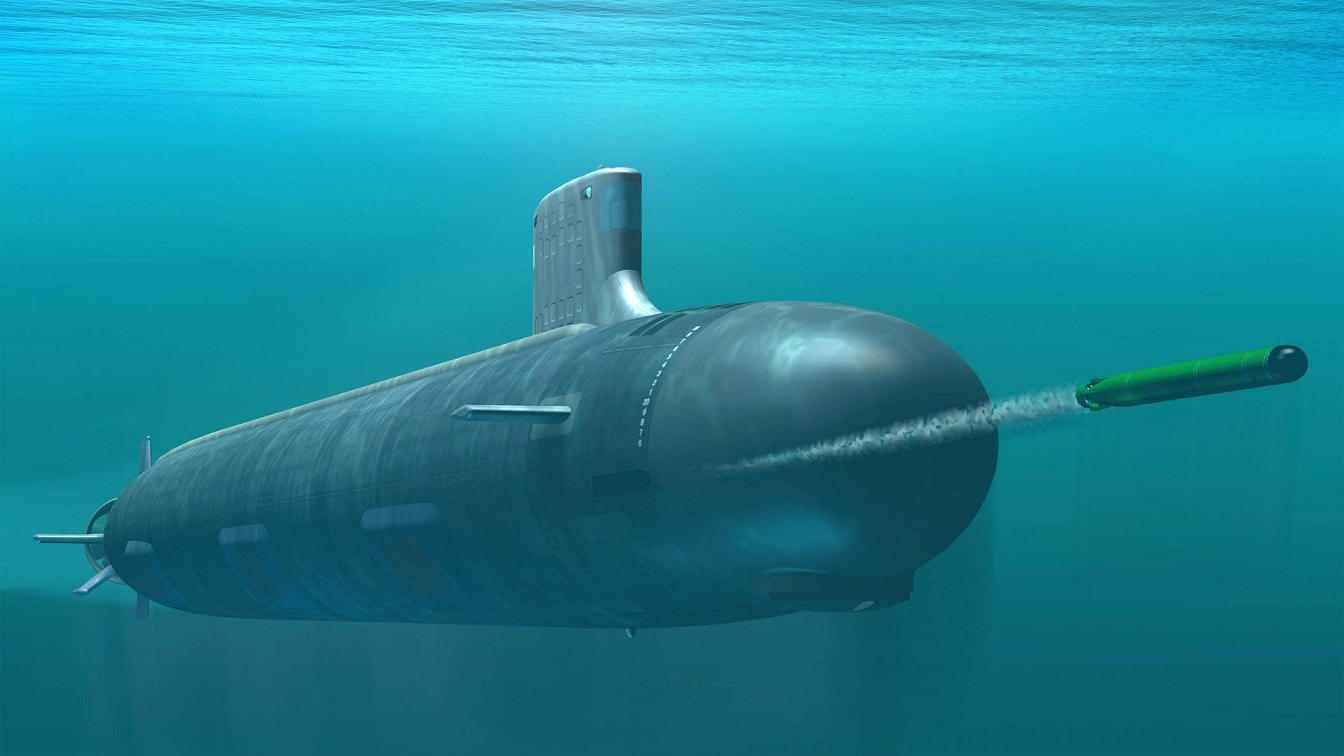
Summary and Key Points: The USS Arizona (SSN-803) is more than just a submarine; it is a high-tech resurrection of a legendary name, now serving as the lead platform for the U.S. Navy’s most significant undersea upgrade in decades.
-As the first Block V Virginia-class boat equipped with the Virginia Payload Module (VPM), the Arizona transforms the traditional fast-attack submarine into a formidable “undersea arsenal ship.”
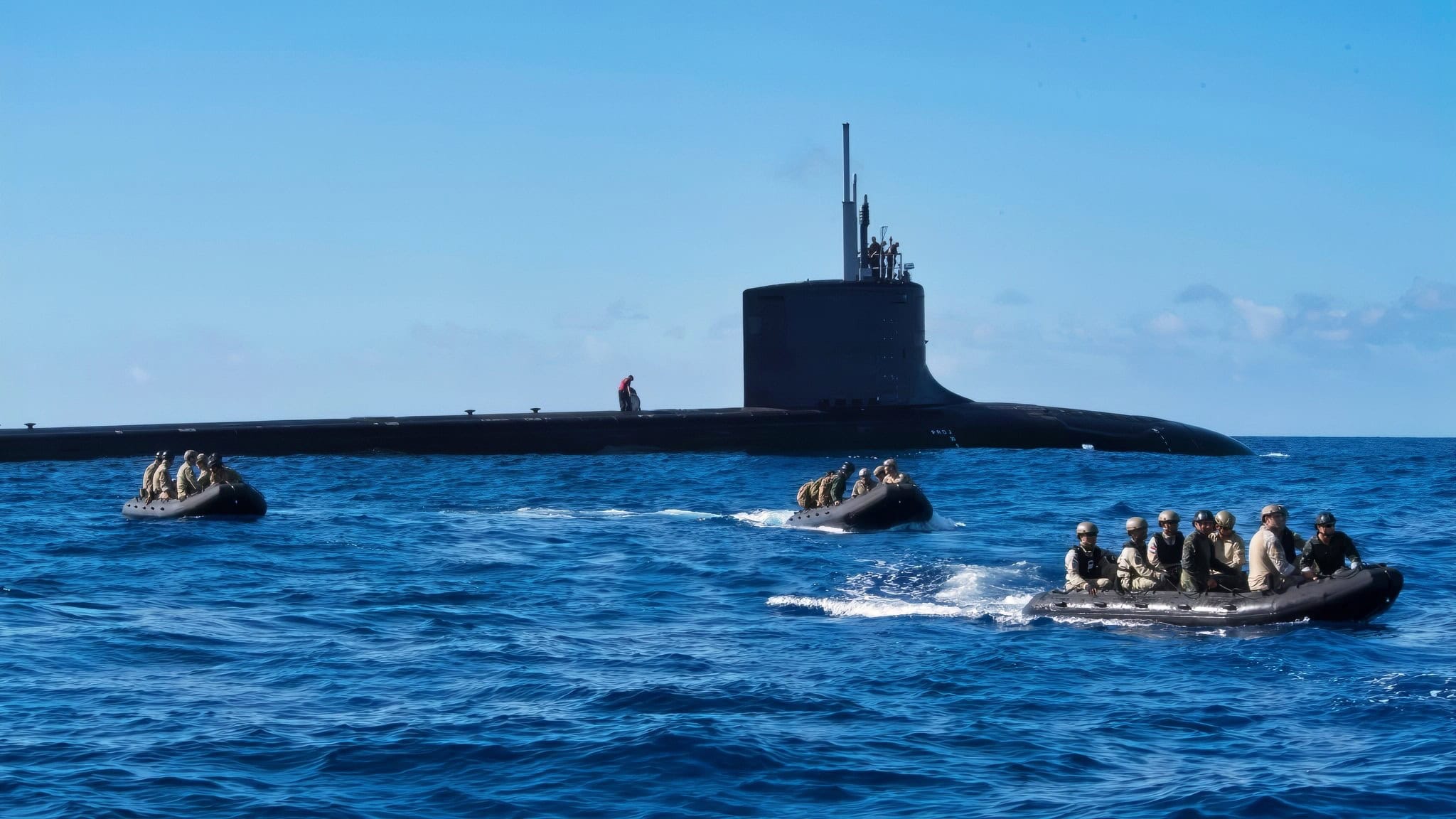
PEARL HARBOR (July 9, 2018) – Multi-national Special Operations Forces (SOF) participate in a submarine insertion exercise with the fast-attack submarine USS Hawaii (SSN 776) and combat rubber raiding craft off the coast of Oahu, Hawaii during Rim of the Pacific (RIMPAC) exercise, July 9. Twenty-five nations, 46 ships and five submarines, about 200 aircraft, and 25,000 personnel are participating in RIMPAC from June 27 to Aug. 2 in and around the Hawaiian Islands and Southern California. The world’s largest international maritime exercise, RIMPAC provides a unique training opportunity while fostering and sustaining cooperative relationships among participants critical to ensuring the safety of sea lanes and security of the world’s oceans. RIMPAC 2018 is the 26th exercise in the series that began in 1971. (U.S. Navy photo by Lt. j.g. Michelle Pelissero)
-By adding 84 feet of hull and four large-diameter tubes, the VPM allows the Arizona to carry 76% more firepower, including Tomahawk cruise missiles, unmanned underwater vehicles, and potentially future hypersonic weapons.
The Undersea Arsenal: How the Virginia Payload Module Changes Submarine Warfare
The Silent Service has a proud and prestigious history. The latest additions to the legacy of the U.S. Navy’s submarine force are the Virginia-class vessels, the successors to the Navy’s prestigious and time-honored Los Angeles-class and Seawolf-class nuclear-powered fast-attack submarines (SSNs).
But what makes the Virginias so special? Aside from being newer hulls, what do they have going for them that the Angelenos and Seawolves don’t have? In the case of the latest batch of Virginia-class boats—starting with the USS Arizona (SSN-803), the 30th ship of the class—it is their fearsome Virginia Payload Module (VPM).
Virginia Payload Module Basics
The details come to us courtesy of a 2023 article by Josh Luckenbaugh of National Defense:
“Once completed, the Arizona will be the first in its class to be equipped with the Virginia Payload Module, a new hull section that will enable the Arizona and subsequent Virginia-class ships to deliver a variety of capabilities such as weapons, vehicles and undersea payloads, according to the Navy.”
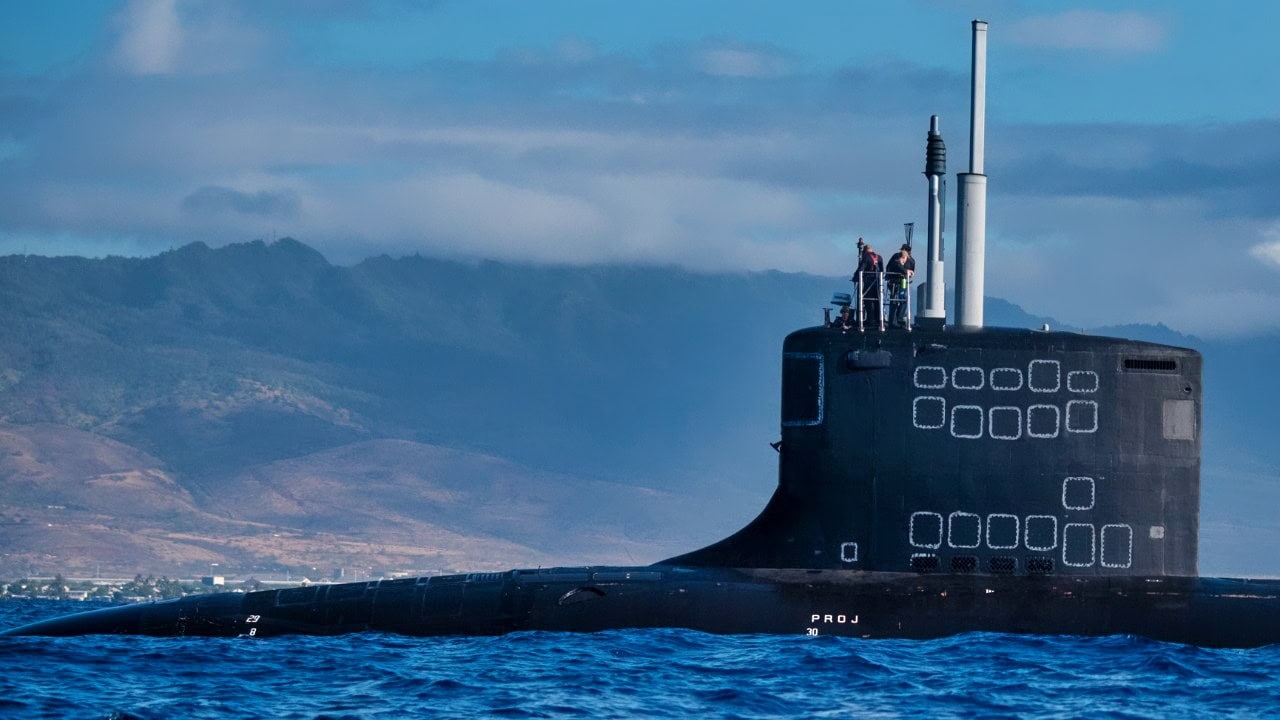
(July 9, 2018) – Multi-national Special Operations Forces (SOF) participate in a submarine insertion exercise with the fast-attack submarine USS Hawaii (SSN 776) and combat rubber raiding craft off the coast of Oahu, Hawaii during Rim of the Pacific (RIMPAC) exercise, July 9. Twenty-five nations, 46 ships and five submarines, about 200 aircraft, and 25,000 personnel are participating in RIMPAC from June 27 to Aug. 2 in and around the Hawaiian Islands and Southern California. The world’s largest international maritime exercise, RIMPAC provides a unique training opportunity while fostering and sustaining cooperative relationships among participants critical to ensuring the safety of sea lanes and security of the world’s oceans. RIMPAC 2018 is the 26th exercise in the series that began in 1971.` (U.S. Navy photo by Mass Communication Specialist 1st Class Daniel Hinton)
Among those weapons are battle-proven systems such the Tomahawk cruise missile and special operations equipment, and for good measure, quite possibly hypersonics.
Luckenbaugh quotes a press release from Rear Admiral Jonathan Rucker, the Navy’s program executive officer for attack submarines:
“The boats in this class are the most advanced attack submarines ever designed. Their stealth, firepower and maneuverability are superior to every other attack submarine force in the world. Building, operating and maintaining Arizona and other Virginia-class subs is crucial to ensuring the Navy’s ability to project power in an ever-shifting global threat environment, and to maintaining peace and the free operation of our sea lanes.”
Luckenbaugh also cites Bryan Clark (himself a former enlisted submariner and submarine officer), a senior fellow and director of the Center for Defense Concepts and Technology at the Hudson Institute, who opines that the Virginia-class subs with the Virginia Payload Module will likely be used more for patrolling or special operations support missions — similar to the Ohio-class guided missile submarines (SSGNs) — as opposed to “traditional submarine missions” such as gathering intelligence in contested waters.
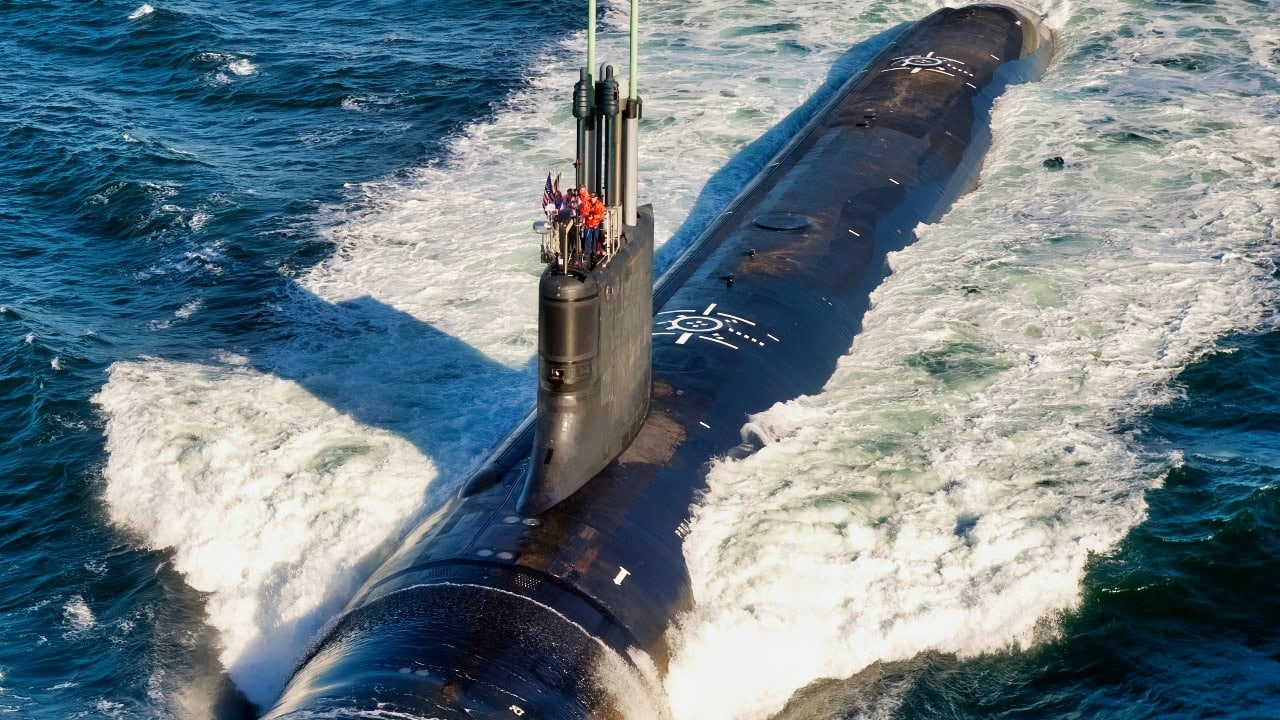
Virginia-Class Submarine.
The Virginia-Class Submarine Keeps Getting Better for the U.S. Navy
In addition to the weaponry suites, the VPM will also be capable of delivering unmanned underwater vehicles (UUVs). Deploying them could prove challenging in practice, however. As Clark stated, “The tubes open on the top of the submarine, so if you have undersea vehicles you want to deploy … they’re going to have to swim out the top, which is not preferred. You prefer them to be able to swim out horizontally.”
Moreover, as an unnamed Navy spokesperson added, “there are no planned unmanned vehicles being launched from the Virginia Payload Module itself, however submarines are planned to incorporate a torpedo tube launched variant of the Razorback Unmanned Underwater Vehicle as well as Submarine Launched Unmanned Aerial System.”
Sidebar Note: What’s In a Name?
If the USS Arizona moniker strikes a nostalgic and poignant chord with U.S. Navy veterans and naval history buffs in general, it should. SSN-803 will indeed be the first Navy warship to bear the name since the ill-fated Pennsylvania-class battleship BB-39 that was sunk during the infamous Pearl Harbor raid of December 7, 1941—claiming the lives of 1,177 of her commissioned officers and enlisted seamen—and is now solemnly memorialized via the USS Arizona Memorial.
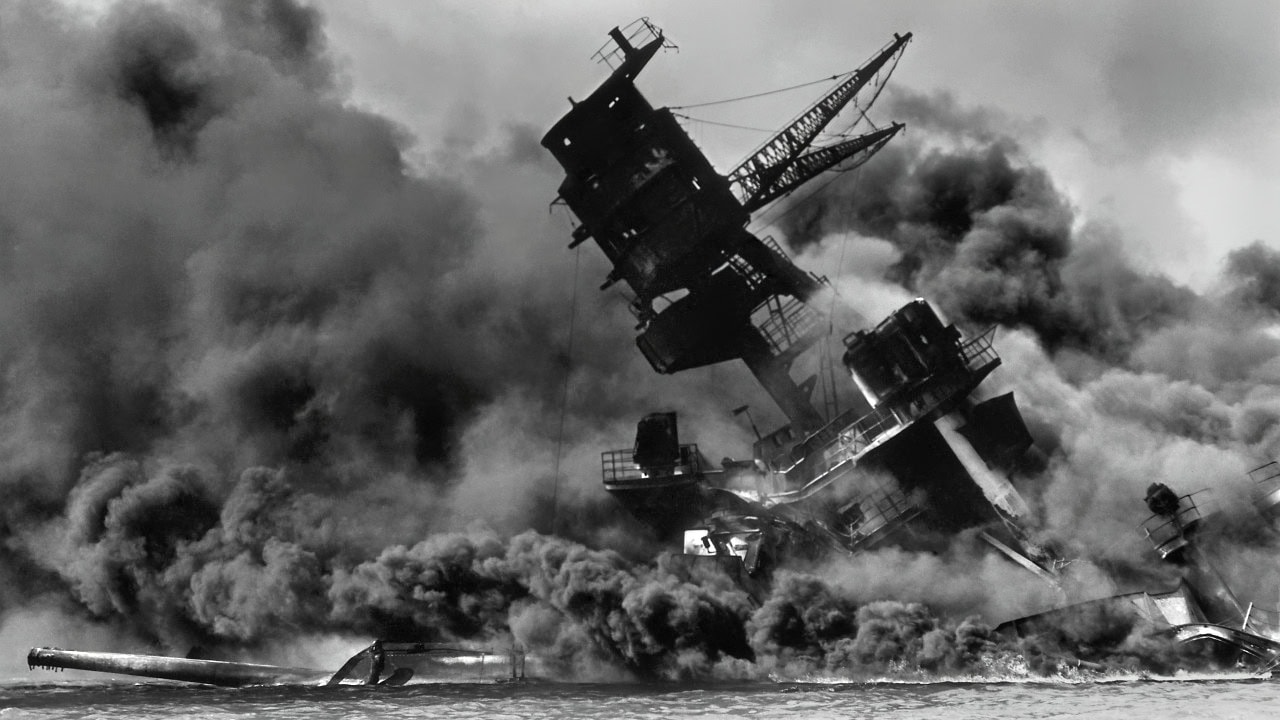
The USS Arizona (BB-39) burning after the Japanese attack on Pearl Harbor, 7 December 1941.
Prior to BB-39, there were two other Navy vessels named for the state of Arizona (“The Grand Canyon State”):
–An iron-hulled, side-wheel merchant steamship that served during the American Civil War
–A Wampanoag-class wooden-hulled screw frigate, originally named the Neshaminy, that was launched in 1865 but never commissioned.
Virginia-Class SSN Initial History and Overview
Built by General Dynamics Electric Boat (GDEB) and HII Newport News Shipbuilding, a total of 26 Virginias have been completed thus far, 24 of which are serving.
The newest iteration of the boats is the Block IV bunch. They began with the USS Vermont (SSN-792), which was laid down in February 2017, launched on March 29, 2019, and commissioned on April 18, 2020. Meanwhile, the USS Iowa (SSN-797) was commissioned on April 5, 2025, and the USS Massachusetts (SSN-798) and USS Idaho (SSN-799) are both expected to be commissioned sometime next year.
Virginia-Class SSN Tech Specs and Vital Stats
Displacement: 7,800 long tons
Hull Length: 377 ft
Beam Width: 34 ft
Test Depth: Officially 800+ ft, allegedly around 1,600 feet
Crew Complement: 135 commissioned officers and enlisted seamen
Armament:
12 × vertically launched missiles; 2 × Virginia payload tubes, each capable of launching 6 × Tomahawk BGM-109 cruise missiles
25 × torpedo tube launched torpedoes & missiles; 4 × 21-inch torpedo tubes for Mark 48 torpedoes or UGM-84 Harpoon anti-ship missiles
The boats’ powerplant is an S9G nuclear reactor that delivers 40,000 shaft horsepower, enabling the boats to attain an official top speed of more than 25 knots and purportedly up to 35 knots.
The Way Forward for USS Arizona and the Virginia Payload Module
SSN-803 was laid down on December 7, 2022 and sponsored by Nikki Stratton, the granddaughter of Donald Stratton, a seaman first class aboard the battleship who survived the Pearl Harbor attack. If all goes according to plan, the Virginia Payload Module-packing sub will be commissioned in 2028.
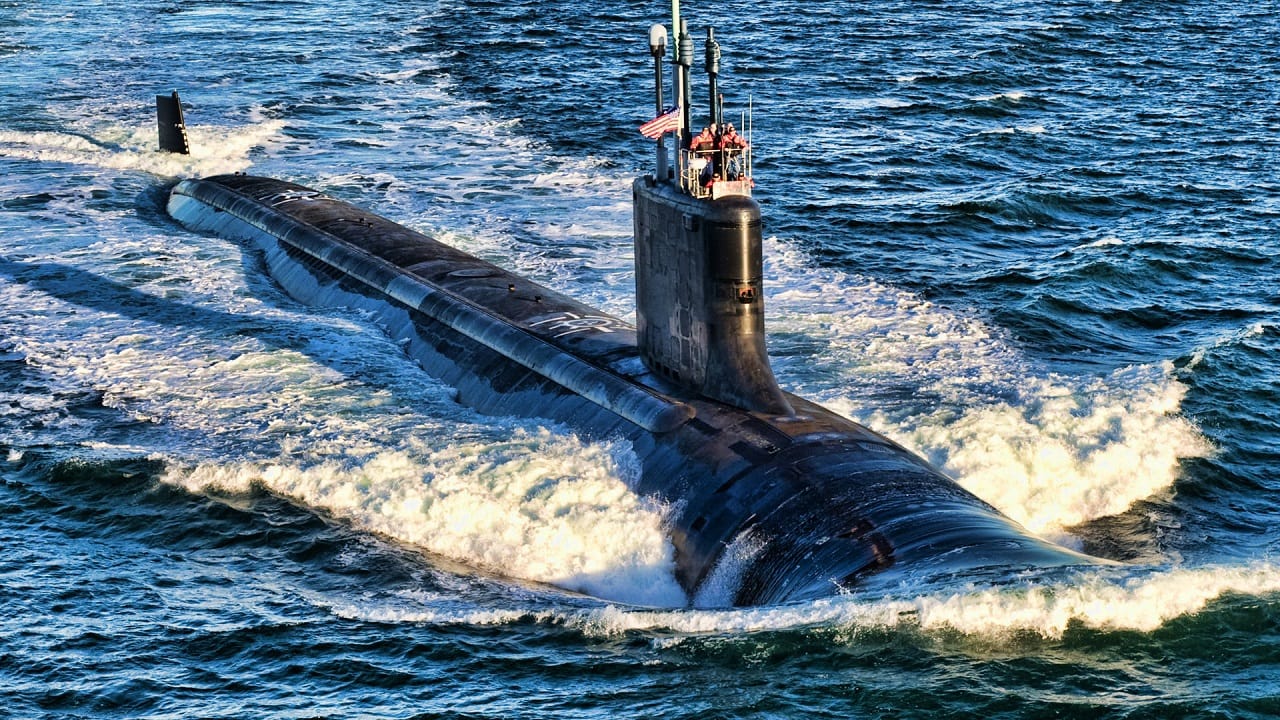
US Navy Attack Submarine. Image Credit: Creative Commons.
About the Author: Christian D. Orr, Defense Expert
Christian D. Orr is a Senior Defense Editor. He is a former Air Force Security Forces officer, Federal law enforcement officer, and private military contractor (with assignments worked in Iraq, the United Arab Emirates, Kosovo, Japan, Germany, and the Pentagon). Chris holds a B.A. in International Relations from the University of Southern California (USC) and an M.A. in Intelligence Studies (concentration in Terrorism Studies) from American Military University (AMU). He is also the author of the newly published book “Five Decades of a Fabulous Firearm: Celebrating the 50th Anniversary of the Beretta 92 Pistol Series.”