Summary and Key Points: Chinese scientists, writing in Acta Aeronautica et Astronautica Sinica, claim their new PADJ-X software can replicate and optimize the performance of the B-21 Raider.
-By integrating aerodynamics, propulsion, and electromagnetics into a single framework, researchers allege they identified “imperfections” in the B-21’s longitudinal stability.
-However, defense analysts remain skeptical.
-Given the extreme secrecy surrounding the B-21’s radar-absorbent materials (RAM) and thermal management, PADJ-X likely relies on external “guesswork” rather than the sensitive internal data required for a true digital twin.
-This development mirrors the U.S. “Sentinel” success but highlights China’s aggressive push into digital engineering.
Stealth vs. Simulation: Can China Actually “Know” the B-21 Raider Bomber’s Secrets?
Chinese scientists claim to have pioneered a new software simulation tool capable of optimizing stealth warplane design, identifying areas for improvement and highlighting flaws or imperfections in existing stealth platforms, such as the U.S. Air Force B-21 bomber.
The software, PADJ-X, was described in a Chinese scientific research paper published in the academic journal Acta Aeronautica et Astronautica Sinica.
The advantage of the software, according to Chinese scientists cited in an essay in Interesting Engineering, is that it enables weapons developers to analyze the merits and limitations of existing and possible future aircraft designs using computer simulation.
The essay on PADJ-X says the simulation technology integrates aerodynamics, propulsion, electromagnetics, infrared signature, and sonic boom.
The purported advantage of this technology, according to published analyses, is that it can examine all these variables in relation to one another within a single, integrated analytical framework.
B-21 Design Parameters
The software reportedly replicates the actual performance parameters of stealth platforms, such as the B-21 bomber. Multiple reports analyzing the Chinese research claim that the simulation software identified “flaws,” “limitations,” or “imperfections” built into the B-21 design.

The B-21 Raider was unveiled to the public at a ceremony December 2, 2022 in
Palmdale, Calif. Designed to operate in tomorrow’s high-end threat environment, the B-21 will play a critical role in ensuring America’s enduring airpower capability. (U.S. Air Force photo)
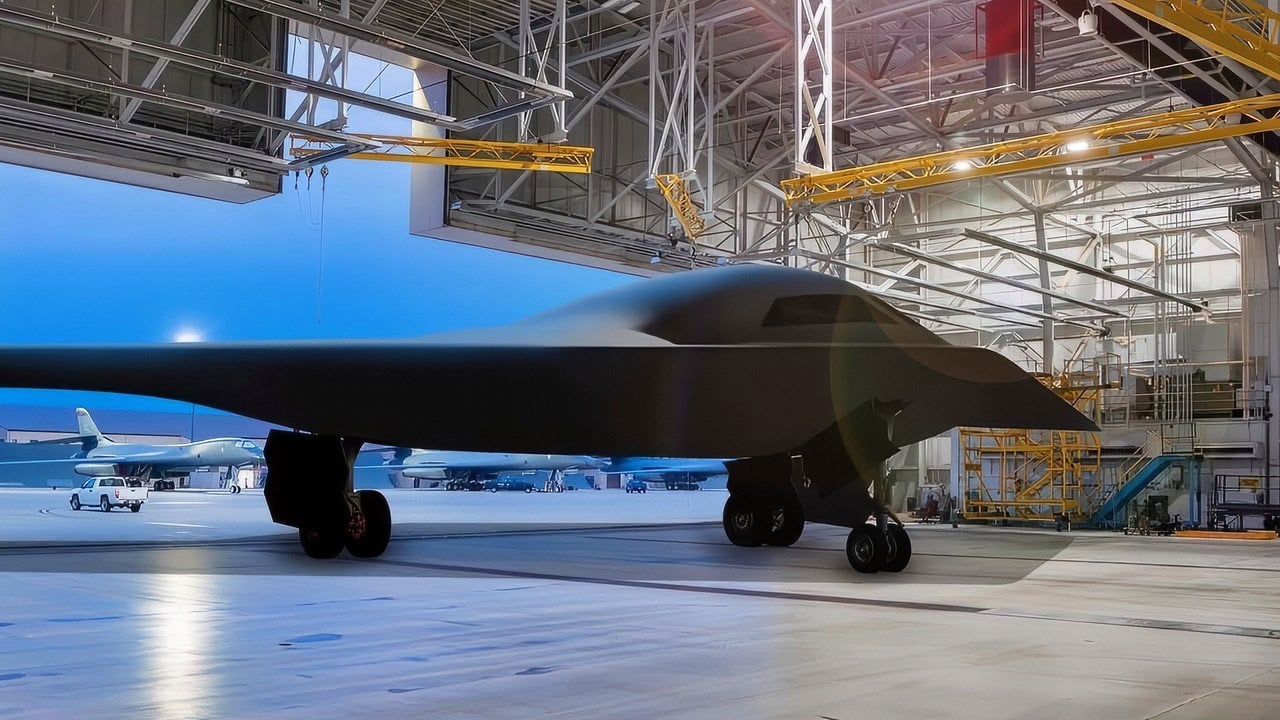
Artist rendering of a B-21 Raider in a hangar at Ellsworth Air Force Base, South Dakota, one of the future bases to host the new airframe. AFCEC is leading a $1 billion construction effort at Ellsworth to deliver sustainable infrastructure to meet warfighter demands for bomber airpower. (U.S. Air Force graphic)
“Using 288 parameters in their simulations, the researchers reported that aerodynamic optimization increased the aircraft’s lift-to-drag ratio by about 15% and significantly reduced shock-wave effects. They also said the pitching moment, a measure of longitudinal stability, improved from 0.07 to nearly zero, a change that would theoretically allow smoother, more stable flight with less need for constant control input,” Interesting Engineering writes.
B-21 Flaws?
From the published analysis, it appears the software identified areas for performance improvement but did not necessarily uncover “flaws” or “problems” with the B-21.
Also, it seems questionable whether Chinese-built software could incorporate or replicate engineering methods and technologies specifically tailored for the B-21.
The stealth configuration properties, radar absorbent materials, computing systems, thermal management technologies, and flight-trajectory details of a B-21 would seem very difficult to fully access or “know,” given the secrecy of the program and dearth of available information.
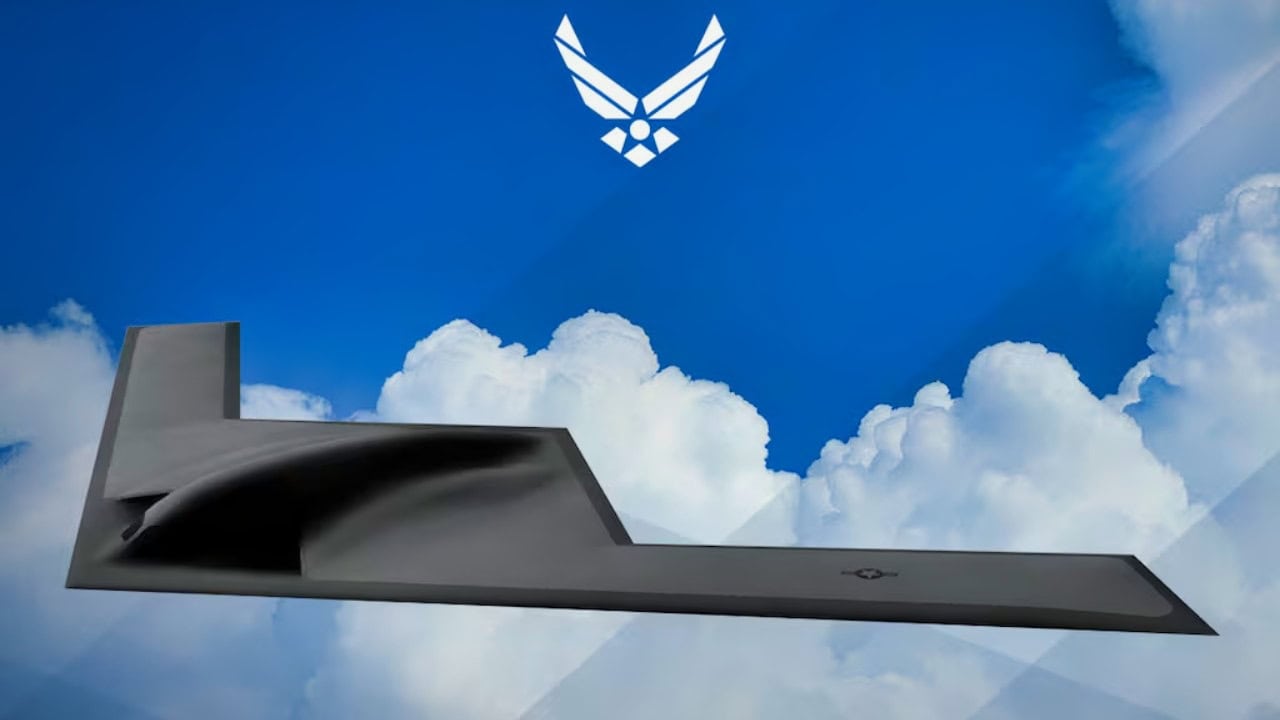
B-21 Raider Bomber.
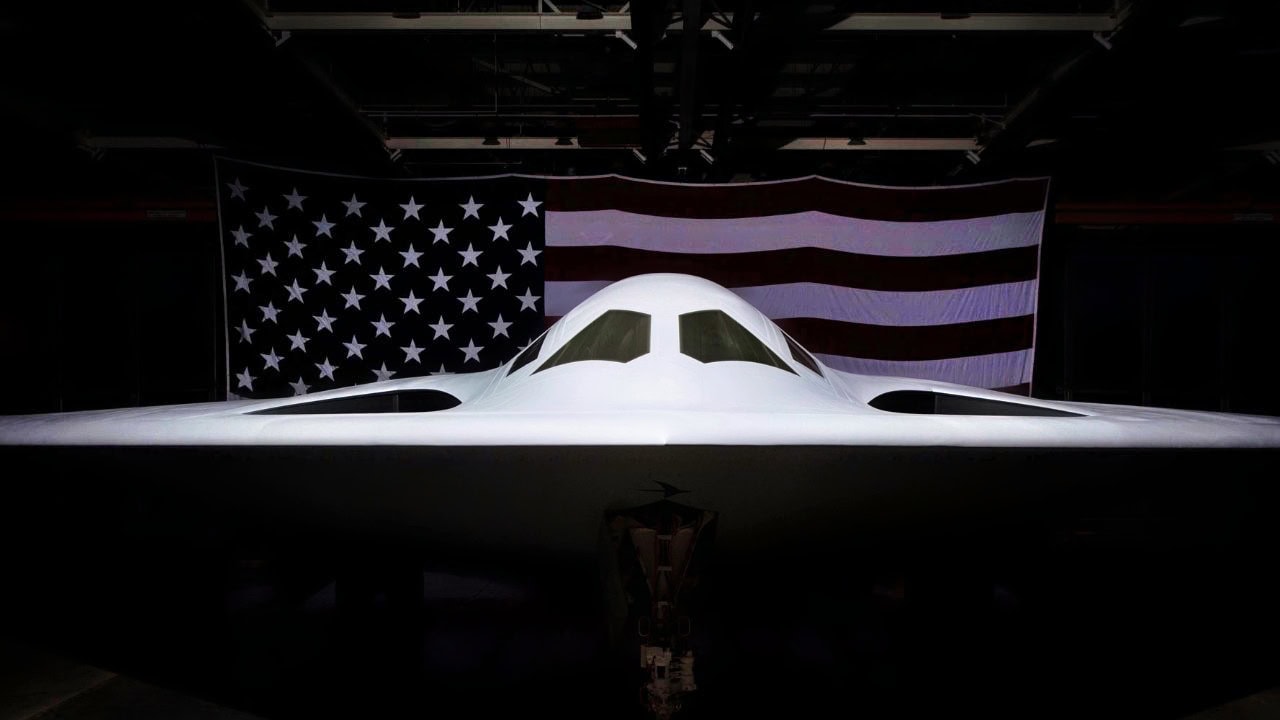
B-21 Raider Bomber. Image Credit: Creative Commons.
Furthermore, analyzing and replicating the many nuances of how these technological variables integrate during flight would seem quite difficult.
U.S. Digital Engineering
The premise of the Chinese research is quite significant, as it mirrors, or aligns to some extent, with U.S. successes in digital engineering, a method of using computer simulations to very precisely replicate the performance parameters and capabilities built into a particular system before it is built.
The advantage of digital engineering, which has been successfully used in Pentagon programs such as the Sentinel ICBM and F-47, is that it enables weapons developers to reduce risk and compare design models through computer simulation.
In the case of the Sentinel, senior Air Force developers said weapons experts and engineers analyzed 9 potential designs through simulation, essentially streamlining the selection process without having to “bend metal.”
Chinese hype?
It is unclear whether this Chinese software is designed to build new weapons per se.
Still, the technological capabilities allegedly embedded in PADJ-X do seem entirely consistent with digital engineering development initiatives.
PADJ-X appears to replicate specific aerodynamic performance parameters and assess them relative to other key variables, such as electromagnetic signature, propulsion, and thermal management.
Chinese experts may wish to announce problems or limitations with the B-21. Yet, the actual technological merits of such findings should be viewed with a measure of skepticism.
About the Author: Kris Osborn
Kris Osborn is the President of Warrior Maven – Center for Military Modernization. Osborn previously served at the Pentagon as a highly qualified expert in the Office of the Assistant Secretary of the Army—Acquisition, Logistics & Technology. Osborn has also worked as an anchor and on-air military specialist at national TV networks. He has appeared as a guest military expert on Fox News, MSNBC, The Military Channel, and The History Channel. He also has a Masters Degree in Comparative Literature from Columbia University.