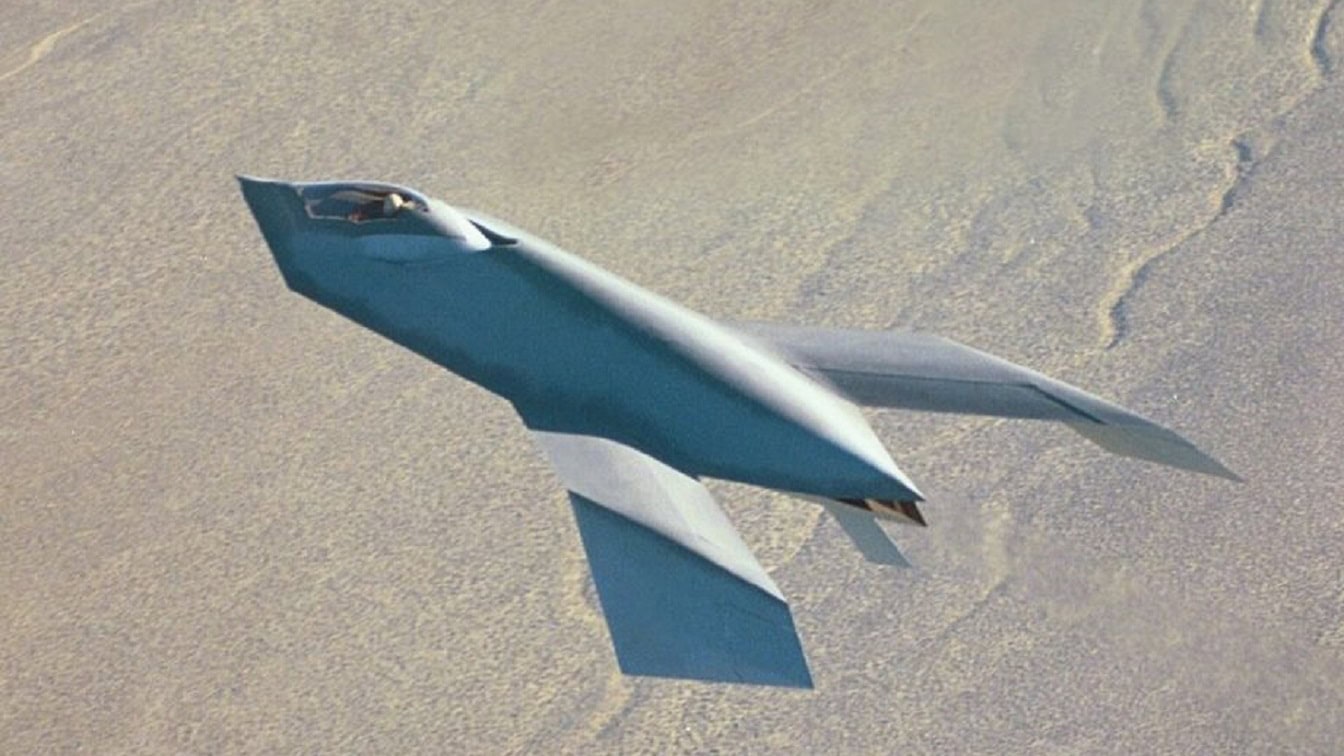
Summary and Key Points: Boeing’s YF-118G “Bird of Prey” was a one-off stealth technology demonstrator built to test radar-defeating shaping and cheaper ways to manufacture low-observable aircraft.
-With tiny wings, a spine-mounted intake, and “gapless” control surfaces, it flew 38 test sorties to validate methods that leaned on digital modeling, virtual reality, large single-piece composite structures, and disposable tooling—often using off-the-shelf parts to keep costs down.

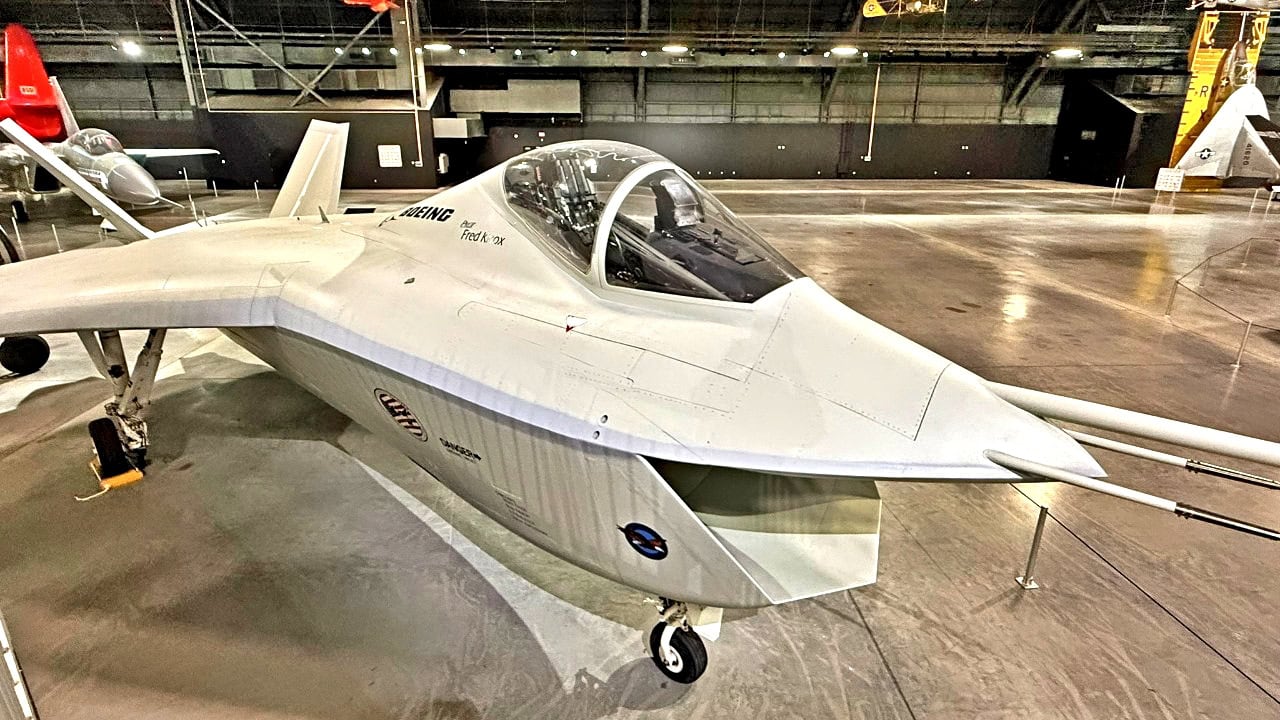
YF-118G. Image taken by Harry J. Kazianis for 19FortyFive.
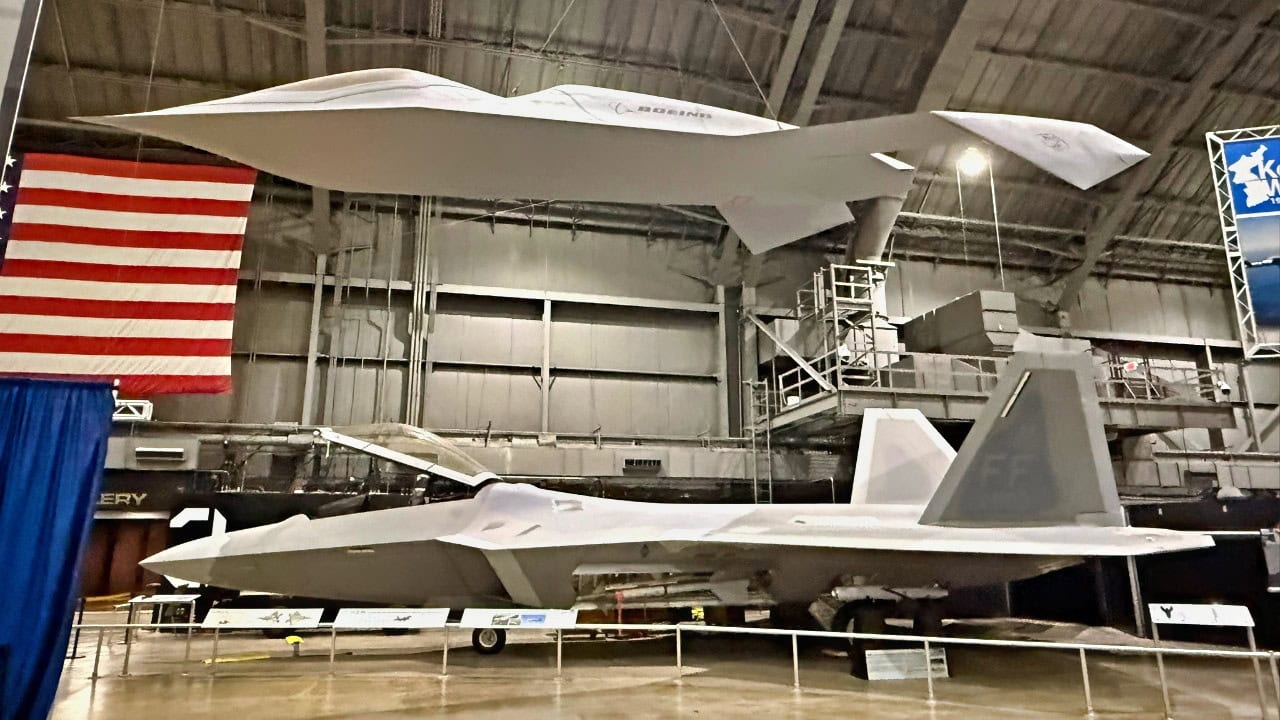
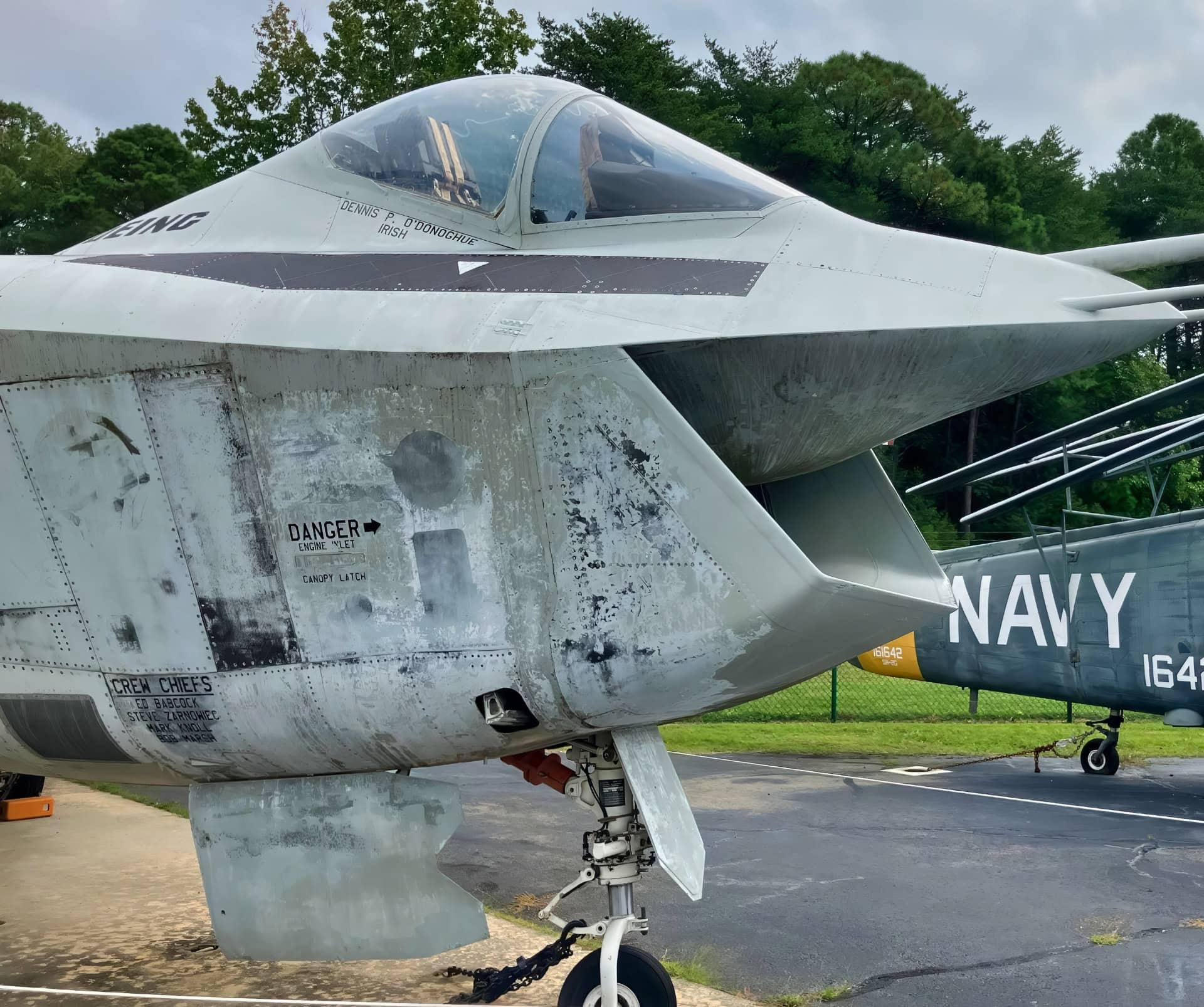
YF-118G. Image taken by Harry J. Kazianis for 19FortyFive.
-Never intended for production, the aircraft retired in 1999 and was revealed publicly in 2002 once its design techniques were no longer sensitive.
-Its DNA appears in later Boeing efforts such as the X-32 and X-45, and the sole airframe now sits on display in Dayton.
In 2 Words: Cheap Stealth
Boeing’s Bird of Prey: The $67 Million Stealth Jet That Changed How Planes Are Built
The YF-118G “Bird of Prey,” a one-off experimental aircraft built by Boeing, is one strange-looking plane. Tiny, unconventional wings, an engine intake on the aircraft’s spine, and its almost beak-like nose all combine into one odd—but presumably quite stealthy—aircraft.
Named after Star Trek’s Bird of Prey, the one-off technology demonstrator was an initiative to test low-observable aircraft shaping and affordable manufacturing. It was never intended to progress toward mass production.
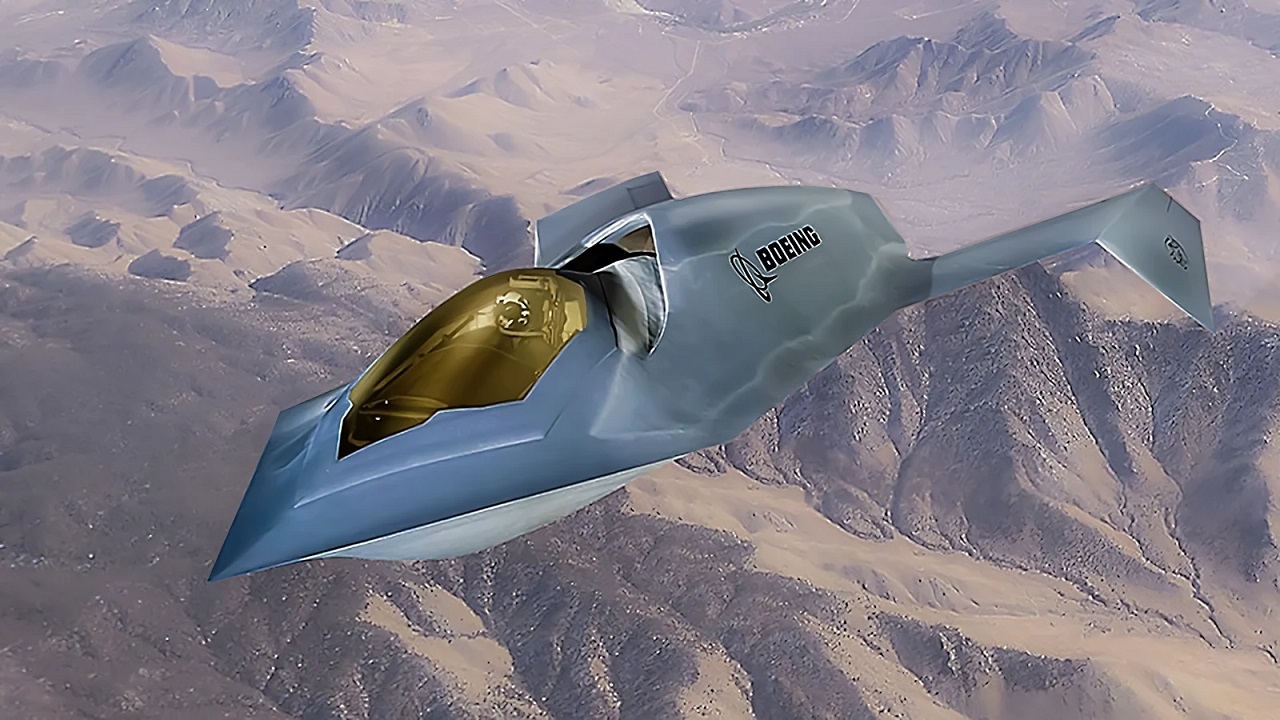
YF-118G. Image Credit: Creative Commons.
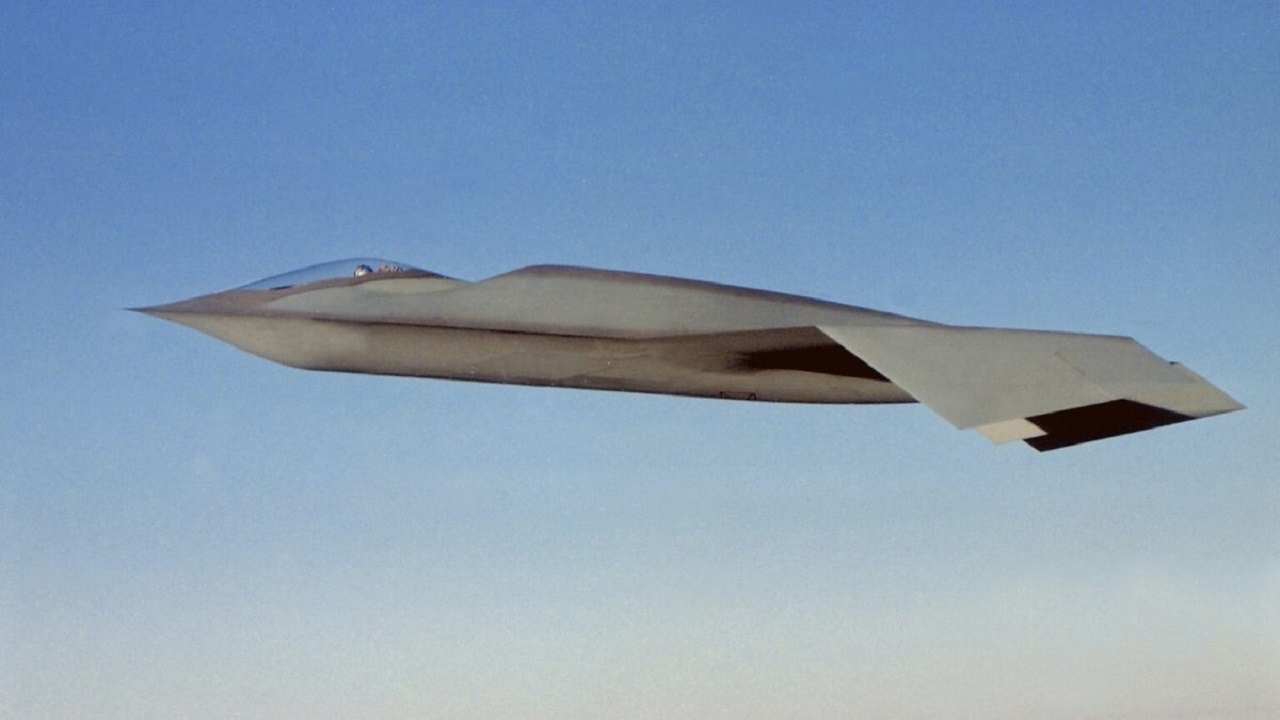
YF-118G. Image Credit: Boeing.
The YF-118G Bird of Prey did indeed influence subsequent aircraft, which benefited from some of the technologies it helped develop.
Back to the Beginning
Boeing’s Bird of Prey was not the first stealth aircraft, nor was it the highest-performing one. It did not enter service anywhere in the world, and only one prototype was ever built. But what it did do was aid research about how aircraft could defeat radar.
Though the collapse of the Soviet Union and the end of the Cold War had left the United States as the world’s sole superpower, research into radar mitigation did not end. Research into increasingly sophisticated air defenses continued elsewhere as well.
This question the Bird of Prey attempted to shed light on was, how could the United States maintain superiority in the air, even against aggressive advanced air defenses? Its answer was aircraft of increasingly sophisticated stealth capabilities. They would become the cornerstone of U.S. and allied airpower for decades to come.
Radar-defeating Stealth Capabilities
The Bird of Prey’s strange-looking design was first and foremost intended to mitigate adversary radar and keep the aircraft hidden from air defenses. The Bird of Prey’s notable chines, somewhat similar to those on the Cold War-era SR-71 Blackbird, aided the Bird of Prey’s lift—as did its diminutive wings—but they also aided its stealth profile.
“In its 38 flights, the Bird of Prey tested ways to make aircraft less observable to the eye and to radar,” the U.S. Air Force wrote.
“It also validated new ways to design and build aircraft using large single-piece composite structures, ‘virtual reality,’ computerized design and assembly, and disposable tooling. The Bird of Prey was revealed in 2002 because its design techniques had become standard practice—Boeing used them in its X-32 Joint Strike Fighter demonstrators and later in its X-45A Unmanned Combat Air Vehicle prototype.
Boeing X-32 Taken by Harry J. Kazianis for 19FortyFive.com
Sideview of Boeing X-32B In Maryland. Image Credit: 19FortyFive.com
“The aircraft demonstrates advanced stealth concepts, notably its “gapless” control surfaces that blend smoothly into the wings to reduce radar visibility, and an engine intake completely shielded from the front.”
The Bird of Prey’s status as a demonstrator aircraft kept costs low by folding in components from other projects into its design, including landing gear from a Beech King Air and Queen Air aircraft, turbofan engines, and other components.
Footage provided by Boeing of the Bird of Prey in flight is intriguing. The firm explains that the Bird of Prey was the first Boeing aircraft to use single-piece composite paneling in its manufacturing, along with digital modeling and what Boeing dubs “low-cost, disposable tooling.”
A Game of Numbers
The Bird of Prey was an attempt to build stealth at low cost—and in that mission, Boeing succeeded, thanks to extensive use of off-the-shelf components and the aforementioned digital modeling strategy.
The cost savings were significant: The YF-118G Bird of Prey cost about $67 million, or approximately the cost of a pair of 737s.
“Early investments in technology demonstration projects such as Bird of Prey have positioned Boeing to help shape our industry’s transformation,” Boeing’s then-president and CEO Jim Albaugh said during the Bird of Prey’s public reveal in 2002.
“With this aircraft, we changed the rules on how to design and build an aircraft, and what we’ve learned is enabling us to provide our customers with affordable, high-performing products,” he explained. “Projects such as Bird of Prey have provided the catalyst for integrating speed, agility and reduced cost into the processes we employ to introduce new commercial and military systems to market.”
The YF-118G Bird of Prey program was very brief, lasting a paltry seven years and retiring in 1999.
Fast forward to today, and the single airframe lives on in static display at the National Museum of the United States Air Force, located in Dayton, Ohio.
In fact, this publication has been on display, positioned above an F-22 Raptor stealth fighter.
About the Author: Caleb Larson
Caleb Larson is an American multiformat journalist based in Berlin, Germany. His work covers the intersection of conflict and society, focusing on American foreign policy and European security. He has reported from Germany, Russia, and the United States. Most recently, he covered the war in Ukraine, reporting extensively on the war’s shifting battle lines from Donbas and writing on the war’s civilian and humanitarian toll. Previously, he worked as a Defense Reporter for POLITICO Europe. You can follow his latest work on X.