Summary and Key Points: As of February 2026, the Russian Navy’s Black Sea Fleet has been effectively neutralized as a dominant regional power.
-Despite Russia’s reluctance to admit defeat, the January 2026 admission of the Moskva’s sinking highlights a service plagued by systemic maintenance failures and poor crew training.
-Forced to relocate from Sevastopol to Novorossiysk, the VMF has been decimated by asymmetrical warfare—including “Sea Baby” underwater drones and cruise missiles.
-Furthermore, elite formations like the Naval Infantry have seen their ranks plummet from 150,000 to 119,000, signaling a permanent degradation of Russia’s maritime power projection.
The “Navy-less” Defeat: Why Russia’s Elite Warships Are Fleeing Ukrainian Drones
While Russia’s Army has suffered staggering losses in the Ukraine War and has been struggling to maintain manpower levels, all has not been happy and gay for the Russian Navy (VMF). Experienced military analysts with many years of observing Moscow’s armed forces argue that a case can be made for the VMF being hit the hardest of all the services in this war.
The reason for this assessment is that numbers alone do not tell the whole story in these matters. The most visible and even embarrassing evidence of this is what has happened to the Russian Black Sea Fleet.
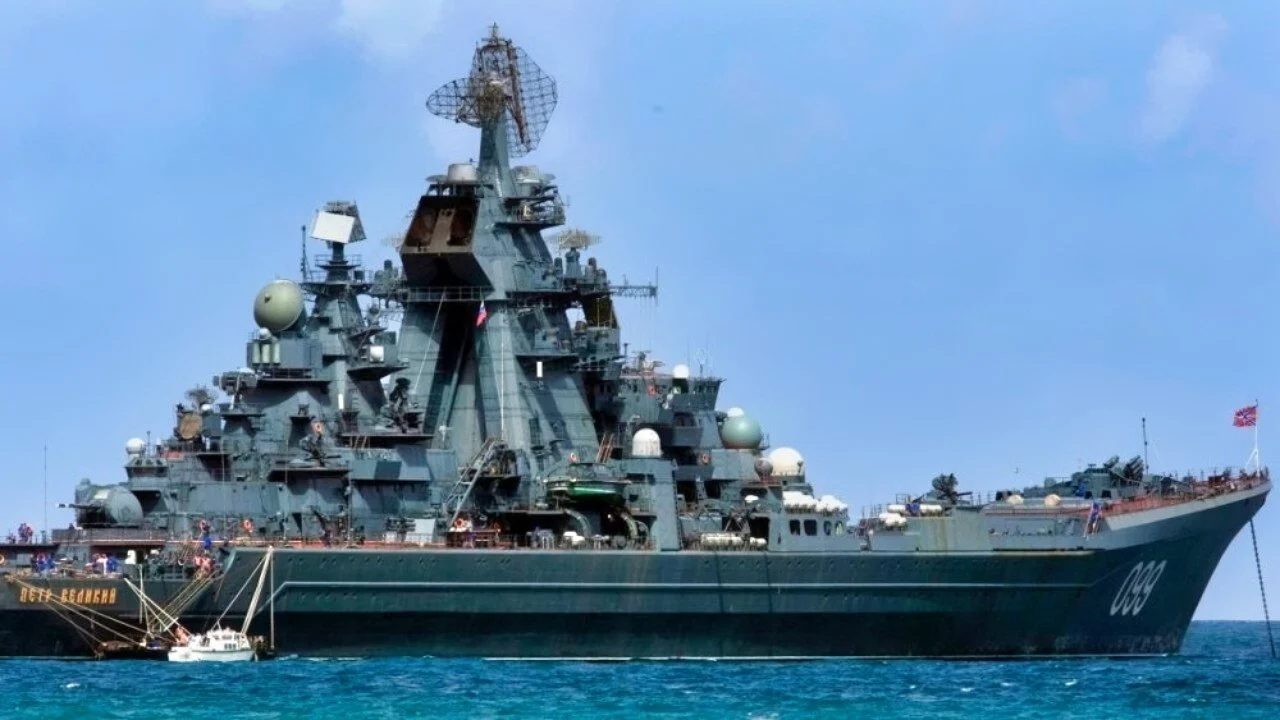
One of the earliest humiliations was the April 13, 2022, sinking by the Ukrainians of the Moskva, a Project 1164 Slava-class guided missile cruiser and the flagship of the Black Sea Fleet. It was also the largest Russian warship ever to be hit and sunk in combat since WWII.

Russian Navy Aircraft Carrier. Image Credit: Creative Commons.
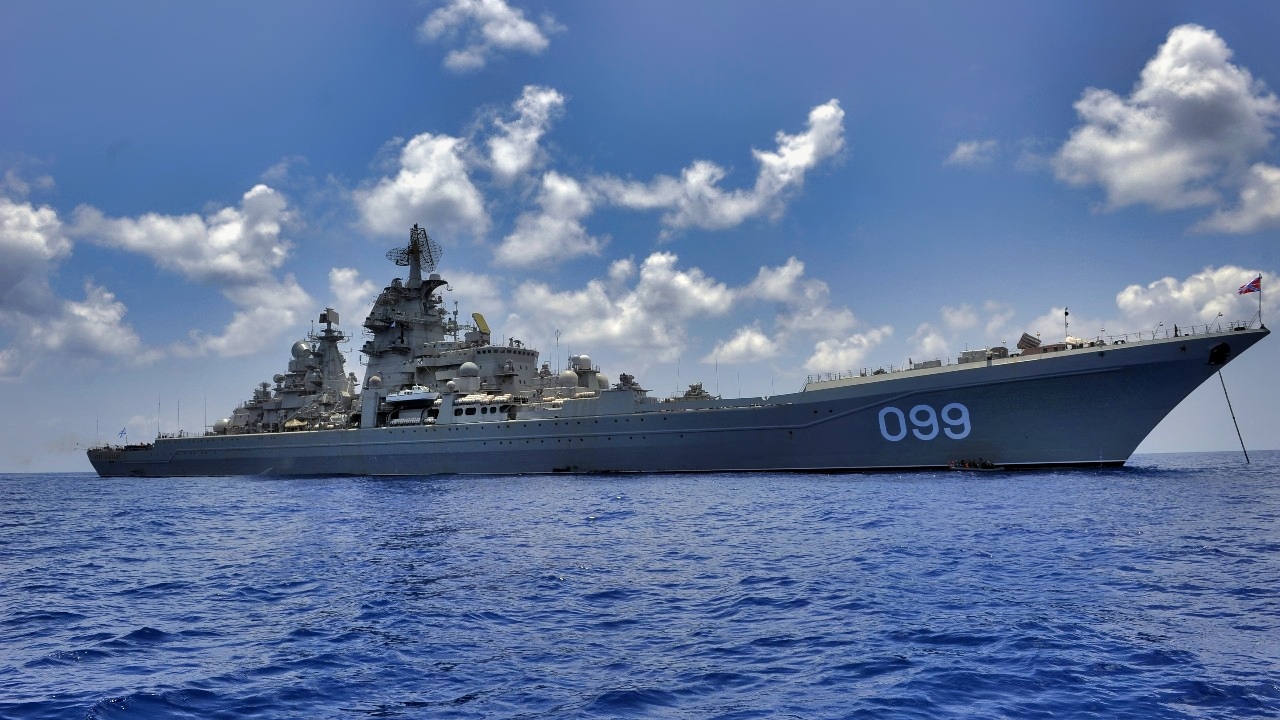
Kirov-Class Russian Navy. Image Credit: Creative Commons.
This sinking brought the VMF’s so-called best practices under a microscope. The evidence uncovered showed that the VMF, in general, and this vessel, in particular, demonstrated multiple and compounded vulnerabilities. These included failed air-defense systems on board, and some of those systems were out of commission at the time of the attack.
The cruellest comment of all made against the VMF has been that “Ukraine, which has no Navy, has chased the Black Sea Fleet from its bases in Crimea.” Since that time, the VMF has not even wanted to admit the degree to which Ukraine’s anti-ship missiles, sea drones, and airborne drone strikes have crippled the fleet.
The Sinking of the Moskva: A Case Study in Failed Air Defense
Only in January 2026 – almost four years later – did Russian officials admit that the Ukrainians had sunk the Moskva. This – like Moscow’s ground forces – is not a sign of an organization that is learning from its mistakes. It falls into that category of “don’t know because don’t want to know.”
But defective equipment or inadequate maintenance of the ship’s systems are not the entire story. The investigations, by outside reporting and independent organizations – as well as the Russian military itself – also reveal that, before the war began and since the February 2022 invasion, the VMF has increasingly been known for poor crew training and inadequate maintenance. These revelations have severely damaged Russia’s maritime prestige worldwide.
The Moskva sinking is also not “an isolated incident”, a phrase used throughout history by government bureaucracies to explain away systemic deficiencies. Over the past three years, Ukraine has destroyed three surface combatants of the Russian Navy.
Ukrainian attacks have also eliminated the Rostov-on-Don Kilo-class submarine with missile attacks in September 2023 and severely damaged another with “Sea Baby” underwater drones in December 2025.
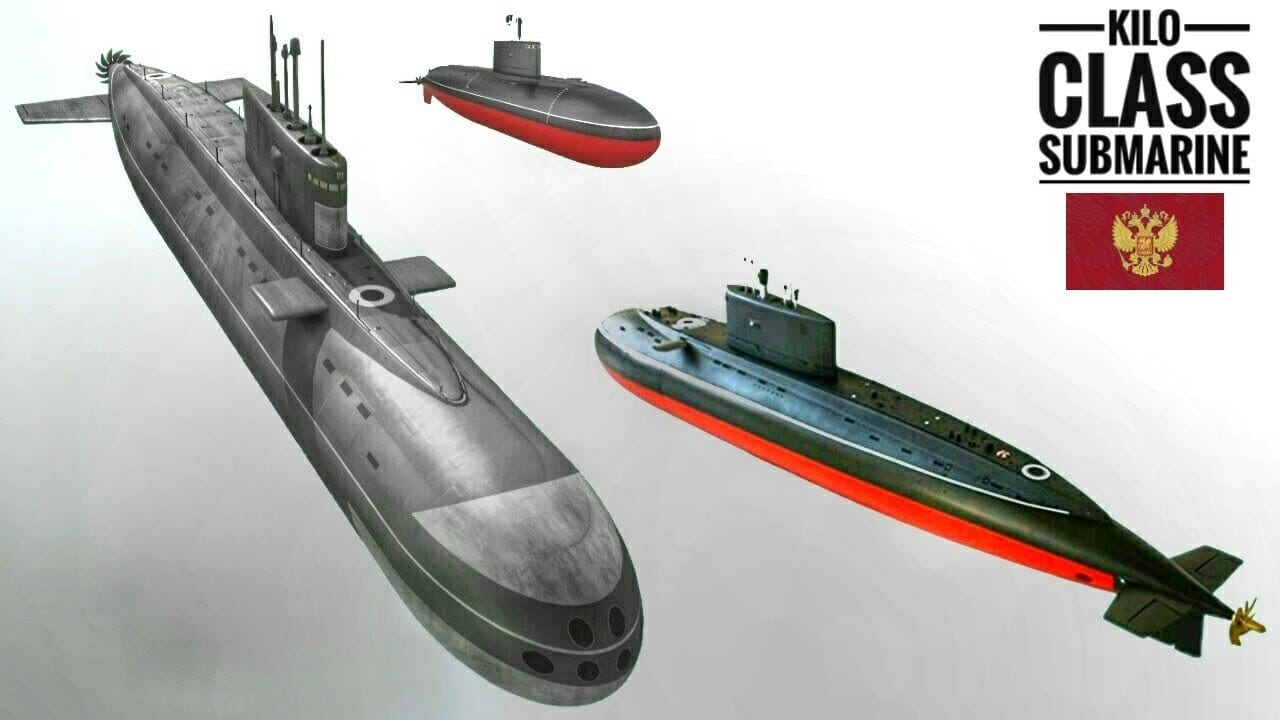
Kilo-class Submarine. Image Credit: Creative Commons.
Systemic Maintenance Failures and Poor Crew Training
Losses became so pronounced that the Russian Navy was effectively forced to relocate its surviving ships and submarines – the bulk of what remained of its Black Sea Fleet – from their main base in occupied Sevastopol in Crimea to Novorossiysk. This is a major naval base on the Russian mainland and what has become a refuge for the VMF.
This redeployment is a direct response to the intensive, repeated, and asymmetrical attacks by Ukraine.
Again, these successful attacks have not come from Ukrainian naval vessels but from drones and cruise missiles, which have managed to destroy or damage a significant portion of the fleet.
But the ships lost are only part of the story.
The VMF is also home to Moscow’s most elite fighting force, the Russian Naval Infantry. Their ranks have been reduced from a pre-war total of 150,000 in 2021 to 119,000 in 2025. These losses parallel the casualties suffered by another special formation – the Russian Airborne Forces (VDV), which has shrunk from 45,000 to 35,000.
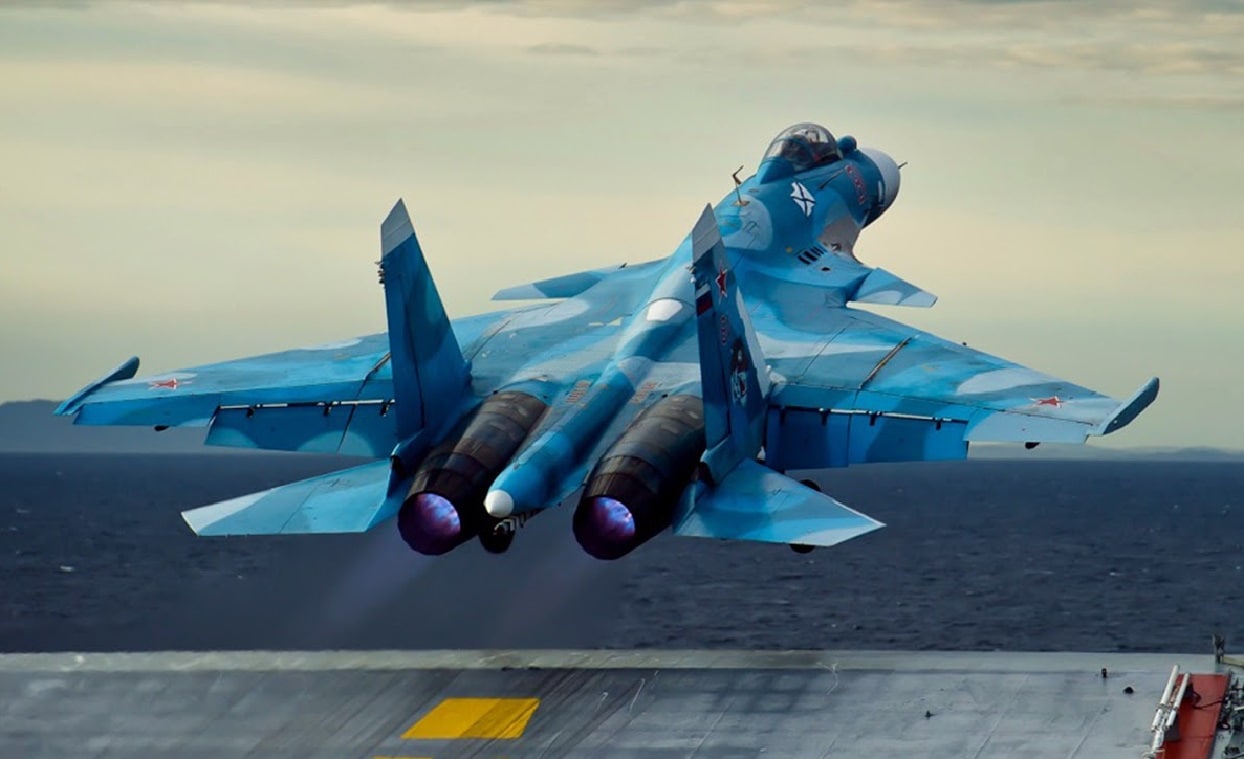
Su-33 Image: Creative Commons.
It appears that these shock troops are also not faring well in Russian President Vladimir Putin’s “Special Military Operation.”
Finally, in 2024, both the VMF central and backup command centers were attacked.
A significant number of naval officers have been killed over the course of the war.
This is further evidence of the VMF’s inability to protect its most important bases and the personnel who man them.
About the Author: Reuben F. Johnson
Reuben F. Johnson has thirty-six years of experience analyzing and reporting on foreign weapons systems, defense technologies, and international arms export policy. Johnson is the Director of Research at the Casimir Pulaski Foundation. He is also a survivor of the Russian invasion of Ukraine in February 2022. He worked for years in the American defense industry as a foreign technology analyst and later as a consultant for the U.S. Department of Defense, the Departments of the Navy and Air Force, and the governments of the United Kingdom and Australia. In 2022-2023, he won two awards in a row for his defense reporting. He holds a bachelor’s degree from DePauw University and a master’s degree from Miami University in Ohio, specializing in Soviet and Russian studies. He lives in Warsaw.