
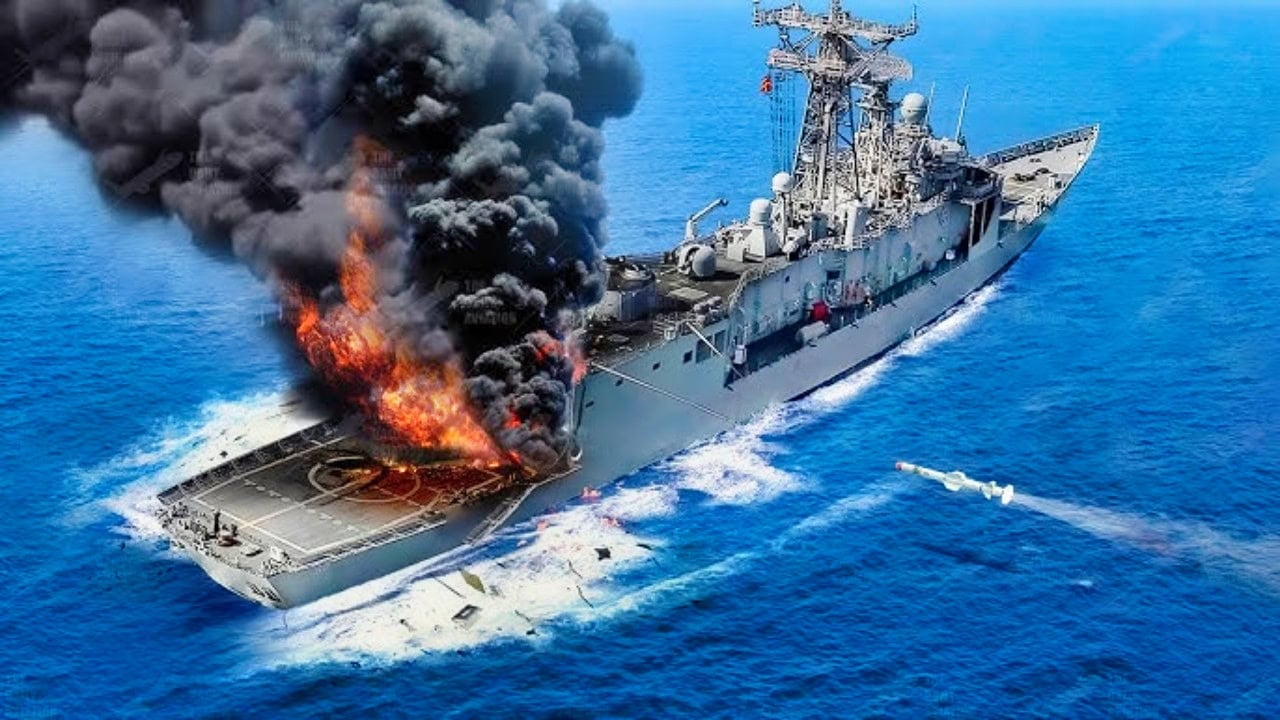
Summary and Key Points: The U.S. Navy utilized the retired Oliver Hazard Perry-class frigate USS Simpson (FFG-56) as a target in a major SINKEX (sinking exercise) during the UNITAS 2025 drills.
-Involving 25 nations and 8,000 personnel, the exercise simulated high-intensity conflict in the Indo-Pacific, specifically rehearsing amphibious assaults against Chinese-militarized islands.
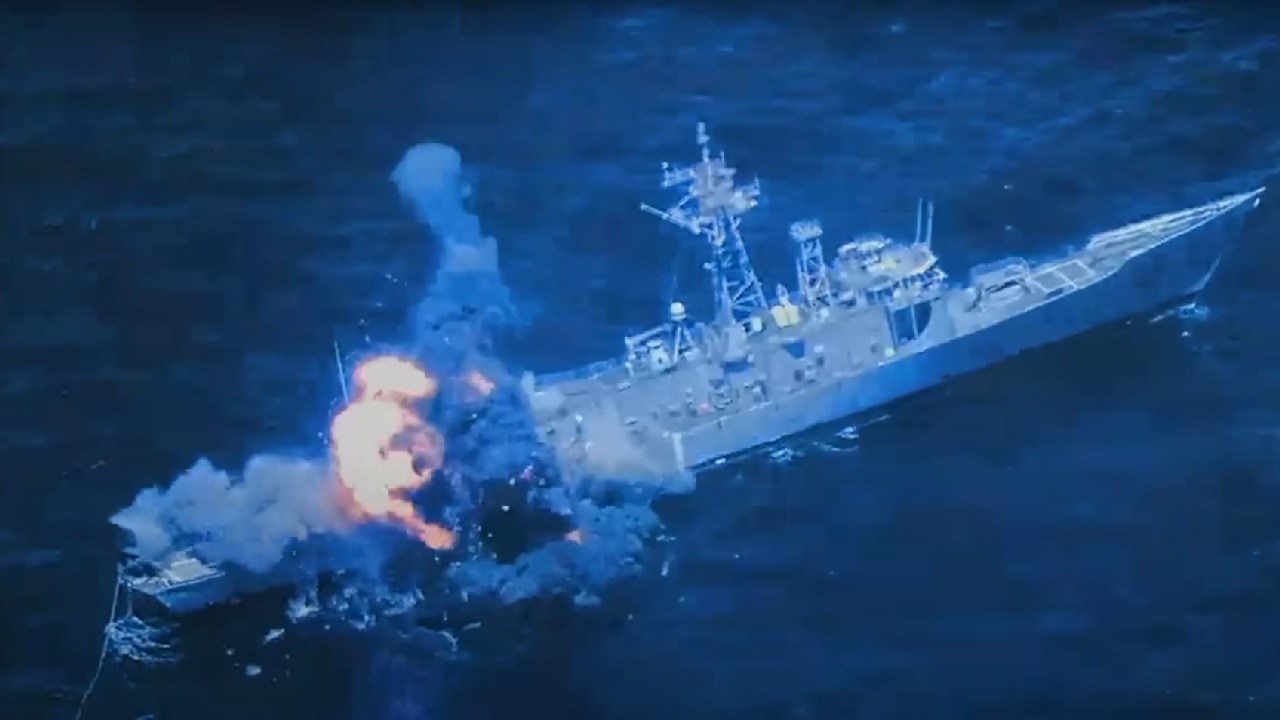
the USS Rodney M. Davis (FFG-60), an Oliver Hazard Perry-class guided missile frigate, was hit and sunk by anti-ship missiles.
-The Simpson, famous for sinking an Iranian gunboat during Operation Praying Mantis in 1988, was sent to the bottom by a combined force of MH-60 helicopters and destroyers, providing critical data on hull resilience and modern anti-ship missile lethality.
What is a SINKEX? How the Navy Uses Retired Warships to Prepare for World War III
Sailors in the U.S. Navy who operate gunnery and missile systems are among the most expert combat personnel in the world. They are accurate, timely, lethal, and deadly. But how do the sailors know how to conduct their jobs so well? They can use simulators to fire weapons systems. This is good training. They can launch missiles at drone targets. That helps. But what about simulated combat against another ship?
There are no active vessels specifically designed to be targets for guns or missiles. That means the Navy must identify a decommissioned vessel to serve as a testbed for weapons systems.
This is called a sinking exercise (SINKEX). The process is simple in concept but can be difficult in practice. Sometimes a ship takes multiple weeks to sink. A SINKEX against the USS America in 2005 took almost a month to send the aircraft carrier to the bottom after the Navy was forced to scuttle it on board.
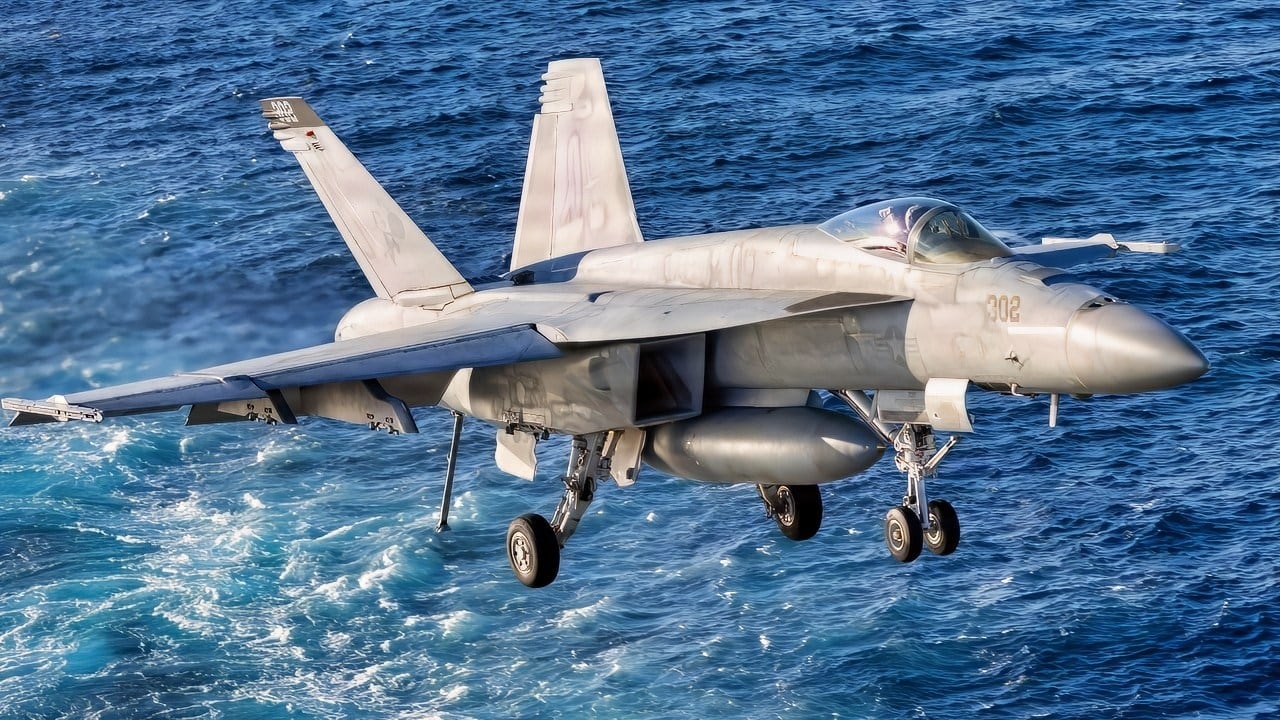
An F/A-18E Super Hornet aircraft approaches the flight deck of the world’s largest aircraft carrier, Ford-class aircraft carrier USS Gerald R. Ford (CVN 78), Nov. 17, 2025. U.S. military forces are deployed to the Caribbean in support of the U.S. Southern Command mission, Department of War-directed operations, and the president’s priorities to disrupt illicit drug trafficking and protect the homeland. (U.S. Navy photo)
The Significance of a SINKEX
SINKEXs are important for enabling engineers and technicians to gather information on best practices for ship design. Close scrutiny is placed on the location of the “hit,” how fast a tear or hole in the hull or deck appears, and how long water fills the gaps. This process of sinking can result in new ships being more resistant to damage from weapons like guns, missiles, or torpedoes.
The SINKEX itself usually coincides with a multinational exercise like RIMPAC or UNITAS. This enables the Navy to simulate combat scenarios with partner nations. The exercises sometimes involve joint forces comprising the Marine Corps, Army, Air Force, and Space Force.
Keeping the Environment from Being Damaged
There are many environmental laws and regulations that must be followed. Before SINKEX can commence, hazardous materials, such as fuel and chemicals, must be removed from the target ship. All civilian vessels are warned to stay out of the area of operations.
Uniting Nations Under One Naval Exercise
In 2025, the Navy took part in the massive, combined forces exercise known as UNITAS – Latin for “oneness” or “unity.” The unity of the drill was remarkable. Twenty-five nations took part from Latin America, Asia, and Europe. There were 8,000 military personnel participating.
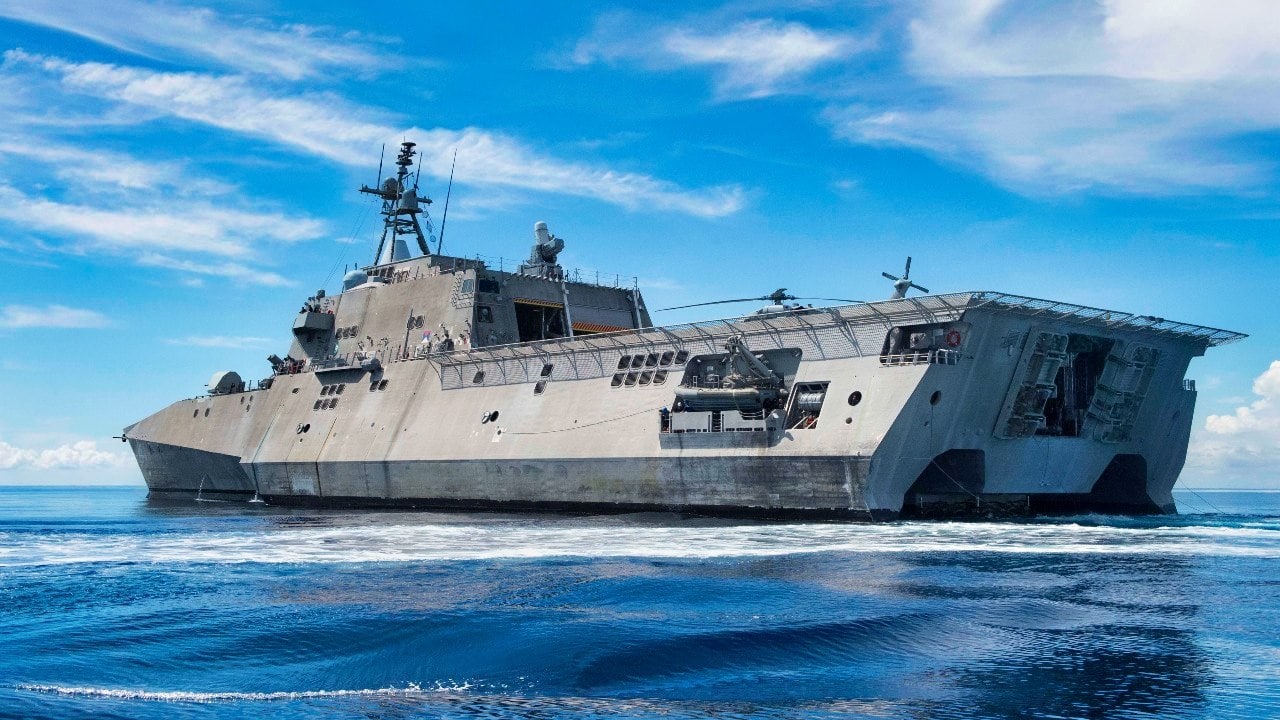
170623-N-PD309-122 BOHOL SEA (June 23, 2017) Littoral combat ship USS Coronado (LCS 4) transits the Bohol Sea during an exercise with the Philippine Navy for Maritime Training Activity (MTA) Sama Sama 2017. MTA Sama Sama is a bilateral maritime exercise between U.S. and Philippine naval forces and is designed to strengthen cooperation and interoperability between the nations’ armed forces. (U.S. Navy photo by Mass Communication Specialist 3rd Class Deven Leigh Ellis/Released)
The countries involved were Argentina, Belize, Brazil, Canada, Chile, Colombia, Dominican Republic, Ecuador, El Salvador, France, Germany, Greece, Guatemala, Honduras, Italy, Jamaica, Japan, Mexico, Morocco, Netherlands, Panama, Paraguay, Peru, and Spain.
The Navy’s Southern Command/US 4th Fleet area of responsibility off the East Coast of the United States was the location for UNITAS. However, the units involved were simulating combat in the Indo-Pacific, with China as the opposing force.
Rehearse an Amphibious Attack Against China
The idea was to rehearse a massive amphibious landing from U.S. vessels with assistance from allies. This could be a real mission someday against one of China’s militarized islands in the South China Sea. China considers the First Island Chain to be sovereign territory. The United States and its partners in the region believe these are international waters and the Americans often patrol during freedom of navigation operations to protect commerce and shipping in the region.
The USS Simpson Was the Targeted Vessel
To learn more about how a ship would perform in combat, the U.S. Navy conducted a SINKEX during UNITAS. The target ship was the USS Simpson (FFG-56) – a retired Oliver Hazard Perry-class frigate.
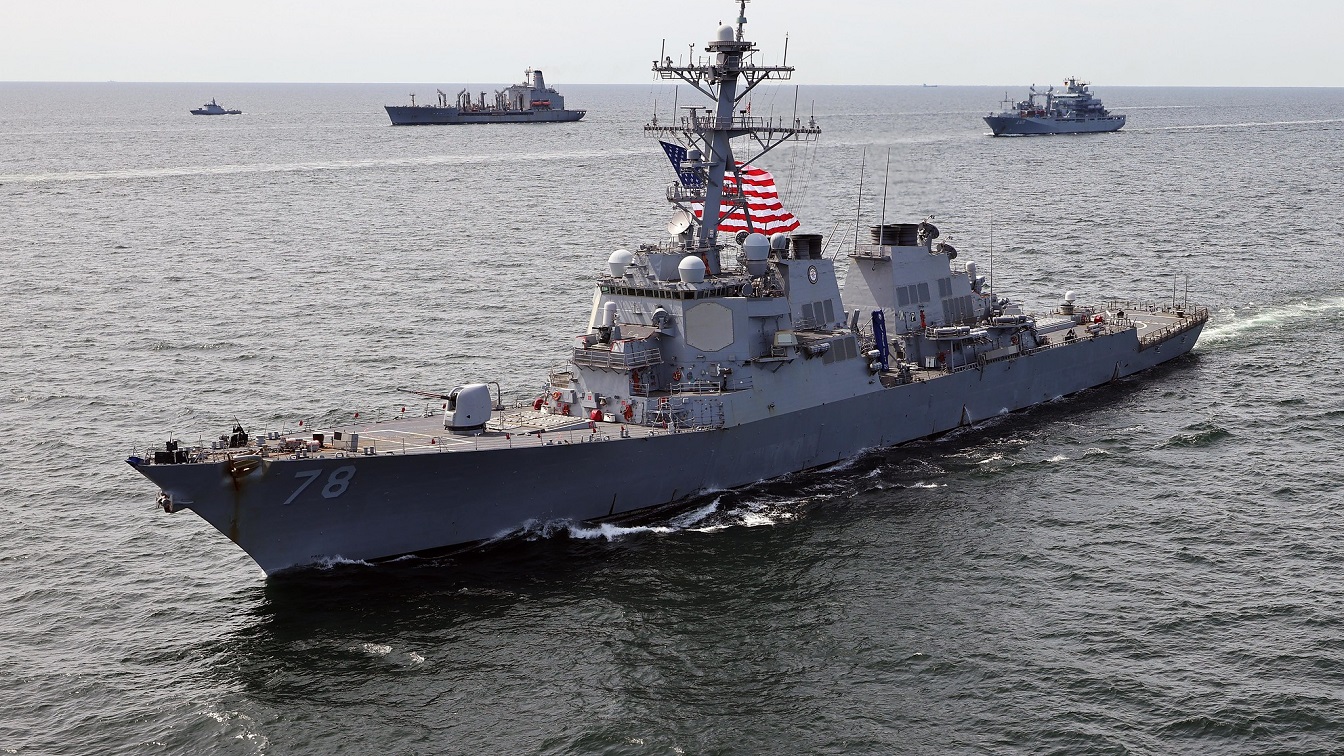
BALTIC SEA (June 6, 2022) The Arleigh Burke-class guided-missile destroyer USS Porter (DDG 78) sails in formation in the Baltic Sea, June 6, 2022, during exercise BALTOPS22. BALTOPS 22 is the premier maritime-focused exercise in the Baltic Region. The exercise, led by U.S. Naval Forces Europe-Africa, and executed by Naval Striking and Support Forces NATO, provides a unique training opportunity to strengthen combined response capabilities critical to preserving freedom of navigation and security in the Baltic Sea. (U.S. Navy photo) 220606-N-NO901-3008
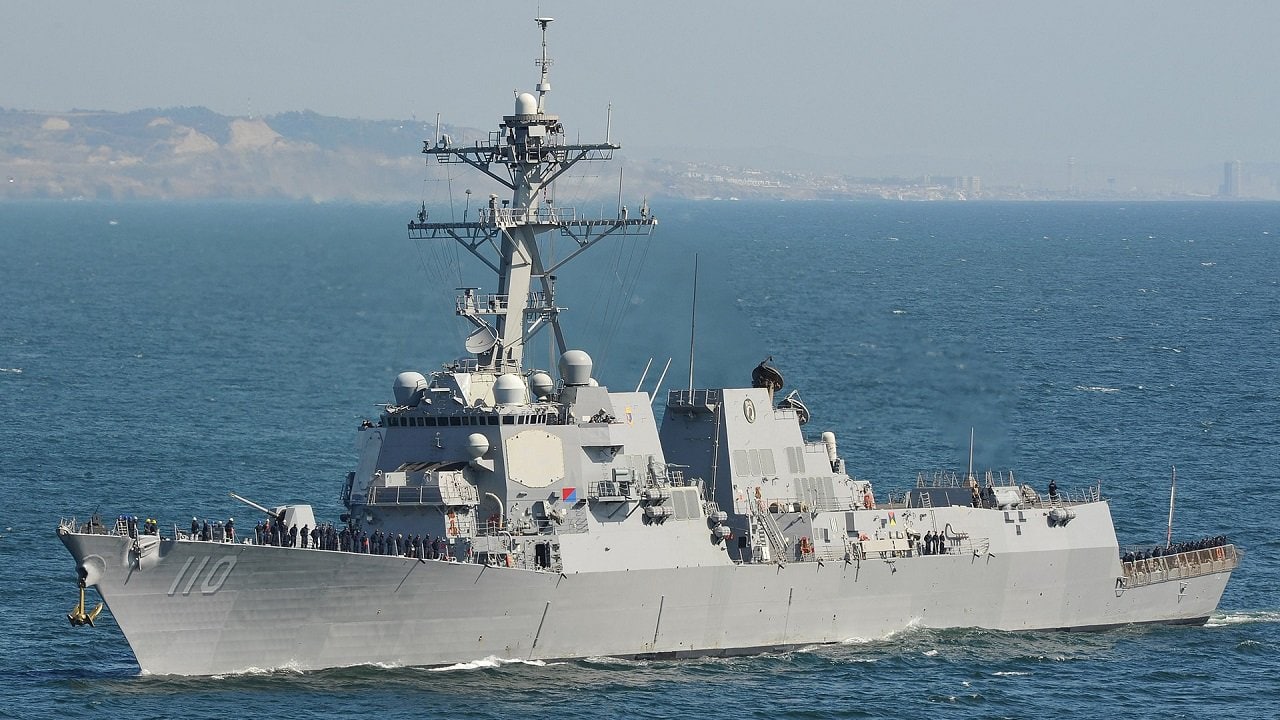
PACIFIC OCEAN (May 4, 2015) – The guided-missile destroyer USS William P. Lawrence (DDG 110) steams toward San Diego Harbor. (U.S. Navy photo by Mass Communication Specialist 3rd Class Nathan Burke/Released)
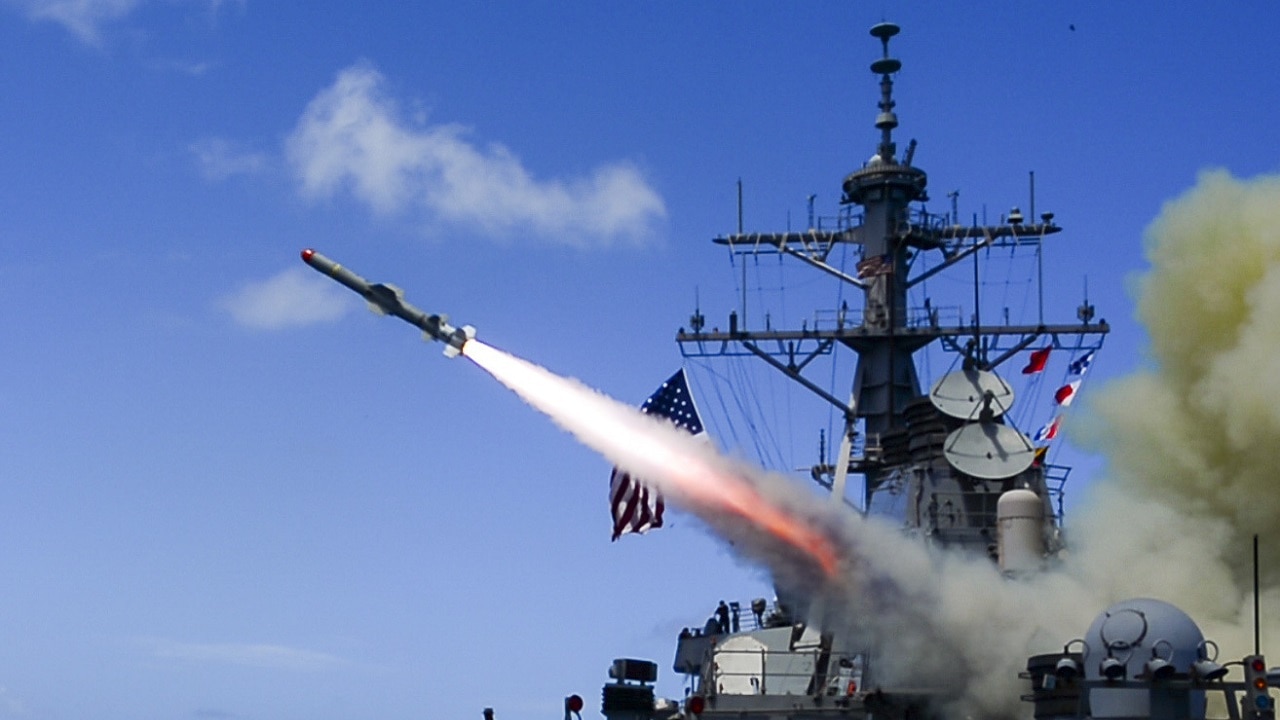
WATERS NEAR GUAM (Mar. 10, 2016) – Arleigh Burke-class guided missile destroyer USS Fitzgerald (DDG 62) conducts a live fire of a harpoon missile during Multi-Sail 2016. Multi Sail is a bilateral training exercise aimed at interoperability between the U.S. and Japanese forces. This exercise builds interoperability and benefits from realistic, shared training, enhancing our ability to work together to confront any contingency. (U.S. Navy photo by Mass Communication Specialist 3rd Class Eric Coffer/Released)
The Simpson was thus a floating “magnet” that missiles, guns, and torpedoes could hit and sink. The first “hits” were made by MH-60R and MH-60S helicopters flying from the San Antonio-class amphibious transport dock USS Arlington. There was also an attack helicopter launched from the Arleigh Burke-class guided-missile destroyer USS Thomas Hudner (DDG-116).
What Kind of Missiles Were Involved?
The Navy did not reveal what type of weapons were employed, but the helicopters in action can be armed with AGM-114 Hellfire and AGM-119B Penguin anti-ship missiles, as well as the Kongsberg Naval Strike Missiles, according to the National Interest.
Other Ships Involved in SINKEXs
During another SINKEX in the Pacific during Operation RIMPAC 2024, the US Navy destroyed the decommissioned USS Dubuque (LPD 8) on July 11, 2024, and the retired USS Tarawa (LHA 1) on July 19, 2024.
The sinking of the ex-Tarawa included hits by the Long-Range Anti-Ship Missile (LRASM) from a U.S. Navy F/A-18F Super Hornet.
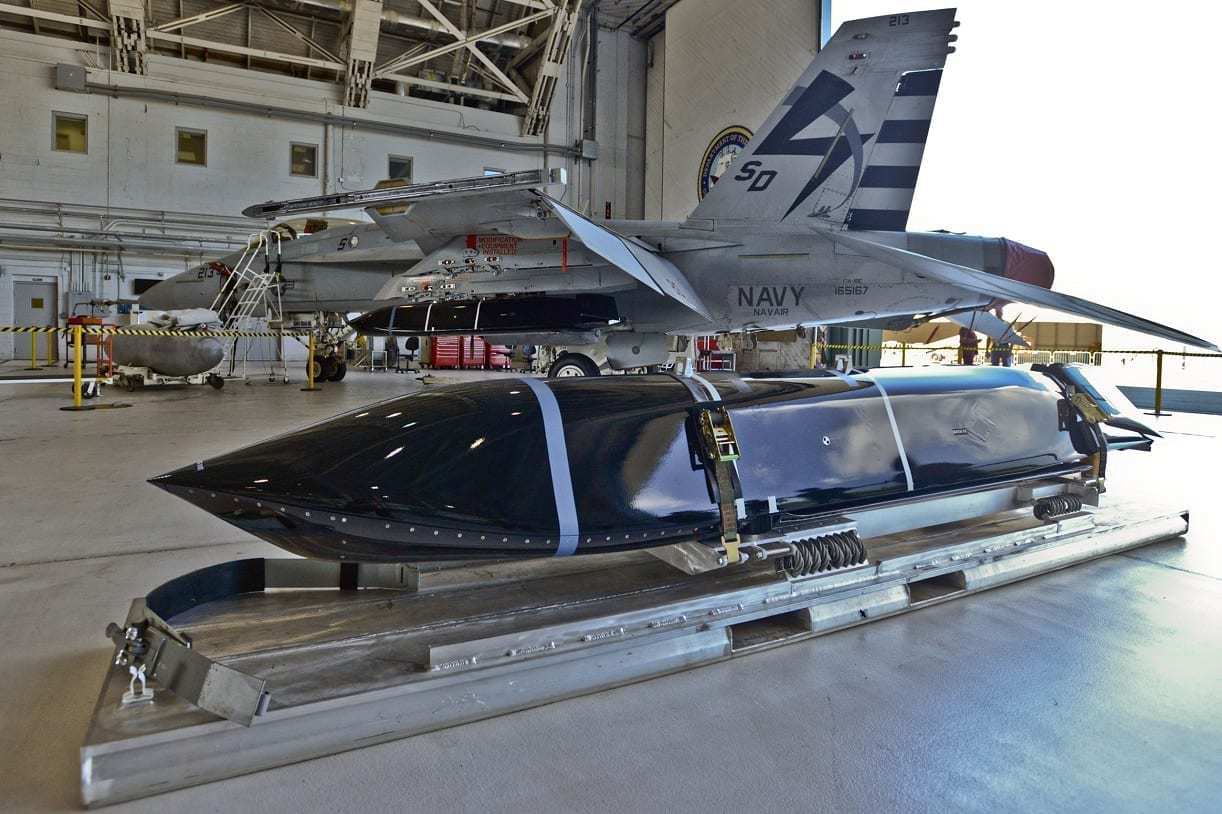
A Long Range Anti-Ship Missile (LRASM) integrated on F/A-18E/F Super Hornet 12 August 2005 at NAS Patuxent River, Md.
Historic Combat Service During Operation Praying Mantis
The Simpson was retired in 2015 and was commissioned in 1985. This frigate was famous because it was the only U.S. warship to sink another enemy vessel with a missile. This happened during Operation Praying Mantis against an Iranian gunboat in 1988. That year, the Simpson was escorting U.S.-flagged merchant vessels in the Arabian Gulf. There was an Iranian mine attack on the USS Samuel B. Roberts frigate, and the Americans wanted Iran to pay the price. The Samuel B. Roberts had a large hole torn in its hull, and the United States decided to counter the Iranians with violent action.
“Ten Sailors from Samuel B. Roberts sustained severe injuries. Four were seriously burned. Commander Paul X. Rinn was hurt as well. The ship should have sunk, but thanks to an extraordinary damage control effort by all hands of an extremely well-trained crew, Samuel B. Roberts was kept afloat,” according to the Naval History and Heritage Command.
Operation Praying Mantis was a large mission – one of the five biggest American naval actions since World War Two. This was the only time that the Navy engaged in a missile attack against an enemy warship.
Iran Paid the Price
During Praying Mantis, the Navy struck two Iranian naval surveillance platforms, sank two of their ships, and seriously damaged another vessel.
“USS Simpson then came under fire from the Iranian Navy’s Kaman-class missile patrol boat Joshan, which was armed with US-made Harpoon missiles dating back to the pre-Islamic Revolution. The Iranian boat fired several salvos at the US vessels but missed their target,” National Interest wrote.
The Simpson earned the Joint Meritorious Unit Award and the Combat Action Ribbon for this mission, and the Armed Forces Expeditionary Medal for the overall action during Operation Praying Mantis.
Sailors Looked Back With Pride
During the Simpson’s retirement ceremony, the skipper, Commander Casey Roskelly, ruminated on what made the frigate so special when interviewed by Navy Times.
“I love being out at sea,” he said. “You get into the rhythm, the routine. There’s just something peaceful, you know, going up on the bridge wing at 2 o’clock in the morning, and it’s your own planetarium. You can just see forever. The stars are just everywhere and then watching the sunrise and sunset. There’s peace. It’s a time for self-reflection.”
The Simpson was a busy ship during its heyday. It engaged in anti-piracy operations, supported anti-submarine warfare, escorted friendly submarines, and conducted counter-narcotics operations.
One notable fact about the Simpson was that it was originally intended for sale to a U.S. ally. Partner nations, including Pakistan, Bahrain, Egypt, Turkey, and Poland, have previously purchased the Navy’s decommissioned frigates.
Where Everybody Knows Your Name
The Simpson had 230 sailors on board. The frigate was not known for its advanced technology; it was more of a workhorse that could get the job done with old-fashioned elbow grease, grit, and determination from its shipmates.
The smaller size of the ships allowed each sailor to know the ships’ personnel by their first name. It was a great experience for most of the crew.
When the Simpson was retired, workers removed missile tubes and the 20mm Gatling-style rotary gun. It was then towed to Philadelphia to await a buyer, but little did the Navy know that the Simpson’s ultimate fate would be a SINKEX. The ship will be remembered for that successful action against Iran and the sailors who loved their time on board.
About the Author: Dr. Brent M. Eastwood
Author of now over 3,000 articles on defense issues, Brent M. Eastwood, PhD is the author of Don’t Turn Your Back On the World: a Conservative Foreign Policy and Humans, Machines, and Data: Future Trends in Warfare plus two other books. Brent was the founder and CEO of a tech firm that predicted world events using artificial intelligence. He served as a legislative fellow for US Senator Tim Scott and advised the senator on defense and foreign policy issues. He has taught at American University, George Washington University, and George Mason University. Brent is a former US Army Infantry officer. He can be followed on X @BMEastwood.