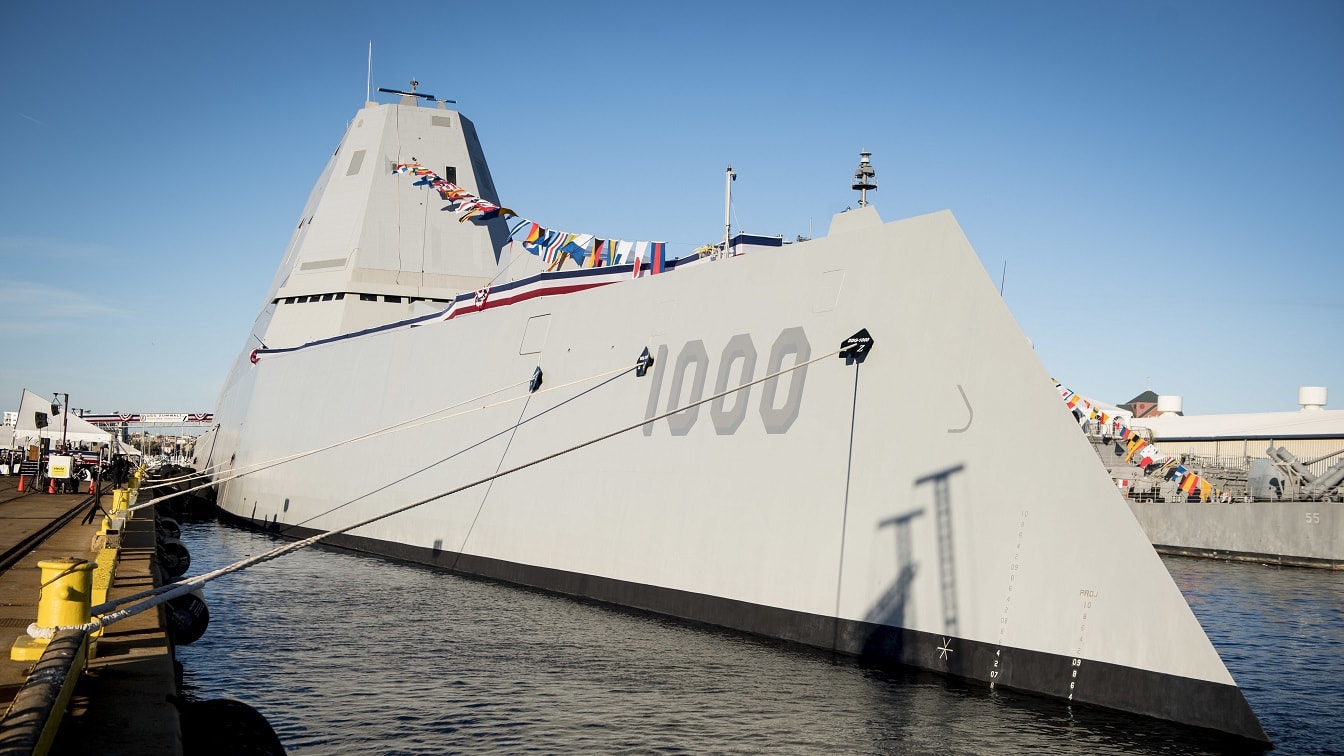
Summary and Key Points: After being docked since the summer of 2023, the lead Zumwalt-class destroyer returned to sea trials following a major modernization that fundamentally changes its mission.
-The Navy removed the two 155mm Advanced Gun Systems—undercut by ammunition costs around $1,000,000 per round—and replaced them with new missile tubes meant to carry the Conventional Prompt Strike hypersonic weapon.
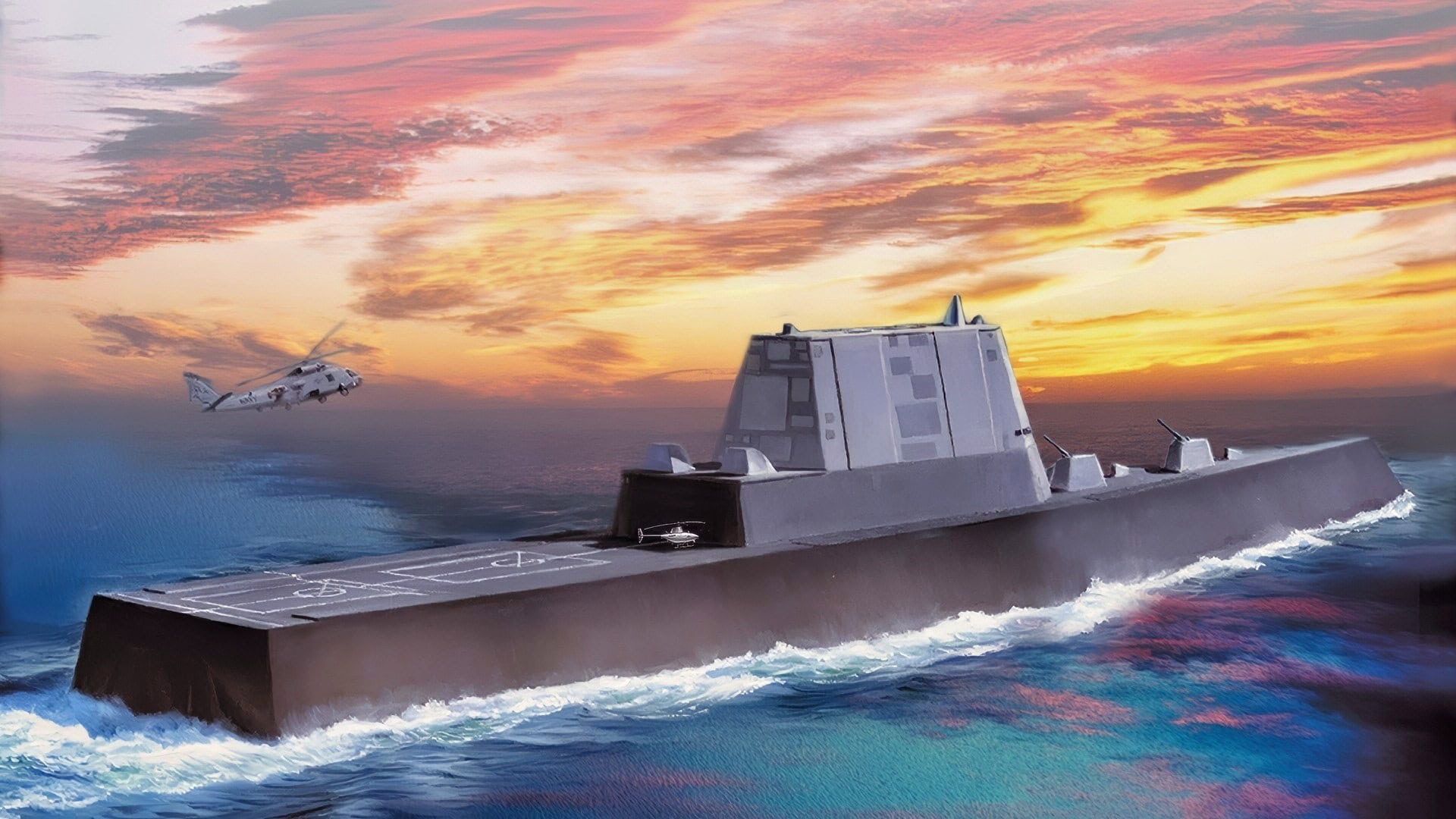
Zumwalt-Class Artist Rendering. Image Credit: Creative Commons.
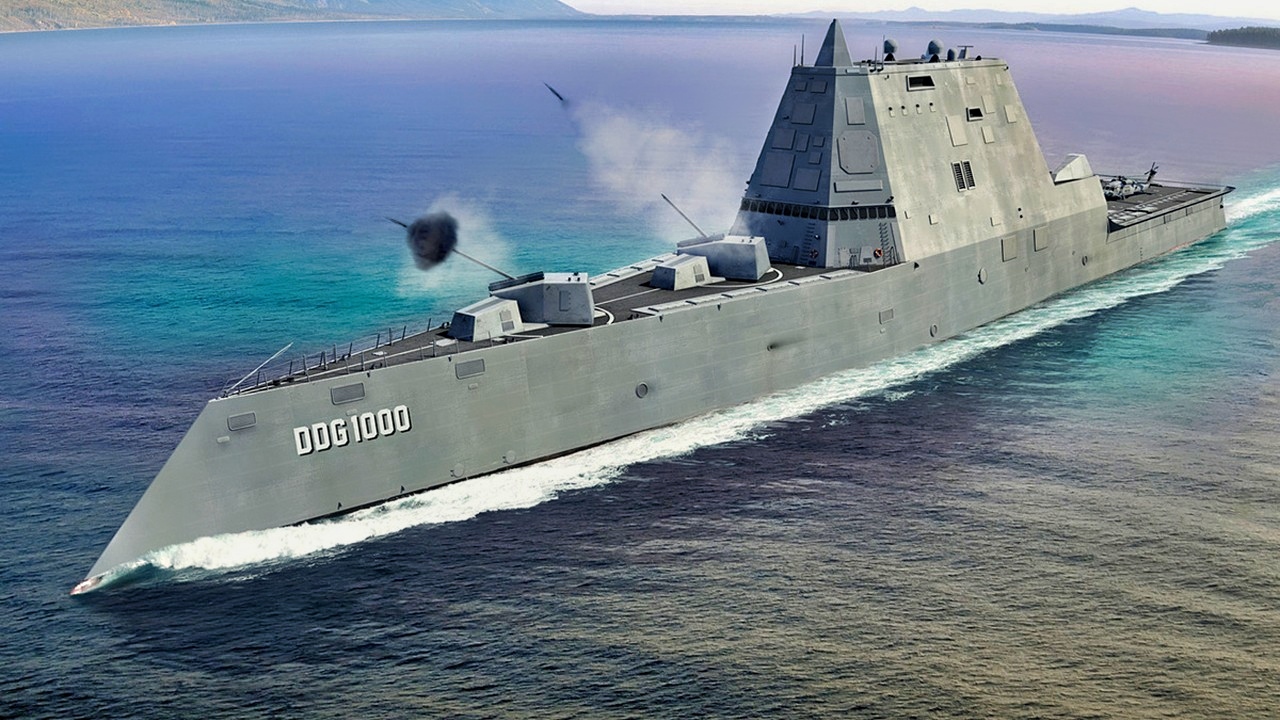
Zumwalt-Class U.S. Navy Destroyer. Image Credit: Creative Commons.
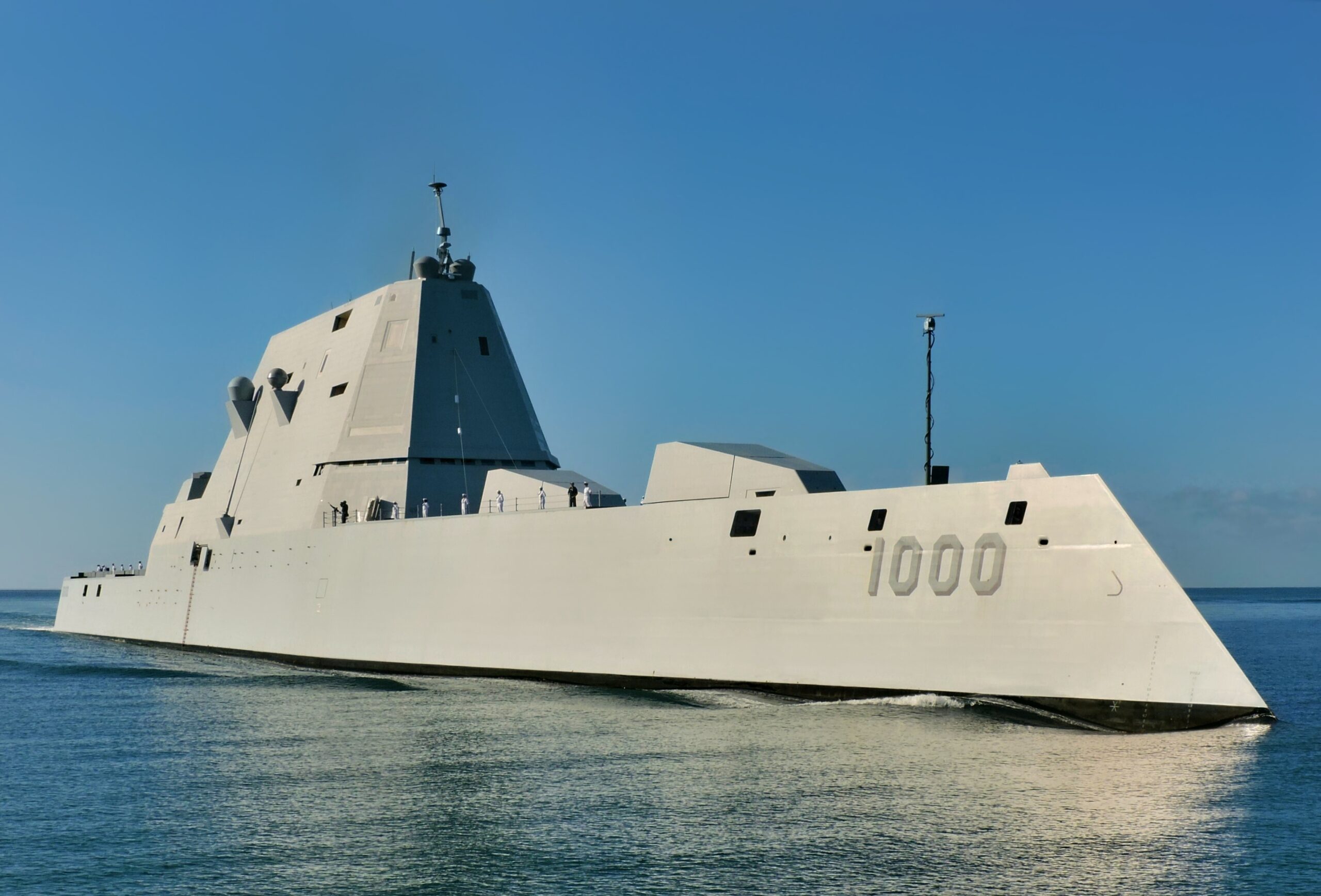
Zumwalt-Class Destroyer U.S. Navy. Image Credit: Creative Commons.
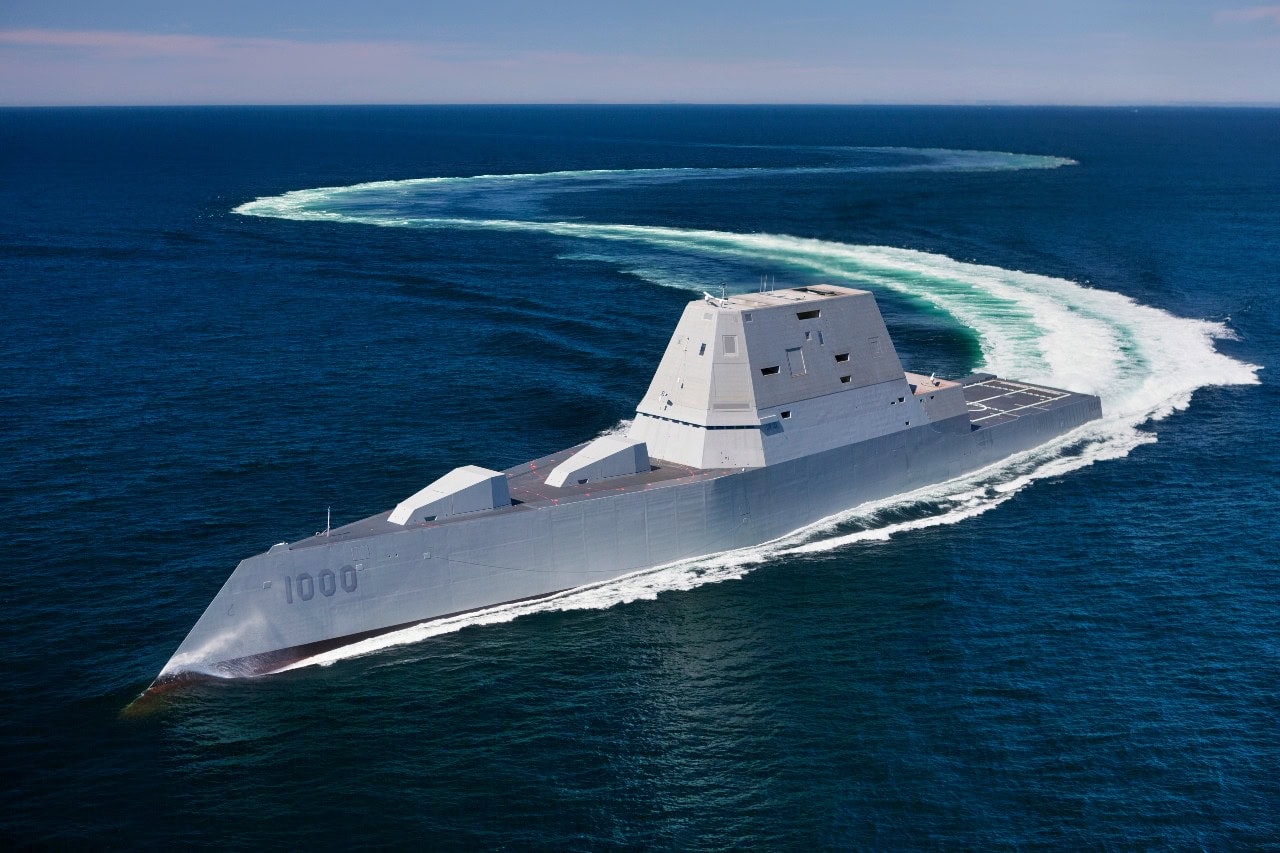
Zumwalt-Class Destroyer U.S. Navy.
-The redesign also recovers internal space beneath the former gun mounts while reserving additional volume for future capability.
-Once conceived for stealthy near-shore fire support, the ship is now being positioned as a blue-water long-range strike platform—though the three-hull class limits scale.
Navy’s First Hypersonic Warship? USS Zumwalt Completes Major Redesign Sea Trials
The lead ship of the diminutive Zumwalt-class, the USS Zumwalt, completed sea trials for the first time in three years following an extensive redesign. That initiative stripped the ship of its problematic pair of 155mm Advanced Gun Systems and saw missile tubes installed in their place, a redesign that accommodates the Conventional Prompt Strike, a hypersonic missile with a conventional warhead.
“We have achieved a pivotal milestone with our Navy and industry partners to advance this complex modernization work that will set a precedent for the Zumwalt class,” said Brian Blanchette, Ingalls Shipbuilding president, in a company release. “I’m very proud of the team effort and their critical role to advance the US Navy’s first warship with hypersonic capabilities.”
That guided-missile destroyer had been docked since the summer of 2023 after the United States Navy decided to replace significant parts of the ship’s original design with new weaponry.
From Vietnam to Today
Named after Admiral Elmo Zumwalt, an influential former Chief of Naval Operations, the class was initially planned to be over thirty-strong—a figure that has been cut down to a paltry three.
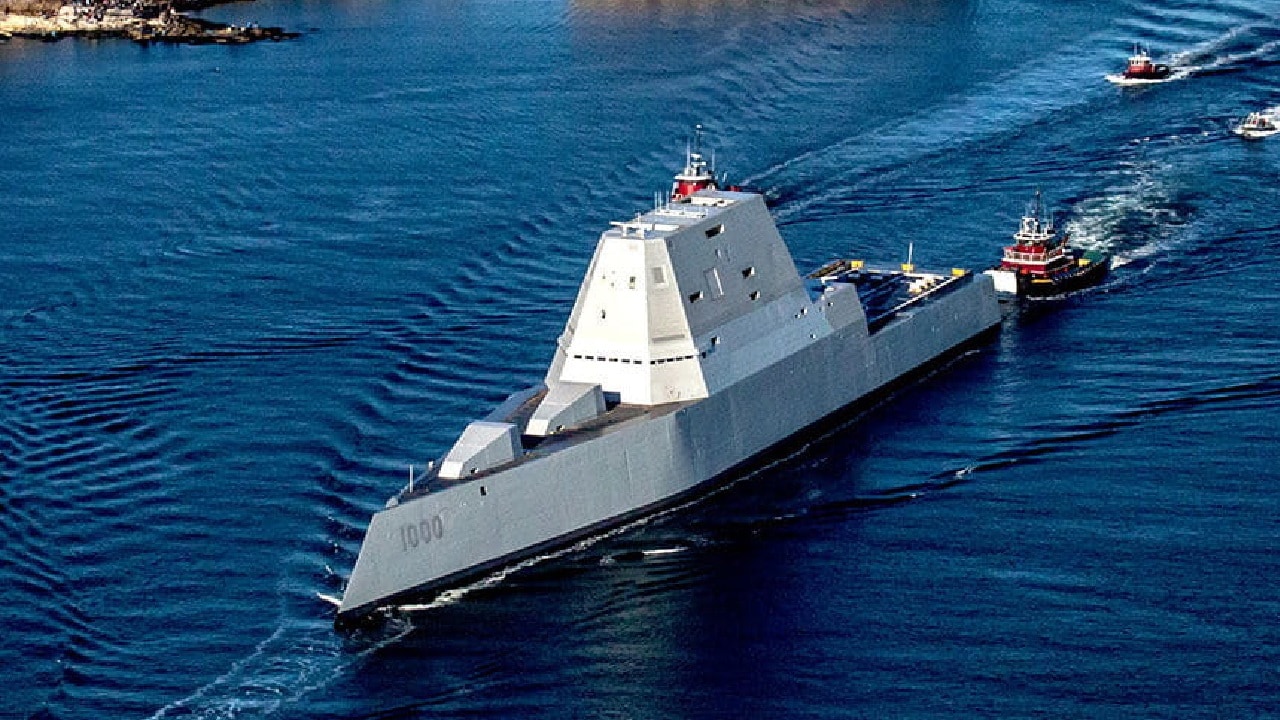
The class’s unique tumblehome hull shape was designed to defeat radar and mask the ship’s movement, a radical departure from conventional ship hull cross-sections.
The ship incorporated a number of innovations, including the extensive use of composite materials, a great deal of automation to reduce crew size, and a substantial amount of electricity generation with the intention of later mating mature directed-energy weapons to the platform.
But perhaps the Zumwalt-class’s most unique feature was to be its Advanced Gun System.
Intended to support land-based forces, the Zumwalts sported a pair of 155mm naval guns. They would have leveraged their stealth capabilities to remain relatively close to shore to support amphibious assaults.
Ultimately, the project proved extremely ambitious and ran into not-insignificant cost overruns, which torpedoed its intended scale.
Ballooning costs curtailed projected class numbers from 32 to today’s three. One post facto analysis of the Zumwalt program by the RAND Corporation attributed the truncated class size to unrealistic initial cost estimates, immature technologies, and “excessive manufacturing or integration risk.”
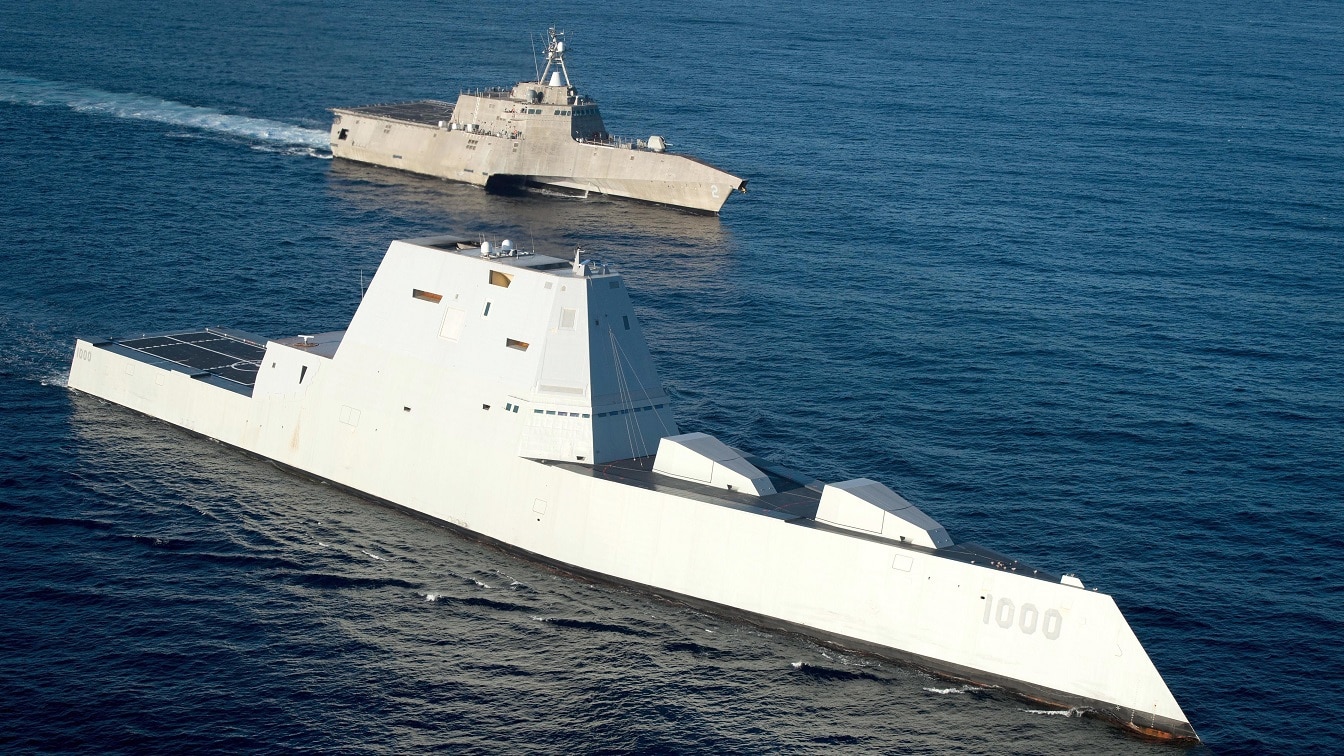
PACIFIC OCEAN (Dec. 8, 2016) The guided-missile destroyer USS Zumwalt (DDG 1000), left, the Navy’s most technologically advanced surface ship, is underway in formation with the littoral combat ship USS Independence (LCS 2) on the final leg of its three-month journey to its new homeport in San Diego. Upon arrival, Zumwalt will begin installation of its combat systems, testing and evaluation, and operation integration with the fleet. (U.S. Navy photo by Petty Officer 1st Class Ace Rheaume/Released)161208-N-SI773-0401
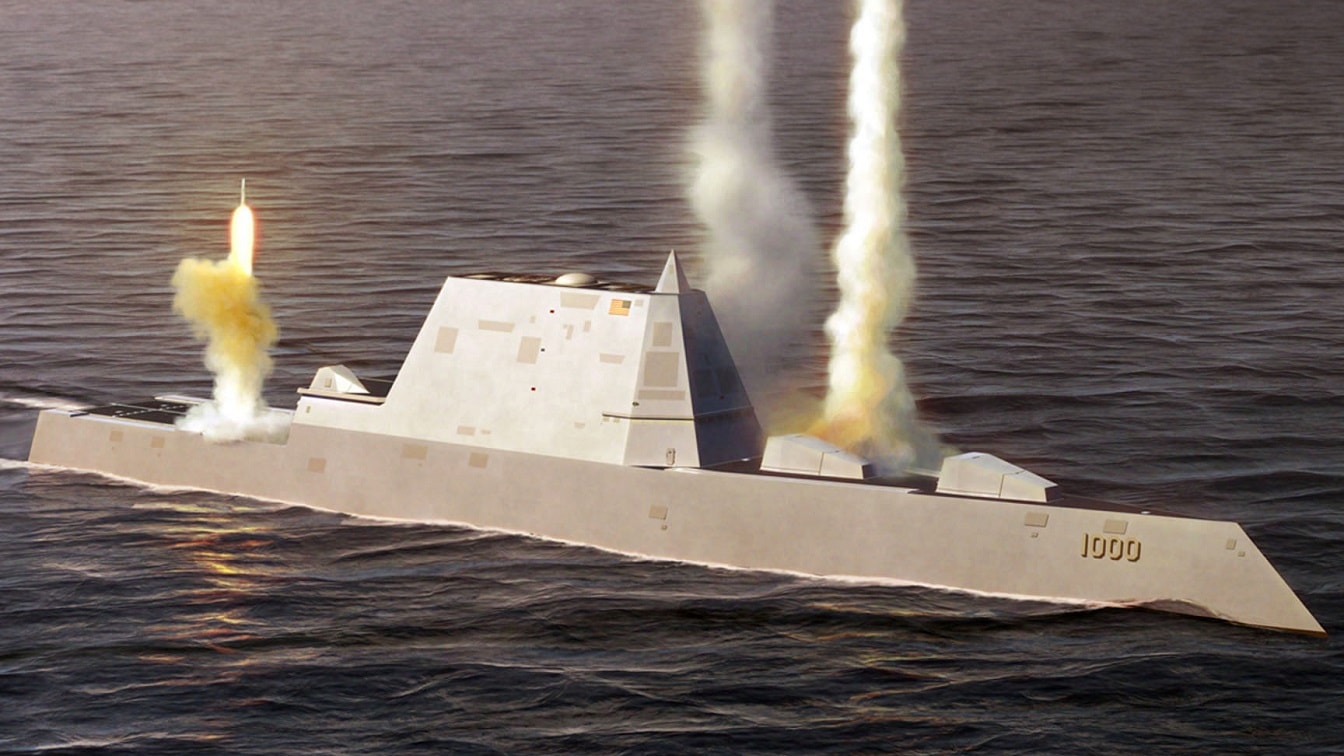
An artist rendering of the Zumwalt class destroyer DDG 1000, a new class of multi-mission U.S. Navy surface combatant ship designed to operate as part of a joint maritime fleet, assisting Marine strike forces ashore as well as performing littoral, air and sub-surface warfare.
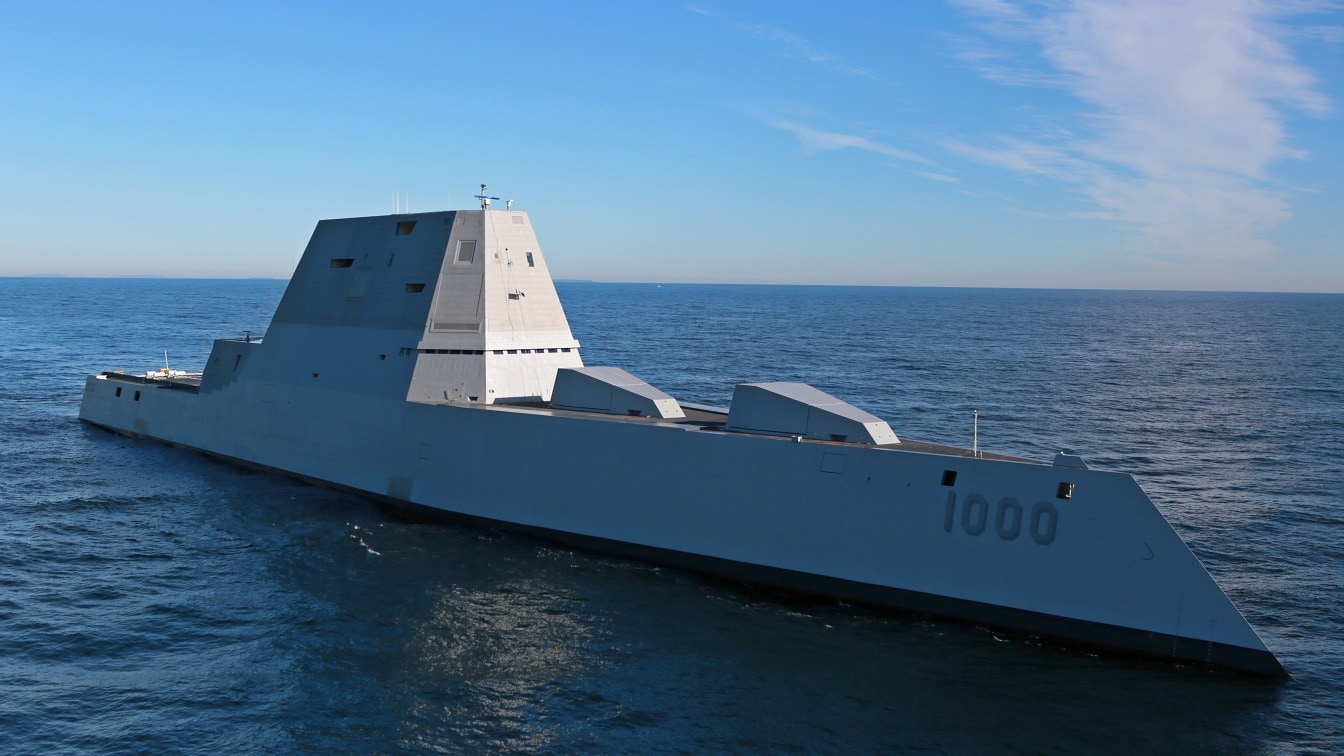
(Dec. 7, 2015) The future USS Zumwalt (DDG 1000) is underway for the first time conducting at-sea tests and trials in the Atlantic Ocean Dec. 7, 2015. The multimission ship will provide independent forward presence and deterrence, support special operations forces, and operate as an integral part of joint and combined expeditionary forces. (U.S. Navy photo courtesy of General Dynamics Bath Iron Works/Released). Zumwalt-Class
Zumwalt-class destroyer. Image Credit: Raytheon.
The Zumwalt’s cost overruns were significant enough to trigger a breach of the Nunn-McCurdy Act, a law mandated by Congress that preemptively truncates defense programs if their costs exceed initial budget estimates.
Besides the class’s much smaller size, perhaps the most significant technological disappointment was the Zumwalt-class Advanced Gun System.
Though the naval gun’s ammunition was the same caliber as NATO-standard 155mm artillery, those land-based artillery shells were incompatible with the Advanced Gun System.
AGS projectile costs proved to be shockingly expensive, around $1,000,000 per round, effectively making them too costly to use.
By way of comparison, NATO-standard 155mm artillery ammunition costs are in the $3,000 to $4,000 range. Without a shore bombardment capability, what was to be one of the Zumwalt’s primary missions was essentially dead on arrival.
Still, the U.S Navy adjusted.
Into the Future
Rather than supporting land forces, the Navy shifted gears and decided to repurpose the ships for long-range strikes.
Though potentially costly, the Zumwalt’s AGS guns were to be removed, with a Vertical Launch System installed in their place, leveraging the additional internal space freed by their removal.
Speaking during the Surface Navy Association’s national symposium, an annual naval affairs event, Captain Clint Lawler, a Zumwalt-class program manager, explained the rationale behind the Navy’s plan to repurpose the ships and its projected timeline.
“The plan is to get the ship available this year and then to support [initial operational capability] when the testing schedule supports that,” Lawler explained.
“We removed both guns from the ship. We’ve recovered some of the space under the second gun system for spaces that were previously used under the forward gun mount,” Lawler added. “We’ve essentially recaptured some of that space. Other space is a reservation for future capability.”
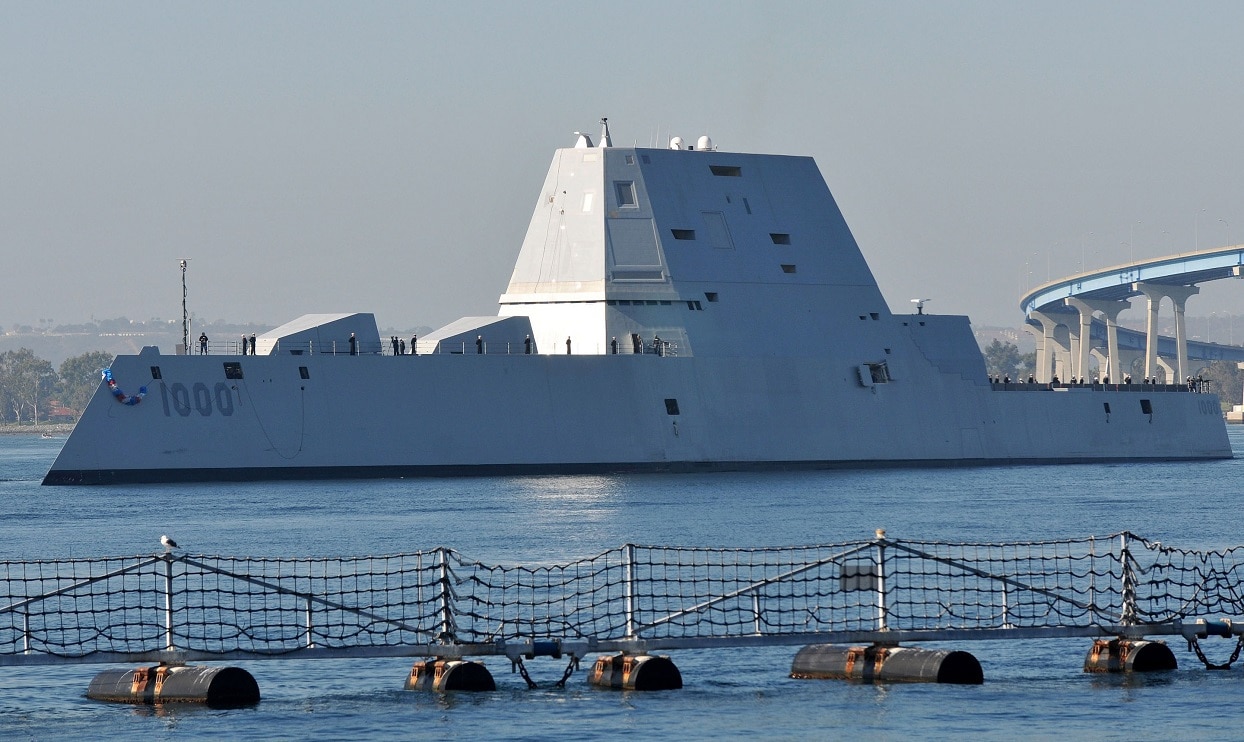
FROM 2016: The U.S. Navy’s newest warship, USS Zumwalt (DDG 1000) passes Coronado bridge on its way to Naval Base San Diego. Zumwalt is the lead ship of a class of next-generation multi-mission destroyers, now homeported in San Diego. (U.S. Navy photo by Petty Officer 3rd Class Anthony N. Hilkowski/Released)
In the end, the Zumwalt-class new role is significantly different than what it was originally intended for.
But as a blue-water strike platform that leverages intriguing stealth features and hypersonic weapons, it could play an essential role within the United States Navy, albeit one that would be rather crimped by the class’s extremely small, three-hull size.
Ultimately, the Zumwalt-class legacy may be more firmly attached to its shocking cost overruns and the triggering of the Nunn-McCurdy Act than to its role within the U.S. Navy.
About the Author: Caleb Larson
Caleb Larson is an American multiformat journalist based in Berlin, Germany. His work covers the intersection of conflict and society, focusing on American foreign policy and European security. He has reported from Germany, Russia, and the United States. Most recently, he covered the war in Ukraine, reporting extensively on the war’s shifting battle lines from Donbas and writing on the war’s civilian and humanitarian toll. Previously, he worked as a Defense Reporter for POLITICO Europe. You can follow his latest work on X.