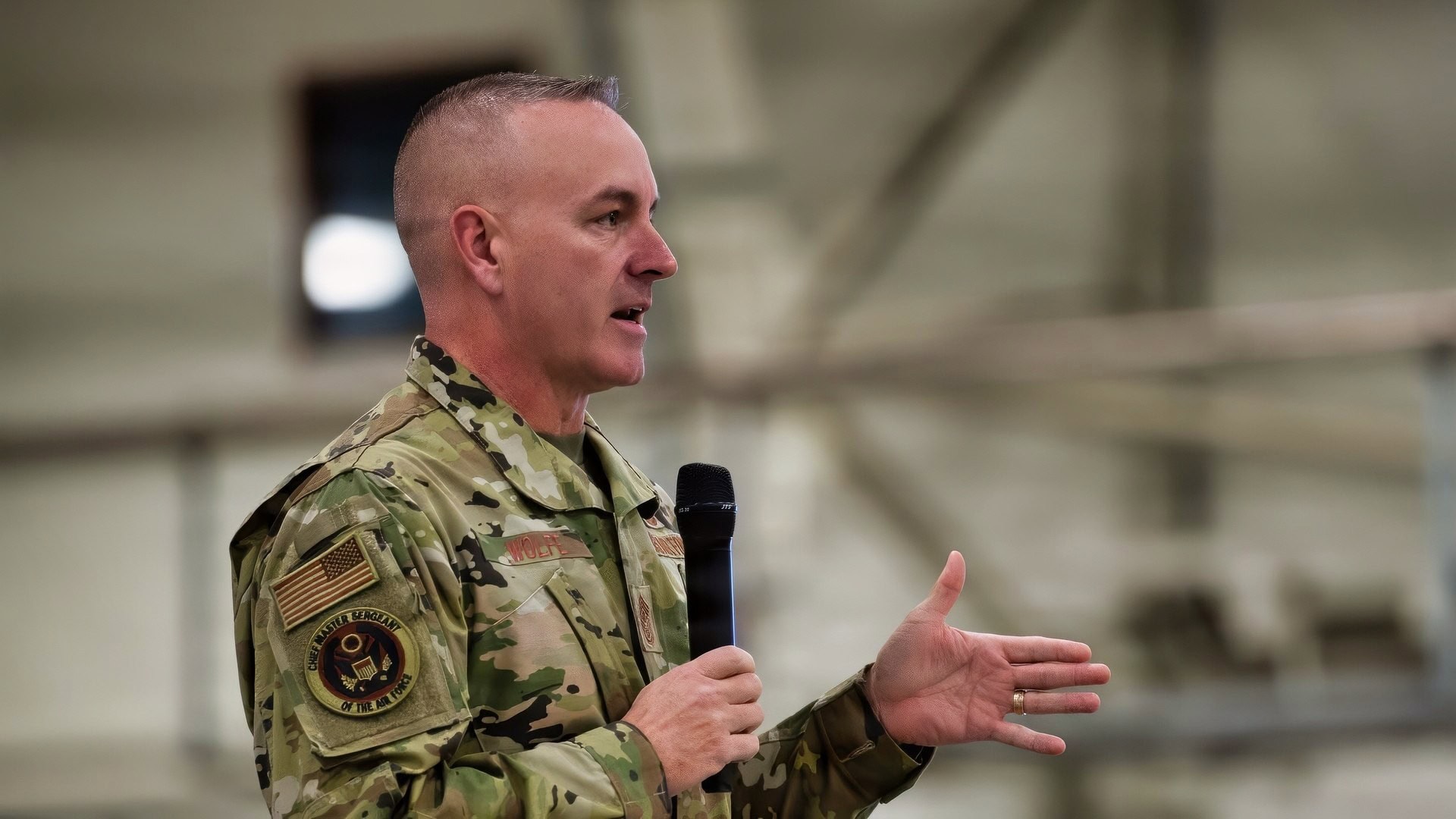
Summary and Key Points: Chief Master Sgt. of the Air Force David R. Wolfe has revealed a deeply personal ritual to connect with his new role: he carries the service pin of his father, Staff Sgt. Thomas Robert Wolfe, inside his service coat.
-Wolfe’s father was a WWII photographer who documented the aftermath of the atomic bombings in Hiroshima and Nagasaki—a legacy Wolfe describes as “beautiful” but “stained with blood.”
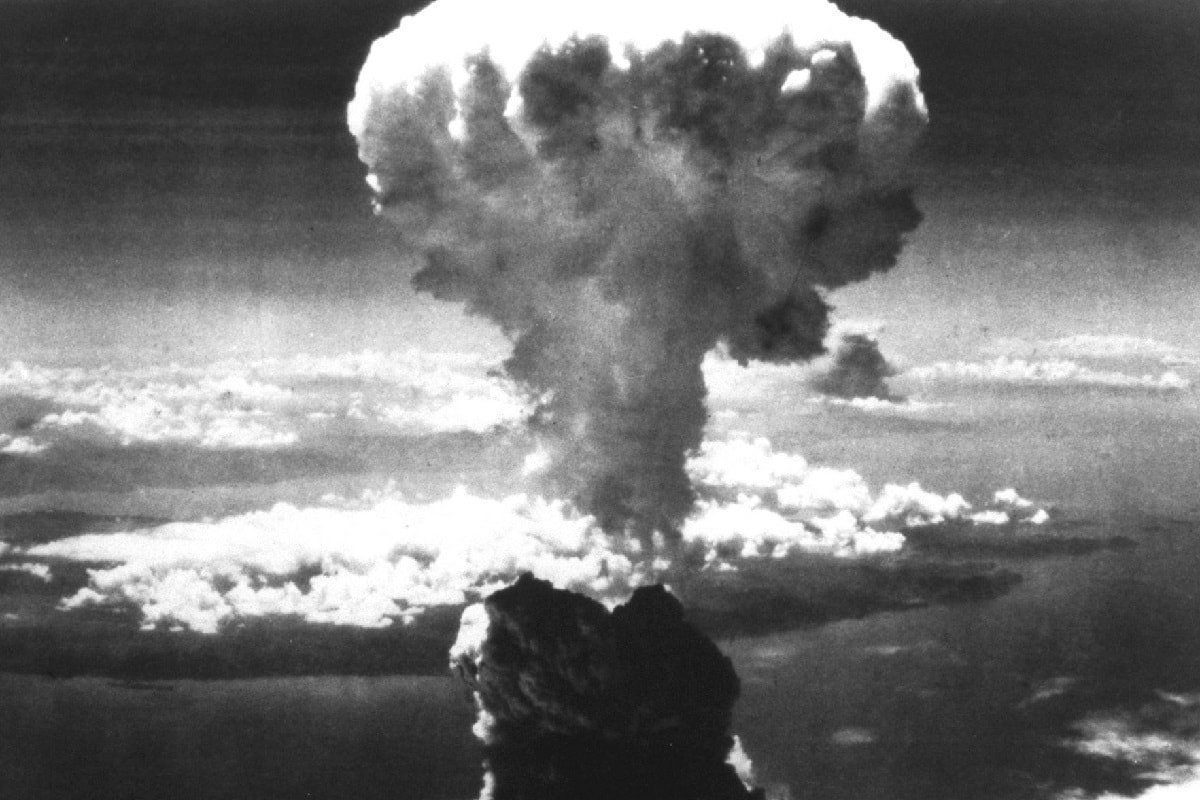
Hiroshima. Image Credit: Creative Commons.
-By sharing this story, Wolfe is launching a new “Why series” communication push, aiming to use this tangible link to the past to explain difficult modern changes and prioritize higher standards and resources for Airmen.
The Secret Pin Hidden Inside a U.S. Air Force Leader’s Coat
Chief Master Sgt. of the Air Force David R. Wolfe has chosen a heartwarming, intimate ritual to explain a highly public-facing vocation.
He has revealed that, tucked away inside his service coat, is an Air Force pin that once belonged to his father, Staff Sgt. Thomas Robert Wolfe.
In a service-wide message picked up on by the online magazine Task & Purpose, Wolfe wrote that feeling the “weight” of the pin against his chest keeps his career anchored in something bigger than the day-to-day grind of the Pentagon.
In a recent social media clip, he referred to himself as “a single thread in a massive tapestry” of the Air Force’s legacy, which he admitted was “beautiful” but “stained with blood, sweat, and tears.”
Wolfe’s father, a Second World War war photographer, was one of the first photographers to document the Hiroshima and Nagasaki atomic bombings.
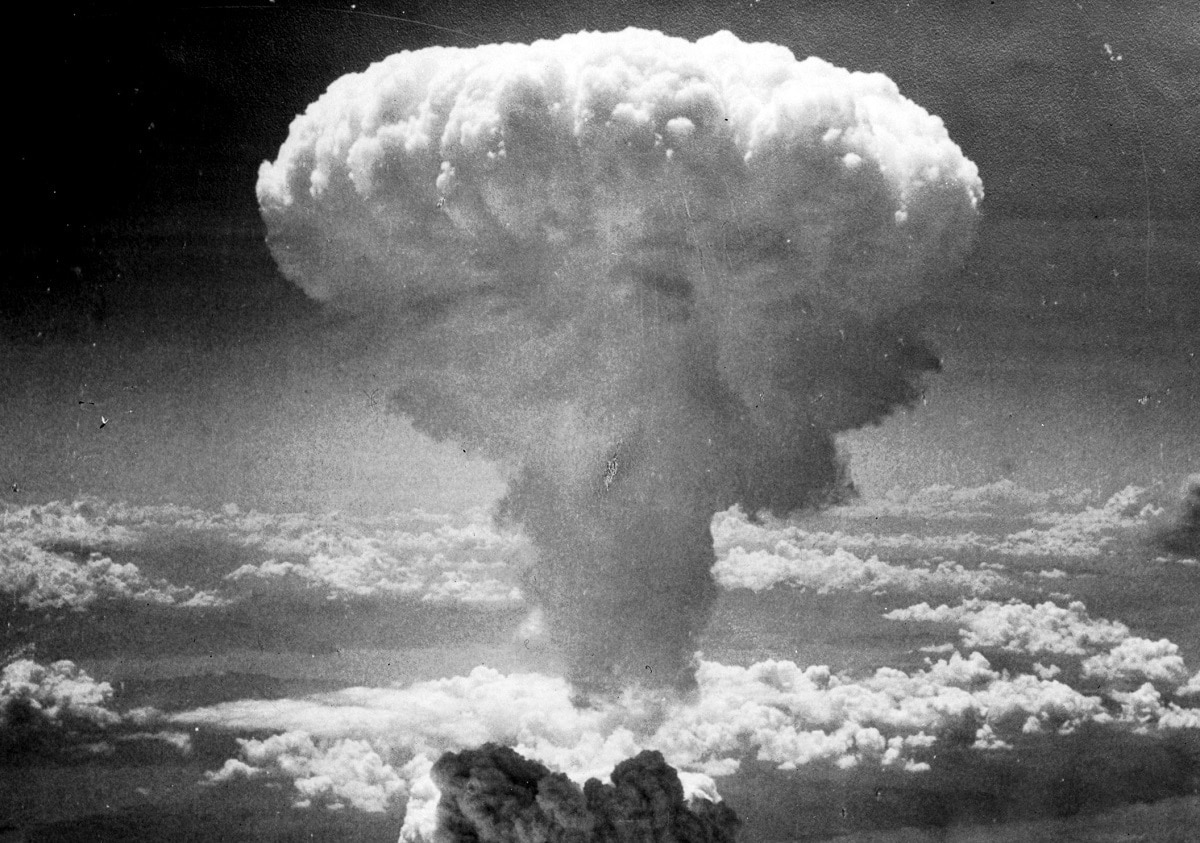
Nuclear Bombing of Nagasaki. Image Credit: Creative Commons.
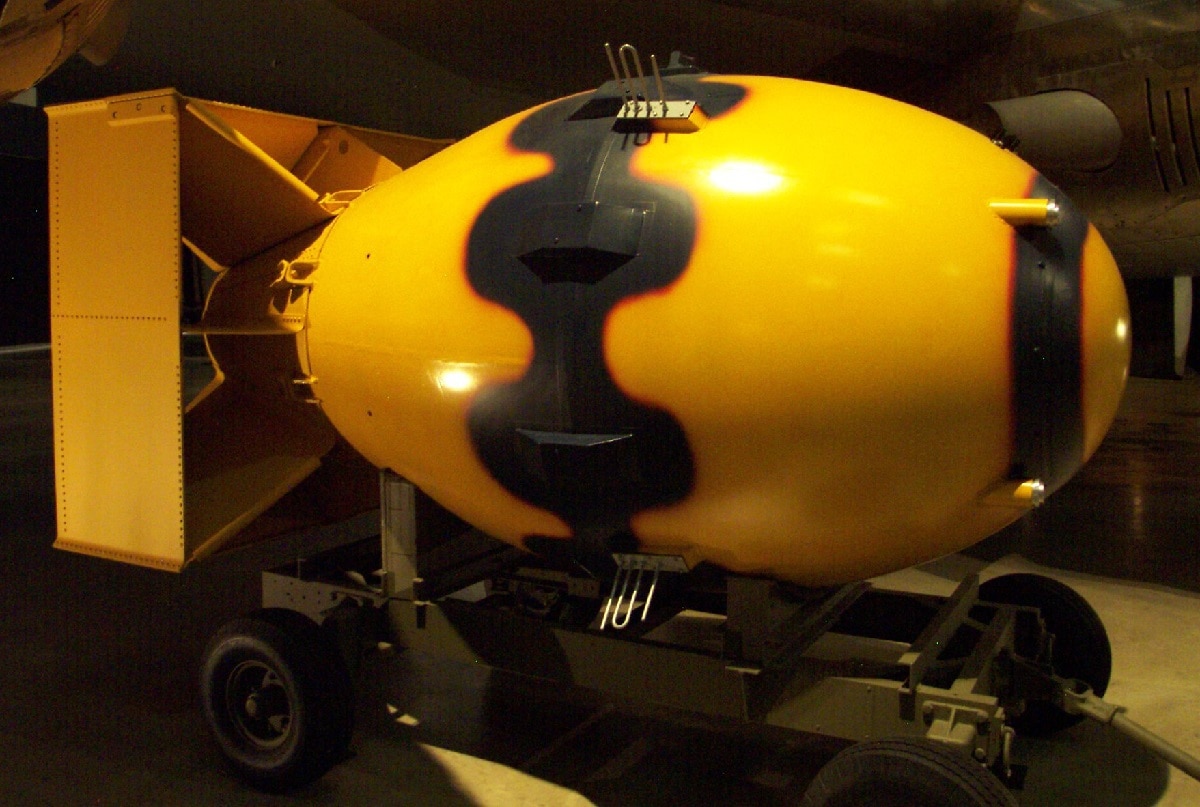
Fat Boy Nuclear Bomb. Image Credit: Creative Commons.
Wolfe wrote that his father, who enlisted in the newly independent Air Force in 1947, did not serve out of “convenience,” but because the war’s toll made indifference impossible.
That thesis matters because Wolfe is still new in the top enlisted role.
He was promoted to 21st Chief Master Sergeant of the Air Force last December 2025, replacing David Flosi.
In those accounts, Air Force Secretary Troy Meink praised Wolfe’s advocacy for Airmen, while Chief of Staff Gen. Kenneth Wilsbach framed Wolfe as the kind of leader who will push standards while fighting for the force’s needs.
Wolfe’s pin story is also the launch of a wider communications push.
He described it as the first installment in a monthly “Why series,” designed to address Airmen’s questions about why the service is prioritizing certain missions and implementing specific changes. He reinforced that message in a video recently posted to his official Facebook page.
The slight irony here is that the most senior, and therefore most public, enlisted leader in the Air Force is using something unseen to make his point.
But perhaps that is what he wanted to signal all along, that the “why” is rarely obvious and glamorous. An Air Force career can inevitably mean missed family events and holidays, tough work, and a long career.
Wolfe is betting that if he can connect sacrifice to meaning, he can better argue for the practical things he’s also vowed to roll out: higher standards, improved resources, and a better quality of life for servicemen.
About the Author: Georgia Gilholy
Georgia Gilholy is a journalist based in the United Kingdom who has been published in Newsweek, The Times of Israel, and the Spectator. Gilholy writes about international politics, culture, and education. You can follow her on X: @llggeorgia.