
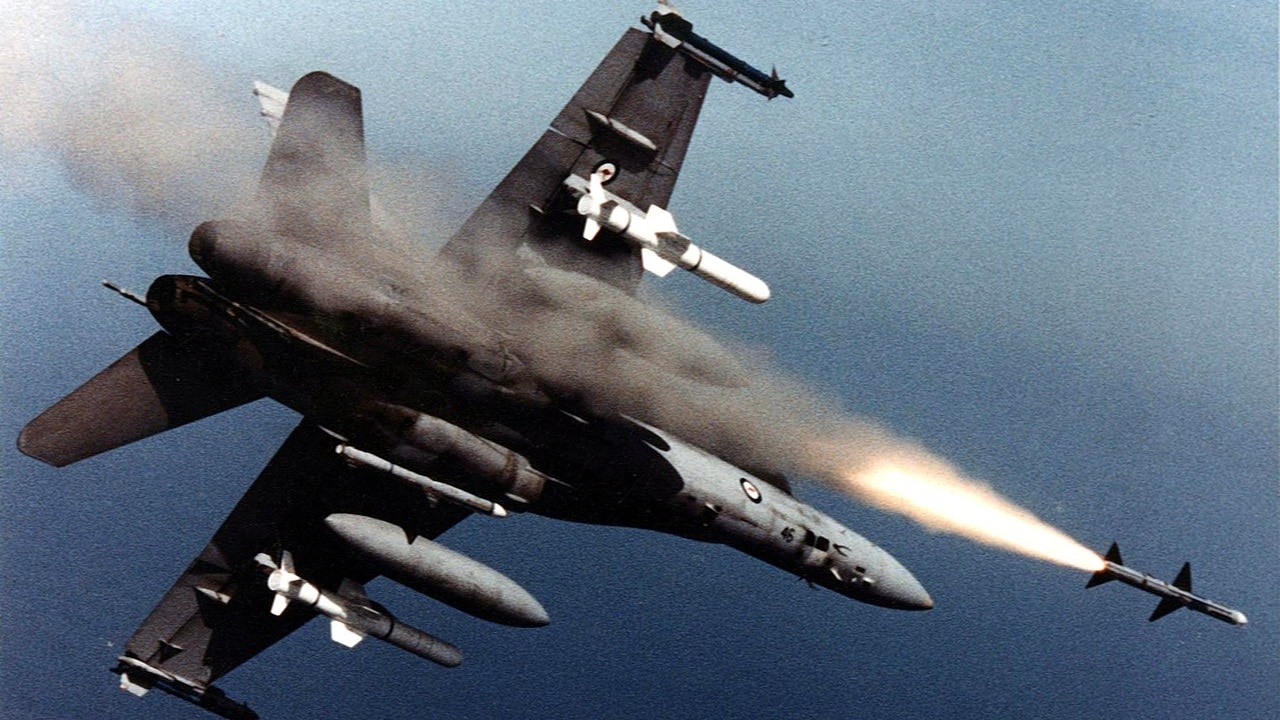
Summary and Key Points: The F/A-18 Hornet emerged in 1983 to solve the Navy’s “hyper-specialization” crisis, replacing the F-4 and A-7 with a single, versatile platform.
-Derived from the Northrop YF-17 Cobra, the Hornet was reinforced for the brutal reality of carrier traps and catapult launches.
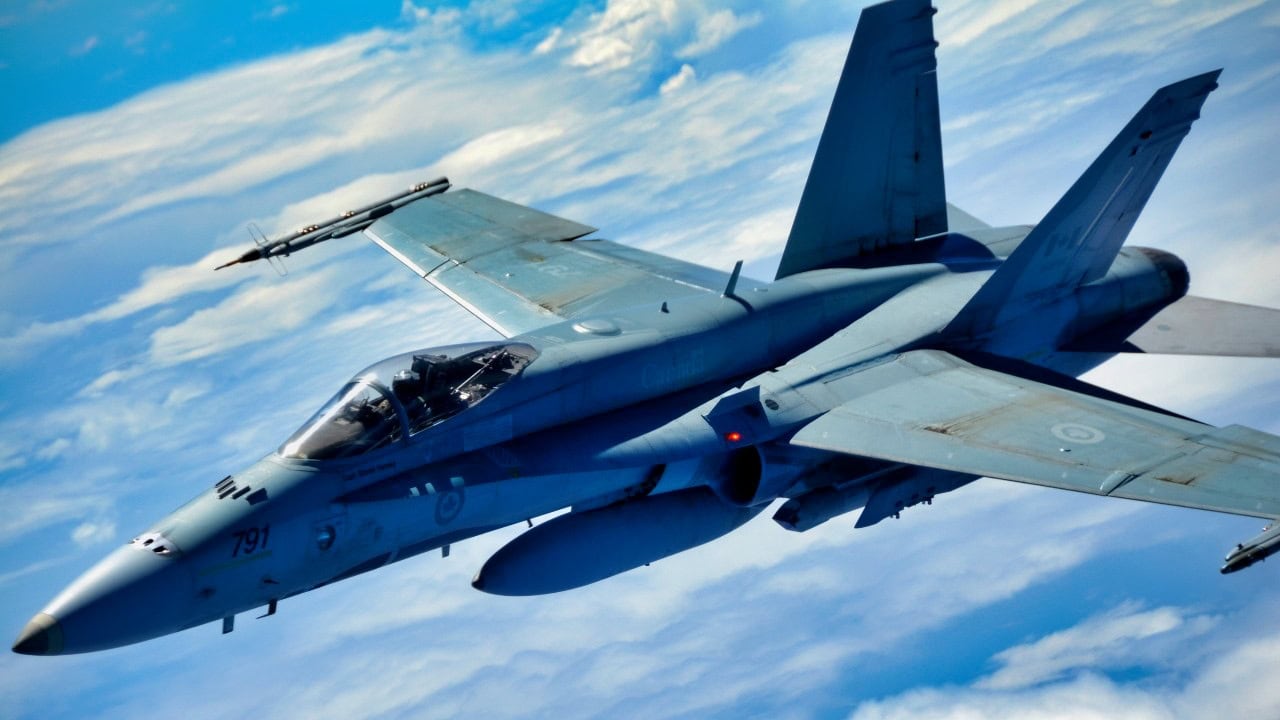
JOINT BASE PEARL HARBOR-HICKAM (July 11, 2016) A Royal Canadian Air Force CF-18 Hornet flies alongside a KC-135 Stratotanker flown by a crew from the 465th Air Refueling Squadron, Tinker Air Force Base, Okla., in support of Rim of the Pacific 2016. Twenty-six nations, more than 40 ships and submarines, more than 200 aircraft and 25,000 personnel are participating in RIMPAC from June 30 to Aug. 4, in and around the Hawaiian Islands and Southern California. The world’s largest international maritime exercise, RIMPAC provides a unique training opportunity that helps participants foster and sustain the cooperative relationships that are critical to ensuring the safety of sea lanes and security on the world’s oceans. RIMPAC 2016 is the 25th exercise in the series that began in 1971. (U.S. Air Force photo/Master Sgt. Grady Epperly)
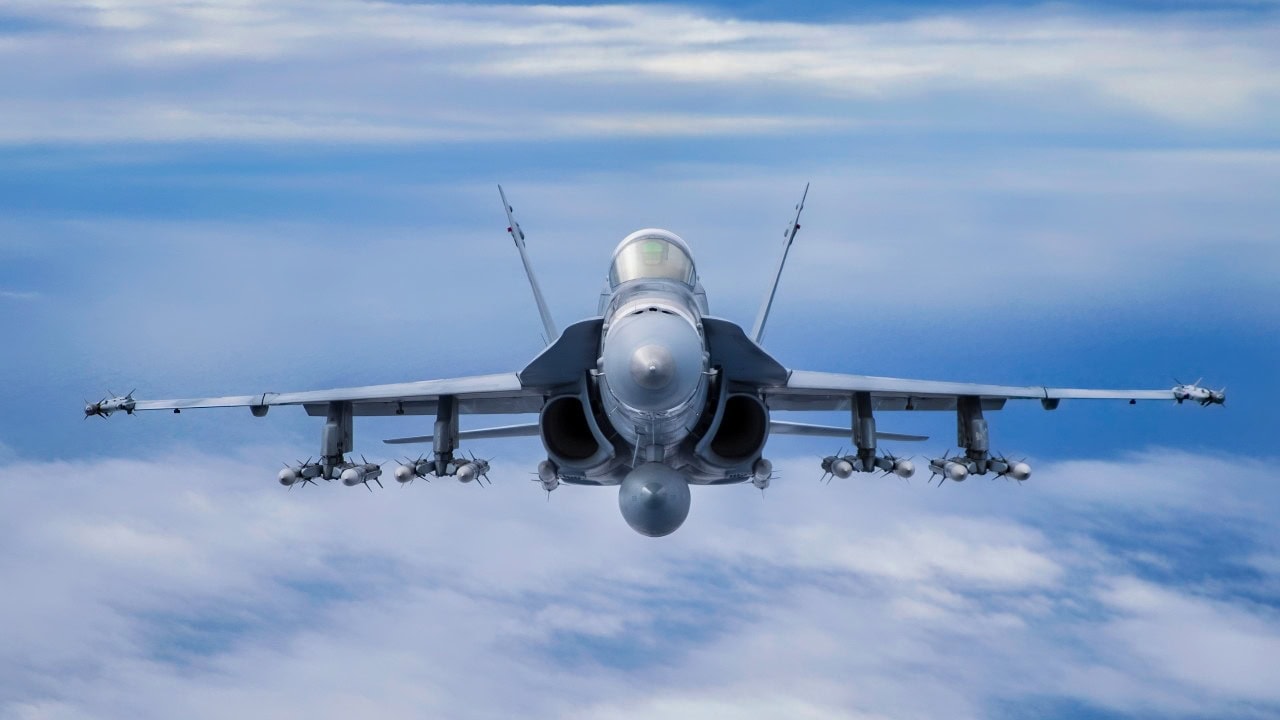
An F/A-18 Hornet with Marine Fighter Attack Squadron (VMFA) 323, MAG-11, 3rd Marine Aircraft Wing (MAW), carrying ten AIM-120 and two AIM-9X Air-to-Air missiles, prepares to refuel over the W-291 training area in southern California, March 6. MAG-11 supports and integrates aviation combat power and capabilities while enhancing 3rd MAW’s ability generate lethality for the supported Marine Air-Ground Task Force (MAGTF). (U.S Marine Corps photo by Sgt. Dominic Romero)
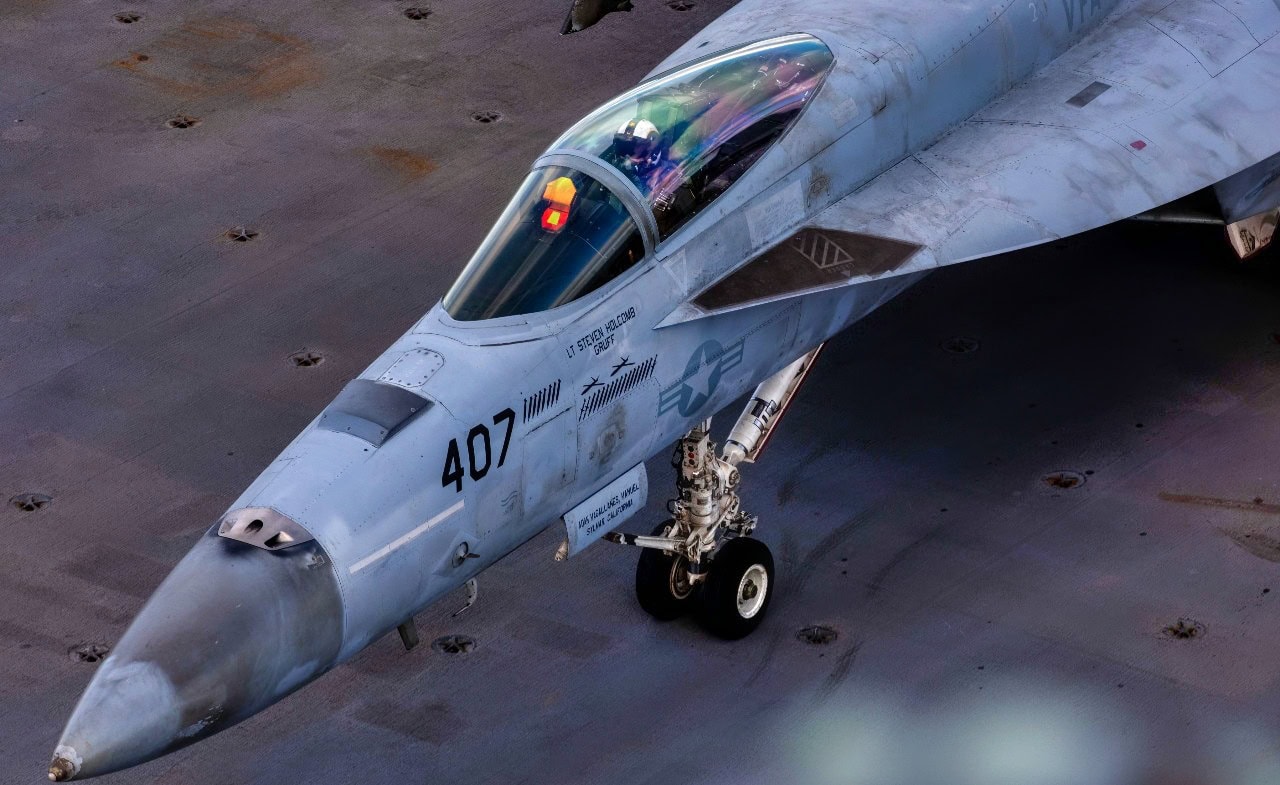
(Dec. 7, 2024) LT Steven Holcomb, attached to the Gunslingers of Strike Fighter Squadron (VFA) 105, operates a F/A-18E Super Hornet on the flight deck during flight operations, Dec. 7, 2024. USS George H.W. Bush is in the basic phase of the Optimized Fleet Response Plan conducting flight deck certification.(U.S. Navy photo by Mass Communication Specialist Seaman Jayden Brown)
-Its digital fly-by-wire system and HUD-centric cockpit allowed pilots to pivot from air-to-air combat to precision bombing in a single mission.
-While smaller and shorter-ranged than the F-14 Tomcat, the Hornet’s 20-hour maintenance footprint and legendary high-alpha maneuverability made it the indispensable backbone of carrier aviation for over four decades.
From YF-17 to F/A-18: The Shocking Success of the Air Force’s “Biggest Mistake”
The F/A-18 Hornet emerged in the late Cold War as a radical idea: a single aircraft designed to replace multiple specialized platforms.
Built to consolidate the roles of the A-6, F-14, and others, the F/A-18 delivered a distinctive multirole platform that the Navy relied on heavily.
The Post-Vietnam Problem
In the 1970s, the US Navy was faced with a problem. Its existing aircraft were aging, and they were all specialized.
The F-4, the A-7, the A-4—all were built primarily to do one thing. And as the airframes aged, as maintenance became more burdensome and parts sourcing became more difficult, the costs of doing that one thing rose and rose.
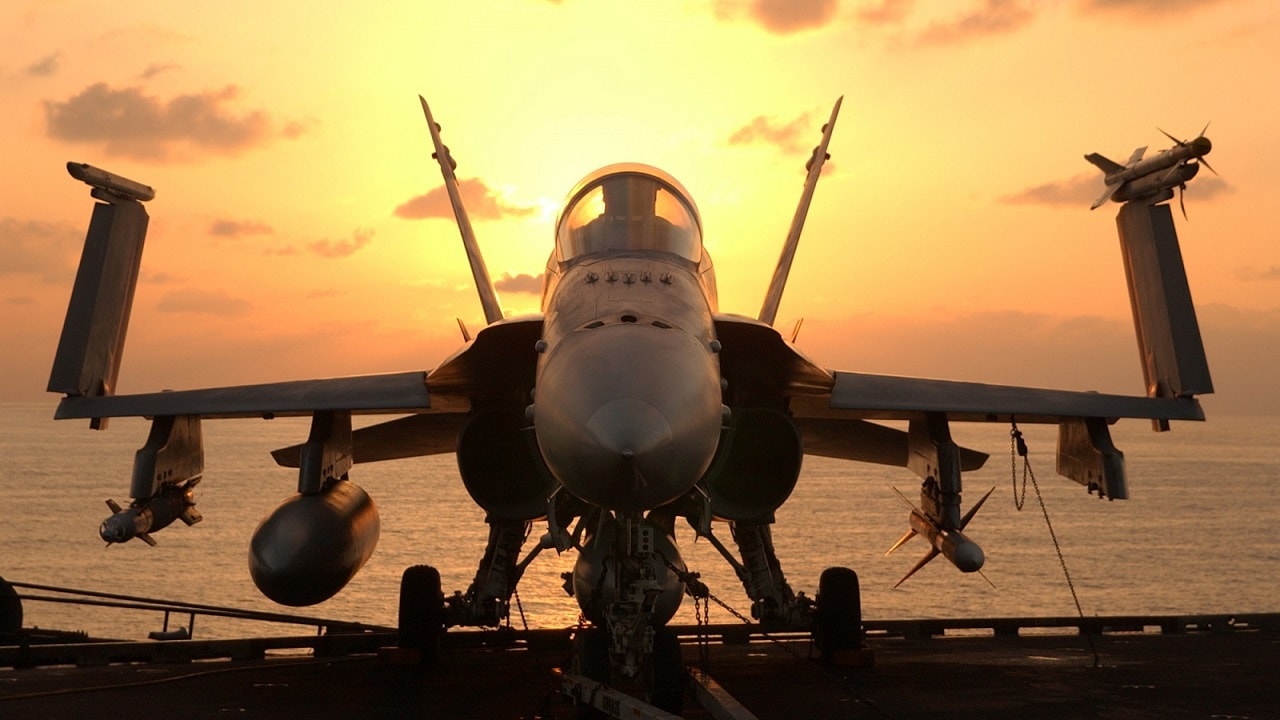
At sea aboard USS John C. Stennis, December 18, 2001 – After an early morning round of flight operations, an F/A-18 Hornet awaits the next round of combat flight operations aboard the USS John C. Stennis (CVN 74). Stennis and her embarked Carrier Air Wing Nine (CVW-9) are supporting Operation Enduring Freedom. U.S. Navy photo by Photographer’s Mate 3rd Class Jayme Pastoric
But hyper-specialization, Vietnam demonstrated, was a poor strategy; the war had demonstrated the need for flexibility and survivability. The Navy needed a true multirole aircraft, capable of both air combat and strike.
Lightweight Fighter Roots
The Hornet was derived from the YF-17 Cobra, a lightweight fighter competitor, which lost an Air Force contract to the YF-16 (which became the F-16 Fighting Falcon).
The Navy selected the YF-17, however, over heavier, single-mission designs.
The YF-17’s emphasis was on carrier suitability, twin engines for over-water safety, and ease of maintenance—all vital, of course, to the Navy’s needs.
The YF-17 was modified to more closely meet the Navy’s needs, becoming the first aircraft formally designated “F/A” for fighter/attack. The designation was telling: the F/A-18 could switch missions between sorties with minimal reconfiguration, reducing the logistics burden aboard carriers, and reflecting a wider doctrinal shift away from rigid role separation.
Design Philosophy
The Hornet prioritized balanced performance over extreme specialization.
Key traits included excellent low-speed handling (important for carrier landings), high angle-of-attack capability (important for dogfighting), and digital fly-by-wire controls. The jet was designed for survivability—not just speed or altitude performance.
From the beginning, the Hornet was optimized for carrier operations. The strong landing gear and arresting hook were built to withstand the punishment of carrier ops. Handling was predictable, especially at low speeds. And the results were reduced accident rates compared to earlier fighters.
The jet also featured an integrated avionics suite that was ahead of its contemporaries. The world on the pilot was reduced, and a HUD-centric cockpit improved situational awareness.
This enabled effective multirole operations without overwhelming pilots with sensory input requirements.
Combat Performance
The Hornet was neither the fastest nor the highest-flying fighter. It didn’t set any records. But that wasn’t the point. The jet excelled in close-in maneuvering, high-alpha flight, and nose-pointing authority.
This equated to a highly respected profile for WVR dogfighting. But the Hornet wasn’t limited to just air-to-air combat; the jet could also perform a strike. Capable of carrying a wide range of unguided bombs and precision-guided munitions, the Hornet was effective for close air support, maritime strike, and interdiction. These strike capabilities are all superlative without sacrificing air-to-air performance.
The Hornet wasn’t just theoretically successful—the platform saw combat in Desert Storm, the Balkans, Afghanistan, and Iraq, frequently flying mixed missions and demonstrating reliability and adaptability under the rigors of combat. Allied air forces recognized the value of the Hornet and purchased the platform for its ease of maintenance, interoperability with US forces, and balanced performance, helping to standardize Western multirole air power.
The Hornet was not without limitations, however. The jet had a shorter range than larger fighters and payload constraints compared with dedicated strike aircraft. Eventually, the jet was outpaced by newer sensors and threats. But the limitations were understood tradeoffs, not design failures.
Significance and Legacy
The Hornet helped redefine what a frontline fighter should be. It proved that multirole aircraft could replace fleets of specialists and that flexibility often mattered more than peak performance. This directly influenced later designs, most obviously the Super Hornet.
Today, the F/A-18 is remembered not for extremes but for reliability, adaptability, and balance.
The jet served as the backbone for naval aviation for decades, while its offshoot, the Super Hornet, is still the Navy’s de facto workhorse.
In sum, the Hornet marked a watershed moment in fighter aircraft design.
About the Author: Harrison Kass
Harrison Kass is an attorney and journalist covering national security, technology, and politics. Previously, he was a political staffer and candidate, and a US Air Force pilot selectee. He holds a JD from the University of Oregon and a master’s in global journalism and international relations from NYU.