

Summary and Key Points: The YF-17 “Cobra” remains one of the most successful “failures” in military aviation history.
-Originally developed for the Air Force’s Lightweight Fighter (LWF) program to counter the rising costs of heavy fighters like the F-15, the twin-engine YF-17 ultimately lost to the more agile and cost-effective YF-16.
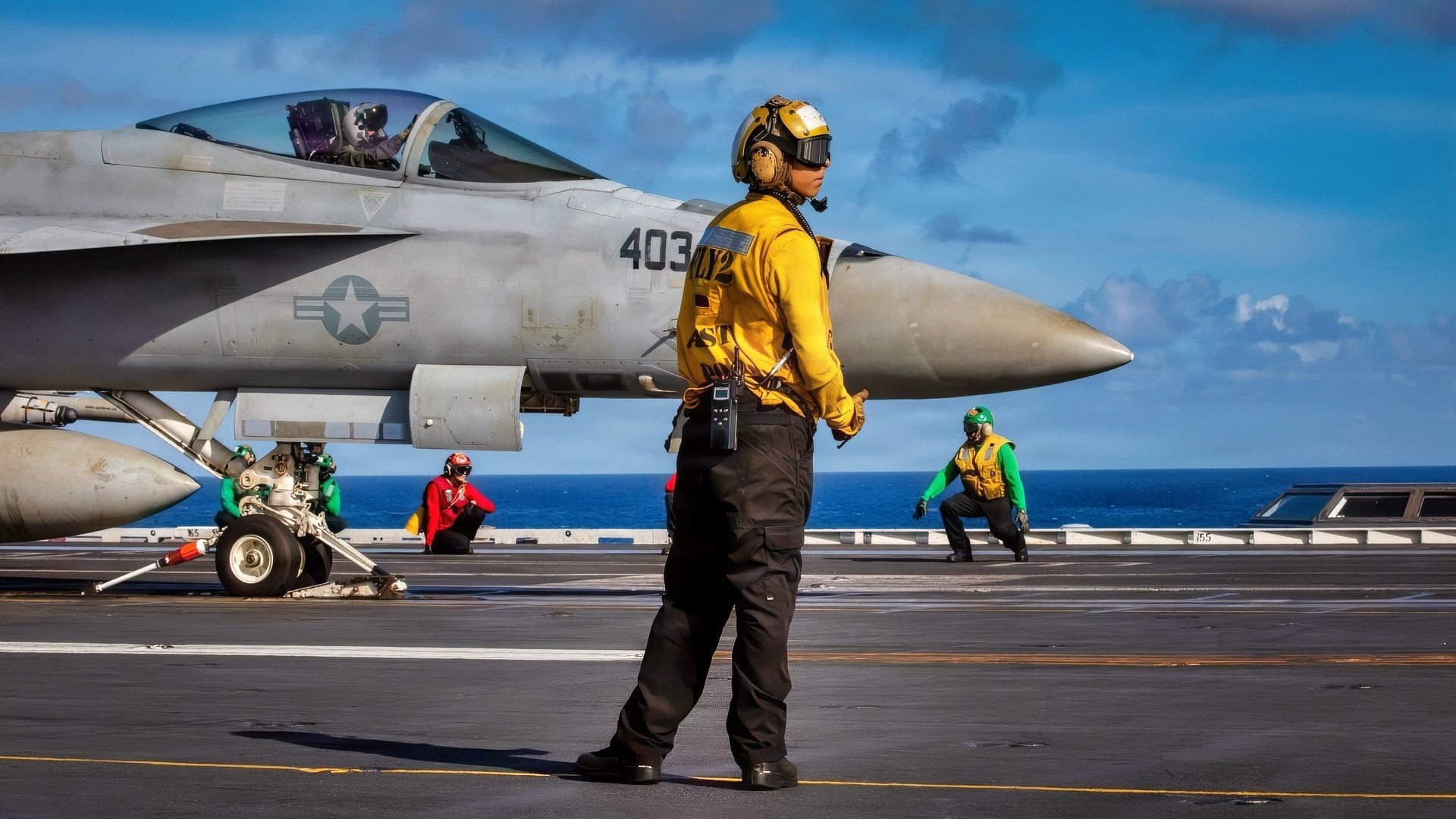
A U.S. Sailor signals to an F/A-18E Super Hornet aircraft, attached to Strike Fighter Squadron 87, during flight deck operations on the flight deck of the world’s largest aircraft carrier, Ford-class aircraft carrier USS Gerald R. Ford (CVN 78), while underway in the Caribbean Sea, Jan. 3, 2026. U.S. military forces are deployed to the Caribbean in support of the U.S. Southern Command mission, Department of War-directed operations, and the president’s priorities to disrupt illicit drug trafficking and protect the homeland. (U.S. Navy photo)
-However, its focus on redundancy, carrier-ready structural strength, and high-angle-of-attack stability caught the eye of the U.S. Navy.
-Reborn as the F/A-18 Hornet, the Cobra’s DNA went on to define naval aviation for decades, proving that a lost competition can sometimes lead to a legendary legacy.
Beyond the F-16: The Secret History of Northrop’s Masterpiece, the YF-17 Cobra
The YF-17 was a prototype lightweight fighter developed by Northrop in the 1970s.
The aircraft, nicknamed Cobra, sought to build on the legacy of the F-5 to produce a cost-effective, lightweight fighter for the U.S. Air Force.
The YF-17 competed in the Lightweight Fighter program against the YF-16, which was later developed into the F-16 Fighting Falcon.
Although the Cobra lost the competition, Northrop was undeterred and continued work on the aircraft, eventually developing it into the F/A-18 for the U.S. Navy.
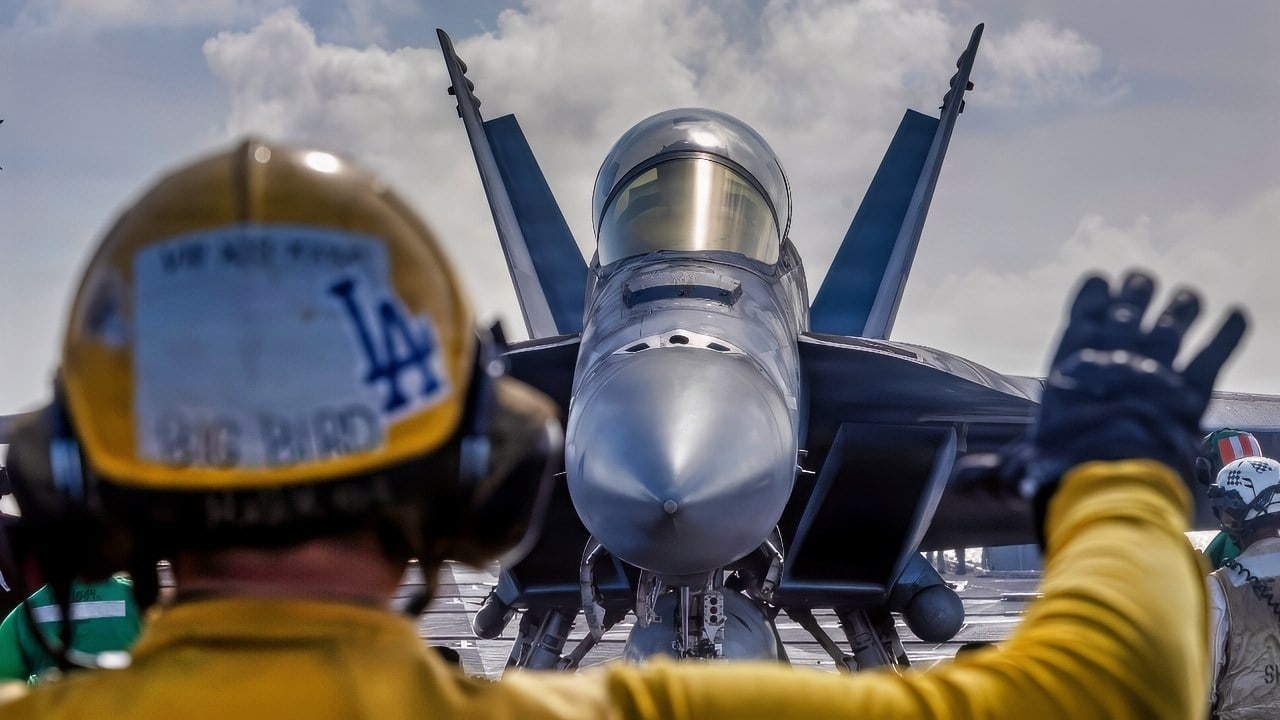
U.S. Navy Aviation Boatswain’s Mate (Handling) 2nd Class Michael Cordova directs an F/A-18E Super Hornet, attached to Strike Fighter Squadron (VFA) 14, on the flight deck of Nimitz-class aircraft carrier USS Abraham Lincoln (CVN 72) on Jan. 10, 2026. The Abraham Lincoln Carrier Strike Group is underway conducting routine operations in the U.S. 7th Fleet area of operations. Units assigned to 7th Fleet conduct regular Indo-Pacific patrols to deter aggression, strengthen alliances and partnerships, and advance peace through strength. (U.S. Navy photo by Mass Communication Specialist Seaman Daniel Kimmelman)
Searching for a New Lightweight Fighter
In the 1960s, many in the defense community were dissatisfied with the direction of fighter development.
American fighters such as the F-4 Phantom II had been optimized for high speed, long-range interception, and missile-based combat, often at the expense of agility and close-in dogfighting performance.
Combat experience in Vietnam demonstrated that visual-range engagements remained common and that large, complex fighters were not always well-suited to such engagements.
At the same time, the escalating costs of advanced aircraft such as the F-15 Eagle raised concerns within both Congress and the Department of Defense about affordability and force structure sustainability.
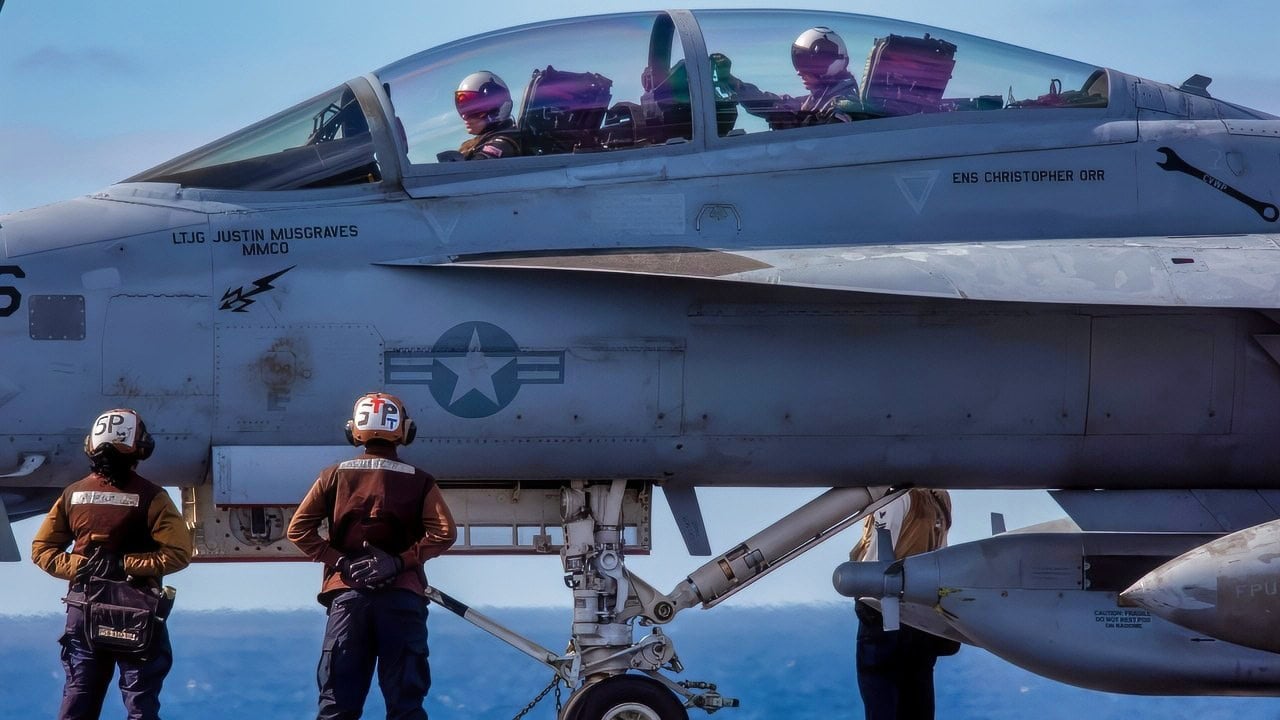
U.S. Navy Sailors prepare to taxi an EA-18G Growler, attached to Electronic Attack Squadron (VAQ) 133, on the flight deck of Nimitz-class aircraft carrier USS Abraham Lincoln (CVN 72) on Nov. 24, 2025. USS Abraham Lincoln (CVN 72), flagship of the Abraham Lincoln Carrier Strike Group, is underway conducting routine operations in the U.S. 3rd Fleet area of operations, demonstrating the U.S. Navy’s long-term commitment to a free and open Indo-Pacific. (U.S. Navy photo by Mass Communication Specialist Seaman Daniel Kimmelman)
In response, the Air Force launched the Lightweight Fighter (LWF) program in the early 1970s. The LWF was intended as a technology evaluation effort rather than a guaranteed procurement program with an emphasis on simplicity, maneuverability, and low cost.
Influenced by John Boyd’s energy-maneuverability theory, the program sought fighters with high thrust-to-weight ratios, low wing loading, and excellent performance in sustained turning combat.
After evaluating several proposals, the Air Force selected two finalists: the single-engine YF-16 from General Dynamics and the twin-engine YF-17 from Northrop. Each company was contracted to build two prototypes and conduct an independent flight test program.
Designing the YF-17 Cobra
Northrop’s YF-17 was the culmination of a long design lineage that traced back to the company’s early lightweight fighter concepts and, most directly, to the F-5 Freedom Fighter family.
While sharing the F-5’s compactness and efficiency, the YF-17 was a substantial improvement in aerodynamic shaping. The most distinctive feature of the aircraft was its leading-edge root extensions, which blended smoothly into the fuselage ahead of the wings.
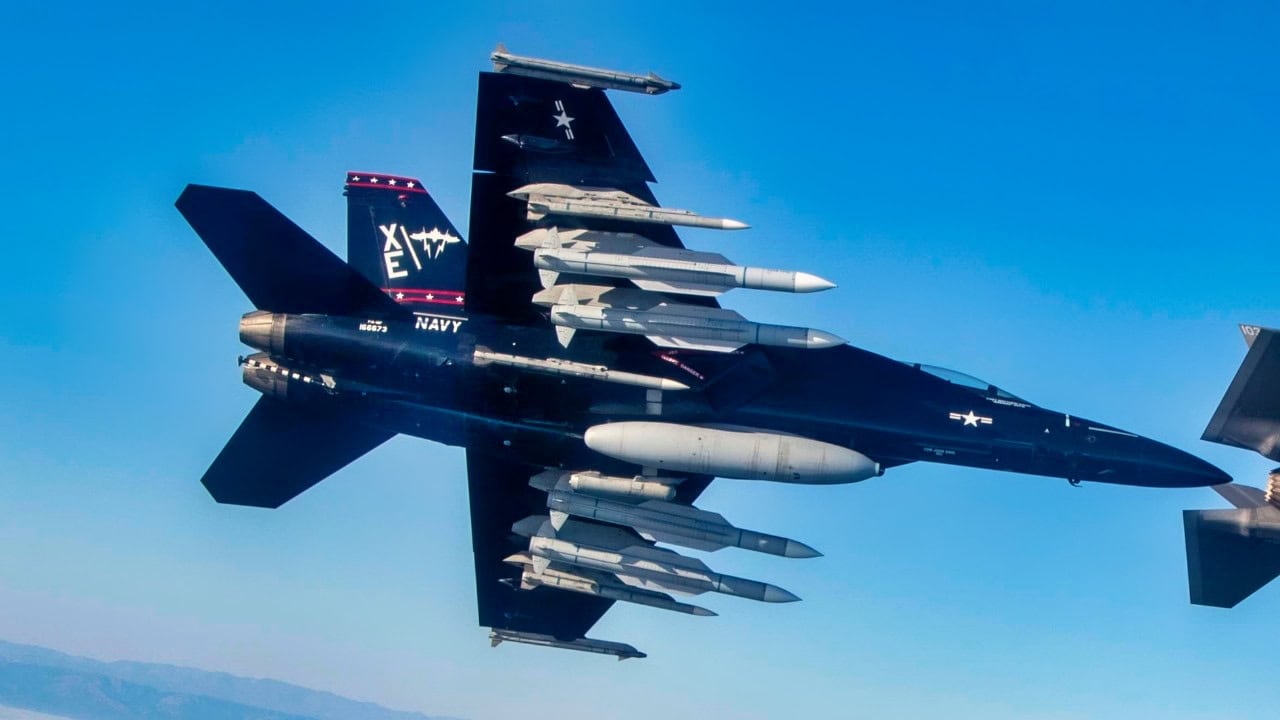
A U.S. Navy F/A-18F and F-35, both assigned to Air Test and Evaluation Squadron (VX) 9, fly over the Point Mugu Sea Range in Southern California with a U.S. Air Force F-15 during Gray Flag 2024 on Sept. 24, 2024. Gray Flag is an annual large-force test event that brings the joint force together to test and evaluate multi-domain systems in a maritime environment, ensuring our nation’s warfighters are equipped with effective, interoperable systems that will help them deter aggression, protect our nation’s prosperity and security, and return home safely to their families. (U.S. Navy photo by Lt. Cmdr. Kory Hughs)
These extensions generated powerful vortices at high angles of attack, increasing lift and delaying stall, thereby allowing the aircraft to remain controllable in aggressive maneuvers.
The YF-17 also employed a twin-engine, twin-vertical-tail configuration, with the tails canted outward and spaced widely apart.
This arrangement improved directional stability at high angles of attack and reduced the aerodynamic interference between the engines and control surfaces. The wing itself was relatively large for a lightweight fighter, providing low wing loading and good sustained turn performance.
The airframe was designed to withstand high G-loads, consistent with its intended role as a close-in air-superiority fighter rather than a high-speed interceptor.
The LWF Flyoff
Flight testing of the YF-16 and YF-17 began in 1974 and quickly revealed the contrasting philosophies embodied by the two designs.
The YF-16 was extremely simple with its single-engine configuration. At the same time, the aircraft demonstrated significant performance potential and showcased its advanced fly-by-wire control system.
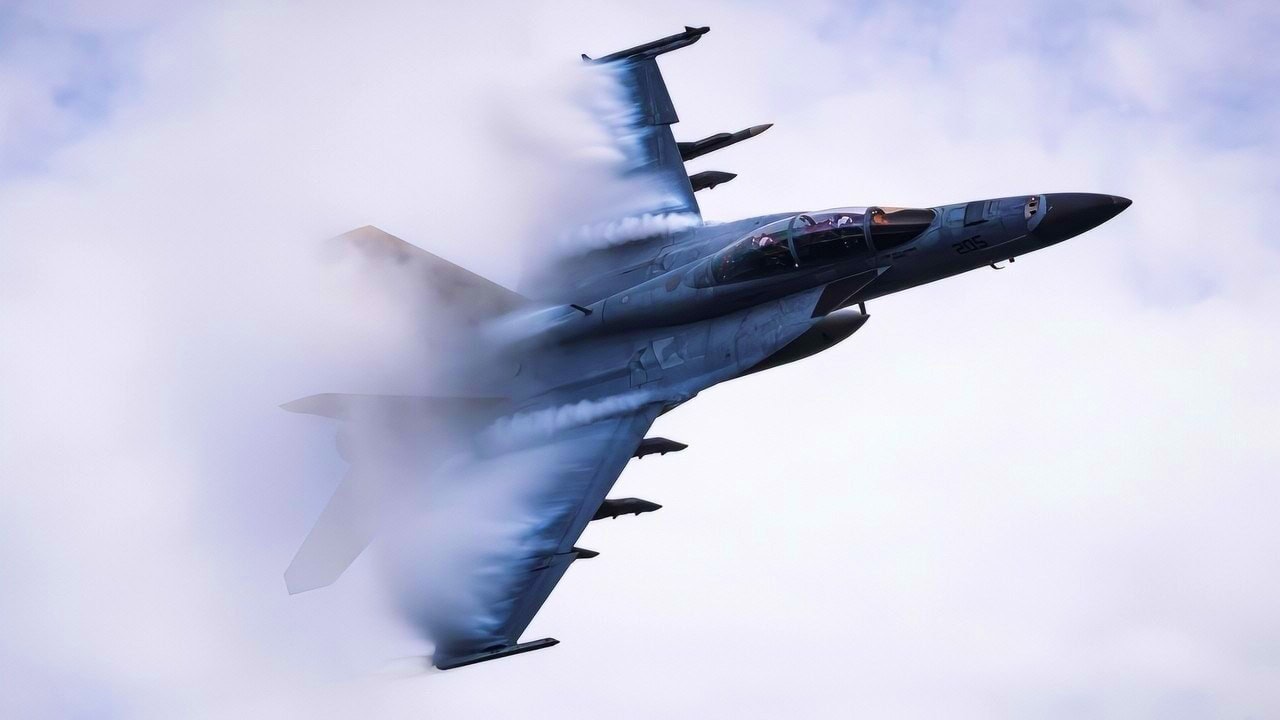
USS George Washington Aircraft Carrier Super Hornet. Image Credit: Creative Commons.
The YF-17, by contrast, prioritized redundancy, structural strength, and predictable handling across a wide flight envelope. Both aircraft demonstrated excellent maneuverability, but the
YF-16 offered superior acceleration, lower fuel consumption, and reduced operating costs.
These factors proved decisive for the Air Force, which selected the YF-16 for full-scale development in January 1975.
The YF-17’s twin-engine configuration, while advantageous for survivability, was judged unnecessary for Air Force requirements, particularly given the emphasis on cost and simplicity. With the competition decided, the YF-17 appeared, at least initially, to have reached the end of its developmental road.
Naval Interest and the Path to the F/A-18
While the Air Force was concluding the LWF program, the U.S. Navy faced its own challenges. Its carrier air wings relied heavily on aging aircraft such as the F-4 Phantom II and the A-7 Corsair II, both of which were becoming increasingly expensive to maintain and operationally limited.
The Navy’s VFAX program sought a multirole fighter capable of both air-to-air and strike missions, with an emphasis on reliability, twin-engine safety over water, and the structural strength required for carrier operations.
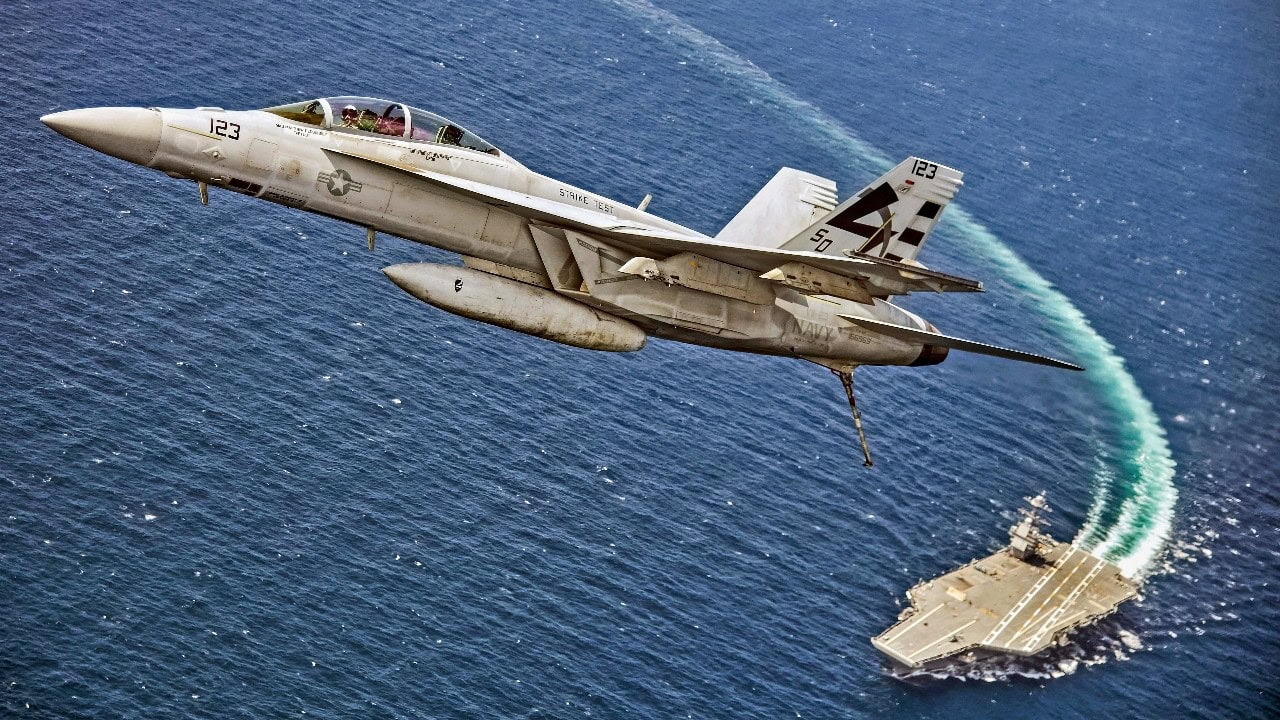
Super Hornet Navy Fighter. Image Credit: Creative Commons.
These requirements aligned closely with the inherent characteristics of the YF-17. In 1975, Congress directed the Navy to base its new fighter on either the YF-16 or YF-17.
After extensive evaluation, the Navy selected the YF-17 design, pairing Northrop with McDonnell Douglas to adapt the Cobra into a fully carrier-capable aircraft.
This decision marked the beginning of the transformation that led to the F/A-18 Hornet.
Transformation from Prototype to Operational Aircraft
The evolution from YF-17 to F/A-18 involved a significant redesign. The airframe was reinforced to endure catapult launches and arrested landings, the landing gear was strengthened, and the wings were modified to fold for carrier storage.
The avionics suite was completely reworked to support all-weather, multirole operations, and the engines evolved into the production F404 series.
Despite these extensive changes, the aerodynamic core of the YF-17 remained evident, particularly in the leading-edge extensions and twin-tail layout that characterized the Hornet throughout its service life.
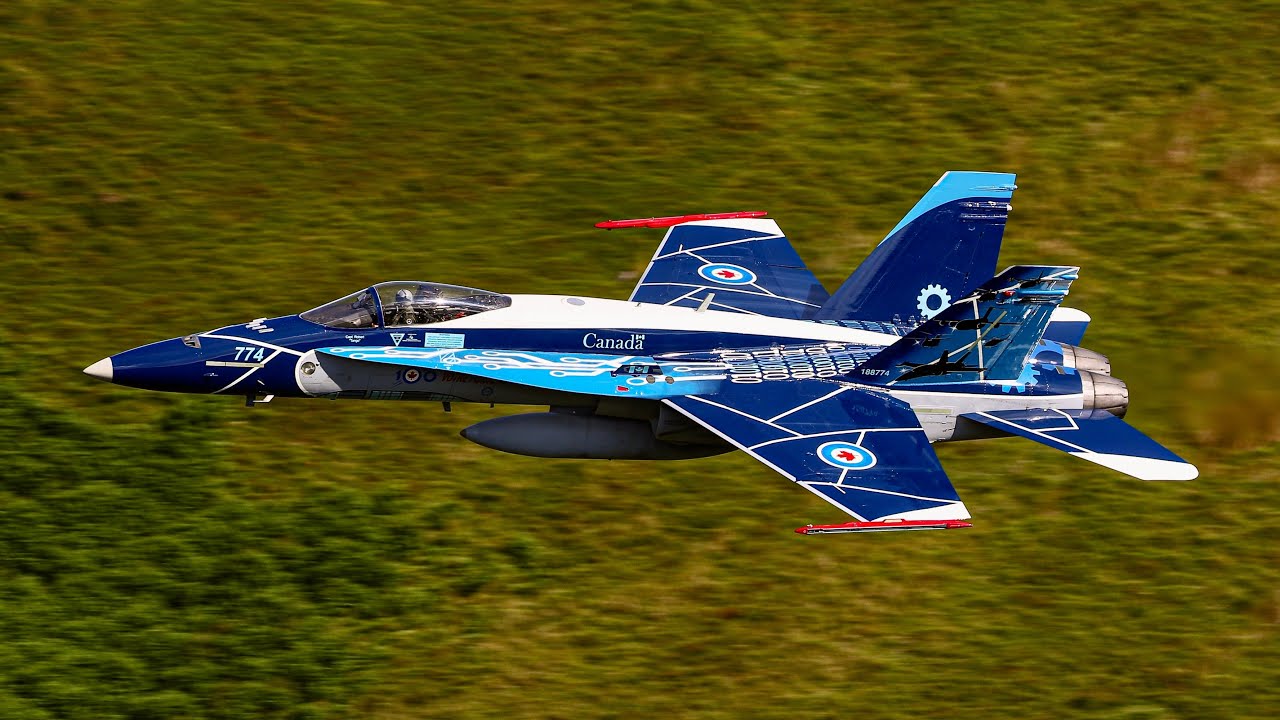
CF-18 Hornet Canada Air Force. Image Credit: Creative Commons.
The F/A-18 first flew in 1978 and entered service with the U.S. Marine Corps and Navy in the early 1980s. It quickly proved to be a versatile and reliable platform capable of performing fighter escort, fleet air defense, close air support, and deep-strike missions.
Over the following decades, the Hornet and its derivatives would see extensive combat service and become a mainstay of allied air forces worldwide.
About the Author: Isaac Seitz
Isaac Seitz, a Defense Columnist, graduated from Patrick Henry College’s Strategic Intelligence and National Security program. He has also studied Russian at Middlebury Language Schools and has worked as an intelligence Analyst in the private sector.