
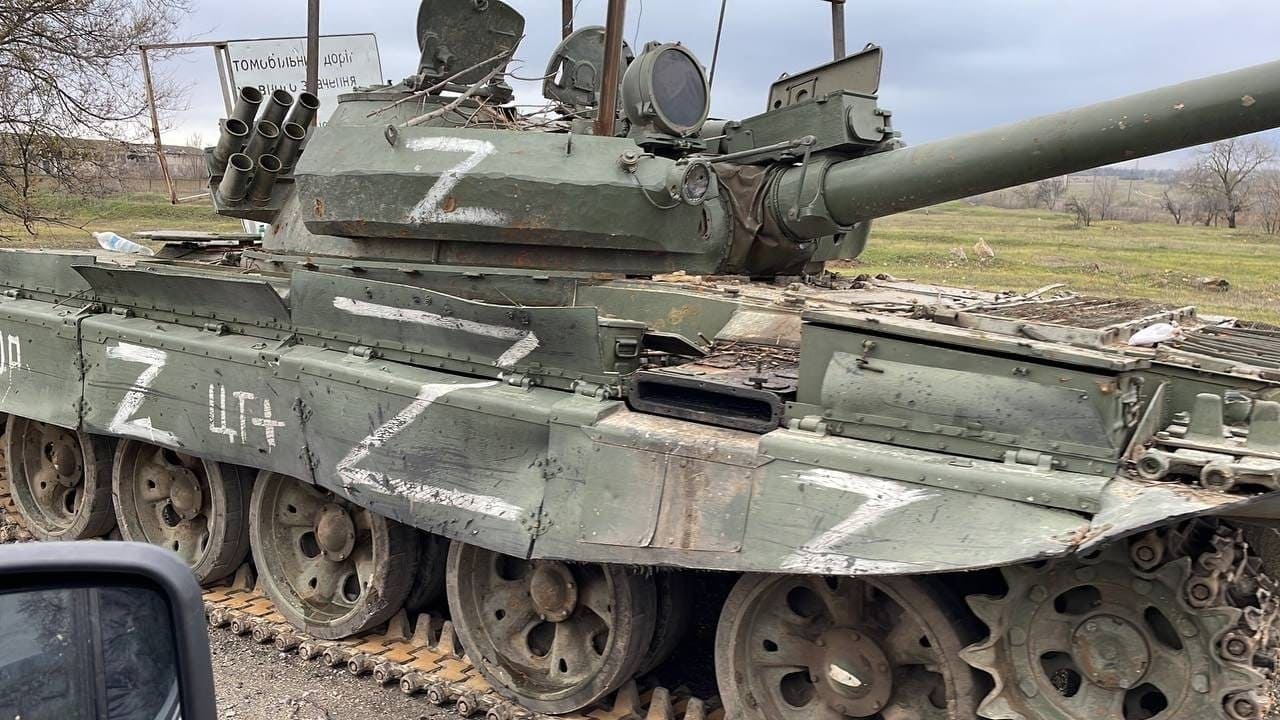
Summary and Key Points: The deployment of 1960s-era T-62 tanks to the front lines in Ukraine signals a desperate shift in Russia’s armored strategy.
-With casualties estimated as high as 1.4 million and over 4,000 main battle tanks destroyed, Moscow is resurrecting “zombie” armor to fill the void left by its decimated modern fleet.
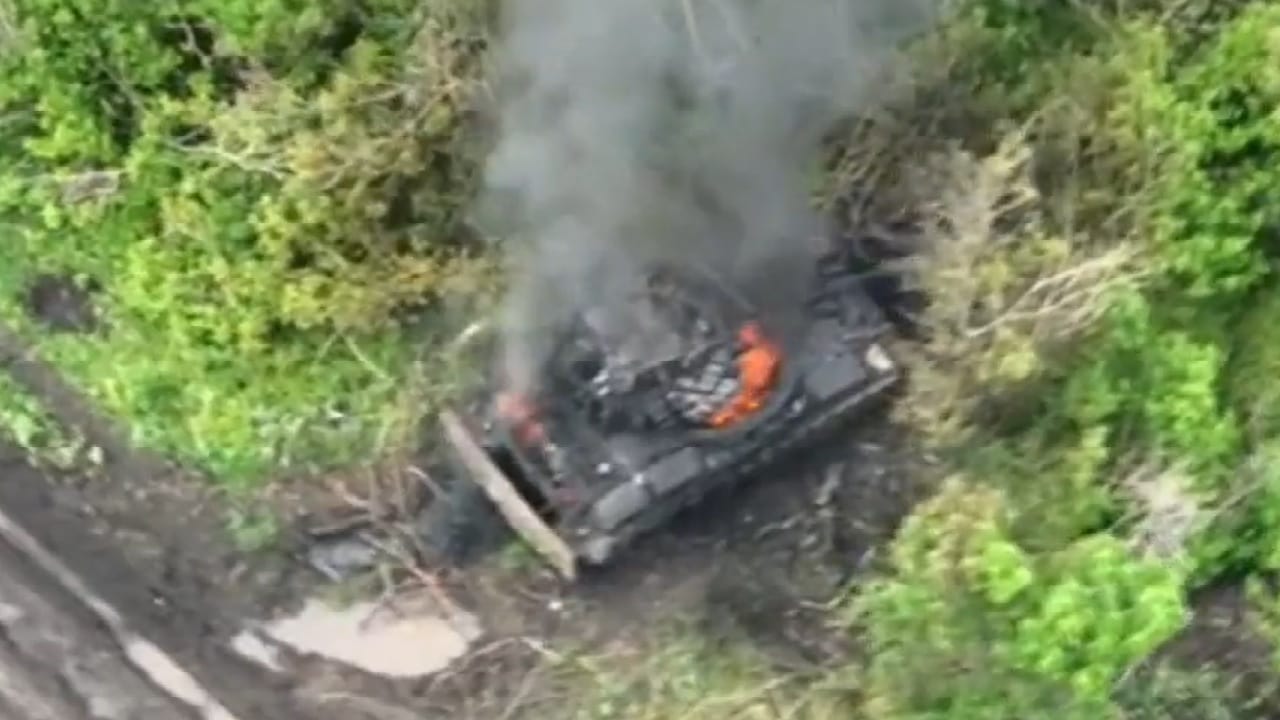
Russian T-62 Tank on Fire in Ukraine. Image Credit – Twitter Screenshot
These “mobile coffins” suffer from a catastrophic design flaw—the “jack-in-the-box” effect—where ammunition carousels ignite, launching turrets stories into the air.
-At the current, plodding rate of advance, Russia’s reliance on obsolete tech proves its military machine is struggling to keep pace with the modern battlefield.
Russia’s Ancient T-62 Tanks Taking a Beating In Ukraine
Russia’s invasion of Ukraine, which began in February 2022, has resulted in horrendous casualties of men and equipment. With casualties upwards of 1.2 million, with some estimates of 1.4 million, the invasion has turned into a meat-grinder with no end in sight.
The losses of nearly all of Russia’s modern main battle tanks have led to the deployment of ancient, obsolete T-62 tanks from storage to the front line, where they’ve been decimated.
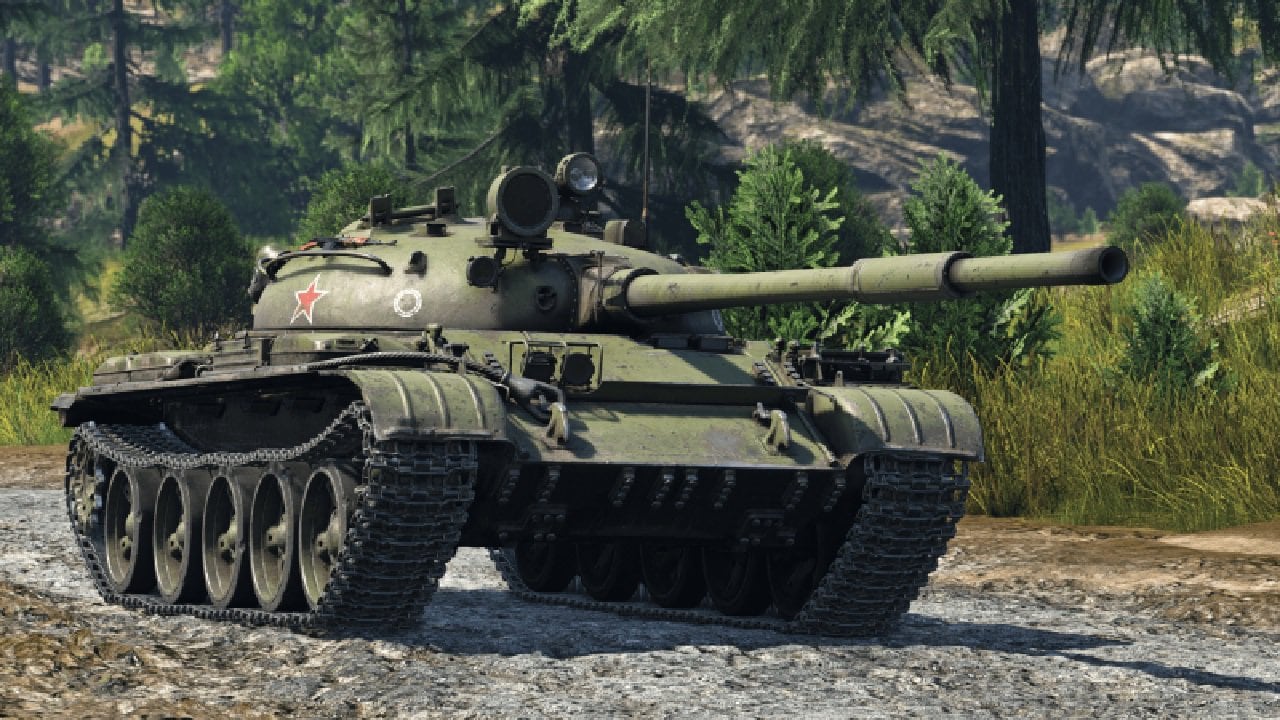
T-62 Tank. Image Credit: Creative Commons/Computer Mock Up.
Russia has lost at least 334 T-62 tanks in Ukraine as of January 2026, with losses increasing by 2.5 times between March and July 2025 due to their frequent deployment on the front lines. As modern armor (T-72/T-80) has been depleted or withdrawn, these 1960s-era, often refurbished, tanks are increasingly used for direct fire support.
At the outset of the invasion in February 2022, the Russian army deployed approximately 2,100 late-model T-72s, 500 modern T-80s, and 400 T-90s.
Unsustainable Levels of Armor Losses
During the initial invasion, Russia’s armored vehicle losses outnumbered Ukraine’s by a 4:1 margin. It increased to 5:1 when Russia captured Avdiivka. It has gradually declined, dropping to 2:1 in May 2025.
As of January 2026, Russia has lost over 4,000 main battle tanks (MBTs) in Ukraine, with some estimates ranging far higher, severely depleting their armored forces and forcing the use of older, 1970s-era models.
Open-source analysis by the highly reputable site Oryx, indicates 4,331 tanks were documented as destroyed, damaged, abandoned, or captured, with high losses among T-80 and T-90 models.
Russia has lost its entire active T-80 fleet—approximately 1,200 tanks—within 43 months of the conflict, prompting efforts to restart production lines.
Russia has lost 8,751 armored infantry fighting vehicles and 722 armored personnel carriers. They’ve also lost 993 self-propelled artillery pieces and 545 mobile multiple rocket launchers.
Moscow Dusting Off T-62s And T-54/55s
Due to high losses of modern, expensive tanks, Russia has increasingly relied on older equipment, such as T-62s and T-54/55s.
High losses are attributed to poor logistics, changing battlefield tactics, and effective Ukrainian defense strategies.
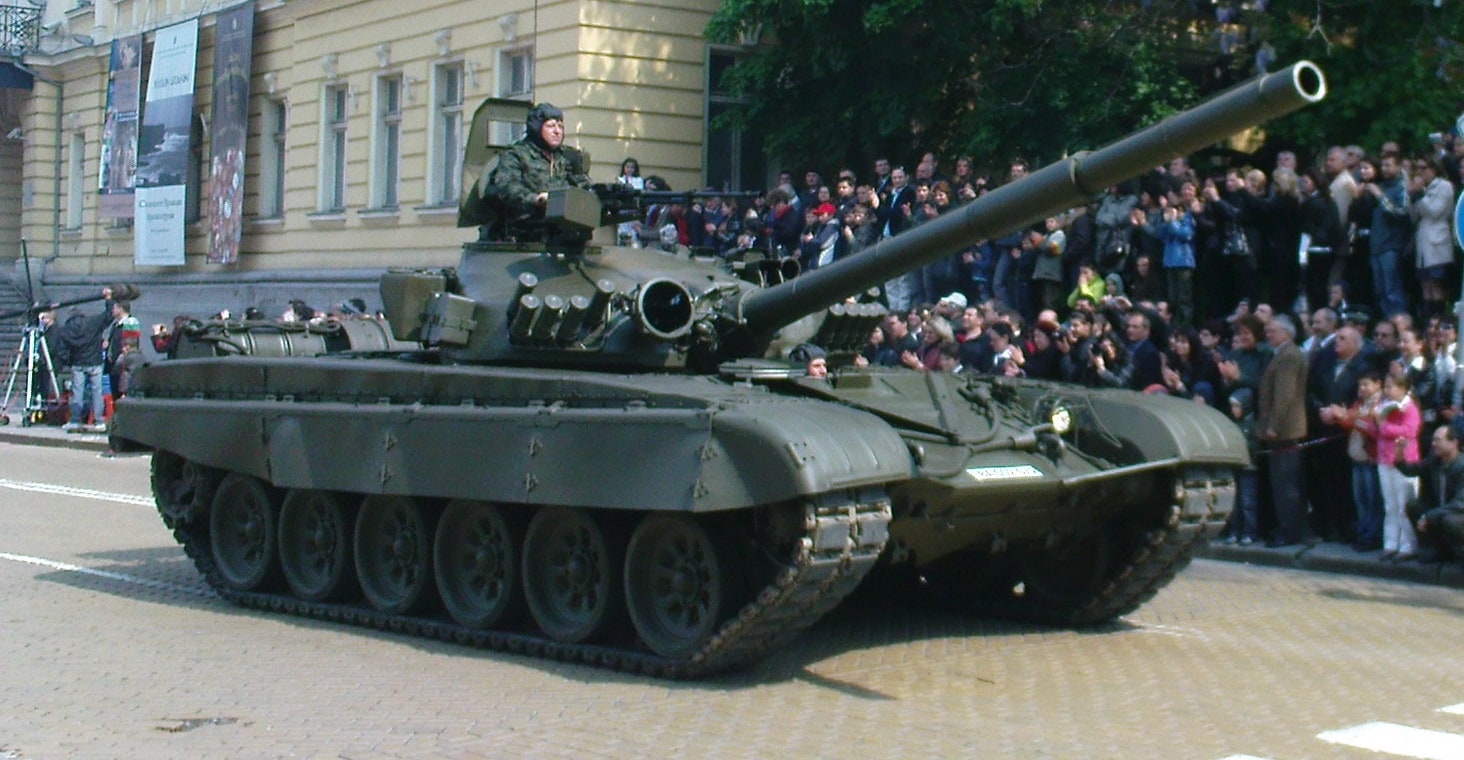
T-72M2 tank on Army day parade in Sofia.
Not surprisingly, many of the T-62s were in poor, long-term storage condition, though some have been upgraded with newer optics and Explosive Reactive Armor (ERA).
The Russians are attempting to withdraw newer tanks from frontline units to preserve them, as evidenced by the significant reduction in losses of T-80 family vehicles.
Design Flaw In Russian Armored Vehicles
The design flaw of Russian armored vehicles is causing a “jack-in-the-box” type of scenario where the turrets blow off after a tank suffers even an indirect hit, killing the crew. Photos and videos from Ukraine are chock full of images of burnt-out Russian vehicles with their turrets blown off, littering the landscape.
Sam Bendett, an adviser with the Russia Studies Program at CNA, told CNN that “Any successful hit quickly ignites the ammo, causing a massive explosion, and the turret is literally blown off.”
It is an issue that also affects the Russian armored fighting vehicles such as the BMD-4. Many defense officials and analysts argue that Moscow should have anticipated this issue decades ago.
Why Are Russian Tanks “Blowing Their Top”?
The flaw in Russia’s armor stems from the design of the turret’s internal workings and the placement of the ammunition. And back in 1991, the US-led coalition was having similar success destroying Russian-built Iraqi T-72s in the desert.
Western tanks store their ammunition in a sealed compartment with additional ballistic protection, and the loader opens and closes a door to the storage area. He then transfers the tank round into the main gun for firing. That loader is the fourth member of the crew, and if the turret were to be hit, there would only be one round inside the turret, which is inside the gun.
Russian tanks, however, have an autoloader, cutting the crew down to three. However, the ammunition in Russian tank design is stored in a carousel located at the base of the turret. While the design gives the tank a lower profile, making it harder to hit, it also means that up to 40 rounds of main-gun ammunition are stored inside the turret. Any hit, even an indirect one will cause the ammunition to explode.
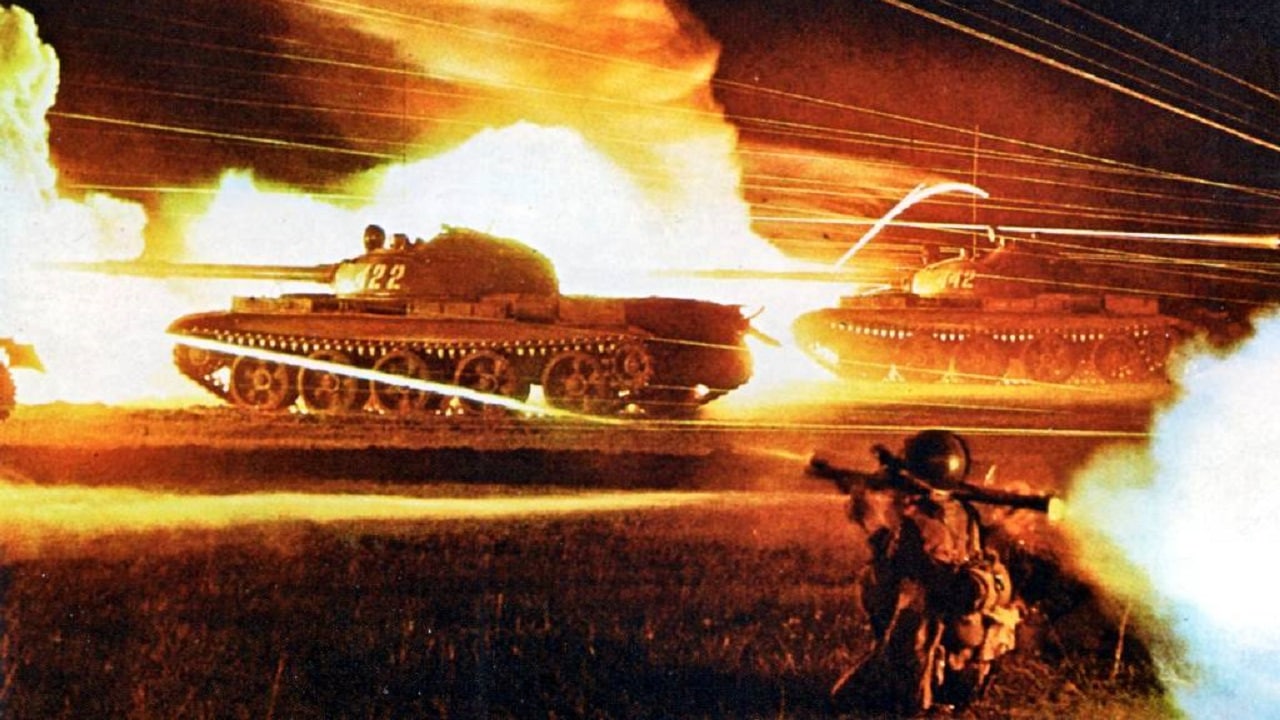
T-62 Tank in Russian military exercise.
The results have been deadly. When the turret and its ammunition explode, the turret can be launched to a height of up to two stories. One Russian tank exploded in Mariupol and the turret landed on the roof of a five-story apartment building.
The flaws aren’t limited to older T-72 tanks; the newer T-80 and T-90 series also have a similar autoloading system in which ammunition is stored inside the turret. While the armor surrounding the tanks has been improved, this flaw persists, and Western analysts point to the Russian military’s refusal to learn from the hard lessons of the Gulf War.
Nicholas Drummond, a former British Army officer and now a defense analyst said to CNN that the Russian tank crews are basically “sitting ducks” if they are hit by an anti-tank missile.
“If you don’t get out within the first second, you’re toast,” he said.
“Western militaries all learned from the Gulf War, and from seeing tanks killed during that time, that you have to compartmentalize the ammunition,” Drummond added, stating the Russian armored vehicles were “mobile coffins”.
Production Can’t Keep Up With Battlefield Losses
CIT and other OSINT intelligence analysts estimate more than 4,000 Russian tanks have been lost since the invasion began in 2022, with around 1,100 lost in 2024 alone. Although losses remain high, the reduced deployment of tanks may allow Russia to maintain a stable armored force over the next several years, assuming current production rates are maintained.
“Limiting Russia’s military production must become a cornerstone of NATO’s deterrence strategy in Europe,” CIT added. “Targeted restrictions on equipment and enforcement of secondary sanctions remain essential to slowing the growth of Russia’s defense capacity.”
Interestingly, Russia seems intent on re-establishing an armored force of numerical superiority over the West, when its armor is taking a beating in Ukraine. Tanks in Ukraine on both sides are taking heavy losses due to improved drone usage and anti-tank missiles.
The Slow, Plodding Russian Advance
At the current monthly rate of advance in Ukraine, it would take Russian forces over 152 years to capture the remaining 80 percent of Ukraine, if Russia can sustain massive personnel losses indefinitely.
Russia is advancing at an average rate of about 70 meters per day, which is slower than the Allied advance during the Battle of the Somme in World War I.
CSIS posted that, “For comparison, it took the Red Army 1,394 days after Operation Barbarossa (the German invasion of the Soviet Union) to make it to Berlin during World War II. Russia hit that mark (1,394 days) on December 19, 2025, but had barely made it to Pokrovsk, over 500 kilometers from Kyiv.”
Russia’s continued usage of obsolete T-62/T-54 tanks in near suicidal frontal assaults, as they conducted in World War II, is taking a massive toll on their armor. The lack of coordinated movement of men and armor shows that the latest untrained troops are being thrown into the meat grinder.
The use of these ancient, obsolete vehicles demonstrates how far the Russian Army has fallen.
About the Author: Steve Balestrieri
Steve Balestrieri is a National Security Columnist. He served as a US Army Special Forces NCO and Warrant Officer. In addition to writing on defense, he covers the NFL for PatsFans.com and is a member of the Pro Football Writers of America (PFWA). His work was regularly featured in many military publications.