
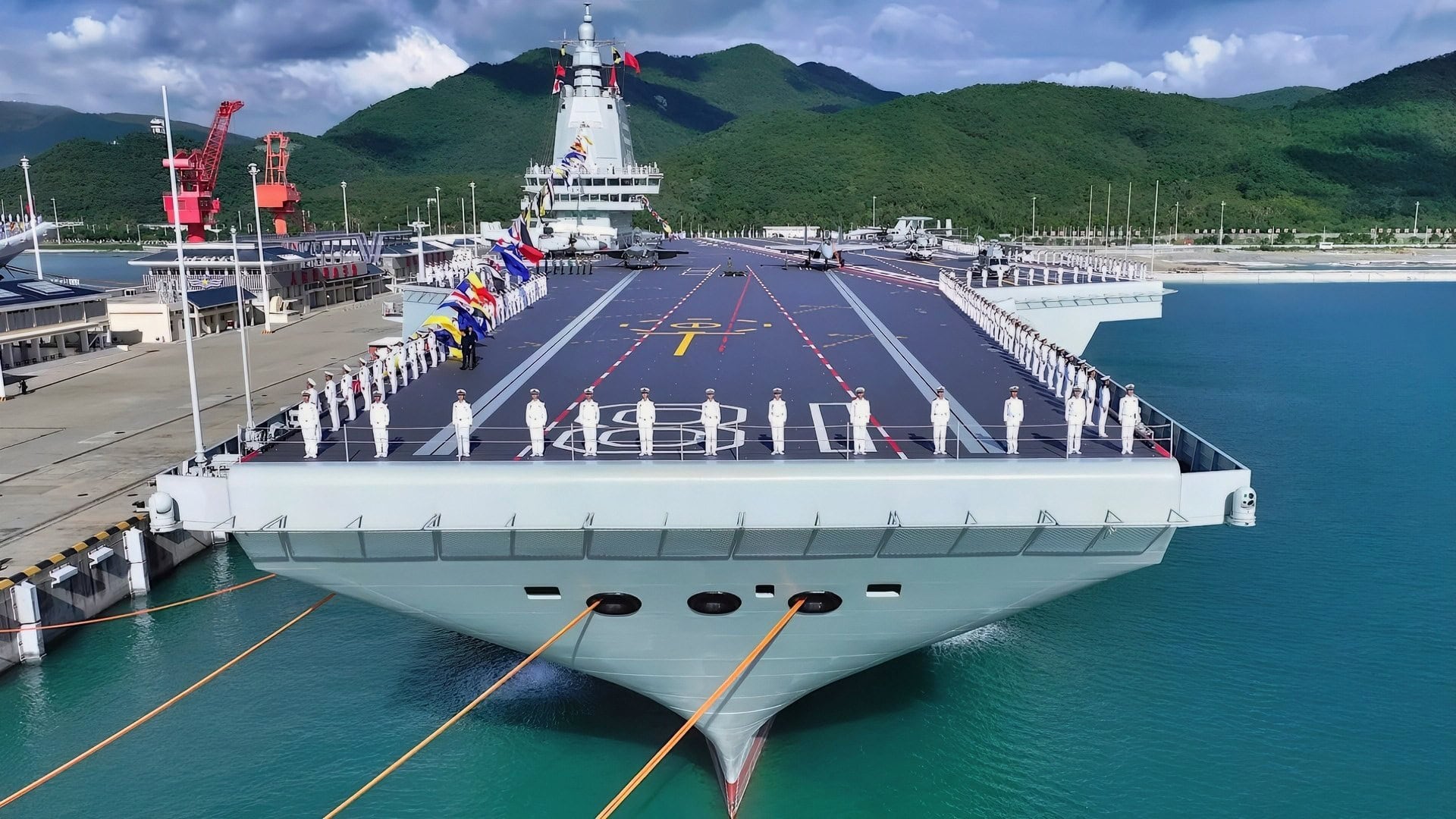
Summary and Key Points: British defense researcher and national security analyst Jack Buckby highlights a terrifying reality for American maritime dominance: while the United States builds the world’s most advanced warships, China possesses a shipbuilding empire capable of producing them at an astonishing, unmatched scale.
-With a sheer capacity gap of 23 million tons to America’s less than 100,000, the true threat isn’t just Chinese missiles—it is Beijing’s ability to out-build, out-repair, and out-sustain the U.S. Navy in a prolonged conflict.
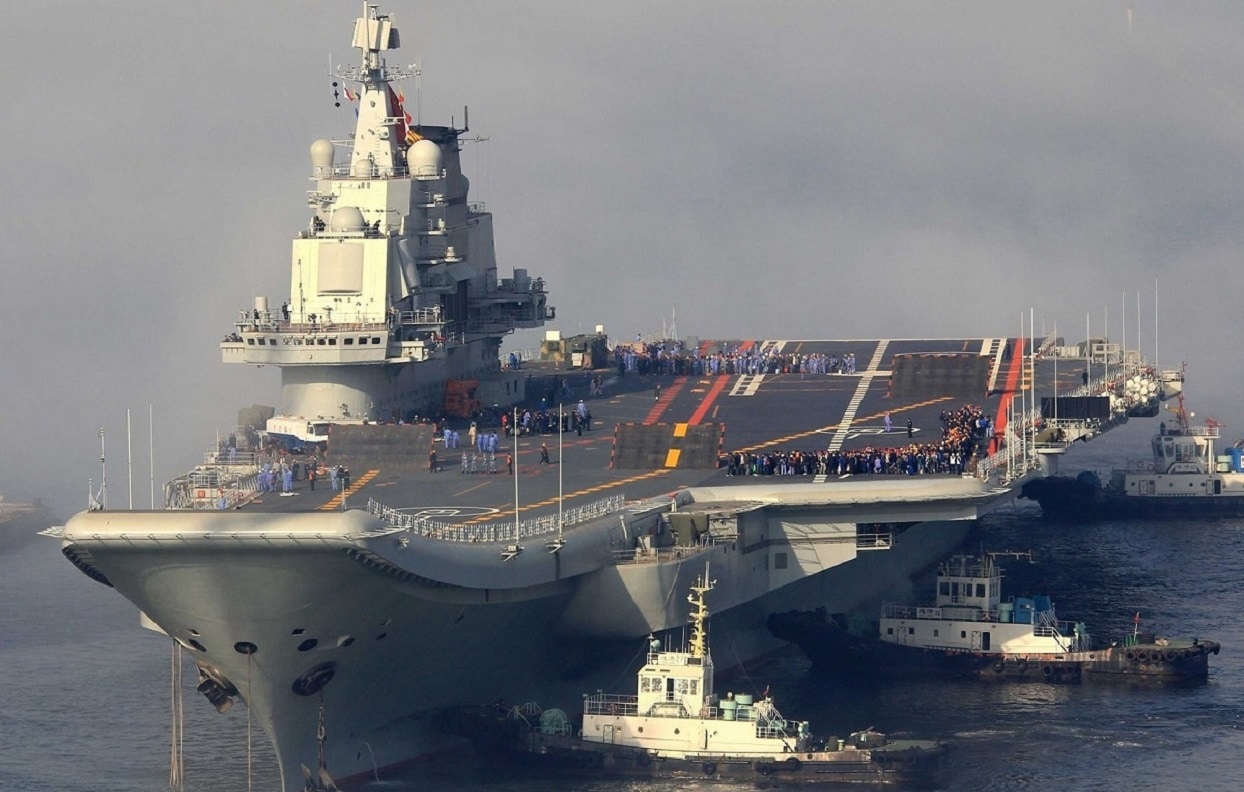
Chinese Aircraft Carrier. Image: Chinese Internet.
The U.S. Navy Builds Better Naval Warships, China Can Build More of Them
The United States builds its most advanced warships in a small number of highly specialized shipyards, and for a long time, that has worked. After all, the United States has been the dominant global naval force for decades, with no country even coming close in terms of technical capability and reach.
Times, however, are changing. China builds ships across an industrial base spanning hundreds of facilities, many of which can support military production if required. That imbalance is becoming an increasingly obvious problem that the United States may soon need to address.
For years, the debate has focused on Chinese anti-ship missiles and “carrier killers,” part of Beijing’s anti-access/area denial (A2/AD) strategy designed to push U.S. forces away from its coastline. But that strategy is evolving, having served as an effective way of protecting the country while it builds its own infrastructure and plans for the future.
A growing body of analysis now suggests that the big consequential issue here is not necessarily whether American ships can survive strikes from Chinese assets using long-range, anti-ship weapons, but whether the United States can build and sustain its fleet over time, as China is clearly preparing to do.
7 vs. Hundreds
The United States has seven primary shipyards capable of producing large and deep-draft vessels for the U.S. Navy and Coast Guard.
While there are more than 150 private shipyards across the U.S., only a handful are capable of building major combatants and large vessels for the U.S. Navy. Shipbuilding is really concentrated in a handful of major yards – primarily Huntington Ingalls Industries and General Dynamics facilities – alongside four public naval shipyards that are focused primarily on maintenance rather than new construction. The yards are highly specialized, particularly for nuclear-powered vessels like aircraft carriers and submarines.
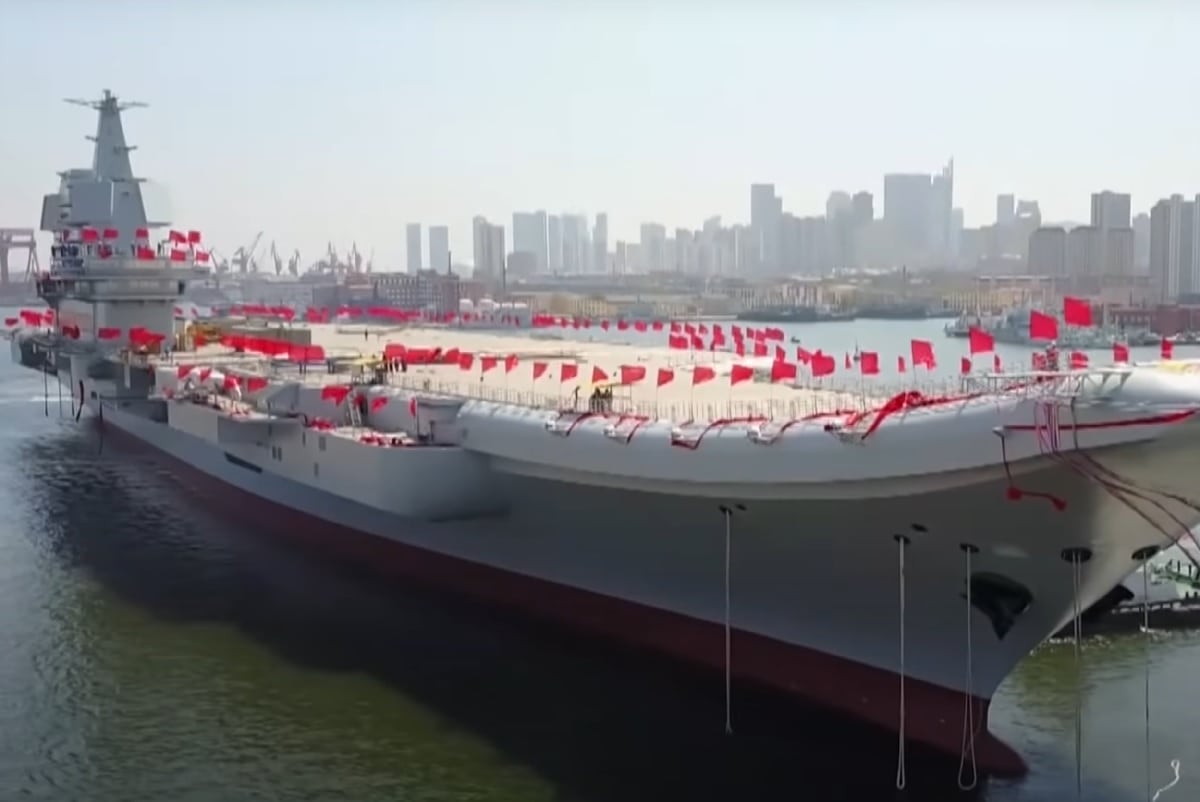
China Aircraft Carrier. Image: CCTV screenshot.
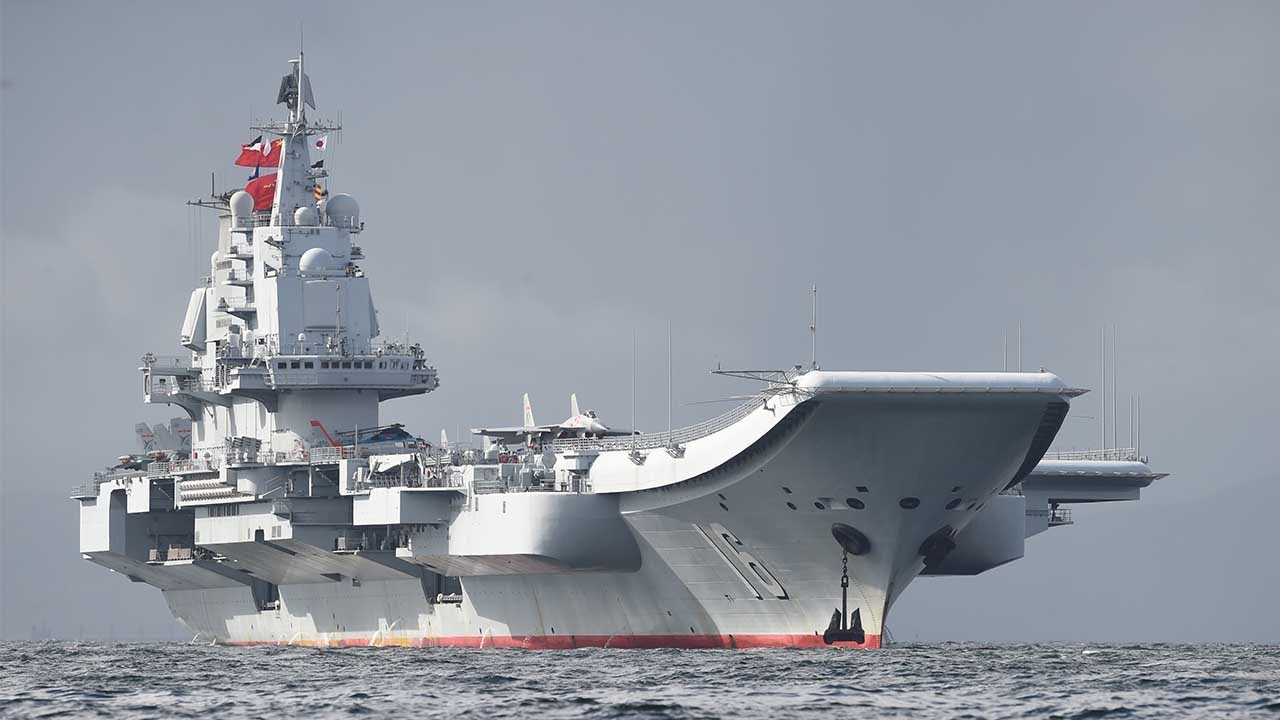
Chinese Aircraft Carrier. Image Credit: Creative Commons.
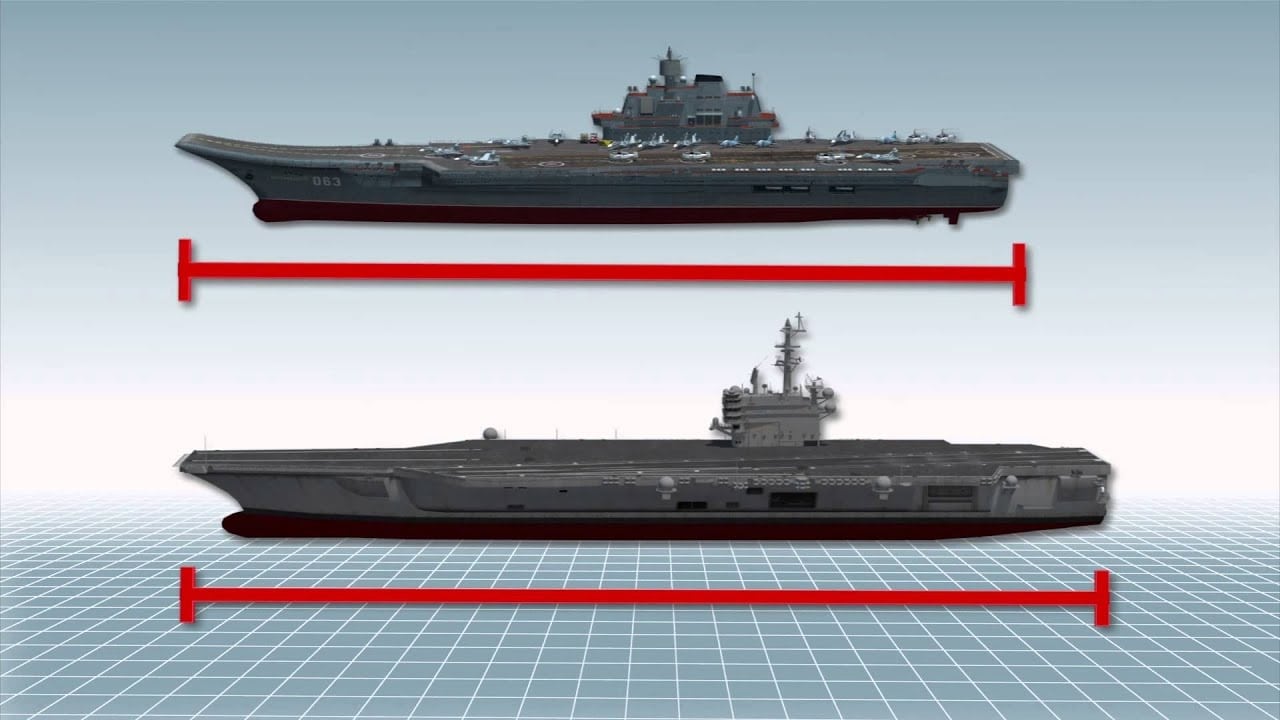
Comparison of U.S. and Chinese Aircraft Carrier sizes. Image Credit: Screenshot.
China, by contrast, operates the world’s largest shipbuilding industry run by state-owned conglomerates like China State Shipbuilding Corporation. Its industrial base is vast and growing, including a large network of commercial shipyards that can either support military construction or, experts say, could transition to military production if necessary.
A leaked U.S. Navy briefing slide, later confirmed as authentic by officials, demonstrates the scale of the gap: Chinese shipyards collectively have a production capacity of roughly 23 million tons, compared to less than 100,000 tons in the United States.
The U.S. Office of Naval Intelligence (ONI) briefing slide began circulating publicly in July 2023, after images of the slide were published online and picked up by defense outlets. The slide itself appears to have been part of an unclassified briefing titled “PLAN vs. USN Naval Force Laydown.”
The disparity is not, then, only about how many ships each country is building today. The problem is that China’s industrial capacity is much larger than that of the United States, and it could – at some point in the future – prove capable of rapidly building and fielding a fleet of vessels even larger than it currently does.
Why the U.S. Is Falling Behind
The U.S. does not by any means lack advanced warships, but it does lack throughput. Modern naval construction is slow and expensive, and as mentioned, it is concentrated in a small number of shipyards.
Destroyers, for example, can take five years or more to build, while nuclear-powered submarines often face delays tied to supply chain constraints and workforce shortages. And then there’s the matter of maintenance.
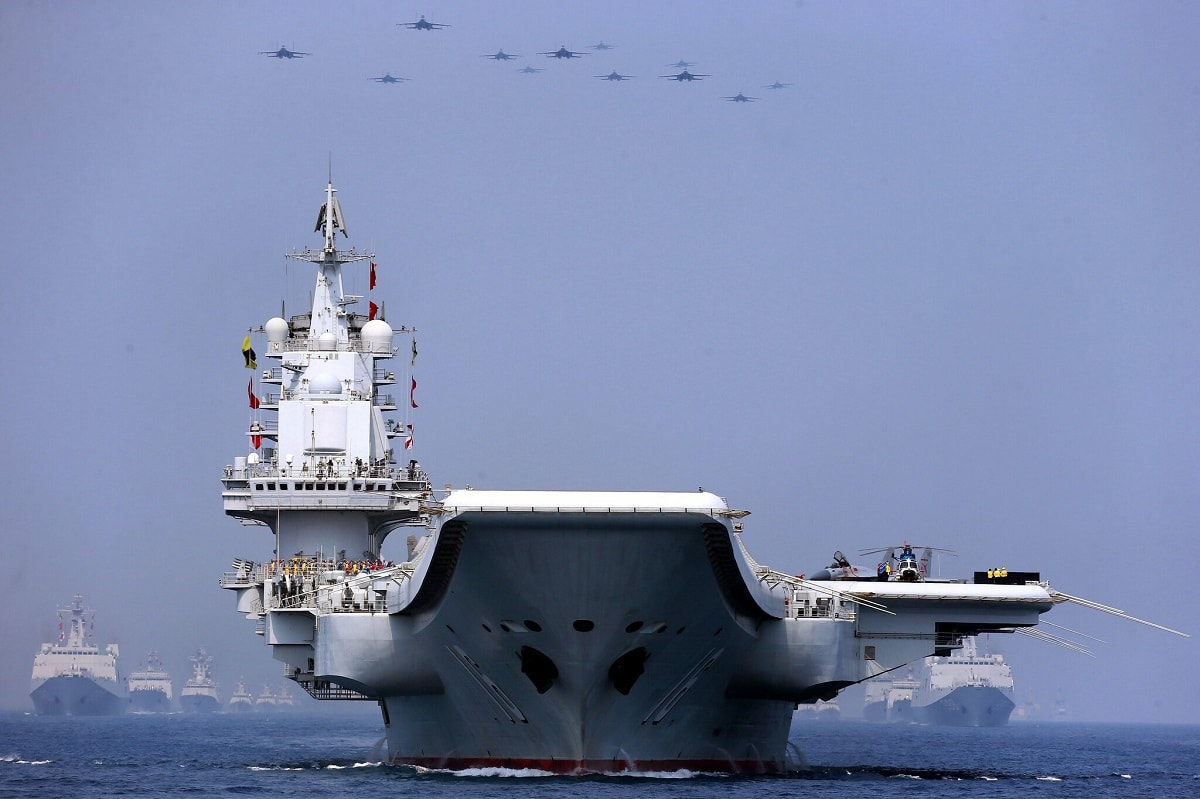
China Aircraft Carrier. Image: Creative Commons.
At any given time, a significant portion of the U.S. submarine fleet is unavailable due to delays in shipyard maintenance cycles. A 2023 analysis found that roughly 40% of U.S. attack submarines have been idle at points due to maintenance backlogs – a direct result of limited yard capacity and workforce constraints.
This matters. A damaged ship that cannot be repaired quickly is functionally removed from combat, and in high-end combat, repair capacity becomes just as important as production capacity. The U.S. is experiencing strain now, amid an ongoing conflict with Iran – and that strain existed long before the conflict broke out. In the event of a large-scale war, the strain would be even greater.
The U.S. industrial base is also difficult to scale quickly. Skilled labor – particularly welders and nuclear-certified technicians – cannot be created overnight, and there have been shortages for some time. Expanding shipyard capacity, therefore, requires years of investment and planning in everything from workforce to physical construction.
China’s Scale and Ability to Iterate
China has an advantage here, in part because it can scale and also because it can be done quickly. The People’s Liberation Army Navy (PLAN) is already the largest navy in the world by number of ships, with more than 350 vessels, and continued growth is expected through the 2030s. That expansion has been enabled by a shipbuilding sector that dominates global commercial output and can support rapid naval construction.
Major shipyards such as Jiangnan and Hudong-Zhonghua are producing advanced destroyers and aircraft carriers at a pace that continues to surprise Western analysts – and China is not only moving quickly, but improving how it builds. In the aerospace industry, China is demonstrating the ability to iterate rapidly. Its J-20 stealth fighter has undergone continuous upgrades, while new platforms like the carrier-capable J-35 have appeared on accelerated timelines. That pattern suggests a system capable of iterative development rather than long production cycles.
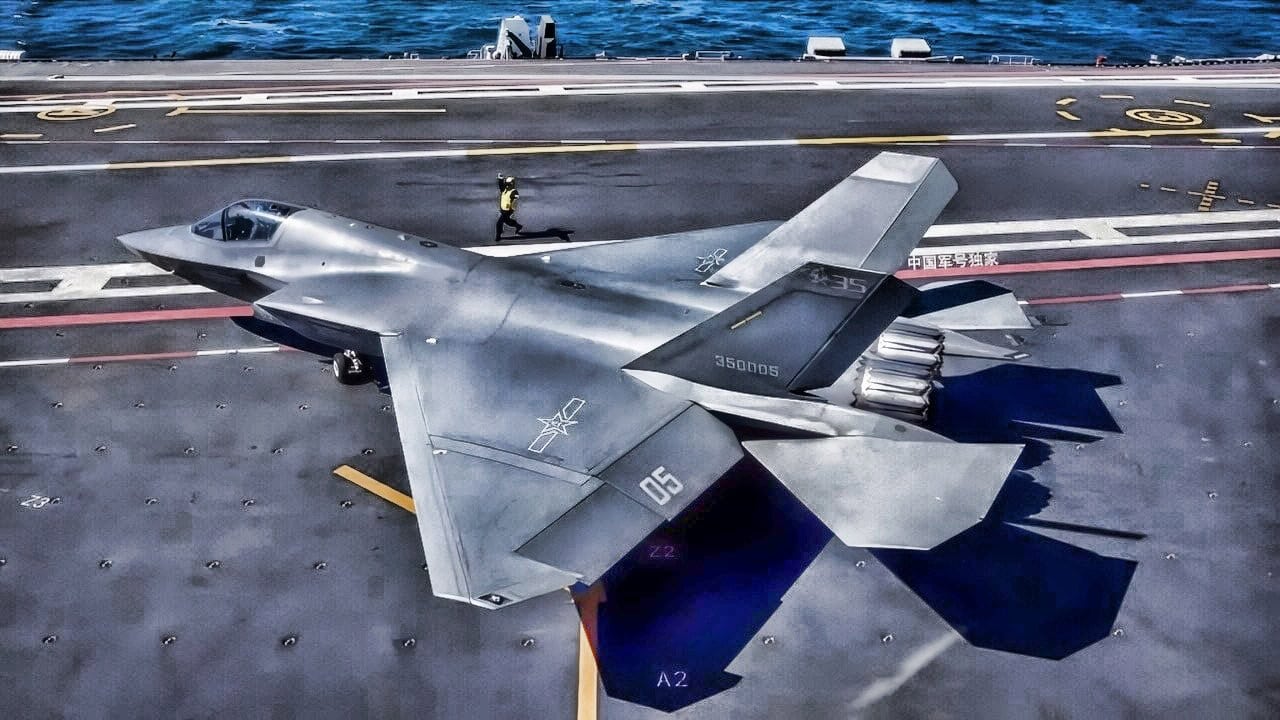
China J-35 Naval Stealth Fighter. Image Credit: PLAN.
There is an implication for naval power there, and it’s significant. If China applies similar iterative approaches to shipbuilding – introducing incremental improvements across successive hulls, perhaps – it could narrow technological gaps quickly over time.
But even without that, simply having the capacity to build rapidly will allow it to field capable naval vessels and assets in huge numbers. That’s a problem for the United States, even if the technological gap remains.
The U.S. still holds the technological edge at sea, but unless it can match China’s growing ability to build and sustain its fleet at scale, that advantage may prove increasingly difficult to maintain over time.
About the Author: Jack Buckby
Jack Buckby is a British researcher and analyst specialising in defence and national security, based in New York. His work focuses on military capability, procurement, and strategic competition, producing and editing analysis for policy and defence audiences. He brings extensive editorial experience, with a career output spanning over 1,000 articles at 19FortyFive and National Security Journal, and has previously authored books and papers on extremism and deradicalisation.