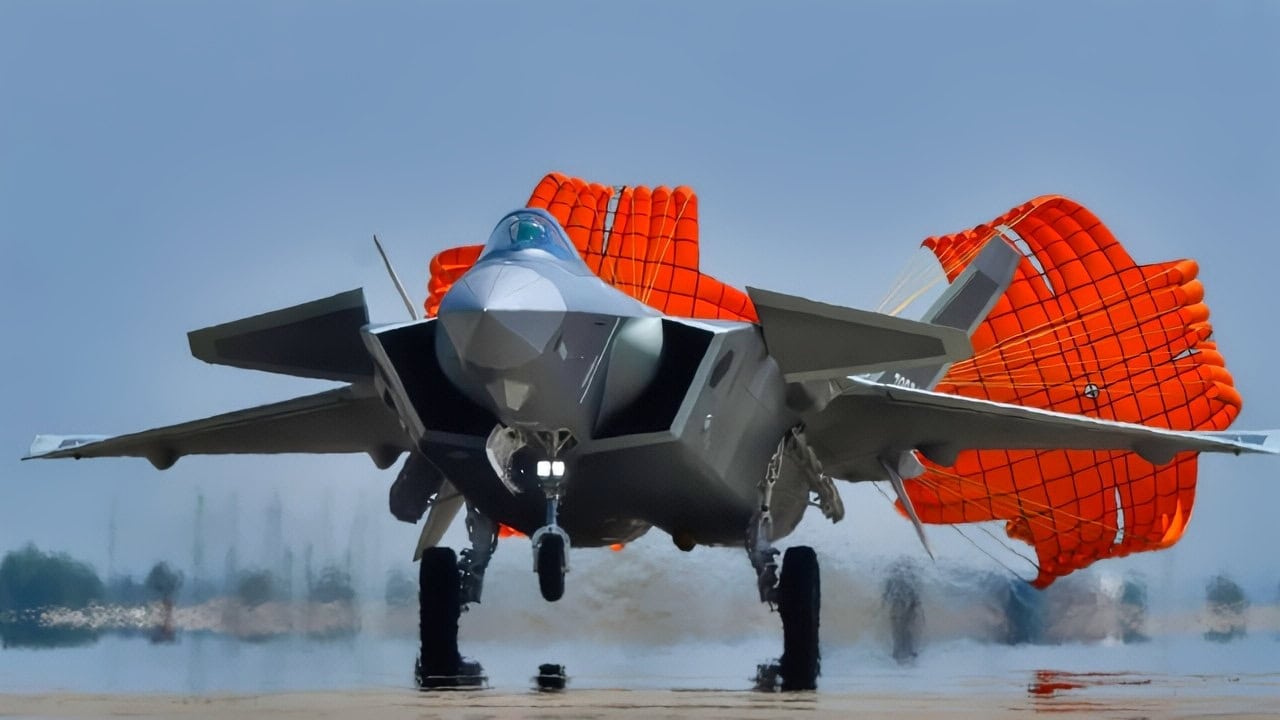
Summary and Key Points: Reuben F. Johnson breaks down why China has deployed at least 14 Chengdu J-20 Mighty Dragon stealth fighters to Shigatse Air Base in Tibet — less than 100 miles from India’s Sikkim border and the Siliguri Corridor.
-Six are sheltered under protective tarpaulins. Eight sit in the open. At 12,000 feet elevation, Shigatse is one of the highest military airbases on earth, and the J-20s might be armed with PL-15 long-range air-to-air missiles capable of reaching targets on the Indian side of the border.
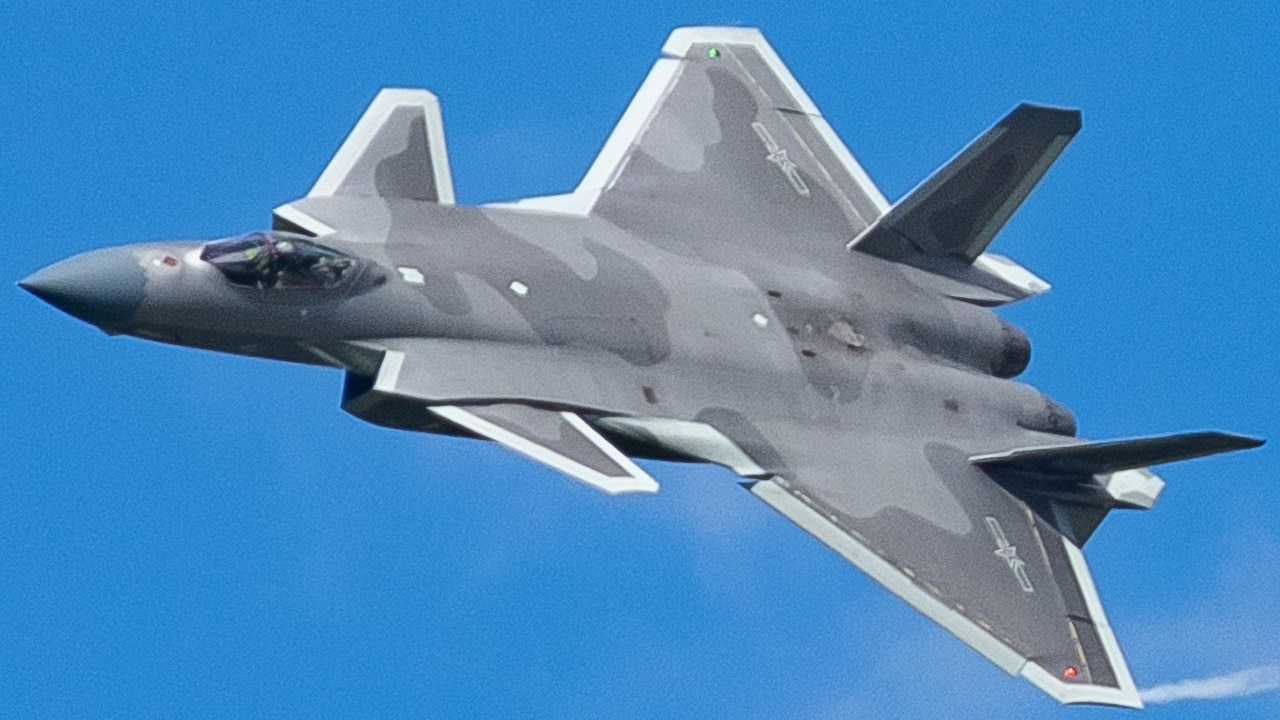
J-20 Fighter. Image Credit: Creative Commons.
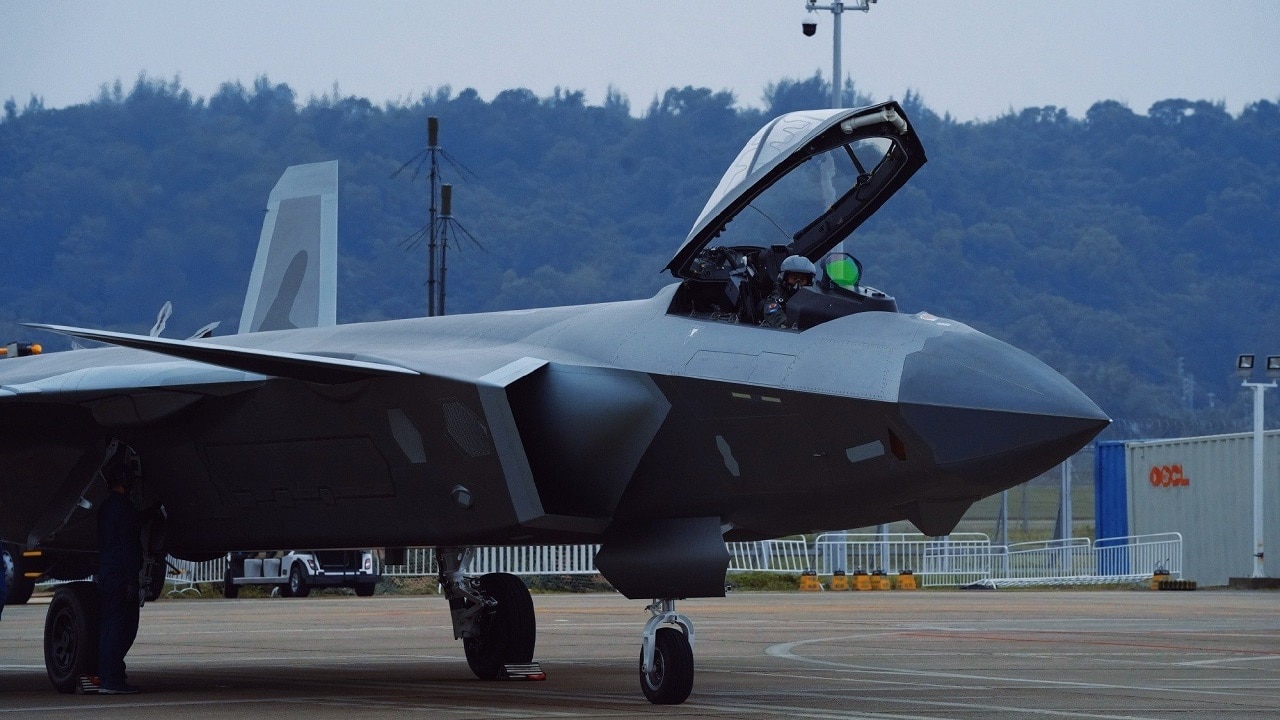
J-20
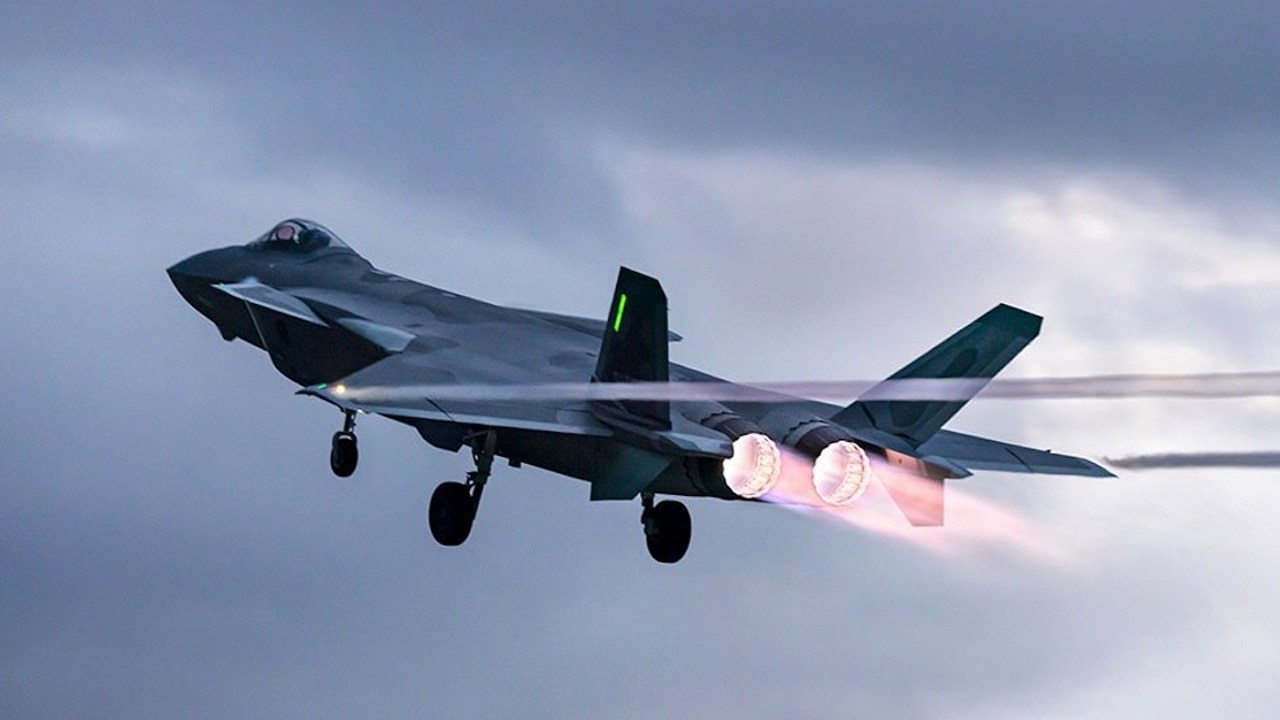
J-20 Fighter. Image Credit: Chinese internet.
-India’s Rafale fighters have a high-altitude performance edge. But 14 fifth-generation stealth fighters on your doorstep changes the calculation regardless.
The PLAAF Is Forward-Deploying its Chengdu J-20 On the Indian Border
According to reports in Indian media, recent satellite imagery confirms that the People’s Liberation Army Air Force (PLAAF) has deployed new Chengdu J-20 “Mighty Dragon” stealth fighters to Shigatse Air Base in Tibet.
This would place the advanced aircraft less than 100 miles from the Sikkim border, near the Line of Actual Control (LAC) dividing Indian and Chinese claims.
Past imagery indicated that six of these aircraft were based at the location. But more recent passes by remote sensing platforms show that six J-20s are deployed at the base and covered with protective tarpaulins, with another eight parked out in the open, confirming a total presence of at least 14 aircraft.
This PLAAF deployment is regarded as potentially destabilizing because it places fifth-generation jets within striking distance of India’s Siliguri corridor. This could spark escalation between the two air forces and an increase in regional aerial competition.
High-Hot Performance
The facility where the J-20s were seen, the Shigatse Peace Airport, is officially designated as a “dual-use military/civilian facility.” The airport was originally a purely military base and today serves as a crucial high-altitude strategic airbase.
Shigatse rests at an altitude of more than 12,000 feet. It sports a 5,000-meter runway and has regularly hosted advanced military aircraft—not just J-20 stealth jets, but also Hongdu GJ-11 stealth drones.

J-20 Stealth Fighter. Image Credit: Creative Commons.
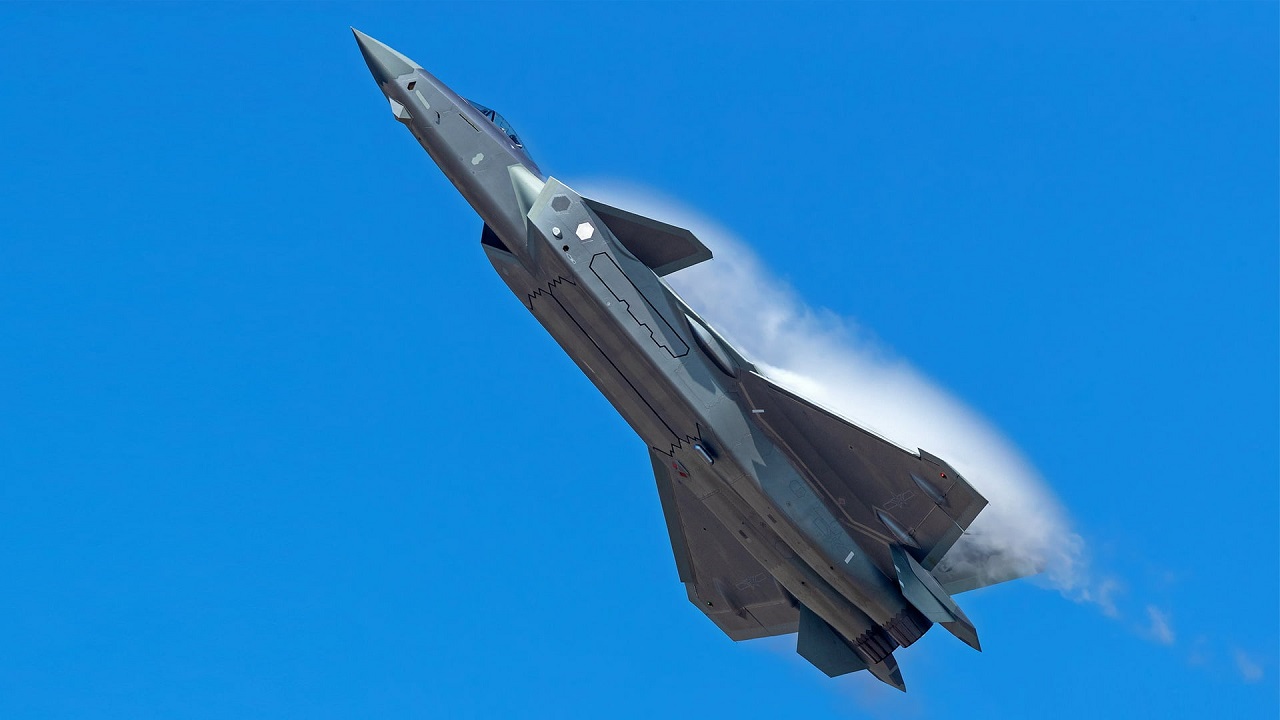
J-20 Stealth Fighter. Image Credit: Creative Commons.
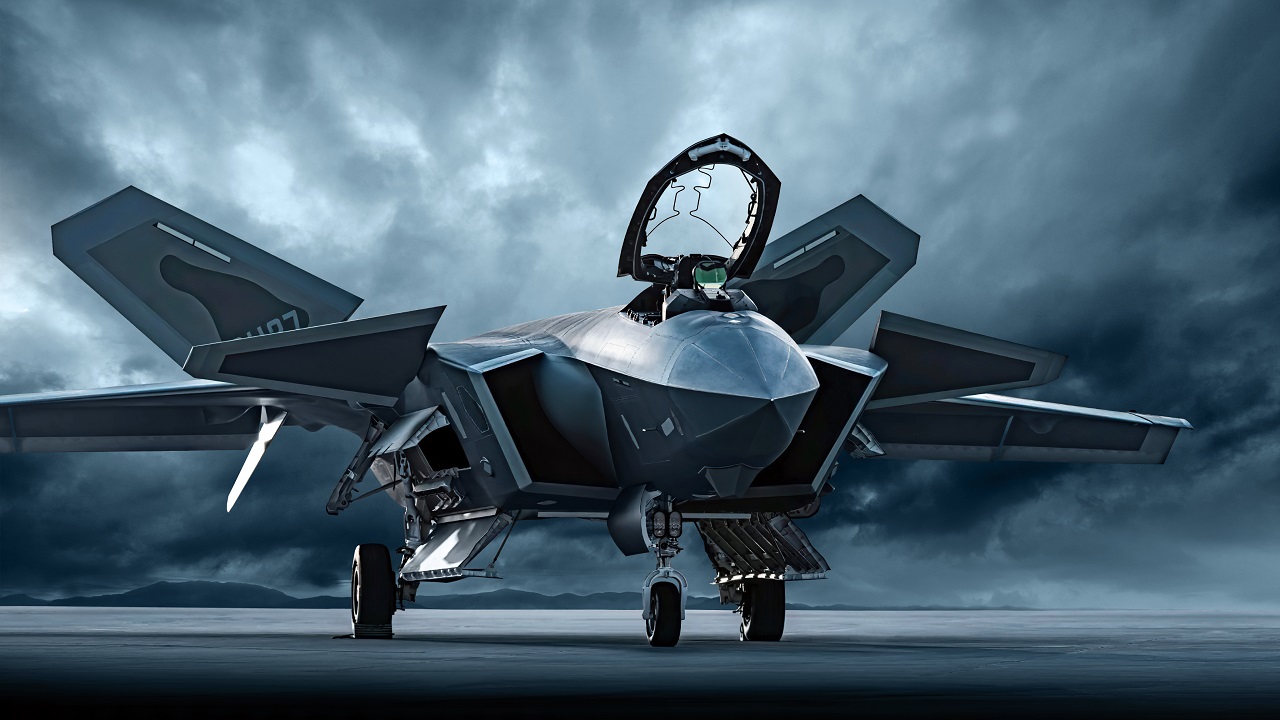
J-20 Stealth Fighter. Image Credit: Artist Rendering/Creative Commons.
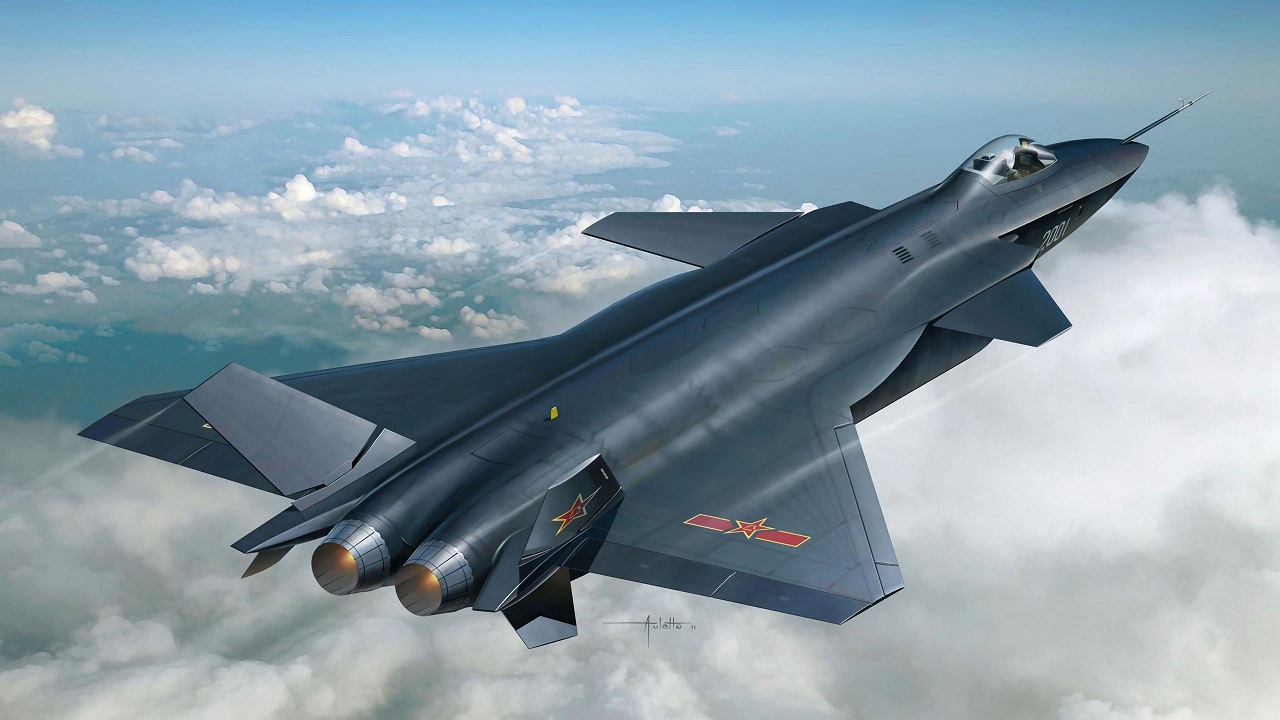
J-20 Fighter via computer generated artist rendering. Image Credit: Creative Commons.
India has also been expending considerable resources on fighters capable of operating at “high-hot”—meaning high altitude, high temperature—locations. Fighter jets capable of operating in these conditions are regarded as essential for maintaining control of the skies over the Himalayas.
The Indian Air Force (IAF) rates its aircraft as having superior performance in these conditions—commanders sometimes refer to this as the ”Ladakh” factor. One Indian commentator wrote in December 2025 that “Chinese jets like the J-20 struggle with engine performance in the thin air of the Himalayas.”
“The [French-made] Rafale was customized with ‘India Specific Enhancements’ including cold-start capabilities for high-altitude bases,” that writer continued. “Its [Safran] M88 engines and delta-canard design allow it to take off with a full weapons load from high-altitude runways where other jets would be grounded or forced to fly light.”
Significance
Although in the past the J-20 has been seen based at locations close to the Indian border, the current sightings are the largest, most significant deployment of the aircraft in this region.
Their presence signals an increase in the PLAAF’s aerial capabilities at a time when the Chinese Communist Party leadership in Beijing is anxious to show how much China’s armed forces have advanced since President Xi Jinping first took power in 2012.
Experienced observers of the PLAAF point out that from this location, J-20s possibly armed with the PL-15—the longest of the PLAAF’s long-range air-to-air missiles—could present a new problem to the Indian Air Force. Armed with the PL-15, the J-20s could reach targets on the Indian side of the border.
Just how effective such a pairing would be remains to be seen.
India is reported to have recovered export versions of the PL-15 that were fired at the IAF by Pakistani aircraft but failed to hit their targets and landed nearly intact in India.
They have since been examined, meaning the missiles could be more vulnerable to Indian electronic warfare systems.
About the Author: Reuben F. Johnson
Reuben F. Johnson has thirty-six years of experience analyzing and reporting on foreign weapons systems, defense technologies, and international arms export policy. Johnson is the Director of Research at the Casimir Pulaski Foundation. He is also a survivor of the Russian invasion of Ukraine in February 2022. He worked for years in the American defense industry as a foreign technology analyst and later as a consultant for the U.S. Department of Defense, the Departments of the Navy and Air Force, and the governments of the United Kingdom and Australia. In 2022-2023, he won two awards in a row for his defense reporting. He holds a bachelor’s degree from DePauw University and a master’s degree from Miami University in Ohio, specializing in Soviet and Russian studies. He lives in Warsaw.