
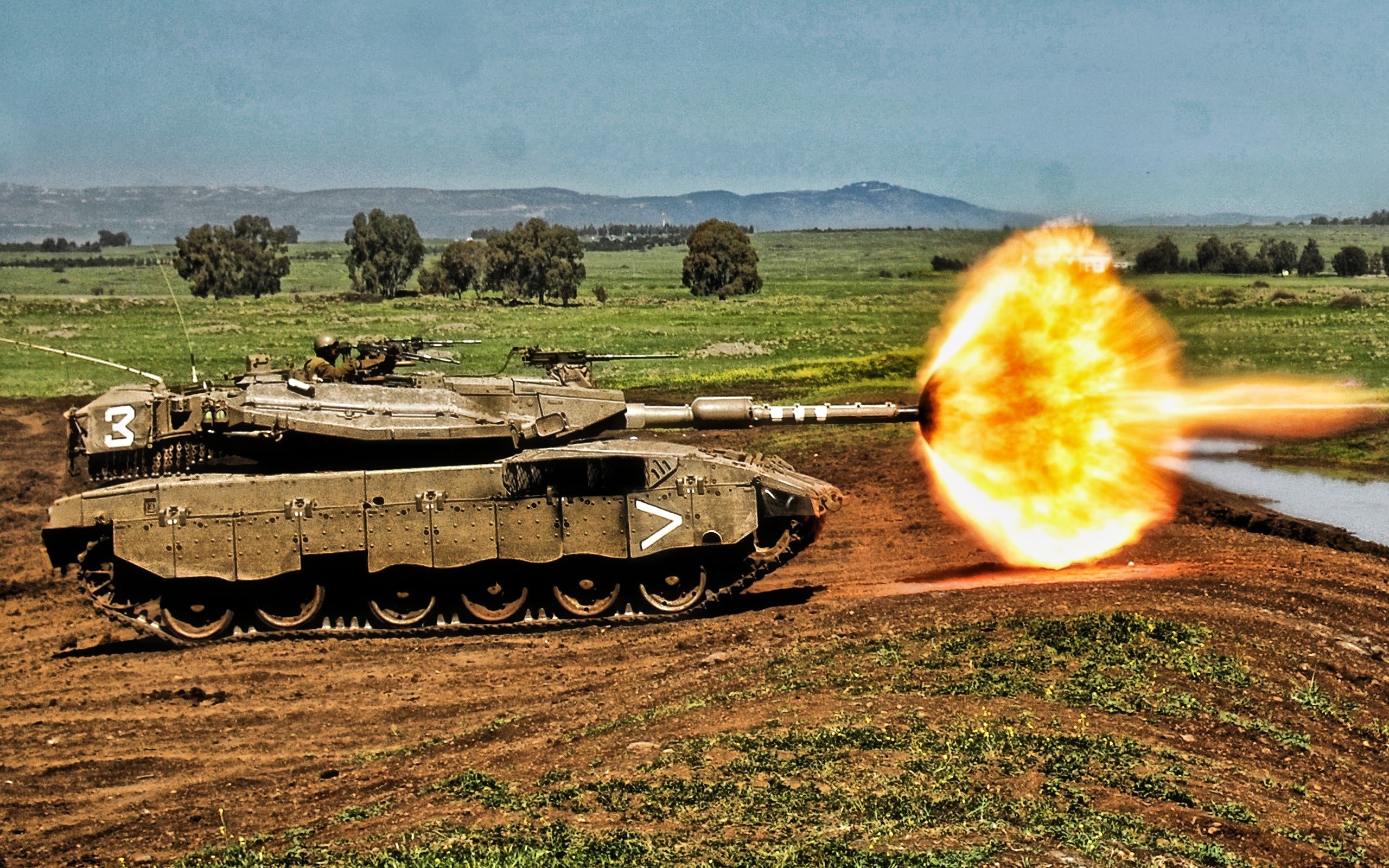
Gaza, Lebanon, Iran, Yemen: The IDF’s New Offensive Doctrine After October 7 Isn’t Delivering Decisive Victories
Israel is fighting a multi-front war in Iran and Lebanon. Israel is preparing for a possible expansion of a ground operation into Lebanon, while it continues to fly thousands of sorties against Iran.
This is a complex operation, but one that the Israel Defense Forces have become used to over the last several years of war. Recent weeks have seen continued Iranian missile barrages striking Israeli cities, even as Israel and the US conduct sustained strikes on Iranian targets.
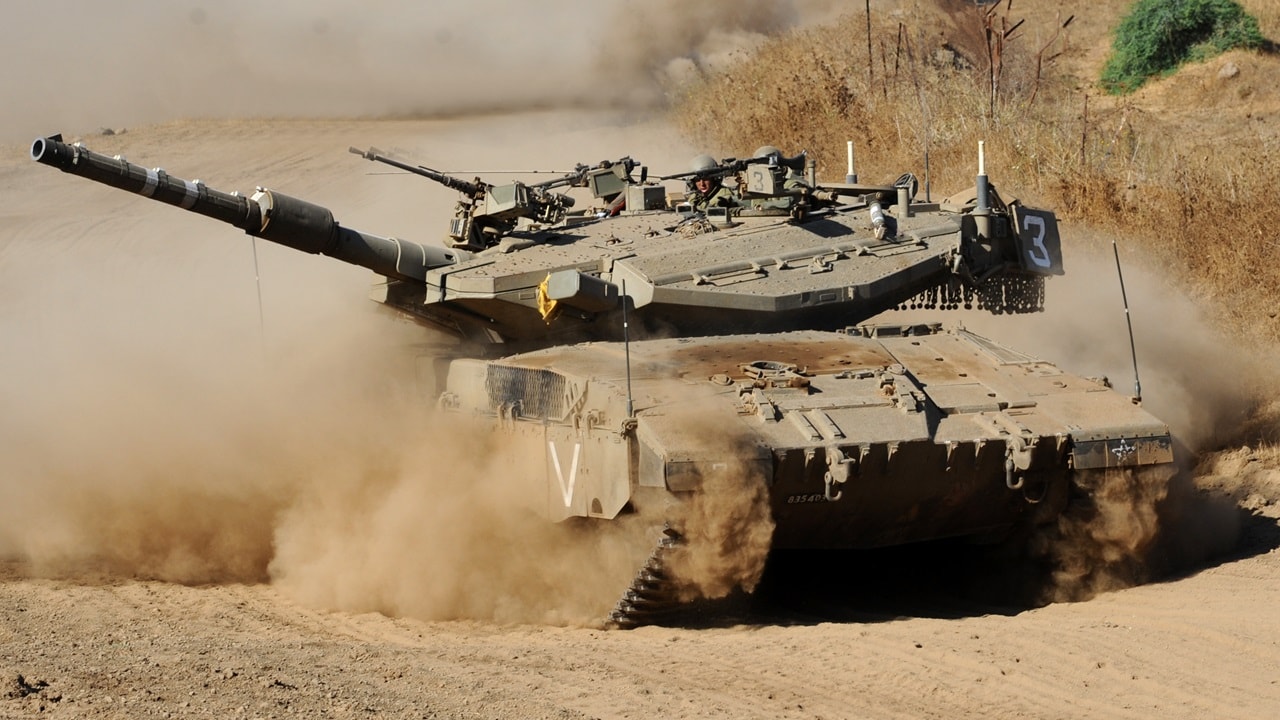
Merkava Tank from Israel
At the same time, Israel has expanded operations against Hezbollah in Lebanon, including ground maneuvers and intensified airstrikes, as the group continues launching rockets and drones at northern Israel.
October 7 Changed Israel’s Doctrine
This war began on October 7, 2023, with a Hamas attack on Israel. Since that attack, Israel has moved from a largely defensive posture to taking the offensive on numerous fronts. “We must act and neutralize threats before they reach our doorstep; that is our duty. We will reinforce our troops wherever necessary in order to continue countering terrorism and prevent the next threat from arising,” Israel’s Chief of Staff Lt. Gen. Eyal Zamir said in November 2025.
This concept of striking preemptively before threats reach Israel’s doorstep is part of a larger push by Israel to take control of new areas and hold on to them in Lebanon, Syria, and Gaza.
This is an offensive posture in which the IDF’s doctrine aims to counter threats continually rather than wait or manage conflicts.
In many ways, Israel’s new doctrine has been shaped by the shock of October 7. “One of our lessons from October 7 is the responsibility for defense in the area and the change in our conception of security, we neutralize threats as they emerge,” Zamir said last year.
However, the real story is more complex. The offensive doctrine of preempting attacks was always within the DNA of Israel’s strategy, going back to the founding of the state. It always sat next to the caution inherent in managing various conflicts.
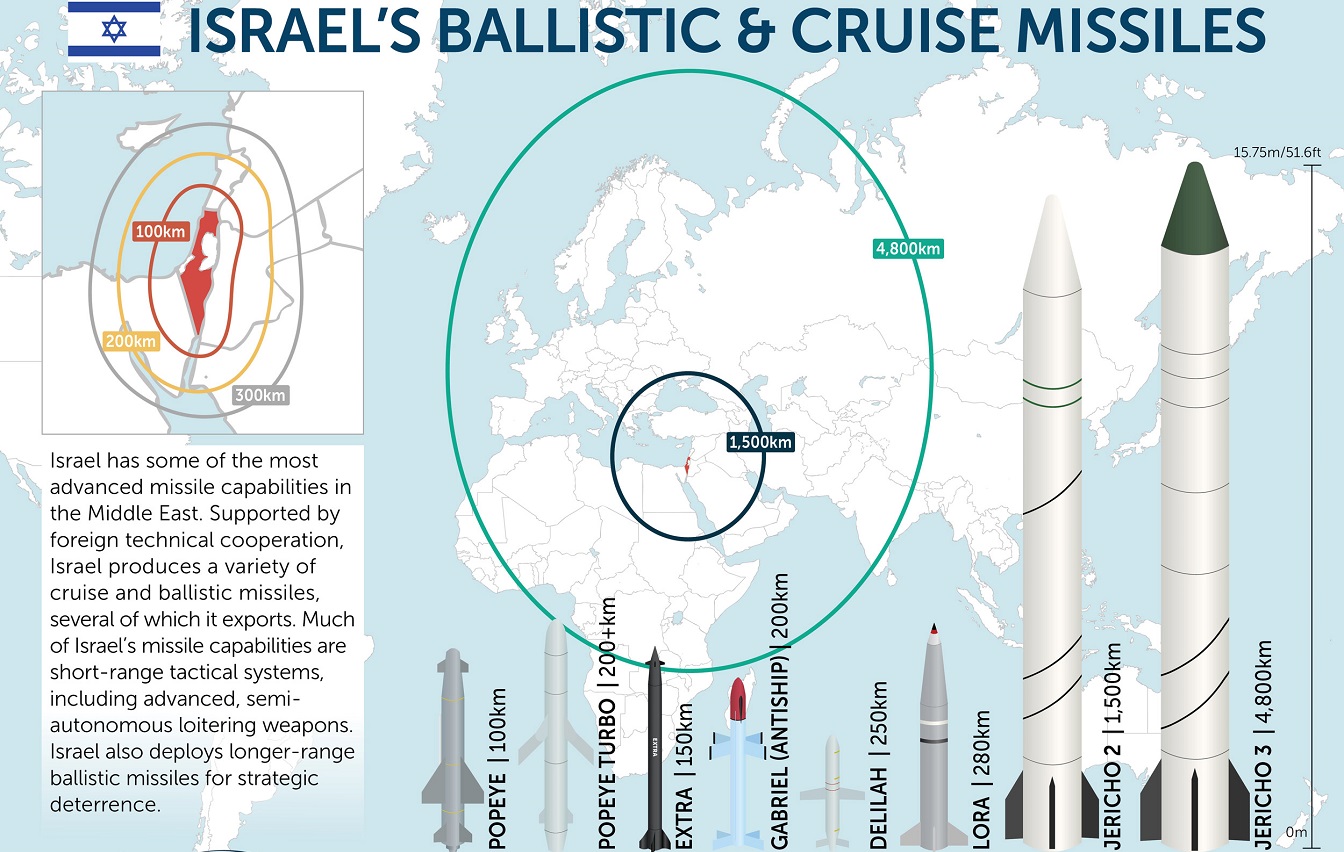
Image of Israel’s various missile classes. Image Credit: CSIS.
History of Israel’s Position
It’s worth understanding how Israel got here because it will shape the next years or decades of how Israel operates in the Middle East. The conflict in Iran, where Israel and the US began strikes on February 28, is an outgrowth of this. The goals of the conflict in Iran are not always clear. They may involve a long-term strategy of hoping the regime will weaken and collapse.
However, in the near term, the idea is to weaken Iran’s ballistic missile capabilities and also its military-industrial complex. This could also cause other dominoes in the Iranian-backed proxy network to weaken.
Observers of Israel’s conduct in the wars in Gaza, Lebanon, Iran, and Yemen will note that in none of these battles has the enemy received a knockout blow.
Where the IDF once fought short wars, such as the Six-Day War in 1967, it now fights long wars that look more like a slog or a marathon than a decisive victory. For instance, Hezbollah was perceived as greatly weakened by the fighting between September 2024 and November 2024.
However, on March 12, 2026, Hezbollah was able to launch a massive barrage of around 200 rockets at northern Israel.
If it was weakened, did it regrow its arsenal? In October 2024, the IDF struck Iranian planetary mixers that are important for Iran’s missile program.
Yet, in March 2026, the missile threat continues. In Gaza, the IDF also fought for two years, and Hamas continues to rule half of Gaza. Clearly, Hamas is greatly weakened in terms of its rocket arsenal, but it is still in charge.
The offensive doctrine that the IDF has adopted has less to do with knockout blows and rapid maneuver warfare than slowly reducing enemy capabilities and leaving adversaries weakened.
One reason is that it’s not easy to uproot groups like Hamas or Hezbollah.
Despite talk of disarming both groups, it’s hard to remove thousands of AK-47s from homes in Lebanon and Gaza. Israeli infantry and armored brigades are not well-suited to the task. In the wars in Lebanon and Gaza, the IDF asked civilians to evacuate before operating in areas. This means that groups like Hamas and Hezbollah can evacuate along with the civilians, taking their small arms with them.
The offensive doctrine that the IDF has adopted involves taking control of territory in Gaza, Lebanon, and Syria and fortifying other borders. For instance, in Gaza, the IDF controls half of the enclave in the wake of the October 2025 ceasefire that was brokered by the White House.
In Lebanon, the IDF controls several points inside Lebanon, and the IDF said on March 15, 2026, that it “will continue to operate with determination against the Hezbollah terrorist organization.”
Israel may launch an expanded ground operation in southern Lebanon, aimed at taking areas south of the Litani River. In 1978, the IDF launched a similar operation between March 14 and 21 and captured this area in southern Lebanon in just a few days using some 30,000 men. Today, it appears it will take many more soldiers and more time.
The pattern is the same on all fronts.
Before October 7, the concept in Israel was to “manage” conflicts, “shrink” them, and “mow the grass” when necessary.
This conflict management approach that came to the fore after the 2006 Lebanon War and after Hamas conquered Gaza in 2007 meant that these groups slowly accumulated a huge arsenal of rockets.
Instead of managing the conflict, Hamas and Hezbollah became massively powerful. The IDF knew this and crafted a doctrine in 2020 called “Momentum.”
Conflict Momentum
The doctrine identified the threat as an “advanced networked adversary that has cracked the secret of Israel’s military power and presents Israel with an operational challenge that serves the enemy’s strategy. These are organized, well-trained armies.”
The IDF also noted that Iran was directing these enemies and the “threat will gradually intensify Israel’s security challenges through deterrence and is based on fire bases created around Israel’s borders (at this stage, Lebanon and Gaza).”
The IDF’s answer to this threat was a plan that envisioned using smart new technology and “multi-domain” operations. “Against fire-based terror armies, it is unlikely that in a future conflict, capturing territory and threatening to surround them will achieve similar results,” the IDF said in 2020.
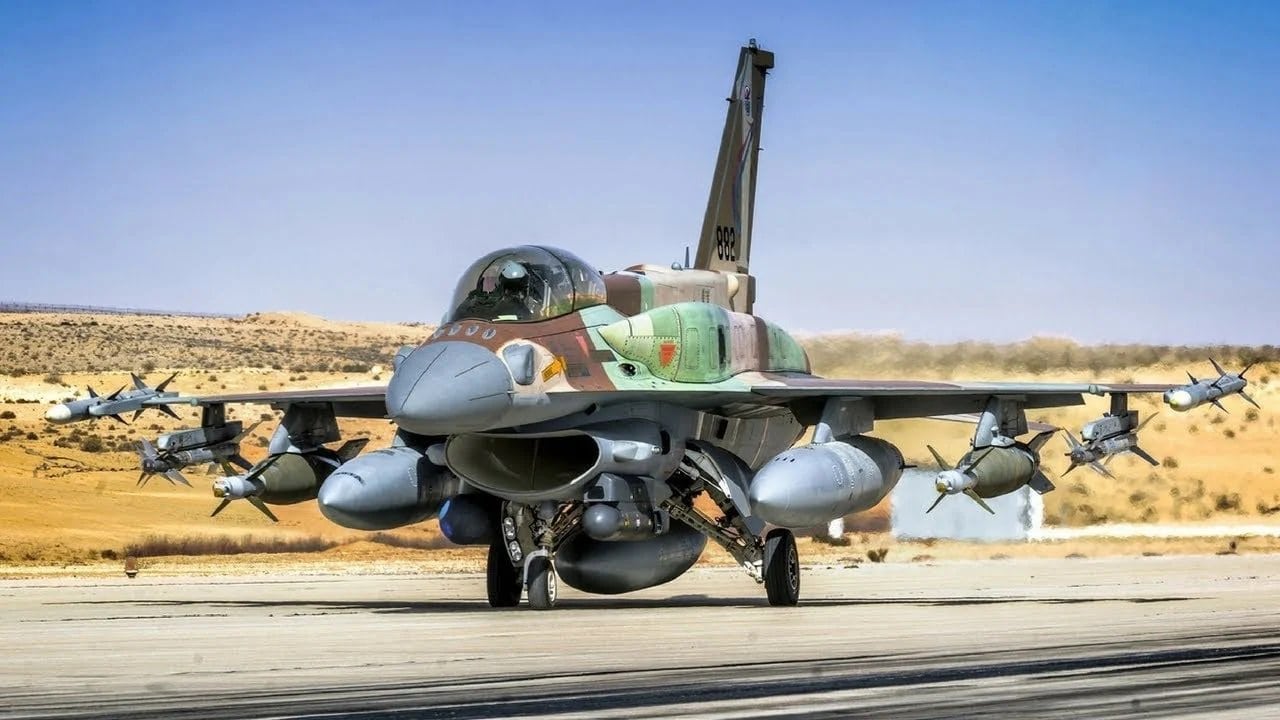
F-16I from Israel. Image Credit: Creative Commons.
The result was that Israel sat and waited for war to happen, and then didn’t try to take land from the adversary. This changed after October 7; the IDF took areas in Gaza, Lebanon, and also seized a strip of land along the Syrian border when the Assad regime collapsed.
However, the new tactic of seizing territory and having an offensive posture on all fronts still leaves challenges for Israel in the future. Israel has attempted this kind of preemption in the past, seeking to hammer down enemy capabilities over the long term.
This was called the ‘Campaign between the Wars,’ abbreviated as MABAM in Hebrew.
In 2019, outgoing IDF Chief of Staff Gadi Eizenkot lifted the lid on this campaign by saying the IDF had struck thousands of Iranian targets in Syria. At the time, Iran was working with the Assad regime and moving weapons through Syria to Hezbollah. The IDF was seeking to prevent Iranian entrenchment in Syria.
The lesson from the decade-long ‘Campaign between the Wars’ was that Iran’s presence in Syria remained relatively static for most of the time from 2013 to 2023. At times it rose to thousands of IRGC personnel and thousands of militia members, and at times it was reduced, but Iran’s role was the same. The precision bombing campaign didn’t remove Iran. Hezbollah kept building its arsenal throughout.
What removed Iran from Syria was the Syrian rebel offensive in December 2024, made possible in part by the IDF hammering Hezbollah. This is a lesson that decisive military action is more effective at ending conflict than the long slog of trying to reduce enemy capabilities over time.
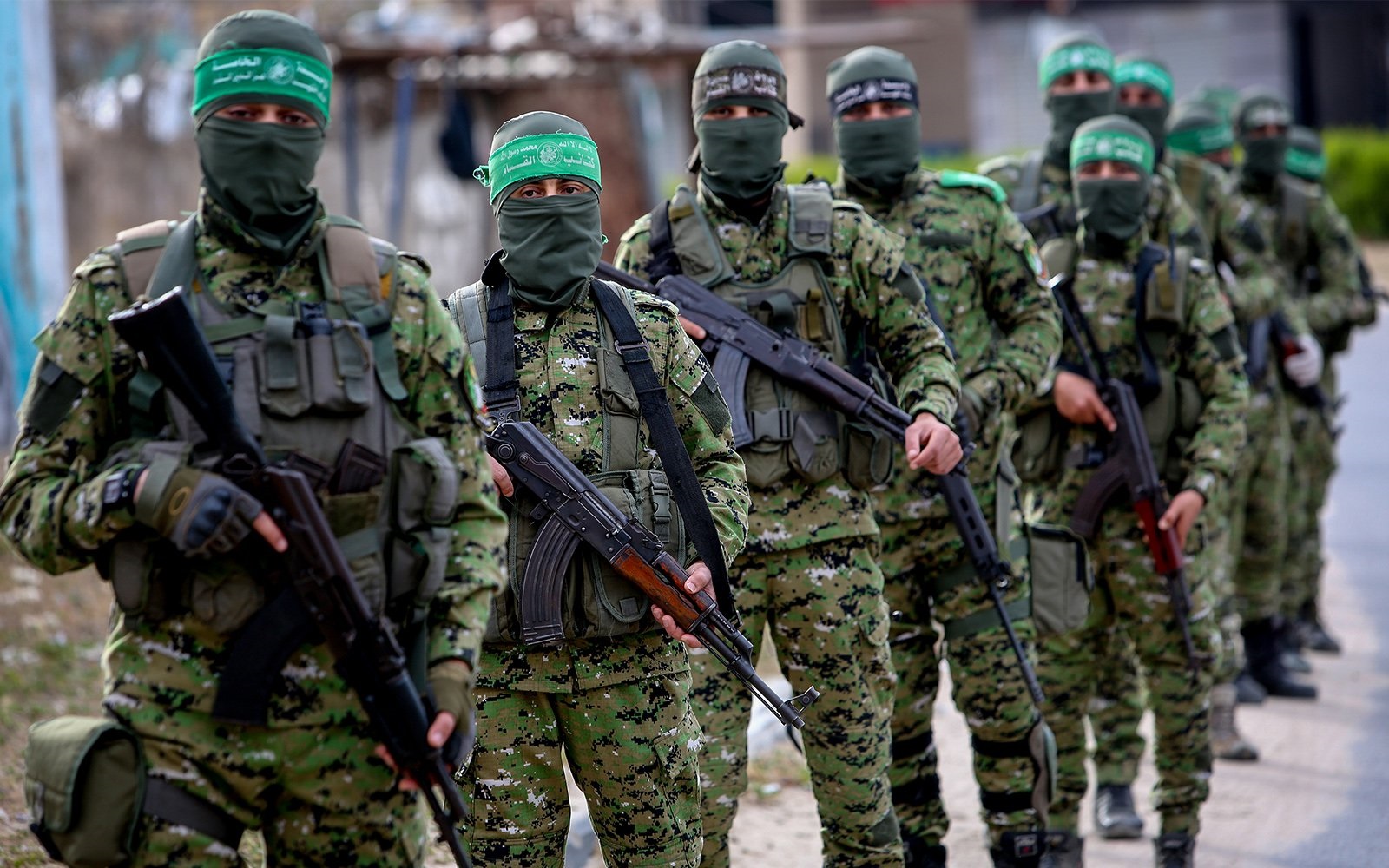
Hamas soldiers. Image Credit: Israeli government.
The question Israel faces today is whether it has learned the wrong lesson from October 7. It has gone from a defensive, waiting, and Momentum plan that didn’t envision taking territory to one that now takes territory and preempts threats through constant operations on multiple fronts.
The link between these doctrines is the Campaign between the Wars, which provides a cautionary tale that precision airstrikes and constant low-level conflict may not get to the end zone.
About the Author: Seth Frantzman
Seth Frantzman is the author of The October 7 War: Israel’s Battle for Security in Gaza (2024) and an adjunct fellow at The Foundation for Defense of Democracies. He is a Senior Middle East Analyst for The Jerusalem Post. Seth is now a 19FortyFive Contributing Editor.