
Summary and Key Points: The consensus among national security experts, such as author Steve Balestrieri, is that “logistics wins wars.” The current shipbuilding crisis is not just a budgetary issue—it is a national security emergency. Without a radical revitalization of the industrial base, the U.S. Navy risks becoming a “paper tiger” that is technically superior but numerically overwhelmed in the Indo-Pacific.

120511-N-WO496-003 STRAIT OF HORMUZ (May 11, 2012) Guided-missile cruiser USS Cape St. George (CG 71) and aircraft carrier USS Abraham Lincoln (CVN 72) transit the Strait of Hormuz. Both ships are deployed to the U.S. 5th Fleet area of responsibility conducting maritime security operations, theater security cooperation efforts and support missions as part of Operation Enduring Freedom. (U.S. Navy Photo by Mass Communication Specialist 3rd Class Alex R. Forster/Released)
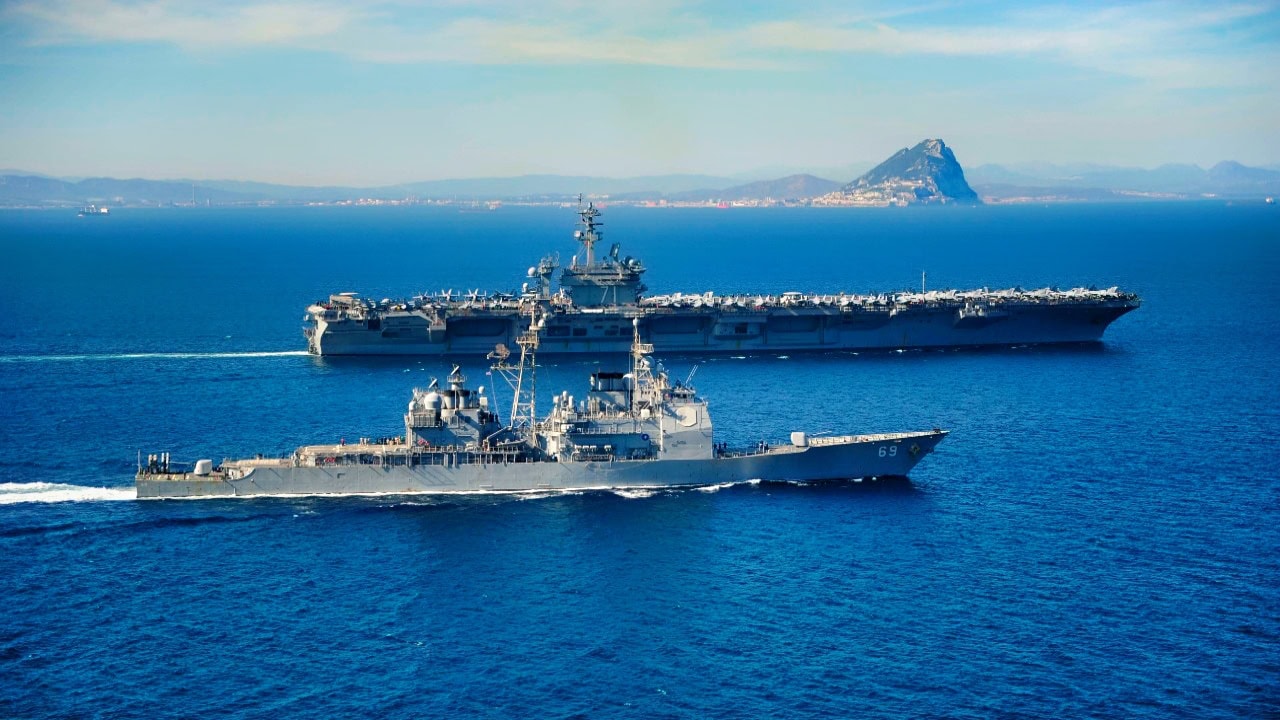
Ticonderoga-Class Cruiser U.S. Navy. Image Credit: Creative Commons.
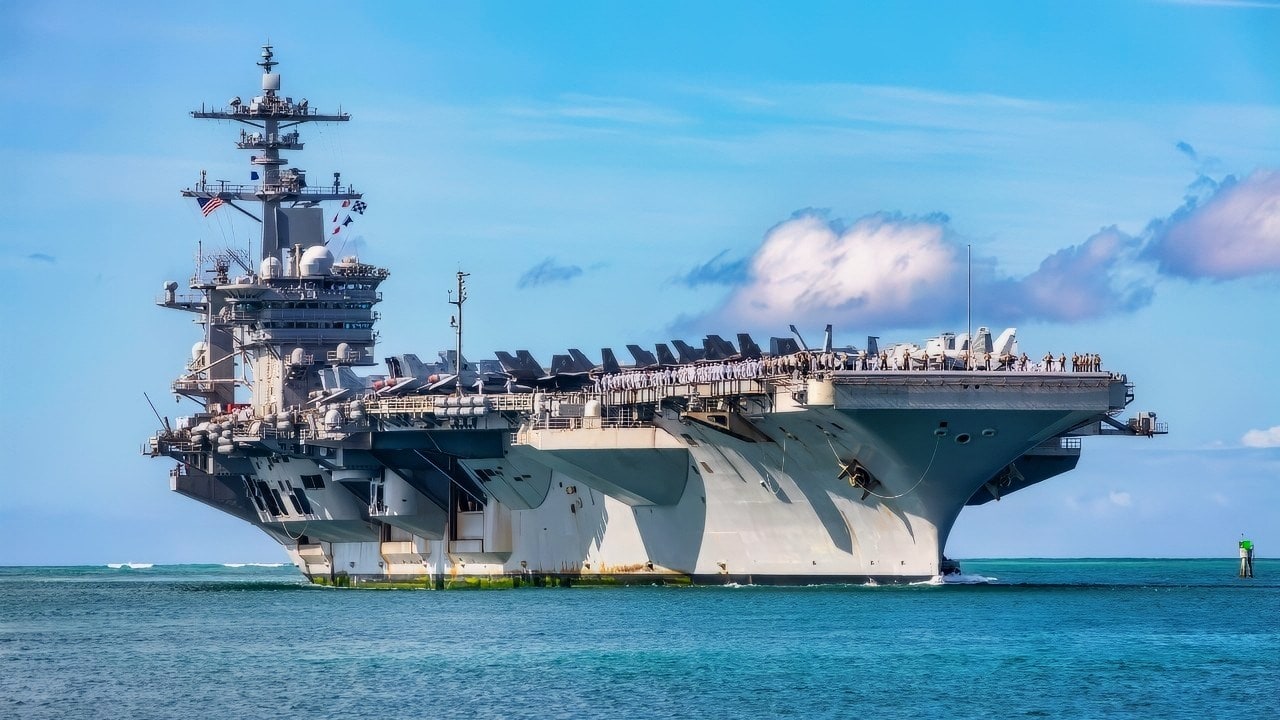
Supercarrier Nimitz-Class U.S. Navy. Image Credit: Creative Commons.
The U.S. Navy’s Ship Building Crisis, The “Doom Loop”
The U.S. Navy is currently facing a significant shipbuilding crisis, characterized by major programs running severely over budget and behind schedule, with roughly 82 percent of ships under construction behind schedule. Other programs are being scaled back or canceled entirely.
Without significant changes to the shipbuilding industry’s foundation, the U.S. Navy will not be able to address its global threats, especially as it retires older vessels and is unable to replace them promptly.
Despite nearly doubling its shipbuilding budget over the last 2 decades, the U.S. Navy’s ship count has decreased. The Navy and Department of Defense work with private companies to build ships and have invested billions of dollars to support the shipbuilding industrial base.
However, the shipbuilding industry has strengths and benefits from public-sector initiatives to revitalize its infrastructure and workforce.
It does need a shot in the arm to improve its aging infrastructure and to create new jobs to bring back the skilled workers needed for the industry.
The U.S. Navy and the Department of Defense are taking steps to help private companies with shipbuilding. For example, they’ve invested billions to increase shipbuilding capacity, including infrastructure improvements at shipyards and workforce development, according to the GAO’s Shelby Oakley.
The U.S. Navy’s “Doom Loop,” What Is It? And Can It Be Fixed?
But even with this investment, the industry has been unable to meet the Navy’s goals—jeopardizing the Navy’s ability to protect the U.S. from growing maritime threats and competition.
This “doom loop” of production delays, maintenance backlogs, and workforce issues has resulted in a shrinking fleet despite nearly doubling the shipbuilding budget over the last two decades.
The U.S. Navy’s “doom loop” is a self-reinforcing crisis where aging ships, maintenance backlogs, and severe shipbuilding delays (with 82 percent of new ships behind schedule) cause a shrinking fleet despite rising budgets.
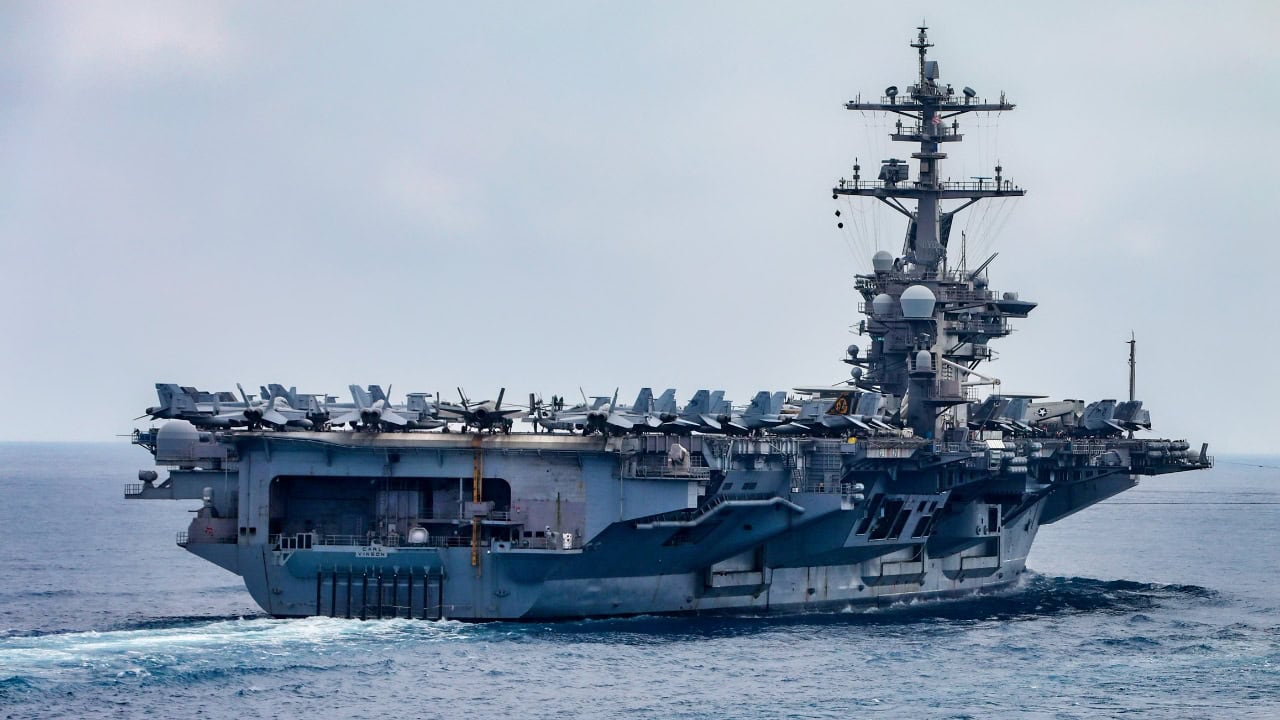
SOUTH CHINA SEA (Feb. 2, 2025) The Nimitz-class aircraft carrier USS Carl Vinson (CVN 70) conducts a replenishment-at-sea with the dry cargo and ammunition ship USNS Carl Brashear (T-AKE 7) Feb. 2, 2025. The Carl Vinson Carrier Strike Group is underway conducting routine operations in the U.S. 7th Fleet area of operations. (U.S. Navy photo by Mass Communication Specialist 1st Class Jacob I. Allison)
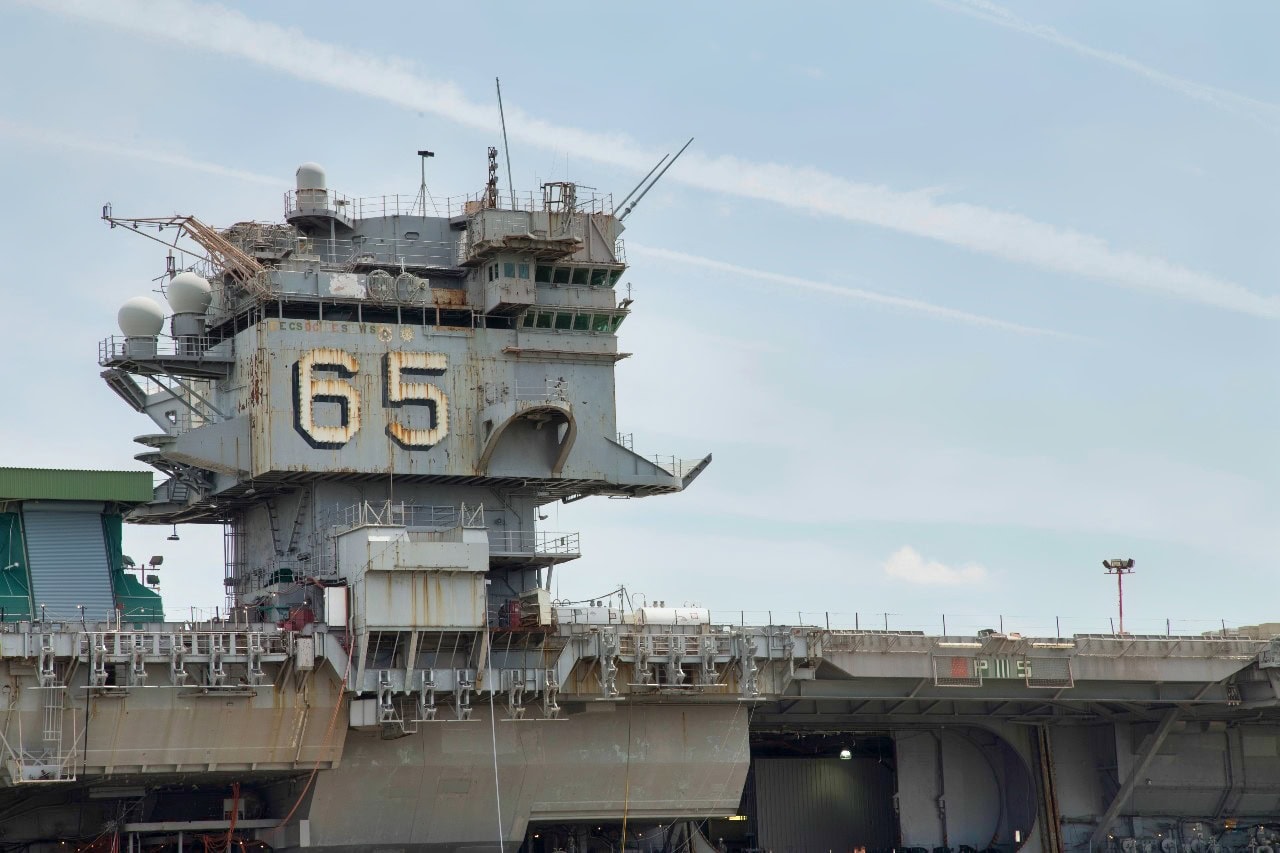
NEWPORT NEWS, Va. (July 15, 2018) — USS Enterprise (CVN 65) sits pierside at Newport News Shipbuilding following its decommissioning in February 2017. (U.S. Navy photo by Mass Communication Specialist 2nd Class Cat Campbell/RELEASED)
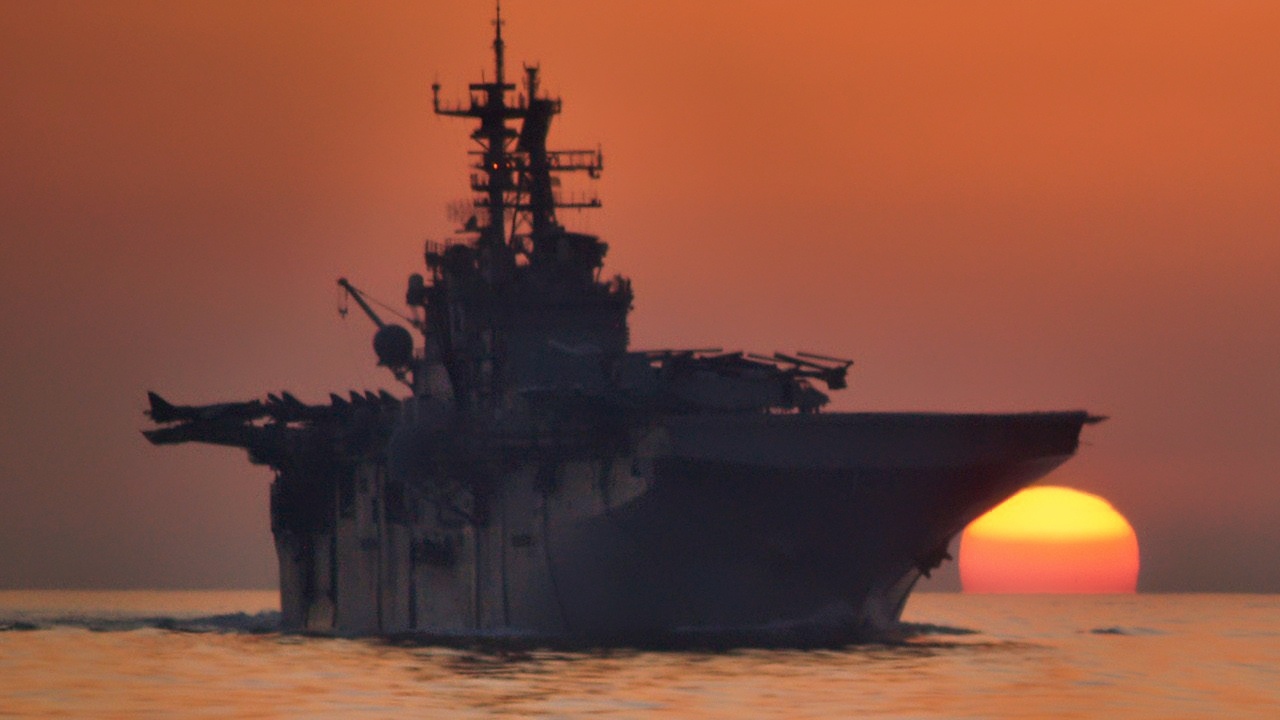
The amphibious assault ship USS Bataan (LHD 5) transits the Strait of Hormuz.
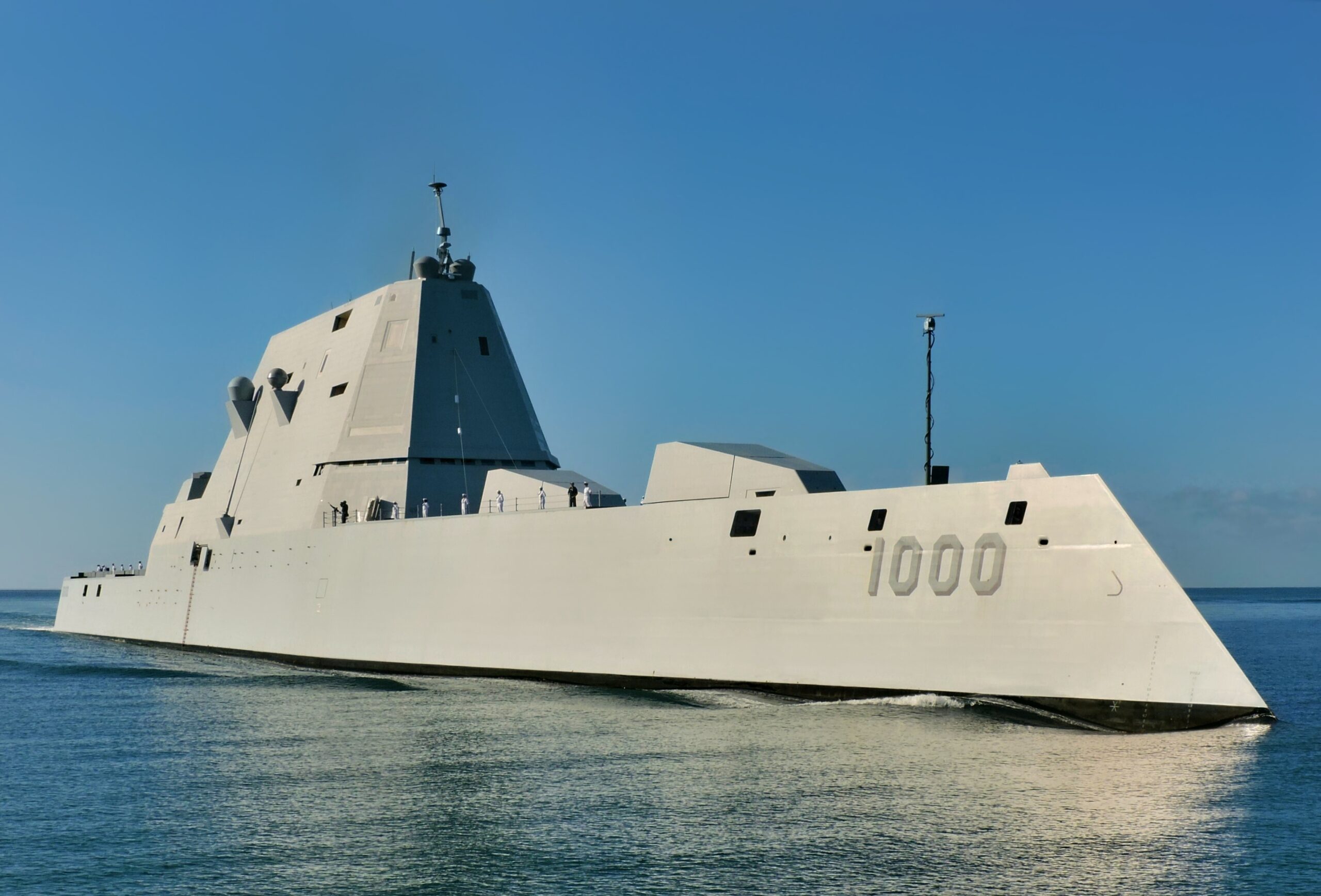
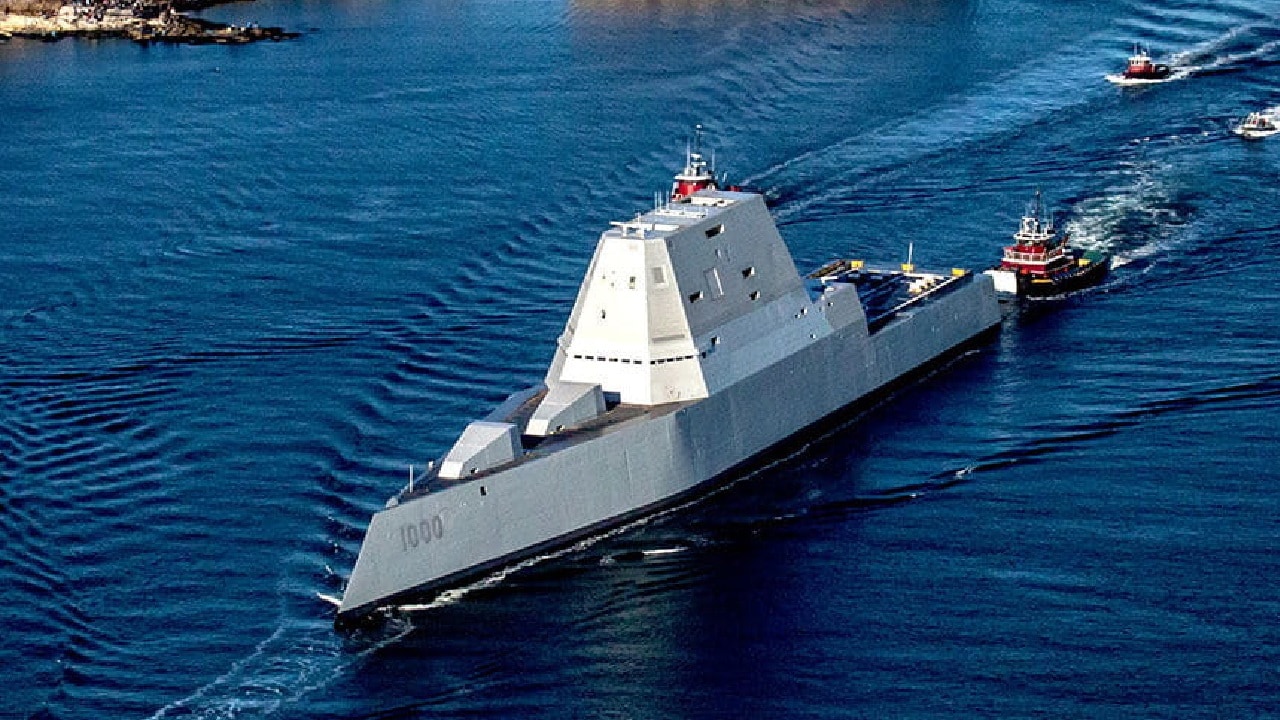
Zumwalt-Class Destroyer U.S. Navy. Image Credit: Creative Commons.
This cycle is driven by industrial base decay, workforce shortages, and design issues, leaving the U.S. struggling to compete with China’s rapid naval expansion.
This puts the Navy in a bad spot to rebuild its force for modern warfare against near-peer adversaries like China and Russia.
The U.S. Navy Shipbuilding Infrastructure Is Hurting Badly
It is a complex issue with various perspectives and challenges, some of which the Navy cannot control. The shipbuilding industry in the United States is one of the cornerstones of the nation’s security and economic resilience.
However, global shifts in industry and supply chain trends threaten its competitiveness and ability to meet growing demands. And the U.S. government allowed its shipbuilding industry to fade on the vine.
The U.S. has allowed its shipbuilding sector to shrink dramatically since the Cold War, leaving only a few specialized shipyards capable of building complex naval vessels.
U.S. Navy Programs That Did Damage
The Navy often begins construction before ship designs are fully mature, increasing the likelihood of major changes mid-construction – one of the main causes of rising costs and delays.
Constellation-Class Frigate (FFG-62) – In November 2025, the Navy announced the cancellation of four out of six contracted frigates, with only the first two (USS Constellation and USS Congress) to be completed.
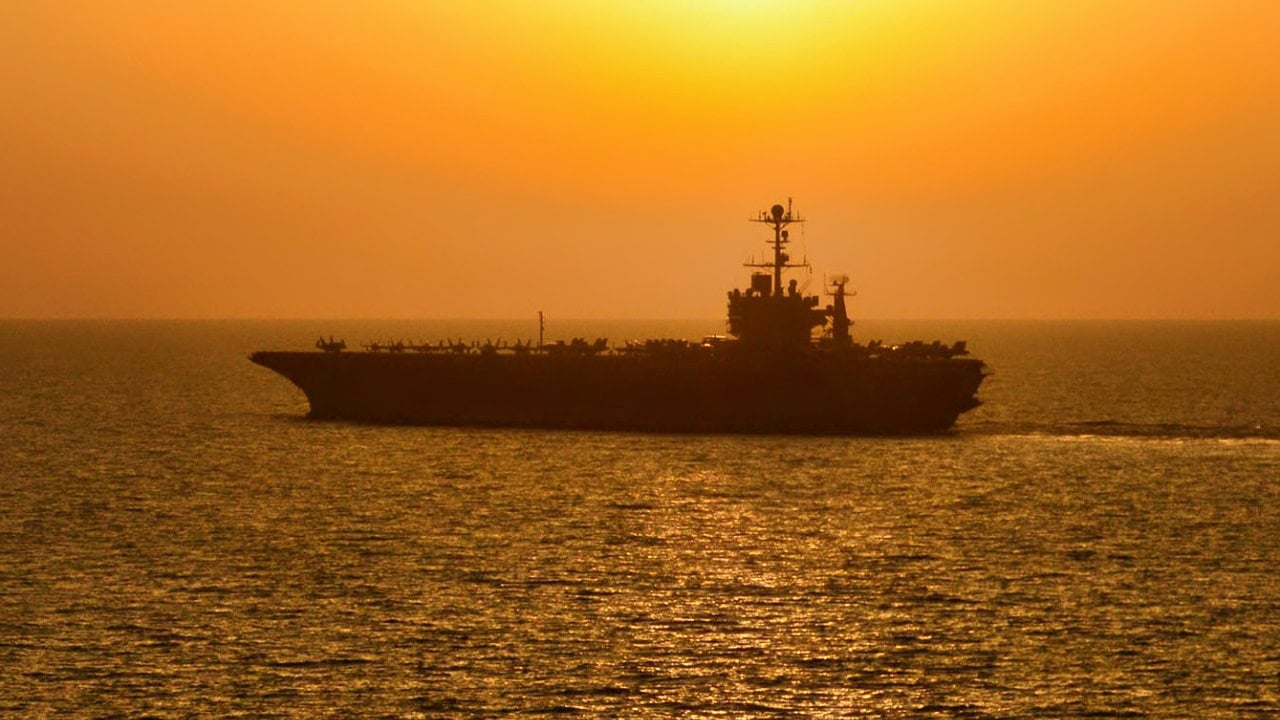
(Oct. 19, 2013) The aircraft carrier USS Harry S. Truman (CVN 75) is underway during sunset. Harry S. Truman, flagship for the Harry S. Truman Carrier Strike Group, is deployed to the U.S. 5th Fleet area of responsibility conducting maritime security operations, supporting theater security cooperation efforts and supporting Operation Enduring Freedom. (U.S. Navy photo by Mass Communication Specialist 2nd Class Mike DiMestico/Released)
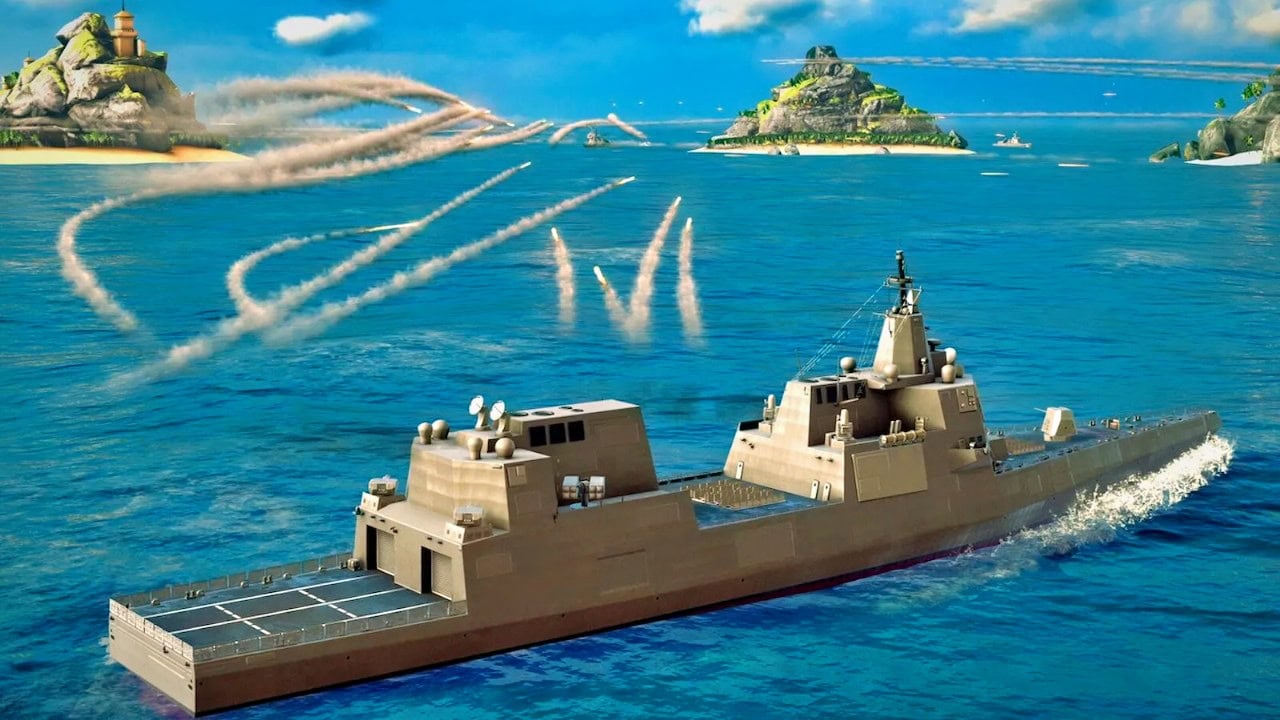
DDG(X) image created by artist. Image Credit: Creative Commons.
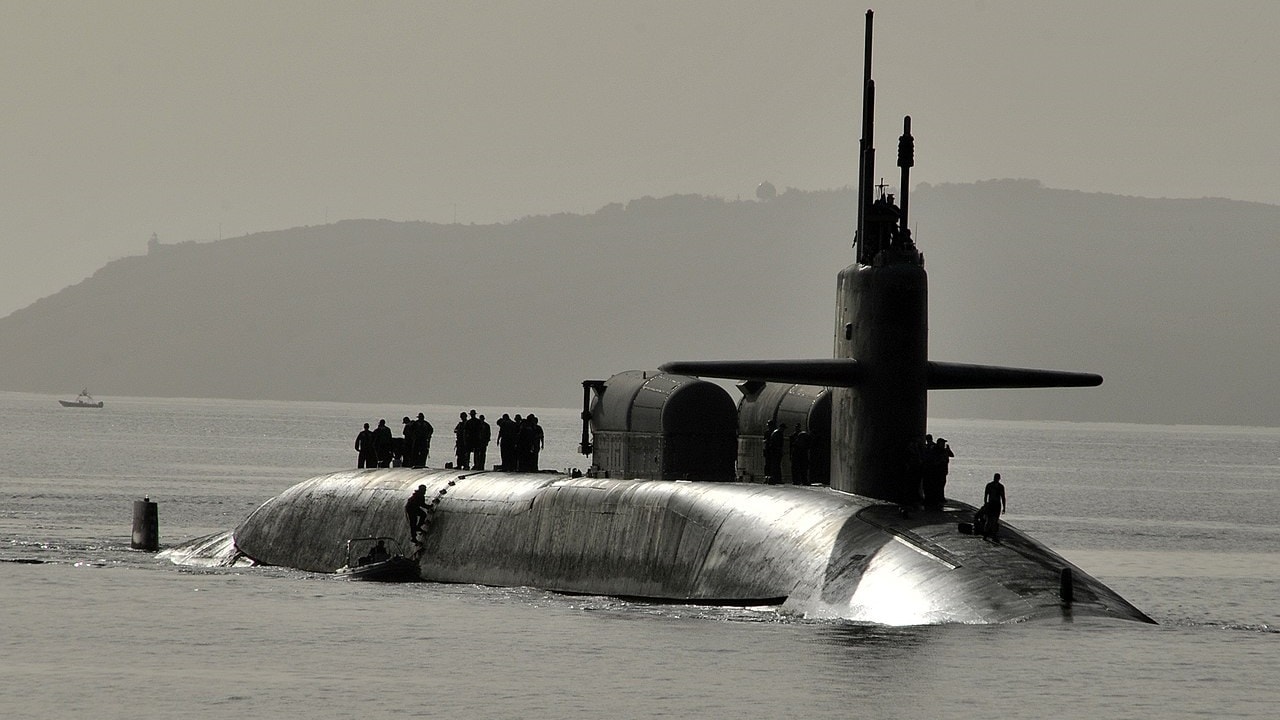
SOUDA BAY, Greece (May 21, 2013) The Ohio-class guided-missile submarine USS Florida (SSGN 728), gold crew, arrives in Souda harbor. Florida is homeported in Kings Bay, Ga., and is deployed conducting maritime security operations and theater security cooperation efforts in the U.S. 6th Fleet area of responsibility. (U.S. Navy photo by Paul Farley/Released) 130521-N-MO201-047
Based on the Italian FREMM design, the program was meant to be a low-risk, “off-the-shelf” design. Still, it became plagued by design creep and weight issues, and, as of late 2025, was considered to cost 80 percent as much as a destroyer while offering only 60 percent of its capability.
Driven by extreme design modifications, 3-year delays, and a 15 percent increase in modification costs from the original, the program was deemed too slow to meet naval requirements.
Littoral Combat Ship (LCS) – Initially estimated at $220 million per hull, costs for these ships ballooned to over $600 million each. The program was significantly scaled back, with several ships retired early due to mechanical issues and mission failures.
The U.S. Navy’s Littoral Combat Ship (LCS) program failed due to technical issues, including propulsion problems, underestimated complexity, immature mission systems, and a lack of survivability against high-end threats, leading to premature retirements and a shift toward more traditional frigates like the Constellation class.
The initial vision of cheap, adaptable, multi-mission ships for near-shore fighting didn’t materialize, resulting in a fleet that struggled with maintenance, lacked adequate armament, and couldn’t meet evolving strategic needs, especially against peer competitors like China.
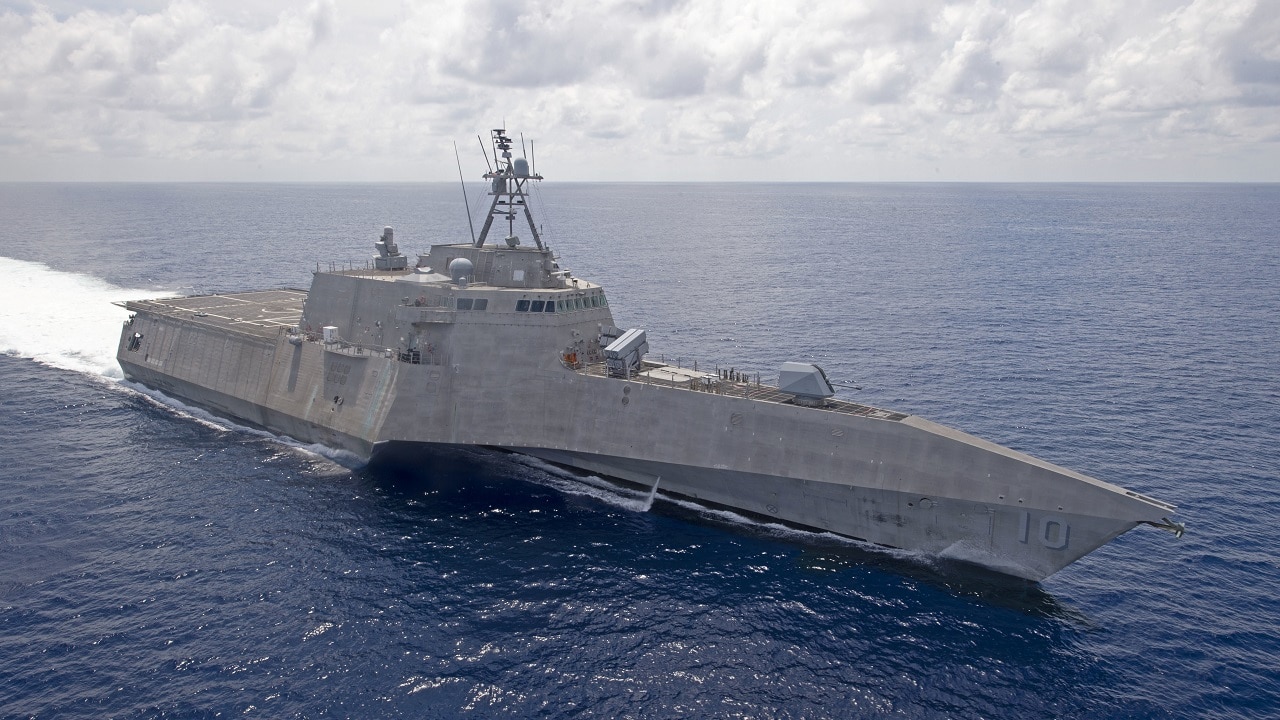
SOUTH CHINA SEA (March 20, 2020) The Independence-variant littoral combat ship USS Gabrielle Giffords (LCS 10) patrols the South China Sea, March 20, 2020. Gabrielle Giffords, part of Destroyer Squadron (DESRON) 7, is on a rotational deployment, operating in the U.S. 7th Fleet area of operations to enhance interoperability with partners and serve as a ready-response force.(U.S. Navy photo by Mass Communication Specialist 2nd Class Brenton Poyser/Released)
Early models suffered from hull cracks, weak propulsion systems (limiting speed), and ongoing mechanical issues, making them expensive to maintain and operate.
The modular mission packages (for anti-submarine, mine warfare, etc.) were often delayed, underdeveloped, or failed testing, hindering the ships’ intended versatility.
The lack of survivability was also a big factor. The ships proved vulnerable in combat, lacking the armor and defensive capabilities needed for modern warfare against sophisticated adversaries, making them ill-suited for high-intensity conflicts.
The Navy struggled to define the LCS’s role, leading to a lack of focus and a ship that didn’t fully meet any single critical need effectively.
Zumwalt-Class Destroyer (DDG-1000) – The Zumwalt destroyer program failed due to massive cost overruns, rendering its key weapons systems economically unviable, leading to the fleet being cut from 32 ships to just three; its advanced features, like stealth, couldn’t justify the exorbitant price tag (around $8 billion per ship) when compared to the cheaper, more versatile Arleigh Burke-class destroyers, forcing the Navy to repurpose the remaining ships for new roles like carrying hypersonic missiles.
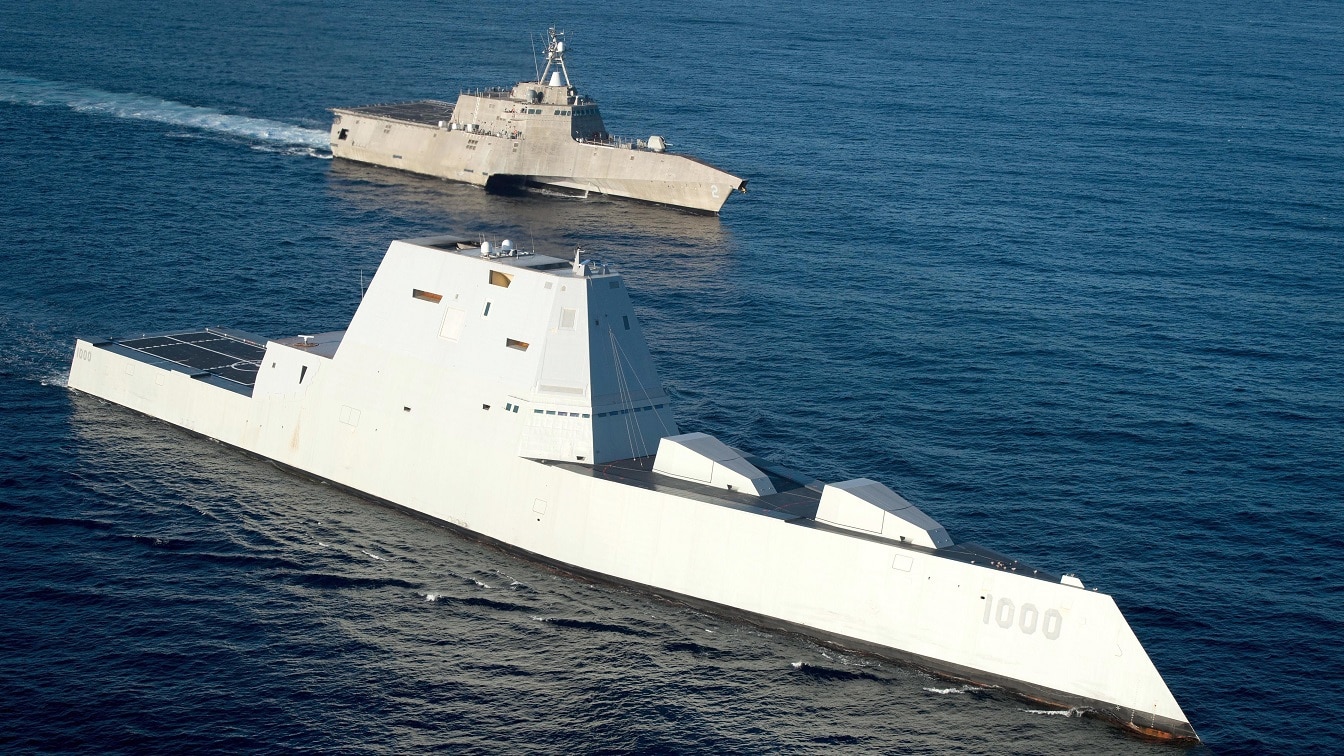
PACIFIC OCEAN (Dec. 8, 2016) The guided-missile destroyer USS Zumwalt (DDG 1000), left, the Navy’s most technologically advanced surface ship, is underway in formation with the littoral combat ship USS Independence (LCS 2) on the final leg of its three-month journey to its new homeport in San Diego. Upon arrival, Zumwalt will begin installation of its combat systems, testing and evaluation, and operational integration with the fleet. (U.S. Navy photo by Petty Officer 1st Class Ace Rheaume/Released)161208-N-SI773-0401
Prohibitive costs were a major factor in its failure. The initial plan for 32 ships was slashed to three, concentrating the massive development costs onto fewer vessels, making each cost roughly the price of an aircraft carrier (around $7.5-$8 billion).
The intended main armament, powerful 155mm guns for long-range bombardment, became useless because the specialized, precision-guided ammunition cost $800,000 to $1 million per round, making it impractical for the Navy to buy.
The Navy’s strategic needs changed, and the expensive, technologically complex Zumwalts couldn’t match the flexibility and cost-effectiveness of the modernized Arleigh Burke-class destroyers.
Concurrent development issues plagued the program. Developing numerous new technologies simultaneously (like its stealth hull and electric propulsion) led to unforeseen problems and increased costs.
Despite advanced stealth, the ships had fewer missile cells than expected and struggled to operate effectively in large task forces or near shore, conflicting with their intended roles.
China’s Rapidly Expanding Navy
The Chinese have invested heavily in their Navy (PLAN) and Coast Guard. Currently, their Navy is concentrating on the Indo-Pacific region, particularly in the First and Second Island Chains.
The PLAN has surpassed the U.S. Navy in the total number of ships, including both surface combatants and submarines. They have the world’s largest Navy by ship count.
And while the U.S. Navy has fewer ships overall, it has greater tonnage and a larger share of larger, more capable vessels, especially in nuclear submarines and aircraft carriers.
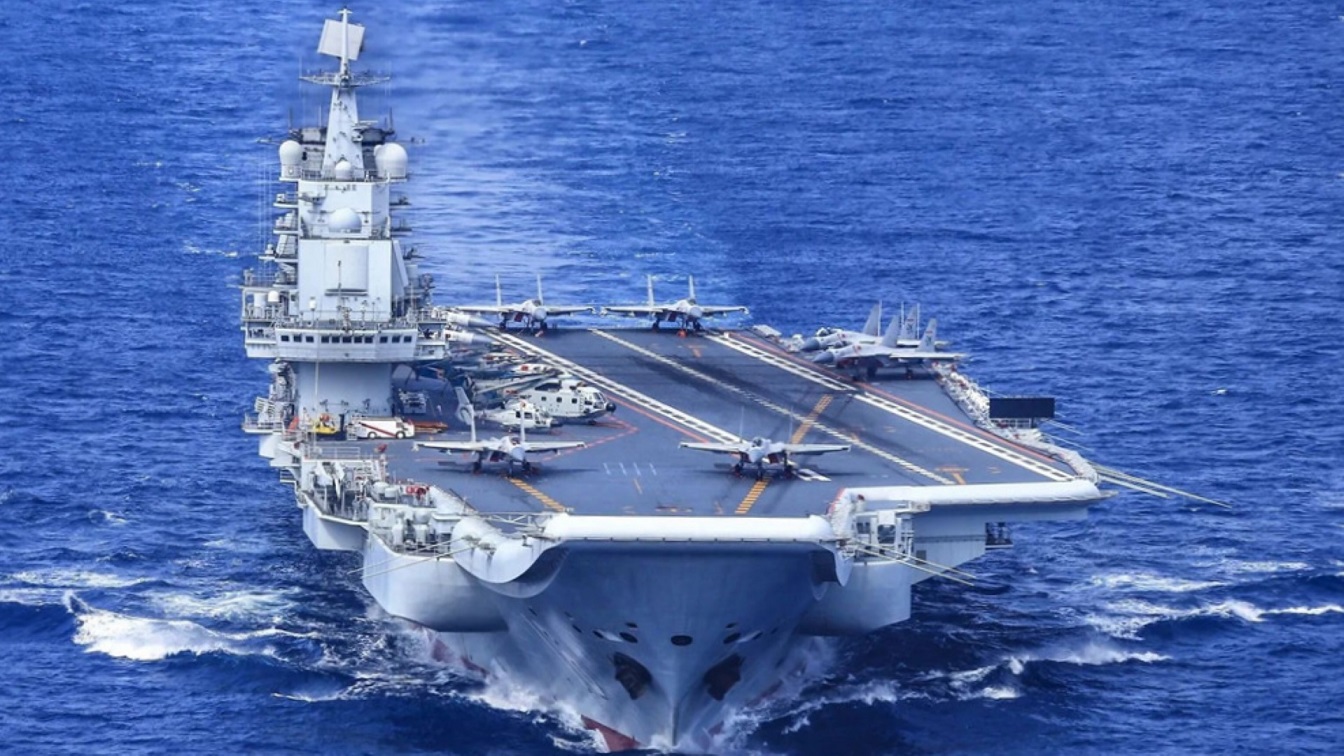
Image Credit: Creative Commons.
Chinese shipyards now outproduce their U.S. counterparts by a wide margin and benefit from a massive commercial shipbuilding sector that supports naval production. The United States now accounts for only a tiny fraction of global shipbuilding output.
China’s Increasingly Aggressive Behavior In The Indo-Pacific
The Chinese Navy and Coast Guard have harassed smaller nations’ ships and belligerently seized small islands that they claim and have stationed bases there. They are growing impatient about reuniting with Taiwan, and have told their military to be ready to go to war in 2027, presumably to take Taiwan.
That would most certainly entail a war with the United States. China has the long-range missiles to attack U.S. bases in Guam, the Philippines, South Korea, Japan, and Australia.
Would the U.S. Navy, split between the Atlantic and Pacific, have enough sea and air power to thwart a Chinese invasion of Taiwan and all that it would entail?
Currently, the Navy lacks sufficient capacity to meet both its worldwide presence and crisis response requirements. One factor to keep in mind is that if China attacks the U.S. and Japan and South Korea join the U.S., then China’s numerical advantage is rendered moot.
Taiwan is so close to mainland China that it can afford to keep its one main aircraft carrier and two smaller ones close to shore and still engage U.S. carriers.
Can The Navy Hope To Reach Its Fleet Size Goals?
The Navy has a clear goal: its 2025 plan aims for a larger fleet (381 manned ships and 134 unmanned vessels) with more distributed firepower. That is a very ambitious, if somewhat unrealistic, goal, given the current state of shipbuilding.
To achieve its goal of 381 battle force ships, the Navy would buy 364 vessels over the next 30 years—293 combat ships and 71 combat logistics and support vessels.
Significant investment is underway in shipbuilding, with the budget nearly doubling over the past two decades.
A focus on advanced technologies, including artificial intelligence, autonomy, cyber resilience, and unmanned systems, is intended to enhance capabilities and accelerate modernization.
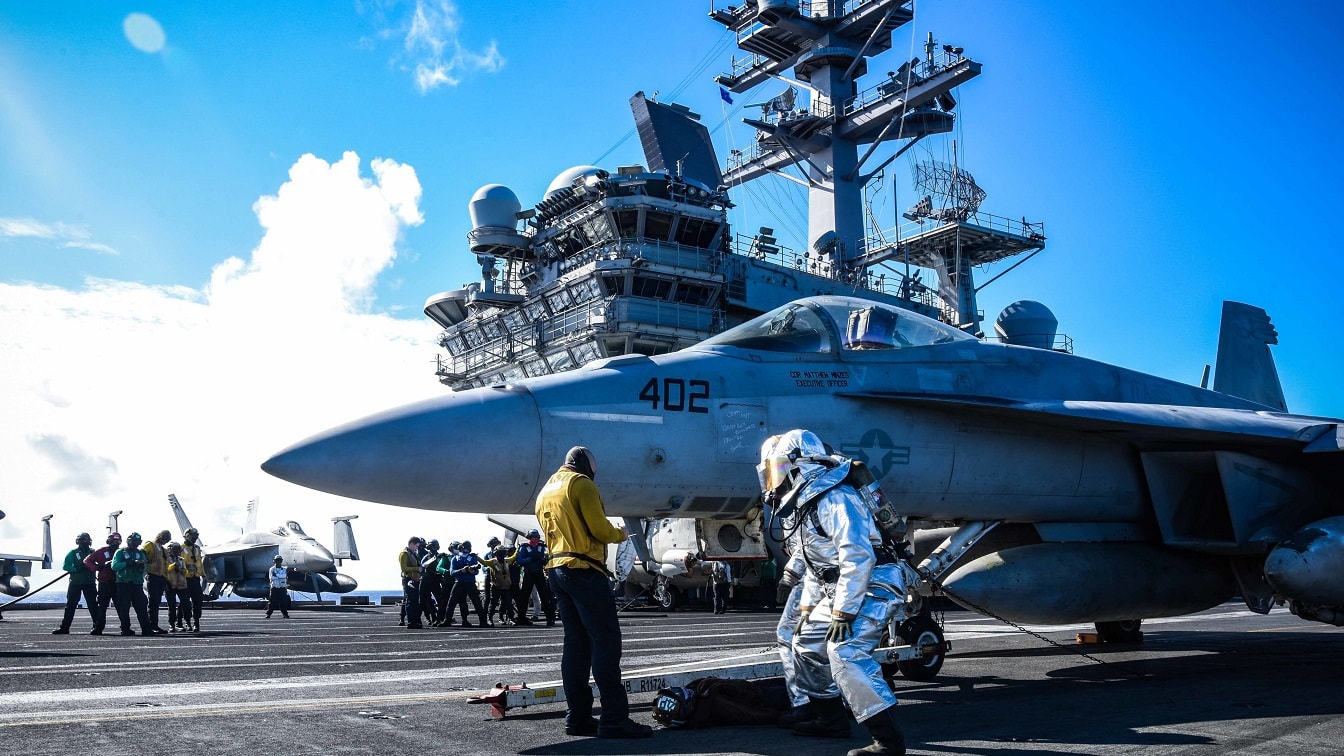
201019-N-ZF088-1100 SOUTH CHINA SEA (Oct. 19, 2020) A crash-and-salvage team prepares to rescue a simulated patient during a flight deck fire drill on the Navy’s only forward-deployed aircraft carrier USS Ronald Reagan (CVN 76). Ronald Reagan, the flagship of Carrier Strike Group 5, provides a combat-ready force that protects and defends the United States, as well as the collective maritime interests of its allies and partners in the Indo-Pacific. (U.S. Navy photo by Mass Communication Specialist 3rd Class Gabriel A. Martinez)
The Navy is working to streamline acquisition processes and to integrate commercially available technologies more quickly. But the failure of designs and the Navy’s insistence on entering production before designs are finalized or fully tested has been wasteful and costly.
To get the Navy back on track with shipbuilding, a multi-faceted approach is needed, focusing on stable, long-term funding (like multi-year buys), streamlining design and acquisition processes (reducing design creep), investing heavily in the industrial base (workforce, infrastructure, automation), and leveraging allied capabilities, while Congress provides consistent demand signals.
The success of the Navy’s rebuilding efforts will likely depend on its ability to overcome these challenges and effectively adapt to the evolving geopolitical landscape and technological advancements.
In a wartime scenario, the ability to build and repair warships will be a significant factor in which side can prevail.
About the Author: Steve Balestrieri
Steve Balestrieri is a National Security Columnist. He served as a U.S. Army Special Forces NCO and Warrant Officer. In addition to writing on defense, he covers the NFL for PatsFans.com and is a member of the Pro Football Writers of America (PFWA). His work was regularly featured in many military publications.