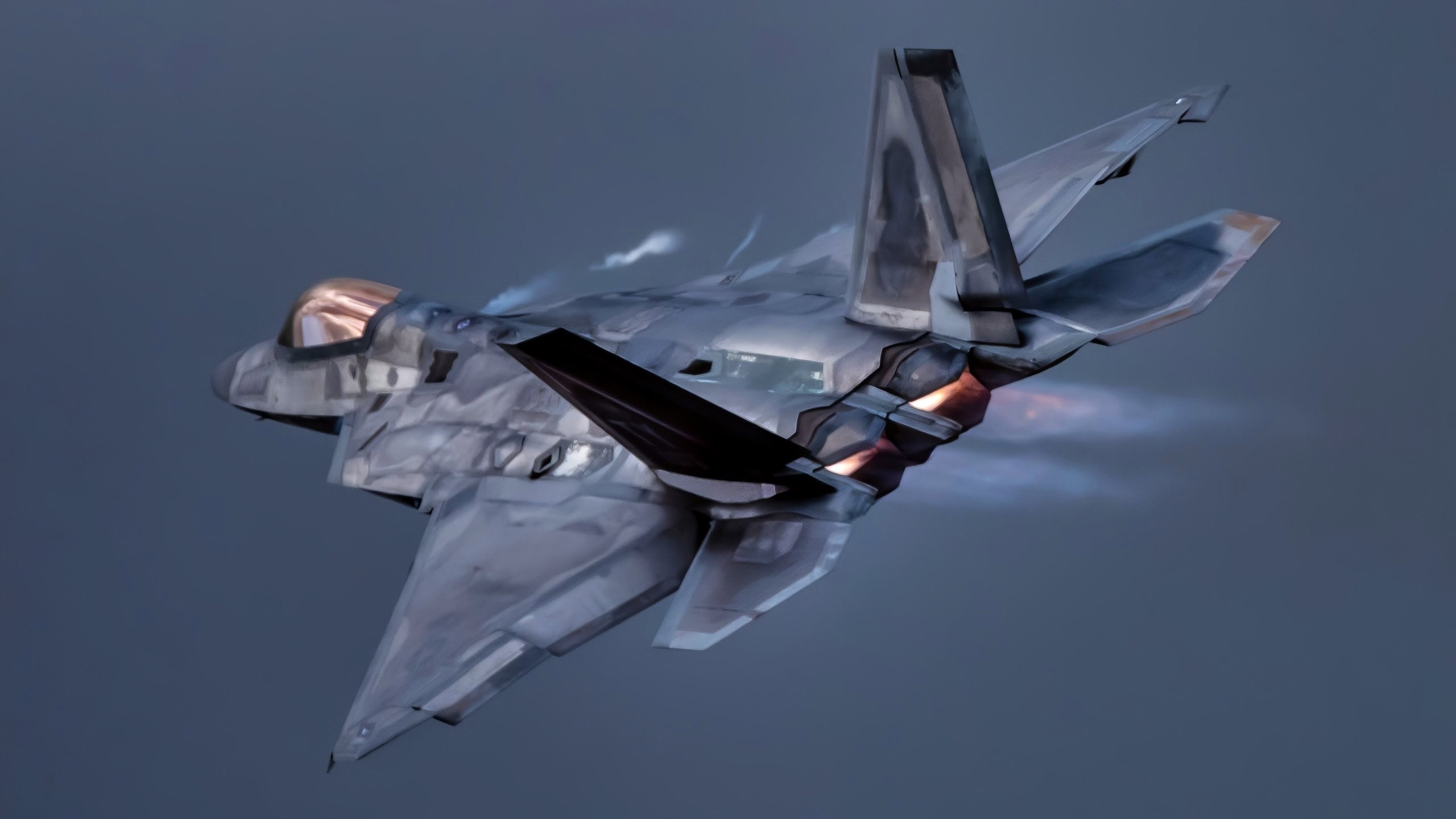
Summary and Key Points: Drawing on his extensive background reporting on European security and American foreign policy for POLITICO Europe, journalist Caleb Larson explores the tragic irony of the F-22 Raptor.
-Widely considered the greatest air superiority fighter ever built, the stealth jet was canceled in 2009 because its Cold War-era design was deemed unnecessary for counterinsurgency operations in the Middle East.
-Today, as the U.S. pivots back to great-power competition against near-peer adversaries, the dismantling of the Raptor’s production line serves as a stark reminder of how quickly strategic environments can shift, leaving the military scrambling to develop the next-generation F-47.
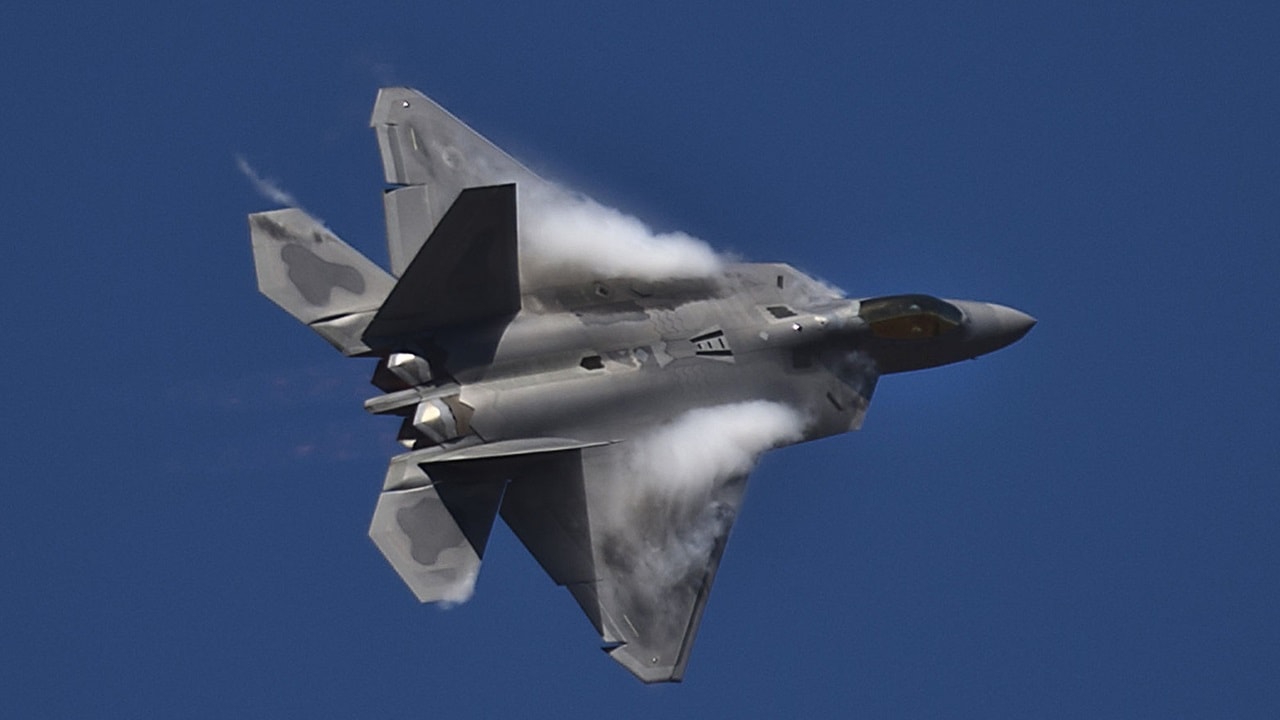
A U.S. Air Force F-22 Raptor from 94th Fighter Squadron Langley Air Force Base, Va., takes off to perform an aerial demonstration for an estimated 180,000 spectators at the Australian International Airshow, March 2, 2013 at Avalon Airport in Geelong, Australia. The F-22 demo team are currently deployed to the 18th Fighter Wing, Kadena Air Base, Japan to support pacific theater operations. This is the first official demonstration of the F-22 Raptors capabilities at an airshow outside the United States. The Australian International Airshow 2013 (AIA13), is held biennially, and is one of the largest international trade shows in the Pacific. The Airshow is expected to draw 350,000 visitors and has featured 500 defense exhibitors from 35 countries and is designed to bolster business opportunities in the international aviation sector. U.S. Pacific Command (USPACOM) participation in AIA13 directly supports theater engagement goals and objectives and further enhances relationships with other Pacific nations. (Department of Defense photo by U.S. Air Force Tech. Sgt. Michael R. Holzworth/Released)
When it debuted, it was the world’s leading air superiority fighter. Dual-engined, with sleek lines and a robust radar-mitigation capability, the F-22 Raptor was the U.S. Air Force’s dream platform. Built to wrest control of the skies from Soviet aircraft, the stealth fighter was years ahead of its peers.
So why was the Raptor production line permanently closed down after less than 200 of them had been built?
The shuttering of the F-22 Raptor production line was not attributable to any single factor, but is rather a reflection of a changed strategic environment in which the F-22 was not the right tool for the job, as well as a strong and ultimately successful congressional push to prevent the technologies that went into the Raptor from leaving the United States.
The Raptor was conceived of during the Cold War as a solution to both increasingly advanced Soviet fighter designs, which challenged the United States air superiority fighter at the time, the F-15, as well as sophisticated Soviet air defenses that threatened to negate the technological superiority then enjoyed by United States warplanes.
Stealth technology held great allure. Its proponents argued that it would allow American jets to fly through even highly contested aerial environments with near impunity.
In 2009, the threat that the Raptor had been built to stare down and defeat — massed formations of advanced Soviet fighter jets over Europe — had evaporated.
Instead, the United States was conducting counterinsurgency operations in the Middle East against enemies that lacked the robust air defenses the Raptor’s designers expected it to face.
Dovetailing with that very different threat environment was the F-22’s lack of utility to ground troops.
Though it is still arguably the world’s preeminent air superiority fighter, it cannot provide robust and sustained ground support. Costs would also prove to be detrimental to the jet’s longevity.
Show Me the Money
At around 140 million dollars per jet, the F-22 is an extremely expensive plane to build.
High maintenance and readiness costs were an issue. Had the U.S. Air Force purchased the 750 F-22 Raptors it originally intended to buy, unit cost would have declined significantly.
Instead, research and production costs were spread across a relatively small fleet, boosting the price tag of each jet.
In essence, the Raptor program was both highly expensive and inapplicable to fighting terror groups in Iraq and Afghanistan. In light of those constraints, it is perhaps more understandable that the program was truncated so severely.
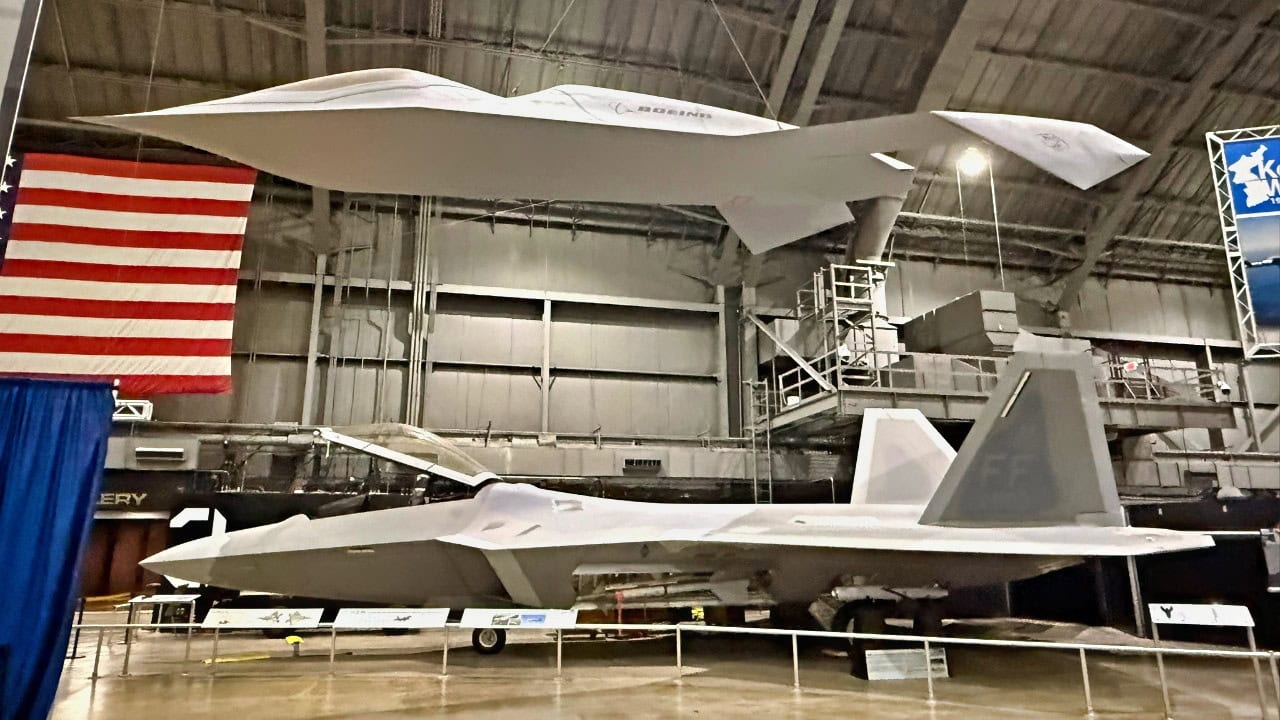
YF-118G. Image taken by Harry J. Kazianis for 19FortyFive.
In parallel to these developments, the Department of Defense was preparing to accept the F-35 Lightning II into service across the U.S. Air Force, Navy, and Marine Corps.
One platform, available in three variants, was promised to keep overall program costs low while also giving each service a bespoke fighter jet to meet its unique needs.
Single-engined and less refined than the Raptor, the F-35 offered, on paper, a cost-effective solution and multirole capability, more akin to a Swiss Army Knife than the Raptor’s scalpel.
Some senior leadership acknowledged that the F-35 would be less capable than the Raptor for air superiority missions, but that the two jets could fight together and offer a high-low mix of capabilities that would serve American interests.

U.S. Air Force Maj. Melanie “Mach” Kluesner, pilot for the F-35A Demonstration Team, preforms high-speed aerial maneuvers during a practice demonstration at Hill Air Force Base, Utah, Jan. 6, 2026. The team practices during their off-season to ensure that they are always sharp and ready to demonstrate the capabilities of the F-35A and the U.S. Air Force. (U.S. Air Force photo by Staff Sgt. Nicholas Rupiper)
Congress ultimately sided with then-Defense Secretary Robert Gates, who argued that F-22s were not the right solution for an era of “small wars.” The Senate voted 58 to 40 to end F-22 production. Including test aircraft, a total of 195 Raptors were ultimately manufactured.
And with that decision, the aircraft’s industrial base withered dramatically.
Stop Means Stop
The Raptor production shutdown was not a pause; it was the dismantling of the F-22 production ecosystem.
Key supplies moved on to other projects and shut down their Raptor portfolios, and much of the tooling used to manufacture Raptor subsystems was mothballed, repurposed, or destroyed.
Despite perennial calls to restart production, doing so would be both prohibitively expensive and significantly more complex than pressing a start button at an aviation assembly facility.
As the United States Air Force prepares to accept their latest air superiority fighter, the F-47, a sixth-generation aircraft, restarting the Raptor production line would be counter to prevailing logic and arguably a significant detraction from the F-47 fighter.

Shown is a graphical artist rendering of the Next Generation Air Dominance (NGAD) Platform. The rendering highlights the Air Force’s sixth generation fighter, the F-47. The NGAD Platform will bring lethal, next-generation technologies to ensure air superiority for the Joint Force in any conflict. (U.S. Air Force graphic)
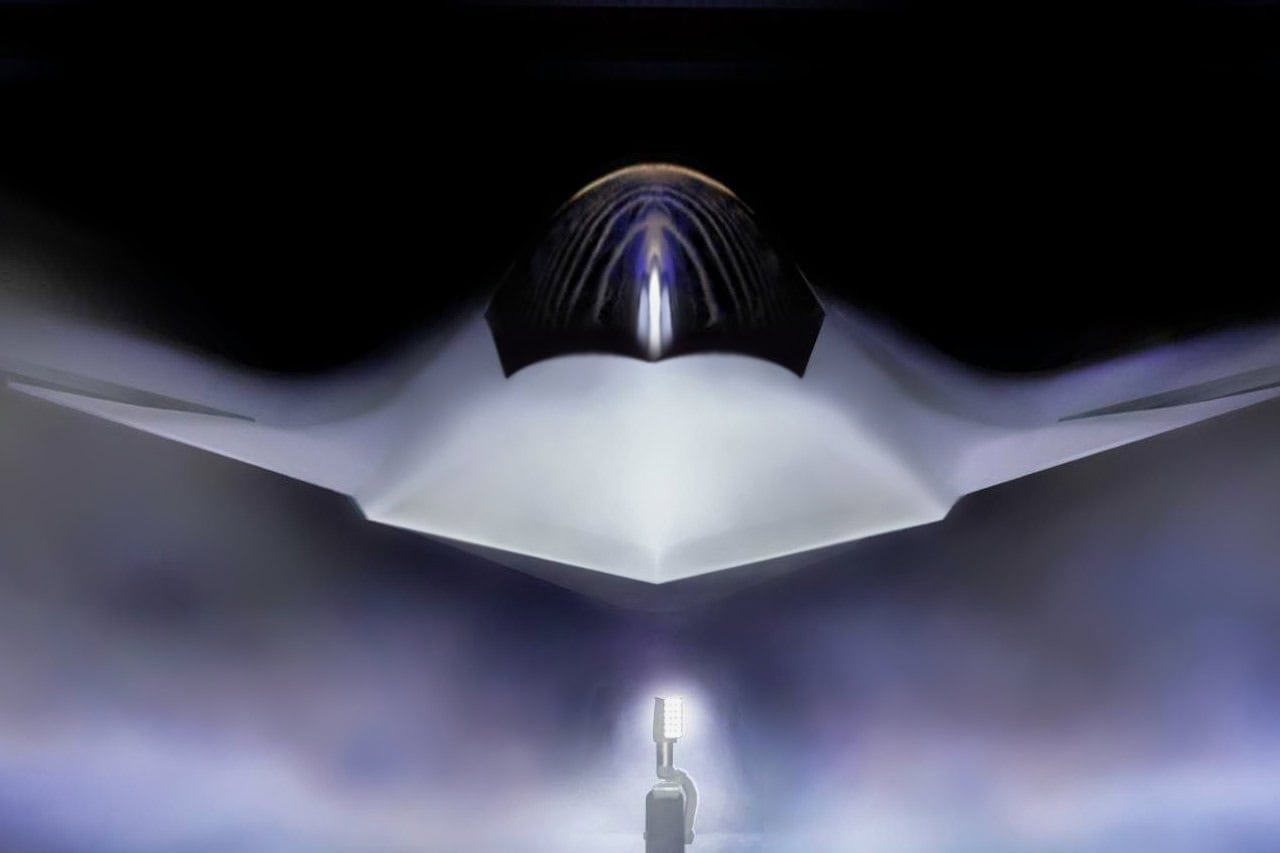
Shown is a graphical artist rendering of the Next Generation Air Dominance (NGAD) Platform. The rendering highlights the Air Force’s sixth generation fighter, the F-47. The NGAD Platform will bring lethal, next-generation technologies to ensure air superiority for the Joint Force in any conflict. (U.S. Air Force graphic)
The decision in 2009 to close production was, at the time, a significant strategic bet, and one that was, in that era, not illogical.
The premise that the United States would not face a near-peer air force and would not require a large number of cutting-edge air superiority fighters for Middle Eastern engagements was clear.
In today’s climate, however, the return to great-power competition has occurred. Instead of fighting Islamist insurgents, the specter of a grinding, high-end fight against China or Russia has emerged.
READ MORE – Iran Claims to Have Hit a Navy Aircraft Carrier With a Missile
READ MORE – Iran Came Close to Hitting a Navy Super Hornet
About the Author: Caleb Larson
Caleb Larson is an American multiformat journalist based in Berlin, Germany. His work covers the intersection of conflict and society, focusing on American foreign policy and European security. He has reported from Germany, Russia, and the United States. Most recently, he covered the war in Ukraine, reporting extensively on the war’s shifting battle lines from Donbas and writing on the war’s civilian and humanitarian toll. Previously, he worked as a Defense Reporter for POLITICO Europe. You can follow his latest work on X.