
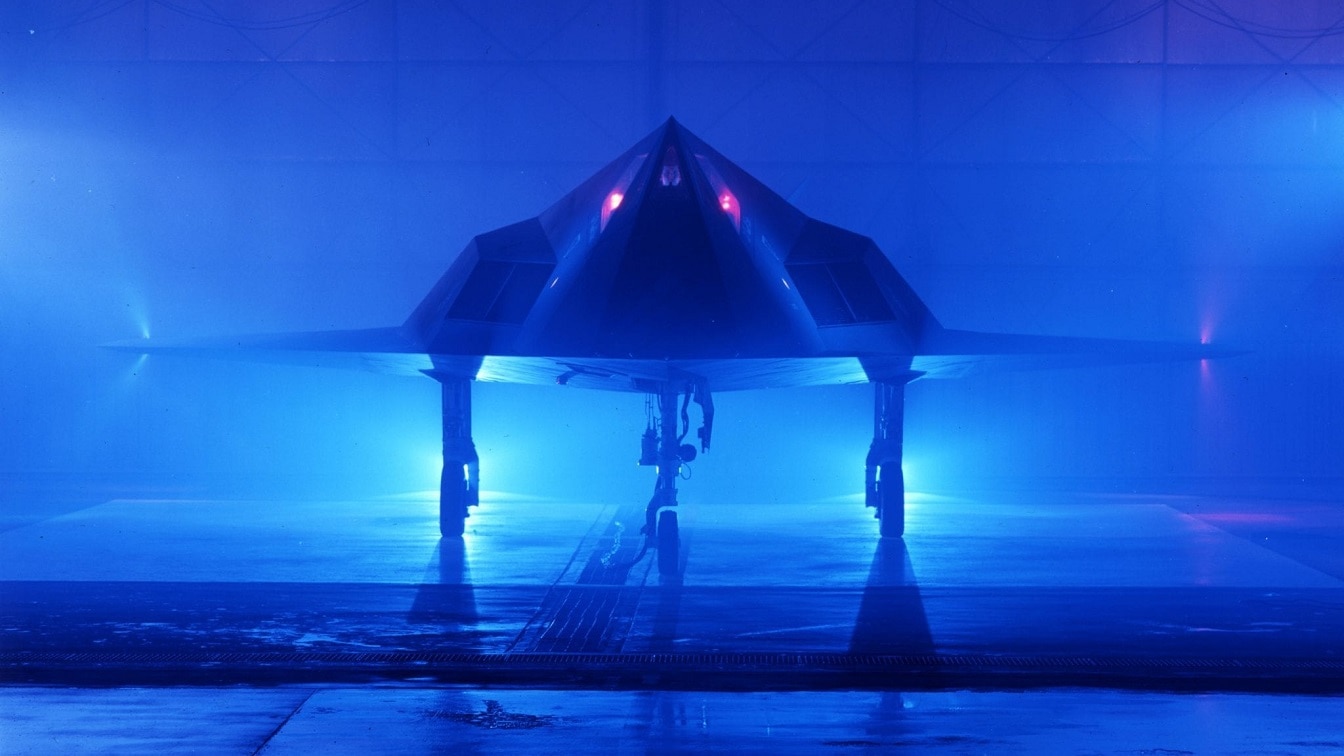
Summary and Key Points: Defense expert Dr. Brent M. Eastwood evaluates the operational resurgence of the F-117 Nighthawk.
-Originally developed by Lockheed’s Skunk Works and DARPA, the F-117 pioneered Low Observable (LO) technology.

F-117 Nighthawk at National Museum of Air Force 19FortyFive Photo
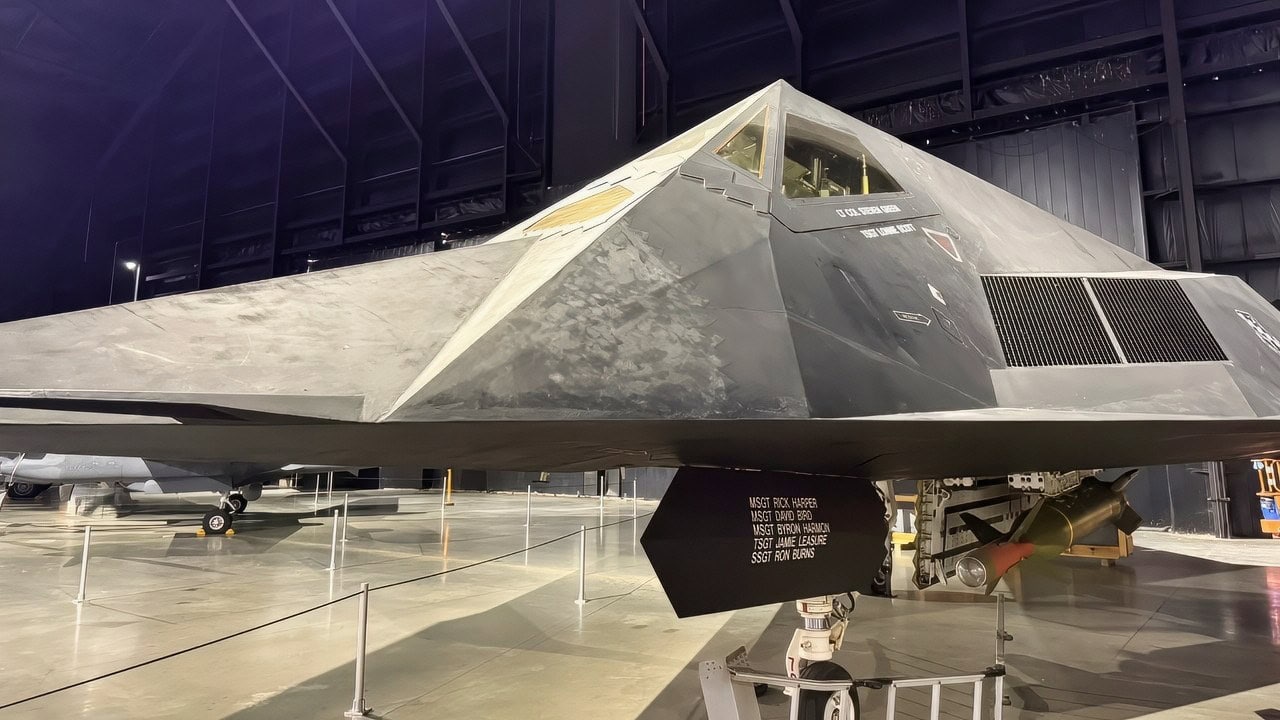
F-117A Nighthawk at USAF Museum. Image taken by 19FortyFive Owner, Harry J. Kazianis.
-This report analyzes its 2026 role as a “Red Team” adversary at the Nevada Test and Training Range, where its unique faceted design challenges the sensors of 5th-generation fighters.
-Eastwood explores the aircraft’s history from Operation Just Cause to its current use and possible testing of quantum computing and stealth coatings, concluding that the Nighthawk remains a “technological marvel” essential for maintaining the U.S. stealth edge.
Remember the F-117 Nighthawk?
This was the warbird that ushered in the new era of stealth flight in the 1980s. It was the first stealth fighter-bomber, with a curious, futuristic design. While it does have its “F” designation as a fighter, the Nighthawk was primarily used as a strike aircraft.
Unfortunately, the F-117 program was retired in 2008. The Nighthawk played a valiant role in Operation Desert Storm and was the impetus for other stealth warplanes, such as the B-2 Spirit.
What Is Its Role Now?
Now there is new life in the F-117. It still has important missions in store. The Nighthawk will be a training airplane and technology demonstrator for pilots who need a taste of stealth to prepare them to fly the F-22 and F-35.
The Nighthawk can also test new stealth coatings or communication systems, and maybe integrate artificial intelligence and even quantum computing into the cockpit to introduce pilots to those capabilities.
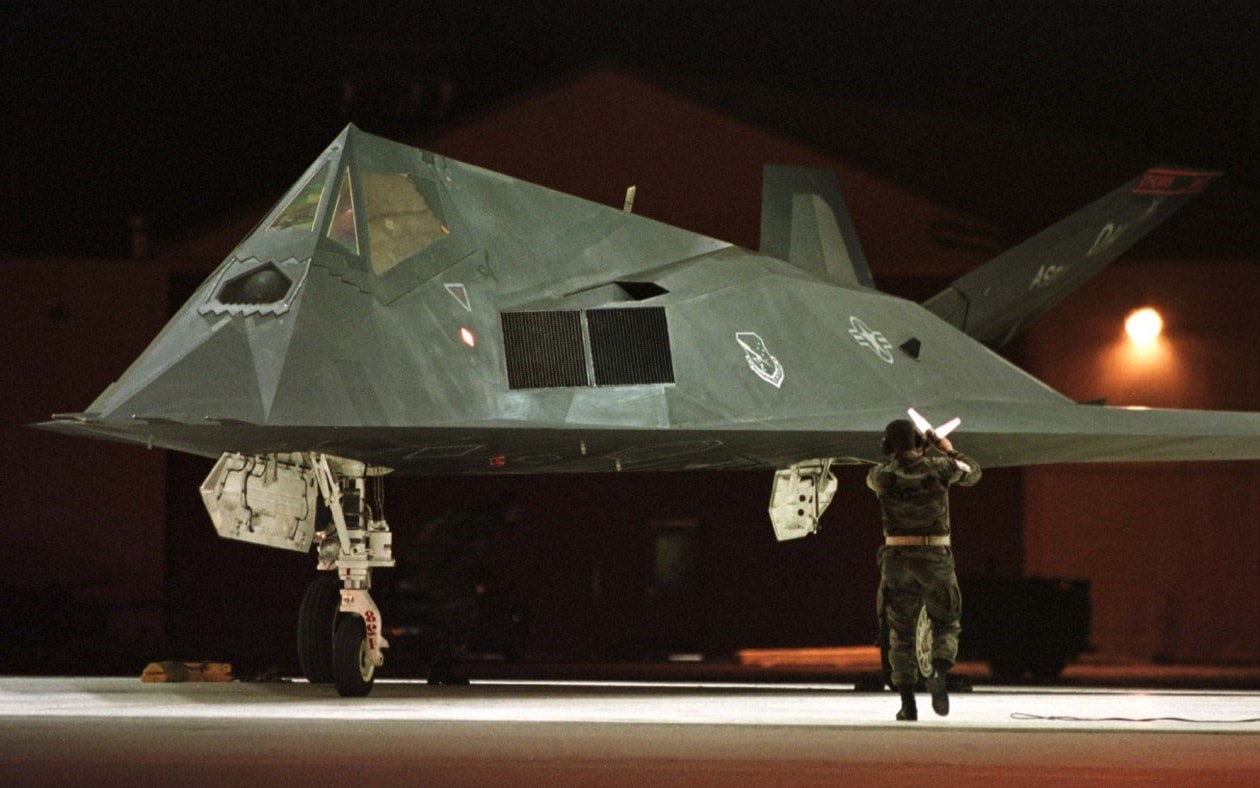
F-117 Stealth Fighter. Image Credit: US Government.

An F-117 Nighthawk taxies down the runway after landing Jan. 11 at Kunsan Air Base, Republic of Korea. A squadron of F-117s, together with 300 Airmen, have deployed here in support of a continuing force posture adjustment throughout the Pacific. The aircraft, assigned to the 9th Expeditionary Fighter Squadron, is part of the third squadron of Kunsan AB’s host unit, the 8th Fighter Wing, during the deployment’s duration. (U.S. Air Force photo/Senior Airman Darnell Cannady)
Keep This Airplane on the Down-Low
The F-117, in its heyday, could outfox enemy radar, which was seen as a huge development in air power and combat. The program was ultra-secretive. My brother-in-law was an avionics technician on the F-117, and he never talks about it.
The Air Force was worried that developments in stealth technology could fall into the wrong hands. The radar absorbent material was the best in the world at the time of its inception.
Now It Can Serve as an Aggressor Airplane
The Nighthawk can also serve as a “Red Team” adversarial airplane in training exercises to simulate what would happen when U.S. pilots go up against fifth-generation fighter jets like the Russian Su-57 Felon and the Chinese J-20 Mighty Dragon.
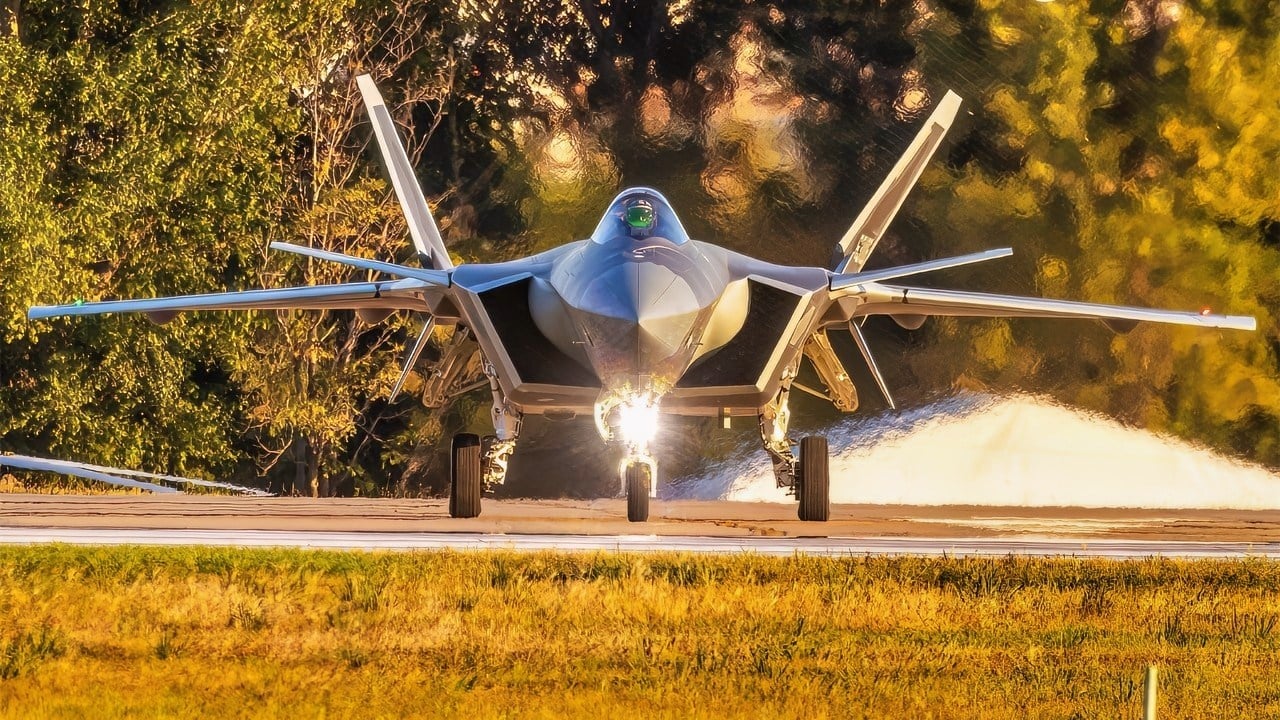
J-20 2026 New Image. Image Credit: PLAAF/Chinese Military.
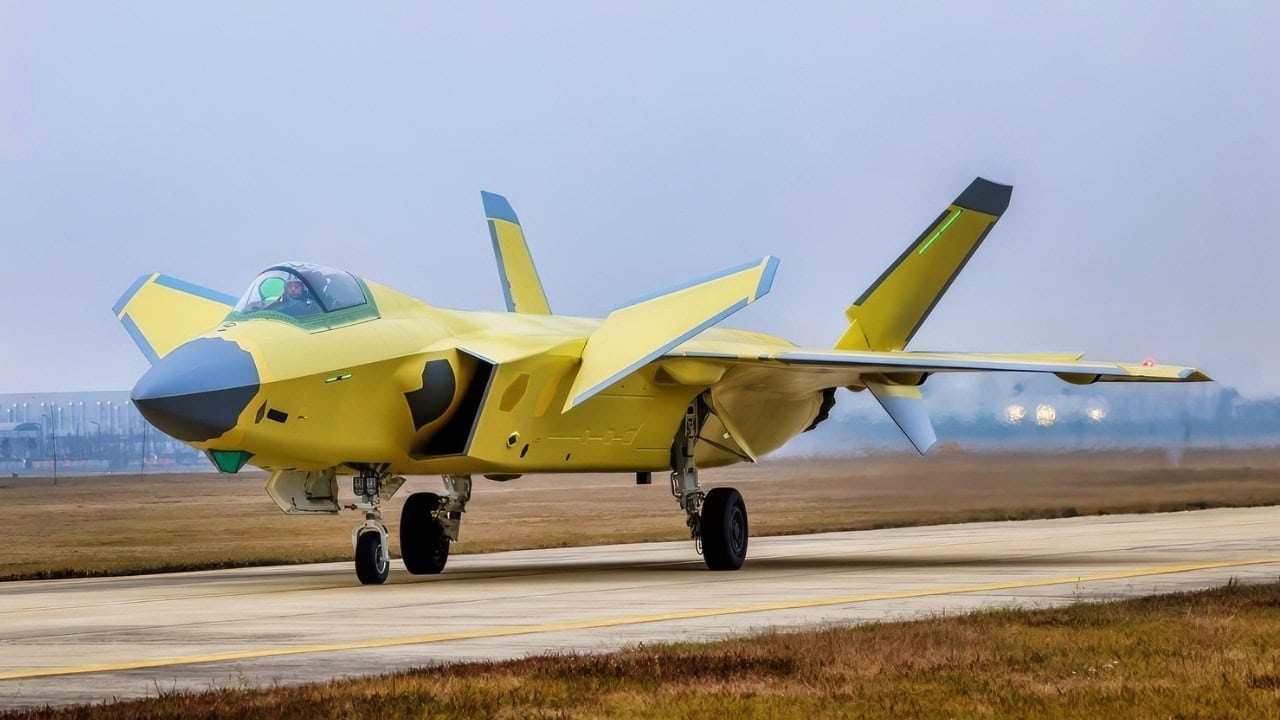
J-20 Fighter from China X Screenshot. Image Credit: Creative Commons.
This is an important part of its future. While the performance, speed, and agility are nothing like those of newer airplanes, the Nighthawk can still evade radar and create an environment in which F-35 and F-22 sensors must work hard to detect and track the F-117 during drills.
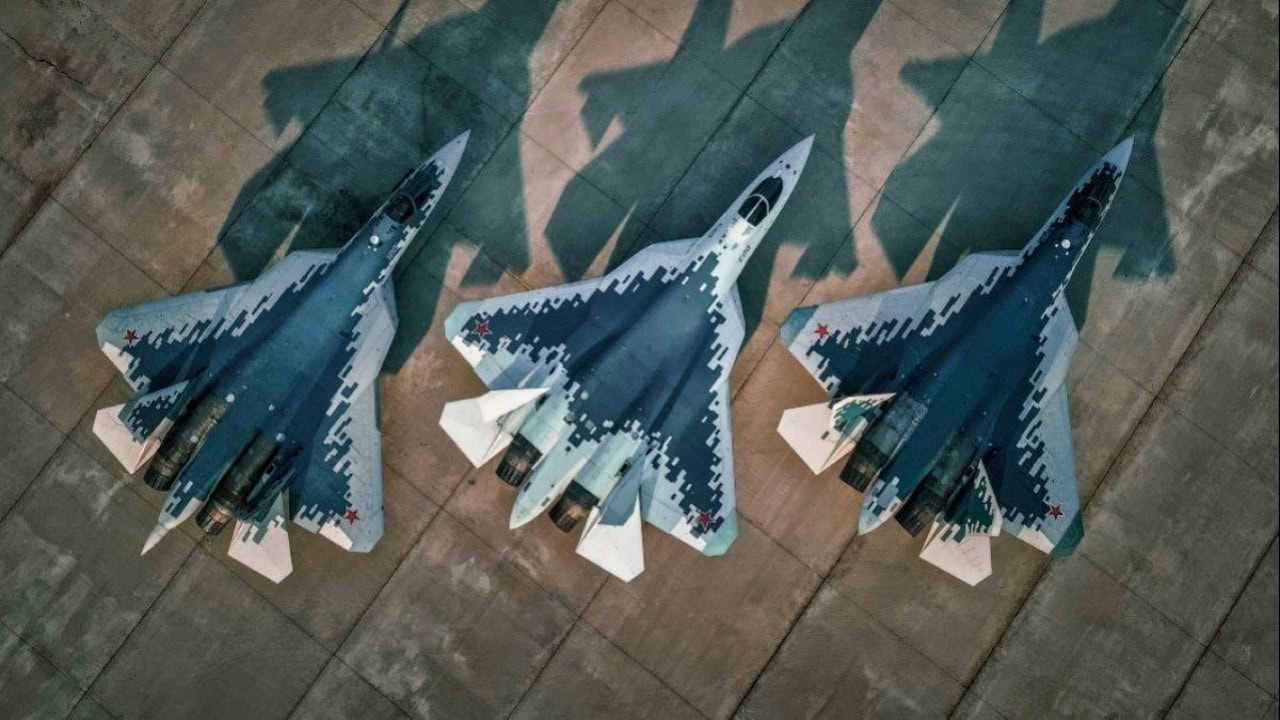
Su-57 Felon. Image Credit: Russian Government.
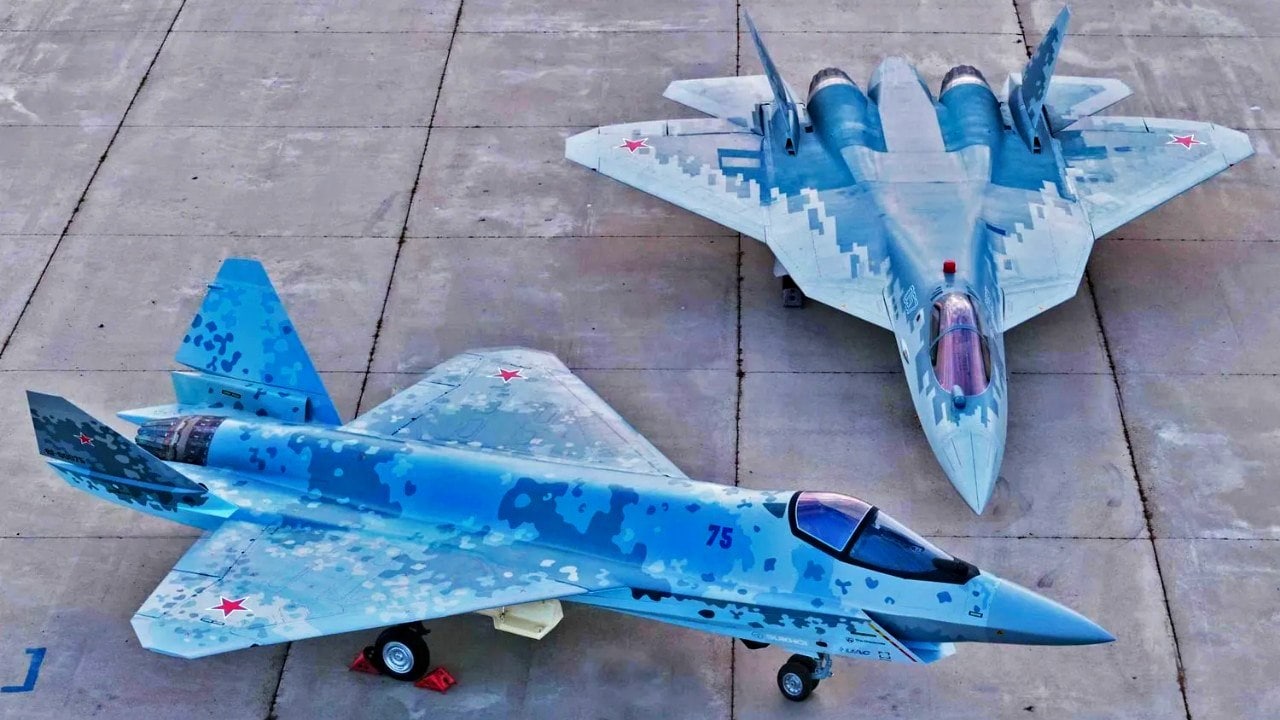
Su-57 and Su-75 Checkmate Russian Air Force.
You Mean the Nighthawk Could Fly For Another Eight Years?
For all these new employment examples, the Air Force may continue to fly the F-117 until 2034.
That is an amazing feat, and when you thought this old stealth jet was ready for a museum, the flying branch has creative ideas for its continued use.
Pleasant Surprise to Fly and Work on this Stealth Bird
That is a feather in the cap for its original designers and engineers. Plus, this should make its pilots smile when they look back on their missions. Ground crews still need to be trained on the ins and outs of maintaining the F-117, and it could still be a surprise when technicians are assigned to work on this esteemed airplane.
Rookie pilots are probably astonished that it can still grace the skies.
F-117s will be stationed at the secretive Tonopah Test Range Airport, which is located inside the huge Nevada Test and Training Range close to Nellis Air Force Base.
Teaching Panama a Lesson in Stealth
The Nighthawk first saw action during Operation Just Cause in 1989. This was the United States’ invasion of Panama. Their air defenses were not that effective in the first place, so the Panamanian military never saw the Nighthawks before they bombed away.
“Its small radar signature, Low Observable (LO Stealth) technologies, and advanced targeting system allowed the aircraft to penetrate dense threat environments and deliver precision weapons against heavily defended, high-value targets with pinpoint accuracy.
Primary missions included precision attack, air interdiction, Suppression of Enemy Air Defenses (SEAD), and special operations,” my colleague Steve Balestrieri wrote in these pages months back.
What Kind of Special Ops Missions Are We Talking About?
Steve is a former Army Special Forces operator and expert on irregular warfare. Does he know some Nighthawk missions that were in support of the U.S. Special Operations Command or the Joint Special Operations Command during the Panama operation? He may be sworn to secrecy, and we will never know.
That would have been an interesting use case if the F-117 had supported special ops raids that prepared the battlefield. The idea was to rid the country of General Manuel Noriega, who was the nasty ruler of Panama at the time and was wanted for drug dealing and racketeering.
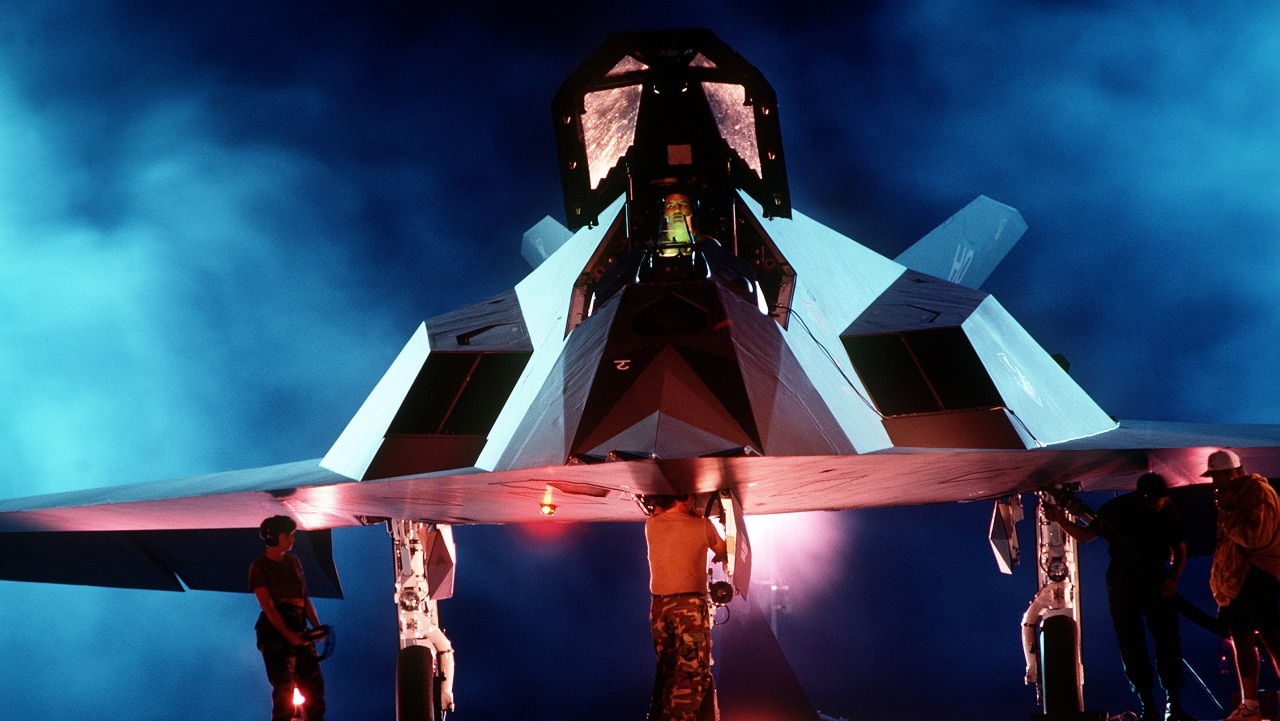
A back lit front view of a F-117A Stealth Fighter aircraft. From Airman Magazine’s February 1995 issue article “Streamlining Acquisition 101”.

Four F-117 Nighthawks fly in formation during a sortie over the Antelope Valley recently. After 25 years of history, the aircraft is set to retire soon. As the Air Force’s first stealth fighter, the F-117 is capable of performing reconnaissance missions and bombing critical targets, all without the enemy’s knowledge. (Photo by Bobbi Zapka)
The F-117’s History Goes Back to the Cold War
The Nighthawk’s history surprisingly goes back to the 1970s. The Air Force was concerned about penetrating the Soviet Union’s multi-layered defense systems, which had effective surface-to-air missiles that would easily eliminate conventional American fighters and bombers.
DARPA and Skunk Works Take Over
Two secretive entities were tasked with developing stealth technology – DARPA and Lockheed Martin’s Skunk Works. They developed the “Have Blue” technology that would be integrated into the F-117. Skunk Works and DARPA accomplished this in only seven years, which was blazingly quick for such a revolutionary program.
By the 1980s, This Airplane Was in the Air Regularly
The first Nighthawk flew in 1983 during the President Ronald Reagan defense build-up, when ample money and resources were devoted to new platforms. This was kept hush-hush, and the general public did not know about the F-117 until 1988.
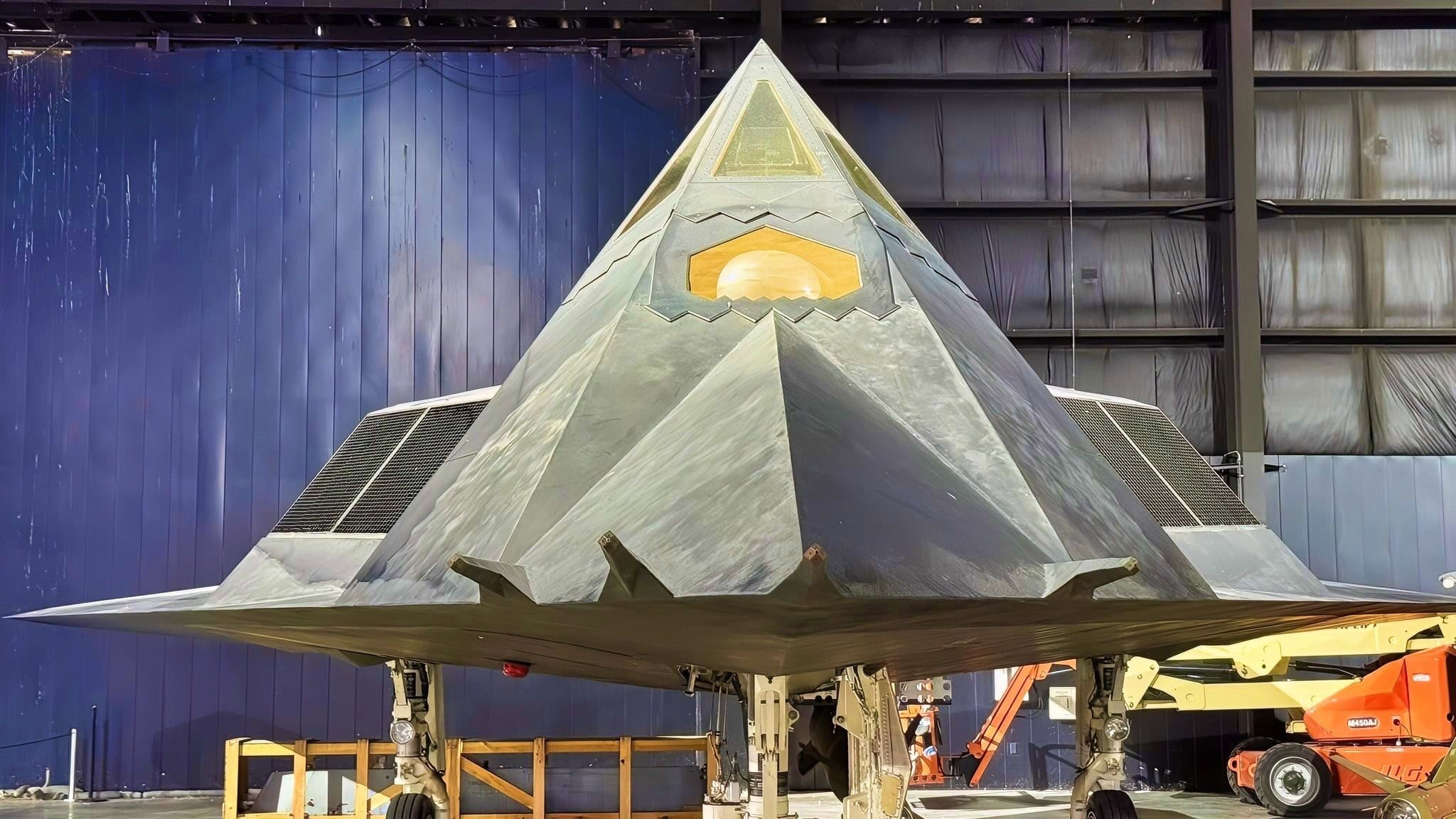
F-117 Nighthawk Stealth Fighter Harry Kazianis Photo from the U.S. Air Force Museum back in July of 2025.
“During Operation Desert Storm in 1991, the F-117 accounted for only 2 percent of combat sorties but covered 40 percent of the targets,” Balestrieri wrote. That’s an exceptional war record.
Those flat, angled panels bounced enemy radar waves. The external radar absorbent materials made the bird invisible. The coatings weighed one ton, and gaps were filled with an adhesive called “butter.”
Quick Look at Specs
The Air Force acquired 59 F-117s. Two General Electric F404-F1D2 engines were powerful in thrust to weight ratio, but the Nighthawk was subsonic with a top speed of only MACH 0.8. That’s why the stealth jet was not known for dog-fighting.
Paving the Way for the Stealth Revolution
The F-117 was one technological marvel that the Americans should be proud of. It changed aerial warfare and gave the Air Force a significant advantage.
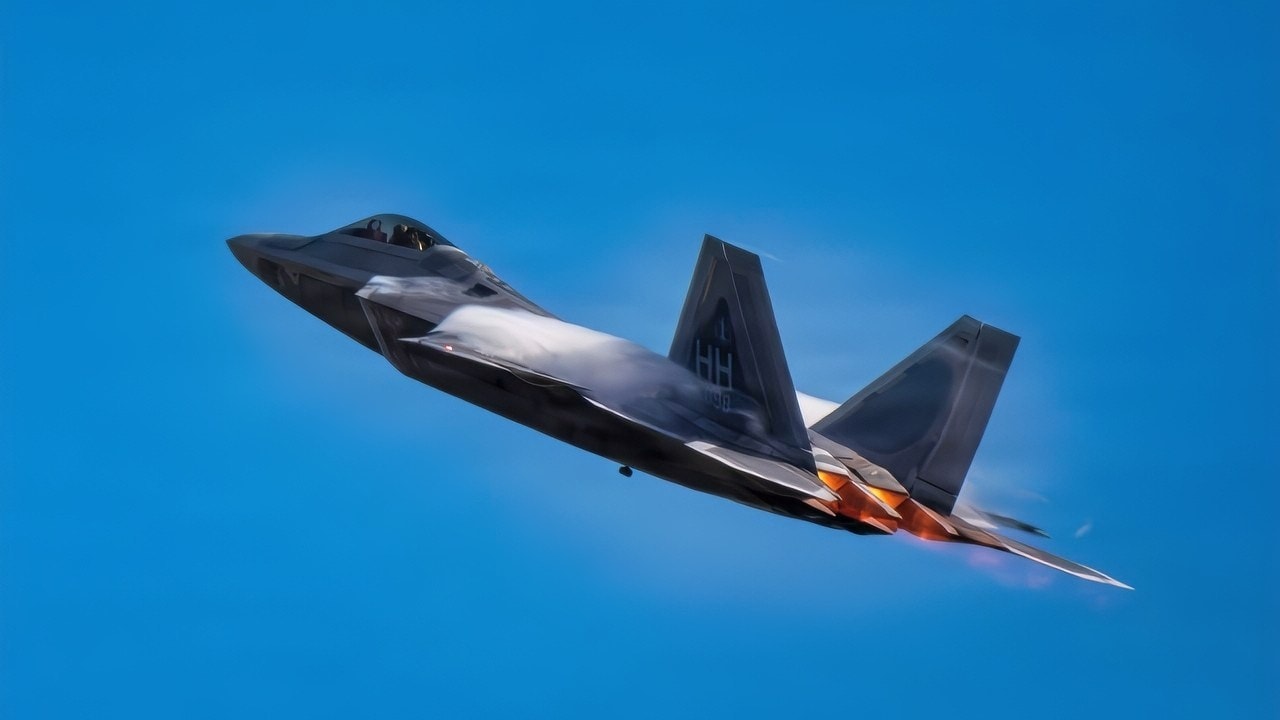
A U.S. Air National Guard F-22 Raptor from the 199th Fighter Squadron, Hawaii Air National Guard, takes off during exercise Sentry Aloha 26-1 at Joint Base Pearl Harbor-Hickam, Hawaii, Jan. 26, 2026. The training demonstrates the 154th Wing’s capability to lead large-force employment exercises, reinforcing the Guard’s position as a vital component of the nation’s operational force. (U.S. Air National Guard photo by Senior Master Sgt. Mysti Bicoy)
Without the Nighthawk, there would never have been the F-35 and F-22. It’s nice to see that the United States is still putting the F-117 to good use. This is a one-of-a-kind airplane with a good war record and can now serve as a test bed for new technologies that could restore the effectiveness of stealth flight.
About the Author: Dr. Brent M. Eastwood
Author of now over 3,000 articles on defense issues, Brent M. Eastwood, PhD is the author of Don’t Turn Your Back On the World: a Conservative Foreign Policy and Humans, Machines, and Data: Future Trends in Warfare plus two other books. Brent was the founder and CEO of a tech firm that predicted world events using artificial intelligence. He served as a legislative fellow for US Senator Tim Scott and advised the senator on defense and foreign policy issues. He has taught at American University, George Washington University, and George Mason University. Brent is a former US Army Infantry officer. He can be followed on X @BMEastwood.