
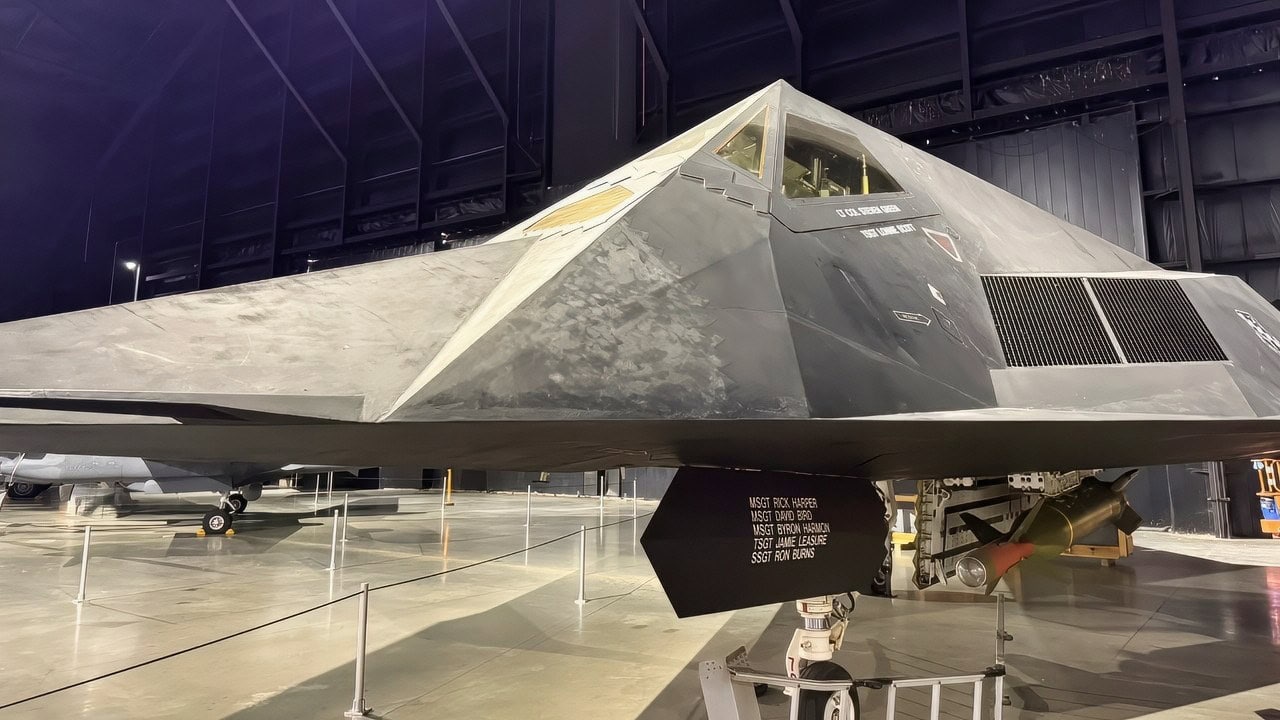
Summary and Key Points – Despite being officially retired in 2008, the F-117 Nighthawk is still actively flying missions from the secretive Tonopah Test Range in Nevada.
-Far from being a museum piece, the world’s first operational stealth aircraft has found a new critical role as a test and training asset.
-The Air Force uses the F-117’s known radar signature to validate new radar systems, stress-test detection algorithms, and train pilots against low-observable threats.
-By using this paid-for legacy platform as a “stealth surrogate,” the military can rehearse peer conflict scenarios without risking expensive modern assets like the F-22 or B-21.
Why the Stealth F-117 Nighthawk Is Still Flying Secret Missions in Nevada
The F-117 Nighthawk stealth fighter is still flying—despite being retired in 2008.
Sightings continue, well into the 2020s, most frequently from the Tonopah Test Range Airport in Nevada.
So, despite being removed from frontline service two decades ago, the F-117 is not a museum piece; rather, the jet is still airworthy, maintained, and actively flown.
This raises the obvious question: if the jet is retired, why is it still flying?
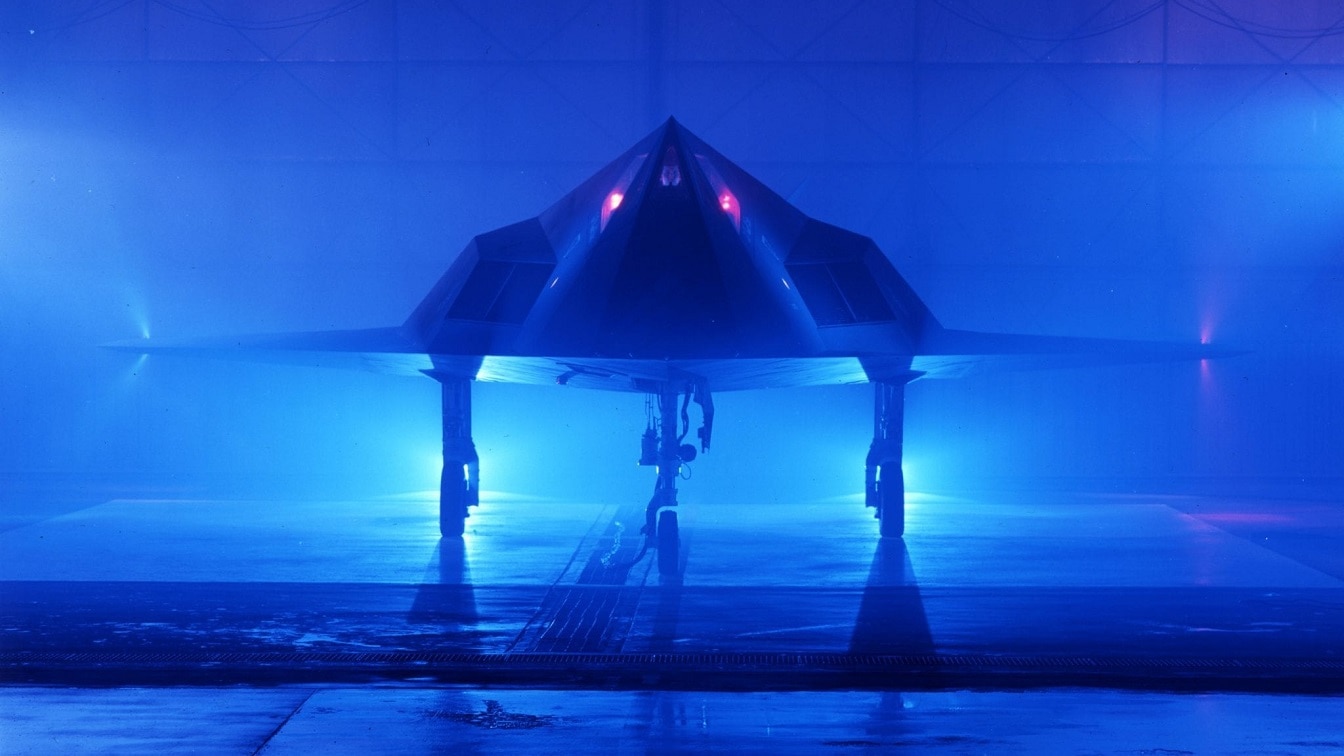
F-117. Image Credit: Lockheed Martin.

An F-117 Nighthawk lands at the Fresno Yosemite International Airport, Sept. 15, 2021, after conducting a training mission with the local Air National Guard unit. Two F-117 Nighthawks are participating in dissimilar air combat training missions this week along with F-15 pilots from the 144th Fighter Wing in Fresno, Calif. (U.S. Air National Guard photo by Capt. Jason Sanchez)
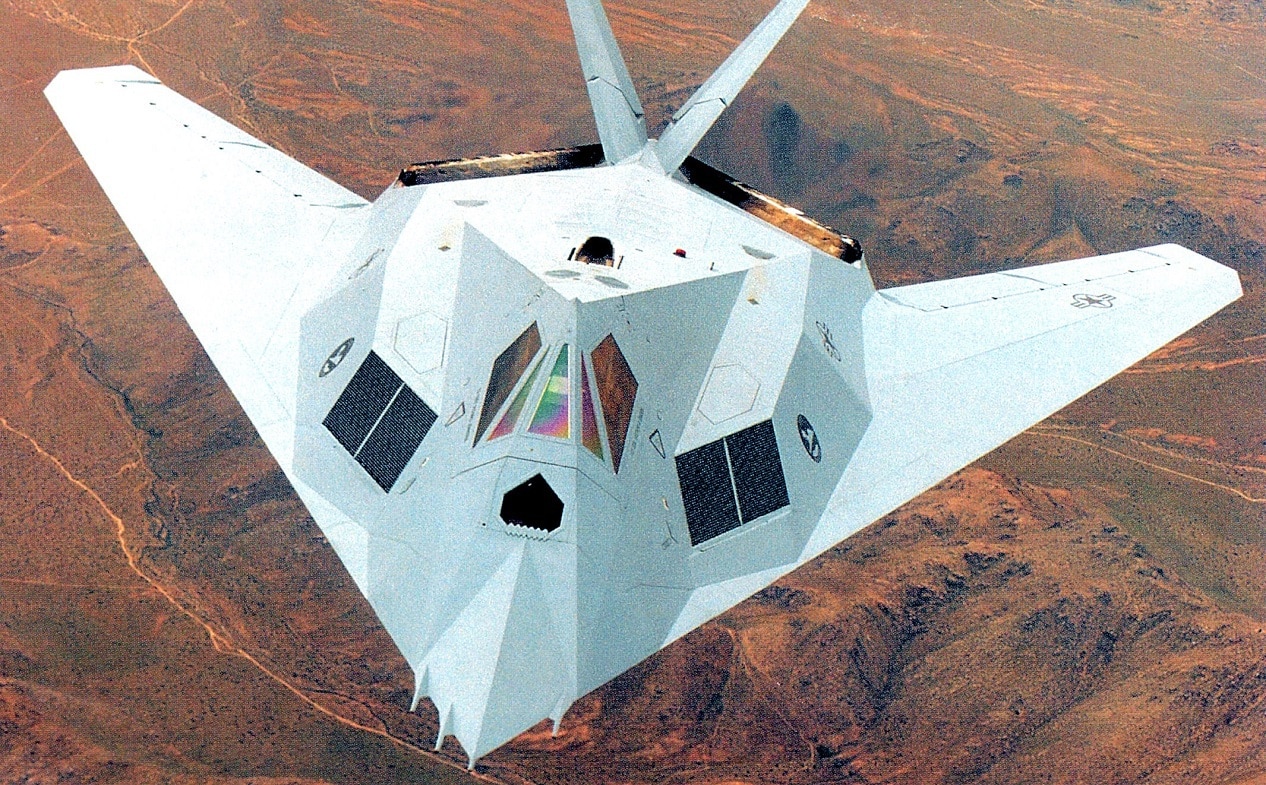
F-117 Stealth Fighter. Image Credit: Creative Commons.
The answer reveals how stealth is tested, how modern air combat is rehearsed, and why old aircraft can still have contemporary relevance.
History of the F-117 Nighthawk
Developed during the Cold War under extreme secrecy, the Nighthawk was the first operational stealth aircraft.
Designed for precision strikes and to penetrate Soviet-style air defenses, the F-117 made its debut in Panama in 1989 and played a significant role in the Gulf War two years later, where the jet flew thousands of sorties with minimal losses.
Known for its iconic faceted design, the Nighthawk was optimized for radar stealth—not aerodynamics. In fact, the jet was inherently unstable and could only fly because of intensive inputs from a flight computer.
In sum, the F-117 represented a design revolution, emphasizing stealth over speed and precision over mass.
Retirement of the F-117
The F-117 was retired in 2008 because the airframes were aging, the payload was limited, and the mission set was narrow.
Operationally, the F-117 was replaced by the F-22, F-35, and B-2—arguably the most advanced lineup of aircraft in history.
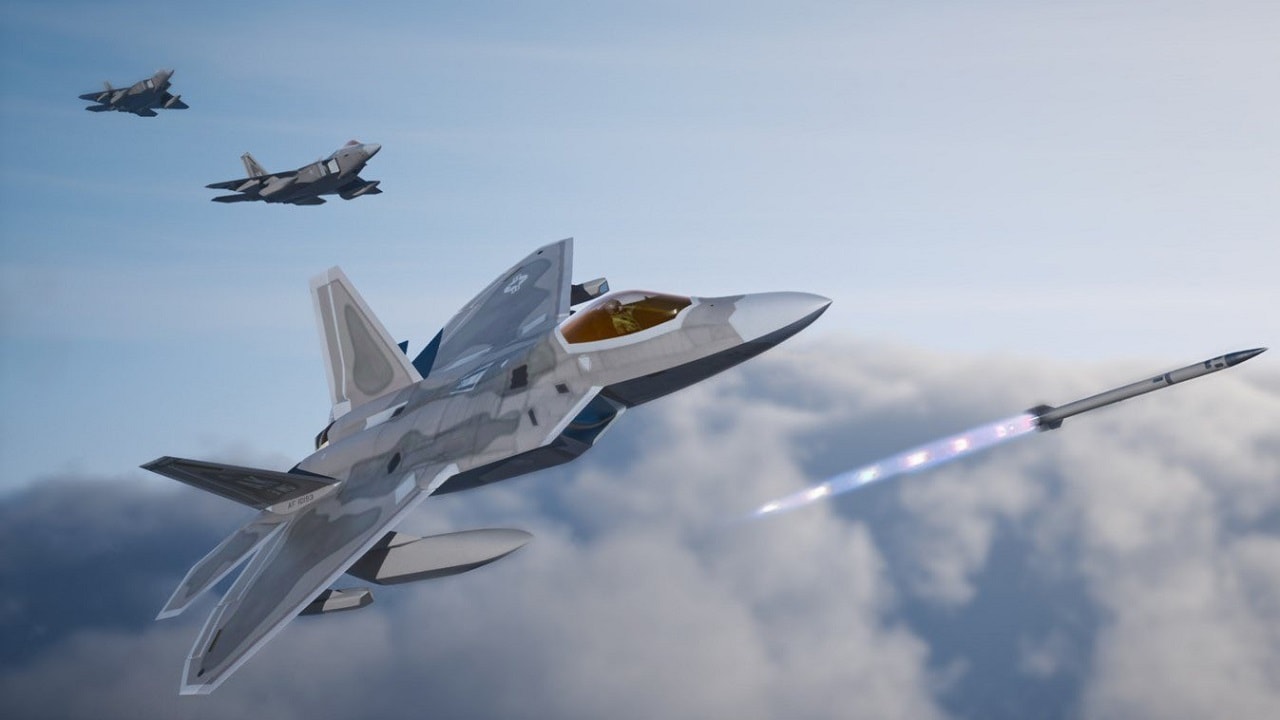
F-22 Raptor. Image Credit: U.S. Air Force Social Media.
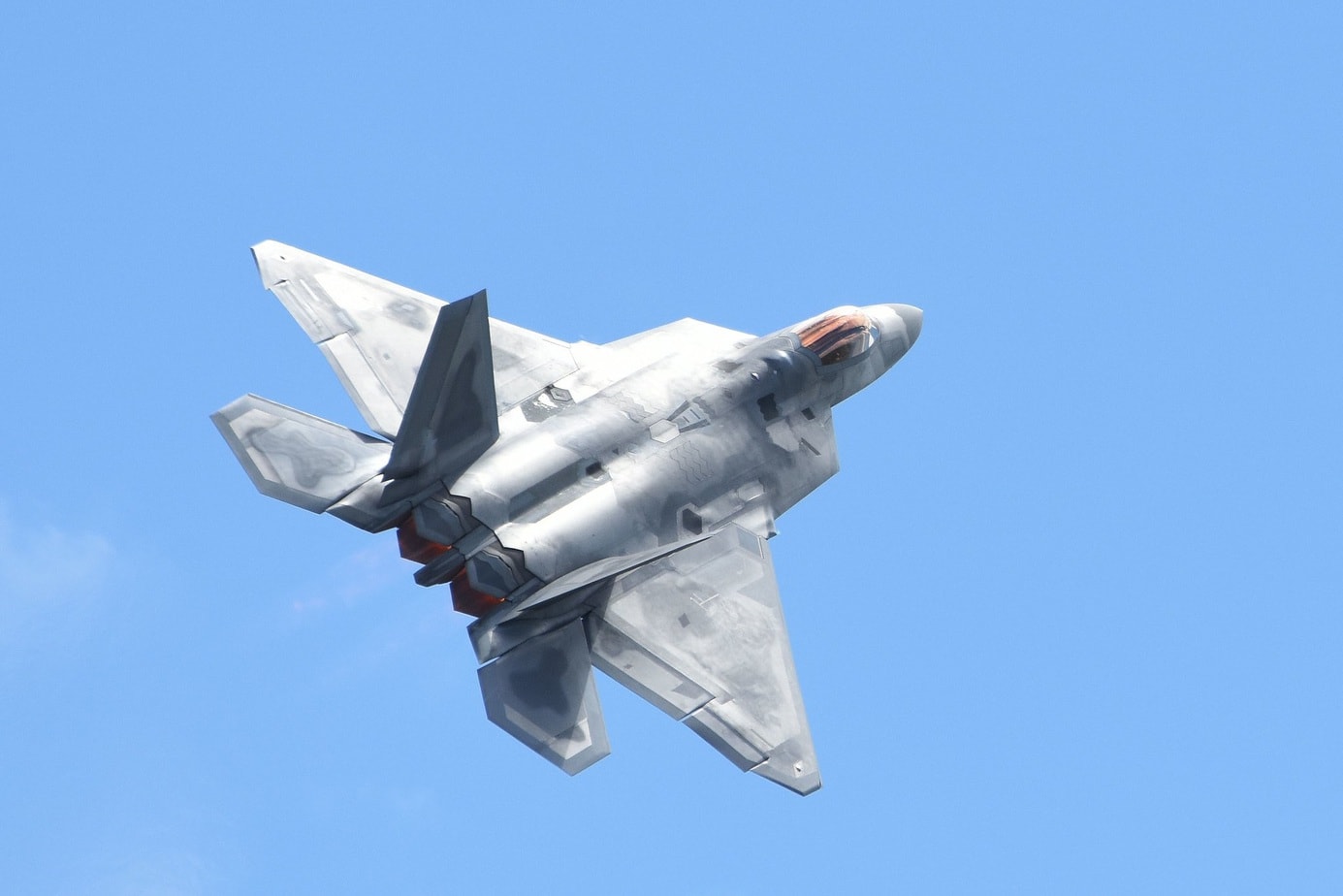
F-22 Raptor. Image Credit: U.S. Air Force.
The fact was that stealth technology had improved since the F-117’s debut; contemporary stealth aircraft were multirole and networked, and survivable across more scenarios.
By the 21st century, the F-117’s sustainment costs could no longer justify the limited returns on capability.
So the F-117 was no longer optimal for frontline combat. But retirement here did not mean irrelevance.
Technical Specs of the F-117
The F-117 is a single-seat stealth attack aircraft, powered by two non-afterburning turbofans.
The jet was subsonic, with limited maneuverability, and only an internal weapons bay. The stealth was optimized for X-band radar.
By modern standards, the Nighthawk had minimal onboard sensors and no radar.
Instead, the jet relied on mission planning and precision navigation.
The process and platform were simple by today’s standards, but extremely predictable and useful as a known stealth baseline.
Still Flying Today
Today, the F-117 is used as a test and training asset to validate radar systems, train air defense operators, and stress-test detection algorithms.
The platform provides a known stealth signature and a repeatable target.
This is critical for developing counter-stealth sensors and training pilots against the low-observable aircraft that are starting to populate adversaries’ air forces.
Risking the retired F-117 is much safer and cheaper than risking F-22s or F-35s or B-21 prototypes—each of which costs nine figures per unit.
The F-117 is already paid for, understood, and carries minimal political risk, which makes it ideal as a stealth surrogate for classified, middle-of-the-desert use.
Tonopah Test Range
Tonopah has a long history with black programs. It is remote, secure, and ideal for classified testing.
The remaining F-117s are stored, maintained, and flown there. Flights often occur at night or in controlled airspace, keeping the footprint low.
This allows for integration testing with new systems and joint exercises without publicity.
So while Tonopah keeps the F-117 out of sight, the jet is very much in use.
Of course, the Nighthawk no longer drops bombs in operational roles, but instead supports red-force training and threat emulation. It helps pilots learn how stealth aircraft appear (or don’t) and how detection varies by geometry.
This is vital for radar calibration and sensor-fusion testing and plays an important role in integrated air-defense simulations.
Strategic Implications
Strategically, the F-117 offers insights into modern air combat, where stealth is no longer binary: it’s contextual and spectrum-based.
Keeping the Nighthawk airborne shows that the US expects adversaries to improve detection technologies.
Training against stealth is now as important as flying it, indicating that the US is serious about preparation for peer conflict.
The warplanes’ enduring use also reflects cost discipline and risk management; there is no need to risk fifth-generation fighters or next-generation bombers when a legacy fighter will do the trick.
About the Author: Harrison Kass
Harrison Kass is an attorney and journalist covering national security, technology, and politics. Previously, he was a political staffer and candidate, and a US Air Force pilot selectee. He holds a JD from the University of Oregon and a master’s in global journalism and international relations from NYU.