
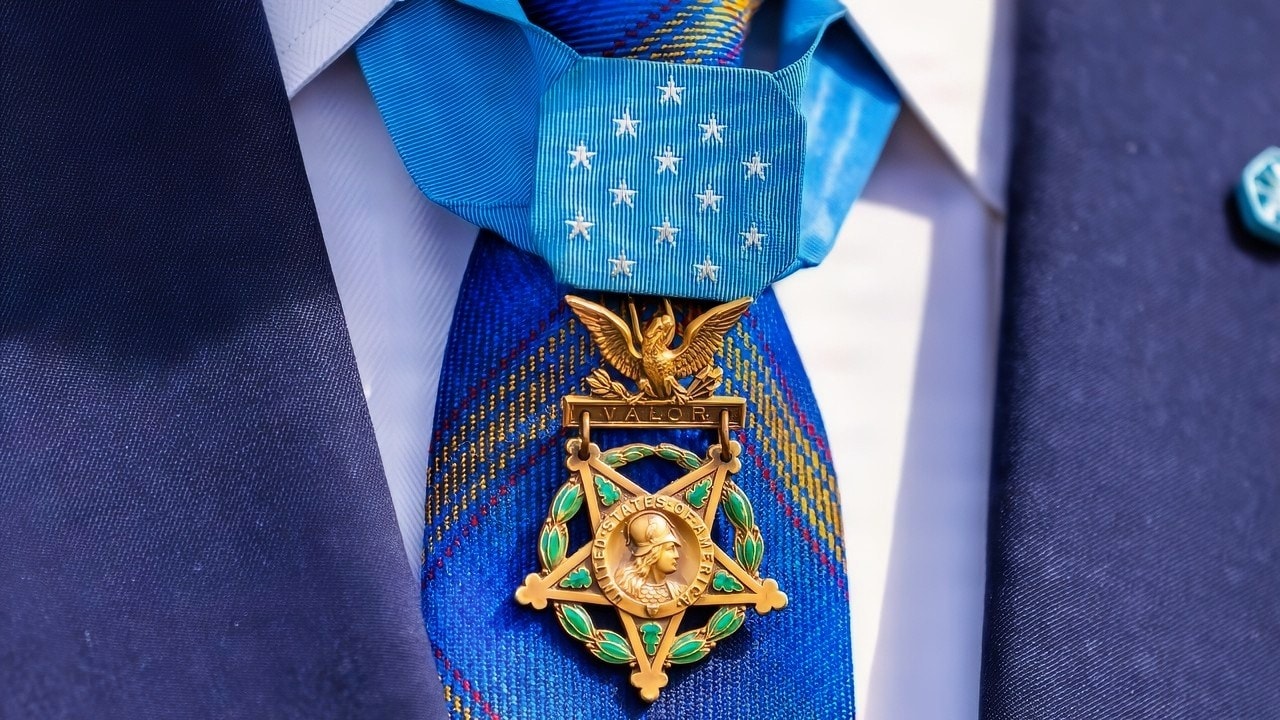
Summary and Key Points: Defense analyst Steve Balestrieri examines the history of the Medal of Honor (MOH) and the specific instances in which the award was revoked.
-Following a 1916 act of Congress, a board of five general officers reviewed past awards to uphold the strict criteria of “gallantry and intrepidity.”
-This report analyzes the 1917 revocations, including the mass award to the 27th Maine Volunteer Infantry and the removal of civilian scouts like “Buffalo Bill” Cody.
-Balestrieri explores the 1977 reinstatement of Dr. Mary Walker’s medal and concludes that these reforms cemented the MOH’s status as the military’s highest decoration.
The Military Can, And Has, Taken Back The Medal of Honor
The Medal of Honor (MOH) is the highest military decoration of the United States Armed Forces and is awarded to recognize American soldiers, sailors, marines, airmen, guardians, and coast guardsmen who have distinguished themselves by acts of valor in combat.
The Medal of Honor is the oldest continuously issued combat decoration of the United States Armed Forces, which was first issued during the Civil War.
The president typically presents the Medal of Honor at a formal ceremony intended to represent the gratitude of the American people, with posthumous presentations made to the primary next of kin.
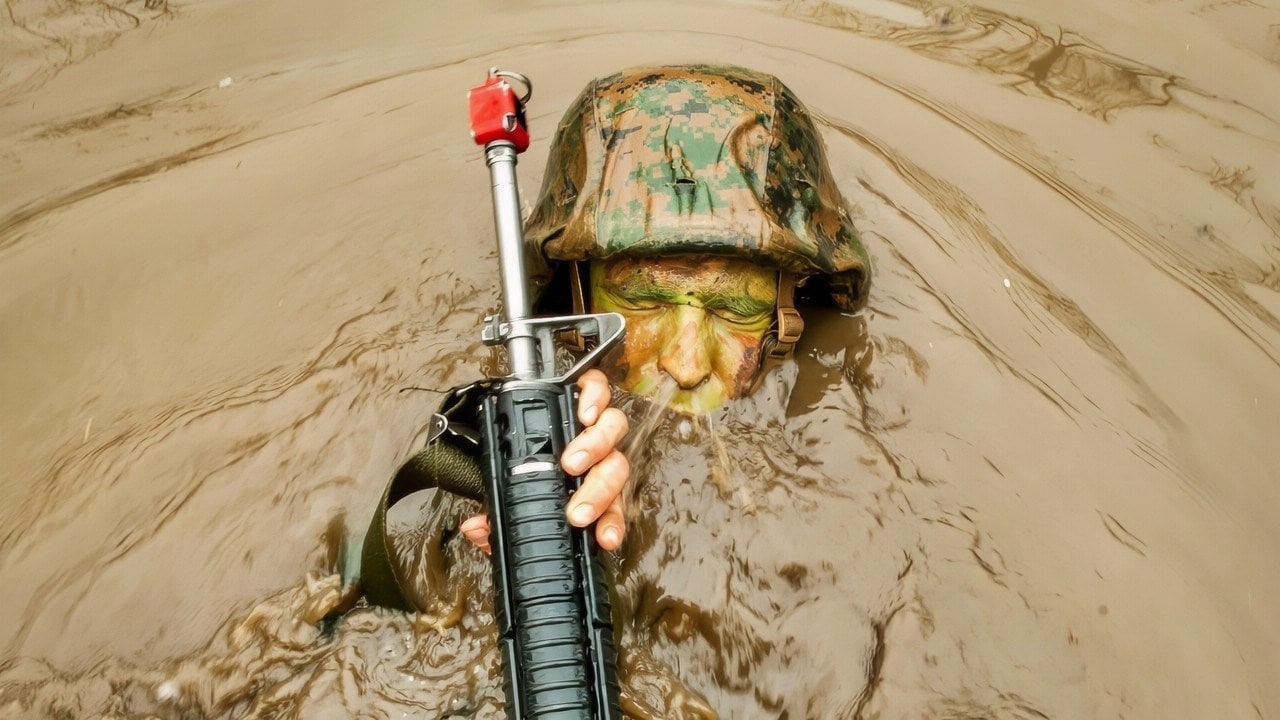
A candidates assigned to Delta Company, Officer Candidates Class-221, breaks the surface of the murky water of ‘The Quigley’ at Brown Field, Marine Corps Base Quantico, Va., on March 15, 2016. The mission of Officer Candidates School (OCS) is to “educate and train officer candidates in Marine Corps knowledge and skills within a controlled, challenging, and chaotic environment in order to evaluate and screen individuals for the leadership, moral, mental, and physical qualities required for commissioning as a Marine Corps officer.” (U.S. Marine Corps Photo by Cpl. Patrick H. Owens/Released)
There have been 3,552 Medals of Honor awarded to 3,533 individuals. Nineteen troops have received two awards of the Medal. One of the soldiers who was awarded two MOH was Tom Custer, the younger brother of George Armstrong Custer, who rose to the rank of general during the Civil War and was later killed at the Battle of the Little Bighorn.
However, there have been many cases in which the Medal of Honor was rescinded or revoked.
Background on the Medal of Honor
In 1861, during the Civil War, a proposal for a battlefield decoration for valor was submitted to Lieutenant General Winfield Scott, the Commanding General of the United States Army, by Lieutenant Colonel Edward D. Townsend, Scott’s chief of staff. Scott, however, strongly opposed the American republic’s awarding of medals for valor, which he considered a European monarchical tradition.
After Scott’s retirement late that year, Iowa Senator James W. Grimes introduced a bill authorizing the production and distribution of “medals of honor” to be presented to enlisted seamen and marines who “distinguish themselves by gallantry in action and other seamanlike qualities” during the war.
President Lincoln signed the legislation on December 9, 1861, and the Medal of Honor was approved for issue.
However, the first action to be recognized for the Medal of Honor did not take place in the Civil War at all.
Cannon Firing. Image Credit: Creative Commons.
Bravery At Apache Pass, Arizona
On February 13, 1861, Bernard J.D. Irwin volunteered to lead troops to rescue 60 soldiers at Apache Pass, Arizona. While Irwin’s valor was recognized, the Medal of Honor had yet to be approved for issue.
Irwin’s valor was finally recognized on January 24, 1894, almost 33 years after his actions against the American Indians in Arizona.
Only Woman Recipient During the Civil War:
Many don’t realize that a woman was already awarded the Medal of Honor, and later attempts to revoke it were unsuccessful.
Dr. Mary Walker was a rare female surgeon (at that time) who helped change the face of medicine during the Civil War. When the war began, she wasn’t accepted as an Army surgeon because she was a woman.
But she volunteered to treat the sick and wounded in Washington, D.C., and later in 1862, she moved to Virginia to be closer to the battles and treat the wounded coming off the battlefields.
In 1863, he credentials were finally accepted, and she was assigned to Tennessee as a surgeon and paid the equivalent of a Captain. In 1864, Walker was captured by Confederate forces, and she was held as a POW for four months. She was then exchanged for Confederate medical officers in a swap.
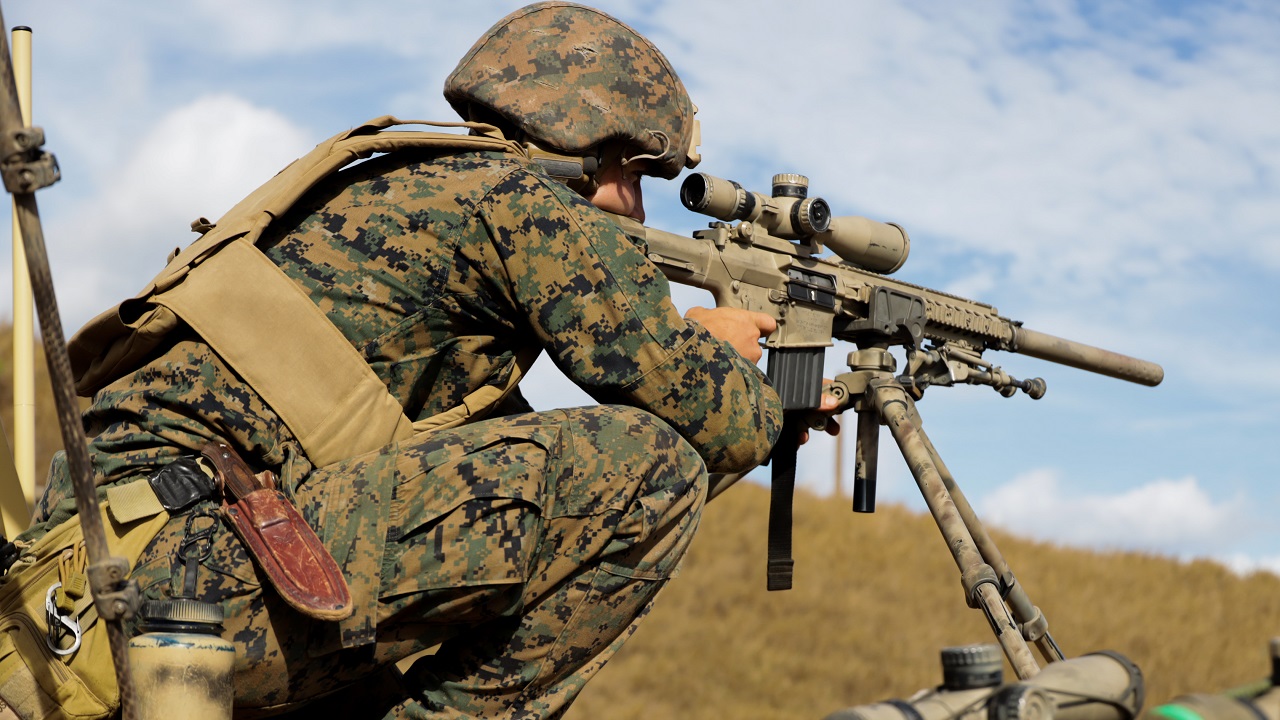
MARINE CORPS BASE HAWAII, Hawaii (July 6, 2022) U.S. Marine Corps Pfc. Darrel Ebaugh, a scout sniper with Weapons Company, Battalion Land Team, 3d Battalion, 4th Marine Regiment, Marine Air-Ground Task Force 7 (MAGFT-7), sights in on a target during a live-fire sniper range in support of Rim of the Pacific (RIMPAC) 2022, on Marine Corps Base Hawaii, July 6, 2022. Twenty-six nations, 38 ships, four submarines, more than 170 aircraft and 25,000 personnel are participating in RIMPAC from June 29 to Aug. 4 in and around the Hawaiian Islands and Southern California. The world’s largest international maritime exercise, RIMPAC provides a unique training opportunity while fostering and sustaining cooperative relationship among participants critical to ensuring the safety of sea lanes and security on the world’s oceans. RIMPAC 2022 is the 28th exercise in the series that began in 1971. (U.S. Marine Corps photo by Lance Cpl. Brayden Daniel)
M40 Sniper Rifle. Image Credit: Creative Commons.
U.S Army Sgt. Matthew Fiore, a UH-60 Black Hawk crew chief representing the Marietta-based 78th Aviation Troop Command, Georgia National Guard, engages targets with the M2010 Enhanced Sniper Rifle at the sniper event during the 2022 Georgia National Guard Best Warrior Competition at Fort Stewart, Ga., March 21, 2022. The Best Warrior Competition tests the readiness and adaptiveness of our forces, preparing our Georgia Guardsmen to meet today’s unpredictable challenges. (U.S. Army photo by Sgt. 1st Class R.J. Lannom Jr.)
In 1865, Walker was awarded the Medal of Honor by President Andrew Johnson, even though she was a civilian who had never served as a commissioned officer. Walker’s Medal was revoked in 1917 along with 910 others (more below), but she refused to return and wore it until she died two years later.
In 1977, President Jimmy Carter reinstated her Medal of Honor.
Why Were 911 Medals Of Honor Revoked?
n 1917, a U.S. Army review board revoked 911 Medals of Honor—nearly one-third of all awarded at the time—to tighten eligibility standards, specifically targeting non-combat actions and civilians. The most notable revocation was Dr. Mary Walker.
The 1917 Purge revoked over 900 Medals of Honor. A 1916 act of Congress mandated a review of all medals, leading to the removal of 911 names from the Army’s Medal of Honor roll.
Medals were taken back from individuals who did not meet the strict criteria of “gallantry and intrepidity” in combat, including 5 civilians (such as “Buffalo Bill” Cody), those who received it via clerical errors (27th Maine), or for non-combat actions.
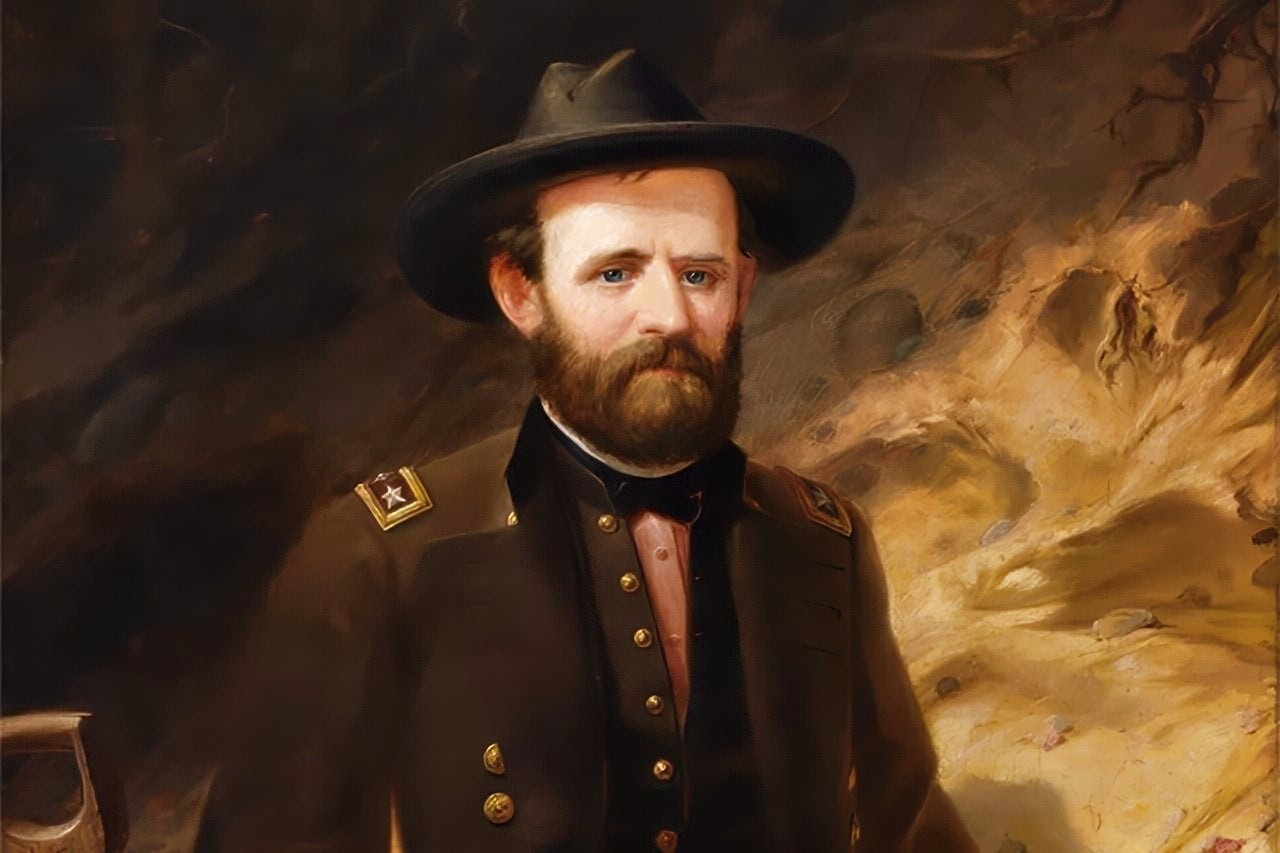
General Grant U.S. Army. Image Credit: Creative Commons.
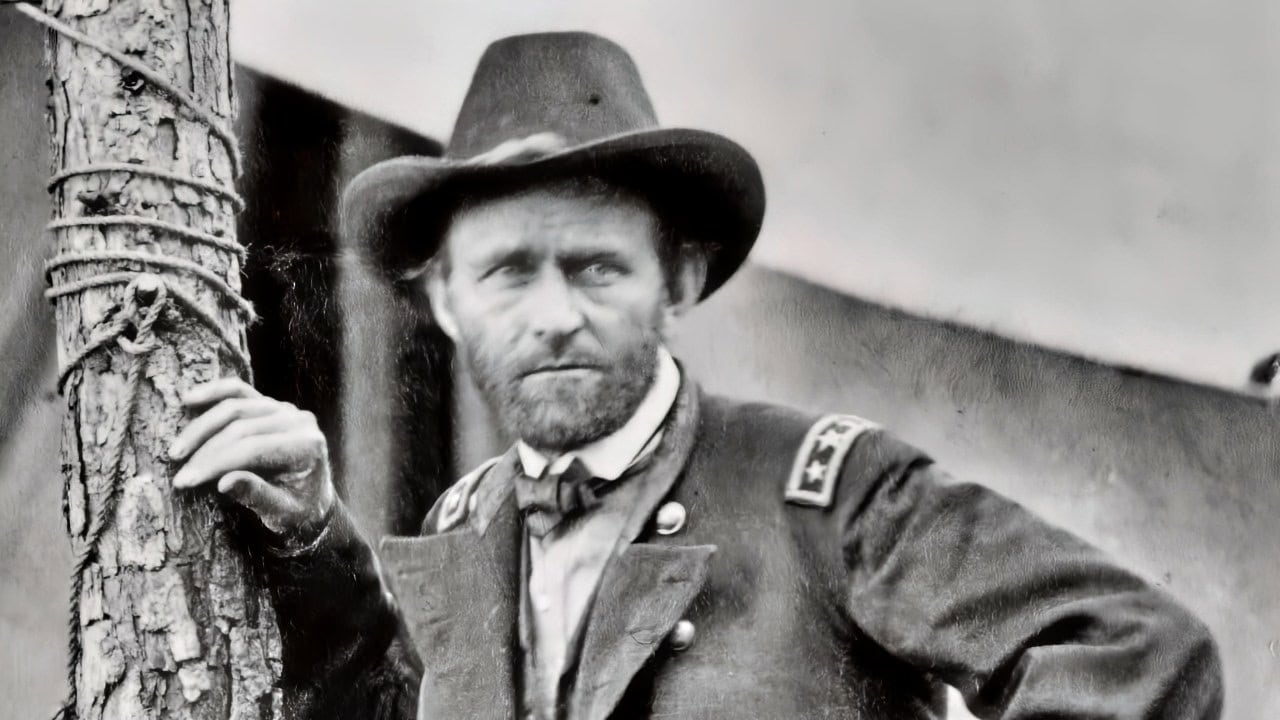
General Ulysses S. Grant at Cold Harbor. Image Credit: Creative Commons.
Of the Medals of Honor being revoked, 864 of them belonged to the 27th Maine Volunteer Infantry from the Civil War. The medals were initially awarded en masse in 1863 for volunteering to extend their service by four days to guard Washington, D.C., but a review board deemed the en masse, non-combat award invalid, forcing the return of the medals.
During the 1863 Gettysburg Campaign, the 27th Maine’s enlistment expired. Secretary of War Edwin Stanton offered a Medal of Honor to any man who stayed to defend Washington, D.C.
While only about 300-311 men actually stayed behind to defend Washington, a clerical error led to all 864 members of the regiment being awarded the medal.
A 1916 board of five general officers was established to review past awards to ensure they met the criteria of “gallantry… above and beyond the call of duty”. In 1917, they determined the 27th Maine awards did not meet this standard, requiring them to be returned. The Maine men actually only remained in Washington D.C. for four days.
By then the troops began returning to Washington from the Gettysburg campaign and the regiment returned to Maine with the rest of their troops. They were mustered out of service on July 17, 1863.
While some other revoked medals were later restored, the 27th Maine medals were never reinstated.
About the Author: Steve Balestrieri
Steve Balestrieri is a National Security Columnist. He served as a US Army Special Forces NCO and Warrant Officer. In addition to writing on defense, he covers the NFL for PatsFans.com and is a member of the Pro Football Writers of America (PFWA). His work was regularly featured in many military publications