Summary and Key Points: Isaac Seitz, a defense columnist and strategic intelligence analyst, evaluates General George S. Patton’s operational brilliance during the Battle of the Bulge.
-Anticipating Adolf Hitler’s final offensive in the Ardennes, Patton prepared three contingency plans before the Verdun meeting with General Eisenhower.
-This 19FortyFive report analyzes the Third Army’s ninety-degree pivot to relieve the besieged 101st Airborne Division at Bastogne.
-By coordinating the 4th Armored Division through brutal winter conditions, Patton’s staff executed a logistical feat that collapsed the German salient and restored Allied momentum in early 1945.
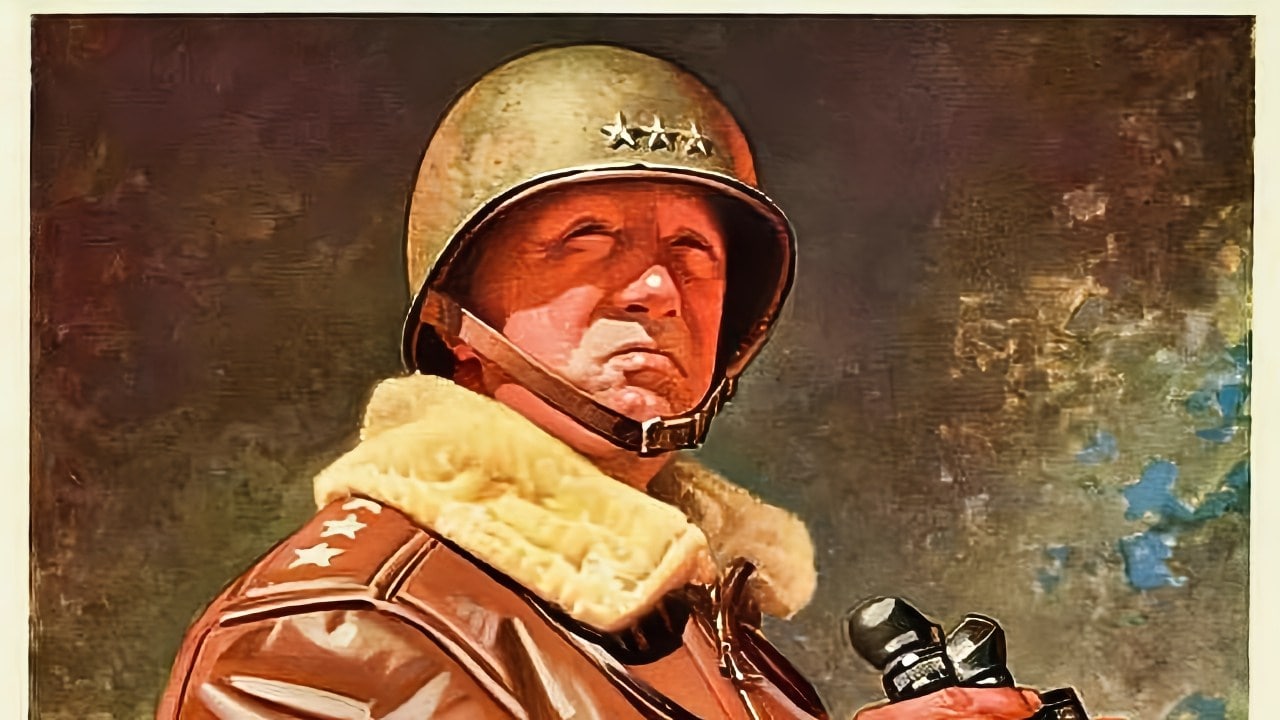
Army General George Patton Quote of the Day
Army Quote of the Day: “It is very easy for ignorant people to think that success in war may be gained by the use of some wonderful invention rather than by hard fighting and superior leadership.” – U.S. Army General George Patton
George S. Patton embodied the United States’ superior leadership during the Second World War. From start to finish, he led his troops from one campaign to the next, crushing all opposition in his way. One of the best instances of his superior leadership came during the Battle of the Bulge in 1944.
As a last-ditch effort, the Germans sought to break through the Allied lines and split them. The offensive resulted in moderate success, with ground gained in France, Belgium, and Luxembourg, and cutting off the 101st Airborne Division. Patton, however, anticipated the attack and already prepared countermeasures. With approval from General Eisenhower, he launched one of the most ambitious relief operations in American history.
Hitler’s Last Offensive
In December of 1994, the German position in the war was growing steadily worse. With the Soviets advancing on one side and the Allies from another, the Nazi high command knew that something had to be done to reverse their situation or at least buy some more time.
George S. Patton Quote of the Day. Creative Commons Image.
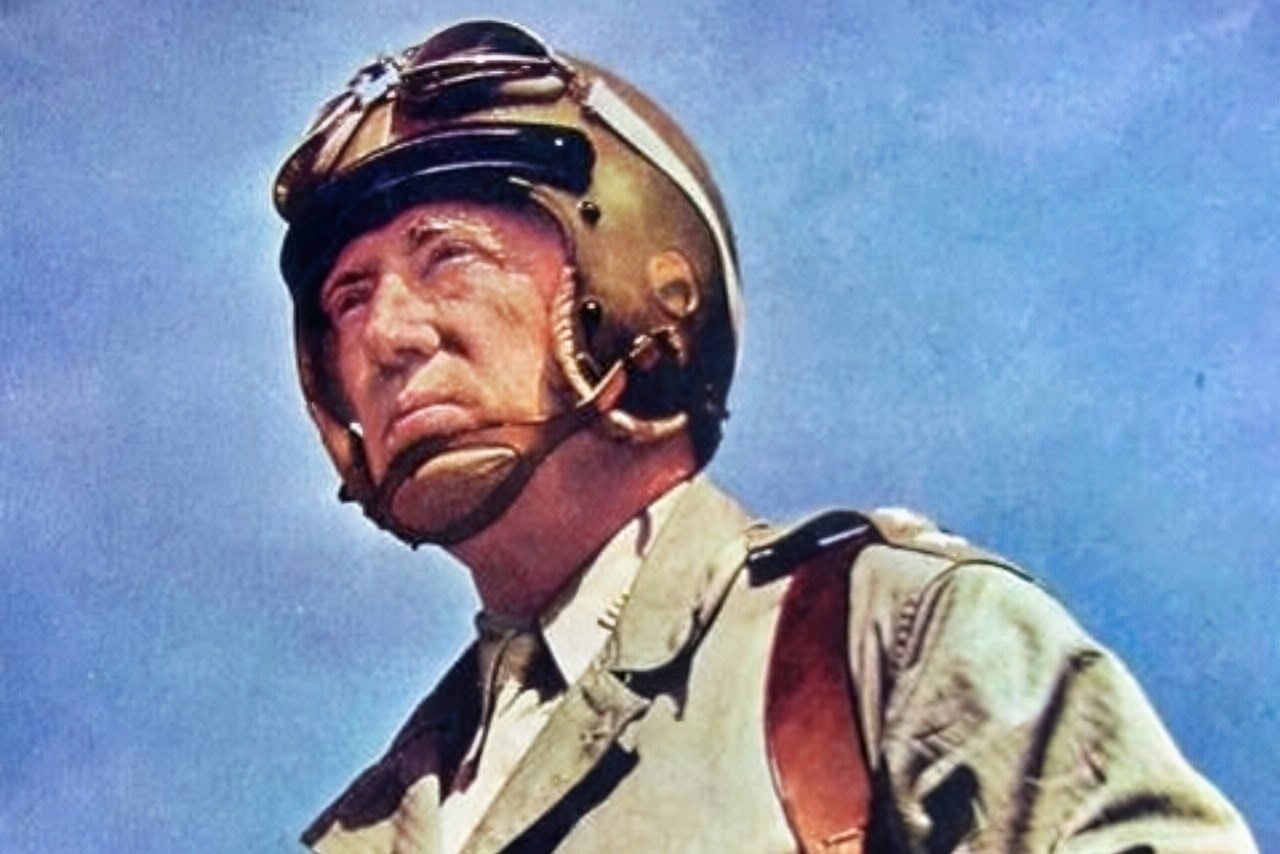
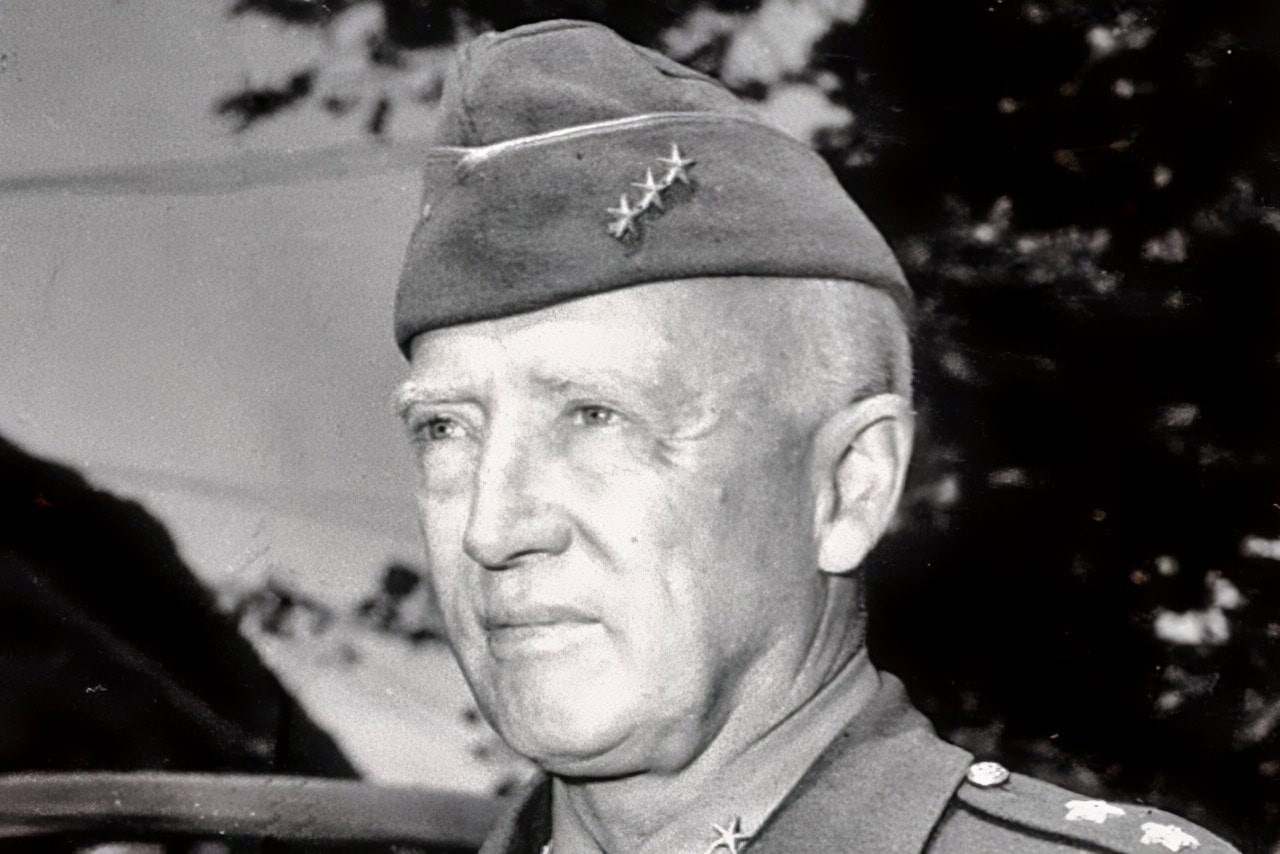
General George Patton of the U.S. Army. Image Credit: Creative Commons.
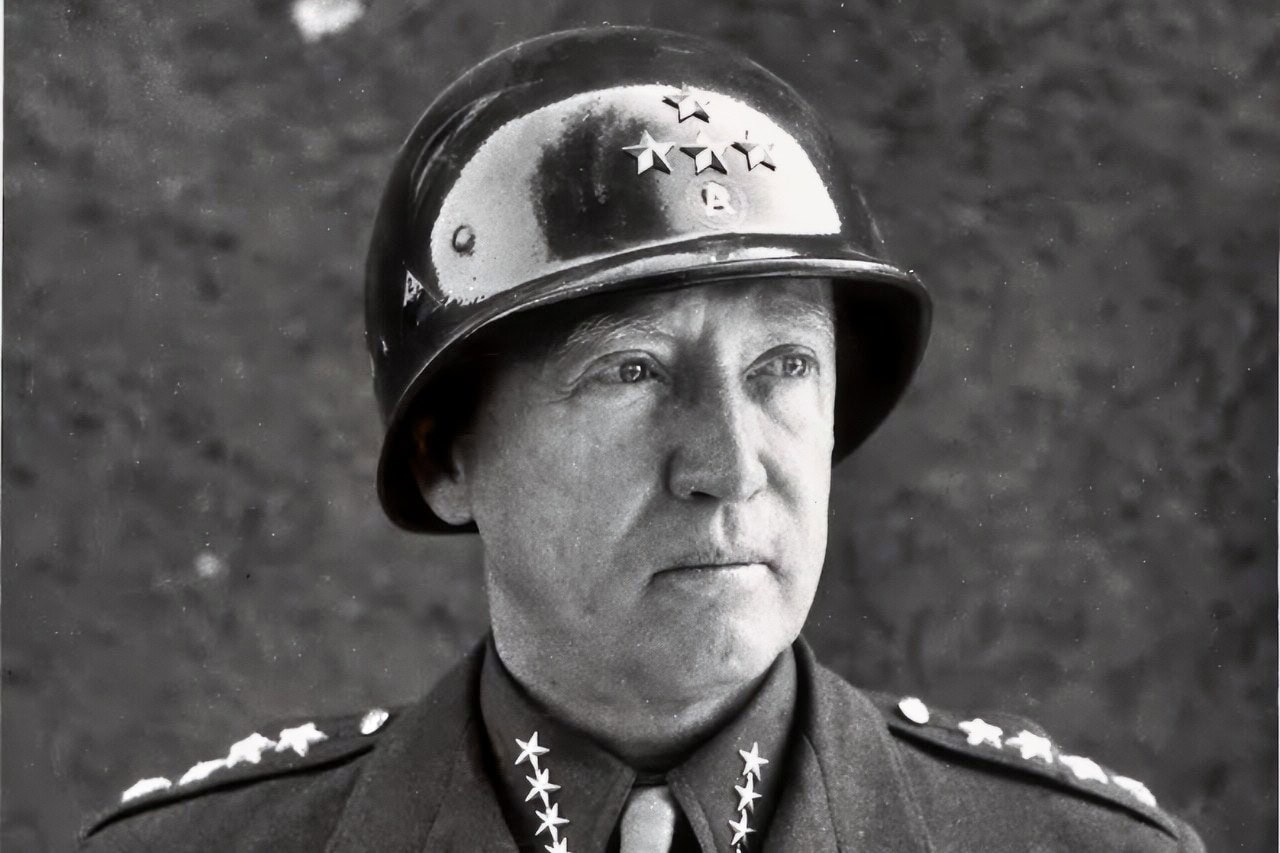
U.S. Army General George Patton

U.S. Army General George Patton. Image Credit: Creative Commons.
When Adolf Hitler launched his final major offensive in the West on December 16, 1944, the German objective was to split Allied lines, capture the port of Antwerp, and force a negotiated peace.
The sudden attack caught many Allied commanders off guard due to winter conditions, scattered intelligence assessments, and the general belief that Germany was nearing collapse. Patton, however, had long harbored doubts about the assumption that the enemy was incapable of further large-scale operations.
Even before the offensive began, he had expressed the view that the Germans might attempt a bold, unexpected strike, and he directed his staff to prepare contingency plans for rapid maneuver in case circumstances changed dramatically.
This foresight proved crucial. When the German breakthrough began to unfold, Patton was not caught in the paralysis that initially gripped several Allied headquarters.
Instead, his staff already had the beginnings of operational plans that could be activated, refined, and executed quickly.
This readiness enabled Patton to be among the first major American commanders to grasp the scope of the crisis and to propose concrete actions to counter it.
Patton Has a Plan
The pivotal moment came on December 19, 1944, during a high-level meeting in Verdun with General Dwight D. Eisenhower and other senior Allied officers. Intelligence summaries made it clear that German forces had created a deep salient and that American units, including the 101st Airborne Division, were in danger of being cut off in the strategically vital town of Bastogne. Eisenhower asked Patton how long it would take him to disengage his Third Army from its current operations and pivot northward to relieve the besieged town.
Patton surprised everyone in the room by declaring that he could attack with three divisions in forty-eight hours.
His answer seemed impossible, bordering on the reckless bravado that he was infamous for, but it was rooted in the preparatory work he had already ordered. Patton had arrived at the meeting with not one but three possible operational plans for such a maneuver.
All he needed was permission to execute one of them. Eisenhower accepted Patton’s proposal, and what followed became one of the most celebrated examples of rapid strategic reorientation in modern warfare.
Play Ball
Turning the Third Army ninety degrees in the middle of winter constituted a logistical and operational challenge of stunning magnitude.
Patton commanded a vast force consisting of armored, infantry, and support units, all of which were oriented toward offensive operations in the Saar region. Reorienting an entire army meant reconfiguring supply lines, adjusting command boundaries, reassigning operational objectives, and coordinating long columns of vehicles on treacherous roads already congested with refugees, retreating units, and deteriorating winter conditions.
Yet Patton’s staff were exceptionally well-organized and drilled in rapid planning cycles and implemented his orders with impressive precision.
They scheduled convoy movements down to the hour, coordinated traffic control points, and ensured that essential supplies, especially fuel were rerouted to sustain the armored formations that would spearhead the drive toward Bastogne.
Additionally, Patton’s presence among the troops, traveling from unit to unit during the march north, reinforced morale. Soldiers later recalled that seeing him in person, distinguished by his polished helmet and unmistakable confidence, convinced them that the seemingly impossible task ahead was not only feasible but certain to succeed.
The First into Bastogne
On December 22, 1944, Patton launched his attack northward, with the 4th Armored Division at the forefront. The weather was brutal, with heavy snow, ice, and freezing winds that complicated movement and caused mechanical failures. German forces, including experienced panzer divisions, resisted fiercely.
Progress was slower than Patton would have liked, and at multiple points his units encountered stiff defenses and counterattacks. But the momentum never stalled. Patton pushed his commanders relentlessly, urging them to keep advancing despite casualties and punishing conditions. His sense of urgency stemmed from his recognition that the American defenders in Bastogne were holding out under increasingly desperate circumstances.
Cut off from resupply and surrounded by enemy forces, the 101st Airborne and various attached units were enduring constant shelling and shortages of medical supplies, ammunition, and food. Patton was determined that they would not be overrun or forced to surrender.
On December 26, elements of the 4th Armored Division broke through German lines and made contact with the defenders inside Bastogne, officially relieving the siege.
This event became one of the defining moments of the battle and ensured that the Germans could not secure the vital road network the town controlled. Patton’s reaction, while proud, was characteristically pragmatic; he viewed the relief of Bastogne as a necessary step in a larger campaign rather than an endpoint.
In his view, the goal was not just to save the besieged garrison but to reverse the entire German offensive and restore Allied momentum. Over the following days, Patton’s forces widened the corridor to Bastogne, secured surrounding terrain, and continued pushing against German flanks.
The Bulge Collapses
Patton’s contribution extended beyond the immediate tactical achievement at Bastogne. He played a crucial role in the broader Allied counteroffensive that ultimately erased the German “bulge.”
His relentless pressure on German flanks strained the enemy’s already overextended logistics. Fuel shortages, a chronic German problem late in the war, became even more dire because Patton’s attacks forced the Germans to divert fuel reserves intended for their armored spearheads.
Moreover, German commanders, faced with increasing pressure from Patton’s advance, had to redirect elite units to counter his movements, weakening their ability to continue their offensive toward the Meuse River.
Obviously, Patton was not acting on his own throughout the battle. His coordination with other Allied leaders, including General Omar Bradley and Field Marshal Bernard Montgomery, enabled a massive pincer movement that gradually compressed the salient from multiple directions.
Hitler, under fear of having his troops encircled, gave the order to withdraw from the Ardennes salient.
His last-ditch offensive, which was supposed to split apart the allies in the West, had been a complete failure. By mid-January 1945, the German offensive had collapsed, and the Allies had regained the initiative.
What Made Patton’s Counteroffensive so Successful
Patton’s leadership style played a central role in these achievements. His aggressive mindset, rooted in a belief that offensive action was always preferable to passive defense, proved well-suited to the chaotic environment of the Ardennes. While some commanders favored a more cautious approach due to harsh weather and shaky supply lines, Patton insisted that speed and decisiveness were essential.
His personal presence on the battlefield energized troops and contributed to high morale during long marches and difficult fights. His organizational rigor, especially his ability to demand and obtain efficient staff work, ensured that orders were issued quickly and executed faithfully. His adaptability, perhaps his greatest strength during the battle, allowed him to pivot rapidly and respond to unfolding events with clarity and confidence.
What Made Patton a Great U.S. Army General
In retrospect, Patton’s contributions to the Battle of the Bulge exemplify the qualities that defined his military career. Patton favored boldness, speed, meticulous preparation, and an unyielding belief in the offensive spirit.
His ability to foresee a German counterstrike before it occurred, his preparation of contingency plans, his rapid execution of a massive operational pivot, and his unwavering determination to relieve Bastogne combined to create one of the most impressive achievements of the war.
The battle itself was the largest and bloodiest fought by the U.S. Army during World War II, and Patton’s leadership helped prevent it from becoming an even greater disaster. His performance in December 1944 remains a benchmark for operational command and a demonstration of how vision, preparation, and decisive leadership can alter the course of a battle and perhaps an entire campaign.
About the Author: Isaac Seitz
Isaac Seitz, a Defense Columnist, graduated from Patrick Henry College’s Strategic Intelligence and National Security program. He has also studied Russian at Middlebury Language Schools and has worked as an intelligence Analyst in the private sector.