
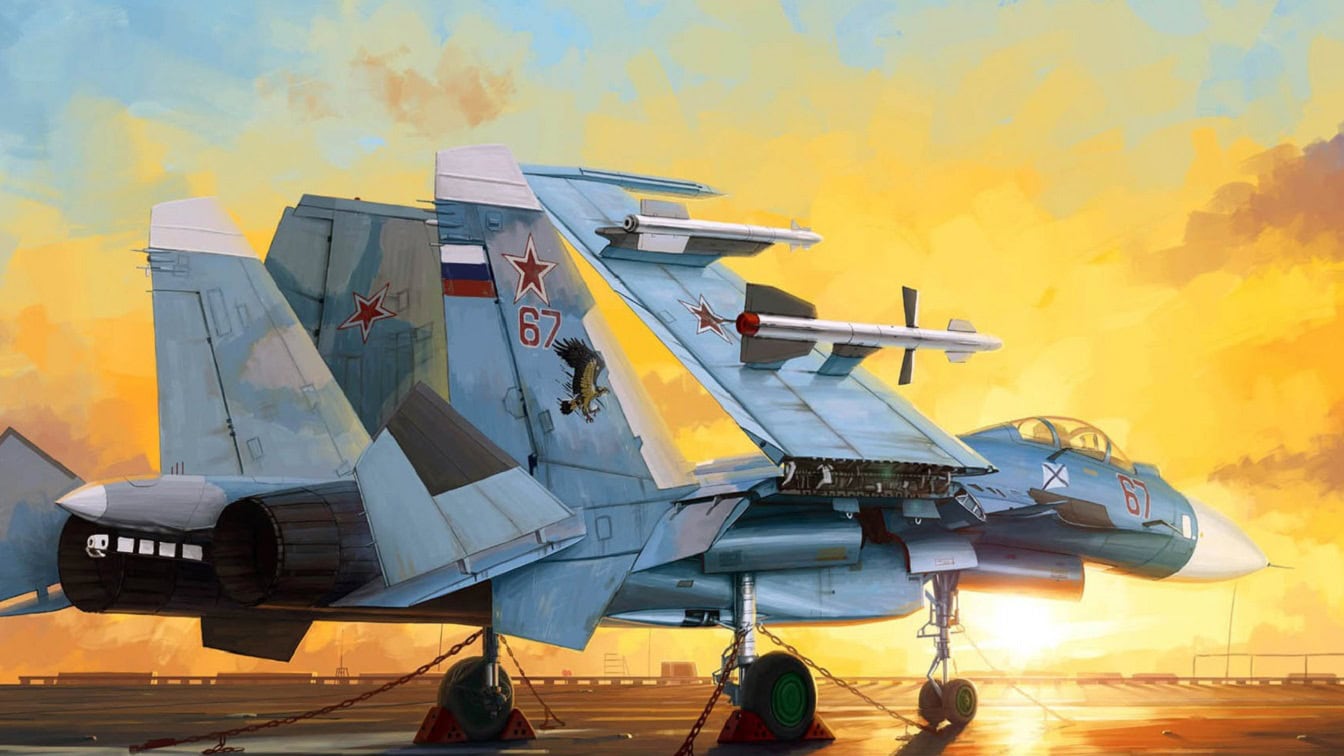
Summary and Key Points: Senior Defense Editor Christian D. Orr evaluates the Sukhoi Su-33 (Flanker-D), the Russian Navy’s premier carrier-based derivative of the Su-27.
-Despite upgrades like Saturn AL-31F3 engines and folding wings for the Admiral Kuznetsov, the Su-33 has faced a “plakhuy” (bad) operational history.
-Critics like Alex Betley highlight its inability to carry heavy air-to-ground munitions, rendering it an air superiority fighter rather than a multirole asset.
-With the Kuznetsov sidelined since 2017 and accidents haunting recent Syrian operations, the Russian Ministry of Defense is pivoting to the MiG-29K Fulcrum-D for its superior cost-efficiency and strike versatility.
Russia’s Naval Aviation Shift: Why the MiG-29K is Replacing the Struggling Su-33
Since the Sukhoi Su-27 “Flanker” air superiority fighter debuted in June 1985, the JSC Sukhoi Company has produced more upgrades and variants for the Russian Air Force and Navy than you can shake a proverbial stick at. Thanks to Russian President Vladimir Putin’s seemingly perpetual “special military operation” in Ukraine, Flanker variants are in the spotlight more than ever.
We now focus on one of the latest variations of this warbird series, the Su-33 “Flanker-D.”
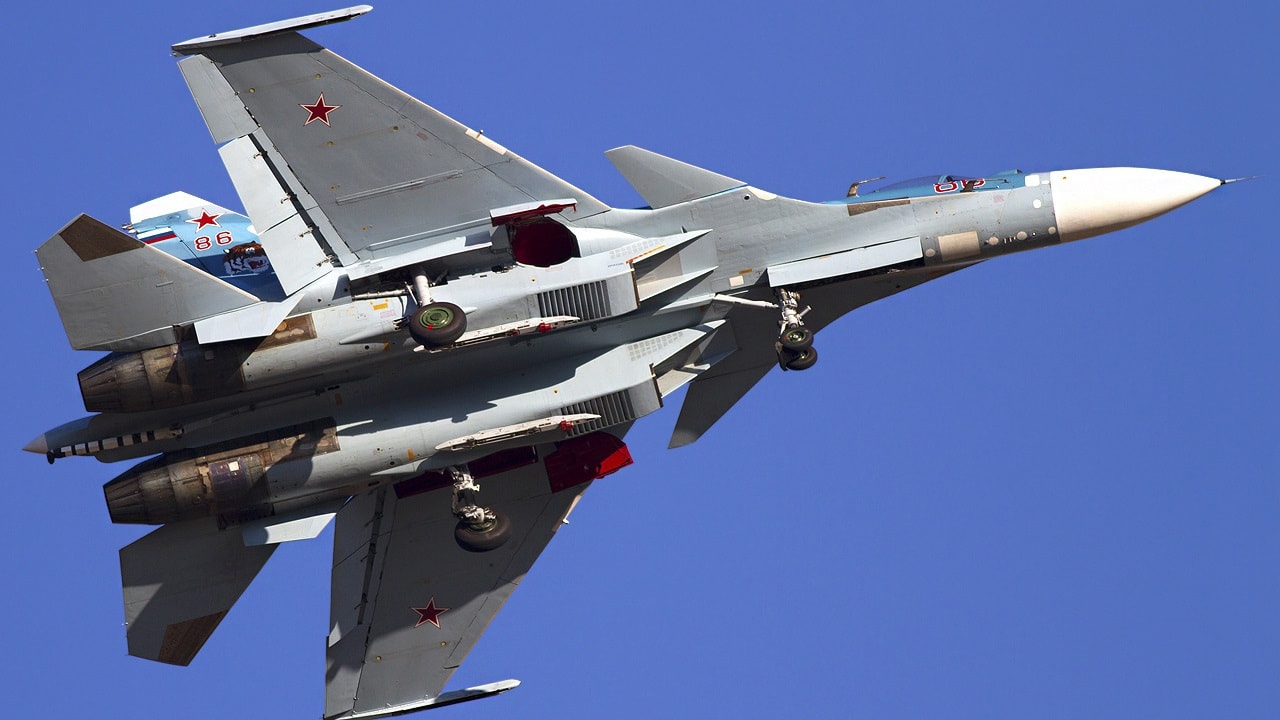
Russia’s Su-33 fighter. Image Credit: Creative Commons.
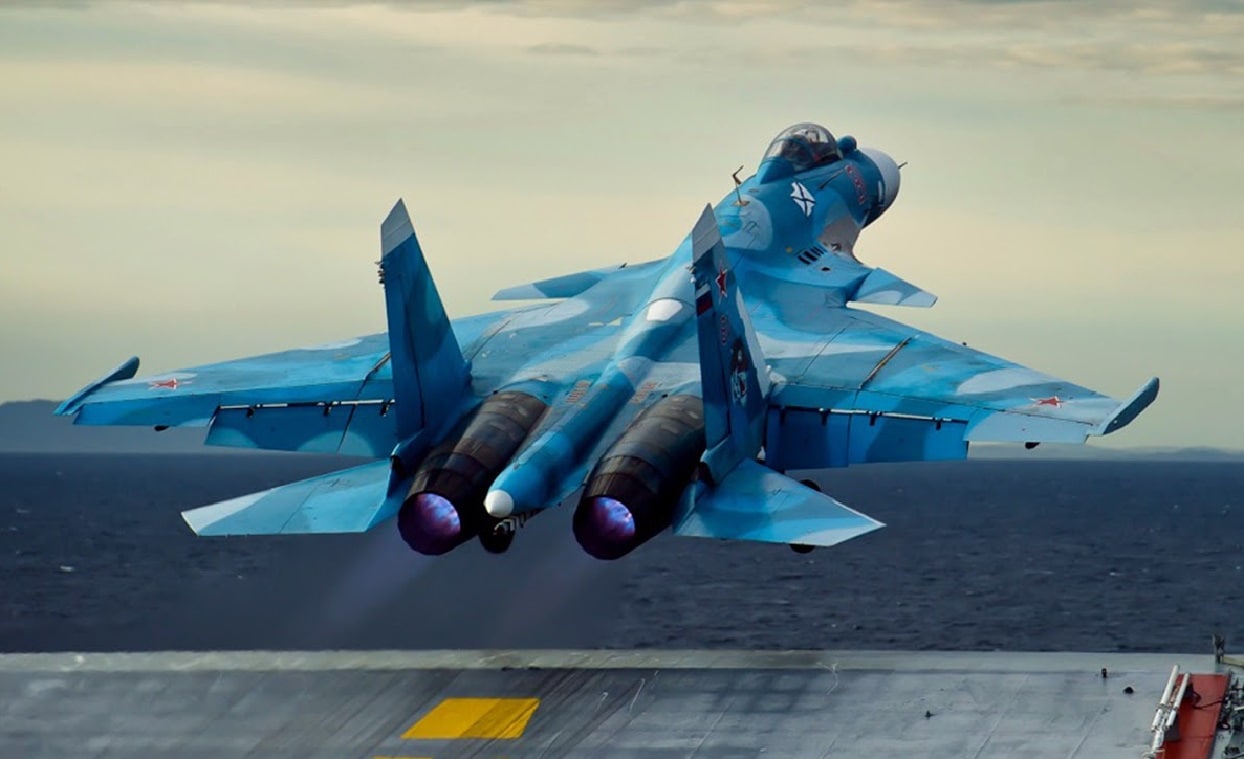
Su-33 Image: Creative Commons.
Sukhoi Su-33 Initial History
The Sukhoi Su-33 made its maiden flight on August 17, 1987, when the Cold War was still raging and the Soviet Union had entered its glasnost and perestroika phases. But the jet didn’t enter official operational service with the Russian Navy until August 31, 1998.
After the Soviet collapse and the subsequent downsizing of the Russian Navy, only 24 airframes were produced.
The Su-33 was designed as a carrier-based version of the Su-27, and indeed it was initially dubbed the Su-27K. Key differences with the land-based Flanker include a reinforced undercarriage, more technical landing gear, wing canards, folding wings, a larger wing area, and slightly more powerful Saturn AL-31F3 afterburning turbofan engines.
In addition, to further boost flight deck capability, the Su-33’s landing gear, folding wings, larger wing area, and engine are specifically designed for tighter accommodations and short runways.
Tech Specs and Vital Stats
Fuselage Length: 21.19 meters
Wingspan: 14.7 m
Width: 7.40 m
Empty Weight: 18,400 kilograms
Max Takeoff Weight (MTOW): 33,000 kg
Max Airspeed: Mach 2.17
Armament:
12 x external hardpoints with a capacity of up 6,500 kg of ordnance, including: R-27R1(ER1), R-27T1(ET1) and R-73E air-to-air missiles; S-8KOM, S-8OM, S-8BM S-13T, S-13OF and S-25-OFM-PU unguided missiles; Kh-25MP, Kh-31 and Kh-41 guided missiles; RBK-500 cluster bombs; and electronic countermeasure pods
Operational History
Alex Betley of Tufts University’s Fletcher School gives a pretty damning assessment of the Flanker-D’s real-world performance, described in the headline as “an aircraft carrier’s worst nightmare.” Betley elaborates on the unflattering title thusly:
“Yet it is this reality—that the Su-33 really can’t load some of the most important munitions (particularly for running air-to-ground missions)—that has made the fighter a very limited success at best and a failure at worst. Thus, despite being branded as a multirole fighter, the Flanker is in reality an air superiority fighter rather than truly multirole. … Although the actual use of the Su-33 has been limited, the times it has been used have been tragic. … Since the aircraft first entered service in 1999, at least three of the 35 produced have been lost in accidents, including one during a summer 2001 airshow in Russia.”
It doesn’t help the Su-33’s cause, or its future viability, that the aircraft carrier it was intended to launch from, the Admiral Kuznetsov, has been an unmitigated disaster. One malady after another has prevented the warship from sailing since 2017, and it may finally be consigned to the scrapyard.
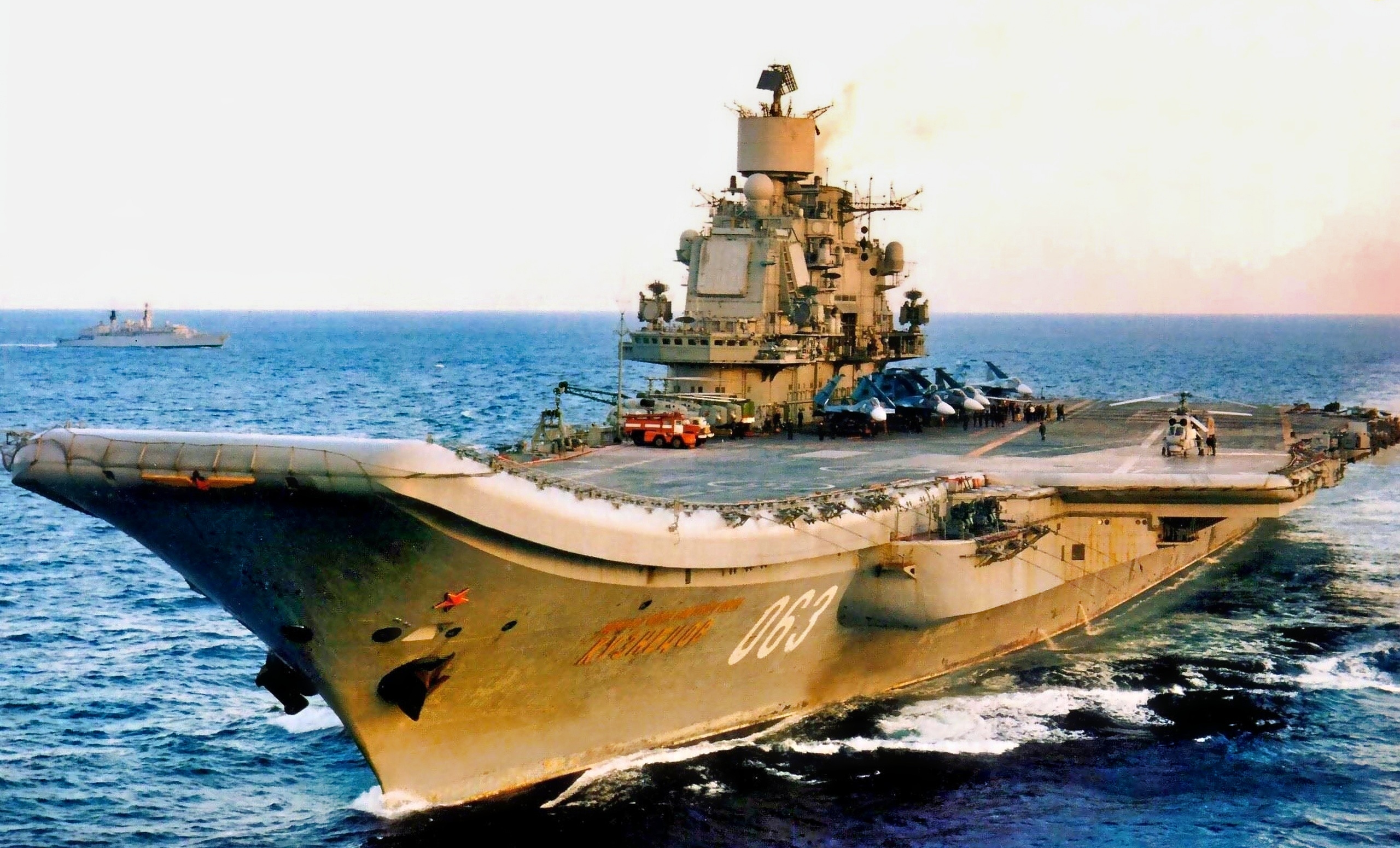
Russia Aircraft Carrier Admiral Kuznetsov. Image Credit: Creative Commons.
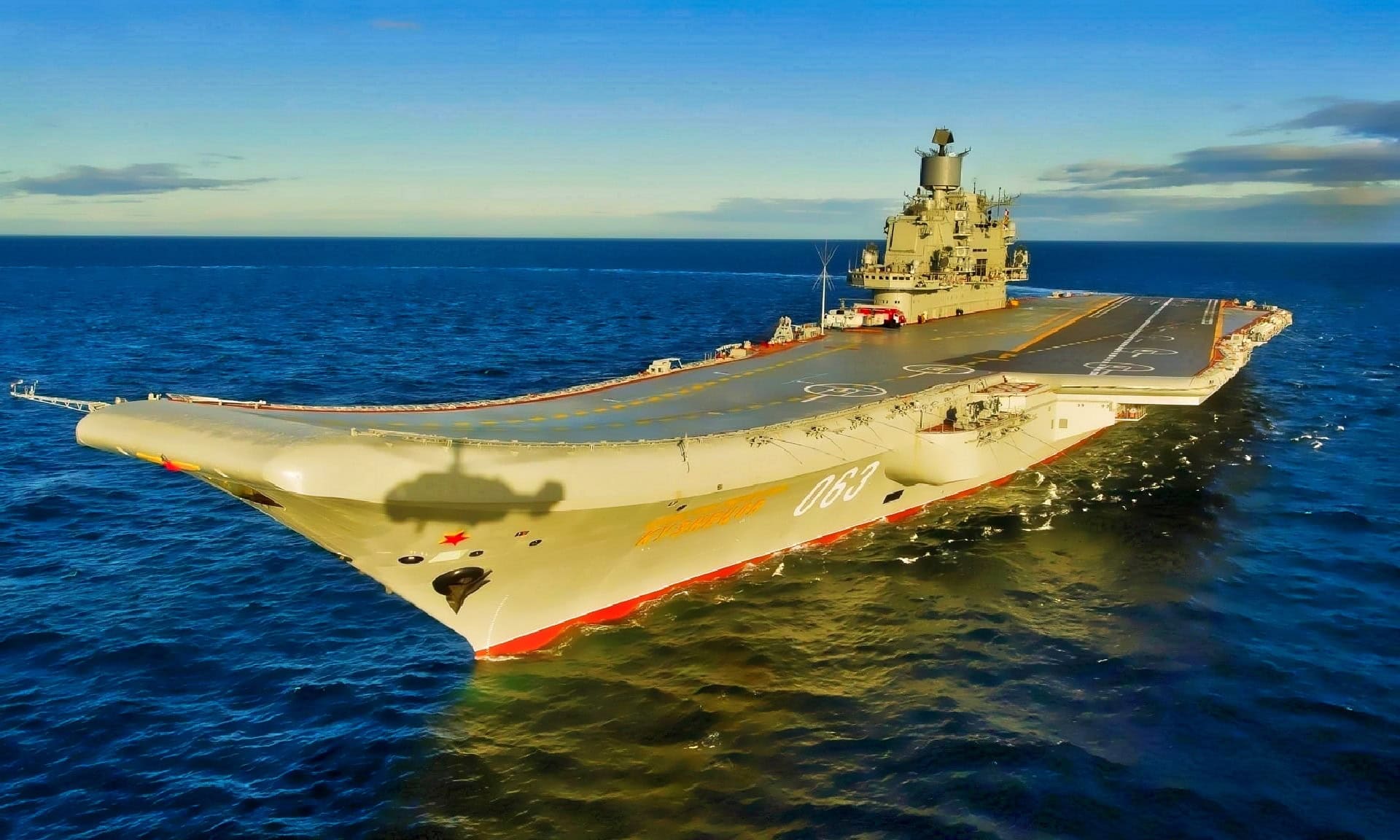
Admiral Kuznetsov Aircraft Carrier. Image Credit: Creative Commons.
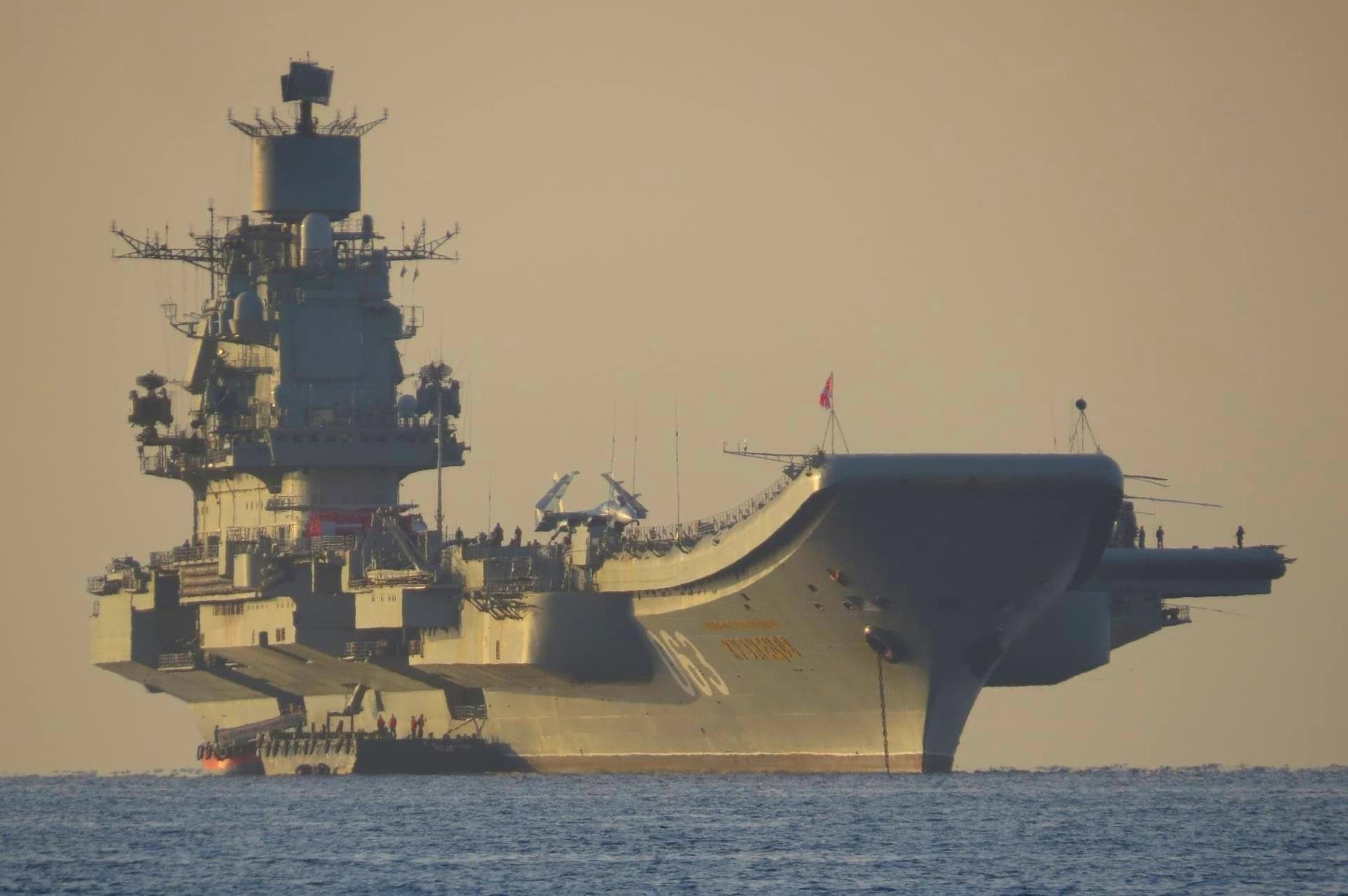
Aircraft Carrier Admiral Kuznetsov. Image Credit: Creative Commons.
It should be noted that the Kuznetsov-Flanker-D tandem did see combat action in 2016, launching airstrikes against ISIS and the Al-Nusra Front in Syria’s Idlib and Homs provinces with 500 kg precision-guided munitions.
Assuming for argument’s sake that the Russian Defense Ministry’s official claims are to be taken at face value, at least 30 terrorists, including three field commanders, were killed in the strikes, which targeted ammunition warehouses, gathering and training centers, and weapon production plants.
However, even during this relatively successful mission, a Flanker-D crashed after the arrestor cable broke up during the aircraft’s second landing attempt, prompting the Russian military to move the entire fleet to land. At least the pilot safely ejected and was rescued.
The Way Forward for the Flanker-D
As if the news weren’t bad enough already, a U.S. Army TRADOC report casts further doubt upon the future viability of the Su-33:
“Attempted sales to China and India fell through. With plans to retire the Su-33 once they reach the end of their service life, the Russian Navy ordered the MiG-29K as a replacement in 2009.”
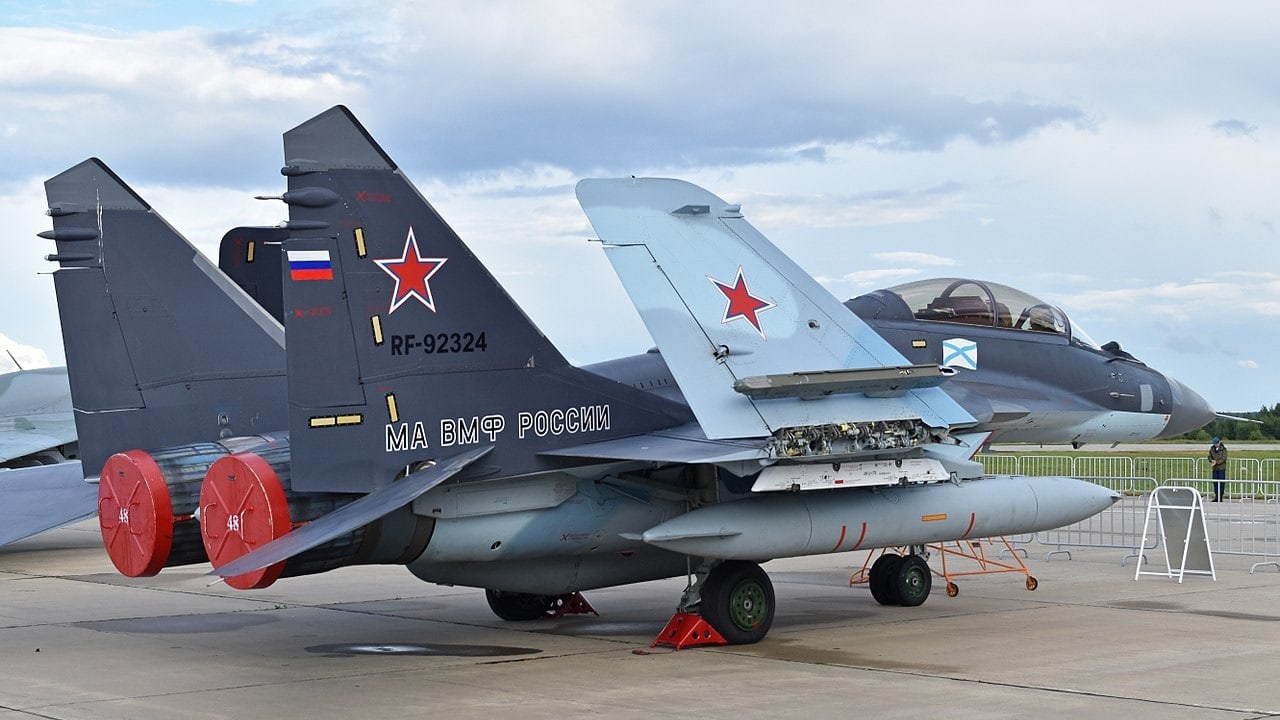
Naval variant of the second-generation MiG-29, with the NATO codename ‘Fulcrum-D’. Reported to be operated by the 100th Independent Shipborne Fighter Aviation Regiment (OKIAP) based at Severomorsk. On static display at the Aviation cluster of the ARMY 2017 event. Kubinka Airbase, Moscow Oblast, Russia.
The MiG-29K “Fulcrum-D” offers multiple advantages over the Su-33, including lower production and maintenance costs, a smaller size and lighter weight that make it more compatible for carrier operations, greater capability for ground strikes, and compatibility with a greater selection of standoff missiles and guided bombs.
In short, a plakhuy (“bad”) future for the Su-33.
About the Author: Christian D. Orr, Defense Expert
Christian D. Orr is a Senior Defense Editor. He is a former Air Force Security Forces officer, Federal law enforcement officer, and private military contractor (with assignments worked in Iraq, the United Arab Emirates, Kosovo, Japan, Germany, and the Pentagon). Chris holds a B.A. in International Relations from the University of Southern California (USC) and an M.A. in Intelligence Studies (concentration in Terrorism Studies) from American Military University (AMU). He is also the author of the newly published book “Five Decades of a Fabulous Firearm: Celebrating the 50th Anniversary of the Beretta 92 Pistol Series.”