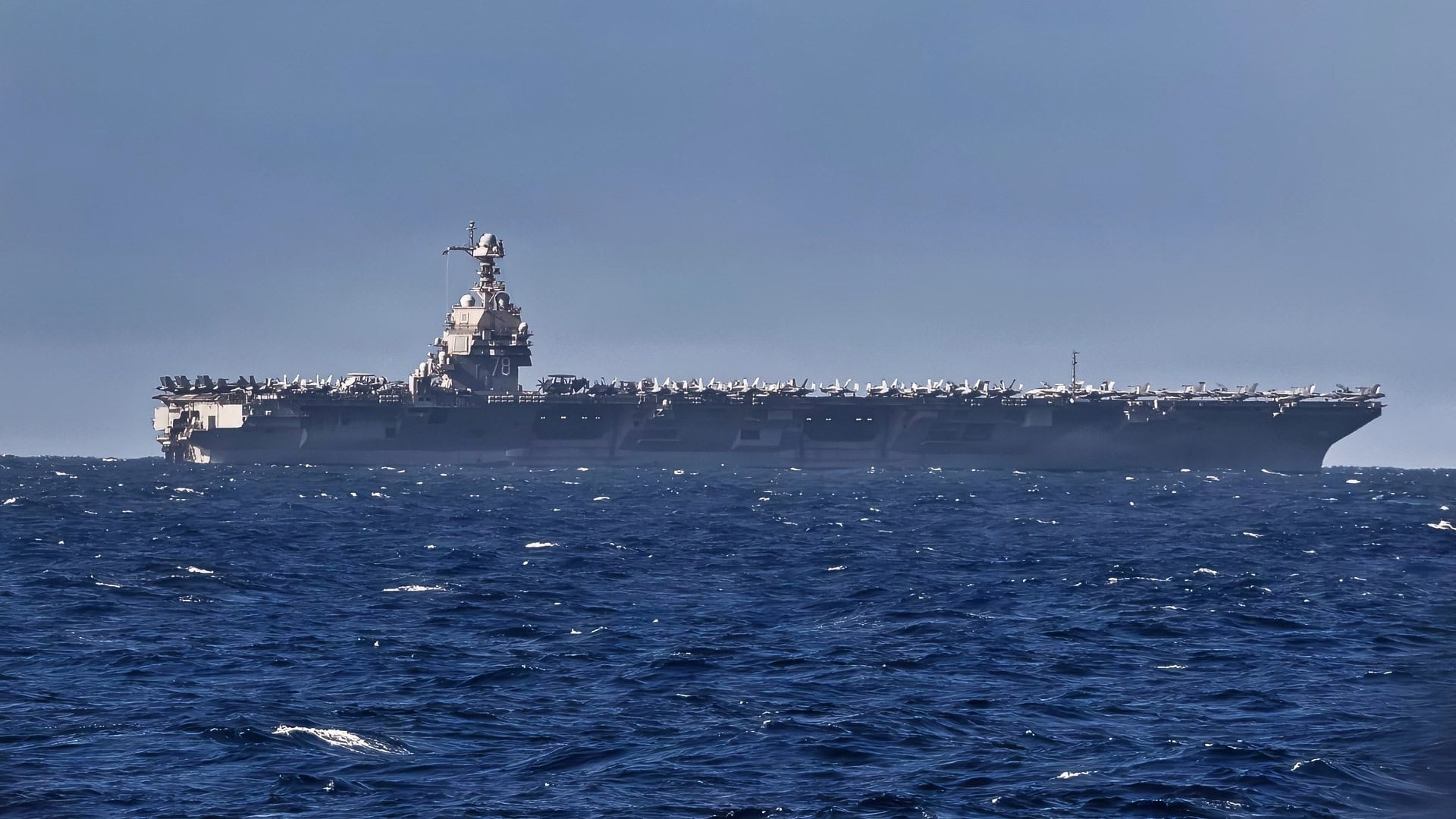
There is little arguing that the U.S. Navy’s USS Gerald R. Ford (CVN-78) supercarrier needs some serious downtime and repairs following its extended deployment to Venezuela and the Middle East. The carrier has made headlines in many different ways.
It is the first in class of a new generation of carriers, engineered with a new system of next-generation maritime warfare technologies.
Credited for supporting the successful abduction in Venezuela of President Nicolas Maduro, the Ford was then retasked to support the ongoing Operation Epic Fury against Iran.
The Ford has been widely credited for its successful performance during these missions. Its larger deck space enables a higher sortie rate.
Its on-board generators support advanced computing and electromagnetic catapults. And its electric elevators allow for rapid rearming and refueling of fighter jets.
Yet, despite that credited mission success during a 250-plus-day deployment that is wildly uncharacteristic of the modern era, the ship has also experienced a range of serious problems.
Not only does a deployment of this length take a measurable psychological toll on crew members, their families, and the ship’s equipment, but it also strains the infrastructure of the ship itself.
The USS Ford has experienced plumbing issues. Recently, a fire broke out on board the ship.
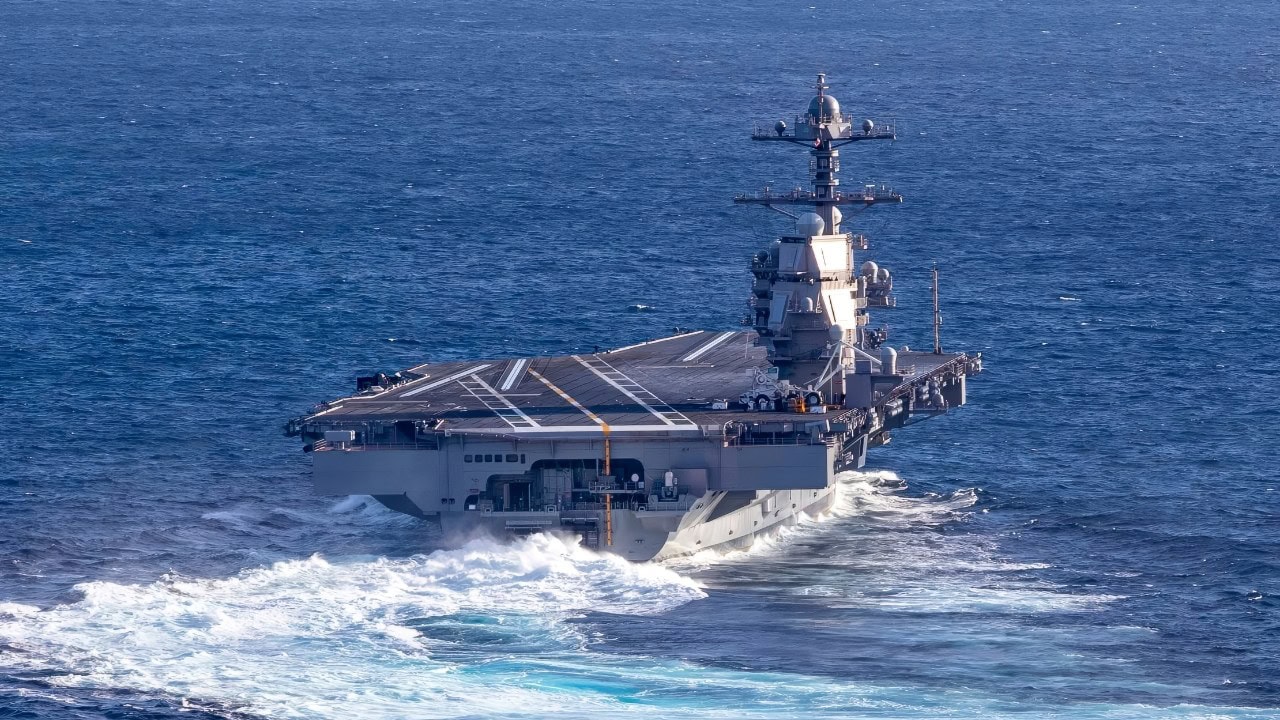
ATLANTIC OCEAN (Oct. 29, 2019) USS Gerald R. Ford (CVN 78) conducts high-speed turns in the Atlantic Ocean. Ford is at sea conducting sea trials following the in port portion of its 15 month post-shakedown availability. (U.S. Navy photo by Mass Communication Specialist 3rd Class Connor Loessin)
The causes of these problems are not entirely clear, and it seems likely that there is no single quick fix; they arise from a mix of human and mechanical factors that are almost inevitable in the context of an extremely long, unanticipated wartime deployment.
All ships, especially massive carriers, need consistent routine maintenance consisting of equipment checks, cleanings, inspections, and overall wear-and-tear assessments. It seems realistic that certain problems or challenges may have simply been left unattended for too long.
How Long to Repair USS Gerald R. Ford?
There is no real way to know how long it will take the USS Ford to return to operational service, as the scale of the mechanical or technological problems that afflict it has yet to be fully ascertained.
Once the core issues and areas of concern are identified, the ship may be in need of a substantial overhaul. If the entire plumbing system is found to be in disarray or inoperable, widespread repairs and reconstruction may be needed.
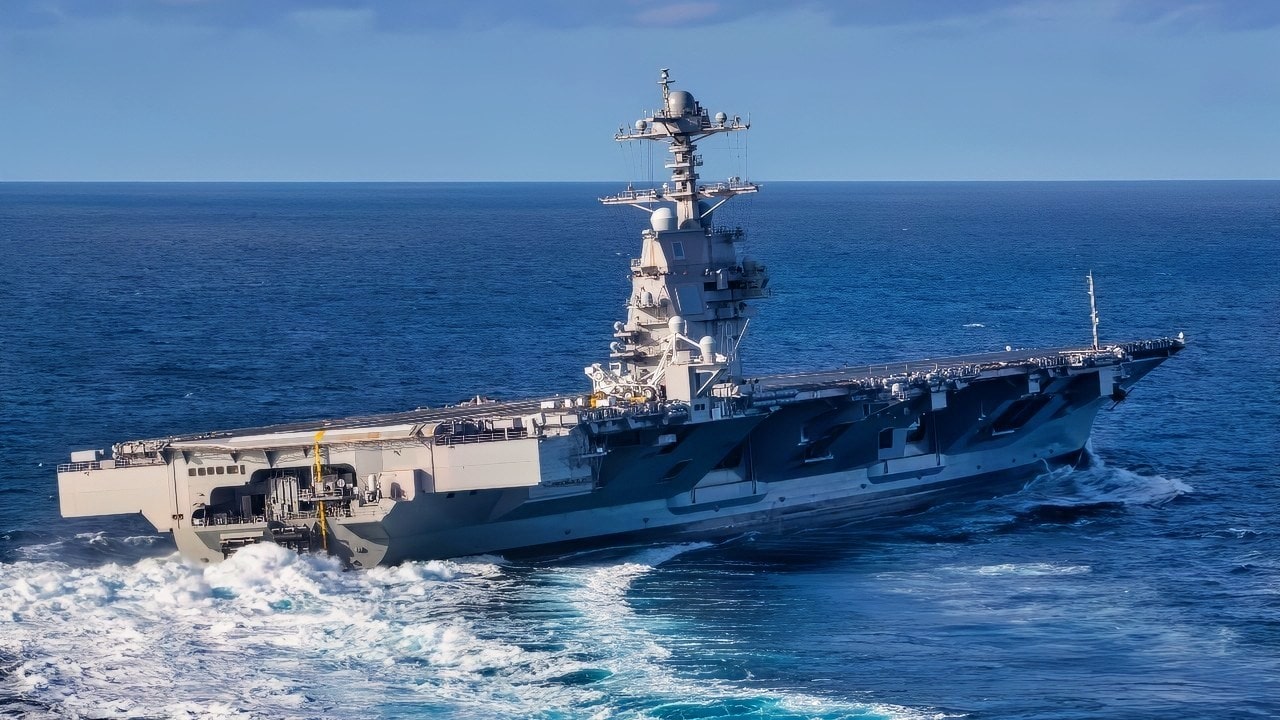
ATLANTIC OCEAN (Oct. 29, 2019) USS Gerald R. Ford (CVN 78) conducts high-speed turns in the Atlantic Ocean. Ford is at sea conducting sea trials following the in port portion of its 15 month post-shakedown availability. (U.S. Navy photo by Mass Communication Specialist 3rd Class Connor Loessin)
There are similar uncertainties regarding the onboard fire, which was determined to be non-combat-related. There has been speculation that a dryer vent in the laundry area may have sparked the blaze, which caused at least 200 sailors to be treated for smoke inhalation.
By contrast, it is also conceivable that the maintenance problems could be fully addressed with quick fixes, as they may have been caused by a combination of human error and over-taxed equipment.
Favorable Outlook for This Aircraft Carrier
While the problems encountered on the ship were sure to generate headlines and cause concern, a larger reality lurks beneath the radar of public perception and discourse.
It appears that Ford provided critical, time-sensitive support to two vital U.S. military missions, and its modern technological components functioned well.
This is great news for a ship that was once derided for being too ambitious, thanks to its efforts to integrate new generations of technology.
However, after delays and growing pains, the breakthrough technologies woven into the USS Ford appear to be combat-ready and combat-worthy.
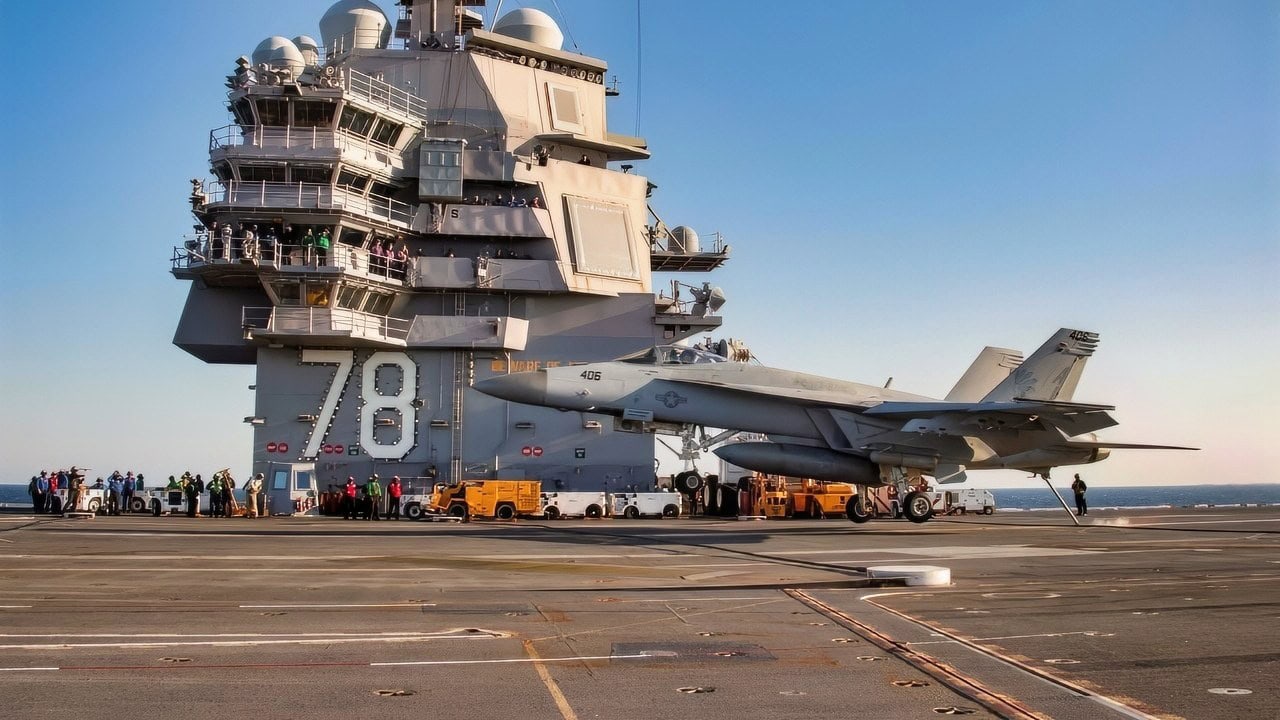
USS Gerald R. Ford Supercarrier Flight Deck. Image Credit: Creative Commons.
There do not appear to have been any problems with the ship’s electromagnetic launch system, which enables smoother, faster, and more stable take-off. The ship’s large deck space must have supported a high sortie rate and operational tempo.
The electric elevators allow for much faster, more efficient rearming and refueling between missions, and it seems likely that none of these new breakthrough systems experienced any problems or malfunctions.
These factors suggest that, despite its deployment problems, the USS Ford is poised for a successful operational future.
About the Author: Kris Osborn, President of Warrior Maven
Kris Osborn is the President of Warrior Maven – Center for Military Modernization. Osborn previously served at the Pentagon as a highly qualified expert in the Office of the Assistant Secretary of the Army—Acquisition, Logistics & Technology. Osborn has also worked as an anchor and on-air military specialist at national TV networks. He has appeared as a guest military expert on Fox News, MSNBC, The Military Channel, and The History Channel. He also has a Masters Degree in Comparative Literature from Columbia University