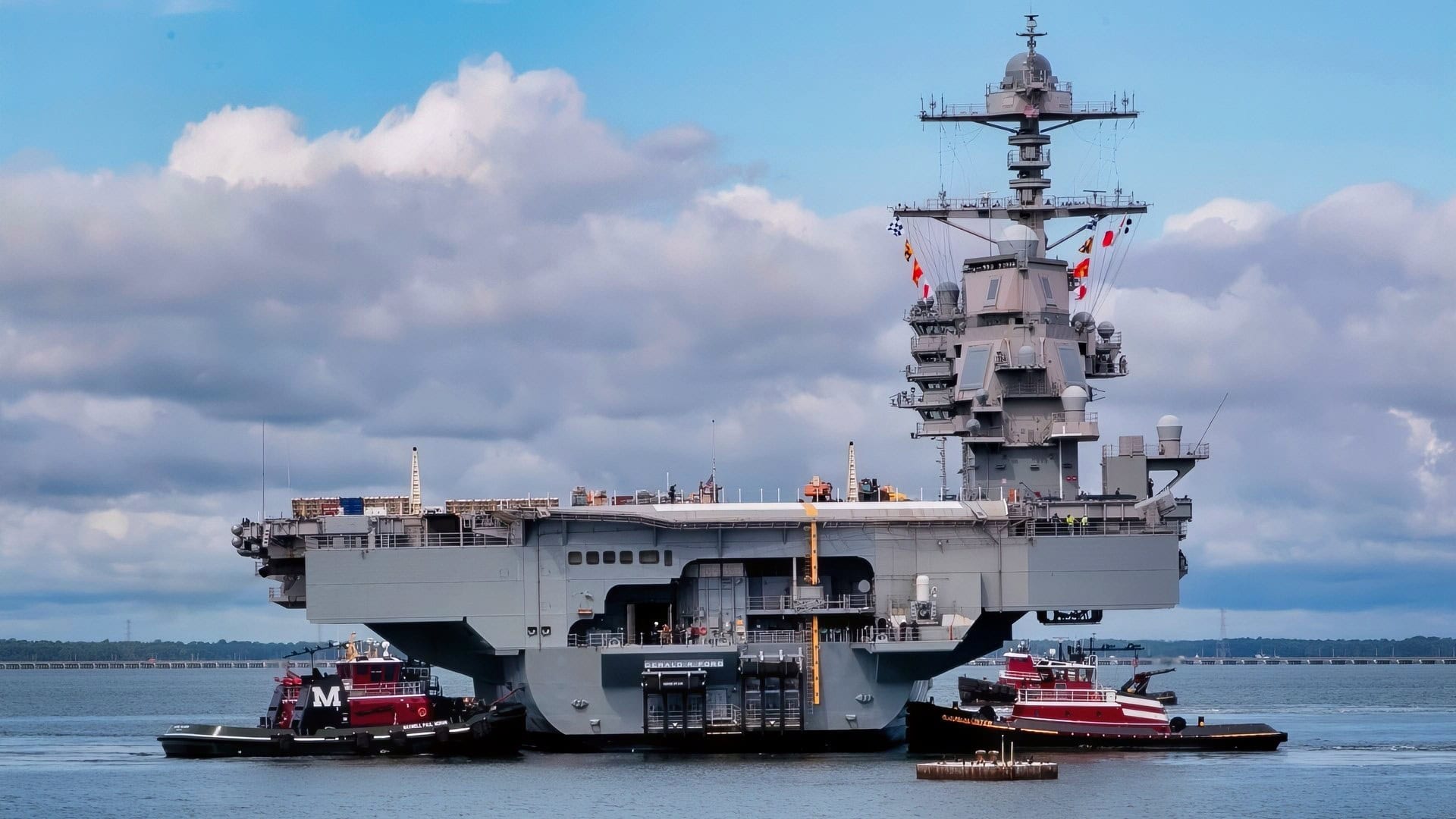
Summary and Key Points: National security analyst and geopolitical consultant Brandon J. Weichert exposes the compounding crises crippling the U.S. Navy’s newest supercarrier, the USS Gerald R. Ford.
-Despite its staggering $13 billion price tag, the USS Gerald R. Ford has been pushed past its physical and mechanical limits by prolonged, high-tempo deployments.
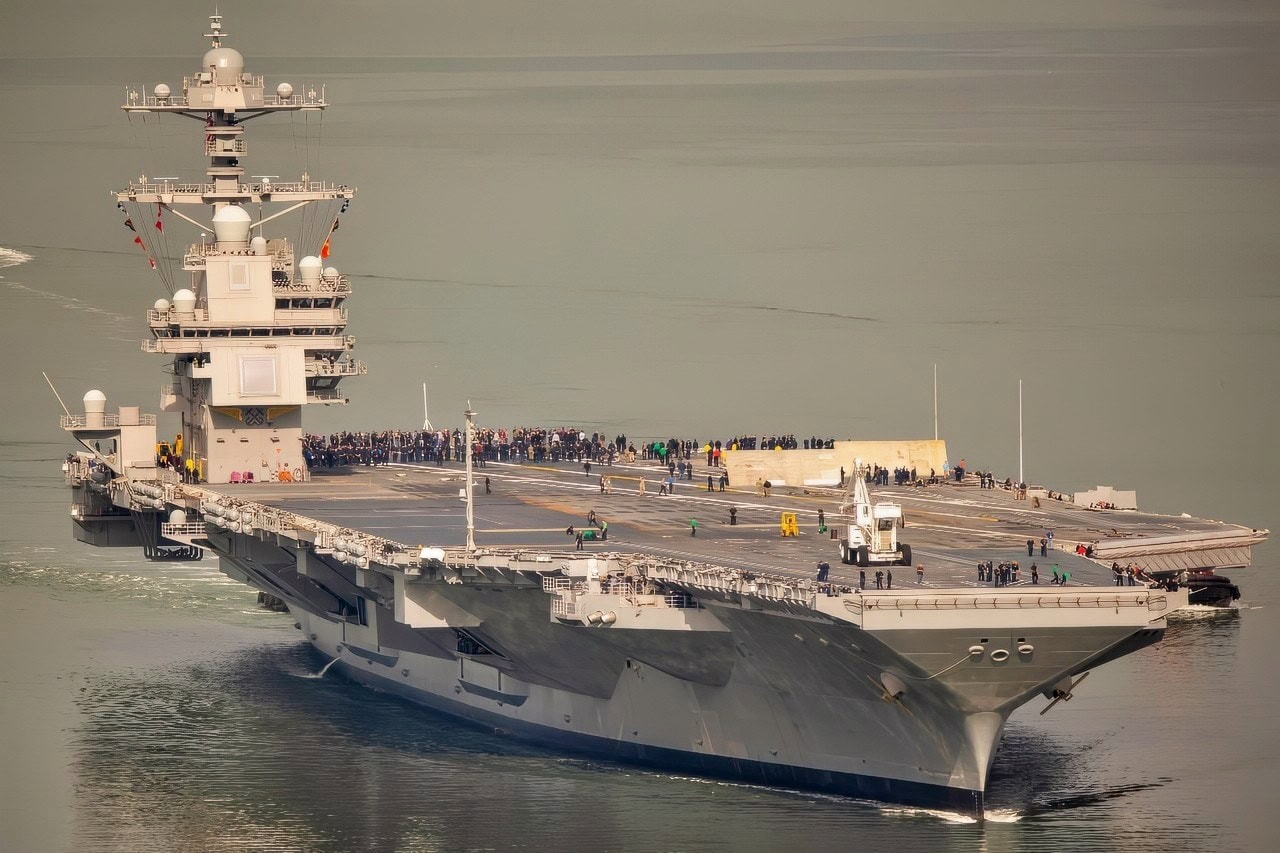
NEWPORT NEWS, Va. (Oct. 25, 2019) USS Gerald R. Ford (CVN 78) gets underway for the first time since beginning its post-shakedown availability July 2018. Ford is currently conducting sea trials, a comprehensive test of the ship’s systems and technologies. (U.S. Navy photo by Mass Communication Specialist 3rd Class Connor Loessin)
-From crippling failures in its high-tech sewage system to a devastating onboard fire that displaced hundreds of sailors, the carrier’s rapid deterioration serves as a stark warning: America’s naval fleet and the sclerotic industrial base that supports it are dangerously overstretched.
The $13 Billion Crisis: Why the USS Gerald R. Ford is Breaking Down at Sea
The USS Gerald R. Ford cost the United States $13 billion. It is the largest aircraft carrier in the world and the first ship of an entirely new class of carriers intended to replace the aging Nimitz-class carriers.
Some reports have the supercarrier out of action for 14 months. In all honesty, the story of why is a real tragedy.
The $13 Billion Crisis: Why the USS Gerald R. Ford is Breaking Down at Sea
Even before she hit the High Seas, though, there were problems. The carrier went dreadfully over time and over budget. There was a slew of problems that deeply affected the carrier’s operational reliability (which, in turn, led to greater delays and cost overruns during its development).
Finally, just when the Navy believed it had ironed out all the wrinkles with the Gerald R. Ford, an entirely new set of humiliations arose for the pricey and needlessly complex carrier.
Essentially, the USS Gerald R. Ford has been pushed to its operational edge by unusually long, high-tempo deployment. This has led to fires, habitability failures, massive crew exhaustion, and emergency repairs. The situation highlights deeper problems with carrier readiness and the United States Navy’s ability to sustain prolonged war operations.
While the Ford may be the most advanced and largest carrier ever built by any nation, the fact is that in just a little less than a year, the Ford hit the mechanical, physical, and psychological limits that any Navy warship can bear.
In fact, the deteriorating condition of the USS Gerald R. Ford has become a symbol of the wider US Navy’s strain during the Iran War and the Ukraine War’s high-tempo operations.
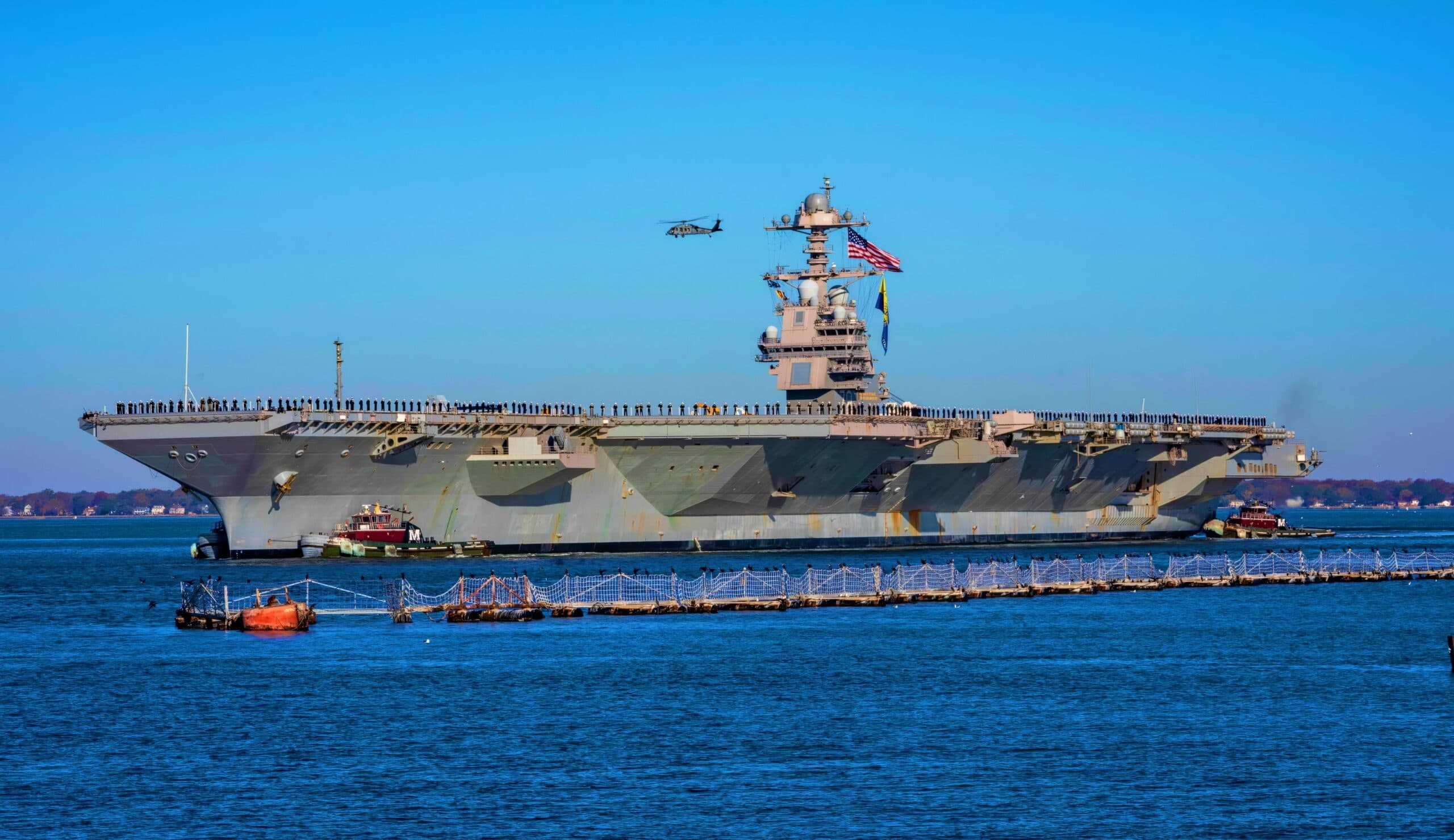
NORFOLK (Nov. 26, 2022) The USS Gerald R. Ford (CVN 78) returns to Naval Station Norfolk after completing their inaugural deployment to the Atlantic Ocean with the Gerald R. Ford Carrier Strike Group (GRFCSG), Nov. 26. The GRFCSG, returned to Naval Station Norfolk following a scheduled deployment with Allies and partners in an effort to build strategic relationships and contribute to a stable and conflict-free Atlantic region, while also showcasing the U.S. Navy’s most advanced class of aircraft carrier. (U.S. Navy Photo/Video by Mass Communication Specialist First Class Nathan T. Beard)
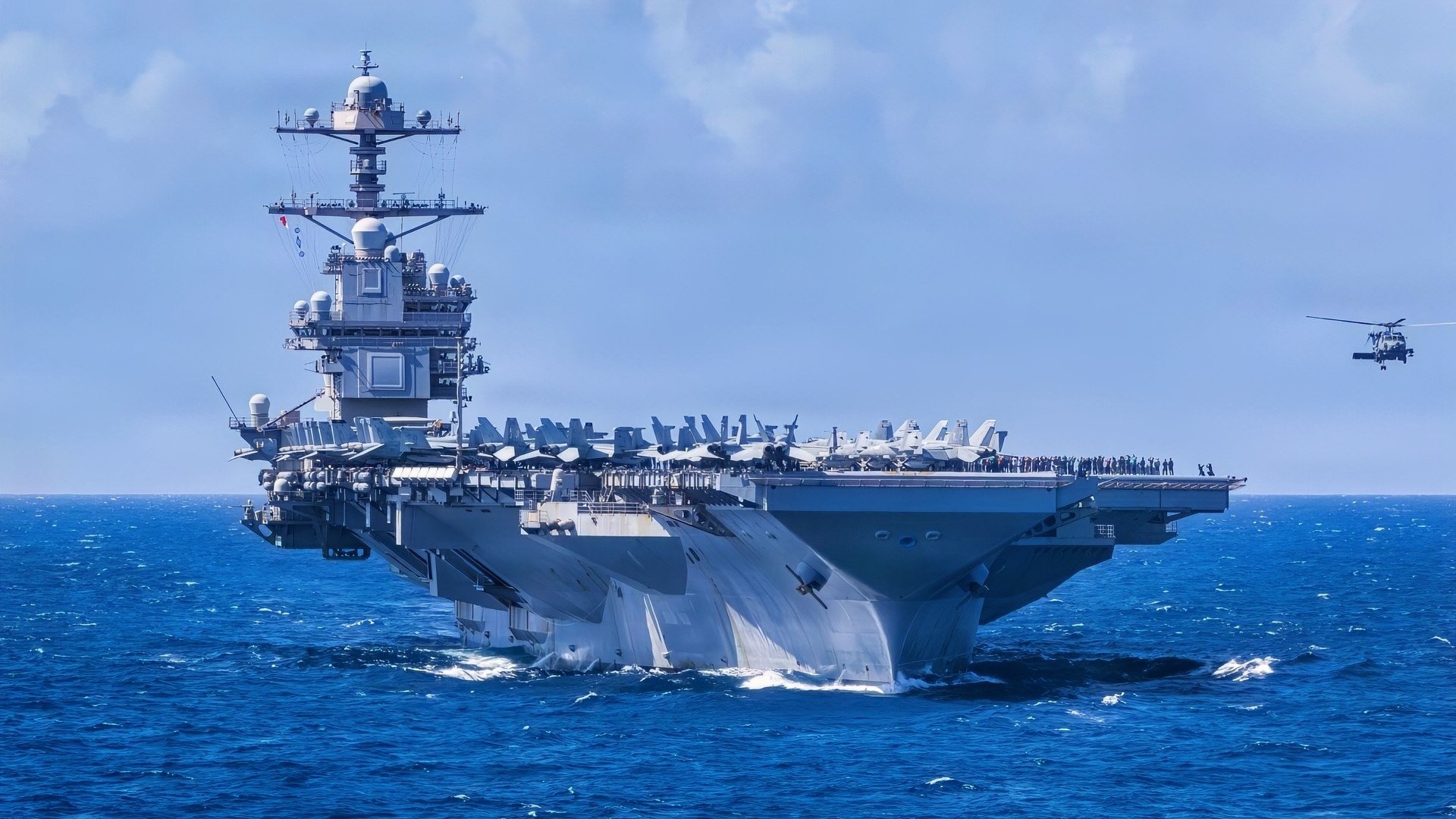
U.S. Navy Carrier Air Wing 8 aircraft fly in formation over the world’s largest aircraft carrier, Ford-class aircraft carrier USS Gerald R. Ford (CVN 78), during Carrier Air Wing 8’s aerial change of command ceremony while underway in the Caribbean Sea, Jan. 19, 2026. U.S. military forces are deployed to the Caribbean in support of the U.S. Southern Command mission, Department of War-directed operations, and the president’s priorities to disrupt illicit drug trafficking and protect the homeland. (U.S. Navy photo)
Fears rightly abound among American naval experts that, after the proxy wars of Iran and Ukraine eventually end, the great power war between the United States, Russia, and China will begin in earnest. Under those conditions, the Americans will be severely depleted and strained at precisely the moment the military needs to be in peak operational shape.
And let us remember that, while the Ford’s deployment has been prolonged, it has not been the longest carrier deployment in history. Many US carriers deployed to Southeast Asia in support of the Vietnam War for far longer than the USS Gerald R. Ford has been deployed.
And let us not even get started on the severity and duration of deployments during the Second World War.
Nevertheless, the Ford has not fared well. Its crew is irate. The ship couldn’t even maintain habitability. And it highlights a much larger issue with all of America’s carriers. They are far too complex for their own good. You see, despite being a warfighting platform, they are not meant to be used in continuous crisis-response missions, contrary to how many Americans assume.
That’s because American carriers are designed around deployment-maintenance-training cycles.
When they are used in continuous operations, as the Ford has been in the last 11 months, crew fatigue and maintenance backlogs accumulate, leading to the various disasters we saw occur aboard the USS Gerald R. Ford.
Sad Supercarrier: Fire, Sewage Failures, and Crew Exhaustion at Sea
There are 650 toilets aboard the USS Gerald R. Ford that is designed to carry a total of 5,000 personnel. Those 650 toilets are separated into clusters of ten throughout the entire ship. They utilize a specialized vacuum-suction system, rather than traditional gravity plumbing.
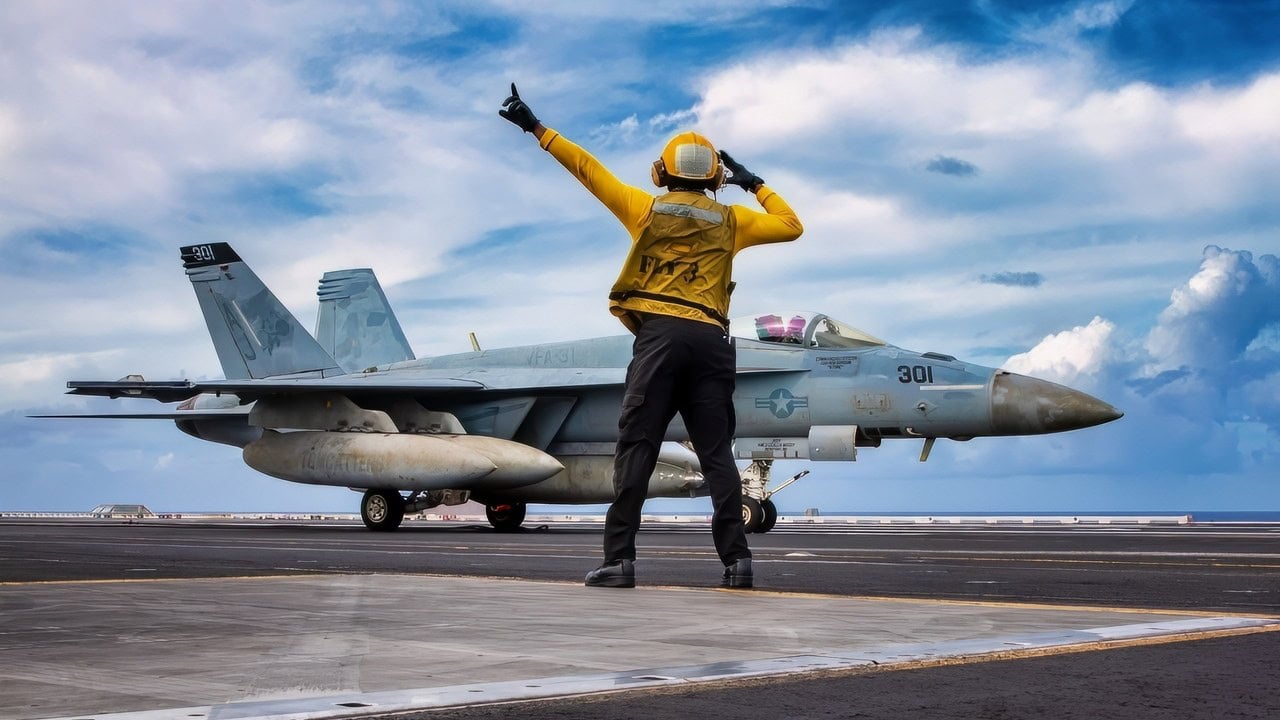
Ford-Class Aircraft Carrier. Image Credit: Creative Commons.

Aircraft Carrier USS Gerald R. Ford Diagram. Image Credit: Creative Commons.
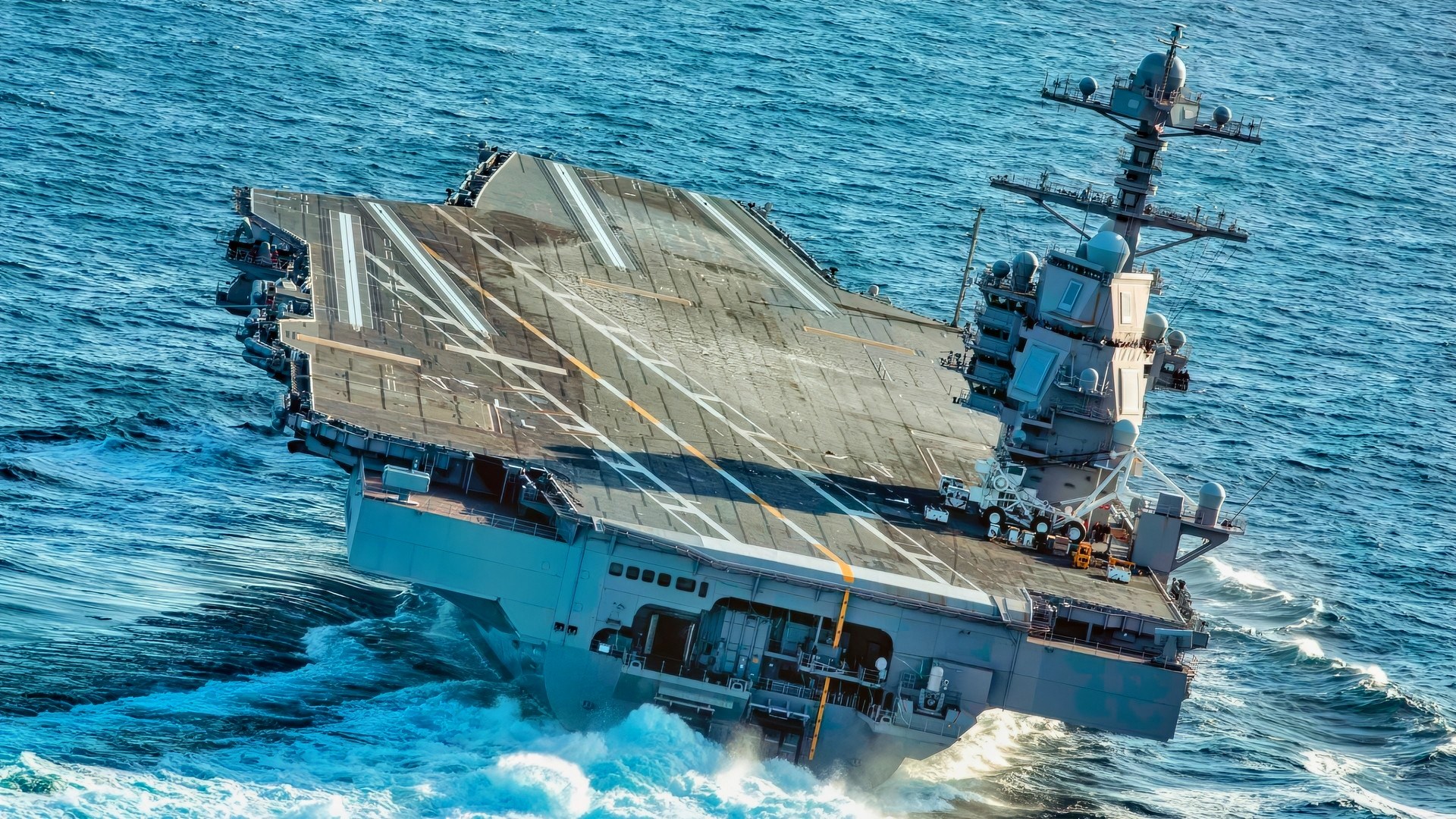
USS Gerald R. Ford (CVN 78) conducts high-speed turns in the Atlantic Ocean. Ford is at sea conducting sea trials following the in port portion of its 15 month post-shakedown availability. (U.S. Navy photo by Mass Communication Specialist 3rd Class Connor Loessin)
What’s more, there is apparently a single valve, known as the Vacuum Collection, Holding and Transfer (VCHT) System (similar to those found on cruise ships) through which all the waste onboard is meant to winnow down to the bowels of the great ship.
That valve sometimes breaks. And when it does, the entire onboard sewage system is compromised. This is part of the reason behind the problems that highlighted the ship’s arrival in the CENTCOM Area of Responsibility (AOR) in the run-up to the ongoing Iran War.
Rumors abounded that the crew was sabotaging the toilets as part of some opposition to participating in the Iran War. That has never been confirmed.
And we do know that the VCHT was so damaged that the ship’s maintenance teams were running 19-hour days trying to keep the sewage system operational.
Finally, as Gerald R. Ford transitioned over to the Arabian Sea to join the USS Abraham Lincoln, the ship was engulfed in flames. We are told by official sources that the aft laundry area caught fire. Smoke injuries were endured by around 200 sailors on board. There was damage to the berthing spaces (the crew’s sleeping and living quarters). As a result of this, around 600 sailors were displaced from their bunks.
The ship was finally diverted to Souda Bay, Crete, for repairs. The Navy says the ship stayed operational, but the fact that a support-area fire forced a port call during combat operations is significant.
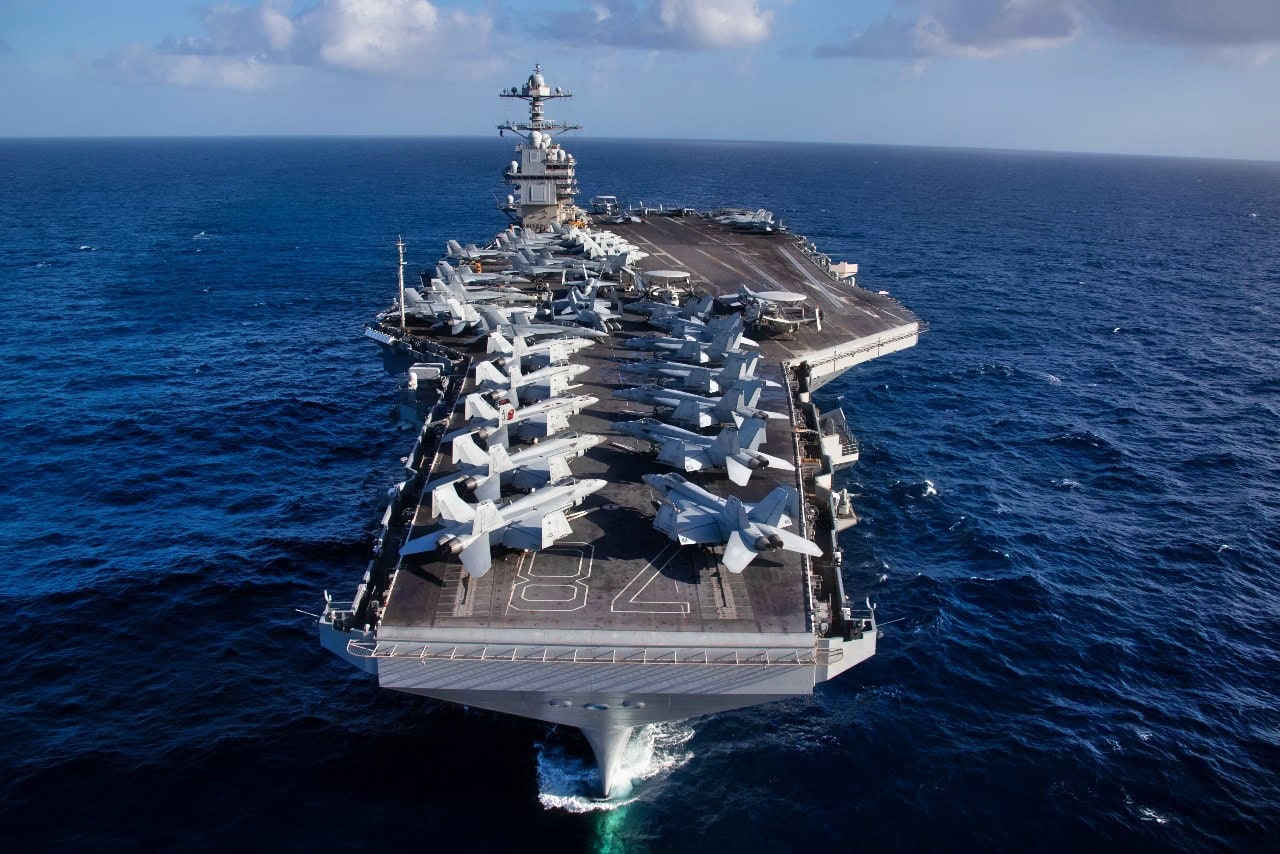
The world’s largest aircraft carrier USS Gerald R. Ford (CVN 78), steams in the Mediterranean Sea, Dec. 24, 2023. The Gerald R. Ford Carrier Strike Group is currently operating in the Mediterranean Sea. The U.S. maintains forward-deployed, ready, and postured forces to deter aggression and support security and stability around the world. (U.S. Navy photo by Mass Communication Specialist 2nd Class Jacob Mattingly)
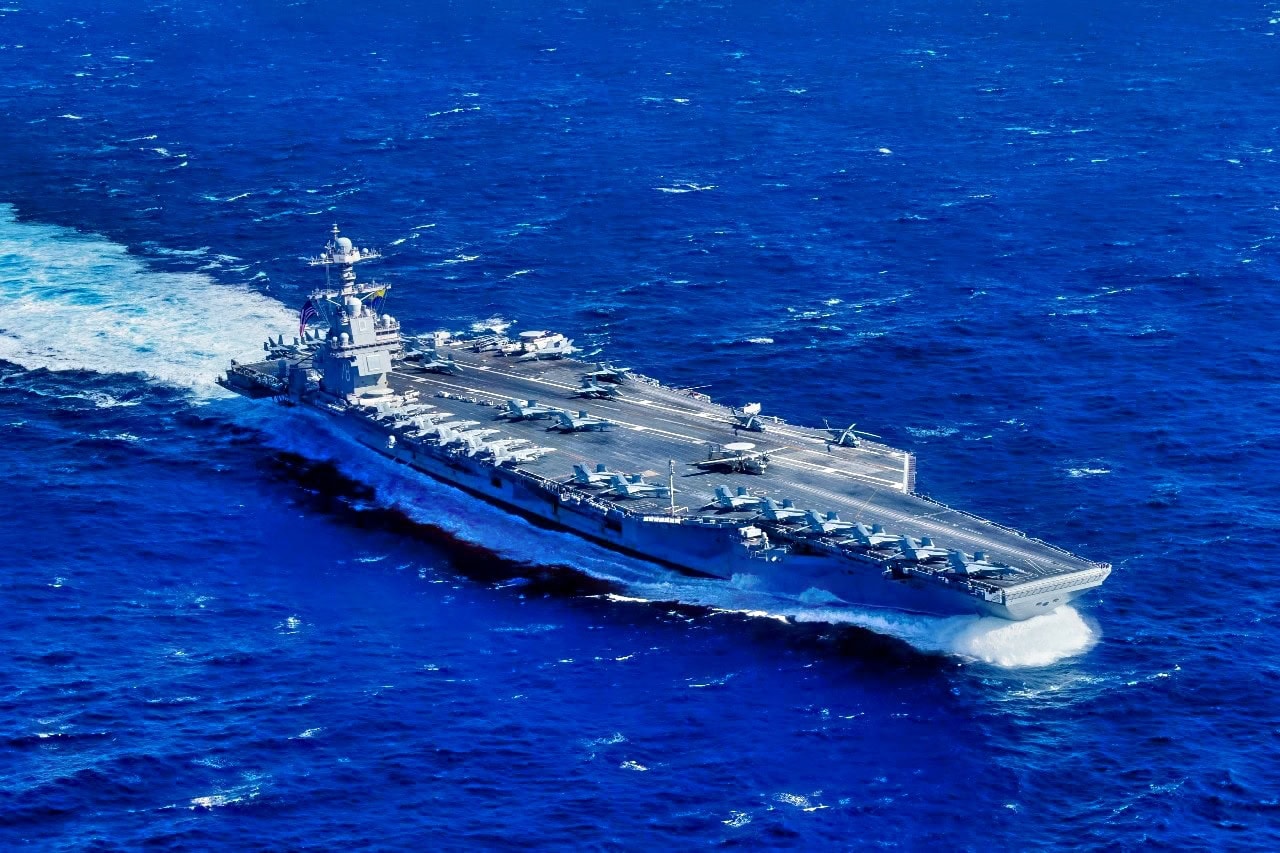
The world’s largest aircraft carrier, USS Gerald R. Ford (CVN 78), sails in formation with the Arleigh Burke-class guided missile destroyers USS Winston Churchill (DDG 81), USS Mitscher (DDG 57), USS Mahan (DDG 72), USS Bainbridge (DDG 96), and USS Forrest Sherman (DDG 98) in the Atlantic Ocean, Nov. 12, 2024. The Gerald R. Ford Carrier Strike Group is underway in the Atlantic Ocean completing Group Sail. Group Sail is the first at-sea integrated phase training event during a routine deployment training cycle. It is designed to challenge the Gerald R. Ford CSG’s ability to use the capabilities of the USS Gerald R. Ford (CVN 78), USS Winston S. Churchill (DDG 81), Carrier Air Wing (CVW) 8, Destroyer Squadron (DESRON) 2, and embarked Information Warfare team as a cohesive Strike Group to meet Navy and Joint Warfighting requirements that increases warfighting capability and tactical proficiency across all domains. (U.S. Navy photo by Mass Communication Specialist 2nd Class Maxwell Orlosky)
Fewer Carriers, More Wars, No Margin for Errors
Ford’s temporary withdrawal had immediate consequences on the US force posture. It reduced US carrier presence in the Middle East. Other carriers are not ready to replace it quickly. Maintenance backlog is a growing crisis across the fleet. One report noted the US was down to one carrier in the theater after the Ford left.
After this crisis, the Navy decided to extend the service life of the USS Nimitz, which was set to be decommissioned earlier this month.
A Navy Built for Peacetime Facing Constant War
Bottom line: the aircraft carrier fleet is stretched too thin.
The US defense industrial base—notably its naval shipyards—is too slow in turning around ships that come in for repair and overhaul. The shortage of carriers, combined with the high operational tempo, means ships are deployed longer, leading to all-important maintenance cycles slipping. This is all occurring at a time when high-intensity war is becoming the norm.
What we have here is an example of a Navy designed for peacetime, not for constant high-intensity war.
The recent hellish experiences of the USS Gerald R. Ford are indicative of a much wider set of problems facing the US Navy—and a warning sign for the whole fleet and the sclerotic industrial base that supports that ailing fleet.
About the Author: Brandon J. Weichert
Brandon J. Weichert is the Senior National Security Editor at 19FortyFive.com. Recently, Weichert became the editor of the “NatSec Guy” section at Emerald.TV. He was previously the senior national security editor at The National Interest. Weichert is the host of The National Security Hour on iHeartRadio, where he discusses national security policy every Wednesday at 8pm Eastern. He hosts a companion show on Rumble entitled “National Security Talk.” Weichert consults regularly with various government institutions and private organizations on geopolitical issues. His writings have appeared in numerous publications, among them Popular Mechanics, National Review, MSN, and The American Spectator. And his books include Winning Space: How America Remains a Superpower, Biohacked: China’s Race to Control Life, and The Shadow War: Iran’s Quest for Supremacy. Weichert’s newest book, A Disaster of Our Own Making: How the West Lost Ukraine, is available for purchase wherever books are sold. He can be followed via Twitter/X @WeTheBrandon.