
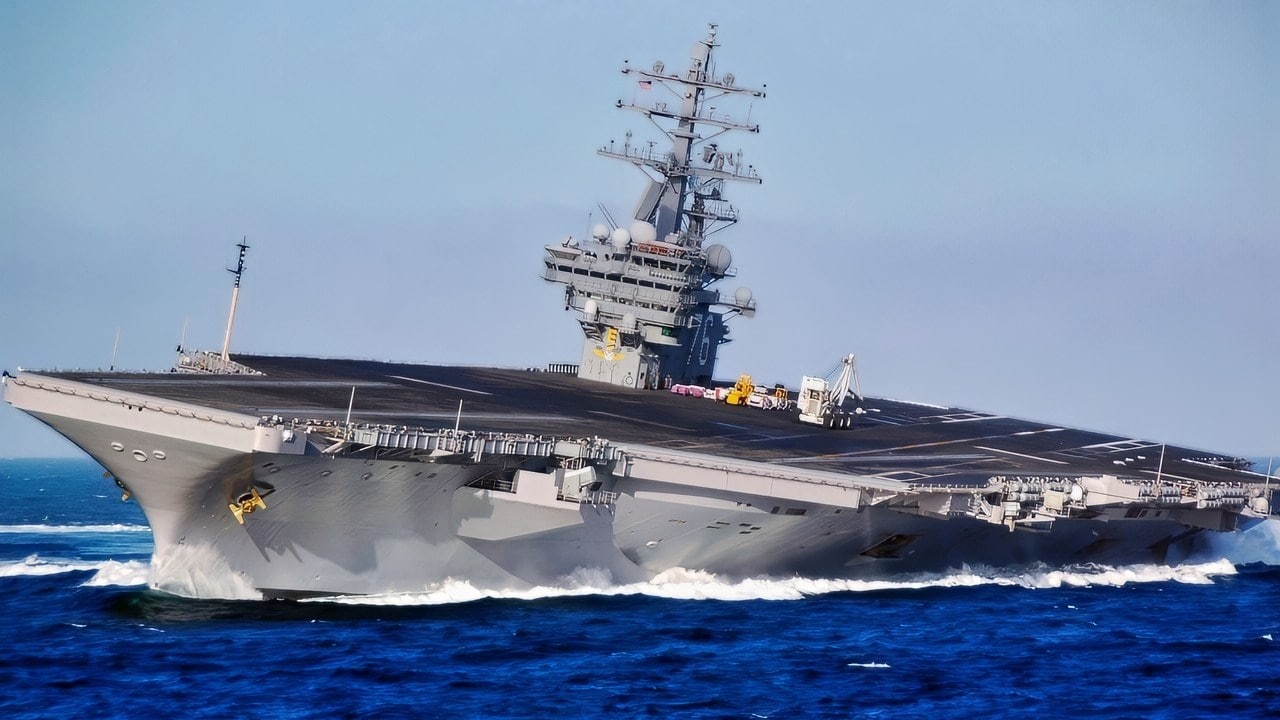
So, we’re doing this. Again. After talks between the US and Iranian delegations collapsed over the course of twenty-one hours in Pakistan, President Trump has ordered another escalation. Instead of destroying a civilization, Trump has settled upon a novel way of ending the war and opening the Strait of Hormuz: a naval blockade of Iranian ports inside and outside the Persian Gulf.
The Iran Blockade?
Although details remain sparse, it seems that the United States Navy will be directed to establish what amounts to a double blockade of the Strait, which, during peacetime, channels much of the world’s energy and fertilizer needs.
This will prevent Tehran from profiting from tolls that Iran’s Revolutionary Guard has been charging for entry and exit to the Persian Gulf, thereby increasing the financial and economic pressure on the Islamic Republic. It will also increase the strain that this war has imposed upon the global economy.
Military Requirement
The details of the operation have yet to come into focus. The US Navy has significant forces deployed in the Persian Gulf, and the threat of boarding and seizure would likely deter most traffic.
Trump also declared that the USN would begin mine-hunting operations in the Strait, a move previewed by the entry of two destroyers yesterday.
The requirements for carrying out the blockade probably won’t overly tax US Navy capabilities, depending on whether any or many countries decide to test US commitment. Trump announced that ships leaving from non-Iranian ports would not be subject to the blockade, although the fact that they would be subject to Iranian attack makes that declaration effectively meaningless.
In the medium term, Iran has excellent military options for retaining control of the Strait, while the United States lacks effective options for seizing it. US ships attempting to force the Strait in a non-cease-fire situation would face an array of Iranian capabilities that could, if the Iranians get lucky, inflict serious damage on US vessels.
Economic and Financial Impact
Iran’s financial windfall over the past four weeks starkly contrasts with the performance of Iranian forces in the field.
Iran’s extraction of tolls from ships transiting the Strait clearly placed the regime on firmer financial footing, with ship owners paying in crypto for safe passage. Tehran only recently survived a financial crisis that nearly brought the Islamic Republic to its knees, and the financial windfall produced by the tolls has undoubtedly shored up the regime.
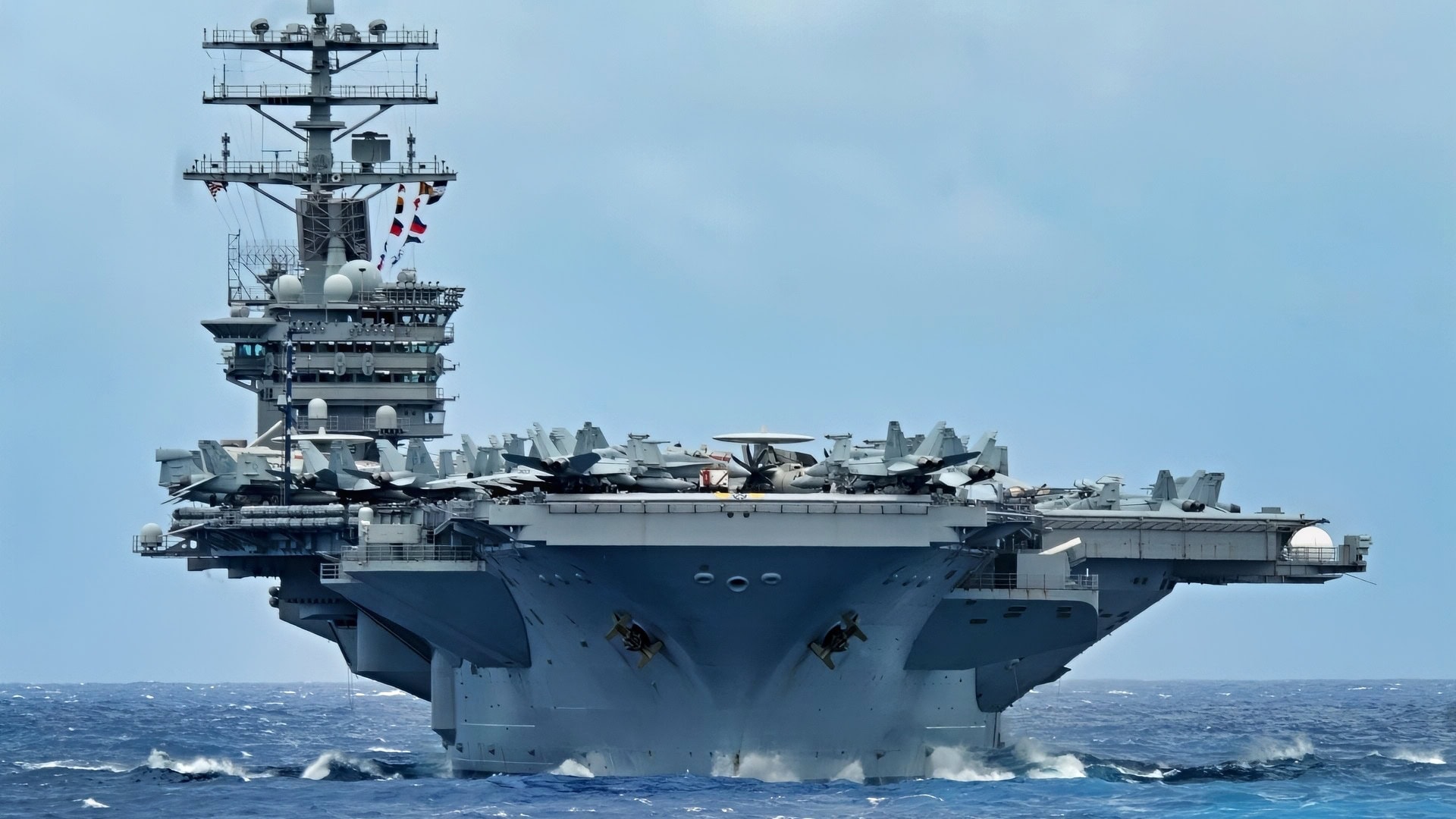
(July 18, 2012) – The aircraft carrier USS Nimitz (CVN 68) moves into formation for a photo exercise during the Great Green Fleet Demonstration as part of Rim of the Pacific (RIMPAC) 2012. Nimitz is currently underway participating in RIMPAC. Twenty-two nations, more than 40 ships and submarines, more than 200 aircraft and 25,000 personnel are participating in RIMPAC exercise from Jun. 29 to Aug. 3, in and around the Hawaiian Islands. The world’s largest international maritime exercise, RIMPAC provides a unique training opportunity that helps participants foster and sustain the cooperative relationships that are critical to ensuring the safety of sea lanes and security on the world’s oceans. RIMPAC 2012 is the 23rd exercise in the series that began in 1971. (U.S. Navy photo by Mass Communication Specialist 2nd Class Eva-Marie Ramsaran/RELEASED)
More broadly, Iran’s assertion of control over the Strait sharply reduced traffic and increased global oil prices.
At the time of this writing, it remains unclear how the financial markets will react.
Markets reacted very positively to the announcement of a cease-fire on Tuesday, but that reaction was predicated on the expectation that normal transit through the Gulf would soon resume.
The collapse of talks and the announcement of this blockade will undoubtedly affect investor decisions. The President’s advisors are clearly aware of the damage that the war is inflicting upon the US economy and upon the midterm election prospects of the Republican Party.
Diplomatic Impact
Iran has made clear that it regards the imposition of a blockade as an act of war, a position that is fully in sync with most understandings of international maritime law.
While the President has asserted that other countries will join with the United States to assist in the blockade, no major navies have yet announced an intention to participate, as this would also place them legally at war with Iran.
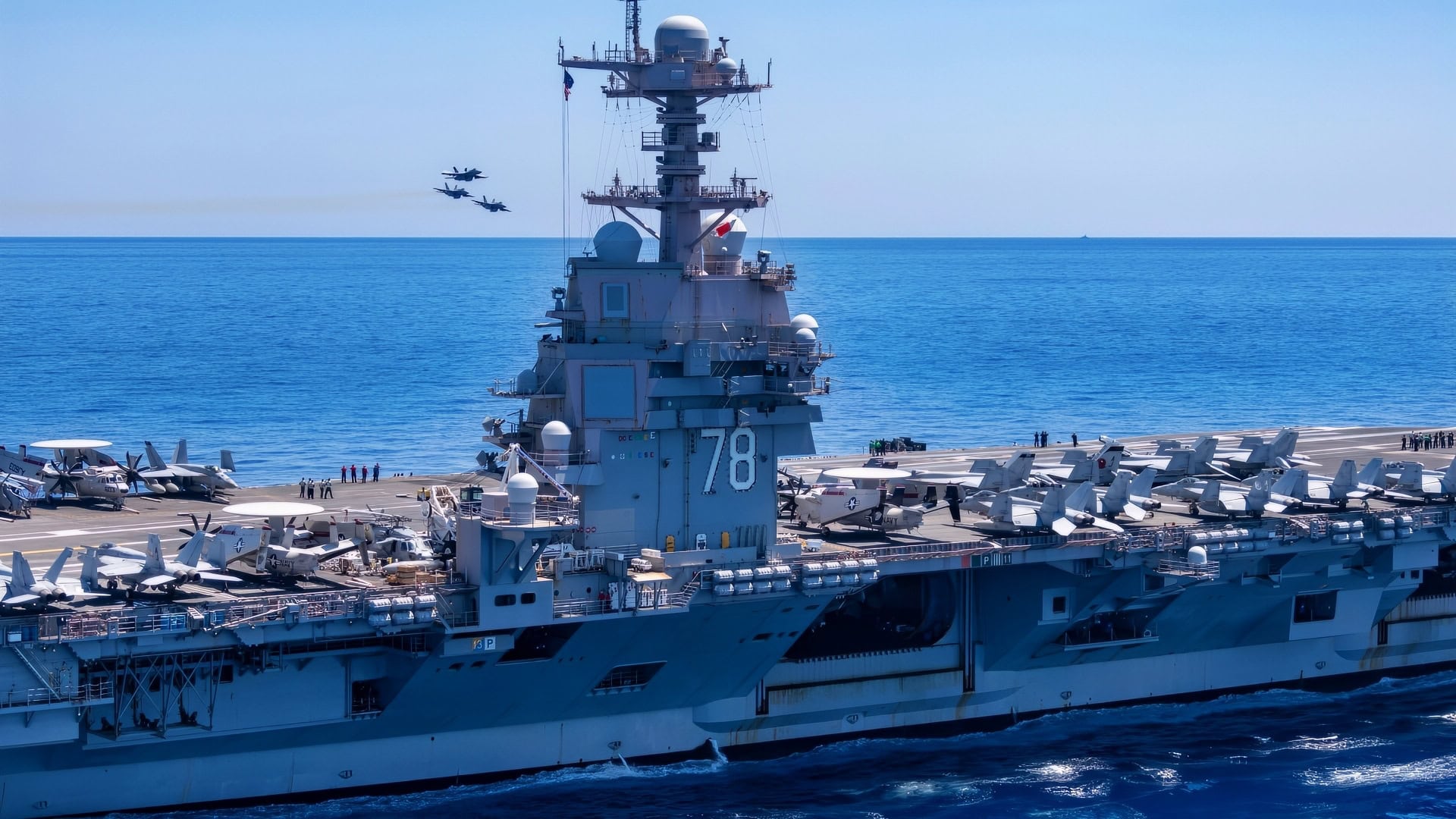
Carrier Air Wing 8 F/A-18E Super Hornets attached to Strike Fighter Squadron 37 fly by the world’s largest aircraft carrier, USS Gerald R. Ford (CVN 78), during the squadron’s in-flight change of command ceremony, August 1, 2025. Gerald R. Ford, a first-in-class nuclear aircraft carrier and deployed flagship of Carrier Strike Group Twelve, is on a scheduled deployment in the U.S. 6th Fleet area of operations to support the warfighting effectiveness, lethality, and readiness of U.S. Naval Forces Europe-Africa, and defend U.S., Allied, and partner interests in the region. (U.S. Navy photo by Mass Communication Specialist Seaman Brianna Barnett)
The double blockade is intended to prevent Iran from exporting oil and importing munitions. As noted above, it will also necessarily limit the transit of oil and petroleum products from the Gulf to customers in Europe and Asia, with potentially dreadful economic effects.
These economic effects are unlikely to assuage international concerns about US policy, especially as it seems that the United States has determined to make a bad situation worse by closing off even the trickles of oil from the Gulf.
But it is early, and Washington apparently hopes that Europeans, faced with economic crisis, will step up in support of the US position.
The Blockade Is Coming: Iran War Back On?
The uneasy cease-fire between Iran and the United States still holds, although it is impossible to say for how much longer. The negotiating teams in Pakistan refused to budge on an array of critical issues, including the Strait, Iran’s nuclear program, and Iran’s support for militia groups across the Middle East.
There seems little doubt that the shooting will resume soon, perhaps as early as Monday morning Eastern Time, when the US blockade is expected to commence. US consumers can expect increased prices across a wide range of goods, not least gasoline.
Unfortunately, a blockade is a long-term strategy that may not see any impact in the near term, even if it is ultimately successful. It is difficult to see at the moment how this blockade improves anyone’s position, least of all the United States.
About the Author: Dr. Robert Farley
Dr. Robert Farley has taught security and diplomacy courses at the Patterson School since 2005. He received his BS from the University of Oregon in 1997 and his Ph. D. from the University of Washington in 2004. Dr. Farley is the author of Grounded: The Case for Abolishing the United States Air Force (University Press of Kentucky, 2014), the Battleship Book (Wildside, 2016), Patents for Power: Intellectual Property Law and the Diffusion of Military Technology (University of Chicago, 2020), and most recently Waging War with Gold: National Security and the Finance Domain Across the Ages (Lynne Rienner, 2023). He has contributed extensively to a number of journals and magazines, including the National Interest, the Diplomat: APAC, World Politics Review, and the American Prospect. Dr. Farley is also a founder and senior editor of Lawyers, Guns and Money.