

Even before the outbreak of Operation Epic Fury, which is now paused due to a ceasefire, Iran’s naval capabilities were not all that impressive compared to those of the United States. However, the Islamic Republic of Iran Navy (IRIN) maintained a small number of Kilo-class submarines acquired from Russia in the 1990s. What many call the ‘black hole‘.
Domestically known as the Tareq-class, these submarines are renowned for their stealth and are among the deadliest naval vessels in Iran’s inventory.
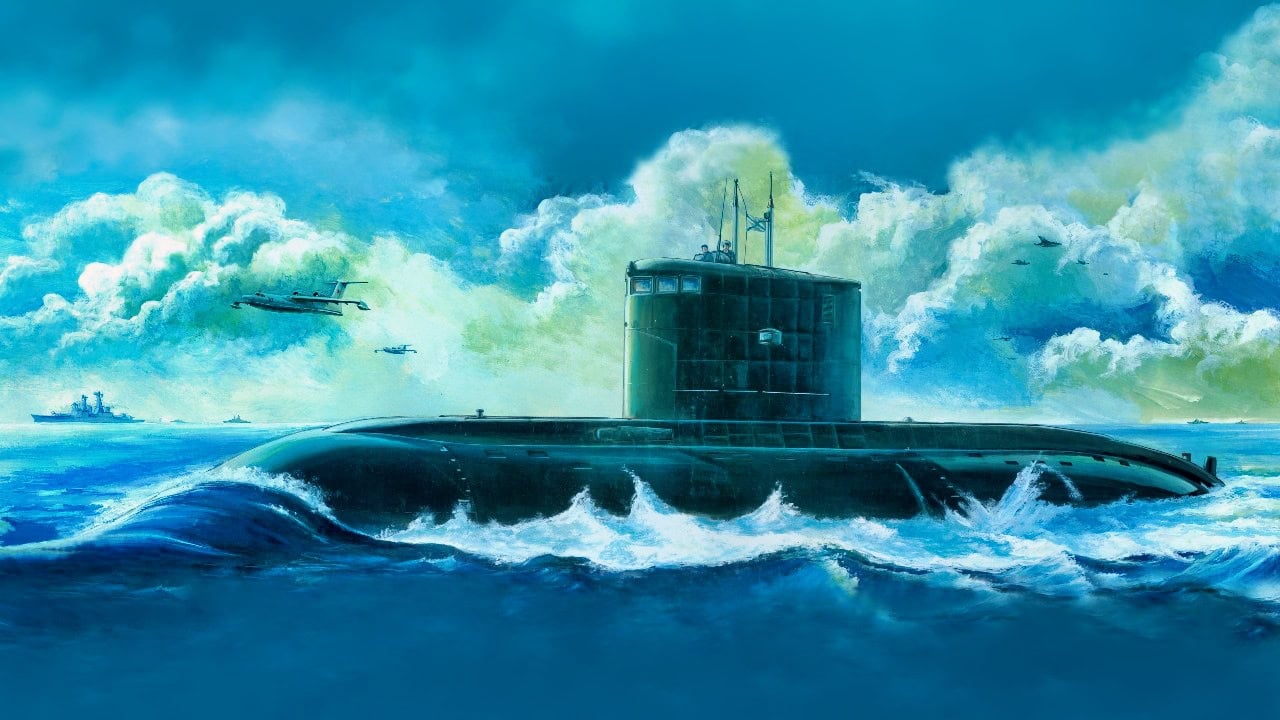
Kilo-Class Submarine
Even today, although the IRIN has lost many vessels, its Kilo-class submarines still remain active, although they have been seemingly absent from combat so far. Where did they go? Were they all destroyed, and hasn’t it been reported?
Iran’s Kilo-class: Where Are They Now?
In the first weeks of combat operations, the U.S. struck several IRIN naval vessels in port, along with several bases and valuable infrastructure.
According to U.S. CENTCOM, nine vessels were destroyed, and the main headquarters of the IRIN were struck by B-2 Spirit bombers.
The goal of these attacks was reportedly to prevent the Iranian Navy from closing the Strait of Hormuz.
While the attacks ultimately failed in this goal, they did succeed in dealing significant damage to Iran’s naval capabilities, particularly its surface fleet, which now relies on small speed boats to harass merchant vessels.
What the attacks did not seem to hit was any of Iran’s Kilo-class submarines. At least, as far as we know.
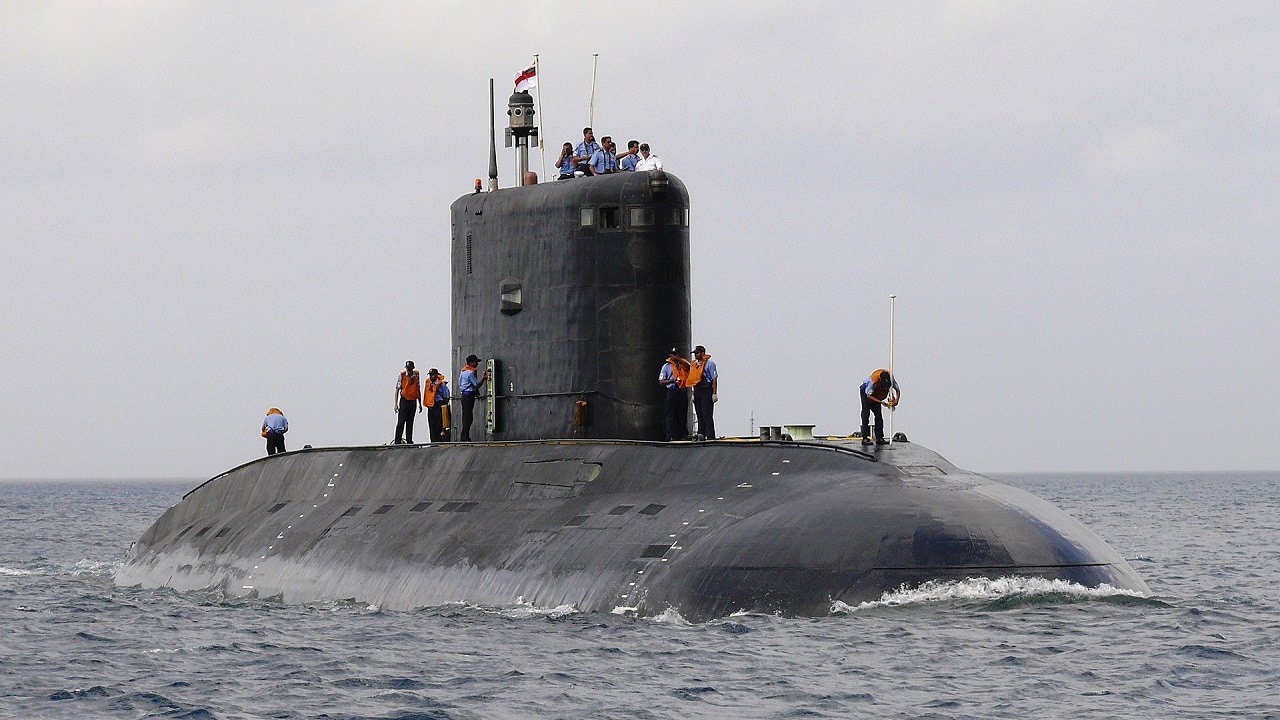
Kilo-Class Submarine.
In fact, one submarine, which was previously in dry dock undergoing modernization, returned to service just days before hostilities began.
The IRIN operates only three of these Russian-made submarines, and based on all evidence, at least one has been visually confirmed to be destroyed.
It is likely that these valuable subs have been used to mine the Strait of Hormuz and are currently patrolling in Iran’s territorial waters to deter any activity from the U.S. Navy.
Because of their high value, Iran’s Kilos are likely high-priority targets for the U.S. While two subs still remain a threat, their scarcity limits their capabilities and their threat to the U.S. Navy.
How Iran Got Russian-Made Submarines
Iran first started pursuing submarine procurements after the Iran–Iraq War between 1980 and 1988.
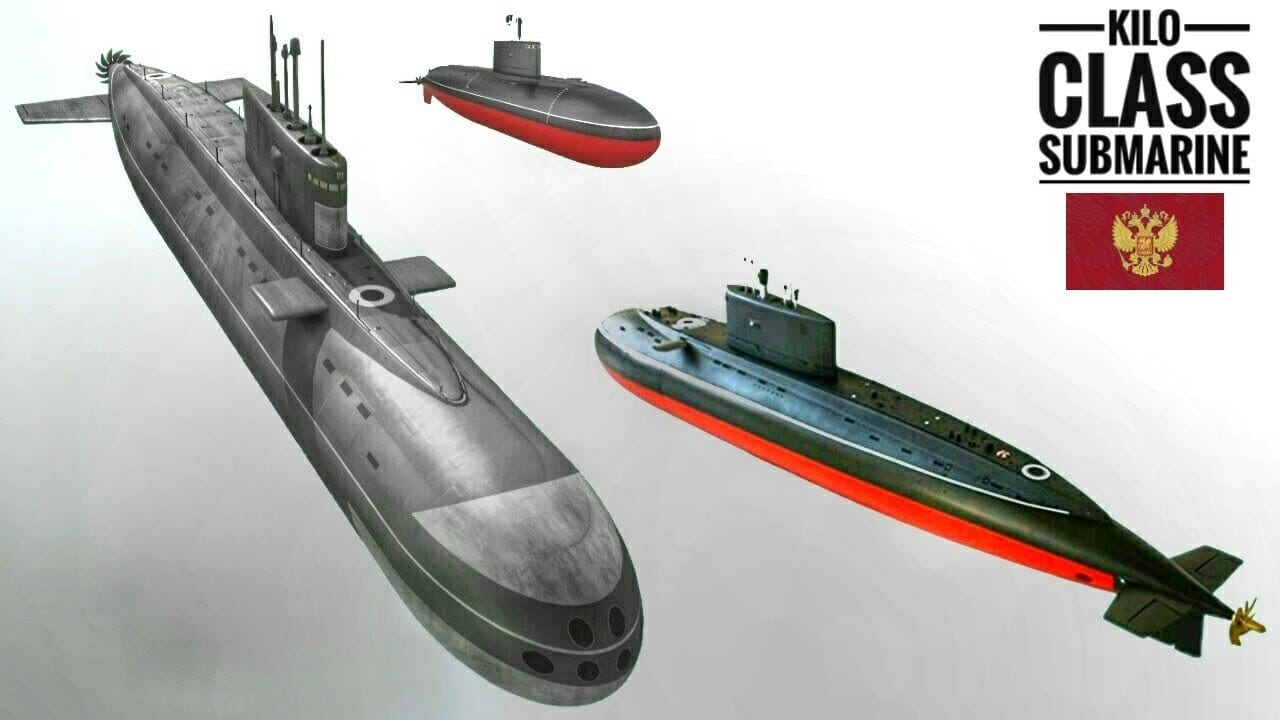
Kilo-class Submarine. Image Credit: Creative Commons.
During that conflict, Iran’s navy suffered heavy losses, particularly among its surface combatants, many of which were damaged or destroyed by Iraqi airpower and missiles.
The war convinced the IRIN that traditional surface fleets were acutely vulnerable and that future maritime defense would require platforms capable of surviving in a contested, missile-saturated environment. Submarines, especially diesel-electric attack submarines optimized for stealth, appeared to offer a solution that aligned well with Iran’s economic limitations and its emerging emphasis on asymmetric warfare.
Efforts to acquire submarines predated the Islamic Republic, but it was only after the war that Iran was able to pursue this goal in earnest. The West had no interest in supplying subs to Iran, and pressure from the United States further narrowed Tehran’s options.
The disintegration of the Soviet Union created an unusual opportunity. In 1988, Iran signed a contract with Moscow for three Project 877EKM submarines, an export version of the Kilo-class design that had entered Soviet service earlier in the decade. These submarines featured modifications allowing them to operate more reliably in warm, saline waters, conditions typical of the Persian Gulf and Gulf of Oman.
The arrival of the submarines in the early 1990s drew significant international attention.
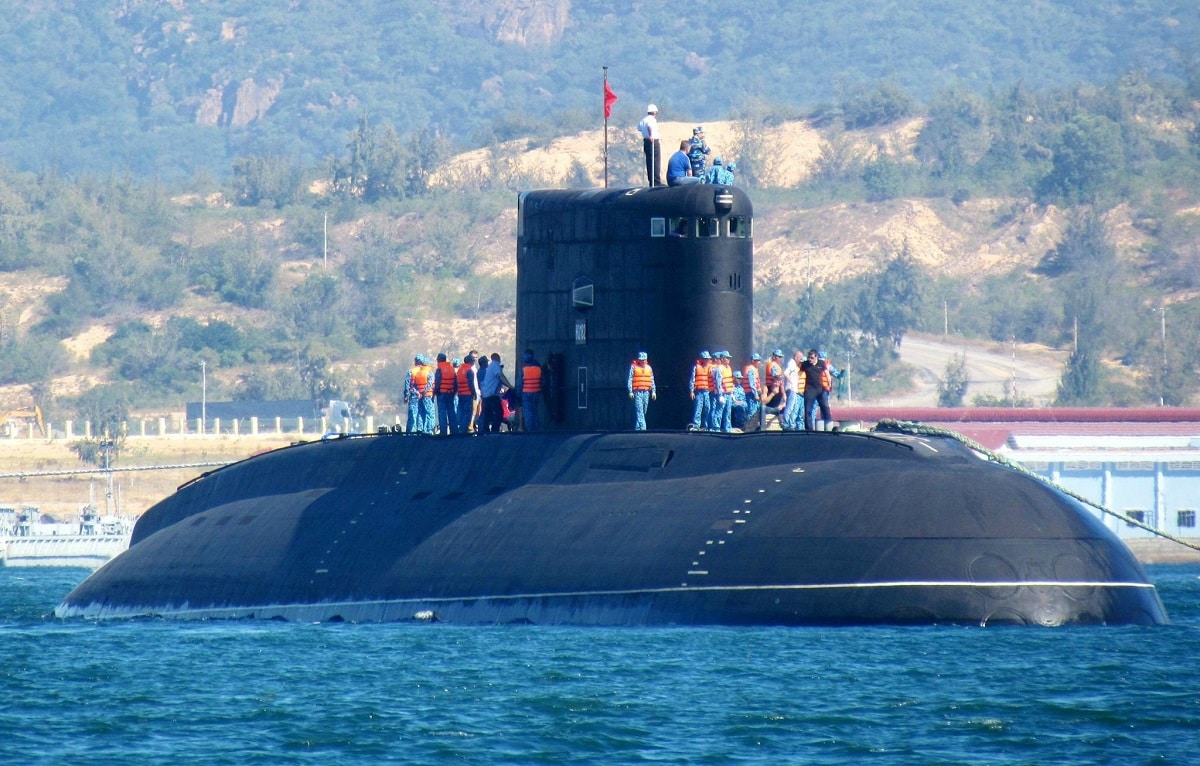
Russia-built Kilo-class Submarine. Image Credit: Creative Commons.
Their transit from Russia to Iran, via the Baltic Sea, the Mediterranean, and the Suez Canal, was closely monitored by Western intelligence services.
The commissioning of IRIS Tareq in 1992, followed by IRIS Nooh in 1993 and IRIS Yunes in 1996, marked the first time Iran possessed modern, ocean-going submarines capable of independent operations.
All three were assigned to Bandar Abbas, Iran’s principal naval base near the Strait of Hormuz, from which they could access not only the Persian Gulf but also the Arabian Sea and the wider Indian Ocean.
Kilo-class Capabilities: The Black Hole
Iran’s Kilo-class submarines are conventional diesel-electric attack boats of roughly three thousand tons submerged displacement, with crews of just over fifty personnel and an endurance of approximately forty-five days.
Their design reflects late Cold War Soviet priorities, placing exceptional emphasis on acoustic stealth.
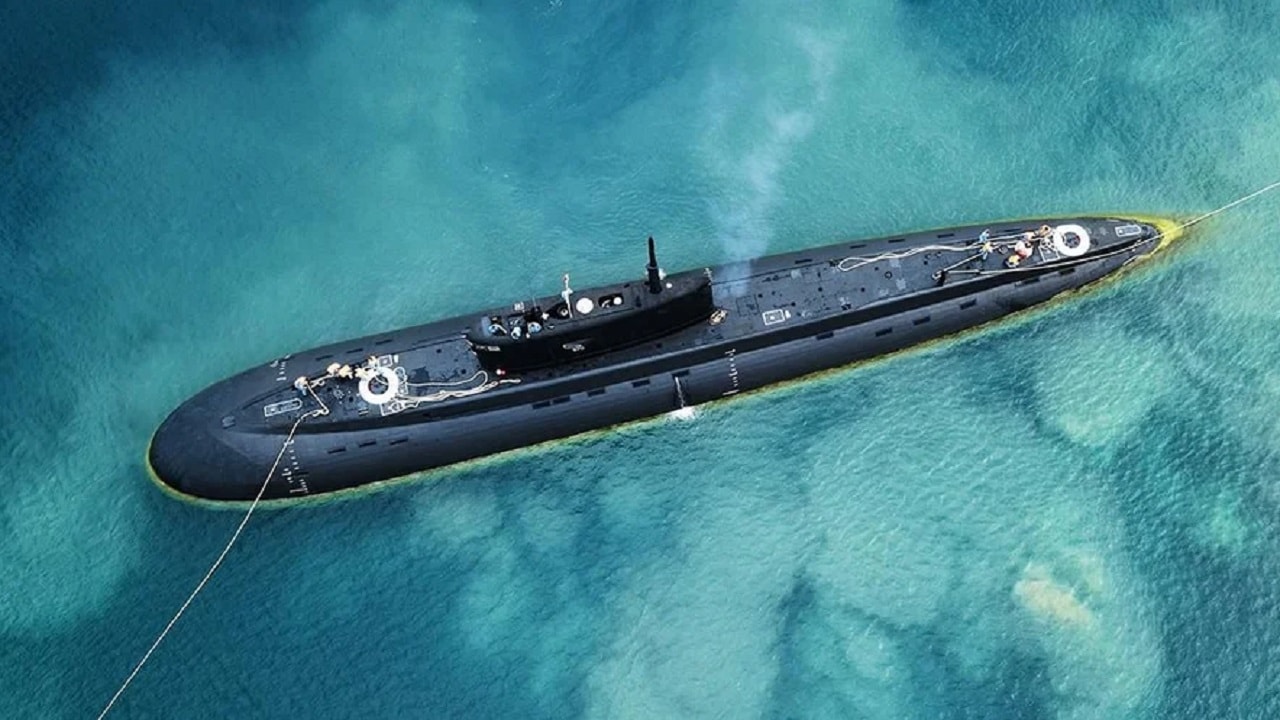
Kilo-Class Submarine. Image Credit: Creative Commons.
When running on batteries rather than diesel engines, Kilo submarines are notoriously quiet, a characteristic that earned them the NATO nickname “Black Hole.”
Although we want to recognize this is a point of debate, as many past and present U.S. Navy officers have called the Kil0-class quite noisy.
The hull is shaped for hydrodynamic efficiency and covered in anechoic tiles intended to absorb active sonar pulses, while internal machinery is isolated to minimize vibration.
At the time of their introduction, these features made Kilo-class submarines particularly challenging to detect, especially in noisy coastal waters.
These submarines are armed primarily with torpedoes and naval mines. Each carries six 533-millimeter torpedo tubes, with the capacity to deploy either heavyweight torpedoes or a substantial load of bottom-laid and moored mines.
For Iran, mine warfare has always been a critical mission. The Strait of Hormuz is narrow, shallow, and heavily trafficked. Despite possessing a navy that is a fraction of the size of the U.S. Navy, the presence of even one of these submarines is enough to significantly disrupt traffic in the Strait.
Their stealth features, despite being several decades old, remain top-of-the-line and pose a significant risk to allied forces in the region.
About the Author: Isaac Seitz
Isaac Seitz, a Defense Columnist, graduated from Patrick Henry College’s Strategic Intelligence and National Security program. He has also studied Russian at Middlebury Language Schools and has worked as an intelligence Analyst in the private sector.