Nine months after Donald Trump declared Iran’s nuclear program ‘obliterated,’ the two countries are negotiating in Pakistan with what the BBC calls a ‘total absence of trust.’ The ceasefire could collapse at any moment — and Trump can’t afford that with a royal visit, a China summit, and midterm elections all on the calendar.
The Iran War: Will the Ceasefire Hold?
After last year’s 12-day war between Israel and Iran, US President Donald Trump announced a “total and complete” ceasefire between the two combatants. Iran’s nuclear program, Trump said at the time, had been “obliterated” and “totally destroyed” by the U.S. strikes. Iran’s retaliation, he said, was “very weak” and resulted in “hardly any damage.”
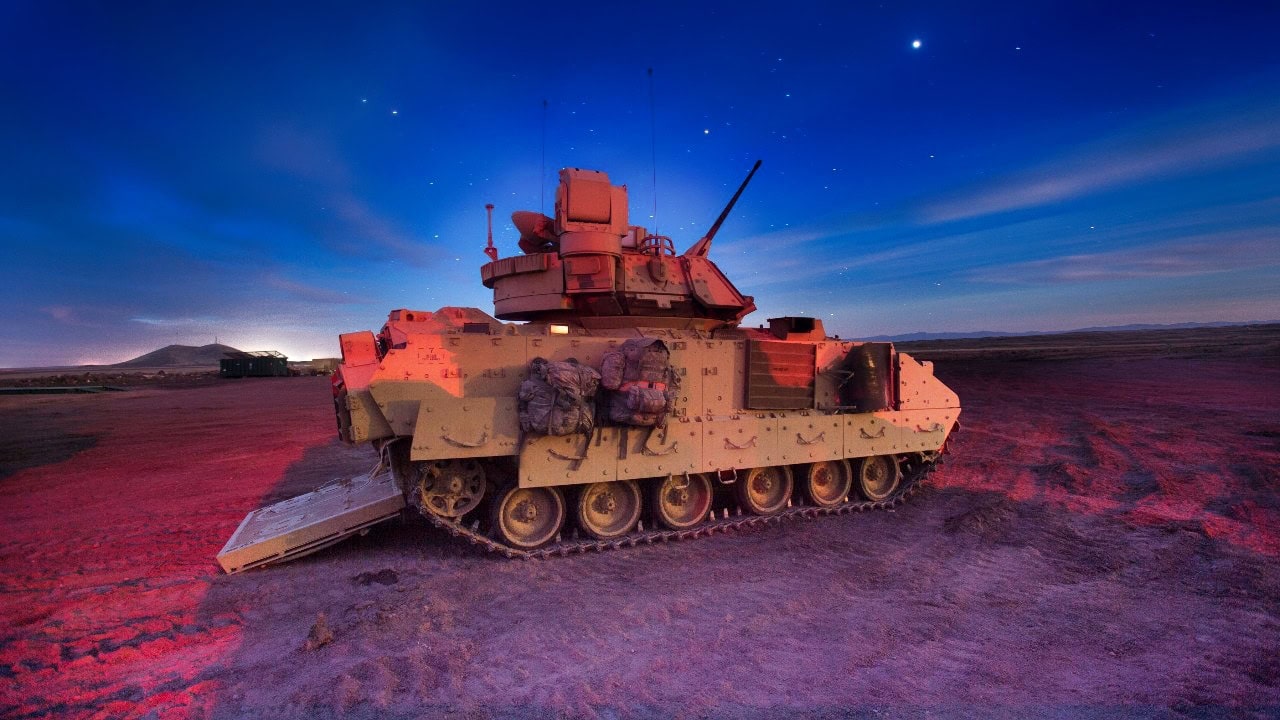
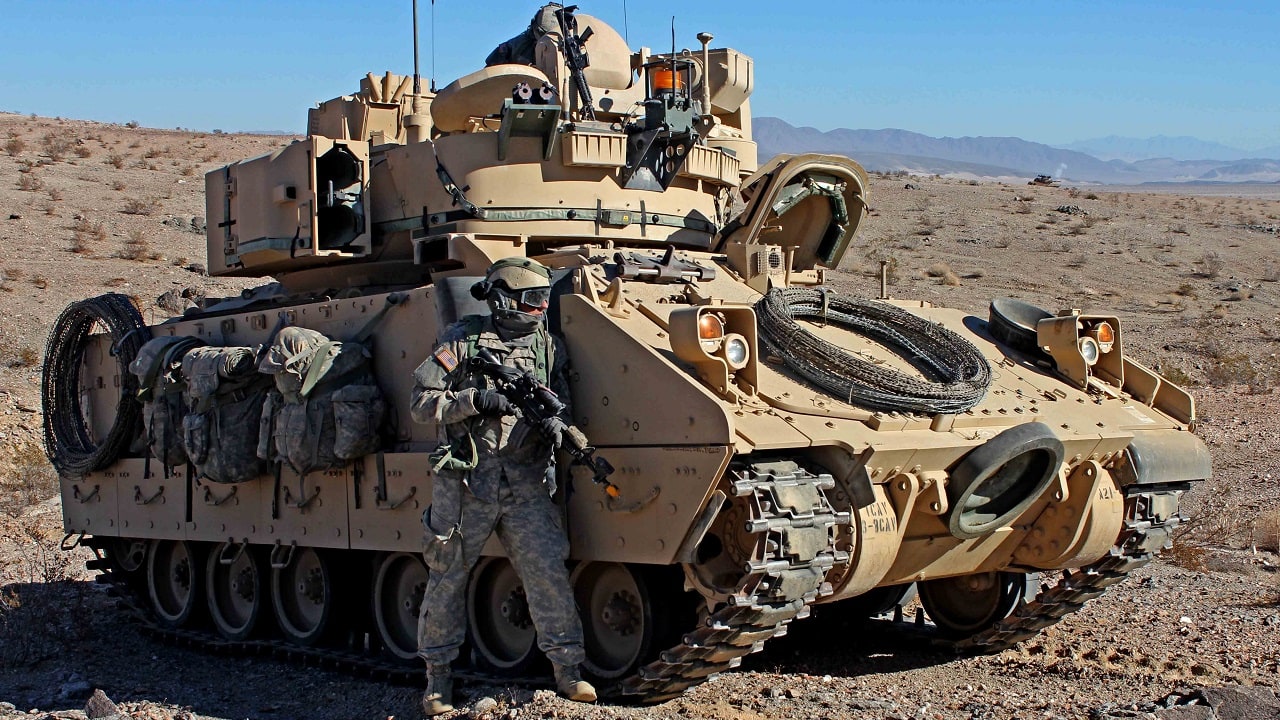
Engineers with the 116th Brigade Engineer Battalion conduct M2A3 Bradley fighting vehicle gunnery qualification on March 27, 2018, Orchard Combat Training Center, south of Boise, Idaho. Combat engineers with the 116th BEB trained through gunnery table XII, evaluating their ability to execute collective platoon-level tasks in a tactical live-fire environment; including integrating dismounted soldiers with their assigned BFV. (U.S. Army National Guard photo by 1LT Robert Barney)
At the time, it was assessed that Trump probably made a crucial mistake in that the ceasefire was not linked to a diplomatic agreement with Iran on the future of its nuclear program. This unresolved issue and all the pitfalls associated with it remain the sticking point between the U.S. and Iran today.
Although nine months have passed since the initial hostilities of last year, and although there is a cessation of active combat — or there will be as soon as every Islamic Revolutionary Guard Corps (IRGC) unit gets the word from on high — the two sides are still far away from a lasting peace.
There is no guarantee that Iran will not continue to develop a nuclear weapon; the Islamic regime and its armed militia are still in charge, and the threat of instability in the region, having a negative effect on the price of oil and other commodities, is still a very probable outcome.
As of late Thursday, April 9, the best hope for the ongoing ceasefire talks in Pakistan is that both the U.S. and Iran have significant incentives to bring the hostilities to an end. But what stands in the way, said the BBC late into the night, is “a total absence of trust” between the two nations.
The Axis of Resistance
The other wild card in the entire equation of what happens next in the almost forgotten and smaller conflict that is ongoing between Israel and Lebanon.
One of Iran’s main proxies for decades now has been Hezbollah, and Tehran views the organization as one of its most vital allies within its “axis of resistance.”
Tehran has now warned that a continuation of Israeli air and missile strikes into Lebanon could also collapse the current but uncertain US-Iran truce.
Iranian officials at this point remain unapologetically prepared to retaliate on behalf of Hezbollah, stating “our hands remain on the trigger.”
A long profile on Iran and the “Axis of Resistance” published just before the same June 2025 conflict with Israel details just how intertwined the issue of Israel and Palestine has become in Tehran’s policy-making apparatus — and how it has reached the point where any Iranian reaction is more a set of reactions that run on autopilot rather than being a product of any rational calculation.
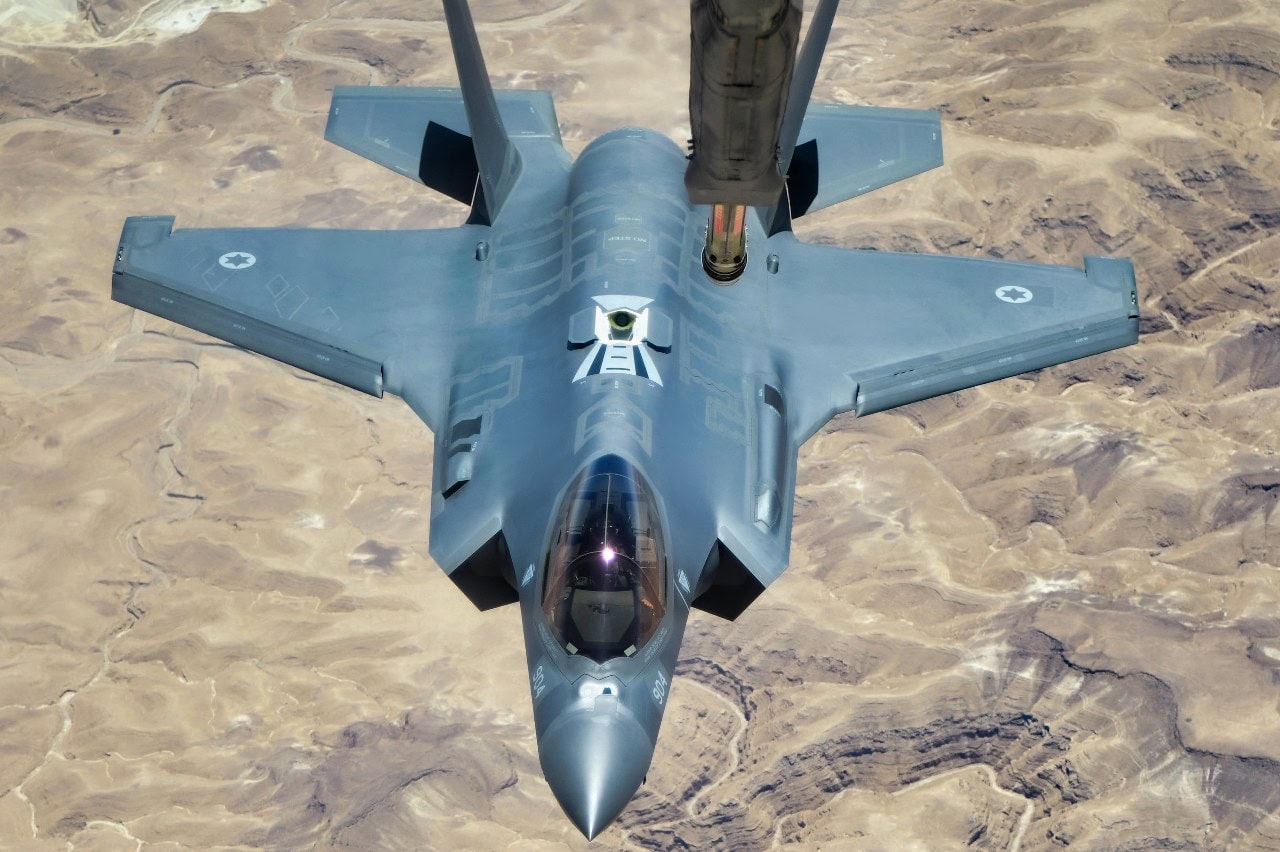
An Israeli Air Force F-35I Lightning II “Adir” approaches a U.S. Air Force 908th Expeditionary Refueling Squadron KC-10 Extender to refuel during “Enduring Lightning II” exercise over southern Israel Aug. 2, 2020. While forging a resolute partnership, the allies train to maintain a ready posture to deter against regional aggressors. (U.S. Air Force photo by Tech. Sgt. Charles Taylor)
“It is a commitment to the Palestinian question emerged from a long history of genuine and sustained — if contested — ideological and political solidarity, one that continues to be espoused, represented, and institutionalised across the Iranian state apparatus,” reads the explanation in this very lengthy essay.
What If the Ceasefire Collapses?
This brings us to the present day, where there are an infinite number of unresolved, deal-breaking issues that could resume the conflict at any moment. These are complicated by the fact that the motivations for the ceasefire to succeed are far greater for the U.S. and its allies than they are for Iran — another factor that could cause the ceasefire to fall apart at any moment.
The simple reasons are that Iran’s situation cannot become too much worse than it already is if hostilities resume. But the aftereffects of a resumption of the shooting war could lead to significant negative blowback.
The first could be an intensified military escalation. Hostilities could re-ignite and become stronger than ever, with a high risk that this time it could escalate into a larger regional conflict.
Secondly, economic disruptions, particularly if the Strait of Hormuz remains even partially blocked, will continue to multiply the damage to the global economy.
Should the negotiations fail to re-open the Strait completely, writes RAND strategic analyst Raphael Cohen in this month’s Foreign Policy, Trump will be left with three options: walk away and declare victory, which would leave Iran in control of the Strait; continue the air campaign, which might bring Iran’s leaders back to the negotiating table; and escalation, which could topple the regime but risks increased costs and “unintended consequences.”
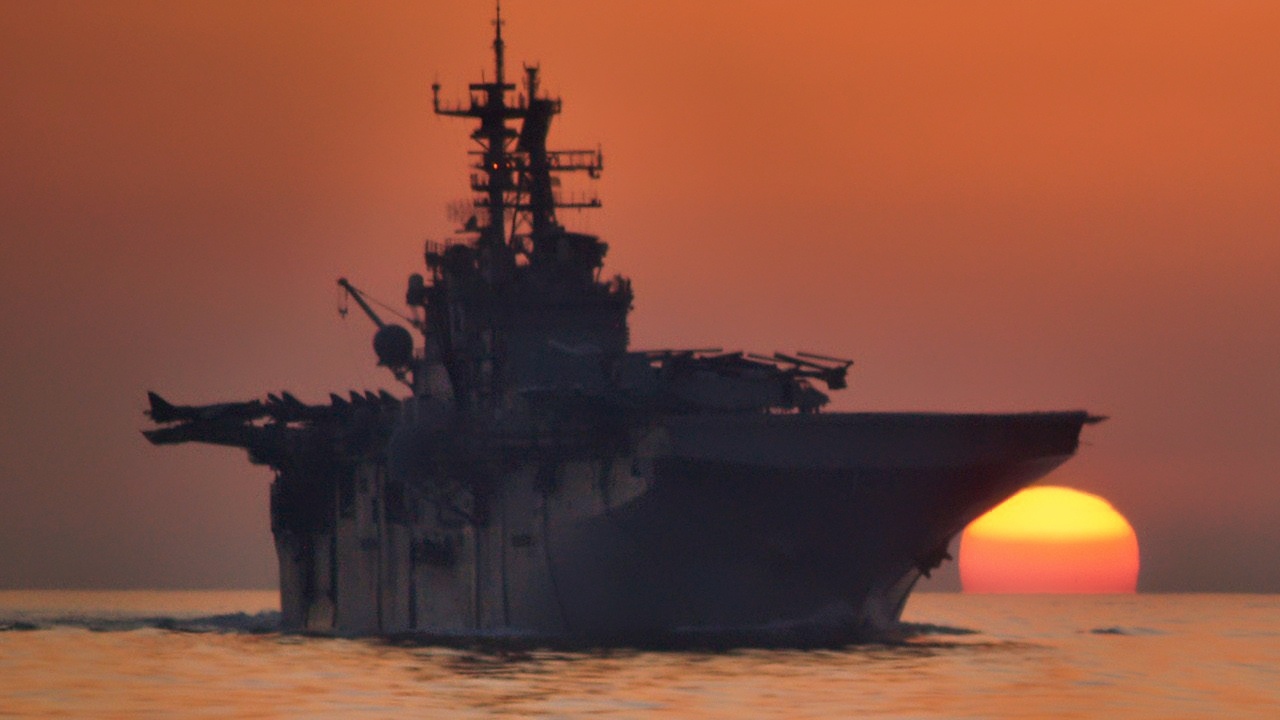
The amphibious assault ship USS Bataan (LHD 5) transits the Strait of Hormuz.
The stakes for the peace deal breaking down are worse for Trump’s political fortunes than for any of the other interested parties.
There are too many major, near-term events coming up that the U.S. President needs to handle without any distractions.
The first of these is a state visit from King Charles later this month.
This will then be followed by the previously delayed summit with the People’s Republic of China’s (PRC) Chinese Communist Party (CCP) General Secretary Xi Jinping in May.
Then come the summer holidays in the U.S., when families rely on lower petrol prices and will be quick to blame the occupant of the Oval Office if they are not already.
After the summer, there will be Congressional midterm elections in November, which will determine whether Trump’s agenda moves forward or stalls.
There is thus the potential for a political deadlock in Washington at the worst possible time.
The two sides present are so very far apart at the negotiating table. Trump is reported to have a 15-point plan that has not been published, but some versions have leaked. It appears to be standard: 150 percent of what he wants in a final agreement with the mullahs.
But those familiar with his “Art of the Deal” negotiating style will tell you that is his standard, Round One positioning in any bargaining process.
Iran has a 10-point plan that includes a list of demands that America has consistently rejected in the past.
Even though this comes from a regime that has murdered 50,000 or more unarmed protestors — including thousands of teens and even some small children — with military-grade automatic weapons, the BBC, CNN, and other outlets are likely to characterize the Iranians’ positions as “far more realistic, reasonable, and show a serious desire to come to terms.”
So, what are the prospects if the ceasefire fails? The most probable answer comes from the old Magic 8 Ball: “Oulook Not So Good.”
About the Author: Reuben F. Johnson
Reuben F. Johnson has thirty-six years of experience analyzing and reporting on foreign weapons systems, defense technologies, and international arms export policy. Johnson is the Director of Research at the Casimir Pulaski Foundation. He is also a survivor of the Russian invasion of Ukraine in February 2022. He worked for years in the American defense industry as a foreign technology analyst and later as a consultant for the U.S. Department of Defense, the Departments of the Navy and Air Force, and the governments of the United Kingdom and Australia. In 2022-2023, he won two awards in a row for his defense reporting. He holds a bachelor’s degree from DePauw University and a master’s degree from Miami University in Ohio, specializing in Soviet and Russian studies. He lives in Warsaw.