
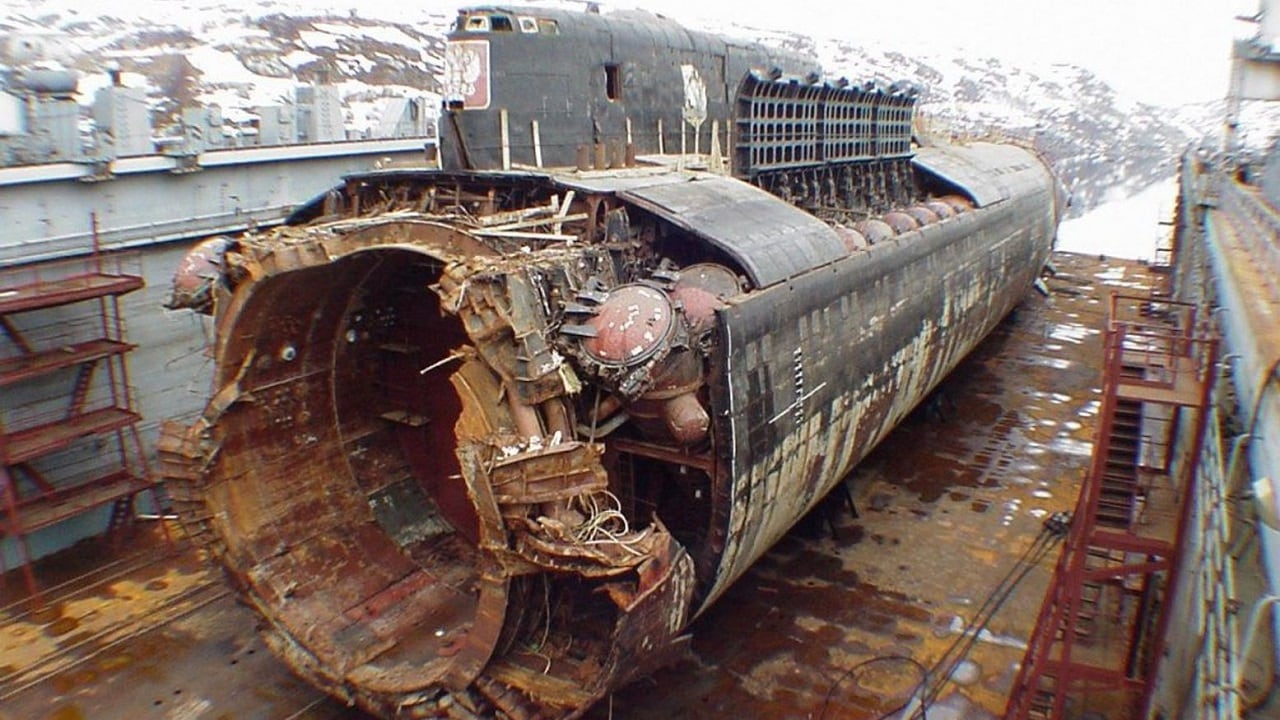
Twenty-three Russian sailors survived the explosion that sank the Oscar-class nuclear submarine Kursk and waited at the bottom of the Barents Sea for a rescue that never came. One of them wrote a note to his wife in the dark.
The Kursk Submarine Tragedy Still Haunts the Russian Navy and Putin
The USS Kursk was a nuclear-powered Russian submarine operated by the Russian Navy. On August 12, 2000, it sank in the Barents Sea, killing all 118 people on board. The tragedy, it appeared, was the result of a torpedo malfunction.
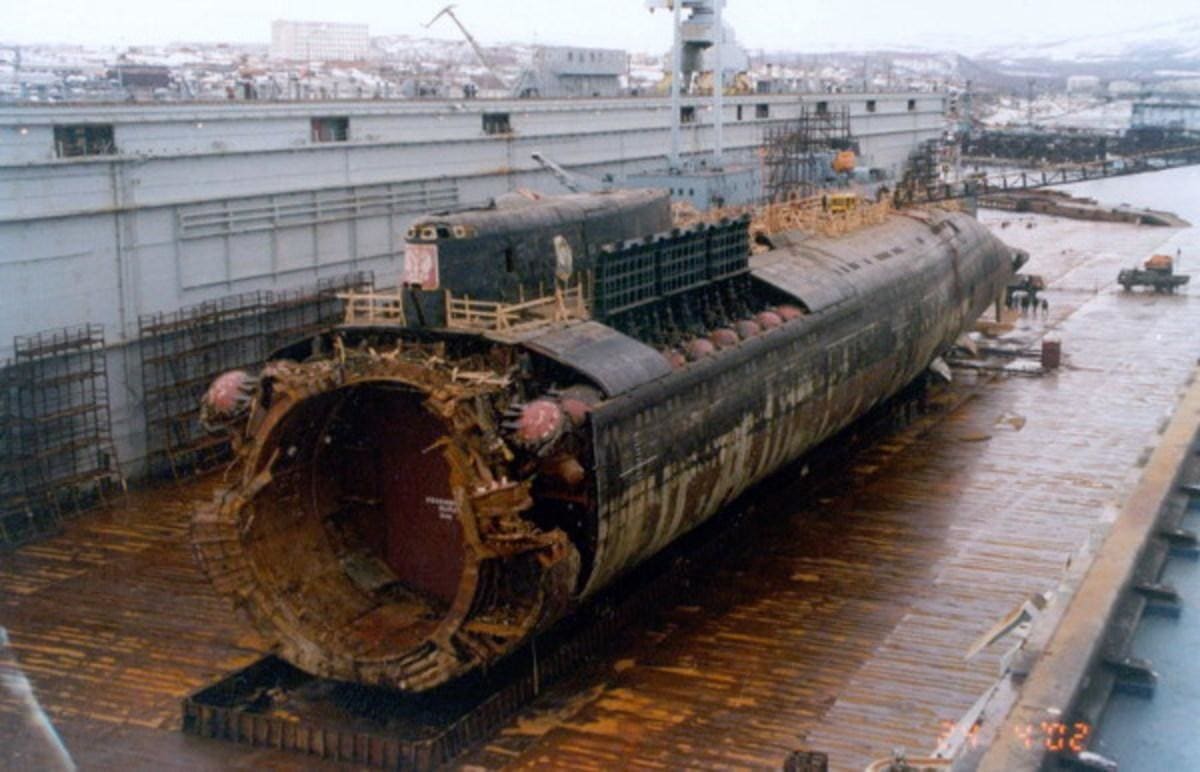
Kursk submarine wreck. Image: Creative Commons.
According to a Washington Post foreign service account, six days after the tragedy, “video images of the silent vessel today showed a gash in the hull far larger than had been previously described, suggesting to officials that the submarine plummeted to an uncontrolled collision with the sea floor that may have killed much of the crew.”
Then-Russian Prime Minister Mikhail Kasyanov described the situation as “close to catastrophic.”
The tragedy came in Vladimir Putin’s first year as Russia’s president, and the Post account declared that “continued delays in reaching survivors and persistent contradictions about the cause of the disaster have inflamed Russian public opinion and are presenting President Vladimir Putin with the first major political crisis of his presidency.”
Nearly three years later, in 2003, retired Russian Naval Captain George Sviatov wrote for the US Naval Institute’s Proceedings about the tragedy, with the headline “The Kursk’s Loss Offers Lessons.”
The incident occurred during a military exercise involving 30 surface ships and submarines. U.S. submarines were observing, and a pair of Ukrainian supersonic strategic bombers were also taking part, two things that are pretty unimaginable for a Russian exercise today.
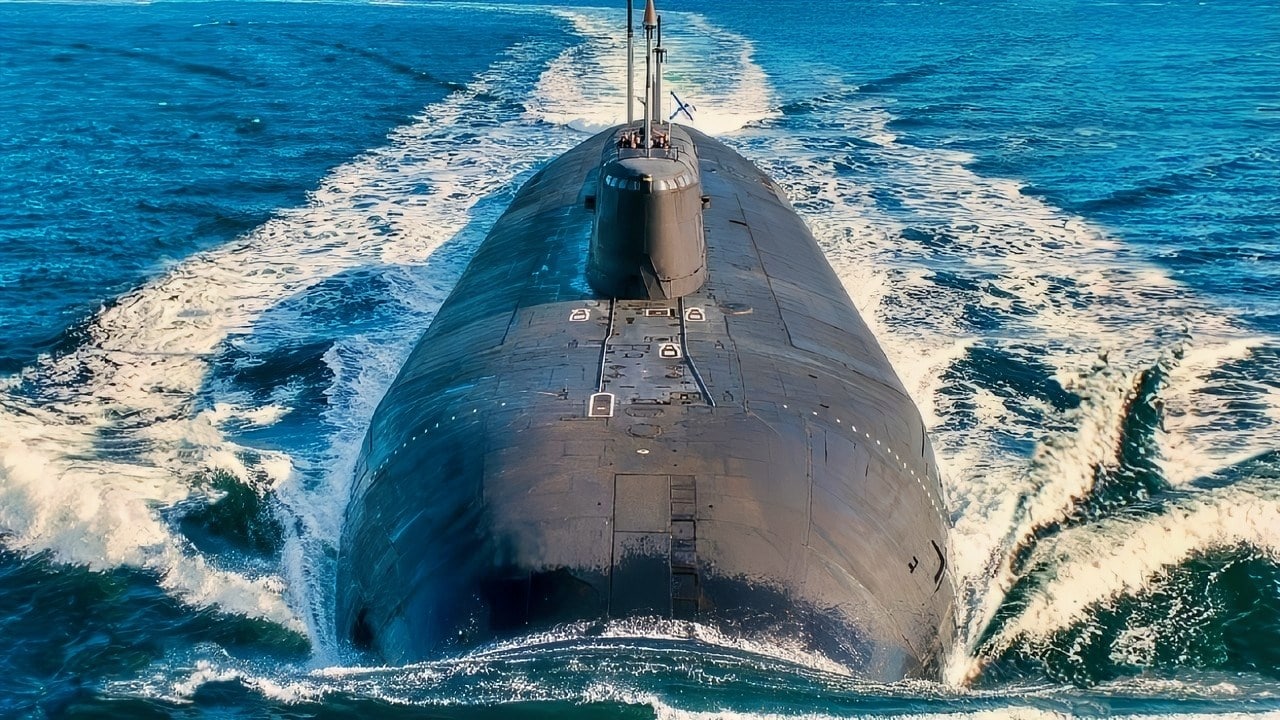
Oscar II-Class Submarine. Image Credit: Creative Commons.
An Exercise Gone Wrong
As part of the exercise, the Kursk, under the command of Captain 1st Rank Gennady Lyatchin, was to fire two practice torpedoes at the “enemy.”
The submarine, per the Proceedings account, “went up to the periscope depth of 19 meters to find the opposing ships, which were to enter the exercise area at about 1100. She slowed to 8 knots and extended her periscopes and antennas.”
That’s when something went wrong.
“Instead of the sounds of torpedoes being blown from torpedo tubes, sonar operators on board the USS Memphis (SSN-691) and USS Toledo (SSN-769) heard two explosions: at 1128, one short and sharp blast equaled 200 pounds of trinitrotoluene (TNT); at 1130, a second huge blast equaled one to two tons of TNT,” Sviatov wrote.
One of the American submarines, the Memphis, picked up a noise from about 5 nm away.
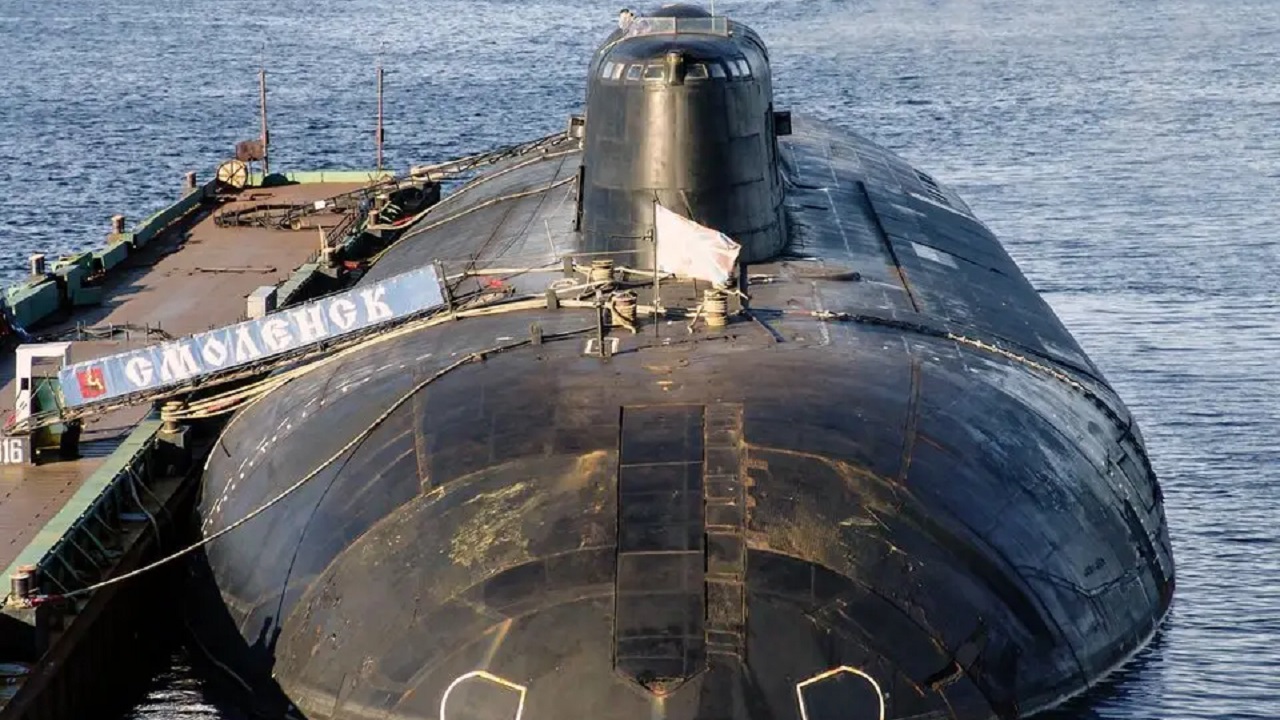
Oscar II Class Submarine. Image Credit: Creative Commons.
“That was followed by what in all likelihood was the liquid-fuel explosion of the single torpedo; after 2 minutes and 15 seconds came the massive explosion of the remaining weapons in the torpedo room,” the Proceedings article said.
Shifting Explanations
Per the Proceedings account, “the official version of events finally announced by the Russian Government Investigative Commission and General Prosecutor holds that the ‘guilty’ torpedo was waiting to be fired from the number 4 starboard torpedo tube,” before its fuel exploded, leading to a fire, which in turn caused “the blast of some or all reserve torpedoes in that compartment and almost instant flooding of the first six compartments.”
Later, it was established that a 650-mm 65-76A hydrogen-peroxide torpedo exploded inside that number 4 tube.
“Had they suspected and been made aware of any danger, they could have fired it to save the submarine. If the official version is correct, the most important remedial action is to remove this kind of hydrogen-peroxide torpedo from service,” Sviatov wrote.
He added that a big question was why seawater failed to extinguish the fire?
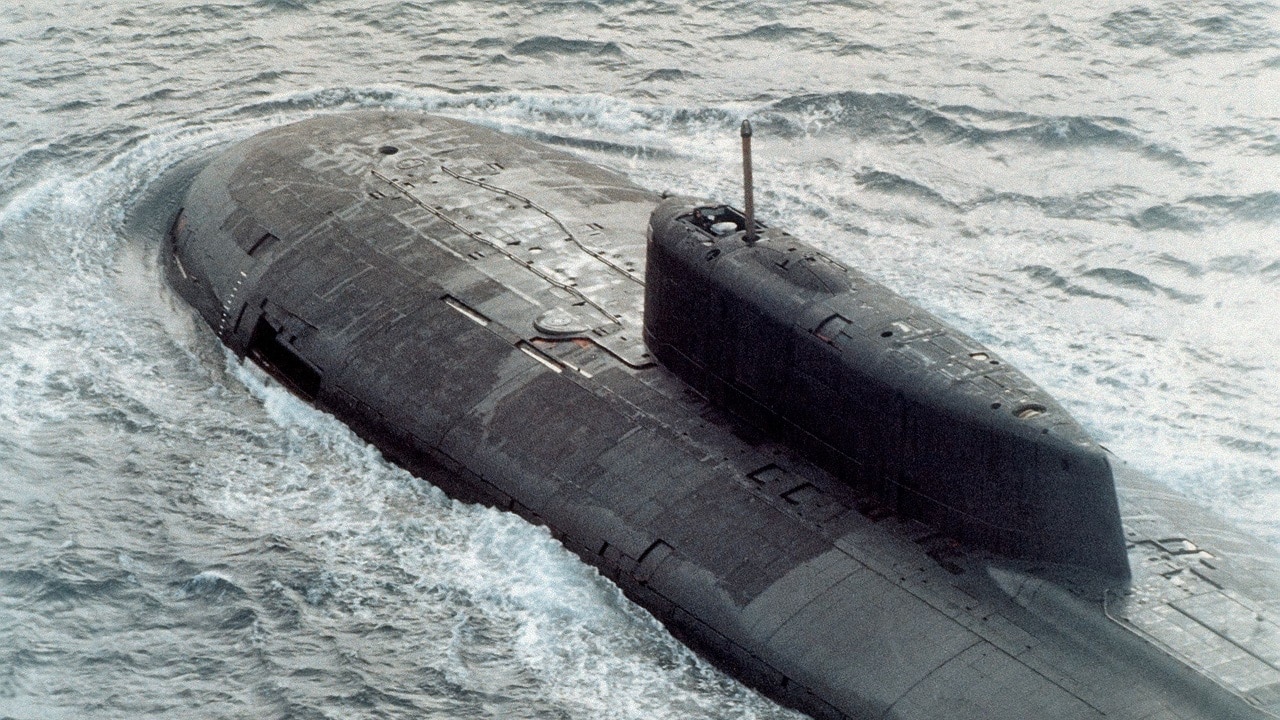
Oscar-class Submarine from Russia.
“Thus, in my opinion, it is possible the defective torpedo exploded in the compartment or while being loaded into the torpedo tube,” Sivatov wrote. “Further, there are questions as to the adequacy of the first compartment’s fire-fighting system—and its fire sensors, which should have signaled the torpedo’s rising temperature.”
The piece added that Putin took responsibility and agreed to meet with the families of survivors. The fleet Commander, Vyacheslav Popov, and his chief of staff, Mikhail Motsak, were both sacked, the BBC reported.
However, a Moscow Times story published in 2004 noted that the government’s initial statements were “riddled with official lies” and took Putin to task for continuing his vacation on the Black Sea while the crisis mounted.
“In short, the Russian leadership gave a brilliant example of how not to handle a crisis,” the Moscow Times piece said, noting the irony of the disaster happening during an international military exercise. “The Kursk had been participating in an exercise intended to illustrate to the world that Russia was still a major player, but the inept reaction of the Kremlin — and, especially, the Navy — exposed the decline of the country and its military instead.”

Oscar II Class Submarine. Image Credit: Creative Commons.
Further Developments On the Kursk Accident
In early 2001, The St. Petersburg Times in Russia reported that the relatives of the Kursk crew “still don’t know the truth about the disaster and are petitioning the Prosecutor General’s Office to find out.” By that time, 15 families had filed cases.
Then, in the summer of 2002, BBC News reported that Russian Prosecutor General Vladimir Ustinov had ordered the criminal investigation of the tragedy closed. The prosecutor, per that report, “told President Vladimir Putin and the Russian public that no one, but a faulty torpedo was to blame for the loss of 118 lives.”
In late 2004, Ramsey Flynn published a book about the tragedy and its aftermath called “Cry from the Deep: The Submarine Disaster That Riveted the World and Put the New Russia to the Ultimate Test.” The book touched on the “Kolesnikov Note,” a note written by a seaman who was killed in the tragedy, telling his wife that 23 of them, at that point, were still trapped.
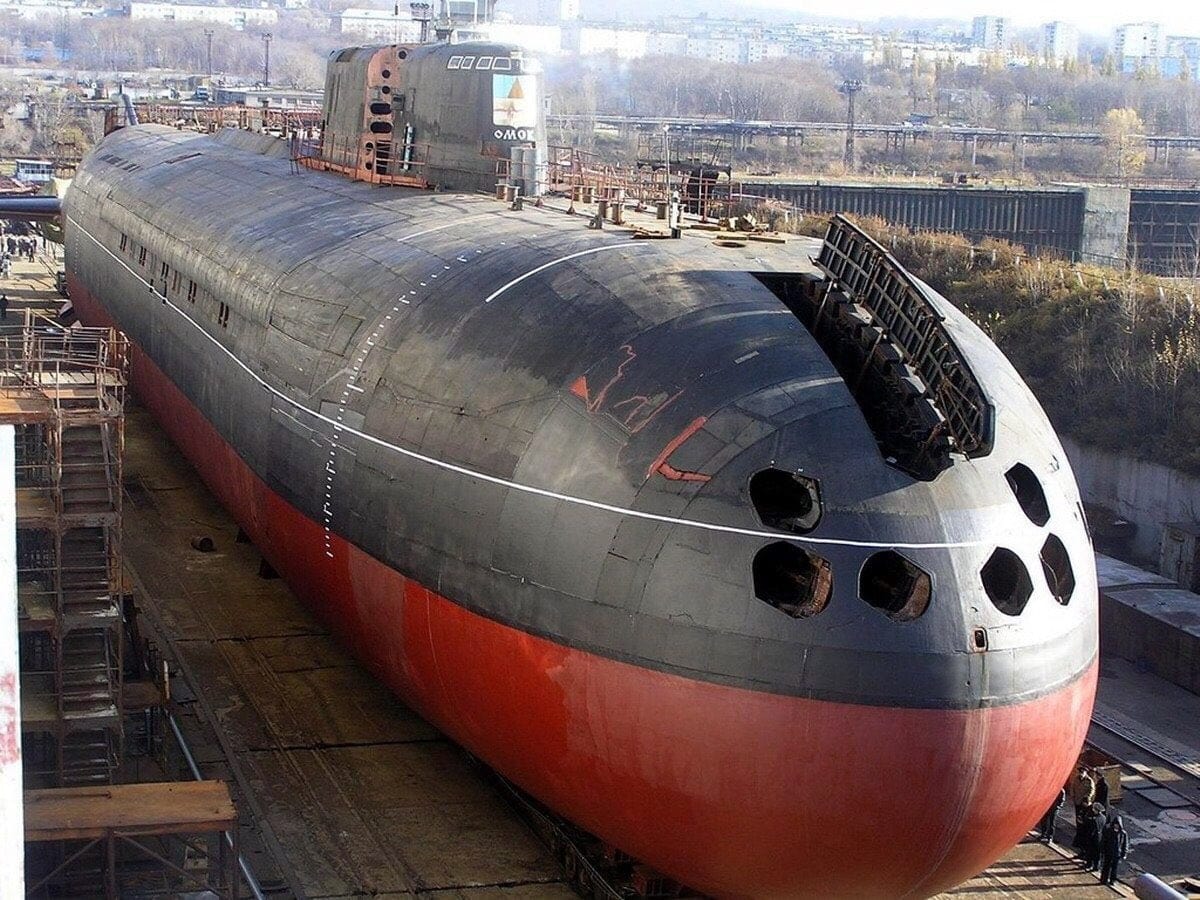
Image: Creative Commons.
“History is not a schoolmistress. She does not teach. She is a prison matron who punishes for unlearned lessons,” was a quote attributed to Russian historian Vasily Klyutchevsky, although the Proceedings history is one of the only English-language versions of the quote available.
Raising the Kursk
In October of 2001, a little over a year after the tragedy, the main part of the Kursk was raised from the sea. The raising was the subject of a documentary.
About the Author: Stephen Silver
Stephen Silver is an award-winning journalist, essayist, and film critic, and contributor to the Philadelphia Inquirer, the Jewish Telegraphic Agency, Broad Street Review, and Splice Today. The co-founder of the Philadelphia Film Critics Circle, Stephen lives in suburban Philadelphia with his wife and two sons. For over a decade, Stephen has authored thousands of articles that focus on politics, national security, technology, and the economy. Follow him on X (formerly Twitter) at @StephenSilver, and subscribe to his Substack newsletter.