
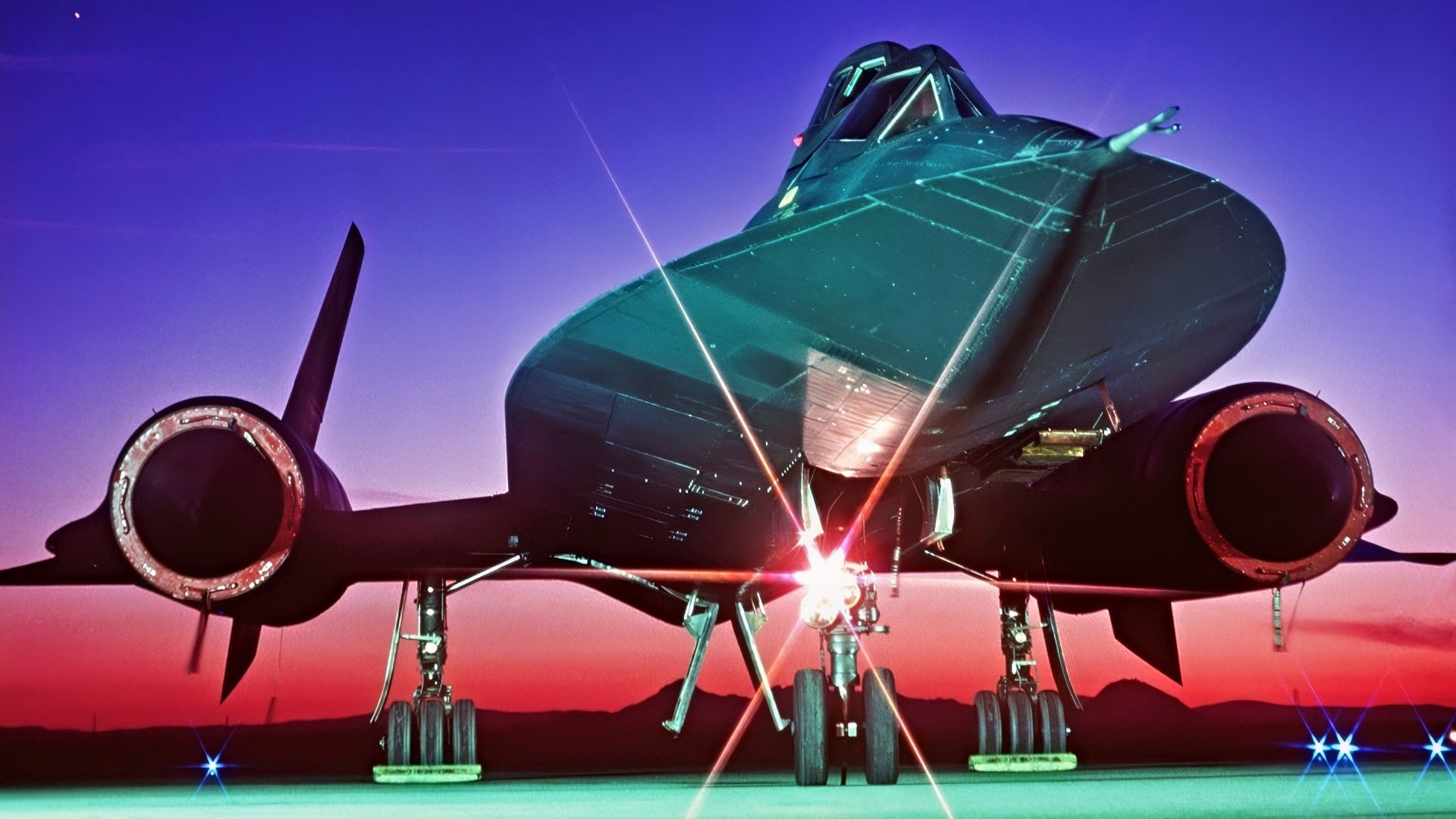
What’s undisputed is the fact that the Lockheed SR-71 Blackbird spy plane (AKA the “Habu” in honor of a highly venomous pit viper [scientific name Protobothrops flavoviridis] native to Okinawa) remains the fastest air-breathing, crewed aircraft ever built.
Yes, the X-15 was twice as fast—at Mach 6.7—but that baby was rocket-powered, not air-breathing, even though it has officially been retired for 27 years, and therefore is one of aviation history’s great success stories (and a major point of pride for the “Skunk Works” division).
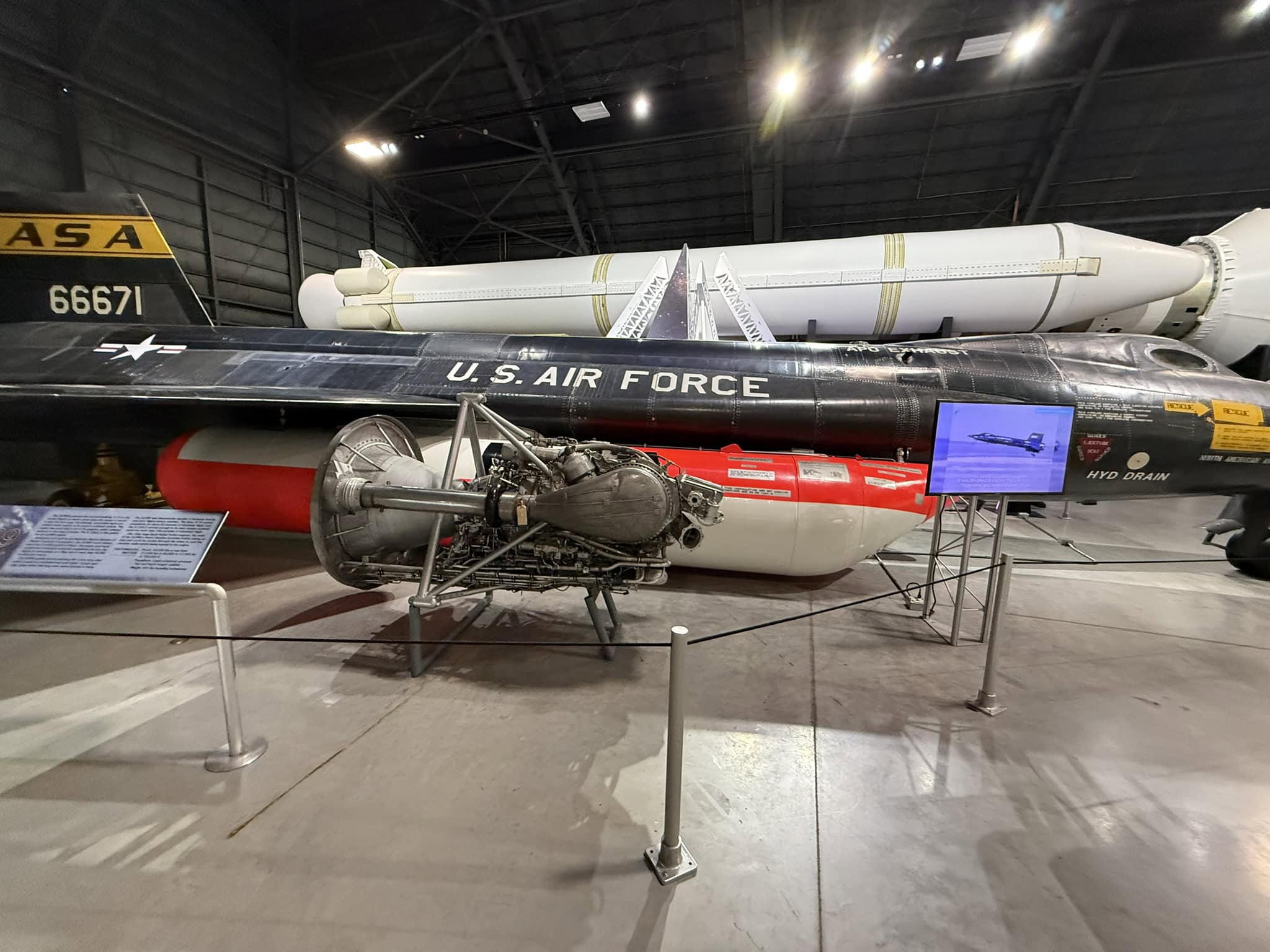
This is an image of the X-15 taken by Editor-In-Chief of 19FortyFive.com Harry J. Kazianis back in 2025 and the National Museum of the U.S. Air Force.
What *is* in dispute, however, is just how fast the SR-71 could really fly.
There’s the official top speed…and then there’s the unofficial top speed. We’ll now take a look at both of these impressive stories and also compare the Blackbird to some other “speed demons” of the wonderful world of warbirds.
SR-71 Top Speed Part I: The Official Story
As per TheSR71Blackbird.Com website, “On 28 July 1976, SR-71 serial number 61-7958 set an absolute speed record of 1,905.81 knots (2,193.2 mph; 3,529.6 km/h), approximately Mach 3.3.”
The record was achieved by Capt. Eldon W. Joersz (Pilot) and Maj. George T. Morgan Jr. (Reconnaissance Systems Officer [RSO])
How apropos, taking place in the same month and year as America’s bicentennial, eh!
Not to be outdone, on that very same day, a Blackbird bear serial number 61-7962, crewed by Capt. Robert Helt (Pilot) and Maj Larry A. Elliott (RSO) broke the “World Absolute and World Class Altitude Record for Horizontal Flight ” of 85,135 feet.
SR-71 Top Speed Part Deux: The Official Story
Mach 3.3 is a plenty impressive figure already (especially with that altitude record factored in alongside it), sufficient to have enabled the Blackbird to retain its title all these years after its retirement (not to mention 62 years after it made its maiden flight).
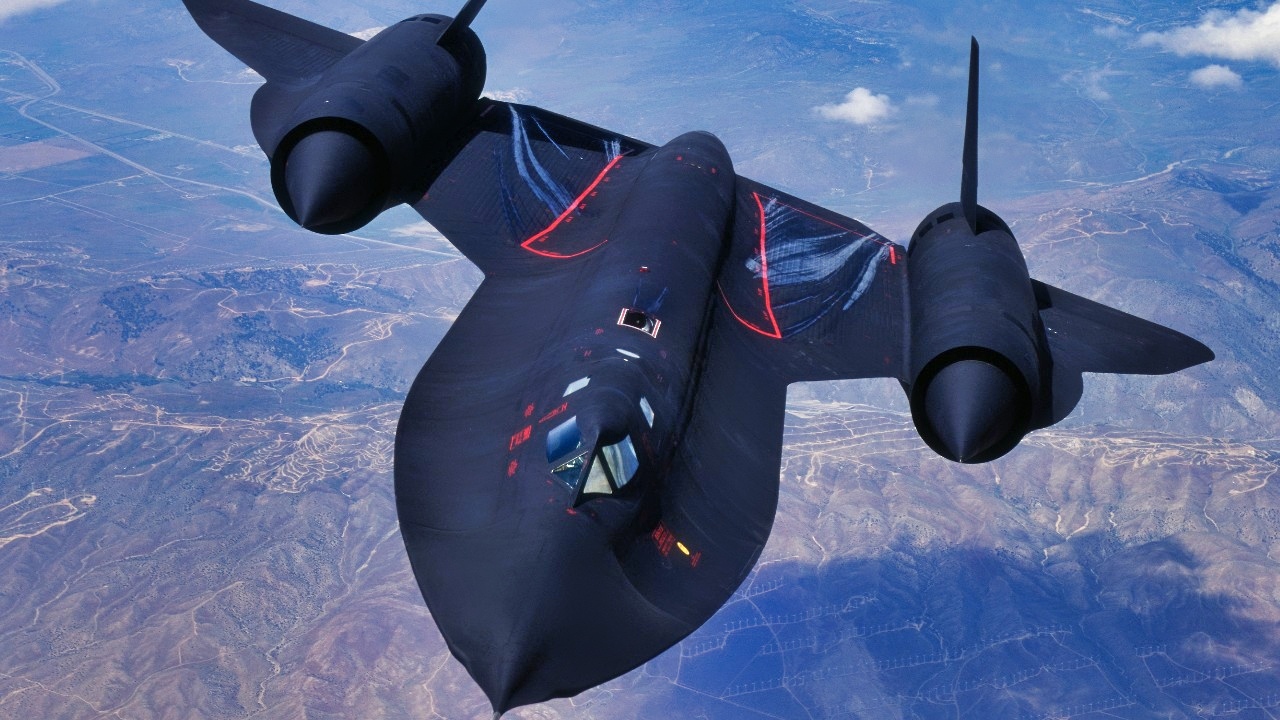
SR-71 Blackbird. Image Credit: Creative Commons.
But if the unofficial story is to be believed, the Blackbird’s top speed capability becomes even more impressive.
That unofficial story comes to us from retired U.S. Air Force Master Sergeant James C. “Jim” Goodall (no relation to the late great anthropologist Jane Goodall as far as I can tell) in his book “Lockheed SR-71 Blackbird: The Illustrated History of America’s Legendary Mach 3 Spy Plane.”
For those of you dear readers who either don’t have the time and/or the funds to obtain Jim’s book and read it in its entirety, Linda Shieffield Miller of The Aviation Geek Club was nice enough to quote some pertinent passages in an April 8, 2023 article with the straightforward title of “Former USAF Master Sergeant reveals the Fastest Speed ever Recorded by a Lockheed Blackbird.”
For starters, there’s this: “I’ve answered this question before, but here goes. The fastest an SR-71A has ever gone is Mach 3.43 in 974 [Blackbird #61-17974, better known as ‘Ichi-Ban’], at the time, a Site II bird. It blew out both inlets as it had a dual unstart.”
MORE – The SR-71 Blackbird Almost Flew Through Volcanic Ash. The Mach 3 Aircraft Would Have Been Destroyed
Yikes. Okay, but what’s the fastest that a Blackbird managed to fly without destroying itself in the process?
MSgt (Ret.) Goodall has an answer for that, too, though it was actually achieved by the A-12 Oxcart, the CIA’s variant with a slightly shorter fuselage, lighter fuel capacity, and a smaller camera load.
The overachieving pilot was James D. “Jim” Eastham (June 18, 1924 – January 4, 2016), call sign “Dutch 52.”

Front view of Lockheed SR-71A (Blackbird, s/n 61-7972, A19920072000) on display at the National Air and Space Museum’s Steven F. Udvar-Hazy Center, Chantilly, Virginia.
Jim Goodall picks up the story from there:
“But during early flight testing at Area 51 with the A-12s, Jim Eastham told me that A-12 #128 flew as fast as any A-12 during testing. On the particular day that the A-12 red-lined everything… When all was said and done, and for a very brief 15 seconds, Jim hit Mach 3.56, or just under 2,400 mph. Mind you, this was a one-time event and was never duplicated.”
Hot dauga!
“Here He Comes, Here Comes Speed Racer…” How Other Fast Warplanes Compare to the SR-71
The warplane that came closest to matching the SR-71’s official speed record was the Mikoyan-Gurevich MiG-25 (NATO reporting name “Foxbat”), which coincidentally made its maiden flight the same calendar year (1964) as the Blackbird and is still the world’s fastest interceptor ever built, with an **on-paper** max airspeed of Mach 3.2.
However, for practical purposes, the Foxbat’s speed was actually limited to Mach 2.8, as speeds in excess of this figure would risk damage to the airframe and engines.
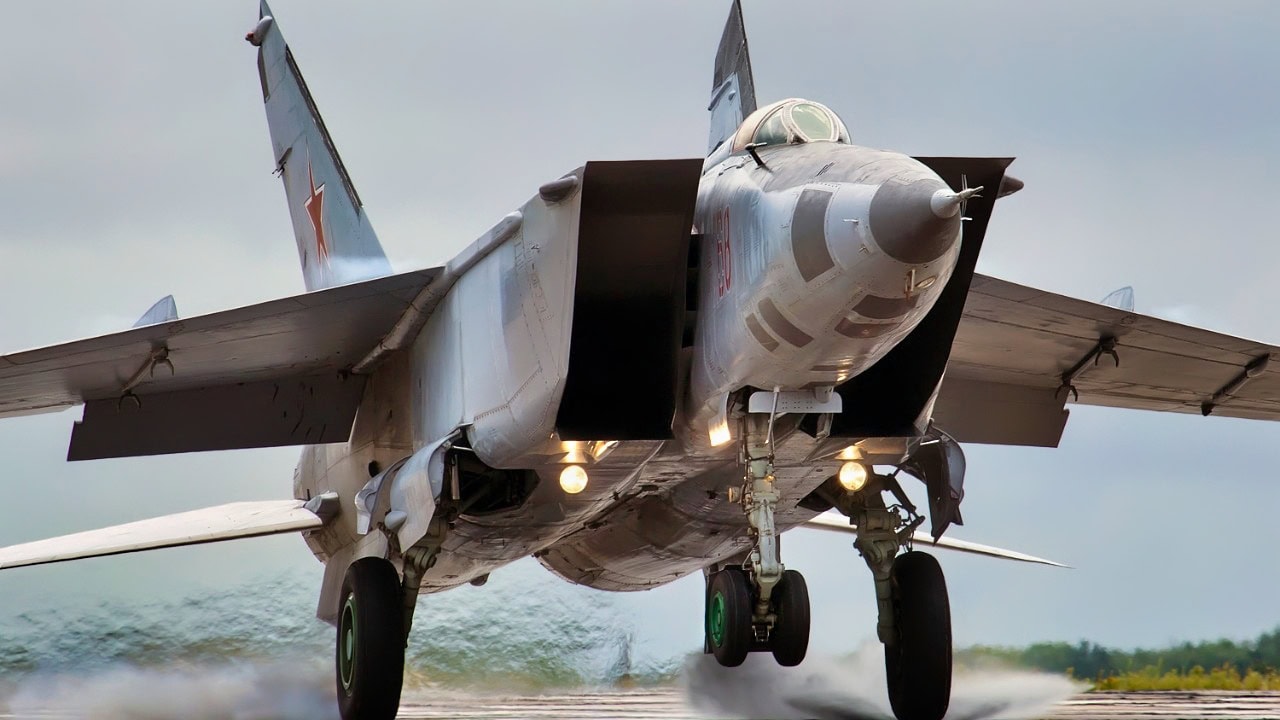
MiG-25 Foxbat. Image Credit: Creative Commons.
The September 1976 defection of MiG-25 pilot Lt. Viktor Belenko did much to dispel the mystique surrounding the Foxbat. (For more on that incredible story, read the book MiG Pilot: The Final Escape of Lieutenant Belenko by John Barron.)
Meanwhile, the fastest fighter jet currently in the American arsenal is the F-15EX Eagle II, with a top speed of Mach 2.5 (roughly 1,900 miles per hour) at high altitude.
In closing, though the Foxbat and Eagle may have more bad*** and intimidating-sounding monikers than the Blackbird, the Blackbird still gets the last laugh on airspeed bragging rights by a country mile.
SR-71 Blackbird Visits by 19FortyFive Staff: Our Photos of the Blackbird Over the Years

YF-12, a plane that is related to the SR-71 looks very similar. 19FortyFive.com image from National Museum of the Air Force.

SR-71 at National Museum of the Air Force.
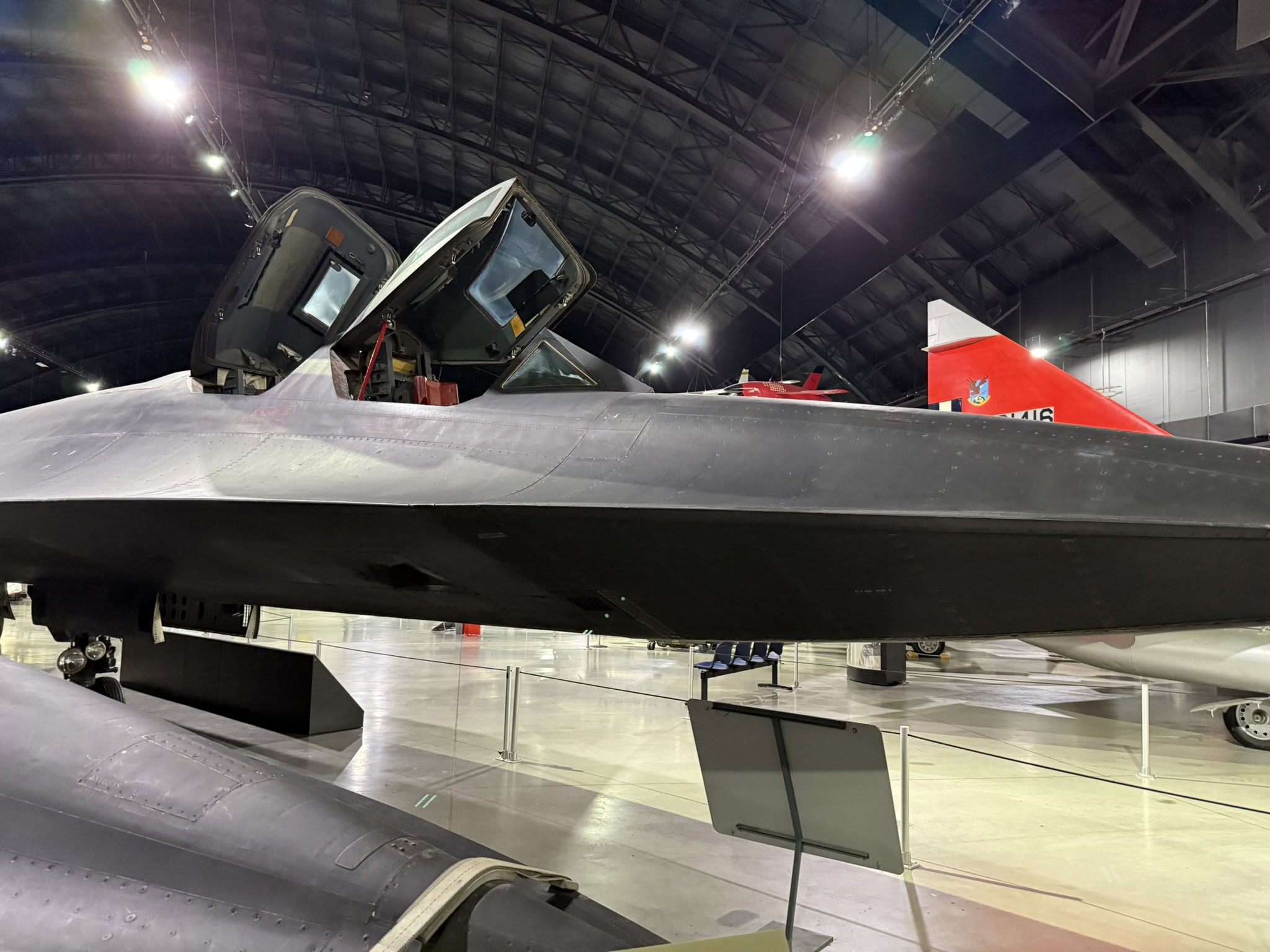
SR-71 at the National Museum of the Air Force.
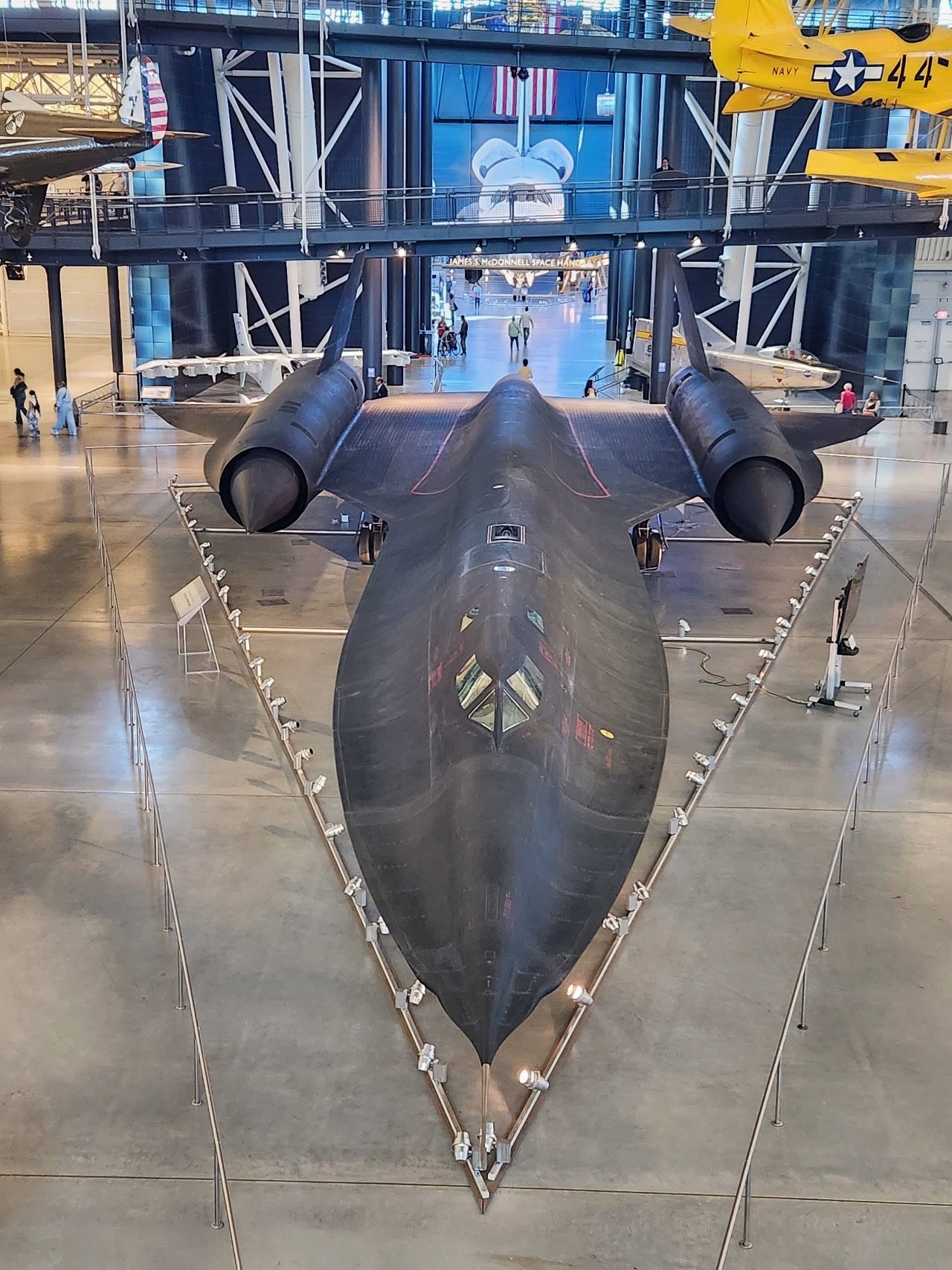
Longshot of SR-71. Image Credit: 19FortyFive.com

SR-71 Blackbird at the Smithsonian 19FortyFive.com Photo
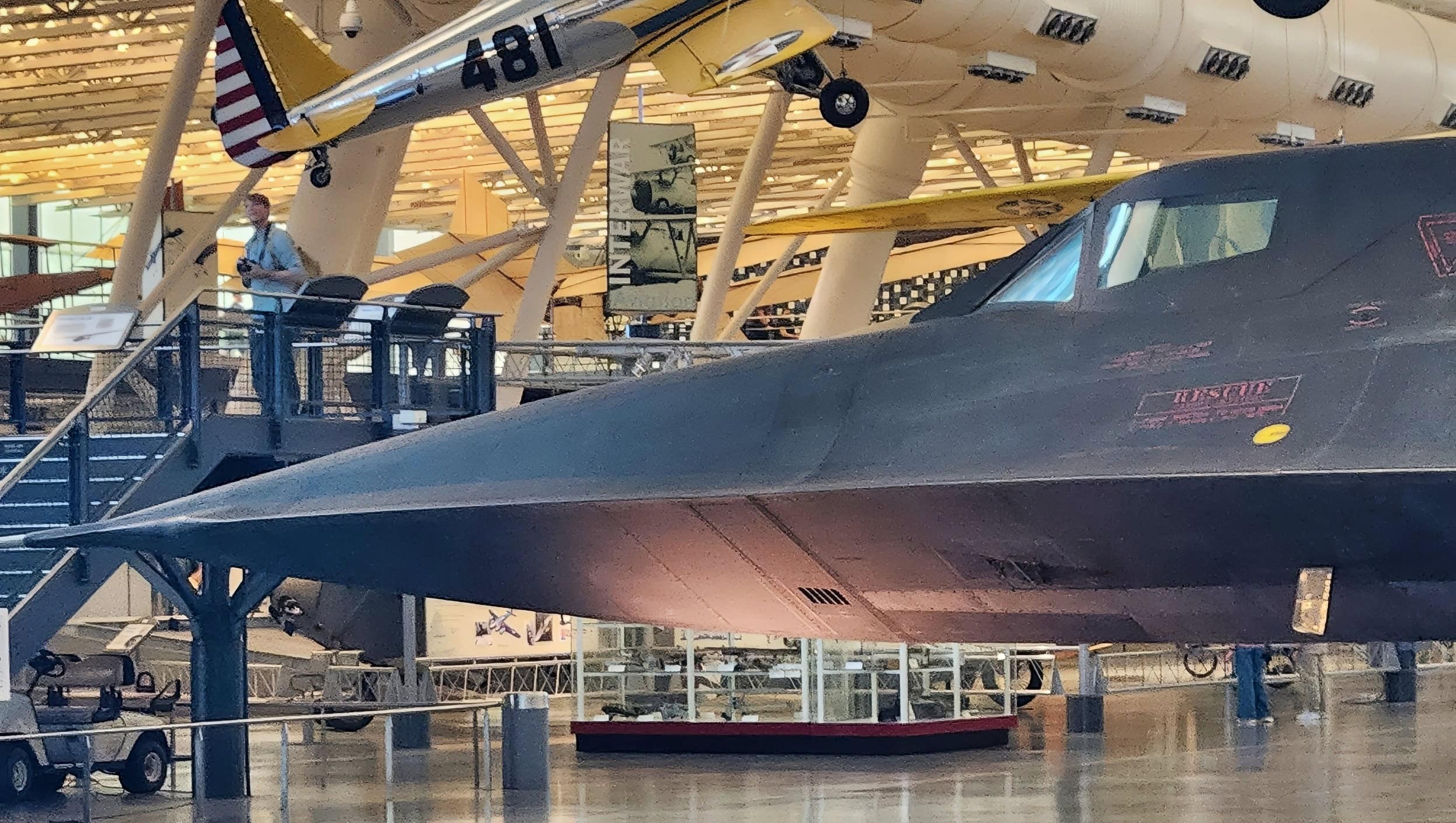
SR-71 Blackbird at Smithsonian. Image Credit: 19FortyFive.com
About the Author: Christian D. Orr, Defense Expert
Christian D. Orr is a Senior Defense Editor. He is a former Air Force Security Forces officer, Federal law enforcement officer, and private military contractor (with assignments worked in Iraq, the United Arab Emirates, Kosovo, Japan, Germany, and the Pentagon). Chris holds a B.A. in International Relations from the University of Southern California (USC) and an M.A. in Intelligence Studies (with a concentration in Terrorism Studies) from American Military University (AMU). He is also the author of the book “Five Decades of a Fabulous Firearm: Celebrating the 50th Anniversary of the Beretta 92 Pistol Series,” the second edition of which was recently published.