

I can never read enough SR-71 stories. It is one of the most intriguing aircraft ever produced, and it was so far ahead of its time. That is why we constantly reference stories by Linda Sheffield Miller, who grew up with the Blackbird, as her dad, Butch, tested the SR-71 back in 1965, and continued to fly on it for years.
There are probably an untold number of stories that haven’t yet been written on the Blackbird, and here’s hoping that we’ll see more and more of them in the very near future.
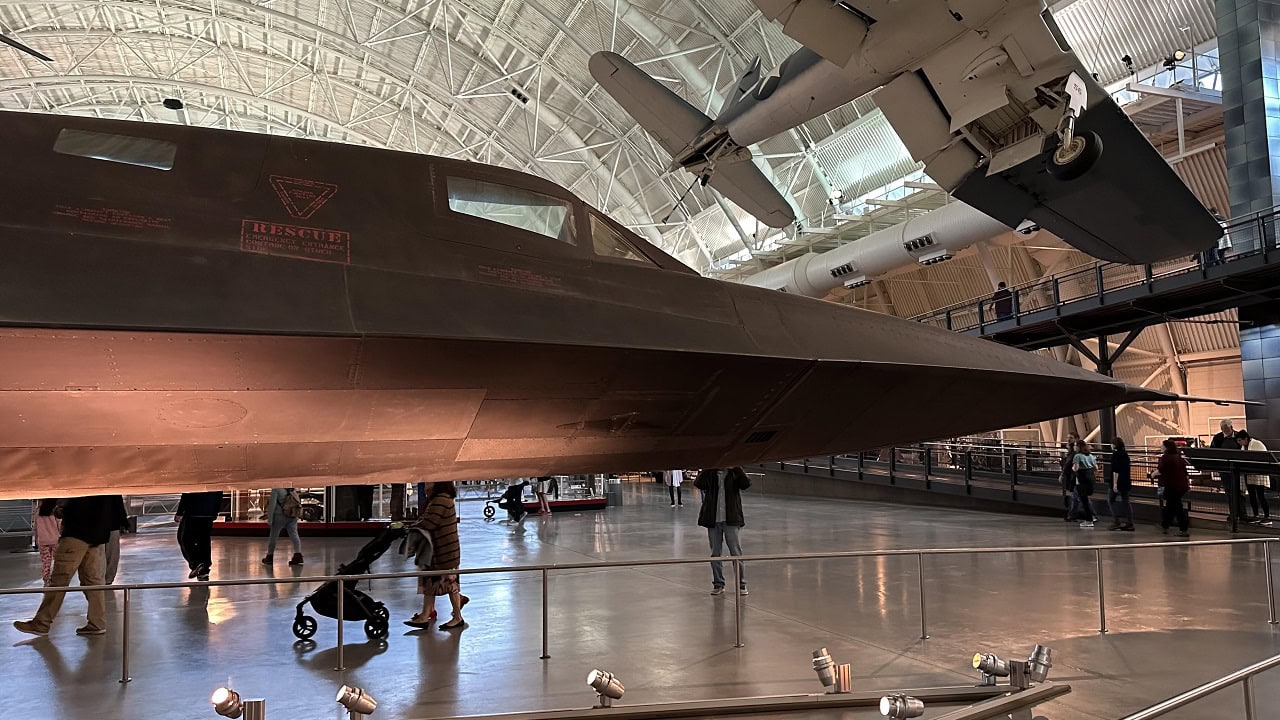
SR-71. SR-71 photo taken at the National Air and Space Museum. Taken by 19FortyFive on 10/1/2022.
Lockheed’s SR-71 Blackbird, first flown almost 62 years ago, remains unmatched as the fastest crewed jet ever. The Blackbird outran over 4,000 missiles; it combined revolutionary stealth, sustained Mach 3+ speed, and advanced engineering, making it virtually untouchable.
While streaking across the sky at 80,000 feet, the SR-71 could photograph 100,000 square miles of terrain in an hour.
The SR-71 was the most successful design of famed aeronautical engineer Kelly Johnson. Johnson had already proven his design mettle with previous projects, such as World War II’s P-38 Lightning, America’s first jet fighter — the P-80 Shooting Star, and most notably, the high-flying U-2 Spy Plane.
Johnson’s secret work during the U-2 program led to the establishment of the secretive military facility many of us know today as Area 51.
Johnson’s Skunk Works team was sailing in uncharted waters with the SR-71. “Everything had to be invented. Everything,” Johnson recalled in an intriguing article that appeared on the Lockheed Martin website.
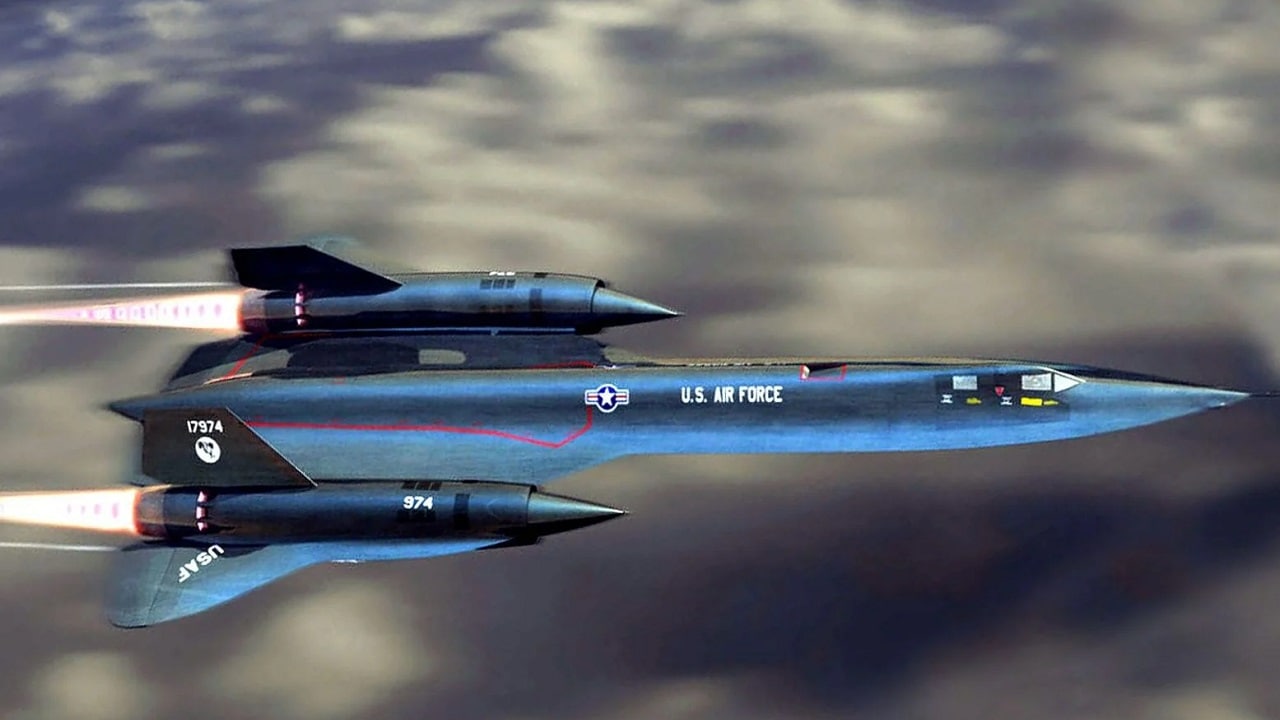
SR-71 Spy Plane. Image Credit: Creative Commons.
The Spy Plane Demanded Intense Focus In The Cockpit:
There was a story that the pilot and Reconnaissance Systems Officer (RSO) were so focused on the myriad tasks in the Blackbird that they didn’t have time to even look out the window.
Sheffield Miller wrote that, “The RSO was the Officer in the SR-71 that ran the checklist for the Pilot. He had to know his job and the Pilot’s job. He did the Navigation in the SR-71 if the Pilot had to make an emergency landing, which happened more often than you would think, he would ask his RSOs, “Where am I landing?” and get the exact coordinates from him.”
The RSO was also tasked with taking reconnaissance photos, using the Blackbird’s sensors to identify electronic surveillance, and plotting a course to the target over enemy territory. Just a walk in the park, right?
But the crew did look out the windows, as it is part of the job, and, as former SR-71 pilot David Peters recalls, it was one of the great perks.
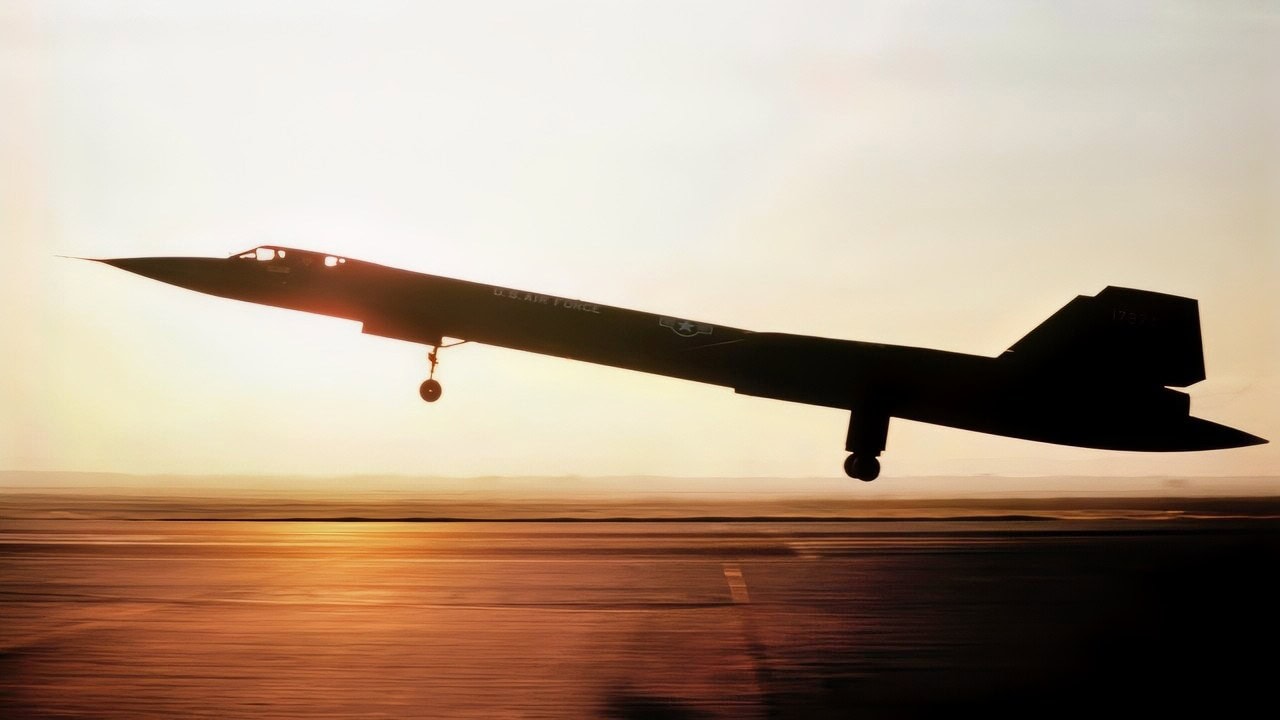
A left side view of an SR-71 aircraft from the 9th Strategic Reconnaissance Wing landing. The aircraft is silhouetted against the sunset.
The Crew Could See 3.5 Trillion More Stars At 80,000 Feet Than Anyone On the Ground Could:
With all due respect to the Eagles and songwriter Jack Tempchin, “And I want to sleep with you in the desert tonight / With a billion stars all around.” They didn’t have nearly the view that the Blackbird crews did in reference to starlight.
Operating above 80,000 feet, the SR-71 Blackbird’s crew could see far more stars and a darker sky than anyone on the ground.
Flying at the edge of the stratosphere, they were above 95 percent of Earth’s atmosphere, which eliminated atmospheric distortion and scattering, allowing for vastly superior celestial visibility, which their astro-inertial navigation system often utilized.
The sky appears almost black because sunlight does not scatter in the thin atmosphere, allowing stars to be visible even during the day.
“Doing the Korean DMZ out of Kadena on a moonless, clear night, we could see 3.5 trillion more stars at 80,000 feet than you can on the ground. That’s according to Palomar Mountain Observatory in California,” Peters said.

YF-12, a plane that is related to the SR-71 looks very similar. 19FortyFive.com image from National Museum of the Air Force.

SR-71 at National Museum of the Air Force.
“We would come in off the Sea of Japan, and there are almost no lights. The Japanese fishing fleet works around that area most of the time, and they just have lanterns hanging on the boats.
“When you make the inbound turn, what you see above you is very much like the [below] image of this post. What you see below is much more like what you see from the ground looking at the sky.”
“It will mess up your head really quick, and you jump on instruments just like you were flying in weather,” Peters added.
About the Author: Steve Balestrieri
Steve Balestrieri is a National Security Columnist. He served as a US Army Special Forces NCO and Warrant Officer. In addition to writing on defense, he covers the NFL for PatsFans.com and is a member of the Pro Football Writers of America (PFWA). His work was regularly featured in many military publications.