
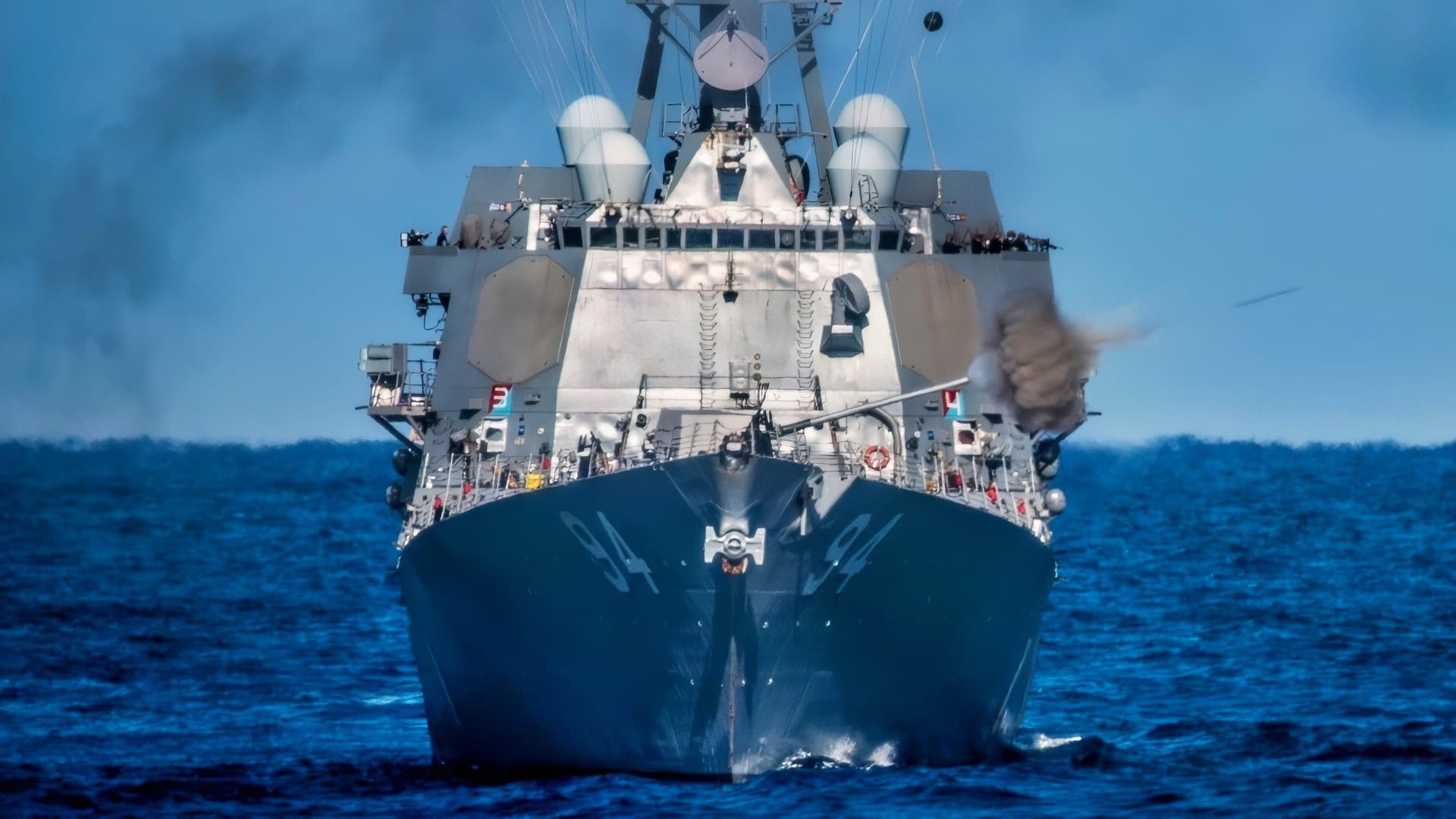
New Countermine System Aims to Flip Script for U.S. Naval Allies: One aspect of naval warfare that the United States and its allies must confront is the use of enemy sea mines in the Middle East and the Indo-Pacific. This asymmetric warfare is used by the Iranians and the Chinese to deny freedom of navigation to U.S. Navy warships. Sea mines create “no-go” zones that frustrate the United States’ ability to patrol key areas along enemy shorelines and in littoral waters.
Now, a French defense firm has an idea that could flip the script for sea mine warfare. The company has created a way to conduct mine countermeasures using autonomous artificial intelligence.
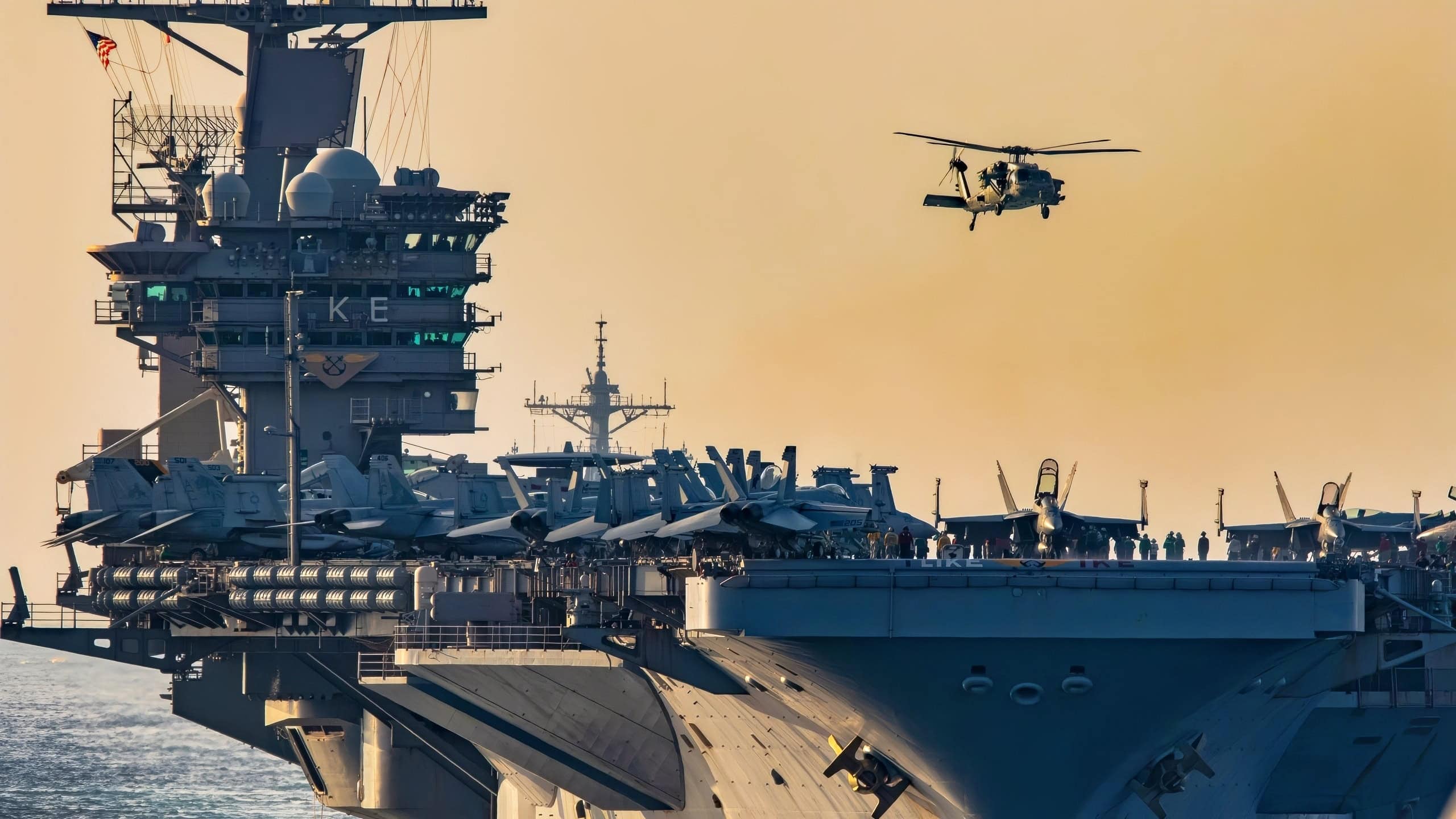
Components of the Dwight D. Eisenhower Carrier Strike Group (IKECSG), guided-missile destroyer USS Stethem (DDG 63) and French Navy frigate FS Languedoc (D 653) transited the Strait of Hormuz. IKECSG is deployed to the U.S. 5th Fleet area of operations to help ensure maritime security and stability in the Middle East Region. (U.S. Navy photo by Electronics Technician 2nd Class Daniel Goodin)
Badly Needed During the Strait of Hormuz Blockade
This would be handy right now, given all the mines in the Strait of Hormuz, which the United States is trying to blockade starting April 13.
What Is It?
This new solution is called “Expeditionary PathMaster.” The idea is to deploy it from the shore and use the counter-mine technology to change the equation in waters where sea mines can threaten ships. PathMaster can be activated from minesweeping ships or from the shoreline.
The company Thales is excited about its new counter-mine system that can secure critical shipping lanes and prevent vessels from being destroyed by mines in key waterways.
“As seas become increasingly contested and navies face unexpected threats and challenges, mine countermeasures have become a key discipline to ensure the sovereignty and safety of critical infrastructures and sea lines of communication,” said Sébastien Guérémy, Vice President of Underwater Systems, Thales.
Expeditionary PathMaster can be operated not only by manned ships but also integrated with unmanned underwater vessels. Conventional mine sweepers benefit from autonomous, sustained information from deeper-diving, remotely controlled assets.
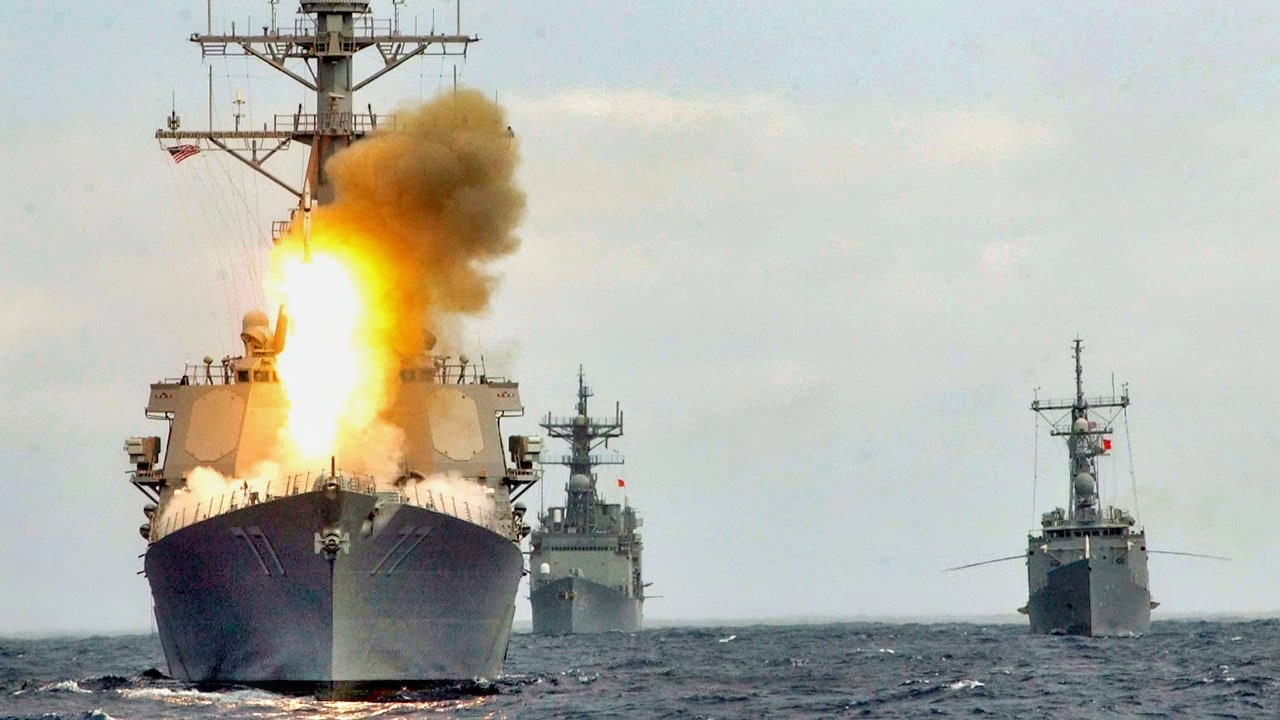
Pacific Missile Range Facility, Kauai, HI (Jul. 5, 2002) — Guided missile destroyer USS O’Kane (DDG 77) launches an SM-2 standard missile from its forward Vertical Launch System (VLS) during exercise ÒRim of the PacificÓ (RIMPAC) 2002. The guided missile frigate USS Crommelin (FFG 37) (right) and Spruance-class destroyer USS Paul F. Foster (DD 964) (center) follow in formation. RIMPAC 2002 is designed to improve tactical proficiency in a wide array of combined operations at sea, while building cooperation and fostering mutual understanding between participating nations. Countries participating this year are: Australia, Canada, Chile, Peru, Japan, the Republic of Korea and the United States. U.S. Navy photo by PhotographerÕs Mate 1st Class Chris Desmond. (RELEASED)
400 Percent Faster Than Current Sonar Technology
PathMaster processes sonar data 4 times faster than current systems for de-mining. This makes it “possible to locate underwater mines with greater precision than ever before, with 99 percent exact classification. The M-Cube mission management system harnesses AI to manage multiple parallel sonar analysis sessions with MiMap, providing real-time updates on session progress and detected objects,” according to a corporate press release.
The French Navy, the British Royal Navy, and the Singaporean Navy are customers and will deploy the system shortly.
A Good Defense Against Cyber Warfare
Thales believes PathMaster can better protect ships and critical maritime infrastructure, thereby creating freedom of navigation in contested seas. PathMaster is resilient and resistant to cyberattacks.
The company is ready for PathMaster to be deployed anywhere in the world and to operate in counter-mine duties 24-7.
Going on the Offensive Against Sea Mine Networks
One use of PathMaster is in offensive operations, not just defensive.
The system can enable an amphibious attack by allowing friendly invading forces to navigate around minefields that would normally restrict movement during the mission.
PathMaster could also be used by U.S. Navy SEALs, who often work with the U.S. Marine Corps to prepare landing zones for amphibious attacks.
“The Expeditionary PathMaster represents a blend of engineering, navigation, and operational planning designed to maintain momentum in challenging environments. By enabling reliable movement and access, it plays a crucial role in both combat and non-combat operations where terrain and infrastructure pose significant challenges,” according to InterestingEngineering.com.
It Only Takes One Hit from a Mine to Change the Scope of Warfare
This system could not come soon enough. Sea mines create unique challenges.
Even one U.S. ship damaged or sunk by a sea mine would change the calculus in the Persian Gulf and could create a condition in which the American-Iranian war would continue unabated without the limitations of a ceasefire and peace negotiations.
China’s Mines Are an Example of Asymmetric Assassin’s Mace Weapons
It will be interesting to see how well PathMaster works for U.S. allies, and it could be a difference-maker in the Middle East and the Indo-Pacific someday as well. Mines are asymmetric, meaning a weaker adversary can make a strong military pay the price.
China calls this concept the “Assassin’s Mace” classification of warfare, and mines support the anti-access/area denial strategy in East Asia.
We will see whether the Americans can field PathMaster or a similar countermeasure to make mine warfare less effective in peacetime or wartime.
The technology for autonomous operations with artificial intelligence is now possible, and it is time for navies around the world to make good use of these new technologies.
Now Is the Time for New Countermine Innovations
PathMaster may be a solution whose time has come. The technology is necessary to alleviate concerns among the U.S. Navy and its maritime allies about deploying for defensive and offensive purposes. The remotely piloted undersea assets will be even stronger with the new system.
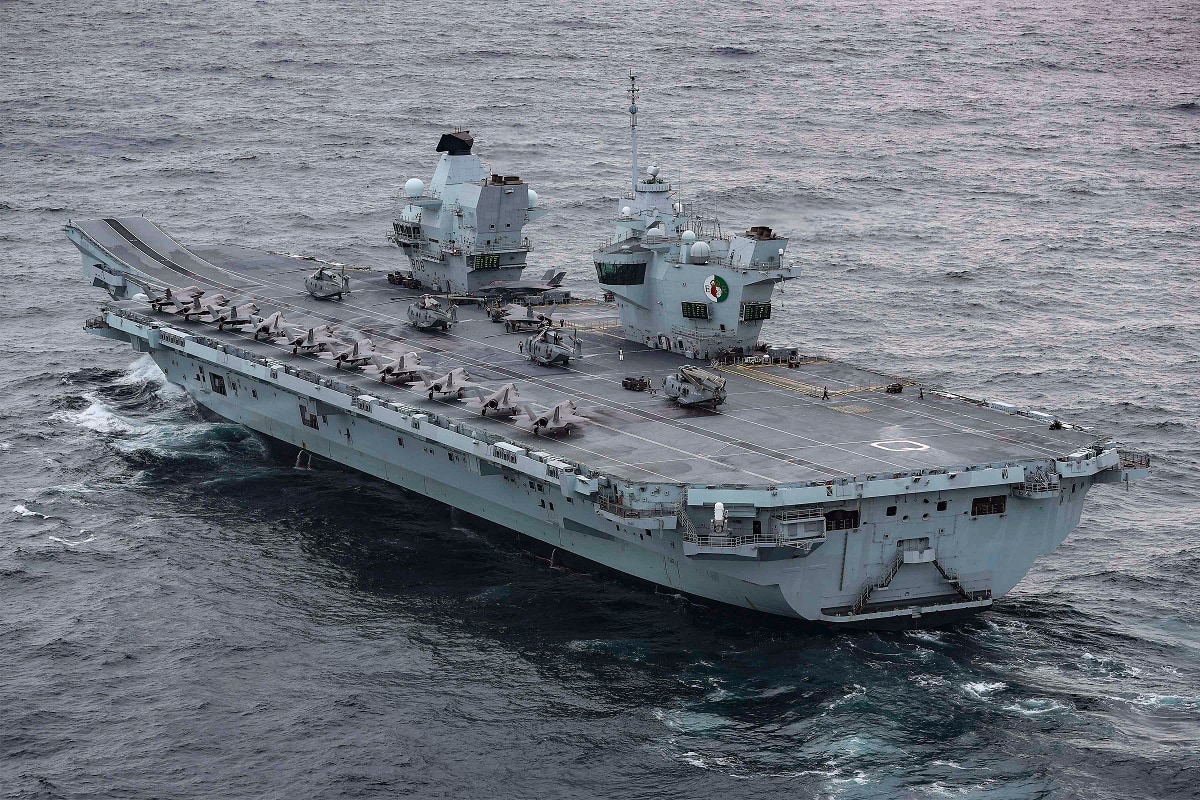
The full United Kingdom (UK) Carrier Strike Group (CSG) assembled at sea on 04 October, 2020. The (CSG) is led by Her Majesty’s Ship Queen Elizabeth and includes flotilla of destroyers and frigates from the UK, the Netherlands, the USS The Sullivans, and 15 F-35B Lightning II’s from Marine Fighter Attack Squadron 211 and the UK’s 617 Squadron. The Navy-Marine Corps team is humbled and proud to represent the United States and serve alongside our United Kingdom counterparts.
(Royal Navy Photo by LPhot Alker)
China will be closely watching how well the U.S. Navy operates in the Strait of Hormuz during the blockade that began on April 13.
It will be critical to see how effectively the Americans can eliminate the risk of a mine collision that could prolong the war.
It is a positive development that some innovative companies are developing countermeasures that could save ships from being taken out by mines. The timing is impeccable, and the United States and its allies could use a system that enhances survivability and enables their warships to operate unabated anywhere in the world.
About the Author: Dr. Brent M. Eastwood
Author of now over 3,500 articles on defense issues, Brent M. Eastwood, PhD, is the author of Don’t Turn Your Back On the World: A Conservative Foreign Policy and Humans, Machines, and Data: Future Trends in Warfare, plus two other books. Brent was the founder and CEO of a tech firm that predicted world events using artificial intelligence. He served as a legislative fellow for US Senator Tim Scott and advised the senator on defense and foreign policy issues. He has taught at American University, George Washington University, and George Mason University. Brent is a former US Army Infantry officer. He can be followed on X @BMEastwood.