
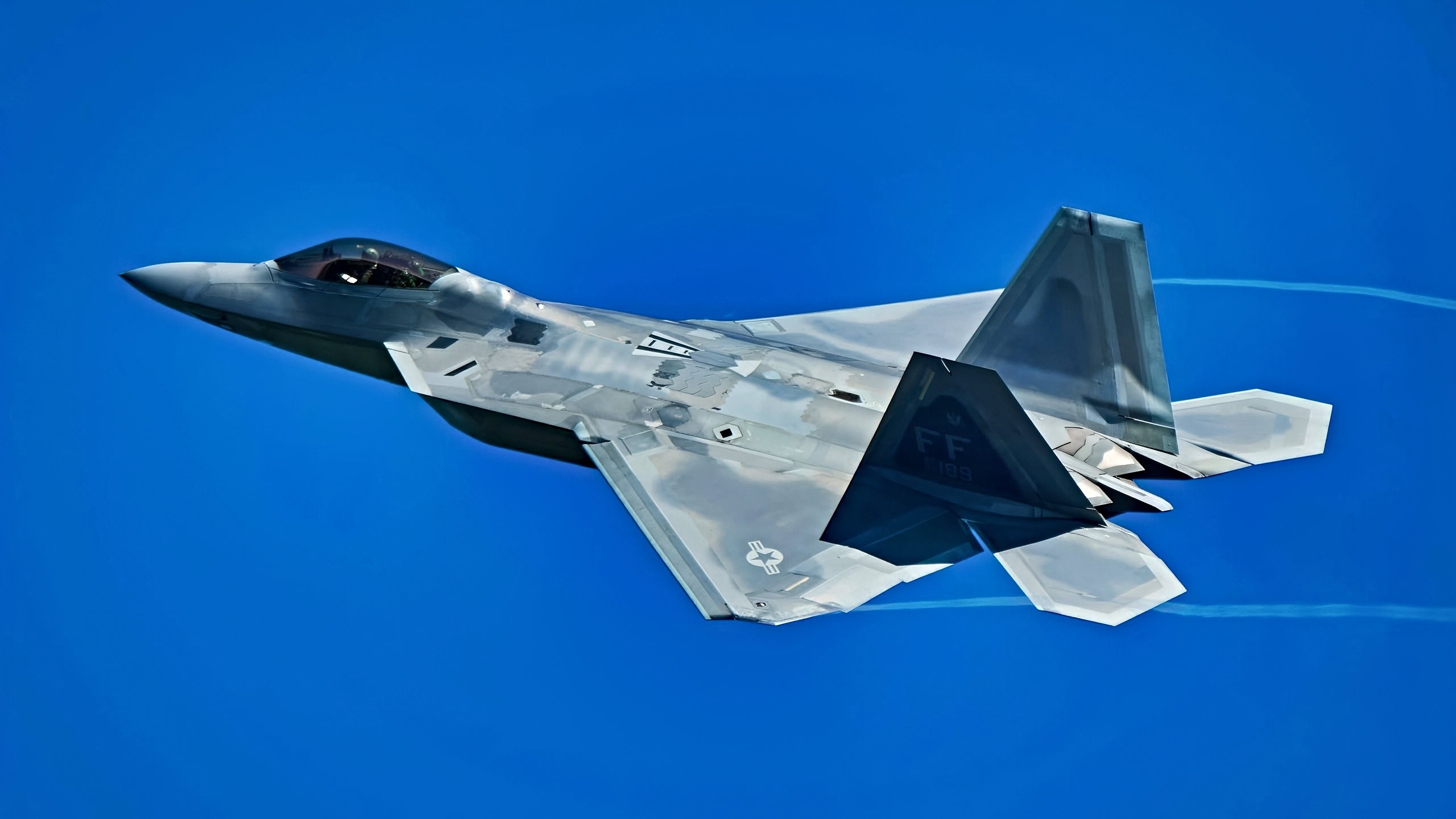
The F-22 and F-35 Have Some Key Advantages over the J-20 and J-35A from China: As tensions with China continue to rise in the Indo-Pacific, Chinese aircraft are increasingly engaging in belligerent actions. The Chinese are pushing on all fronts in the Pacific, trying to intimidate their neighbors.
China wants Taiwan, the small island nation, which was the last vestige of freedom, where the Nationalists fled after Chairman Mao and the Communists took over the country in October 1949, following World War II. China wants a bloodless takeover, especially since it wants control of the lucrative semiconductor industry.
Taiwan produces more than 60 percent of the world’s semiconductors and over 90 percent of the world’s most sophisticated chips.
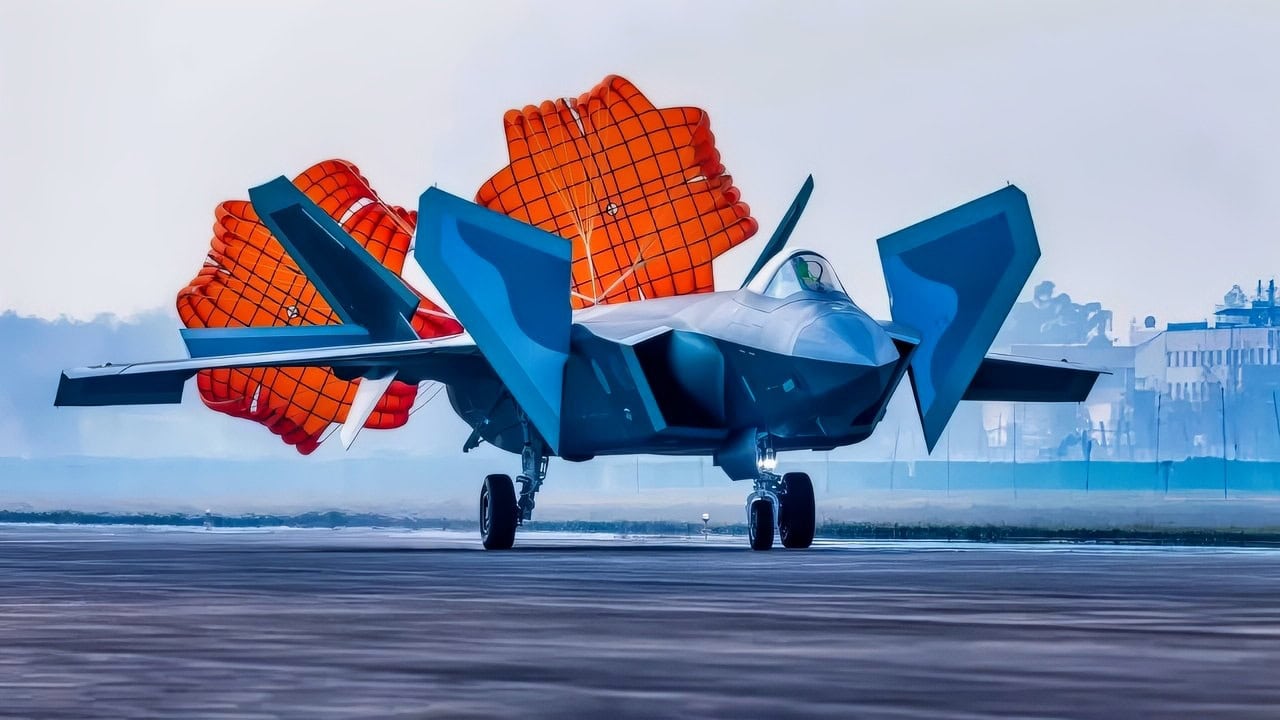
J-20S Fighter from China. Image Credit: Creative Commons.
So, while China wants a reunification of its people, the US currently supports Taiwan. There’s the rub. And in its insistence on taking the island, China has claimed ownership of a large chunk of the Pacific and has built bases on the Spratly Islands off the coast of the Philippines in the First and Second Island Chains.
All signs point to a possible conflict with the US, South Korea, the Philippines, Australia, and Japan in the not-so-distant future. And China is modernizing its military. Its Air Force and Navy are growing by leaps and bounds.
If a war does happen, and most analysts believe that it will, combat experience will be an important factor; also, the aircraft on each side will play a huge role in the air battles. The Chinese would have the J-20 and J-35A, while the US and its allies would counter with the F-22 and F-35.
Each Side Operates Modern Stealth Aircraft:
The Chengdu J-20 Mighty Dragon was built in no small part thanks to documents stolen by Chinese espionage from the US on the F-22, F-35, and the Russian MiG-1.44.
The Shenyang J-35A is China’s future carrier-standard stealth fighter. It is in the process of replacing the J-15 carrier-borne fighters.
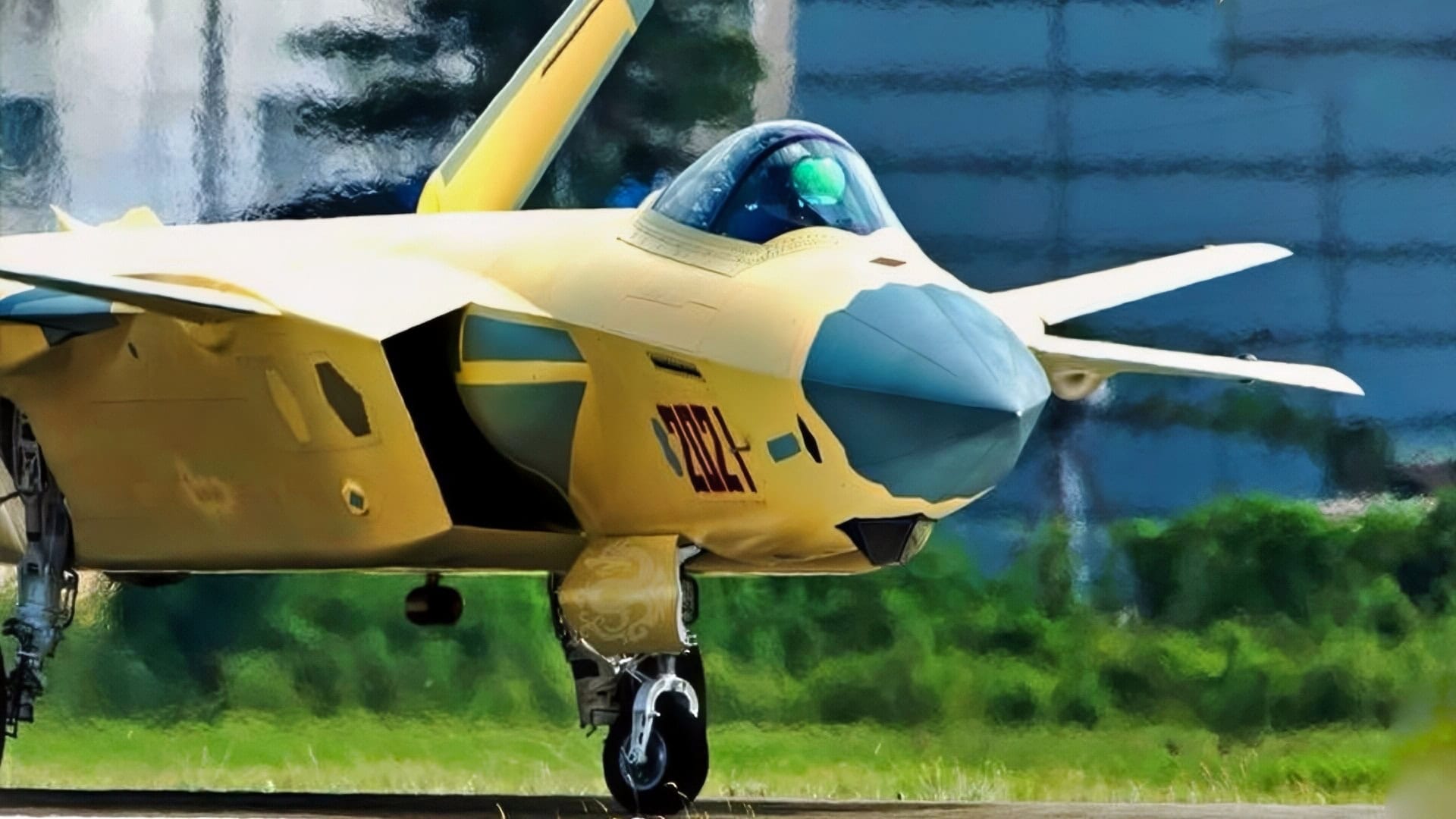
China’s J-20 Mighty Dragon in Yellow. Image Credit: Screenshot.
The US F-22 Raptor has been the standard against which all fighter aircraft have been measured for more than 20 years. Yet it still sits at the top of the mountain in terms of dogfighting ability, stealth, supercruise ability, maneuverability, and integrated avionics.
So, which aircraft is most likely to defeat the other in the skies? Let’s look at each aircraft. We’ll look at how the two carrier aircraft, the J-35A and the F-35 matchup while the J-20 and F-22 high-performance stealth aircraft from each air force will go head-to-head.
China’s J-20 Mighty Dragon:
The Chinese J-20 fighter was designed and built by the Chengdu Aircraft Industry Group. The J-20 “Mighty Dragon” is a fifth-generation fighter with the NATO designation FAGIN.
The J-20 is a large aircraft with a wingspan of 44 feet, a length of 67 feet, and a maximum take-off weight (MTOW) of 81,660 pounds.
While early models of the J-20 used twin Russian AL-31FM2 engines, based on those that powered the Russian Sukhoi Su-27, later models switched to Chinese WS-10B powerplants as part of a broader transition of China’s fighter fleet to domestically produced engines.
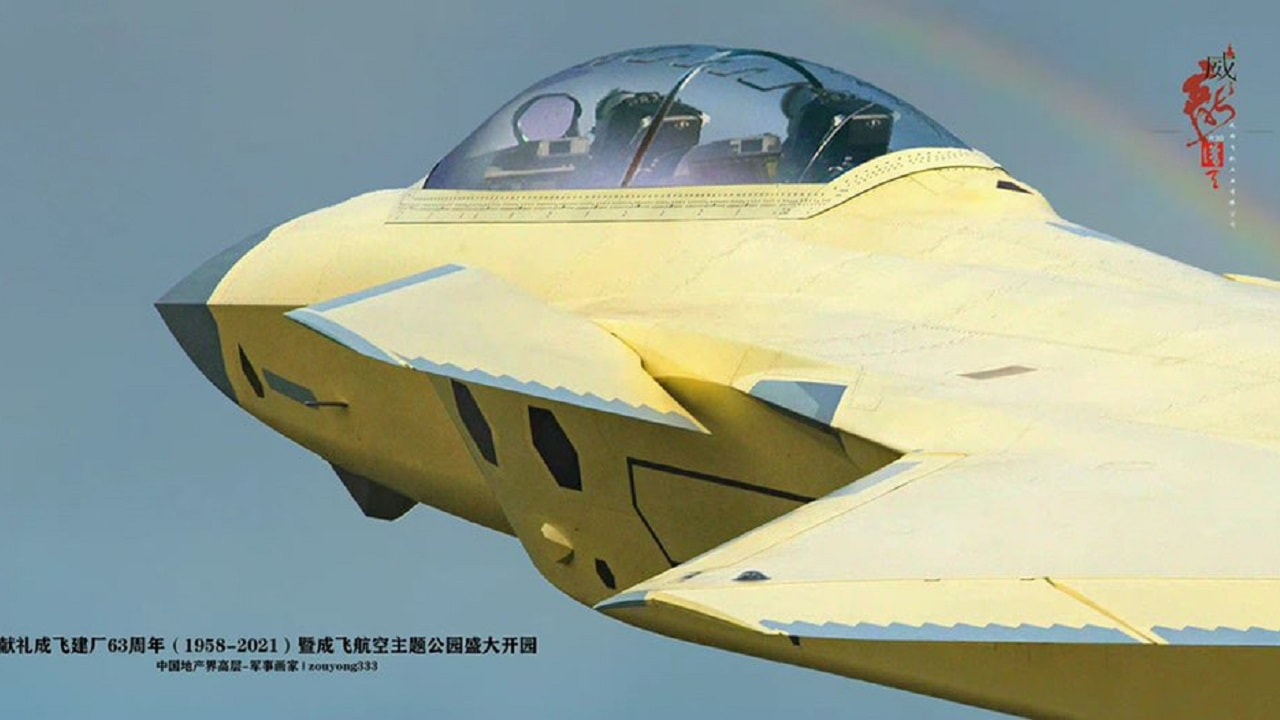
Chinese J-20 stealth fighter. Image Credit: Chinese Internet.
The J-20 has also been seen testing a new and more powerful WS-15 engine. With WS-10 engines, the J-20 has a maximum speed of Mach 2.
The jet is capable of carrying various weapons systems, including the very long-range PL-15 missile, PL-21 long-range missile, and the LS-6 precision-guided bomb.
First seen in November 2024, the J-20S is a two-seat variant under development. It is a long-range, multi-role, stealthy fighter jet that can also team up with unmanned drones and aircraft. The “loyal wingman” concept that the US is also testing. Currently, China has between 270 and 300 J-20 aircraft.
Meet The Chinese Shenyang J-35A:
The Shenyang J-35A, also known as the FC-31 or J-31, is a multi-role fighter aircraft developed by the Chinese government. It is designed for the military and intended to serve as a fifth-generation combat aircraft. The FC-31 is designed for a range of missions, including air superiority, ground attack, and reconnaissance.
“The Chinese development of their capabilities is something we need to respect and be able to account for,” Air Force Chief of Staff Gen. David W. Allvin said.
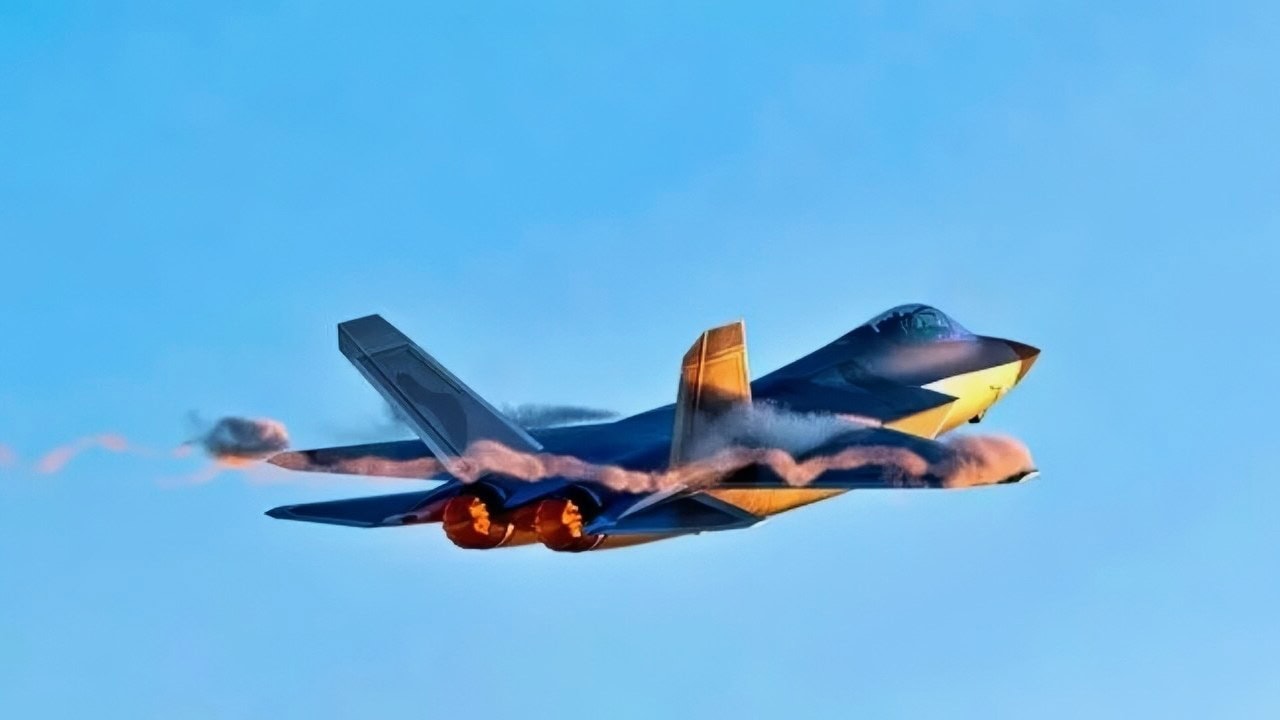
J-35A Fighter from China PLAAF. Image Credit: Creative Commons.
“One thing that they’ll never catch up on us is the quality of our force, the quality of our entire total force, the quality of our [noncommissioned officer corps], the quality of our aviators, the maintainers, all of that. But I don’t want to make it a close fight.”
The F-22 Raptor Remains The Standard:
The F-22 Raptor remains the world’s best pure fighter aircraft, but its service window is closing. The Air Force plans to replace the Raptor in 2030 with the F-35 and the Pentagon’s Next Generation Air Dominance (NGAD) fighter, the F-47.
“We’ve already built and flown a full-scale [sixth generation] flight demonstrator in the real world, and we broke records in doing it,” Will Roper, Director of the Pentagon’s Strategic Capabilities Office, told Defense News in 2020. “We are ready to go and build the next-generation aircraft in a way that has never happened before.”
However, the U.S. Air Force’s decision to prematurely halt F-22 Raptor production at just 186 aircraft was a “strategic blunder” that has created a dangerous “air superiority gap.”
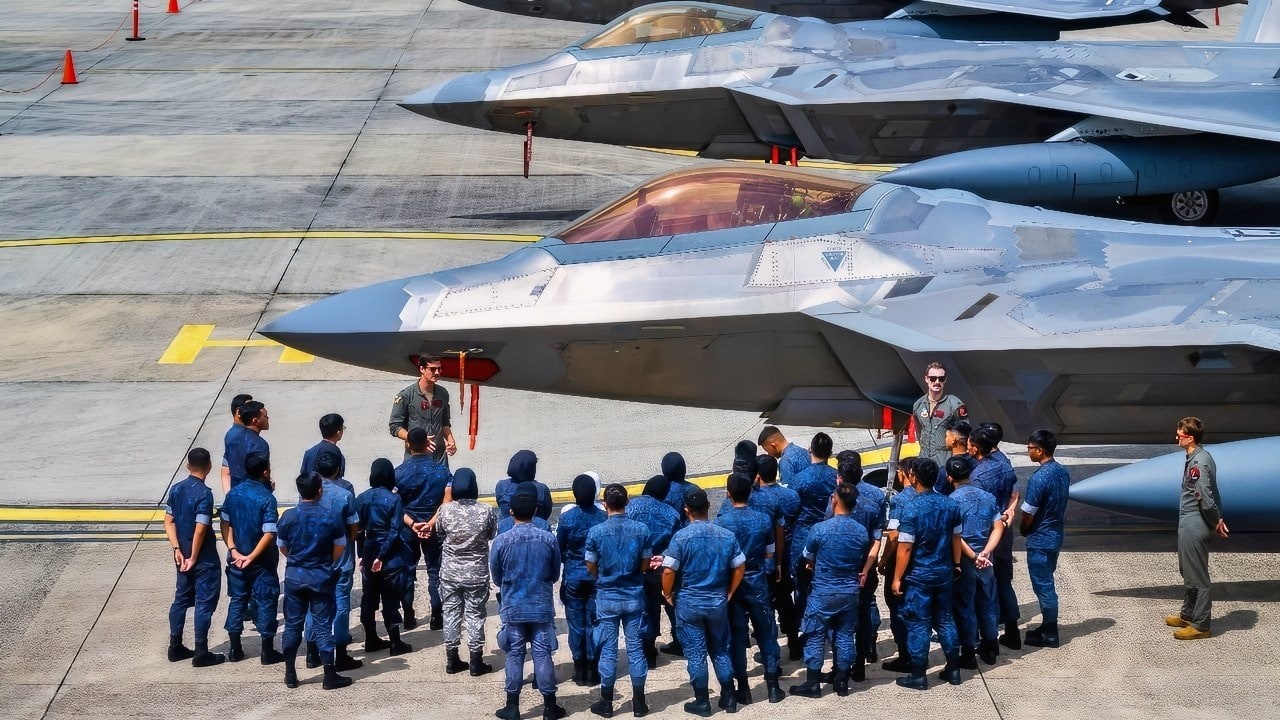
U.S. Air Force F-22 Raptor pilots assigned to 27th Expeditionary Fighter Squadron, Joint Base Langley-Eustis, Virginia, conduct a capabilities brief at Rimba Air Force Base, Brunei Darussalam, on Aug. 7, 2024. This year marks the 40th anniversary since the United States established diplomatic relations with Brunei Darussalam. (U.S. Air Force photo by Senior Airman Mitchell Corley)
What makes the F-22 great in a dogfight is the aircraft’s thrust vectoring capabilities.
Its two engines have specially designed nozzles at their ends that can move on a vertical plane to vector the aircraft’s 70,000 pounds of thrust in one direction even if the aircraft is heading in another, thus allowing the F-22 to do some impressive acrobatics, as well as leverage a highly high angle of attack during a within-visual-range engagement.
The Raptor’s top speed is Mach 2.25 or 1,500 mph, powered by the Pratt & Whitney F119 turbofan engines.
The USAF currently has approximately 176 combat-ready F-22s in its inventory.
Comparisons Between the J-20 and the F-22:
While the J-20 can carry an enormous payload, most of it must be carried on external pylons, which will reduce its stealth capability. Due to the size of its long-range missiles, it can carry only four internally. The F-22 can carry six AIM-120 AMRAAMs and two AIM-9X Sidewinders in its internal weapons bay.
And stealth is already a factor that the J-20 is behind the Raptor. The J-20’s radar cross-section is about 35 meters, or about 100 times more than the Raptor, not counting the additional weapons on pylons.
The J-20 lacks a cannon, which could mean the designers didn’t intend it as a dogfighter. The Chinese may view the J-20 in a more interceptor-like role, utilizing its long-range missiles to penetrate opposing air defenses by engaging and destroying enemy fighter patrols, early warning aircraft, and refueling tankers.
The speed of the Raptor is about 1,500 mph. Reports of the J-20’s new WS-15 engine now put it roughly on par. The J-20 has a considerable advantage in range, with a combat range of about 1,100 miles, while the Raptor has a range of about 650.
However, the Air Force is working on a conformal external fuel tank for the F-22 and F-35 that won’t affect its stealth, similar to what Israel did with their F-35I Adir fighters.
Key Differences Between the Aircraft:
The J-35A is generally considered faster and potentially more agile due to its twin-engine, sleeker design. The F-35 boasts more mature sensor fusion, advanced electronics (EW), and, critically, thousands of hours of operational experience, whereas the J-35A is still maturing.
Stealth profiles favor the F-35. The J-35A is designed with a very low-observable airframe, but its slightly less aggressive angular edges may result in a slightly higher radar signature than the F-35, though they are in the same general class.
While both are multirole, the J-35A is designed to serve as a “point guard” or “quarterback” for the larger J-20 in air-to-air combat, while the F-35 often prioritizes deep-strike missions.
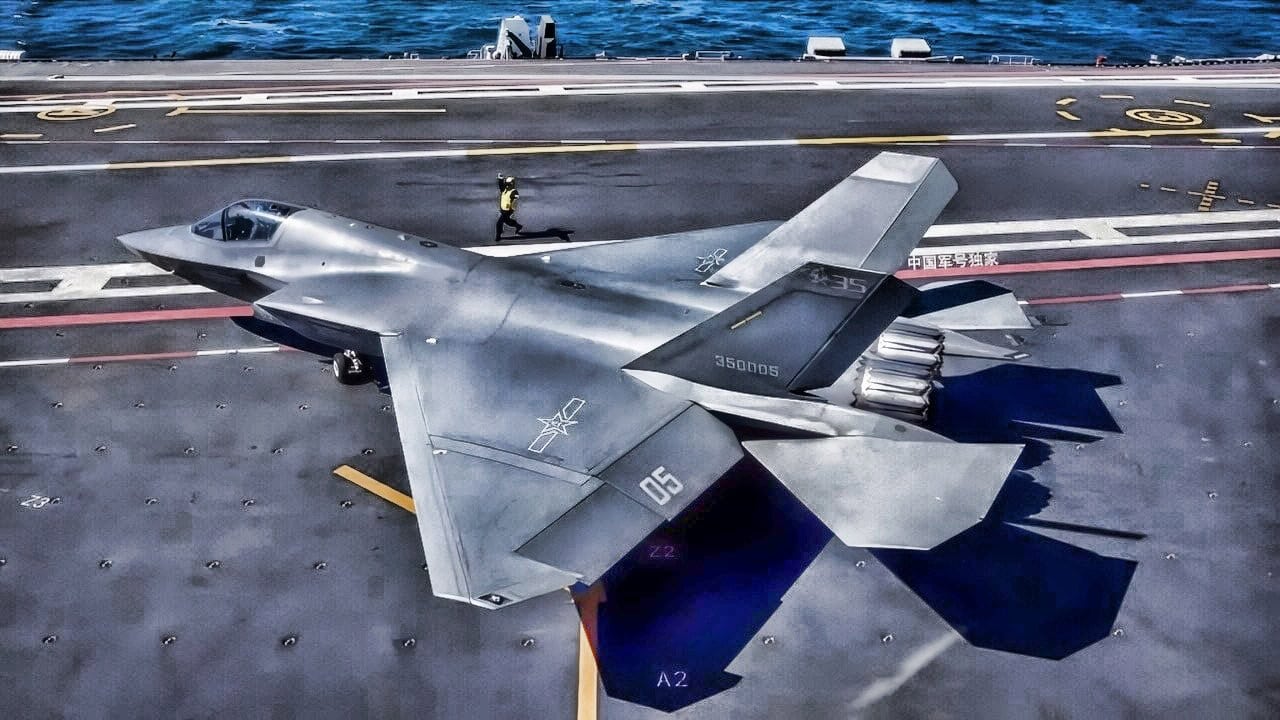
China J-35 Naval Stealth Fighter. Image Credit: PLAN.
The J-35A’s shorter range of 750 miles is on par with the American fighters, but the US has nearly 600 air-refueling tankers. The Chinese, however, don’t currently have as many, but are pushing for an increase in air tankers in the near future.
The speed and weapons capability are about the same. However, the avionics on the F-35 are far superior. The F-35 carries the AN/APG-81, the most technologically advanced and powerful radar array ever; in even better news, that system is due for replacement in the forthcoming Block IV upgrade to the AN/APG-85.
When China’s J-35 becomes operational, it will use an avionics package about two generations behind the F-35’s in the United States.
While the J-35 is expected to be another worthy adversary for American airpower, the US F-35 remains ahead of it.
Chinese Computer Programs Showed The Raptor Is Still #1:
Recent headlines from China featured statements from Chinese computer programmers who claimed that the J-20 would win engagements 95 percent of the time against the F-22.
However, that is if the J-20s had two “loyal wingmen.” The US is also developing the same program.
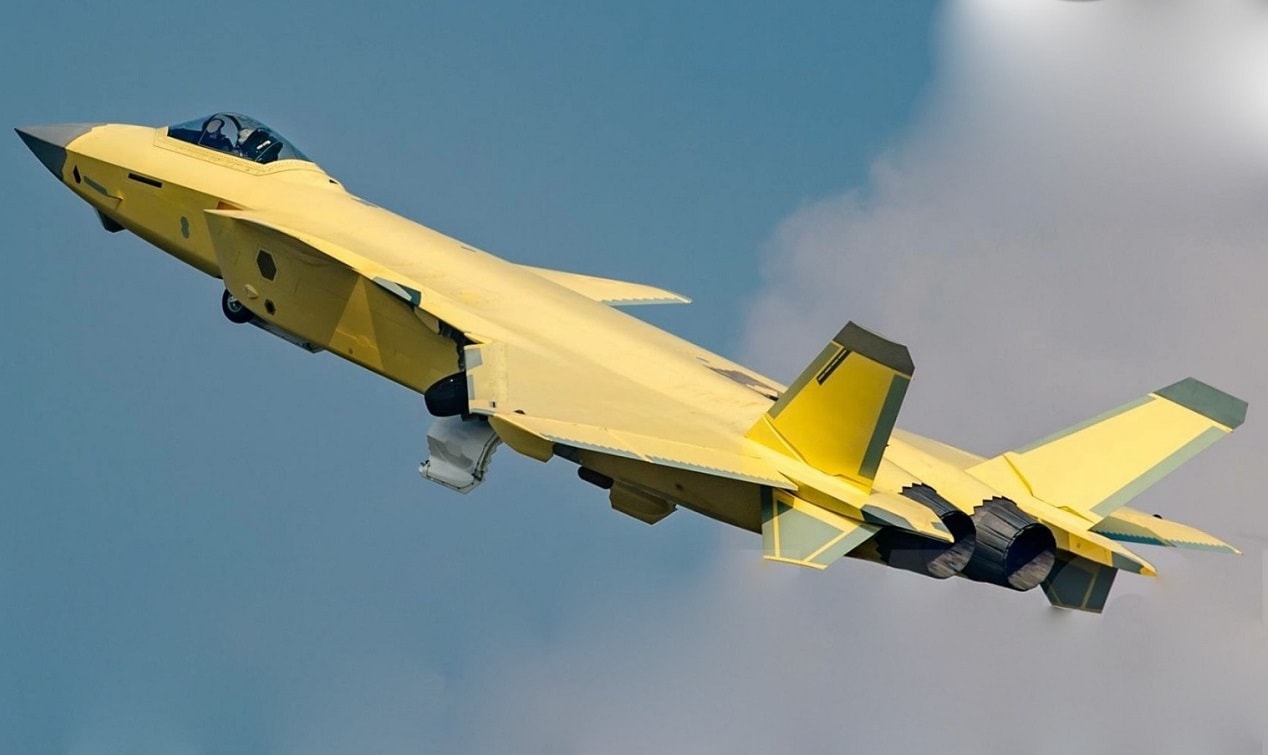
J-20 Stealth Fighter. Image Credit: Creative Commons.
The Collaborative Combat Aircraft (CCA) program is a US Air Force initiative to develop a new type of uncrewed, jet-powered aircraft that will operate alongside and collaborate with crewed fighter jets. These are already flying and being tested.
However, in the same computer simulations conducted by Chinese programmers, it was reported that a single J-20 equipped with eight medium-range air-to-air missiles had less than a 10 percent chance of defeating an F-22 equipped with six AIM-120C missiles.
US Pilots Have An Advantage in Combat Experience:
American pilots possess a significant advantage in combat experience over China due to decades of continuous operations in Iraq, Afghanistan, Syria, and the two recent air campaigns over Iran.
This experience enhances decision-making and adaptability, whereas the People’s Liberation Army (PLA) has not engaged in major combat since 1979.
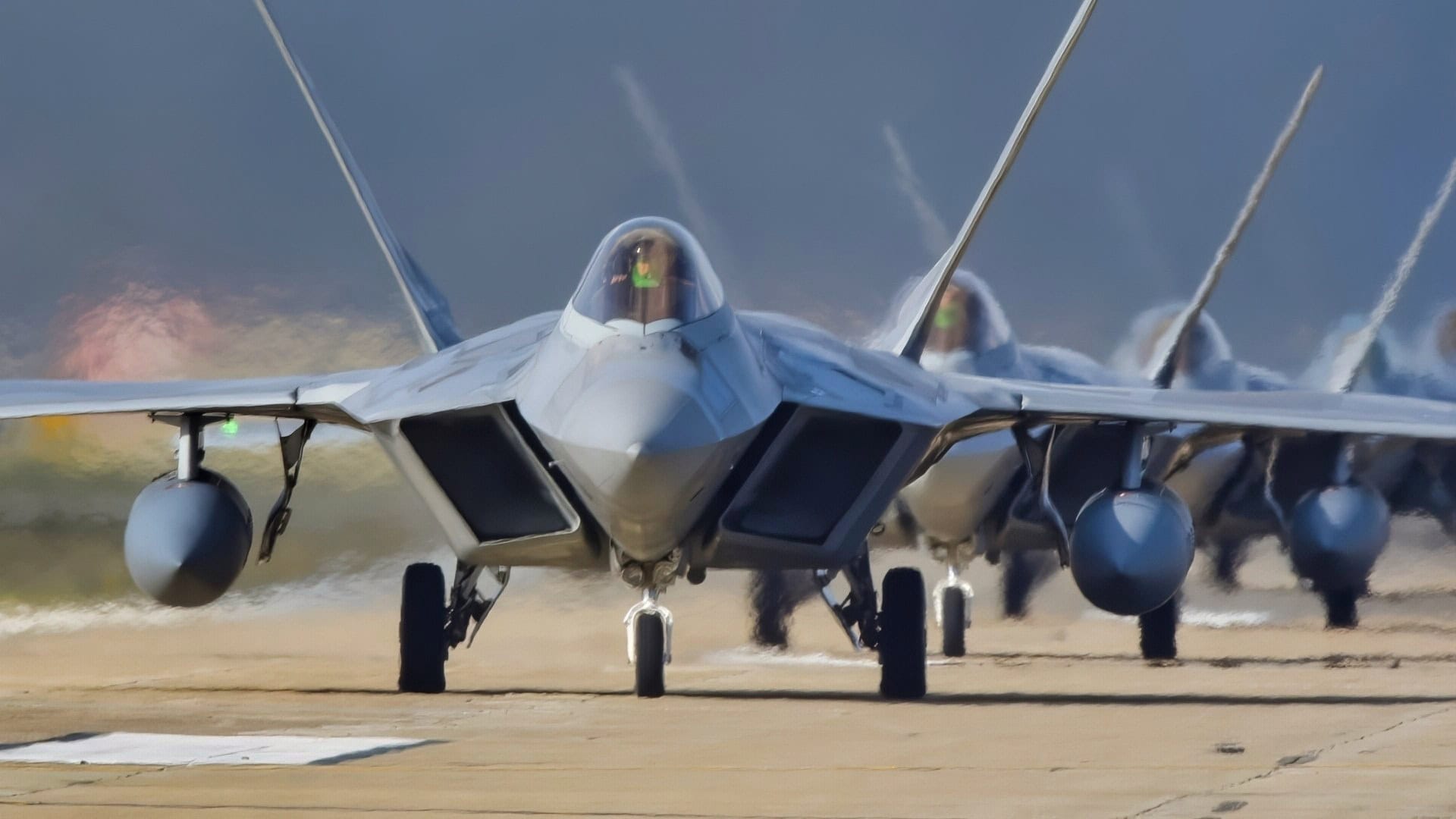
F-22 Raptors from the 1st Fighter Wing and 192nd Fighter Wing, participate in a total force exercise at Joint Base Langley-Eustis, Virginia, Feb. 28, 2019. Both wings partnered with the 633rd Air Base Wing during the Phase I exercise to showcase their readiness and deployability of the F-22s. (U.S. Air Force Photo by Tech Sgt. Carlin Leslie)
“It is easy to bluster, but it’s another thing when you actually have to go toe-to-toe and go in harm’s way,” Marine Corps Commandant Gen. Eric Smith said in 2024. “And we have a lengthy history of going in harm’s way in Iraq, in Afghanistan. So, I would not undersell the value that our combat experience brings to this fight.”
MORE – North Korea Murdered Two U.S. Officers With Axes Over a Tree and Almost Started World War III
MORE – Japan Built 70,000-Ton Battleships. None Survived WWII
About the Author: Steve Balestrieri
Steve Balestrieri is a National Security Columnist. He served as a US Army Special Forces NCO and Warrant Officer. In addition to writing on defense, he covers the NFL for PatsFans.com and is a member of the Pro Football Writers of America (PFWA). His work was regularly featured in many military publications.