
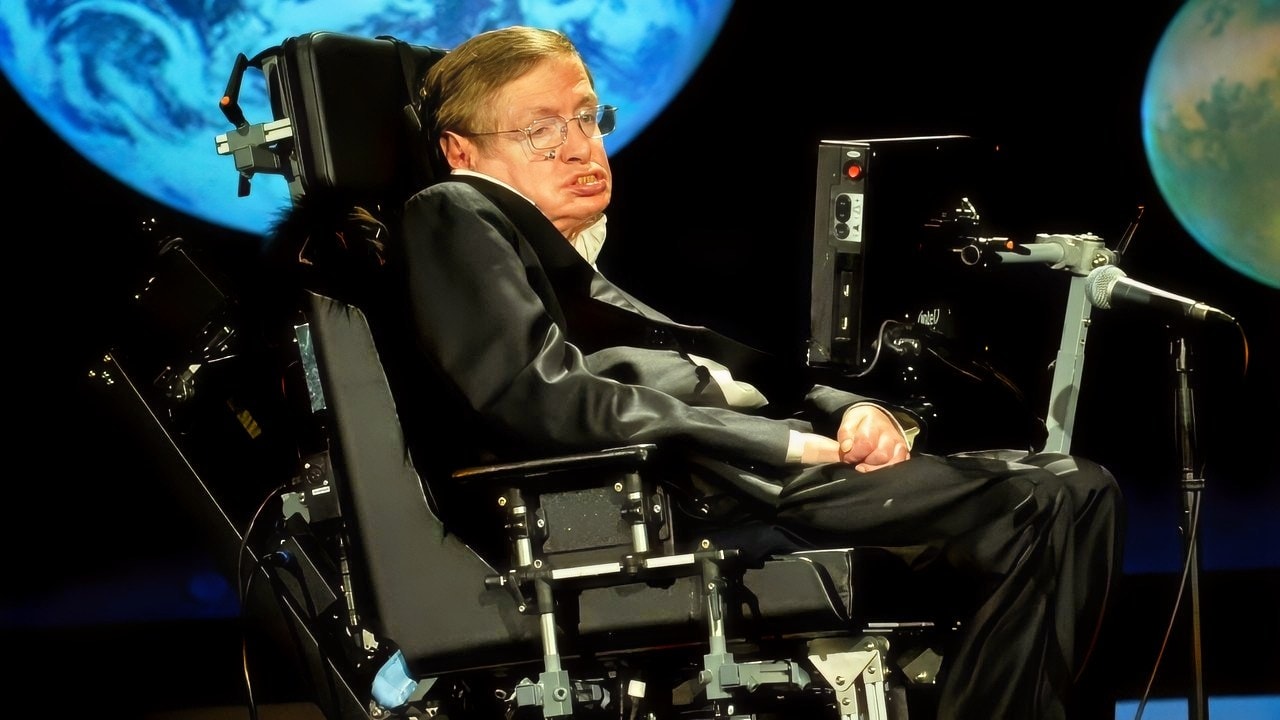
“Remember to look up at the stars and not down at your feet. Try to make sense of what you see and wonder about what makes the universe exist. Be curious. And however difficult life may seem, there is always something you can do and succeed at. It matters that you don’t just give up.” – Dr. Stephen Hawking
Stephen William Hawking was one of the most influential scientists of the modern age, renowned for his profound contributions to theoretical physics and cosmology as well as for the extraordinary perseverance with which he pursued his work.
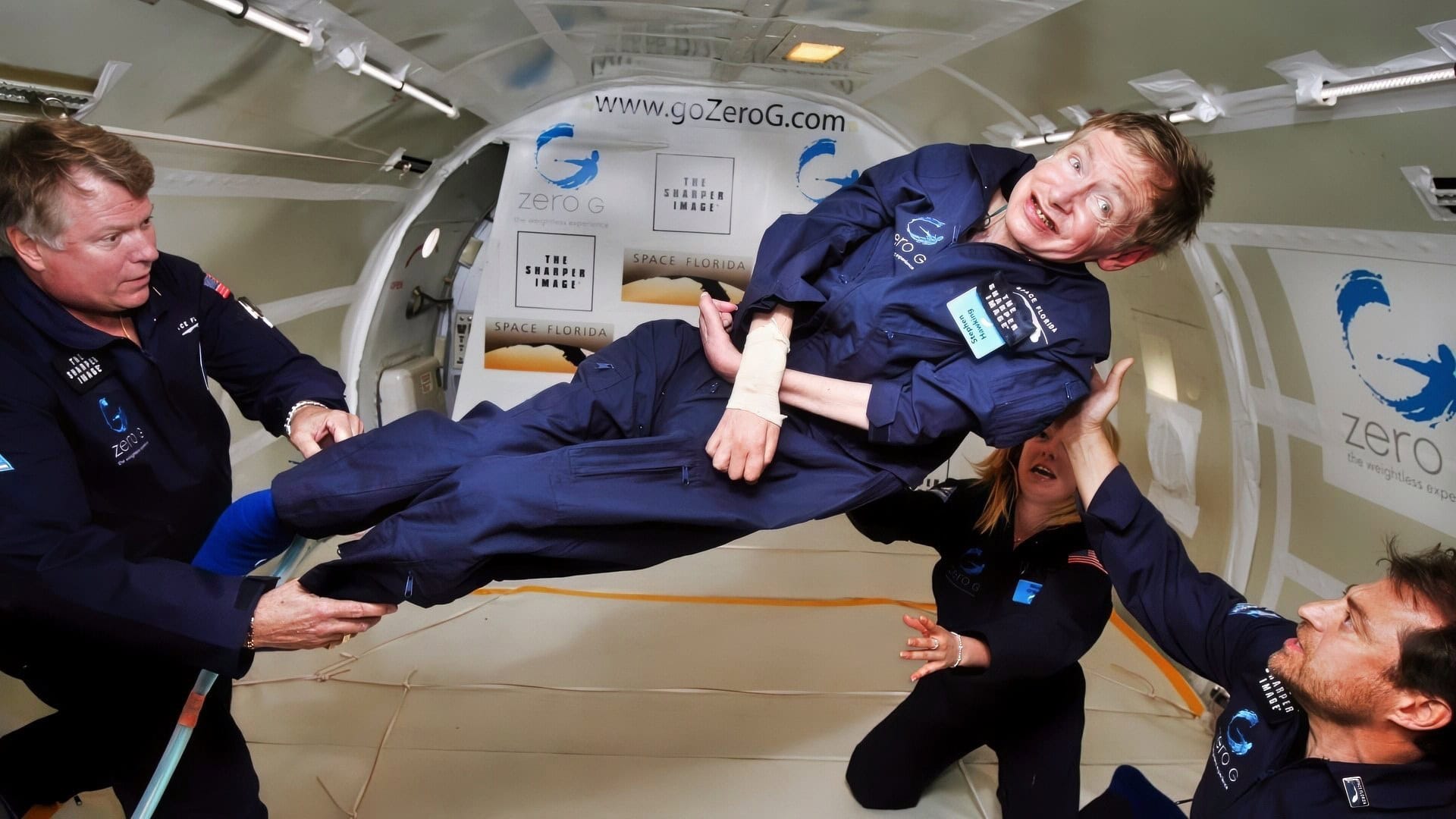
Stephen Hawking. Creative Commons Image.
His life story is remarkable not only because of his intellectual achievements, but also because he accomplished them while living with a severe physical disability that progressively limited his movement and speech.
Early Life and Education
Stephen Hawking was born on January 8, 1942, in Oxford, England, during the Second World War.
He was the eldest of four children in a family that valued education and intellectual discussion.
His father, Frank Hawking, was a medical researcher who studied tropical diseases, while his mother, Isobel Hawking, was known for her wide-ranging intellectual interests. Although the family did not have much money, books were a central component of Hawking’s home life.
From a young age, Hawking displayed an interest in how things worked, often building models and inventing games that required logical thinking, even if he was not always considered an outstanding student by his teachers.
After completing his undergraduate degree at Oxford, Hawking began postgraduate studies at the University of Cambridge, focusing on cosmology, the study of the origin and structure of the universe.
It was during these early years at Cambridge that Hawking began experiencing troubling physical symptoms, including clumsiness, muscle weakness, and frequent falls.
At age twenty-one, he was diagnosed with amyotrophic lateral sclerosis, or ALS, a degenerative neurological disease that gradually destroys the nerve cells controlling voluntary muscle movement. Doctors initially told him that he likely had only two or three years to live, plunging him into deep despair.
Scientific Contributions
Hawking’s early scientific work focused on applying Albert Einstein’s theory of general relativity to the universe as a whole. In collaboration with mathematician Roger Penrose, he developed a series of theorems demonstrating that the universe must have begun from a singularity, a point in spacetime where density becomes infinite.
This work provided strong mathematical backing for the Big Bang theory and fundamentally changed how scientists understood the origin of the universe. These singularity theorems established Hawking as a leading voice in cosmology while he was still in his thirties.
In the 1970s, Hawking turned his attention to black holes, mysterious objects formed when massive stars collapse under their own gravity.
Classical physics held that nothing could escape a black hole once it crossed the event horizon. Hawking challenged this view by combining principles of quantum mechanics with those of general relativity.
In 1974, he proposed that black holes emit a faint form of radiation due to quantum effects near the event horizon, a phenomenon now known as Hawking radiation. To put it in layman’s terms, the discovery suggested that black holes are not truly eternal but can gradually lose mass and eventually evaporate.
The theory sparked major uproar in the scientific community and remains divisive among scientists today.

NASA’s Discovery. Image Credit: 19FortyFive.com taken on October 1, 2022.
In 1979, Hawking was appointed Lucasian Professor of Mathematics at the University of Cambridge, one of the most prestigious academic positions in the world and one previously held by Isaac Newton. He would occupy this position for thirty years.
By this time, his physical condition had deteriorated significantly, and he relied on a wheelchair and constant assistance. In the mid-1980s, a severe illness resulted in a tracheotomy that permanently removed his ability to speak. From then on, Hawking communicated using a computerized speech-generating device, eventually controlled by subtle movements of his cheek.
An Active Mind with an Inactive Body
Despite the increasing severity of his disability, Hawking remained extraordinarily productive. He published influential scientific papers, supervised doctoral students, and participated in global scientific debates.
In 1988, he achieved worldwide fame with the publication of A Brief History of Time, a book written for a general audience that explored the nature of time, space, black holes, and the origin of the universe.
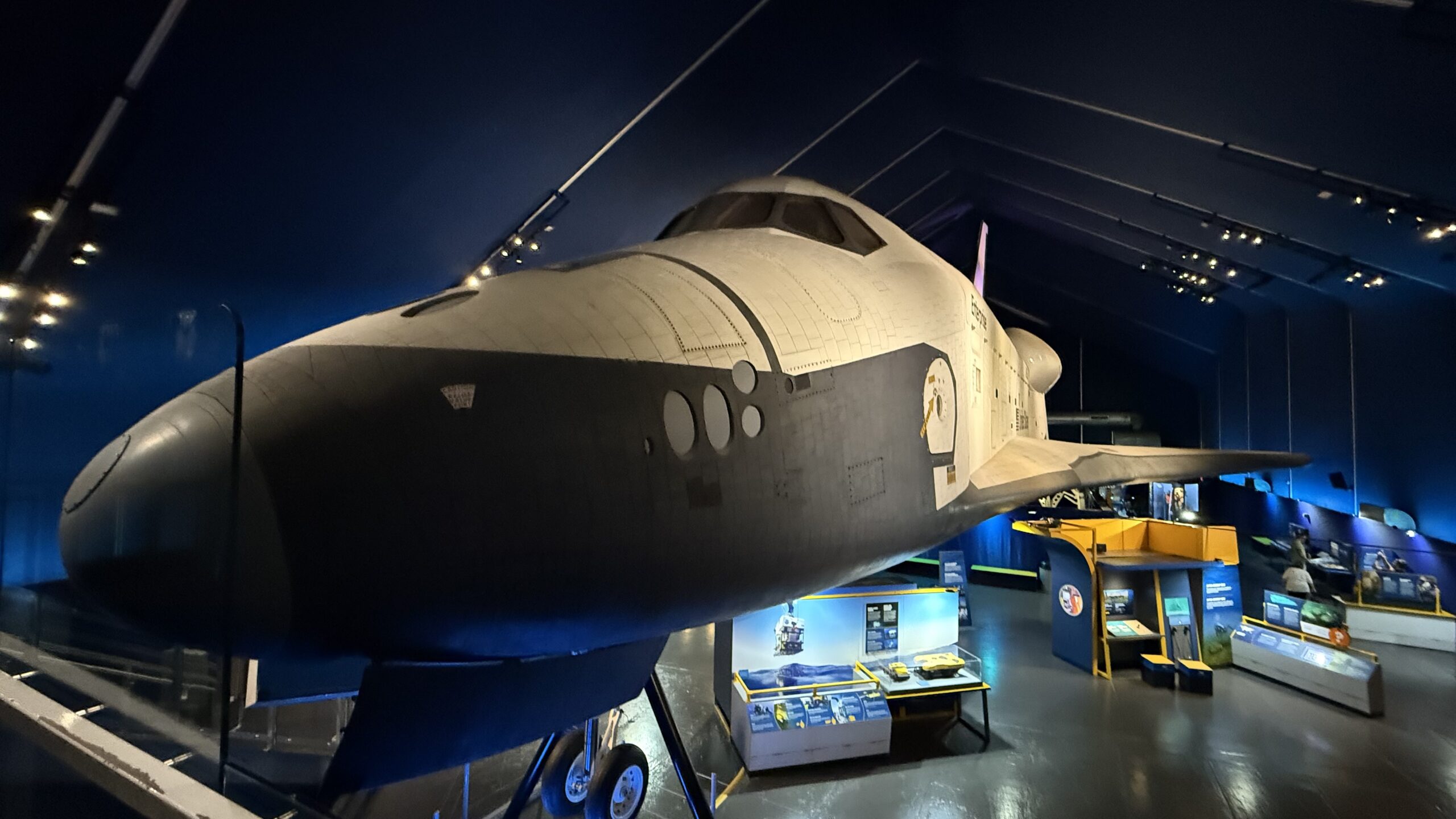
NASA Space Shuttle Onboard USS Intrepid. 19FortyFive.com Image.
Although the book was a bit too much for many readers to comprehend, the book was a massive success and spent years on bestseller lists around the world.
Following this success, Hawking continued to write popular science books, including The Universe in a Nutshell, A Briefer History of Time, and The Grand Design.
Through these works, he sought to answer some of humanity’s most fundamental questions, such as where the universe came from and whether a grand unifying theory of physics could explain everything. He believed strongly that science should be accessible to everyone, not just experts, and he worked tirelessly to communicate difficult ideas in engaging ways.
Later Years and Death
In his later years, Hawking became increasingly vocal about humanity’s future. He warned about potential existential threats such as climate change, nuclear weapons, artificial intelligence, and global pandemics.
He also advocated space exploration, arguing that humanity should become a multi-planet species to survive in the long term.
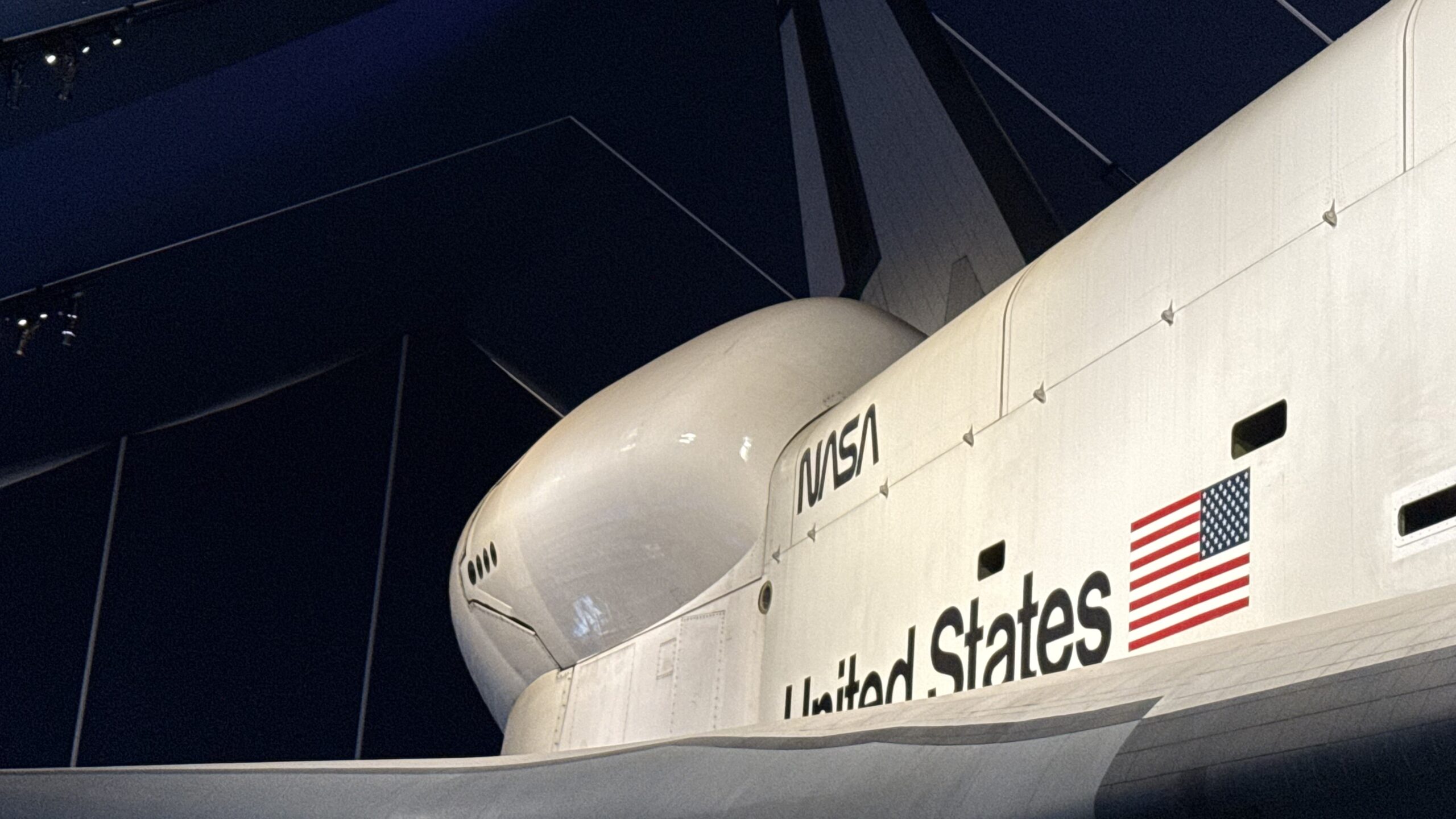
NASA Space Shuttle Onboard USS Intrepid. 19FortyFive.com Image.
Despite his condition, he continued to work on unresolved questions, especially the black hole information paradox, remaining engaged in research and debate until near the end of his life.
Stephen Hawking died peacefully on March 14, 2018, at the age of seventy-six, defying the grim prognosis he had received more than five decades earlier.
His death prompted tributes from around the world, with scientists, world leaders, and admirers recognizing not only his intellectual brilliance but also his courage and determination. Hawking left a monumental impact on the scientific community as a whole.
He reshaped our understanding of the universe, inspired generations of scientists, and showed that the pursuit of knowledge can transcend even the most severe physical limitations.
About the Author: Isaac Seitz
Isaac Seitz, a Defense Columnist, graduated from Patrick Henry College’s Strategic Intelligence and National Security program. He has also studied Russian at Middlebury Language Schools and has worked as an intelligence Analyst in the private sector.