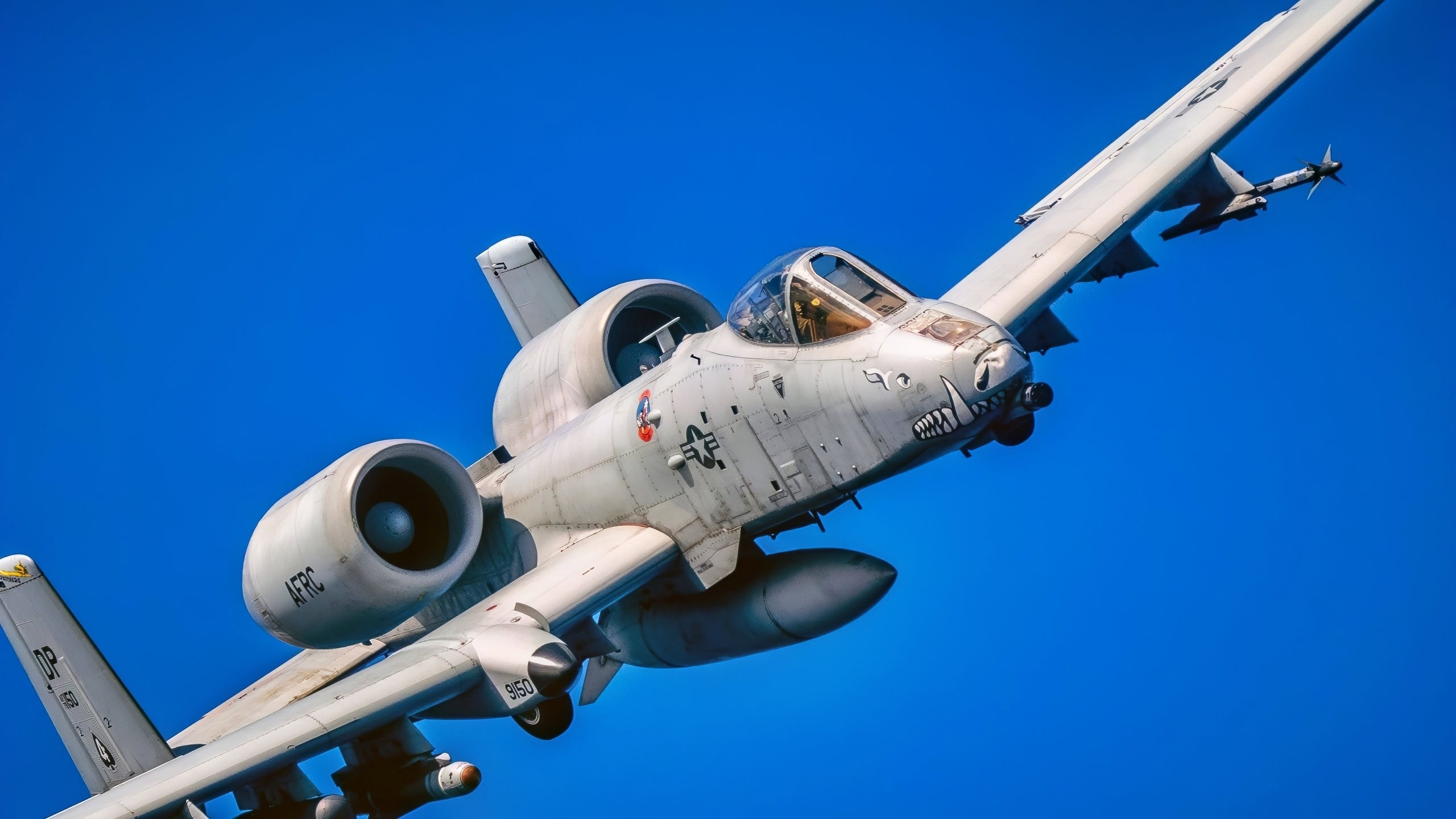
Chairman of the Joint Chiefs General Dan Caine Confirms A-10 Warthogs Are Hunting Iranian Fast Boats in the Strait of Hormuz
With A-10 Thunderbolt IIs strafing targets in Iran, and Iranian fast boats in the Strait of Hormuz, that Cold War-era platform is enjoying a renaissance of sorts.
Photos of the jet posted online show the A-10’s distinctive shape and unique nose art, capped by the jet’s hulking 30-mm Gatling gun.
“The A-10 Warthog is now in the fight across the southern flank and is hunting and killing fast attack watercraft in the Straits of Hormuz,” Chairman of the Joint Chiefs Air Force General Dan Caine told reporters during a recent press briefing.
A social media post on X explained one of the jet’s immense strengths—its ability to loiter for hours on station, flying in wait for targets to appear on the ground.
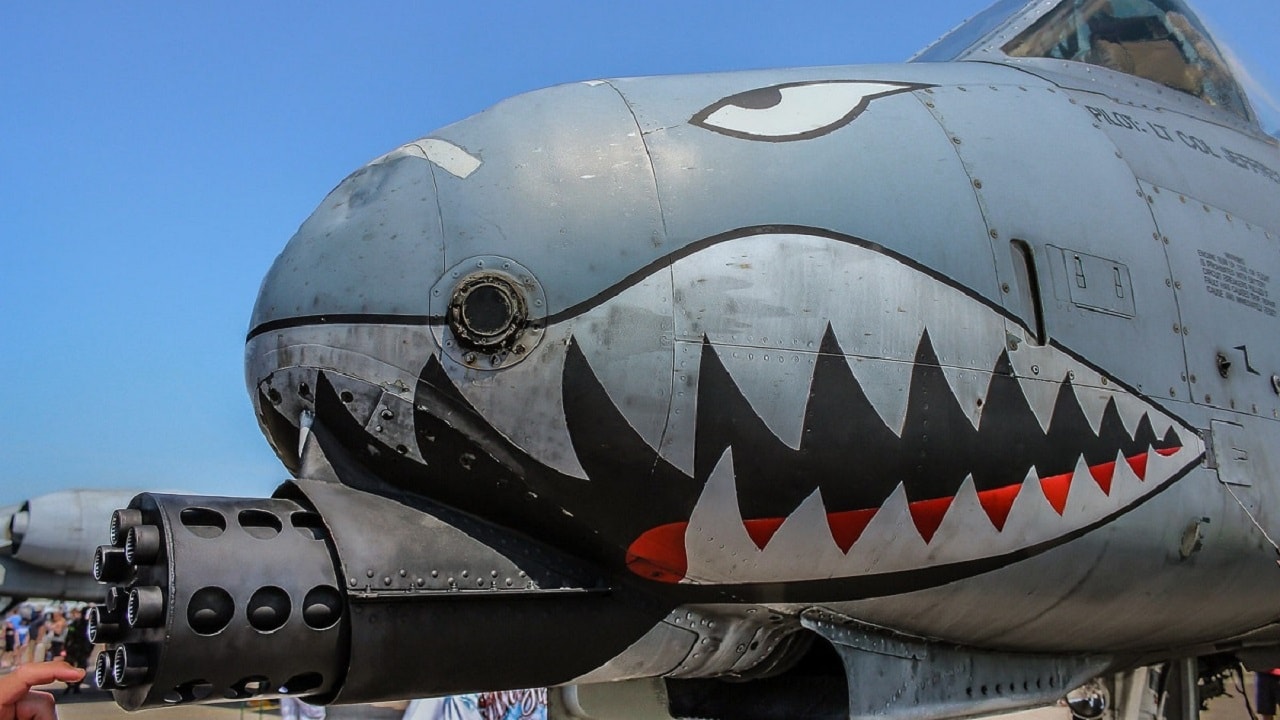
A-10 Warthog. Image Credit: Creative Commons.
Supporters and Detractors for A-10 Warthog
Despite its many detractors, who maintain that the A-10 is ill-suited to today’s threat environment, the jet is proving it is still useful during a largely successful effort by Israeli and U.S. forces to suppress Iran’s air defenses.
Of course, despite its detractors, the A-10 has a dedicated fan base too—one that strongly advocates for the jet’s unique abilities.
“The longer the A-10 exists, the more impressed I am with that aircraft,” Dan Grazier, a Stimson Center senior fellow and the director of the nonprofit’s national-security reform program, said to Defense One.
“It’s just proof positive that when you design a weapon system that is stripped down and all the decisions that were made in the course of its design were all made for matters of military effectiveness, you get a really effective aircraft.”
Continued Relevancy?
Multiple administrations and Pentagon officials have argued that as the United States pivots from the long, grinding campaigns in the Middle East toward the prospect of a near-peer, high-end conflict in Asia, the A-10 is increasingly irrelevant.
Developed during the Cold War to decimate massed Soviet armored formations rolling westward toward NATO countries, the A-10 proved particularly useful to U.S. and coalition forces in Iraq and Afghanistan.
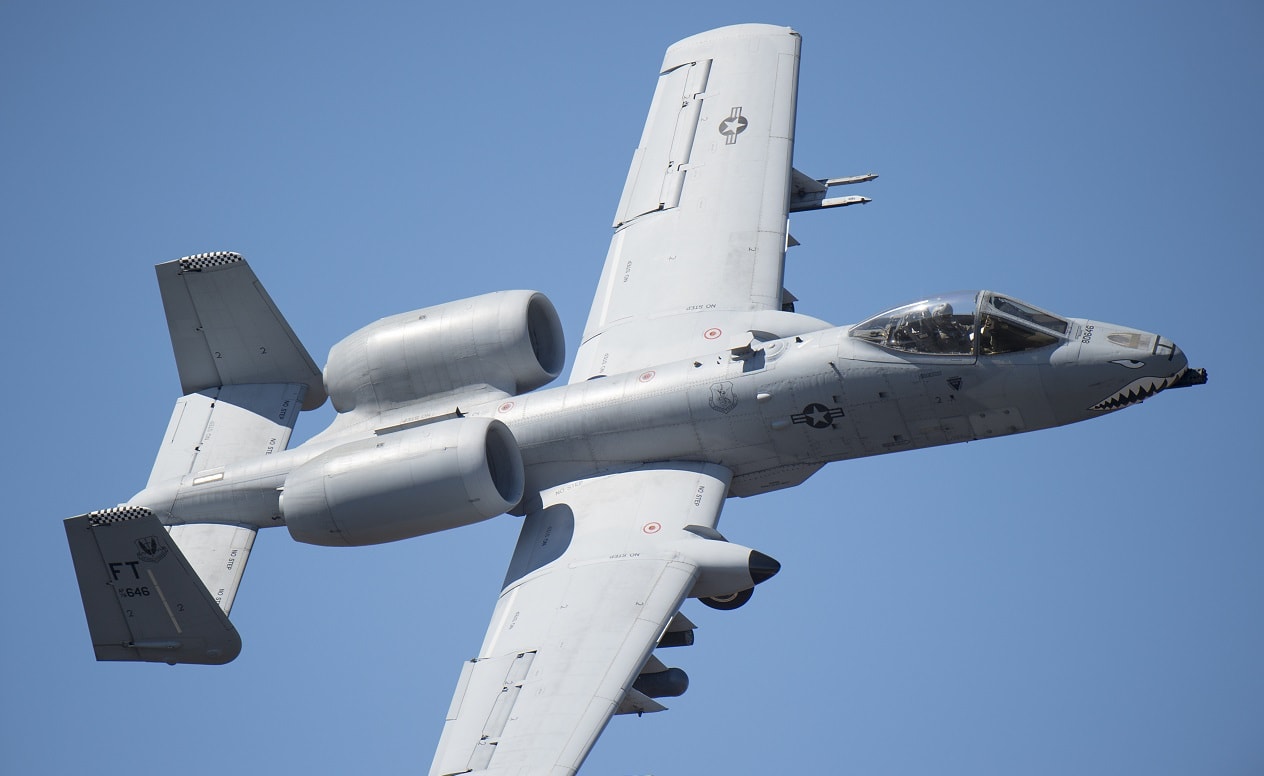
An A-10 Thunderbolt II flies over Grand Bay Bombing and Gunnery Range at Moody Air Force Base, Ga., Feb. 18, 2016. Multiple U.S. Air Force aircraft within Air Combat Command conducted joint aerial training that showcased the aircrafts tactical air and ground maneuvers, as well as its weapons capabilities. (U.S. Air Force photo by Staff Sgt. Brian J. Valencia/Released)
Capable of remaining on station for extended periods of time, the A-10’s immense 30-mm gun and wide weapon loadout were a powerful deterrent force.
But in those theaters, A-10 pilots faced virtually no surface-to-air threats—indeed, it faced virtually no air defenses of any kind—so it could fly over Iraq and Afghanistan with impunity.
Against an adversary with robust air defenses, however, the A-10 would not have the freedom of movement it enjoyed during previous wars in the Middle East.
Close Air Support
Retiring the A-10, however, would have created a gap in close air support (CAS)—a void the F-35 multi-role fighter was billed as being able to fill. The F-35A, a stealthy fifth-generation fighter flown by the U.S. Air Force and other allied air forces, has a single, four-barreled Gatling gun.
That GAU-22/A fires a somewhat smaller 25-mm round but retains the same accuracy of its five-barreled predecessor.
The inclusion of a 25-mm gun in the F-35A design was a nod to the A-10’s anticipated retirement. But a series of partially declassified tests comparing both aircraft’s ability to support ground forces cast doubt on assumptions about the F-35A’s CAS capability.
Recent Use in Iraq
Videos swirling around social media of A-10s on staging runs in the Middle East garnered some attention, partially thanks to the unique “revving” noise the plane’s 30mm gun makes, but also for the remarkably long duration of said gun runs.

A U.S. Air Force A-10 Thunderbolt II flies a routine mission over the U.S. Central Command area of responsibility Dec. 23, 2024. A-10 Thunderbolt II pilots train and operate under night vision, allowing them to conduct presence patrols critical to regional security at any time and under any conditions. (U.S. Air Force photo)
The A-10’s GAU-8 Avenger, which is also used onboard some U.S. Navy ships for air defense, fires up to 4,200 shots per minute and can deplete its magazine in seconds.
As one former A-10 pilot explained to TWZ, the gun is usually fired in two- to three-second bursts. But some clips of A-10s show the jets firing their main gun for long nine-second bursts.
Such long strafing runs could be explained by a long convoy of vehicles or a dense grouping of targets on the ground. But prolonged strafing runs degrade the gun’s accuracy as its barrels heat, and the precise reason for the long runs is unclear.
Into the Future
The National Defense Authorization Act for Fiscal Year 2026 obliges the Secretary of the Air Force, Troy E. Meink, to give Congress “a briefing on the status of A-10 aircraft inventory and the proposed plan for divesting all A-10 aircraft prior to fiscal year 2029.” It also says that the U.S. Air Force must not “decrease the total aircraft inventory of A-10 aircraft below 103 aircraft.”
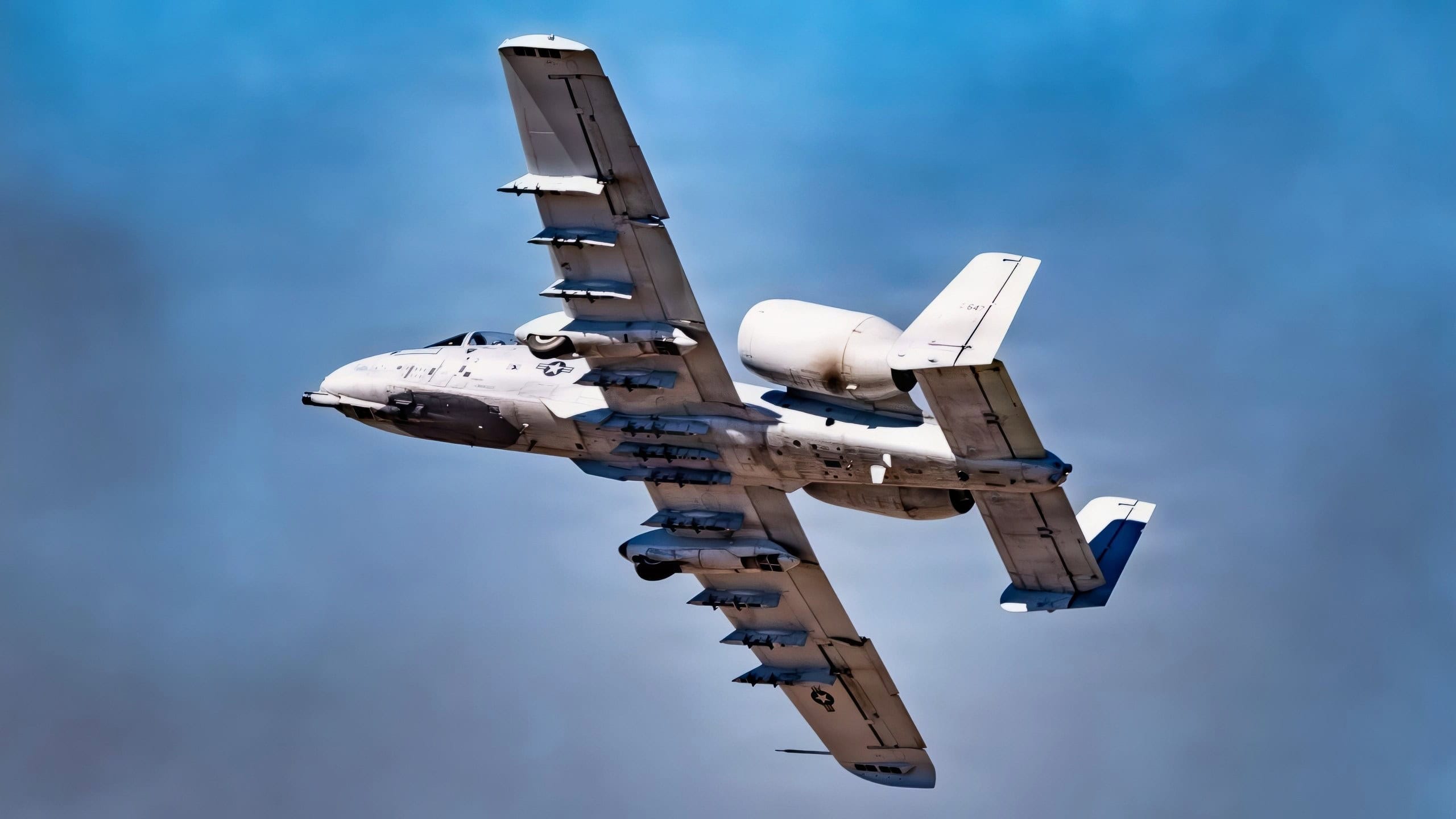
A U.S. Air Force A-10 Thunderbolt II assigned to Davis-Monthan Air Force Base, flies over the 56th Fighter Wing, March 20, 2026, at Luke Air Force Base, Arizona. Demonstrations and displays provide insight into the discipline and expertise required of those who operate military aircraft. Opportunities for the public to see military aviation up close help build appreciation for the readiness of the joint force. (U.S. Air Force photo by Senior Airman Belinda Guachun-Chichay)
Though the sun has not yet fully set on the A-10, it would appear that the jet’s service—despite its recent application over the skies of Iran and the Strait of Hormuz—may be nearing its end.
MORE – China’s H-20 Stealth Bomber Is Coming – We Just Don’t Know When
MORE – We Got Close to the YF-12A – The Mach 3 Cold War Interceptor That Looks Like the SR-71
About the Author: Caleb Larson
Caleb Larson is an American multiformat journalist based in Berlin, Germany. His work covers the intersection of conflict and society, focusing on American foreign policy and European security. He has reported from Germany, Russia, and the United States. Most recently, he covered the war in Ukraine, reporting extensively on the war’s shifting battle lines from Donbas and writing on the war’s civilian and humanitarian toll. Previously, he worked as a Defense Reporter for POLITICO Europe. You can follow his latest work on X.