
After Trump: Any Future President Except Possibly JD Vance Would Try to Rejoin NATO
President Donald Trump is once again talking about abandoning NATO, perhaps with a degree of seriousness that we have not seen before.
Trump is upset that NATO allies have not come to the support of the United States in its war against Iran, irrespective of the fact that NATO is a defensive alliance and that Washington did not consult with the allies before launching the conflict.
As politics constrain the President domestically, he may feel the need to lash out at foreign countries to maintain his position in the national spotlight.
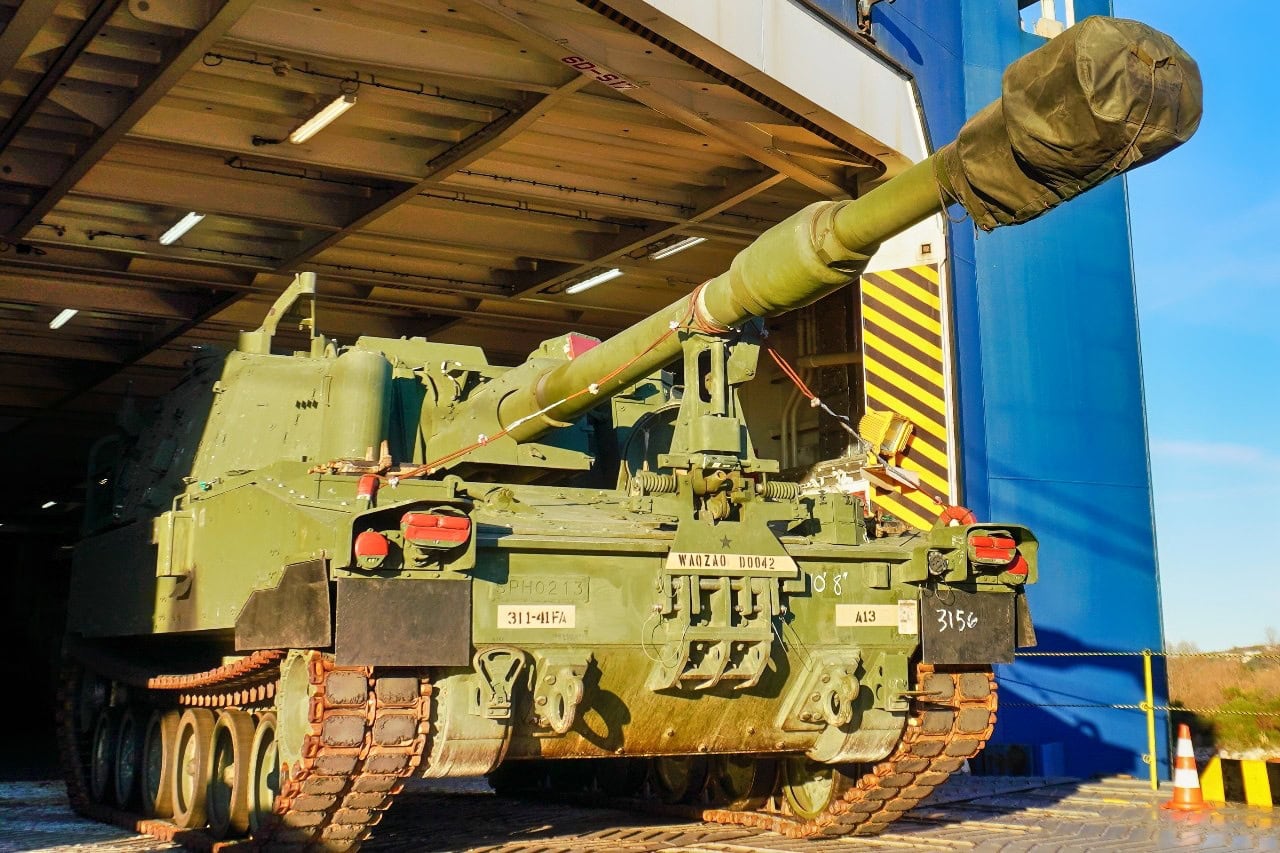
A U.S. M109 Paladin howitzer drives off the vessel Liberty Peace during offloading operations at the port of Koper, Slovenia on December 28, 2024. This Reception, Staging, and Onward Movement (RSOM) operation in the port of Koper is bringing in 1-3ID, the next Regionally Aligned Force (RAF), into the European Theater. These forces will be then transported by the 21st Theater Sustainment Command to their forward operating sites across NATO where they will conduct interoperability training with Allies and partners. The intent of these RAFs is to assure our allies and deter all adversaries.
Zeroing in on NATO
NATO provides critical security benefits for the United States.
As has been the case since its creation, it serves as a focal point for deterring and constraining Russia. Commitment to partners in the East prevents Moscow from chipping away at the heart of Europe.
It also restrains competition within its membership, providing an incentive for every state to resolve differences through peaceful negotiation rather than militarized competition.
NATO provides an institutional framework for the transatlantic defense industrial base, a cooperative regime that has produced the most lethal military equipment that the world has ever known.
NATO ensures that America will remain politically interested in a part of the world where Washington has intrinsic social and economic interests.
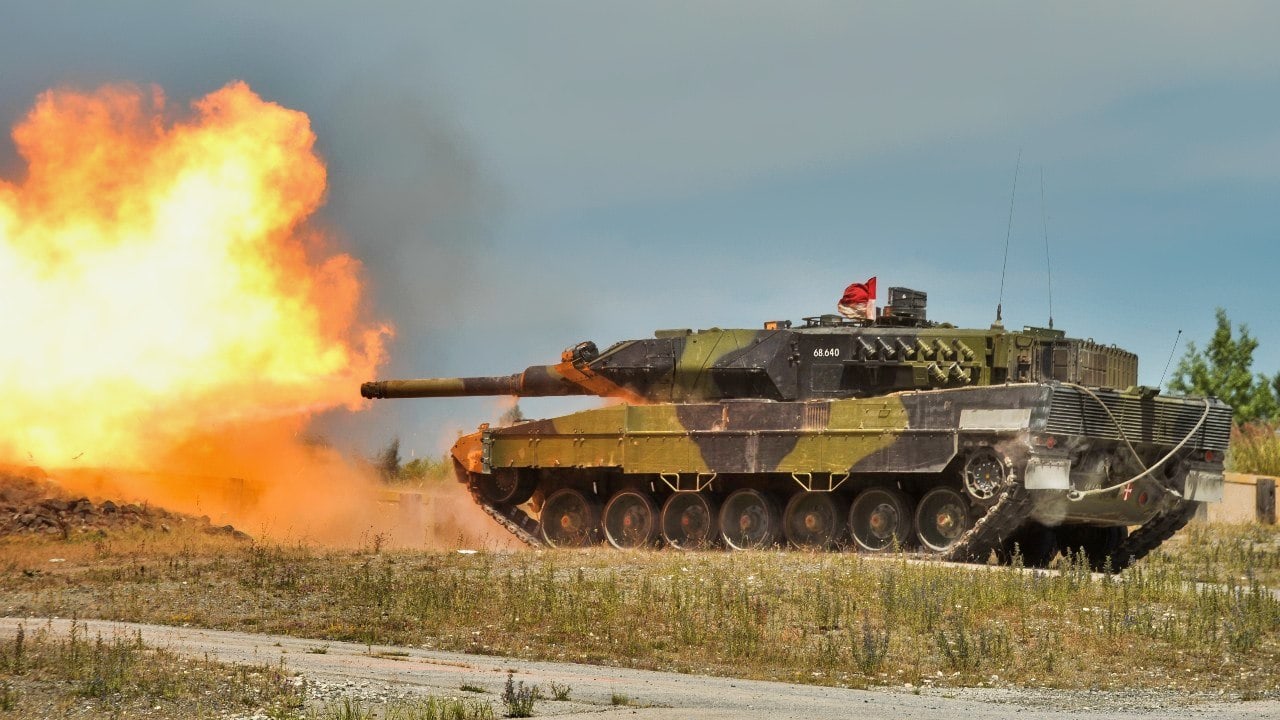
A Royal Danish Army Leopard 2 tank fires at a target during a live-fire exercise at the 7th Army Joint Multinational Training Command’s Grafenwoehr Training Area, Germany, July 04, 2014. The 7th Army JMTC provides dynamic training, preparing forces to execute Unified Land Operations and contingencies in support of the Combatant Commands, NATO, and other national requirements. (U.S. Army photo by Visual Information Specialist Markus Rauchenberger/released),
And yet President Trump does not highly rate these benefits, as he sees little threat from Russia and little benefit from economic cooperation with Europe.
If Trump decides to withdraw from NATO, he may well succeed legally, despite a statutory provision mandating Congressional approval for such an action.
A confrontation between Congress and the President over NATO would likely end up in the courts, and the courts have historically been loath to challenge the President’s authority over national security policy.
In any case, Trump’s obvious disdain for NATO has already damaged the alliance, as American credibility undergirds the security guarantees upon which NATO relies.
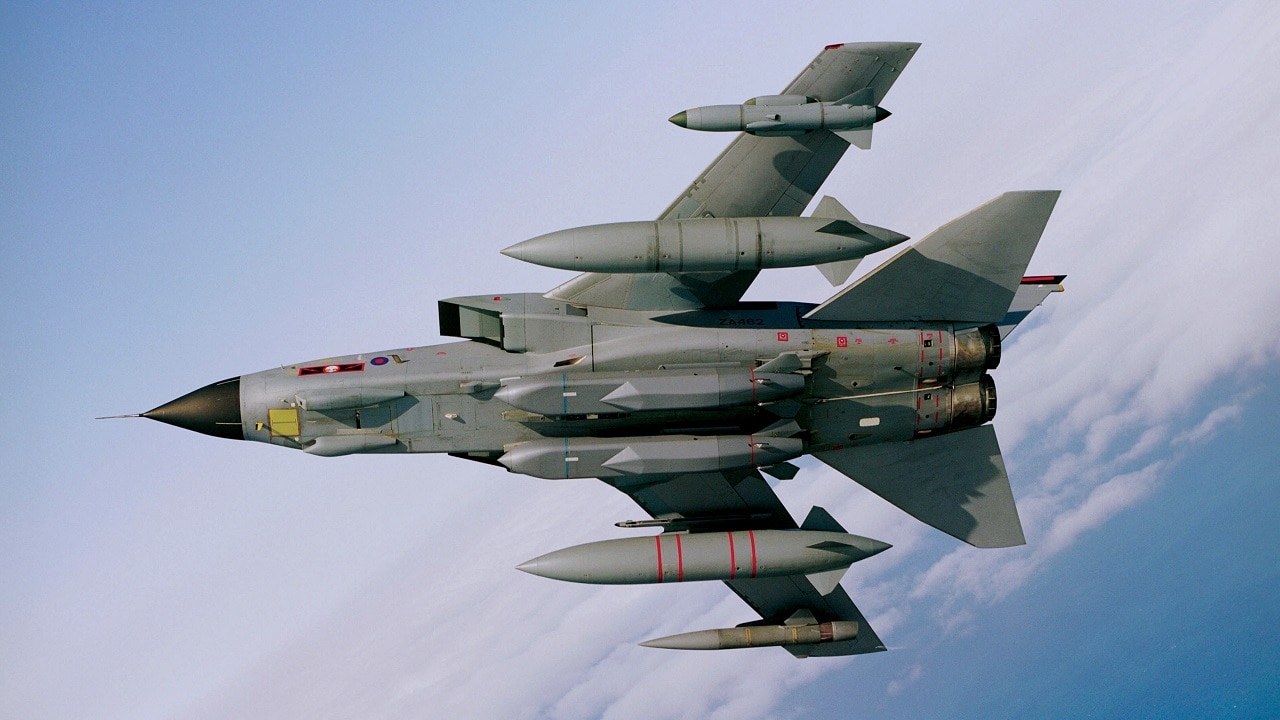
An RAF Tornado GR4 aircraft carrying two Storm Shadow missiles under the fuselage.
A Strong Case for NATO
And yet NATO could, and probably would, persist despite the abdication of the United States. The core logic of a pan-European military alliance would still hold. Russia is as threatening as it has ever been, and supporting Ukraine would become even more critical as a means of keeping Moscow busy and sapping its strength.
The French and British nuclear deterrents can only imperfectly replace the American nuclear stockpile, but maintaining and expanding them would immediately become a critical interest for major European partners.
Not least, few Europeans will forget the threats of military force made by the United States against Greenland, a territory of the Kingdom of Denmark.
And while Europeans sometimes like to forget, the fact is that Europe is wealthy and technologically advanced.
The European defense industrial base remains world-class and would benefit immensely from the heavy investment that would almost certainly result from an American withdrawal.
This process would be painful and time-consuming, but without the US conventional and nuclear umbrella, Europeans would have to adjust quickly.
The Day After Trump
And were Trump to withdraw from NATO, it would leave open the question of how the next US President would handle the transatlantic alliance.
President Trump represents the ragged right edge of US opinion on NATO, and likely any future President (apart, possibly, from Vice President JD Vance) would look more kindly on maintaining the alliance.

The guided missile destroyer USS Laboon arrives for a routine port visit to the island of Crete. Laboon is on a scheduled six-month deployment in support of Standing NATO Maritime Group (SNMG) 2 and is conducting operations in support of Operation Active Endeavor. Active Endeavor operates in the Mediterranean Sea and is designed to prevent the movement of terrorists or weapons of mass destruction as well as to enhance the security of shipping in general. U.S. Navy photo / Paul Farley.
On the one hand, US withdrawal would badly undermine credibility within and outside the alliance, indicating to both Russia and the Europeans that the United States did not regard NATO as an enduring national security value.
On the other hand, it is difficult to imagine European policymakers rejecting US efforts to re-engage with the alliance. US capabilities are too substantial to ignore, and at the very least, reintegrating the United States would give Europeans some tools to manage their unreliable ally.
Trump, NATO, and the Future
Withdrawing from NATO would be foolish and destructive of US national security interests.
This doesn’t mean it won’t happen. A withdrawal from NATO would redraw security politics in Europe and sever the most important security relationship of the mid-to-late twentieth century.
Major complications would ensue, not least the need to decide how to defend Canada and Greenland against the US.
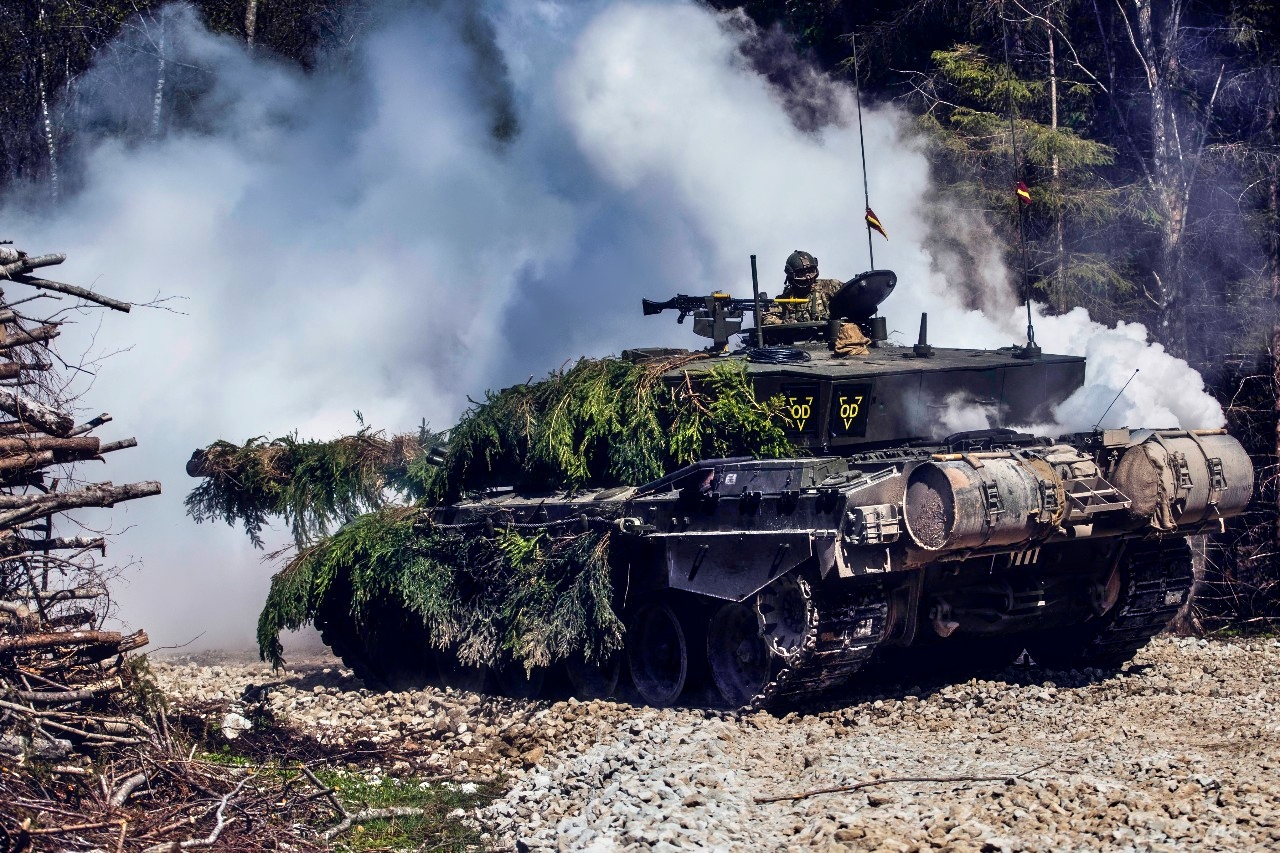
A British Army Challenger 2 Main Battle Tank (MBT) lays down a smoke screen during Spring Storm 19, Estonia’s largest annual military exercise. Roughly 9,000 soldiers from Estonia, other NATO Allies and partner nations have gathered near the town of Jõhvi to engage in a collective defence exercise, strengthening their ability to work together in times of crisis. The exercise runs from 29 April until 10 May.
And yet the basic factors that brought NATO into existence would remain. Europe is wealthy and potentially powerful, and its major powers are accustomed to cooperation.
European security cooperation won’t fall apart simply because the United States takes its ball and heads home.
MORE – NATO Can Be Broken by Donald Trump
About the Author: Dr. Robert Farley
Dr. Robert Farley has taught security and diplomacy courses at the Patterson School since 2005. He received his BS from the University of Oregon in 1997 and his Ph. D. from the University of Washington in 2004. Dr. Farley is the author of Grounded: The Case for Abolishing the United States Air Force (University Press of Kentucky, 2014), the Battleship Book (Wildside, 2016), Patents for Power: Intellectual Property Law and the Diffusion of Military Technology (University of Chicago, 2020), and most recently Waging War with Gold: National Security and the Finance Domain Across the Ages (Lynne Rienner, 2023). He has contributed extensively to a number of journals and magazines, including the National Interest, the Diplomat: APAC, World Politics Review, and the American Prospect. Dr. Farley is also a founder and senior editor of Lawyers, Guns and Money.