
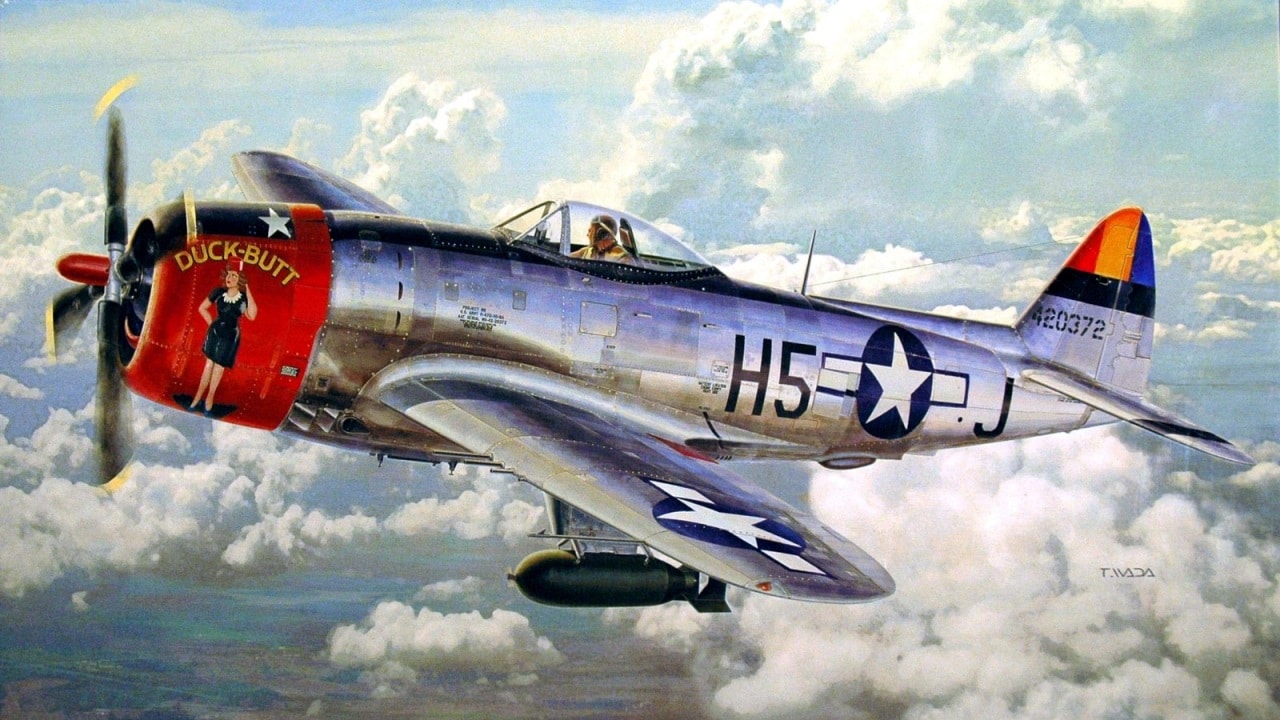
The P-47 Was Called the ‘Flying Bathtub’ and Weighed 10,000 Pounds Empty — It Still Shot Down 20 of Hitler’s Messerschmitt 262 Jets
This writer is already on record as buying into the strong (though not universal) consensus that the North American Aviation (NAA; sadly now defunct) P-51D Mustang was the best fighter plane of World War II.
However, I objectively noted that the Republic P-47 Thunderbolt, aka the “T-Bolt,” aka the “Jug,” aka the “Flying Bathtub,” also had a strong case for that title.
Accordingly, we now give the T-Bolt its moment in the sun.
P-47 Initial History and Vital Stats
Built by Republic Aviation Corporation (now defunct; not to be confused with the present-day company of the same name, which builds “advanced electric VTOL aircraft”), the P-47 Thunderbolt made her maiden flight on May 6, 1941 – four years to the day after the Hindenburg disaster and 7 months before the Pearl Harbor raid – and was officially introduced into U.S. Army Air Forces (USAAF) service in November 1942.
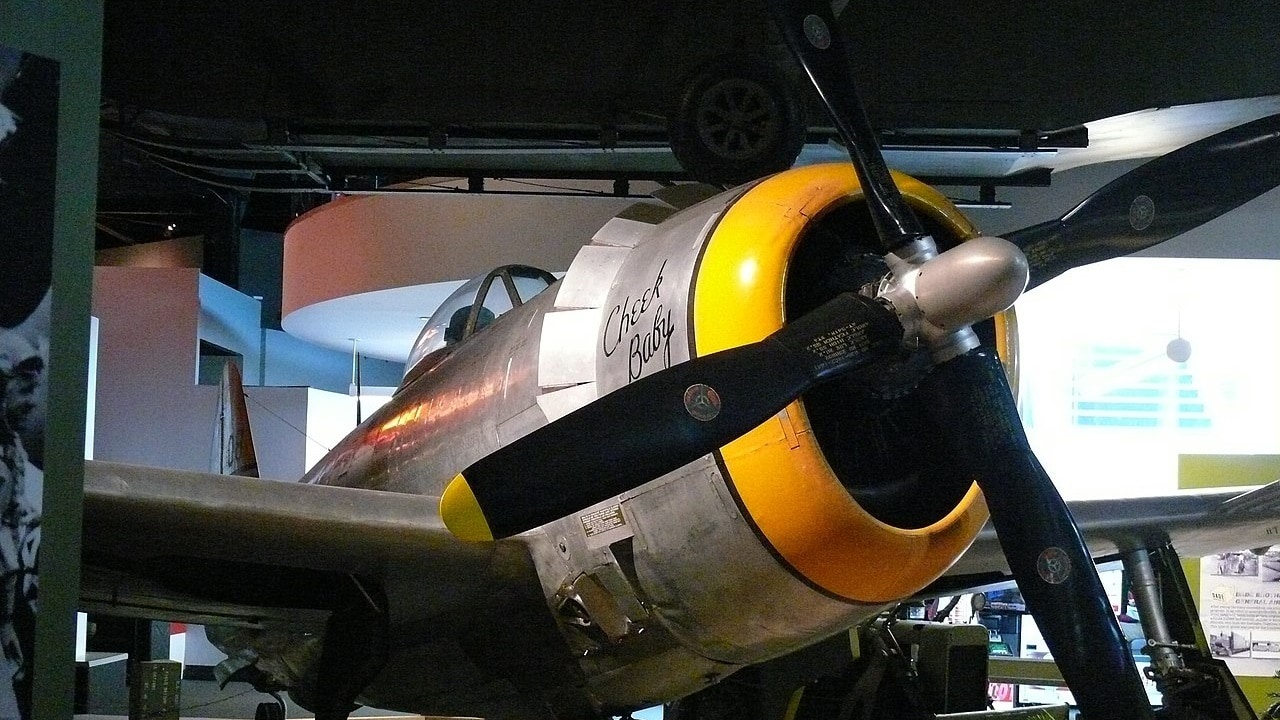
Republic P-47 Thunderbolt in the Cradle of Aviation Museum. The Republic P-47 Thunderbolt was the biggest, heaviest, and most expensive fighter aircraft in history to be powered by a single reciprocating engine. The P-47 was effective in air combat but proved especially adept at ground attack. The P-47N was the last Thunderbolt variant to be produced. It was designed as an escort fighter for the B-29 Superfortress bombers flying raids on the Japanese home islands.
Those sobriquets of “Jug” and “Flying Bathtub” were highly apropos, as the goshdarn thing was huge by WWII fighter plane standards.
The P-47D variant in particular had an empty weight of 10,000 lbs. and a maximum takeoff weight (MTOW) of 17,500 lbs.; by comparison basis of comparison, the P-51D had an empty weight of 7,635 lbs. and an MTOW of 12,100 lbs.
Yet despite the heavy weight, the Republic warbird still had a very respectable max airspeed of 426 mph.
Additionally, the “Flying Bathtub” definitely had some metaphorical “muscle” to go with the “fat,” to the tune of eight Browning M2 “Ma Deuce” .50 caliber machine guns, with four, mounted on each wing (compared with six such guns for the Mustang).
The “Jug” could also tote up to 2,500 lbs. worth of bombs or M8 4.5-inch rockets.
Over 15,600 P-47 airframes were built between 1941 and 1945.
Combat History
As “fighter pilot’s minstrel” Dick Jonas (Lt. Col, USAF, Ret.) sang in a verse of the humorous ditty “Give Me Operations,” “Don’t give me an old Thunderbolt. / It gave many a pilot a jolt. / It looks like a jug and flies like a tug, / Don’t give me an old Thunderbolt.”
However, it was the Axis powers that ended up suffering a far greater—and far more fatally final— “jolt” at the hands of the Thunderbolt pilots.
The top two American aces of the European Theater, then-Lt. Col. Francis “Gabby” Gabreski and then-Capt. Robert S. “Bob” Johnson, with 28 and 27 air-to-air victories respectively, obtained all their kills in T-Bolts; Bob Johnson in particular was the first USAAF pilot in Europe to top the previous record of 26 victories held by America’s First World War ace of aces, Capt. Eddie Rickenbacker.
Gabby and Bob’s unit, the 56th Fighter Group, was the only 8th Air Force unit still flying the Thunderbolt instead of the Mustang by the end of the war, and this was by choice; this choice was vindicated by their 677.5 air-to-air kills and 311 more Luftwaffe aircraft destroyed on the ground.
The lumbering T-Bolts even performed well against Hitler’s then-newfangled Wundwerwaffen (“wonder weapon”) jets, killing 20 Messerschmitt Me 262 Schwalbe (“Swallow”) jet fighters and four Arado Ar 234 Blitz (“Lightning”) jet bombers.
But it wasn’t just the Luftwaffe that felt the wrath of the P-47’s power, as the ground forces of the Wehrmacht were heavily victimized by this massive warbird as well. Units such as the 365th Fighter Group and the 405th Fighter Group rained absolute hell upon the terrestrial components of Nazi Germany’s war machine, laying waste to a staggering 86,000 railroad cars, 9,000 locomotives, 6,000 armored fighting vehicles, and 68,000 trucks. For more details on these particular exploits, read “Hell Hawks!: The Untold Story of the American Fliers Who Savaged Hitler’s Wehrmacht,” by the late Robert F. Dorr and Thomas Jones.
Not to be outdone, T-Bolt drivers in the Pacific Theatre of Operations got more than their fair share of kills against Imperial Japan’s warplanes.
One shining example was Col. Neel E. Kearby of the 5th Air Force, who tallied 22 aerial victories and was awarded the Medal of Honor for downing six enemy fighters in a single engagement.
Where Are They Now?
After the U.S. Air Force became a separate and independent branch of service on September 18, 1947, it changed the alphanumeric designations of its fighter planes from “P” for “Pursuit” to “F” for “Fighters. Accordingly, the P-47 officially became the F-47, at least briefly.
However, unlike, say, the P-51 cum F-51 Mustang, the F-47 Thunderbolt didn’t get to see further action in the Korean War; the active-duty USAF retired the plane in 1949, and the Air National Guard (ANG) followed suit in 1953. However, the Peruvian Air Force kept the big “Bañera Voladora” (that’s “Flying Bathtub” in Spanish) in service until 1966.
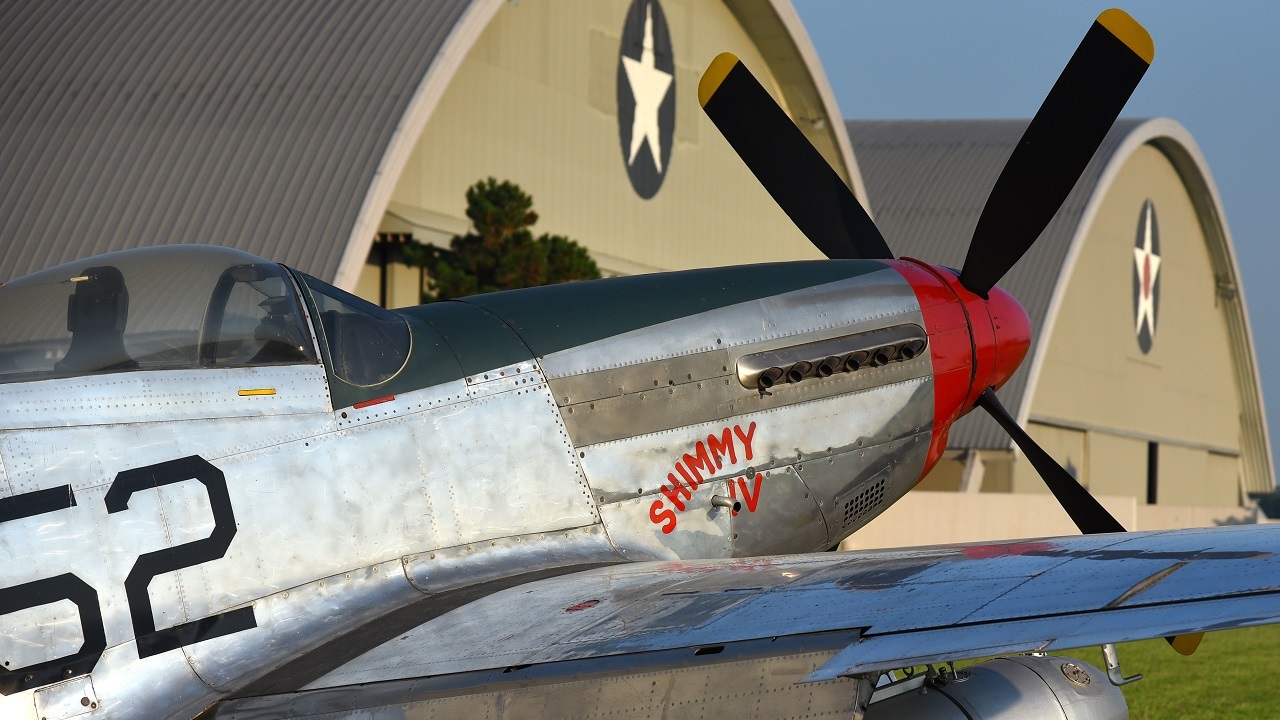
The P-51D incorporated several improvements, and it became the most numerous variant with nearly 8,000 being built. The most obvious change was a new “bubble-top” canopy that greatly improved the pilot’s vision. The P-51D also received the new K-14 gunsight, an increase from four to six .50-cal machine guns, and a simplified ammunition feed system that considerably reduced gun jams.
Over 40 T-Bolt specimens survive today; according to Classic Aircraft Sales, “barely a dozen remain in flyable condition worldwide today.“
Among these airworthy survivors is “Balls Out” (Serial No. 4432817), homed at the Fagen Fighters WWII Museum in Granite Falls, Minnesota.
Naming Legacy
In addition to the above-mentioned surviving airframes, the P-47/F-47 Thunderbolt namesake lives on in the nomenclature of two jet-powered USAF warbirds:
-The Fairchild Republic A-10 Thunderbolt II, which, of course, is much better known by the nickname of “Warthog.” Unlike the original Thunderbolt, the “sequel” (to so speak) is designed specifically as a ground-attack warbird, although A-10 drivers did manage to shoot down two Iraqi helicopters during the 1991 Persian Gulf War (Operation Desert Storm). (NOTE: Fairchild Republic was the successor to Republic Aviation; it’s now part of the M7 Aerospace LLC subsidiary of Elbit Systems.)
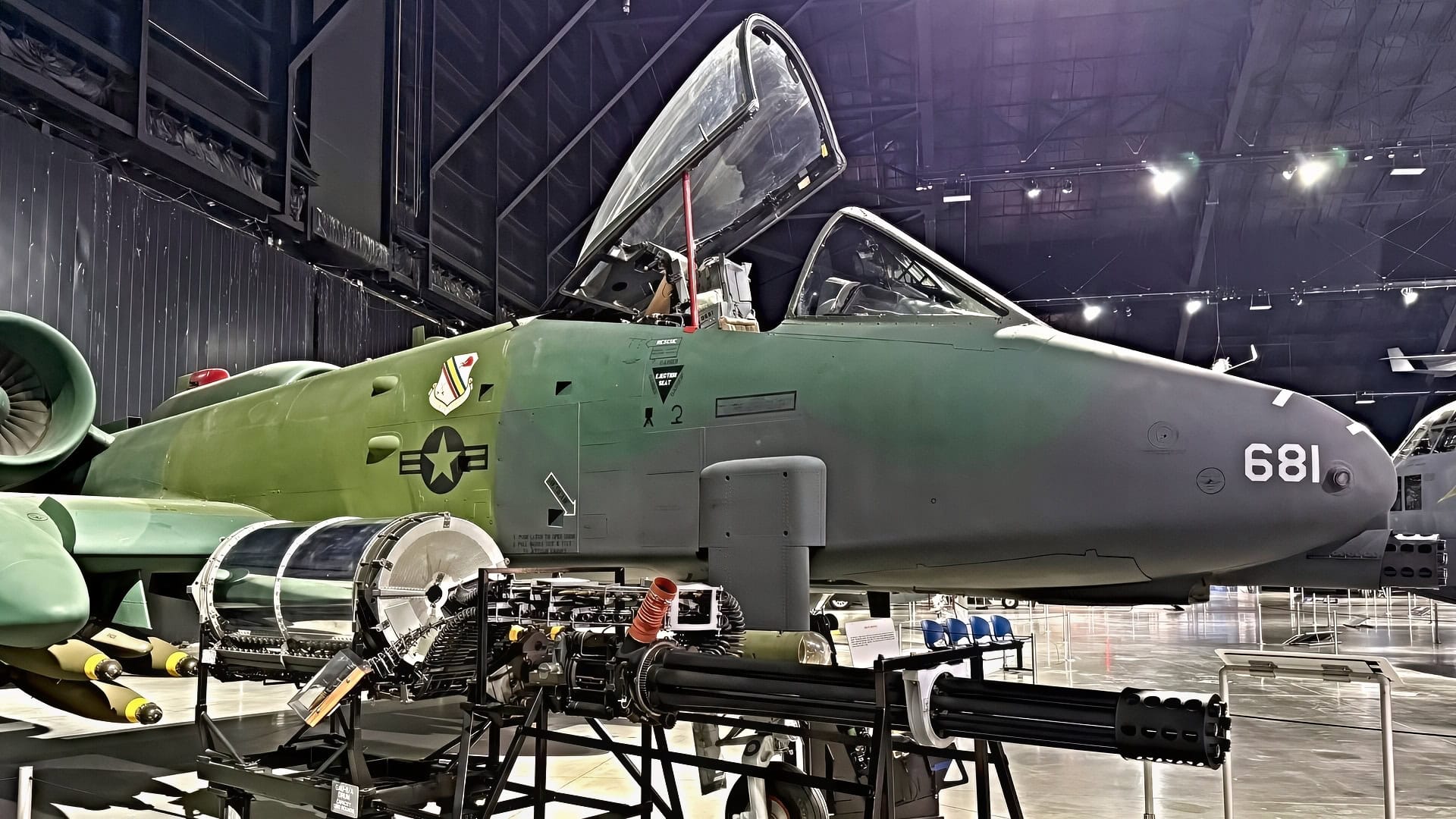
A-10 Warthog 19FortyFive.com Image
-The F-47 Next Generation Air Dominance (NGAD) 6th Generation fighter plane (although some postulate that the “47” was actually a sop to the ego of U.S. President Donald John Trump; but hey, who says it can’t be all of the above?)
Afterword: But, What About British WWII Fighter Planes?
So then, going back to the “Best WWII Fighter Plane” debate, I recently wrote an article asserting that the Japanese Mitsubishi Zero was the best of the bunch during the early years of the Pacific Theatre.
I didn’t mention any Western European planes by name, which prompted this angry comment from a reader by the name of Ken Mills: “I find it unbelievable that no mention is made of the British Spitfire or the Mosquito.
This is a typical American view of history.” Fair enough, Mr. Mills; as Jules Winfield (Oscar-winning actor Samuel L. Jackson) said to Brett (Frank Whaley) in “Pulp Fiction,” “Well, allow me to retort!”
First off, my proud, unabashed American patriotism notwithstanding, I’m also a big-time Anglophile and am indeed a member of the British Military History Group on LinkedIn.
Furthermore, I’ve sung the praises of the De Havilland Mosquito and Spitfire alike in my previous writings. However…
-Though the Mosquito did indeed garner 600 air-to-air kills against manned enemy aircraft as well as an additional 600 V-1 “buzz bomb” rockets whilst performing night fighter duties, it was used primarily as a **bomber** (as dramatized in the 1964 movie “633 Squadron” starring the late great Cliff Robertson).
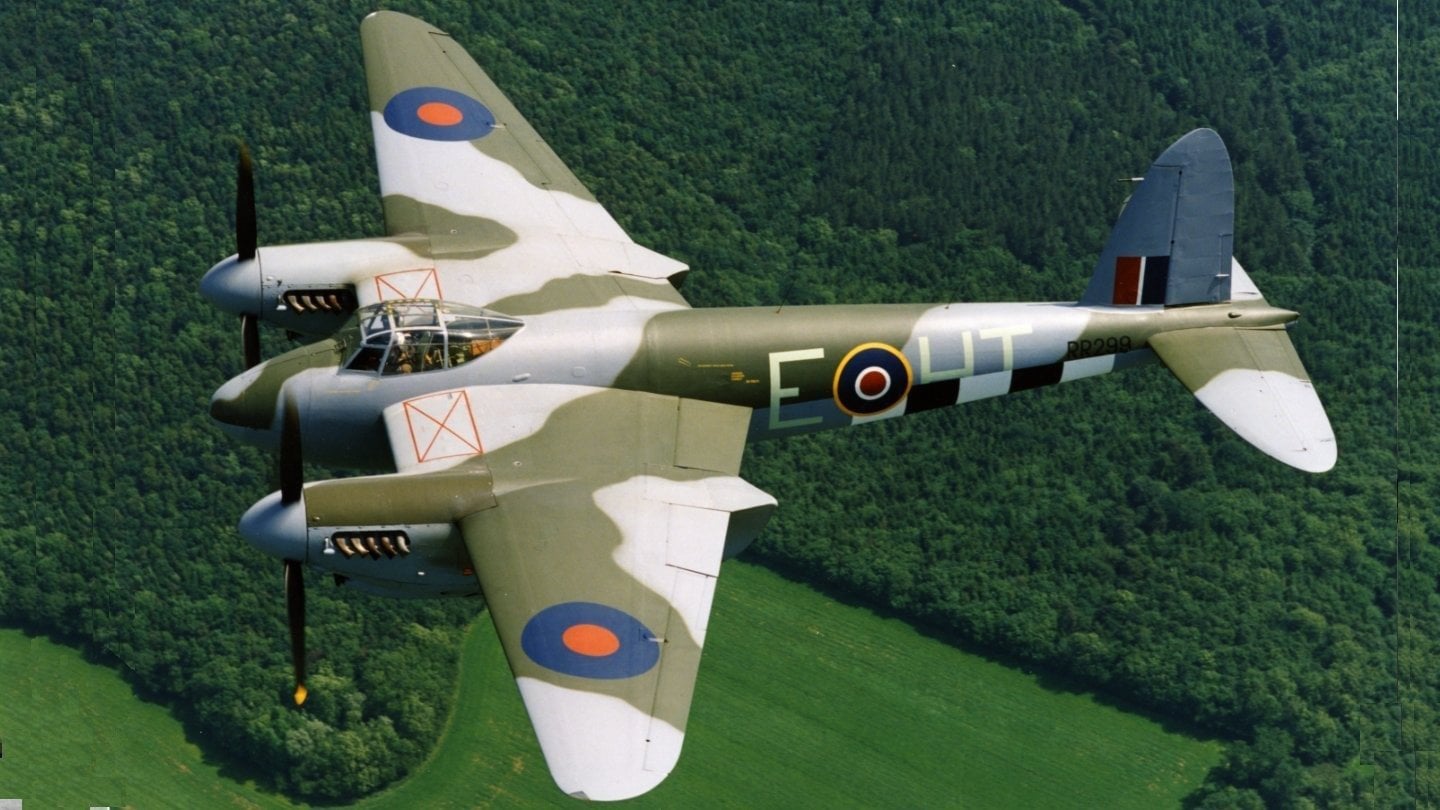
De Havilland Mosquito. Image Credit: BAE Systems.
-The Spitfire was a wonderful plane that helped win the Battle of Britain in 1940, kicking a lot of Luftwaffe bum in the process. Indeed, I had the honor and pleasure of sitting in the cockpit of a Spitfire Mark XVI at the RAF Museum in London back in 2017. However, when it went up against the Zero, the “Spit” was simply outclassed. It did not rack up the impressive kill tally that the Mustang and Thunderbolt alike did during the last two years of the war.
About the Author: Christian D. Orr
Christian D. Orr is a Senior Defense Editor. He is a former Air Force Security Forces officer, Federal law enforcement officer, and private military contractor (with assignments worked in Iraq, the United Arab Emirates, Kosovo, Japan, Germany, and the Pentagon). Chris holds a B.A. in International Relations from the University of Southern California (USC) and an M.A. in Intelligence Studies (with a concentration in Terrorism Studies) from American Military University (AMU). He is also the author of the book “Five Decades of a Fabulous Firearm: Celebrating the 50th Anniversary of the Beretta 92 Pistol Series,” the second edition of which was recently published.