
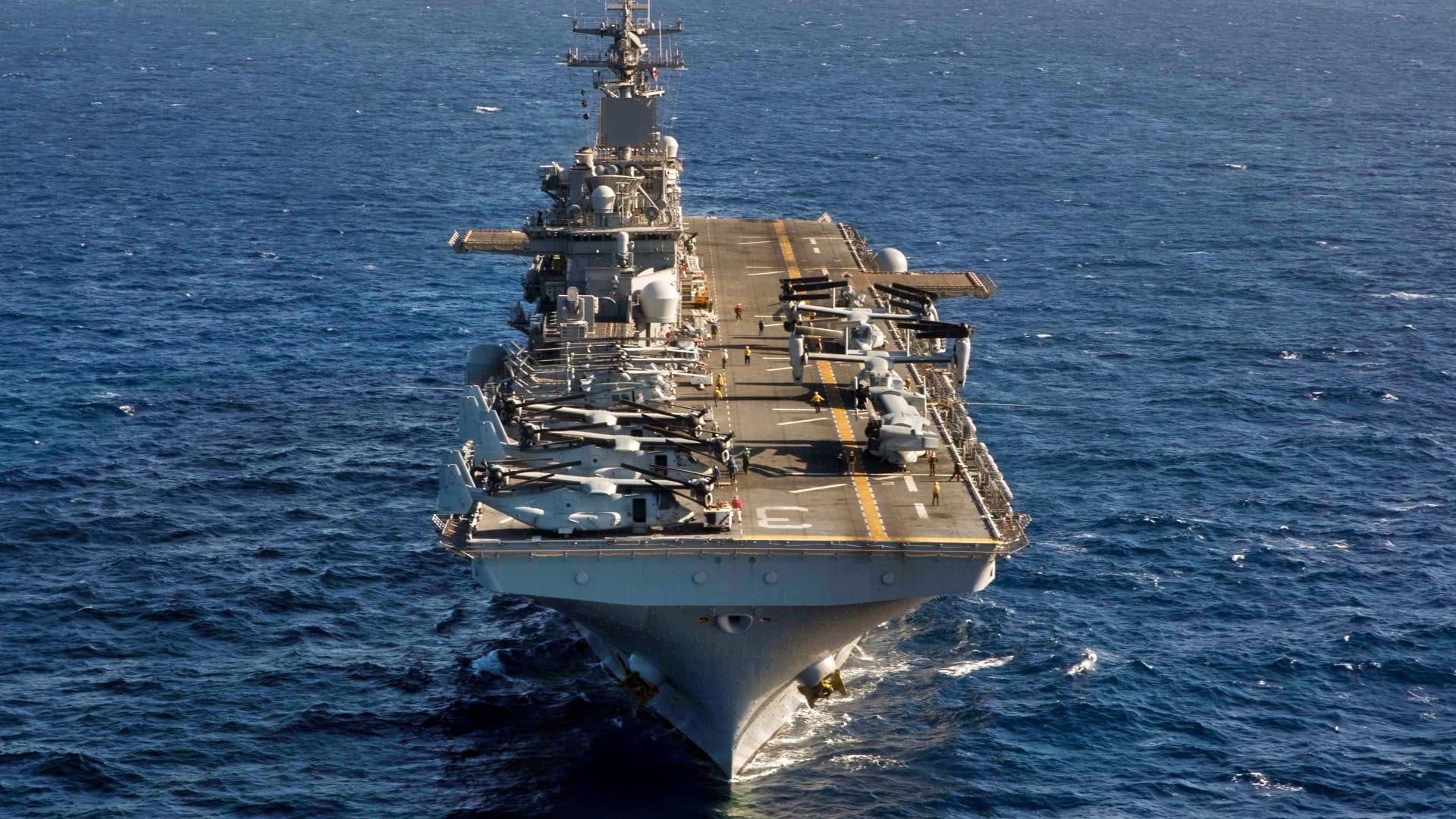
Drones and Long-Range Missiles Have Put Every Surface Warship at Risk: Surface warships have never been invulnerable. Mines, torpedoes, bombs, and anti-ship missiles have sunk them for generations. The difference now is reach, persistence, and price. Aircraft carriers, destroyers, frigates, amphibious ships, patrol vessels, and supply ships operate under a threat web built from satellites, long-range missiles, aerial drones, and explosive unmanned boats.
Ukraine supplied the clearest warning. Britain reported in October 2024 that 26 Russian Black Sea vessels had been destroyed or damaged. Kyiv achieved much of the effect with shore-launched missiles, aerial drones, and unmanned surface craft despite beginning the war without a major surface fleet.
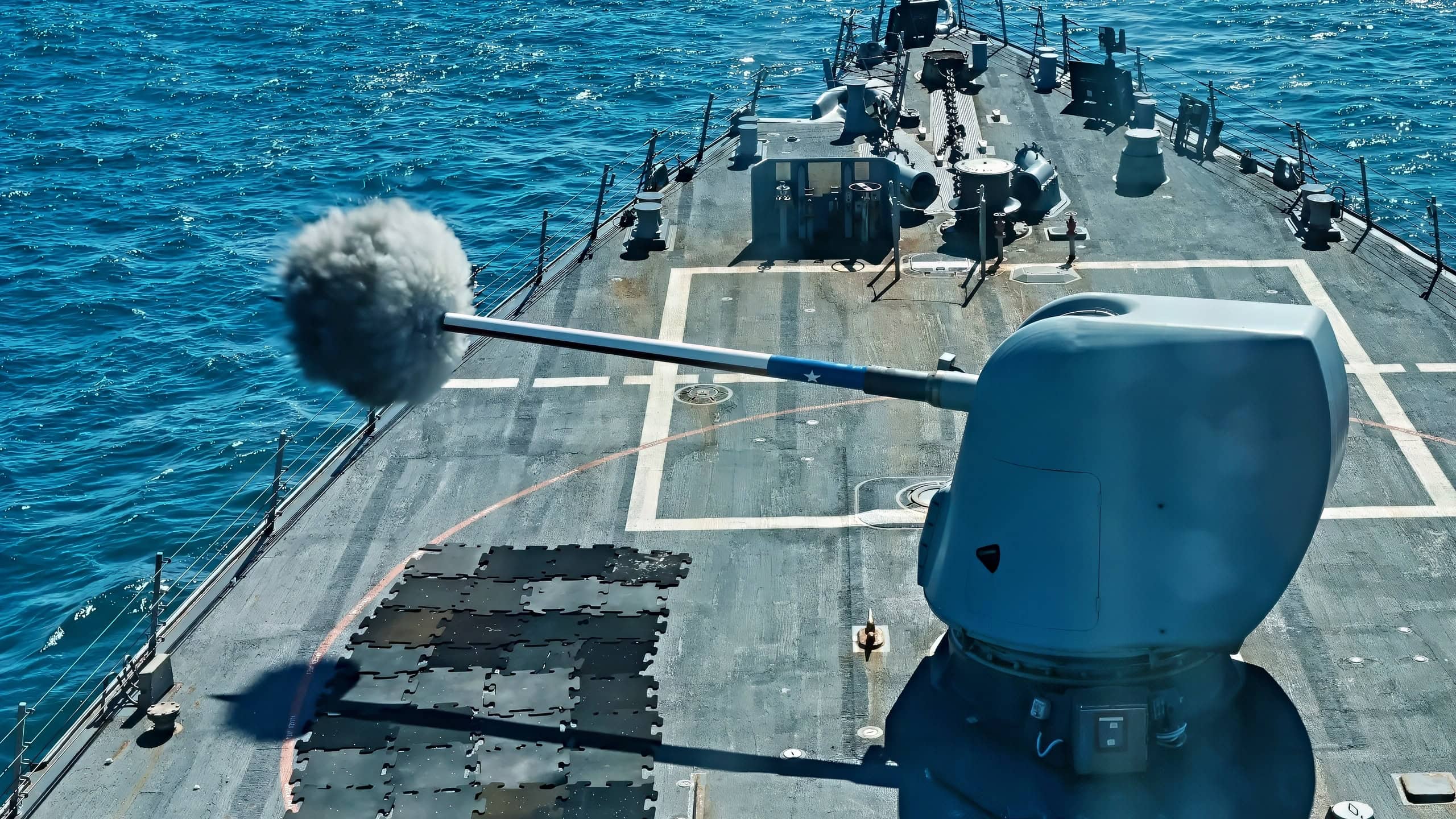
(Oct. 3, 2025) – Arleigh Burke-class guided-missile destroyer USS Gonzalez (DDG 66), fires the Mk45 5-inch gun system while underway as part of the Titans of the Sea Presidential Review. The Titans of the Sea Presidential Review is one of many events taking place throughout the country to showcase maritime capabilities as part of the U.S. Navy’s 250th birthday. America is a maritime nation. For 250 years, America’s Warfighting Navy has sailed the globe in defense of freedom. (U.S. Navy photo by Mass Communication Specialist Seaman Jayden Howard)
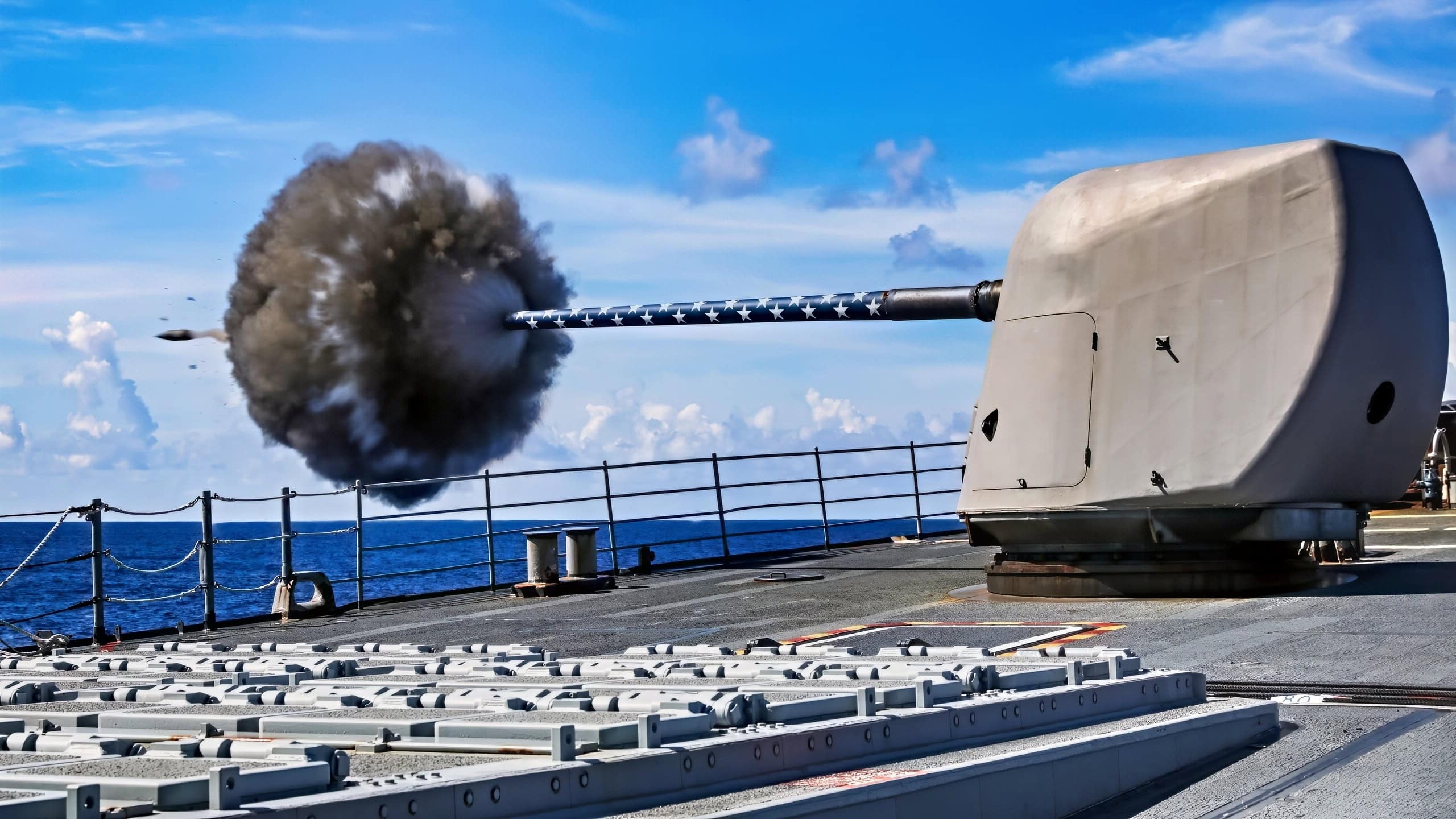
(July 29, 2025) The Ticonderoga-class guided-missile cruiser USS Princeton (CG 59) fires its forward Mark 45 5-inch gun during a weapons maintenance shoot, July 29, 2025. The Carl Vinson Carrier Strike Group is underway conducting routine operations in the U.S. 3rd Fleet area of operations. (U.S. Navy photo by Mass Communication Specialist 1st Class Jacob I. Allison)
The Red Sea supplied the opposite lesson. USS Carney survived a 10-hour engagement in October 2023 and destroyed 15 drones and four cruise missiles. The destroyer later completed 51 combat engagements during its deployment. Modern warships are vulnerable, but trained crews and layered defenses still work.
The cost of staying alive is now part of the threat. During its Red Sea deployment, the Dwight D. Eisenhower Carrier Strike Group fired 155 Standard missiles and 135 Tomahawks. Its aircraft used nearly 60 air-to-air missiles and 420 air-to-surface weapons. The Houthis failed to sink an American ship, but they forced the Navy to expend large numbers of weapons and maintenance hours.
Cheap Weapons Have Changed the Cost of Naval Combat
A drone does not have to carry a large warhead to matter. It can scout, force a radar to activate, draw an interceptor, relay a ship’s position or join a larger attack. A missile arriving behind several decoys sees a defender with less time and fewer weapons. The resulting missile-magazine problem is especially serious because vertical-launch cells are finite and cannot be refilled routinely during combat at sea.
The danger reaches beyond carriers and destroyers. Amphibious ships, mine countermeasures vessels, oilers and ammunition ships often have fewer defenses, yet the fleet cannot operate without them. A navy protecting its flagship while losing the ships carrying fuel, missiles and spare parts still loses operational freedom. This is why the surface-warship debate now covers the entire fleet, not one class of ship.
Ukraine Proved a Naval Base Is Not a Sanctuary
Ukraine sank the cruiser Moskva, damaged landing ships, struck a submarine in dry dock and forced major Russian units away from Sevastopol. USNI reported Russia moved submarines, frigates and landing ships to Novorossiysk after repeated attacks. The campaign left the Black Sea Fleet less able to enforce a blockade or operate freely.
The lesson needs limits. The Black Sea is confined, Russian ships often sat in predictable ports and Moscow displayed serious readiness failures. A carrier group moving in the open Pacific is a harder target than a landing ship tied to a Crimean pier. Even so, Ukraine’s sea-drone campaign proved harbor barriers, distance and naval size no longer guarantee protection.
China Turns the Surface Threat Into a Strategic Problem
China has built a far larger system than anything seen in the Black Sea or Red Sea. The Pentagon’s 2025 military report says PLA strikes could reach 1,500 to 2,000 nautical miles from China in sufficient volume to challenge American forces. The threat combines satellites, aircraft, submarines, over-the-horizon sensors, cruise missiles and anti-ship ballistic missiles.
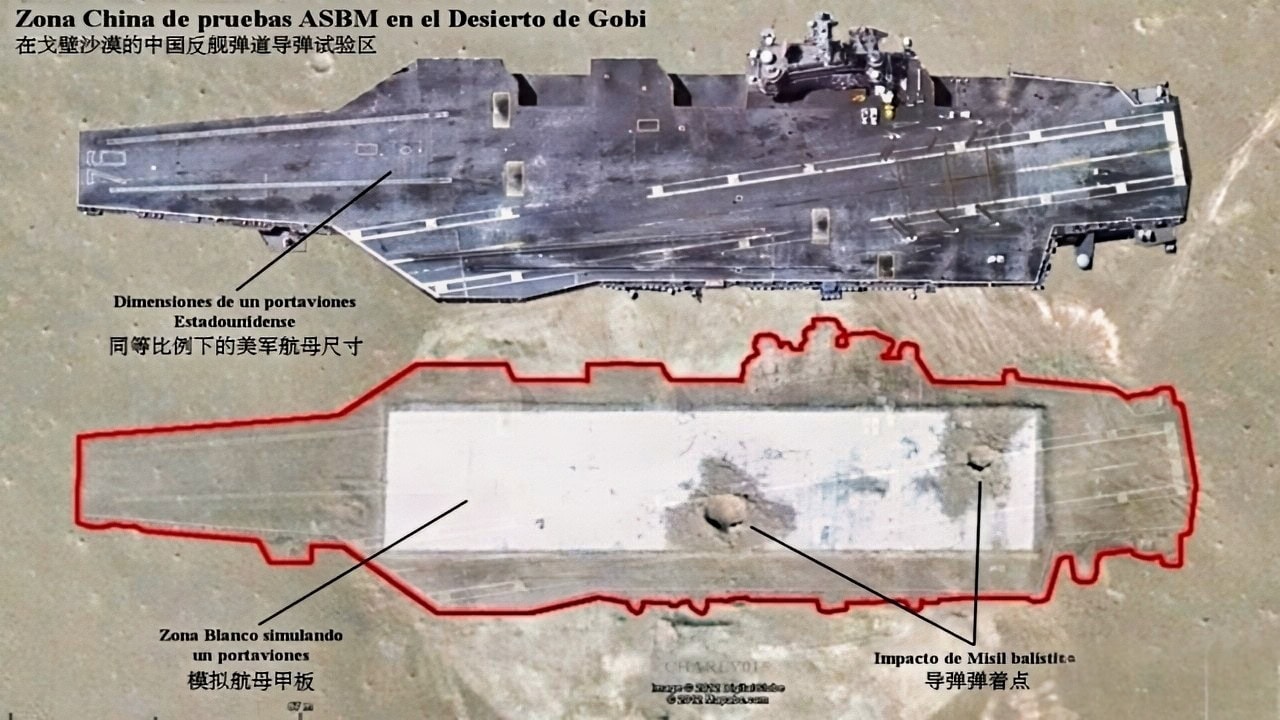
DF-21D image. Creative Commons.
Long range does not equal a guaranteed hit. China still has to find a moving ship, identify it, maintain an accurate track, transmit targeting data and guide a weapon through jamming, deception and defensive fire. Mobility and electronic warfare attack this chain. The risks are still serious enough to drive a wider argument over whether traditional surface formations remain sustainable.
The Answer Is a Different Surface Fleet, Not No Surface Fleet
Warships remain essential for air defense, anti-submarine warfare, sea control, strike missions, convoy protection and command. The Navy has shown Aegis ships can defeat mixed raids. In one live-fire test, USS Carl M. Levin engaged two ballistic-missile targets and two cruise-missile drone targets during the same event.
The defensive layers must become cheaper and more numerous. The new MK 38 Mod 4 links a 30 mm gun to Aegis for use against aerial drones and fast unmanned boats. Electronic warfare, decoys, lasers, interceptor drones and guns should handle lower-end threats while expensive Standard Missiles remain available for the hardest targets. The fleet also needs unmanned scouts and decoys operating ahead of crewed ships.
The Navy established Unmanned Surface Vessel Squadron 7 to place small robotic craft alongside carrier strike groups, amphibious groups and surface action groups. Those vessels extend surveillance, complicate enemy targeting and place expendable sensors in dangerous water. Crewed ships will still fight on the surface. They will do it dispersed, connected to unmanned partners and far less willing to let one expensive hull carry every mission.
About the Author: Harry J. Kazianis
Harry J. Kazianis (@Grecianformula) was the former Senior Director of National Security Affairs at the Center for the National Interest, a foreign policy think tank founded by Richard Nixon in Washington, D.C. Harry has more than a decade of experience in think tanks and national security publishing. His ideas have been published in The New York Times, The Washington Post, The Wall Street Journal, CNN and many other outlets worldwide. He has held positions at CSIS, the Heritage Foundation, the University of Nottingham and several other institutions related to national security research and studies. He is the former Executive Editor of The National Interest and The Diplomat. He holds a master’s degree focusing on international affairs from Harvard University.

