
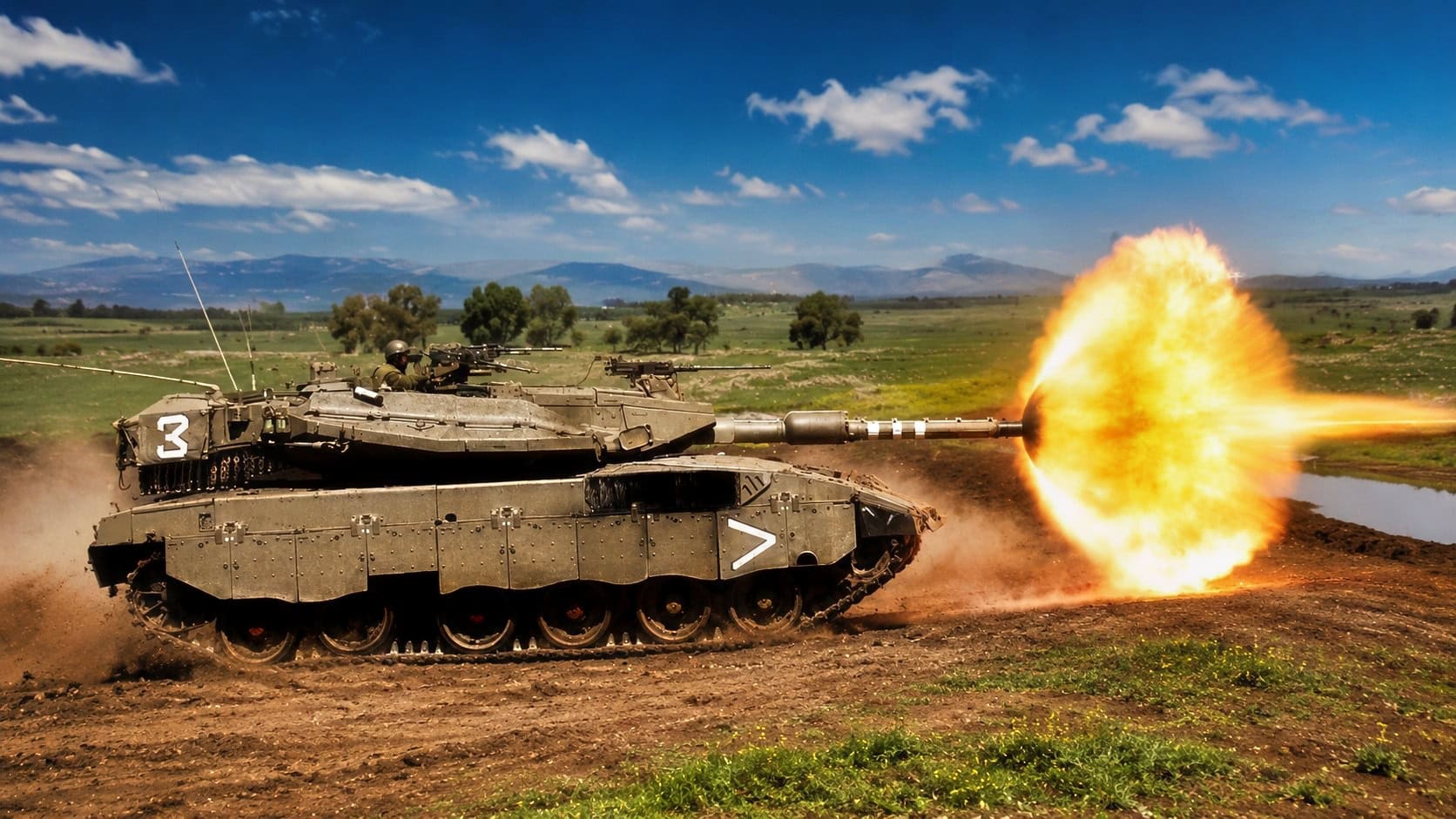
Most of the argument about Israel’s nuclear weapons arsenal asks whether a small, exposed state is right to keep an arsenal it has never admitted owning. It is. That question was settled decades ago, and nothing since has unsettled it. The harder question is the one almost nobody asks: what has that arsenal actually done in nearly three years of war?
In one case, Iran does real work. In the wars that consume most of Israel’s effort, it does almost nothing. And the gap between what the bomb insures against and what Israel keeps needing is the reason the United States cannot seem to put the region down.
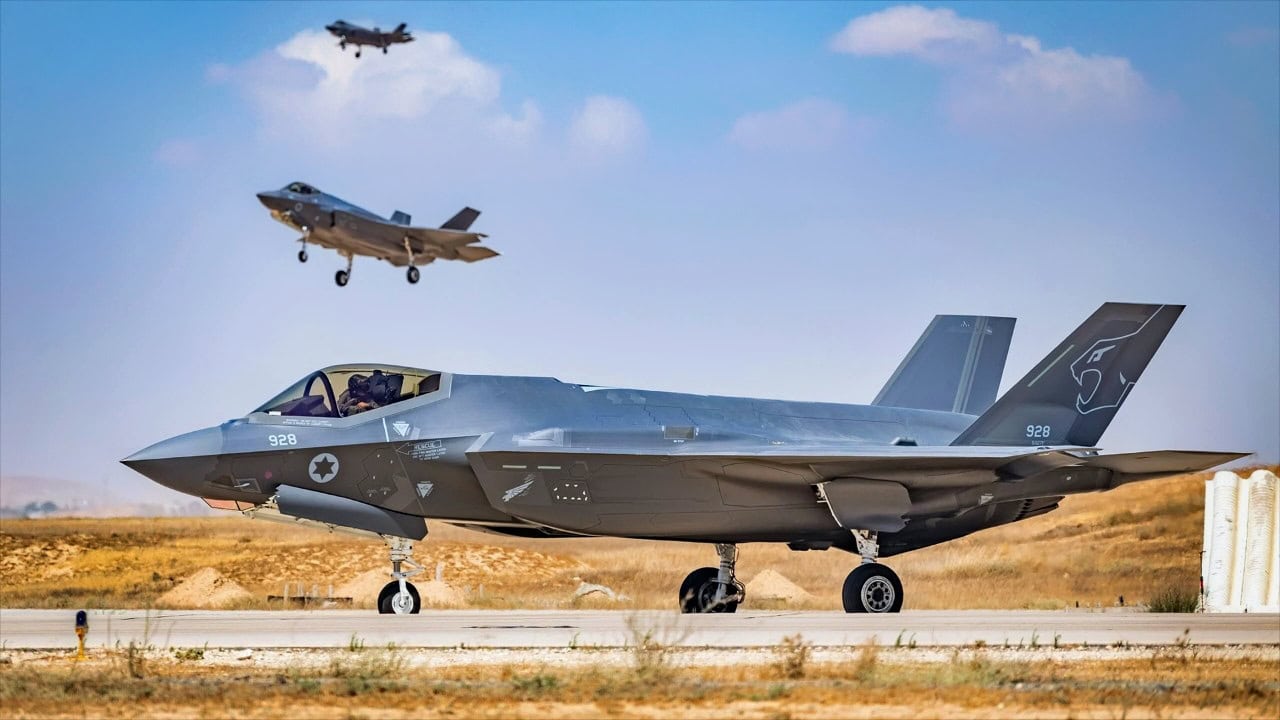
F-35I Adir. Image Credit: Creative Commons.
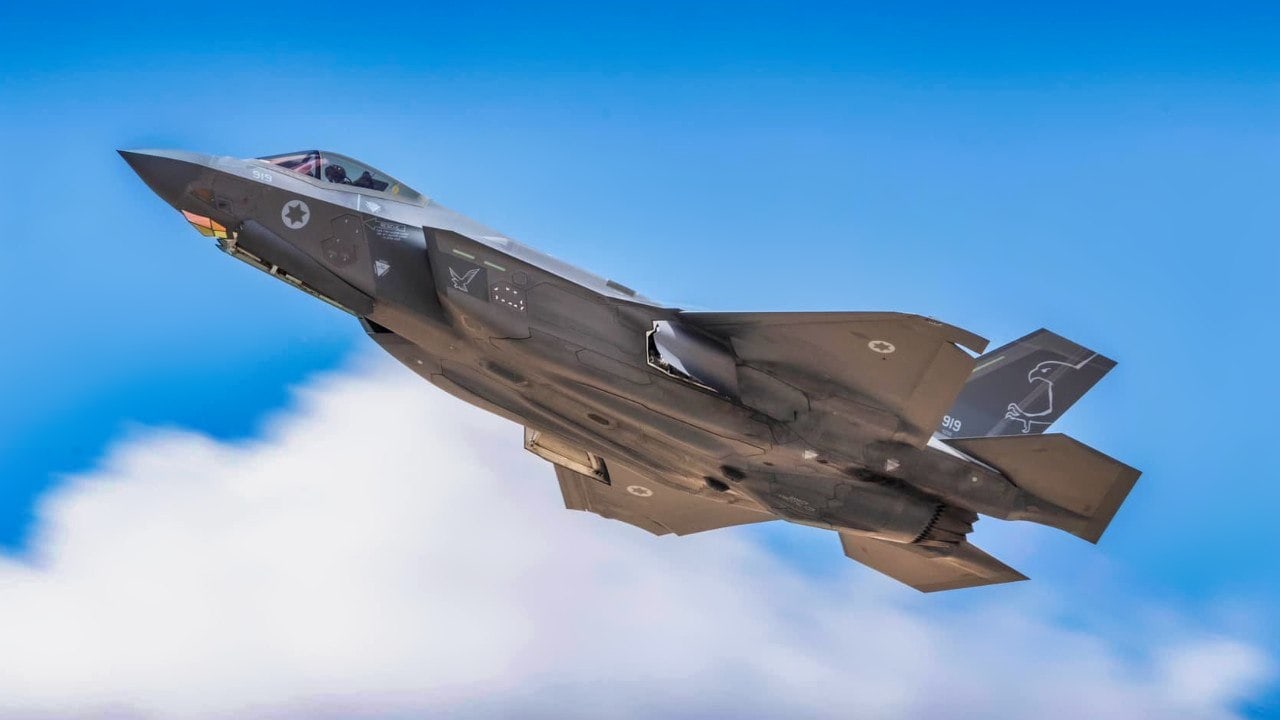
Israeli Air Force (IAF) F-35I Adir
The Bomb Insures Against Destruction
We should begin with what the Israeli nuclear arsenal is for. SIPRI estimates around 80 warheads on aircraft and ballistic missiles. The exact count has never mattered. What matters is that the force is believed capable of surviving a first strike and answering it, and that every government from Tehran to Cairo assumes as much without Israel saying so.
That insurance covers the contingencies no intelligence service can rule out over decades. A nuclear-armed adversary. A conventional balance that tips the wrong way. An American president who decides the relationship has run its course. Against any of those, the bomb is insurance; a country with no strategic depth would be reckless to cancel.
What the Deterrent Could Not Do on October 7
Israel held every one of those warheads on the morning Hamas came across the fence. Hamas knew it. The knowledge changed nothing, because no Israeli leader was ever going to answer a massacre in the kibbutzim with a nuclear strike.
The bomb could not find the hostages. It could not clear Hamas out of a dense urban strip without erasing the strip. It could not name whoever was supposed to run Gaza once the tanks pulled back.
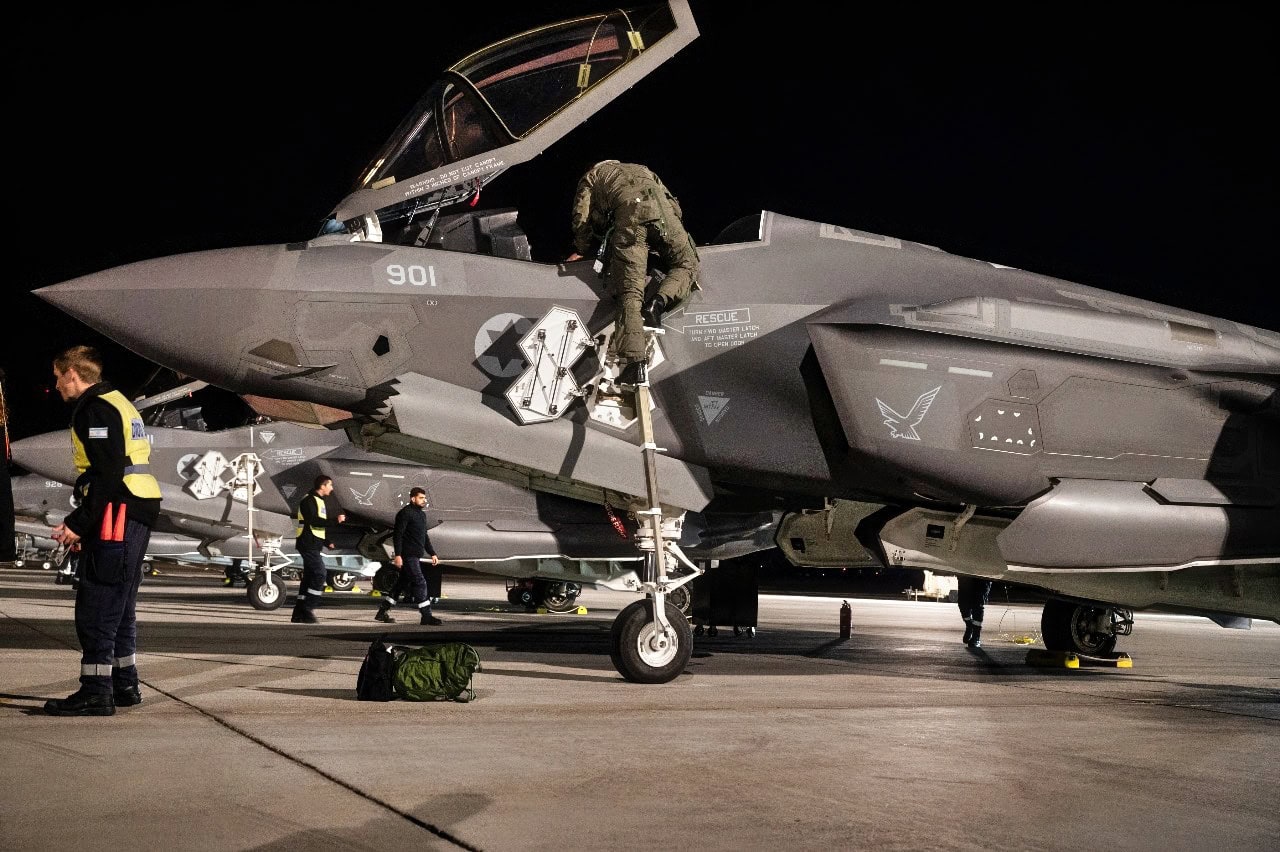
An Israeli Air Force pilot climbs into an F-35I Adir prior to a Red Flag-Nellis 23-2 mission at Nellis Air Force Base, Nevada, March 16, 2023. Red Flag is an opportunity to build on the success of JUNIPER OAK 23-2, JUNIPER FALCON, and additional combined exercises to enhance interoperability with Israel, strengthen bilateral cooperation, and improve capabilities in ways that enhance and promote regional stability and reinforce the United States’ enduring commitment to Israel’s security. (U.S. Air Force photo by Airman 1st Class Trevor Bell)
That work went where it always goes, to the intelligence services and the infantry, and then to the diplomats sent in afterward to make the result stick. Nearly three years on, Israel’s military superiority is no longer in doubt. The political outcome still is. Days before the Washington trip, Israel’s security cabinet approved the framework for a multinational force to enter parts of Gaza under the American plan, with no deployment date set. Taking ground and governing it are different jobs, and firepower only does the first.
Lebanon runs on the same logic, and it is the cleaner test because the mechanics have actually started to move there. Israel can flatten launch sites and kill the men who run them, raising the price Hezbollah pays to rebuild. It cannot make the Lebanese state disarm Hezbollah by force alone. That needs a political bargain, and the June 26 framework was built to produce one in miniature.
Under the deal, Israel withdraws from two small pilot zones, the Lebanese Army moves in and disarms Hezbollah, and only then does the process expand. Last week, the first piece finally happened: Israeli troops pulled out of one southern town and Lebanese soldiers deployed behind them. That is the good news, and it is thinner than it sounds. There is still no timetable for the wider withdrawal and no agreement on who verifies that a zone is clear. Israel says its forces will stay in a ten-kilometer strip until Hezbollah is disarmed, and Hezbollah has rejected the whole framework and will not give up its weapons. The tanks can leave one town. The problem the tanks were supposed to solve is exactly where it was.
Deterrence still works on Hamas and Hezbollah; conventional punishment shapes what they do and makes rebuilding expensive. The nuclear force was never the thing doing that work.
Iran Is Where the Arsenal Bites and Where the Limit Shows
Iran complicates the picture because here the bomb genuinely matters. It makes any Iranian attempt to destroy Israel an act of national death, and it shields Israel against nuclear blackmail if Tehran ever crosses the threshold. A state staring at that would be mad to give up its deterrent.
Then watch what the February 28 war actually did. The joint campaign killed Khamenei and several of Iran’s senior commanders in the first hours and wrecked missile arrays and air defenses. None of it stopped Iran from firing back at Israeli cities and at American forces based in the Gulf. A Pakistani-brokered ceasefire took effect in April, followed by a framework agreement in June. That arrangement came apart over the strait in July. The Pentagon ran thirteen straight nights of strikes; Trump then paused the campaign, and Iran said it would hold its fire as long as the pause held. It held for a few days. Then, with Netanyahu in Washington, Iran fired ballistic missiles at American forces, which intercepted them.
Read that sequence, and the deterrent is doing one thing. It held the ceiling. Tehran had every reason not to reach for Israel’s destruction, and it didn’t. Everything under the ceiling stayed open, and Iran used all of it. You can win the exchanges lopsidedly and leave every incentive that started the war exactly where it was. Iran can lose a round this badly and begin assembling the next. The bomb keeps the catastrophe off the table. It cannot settle the war beneath it.
The Space Below the Ceiling Is Where Washington Lives Now
Israel has never lacked destructive power. Its problem is turning the battering into arrangements that outlast it, and that is where the United States keeps ending up holding the thing. American forces widen the war against Iran while American diplomats scramble to fence it back in. The Gaza force runs under American auspices; the Lebanon framework runs on American mediation and on somebody verifying a disarmament Hezbollah has already refused. None of these arrangements holds together without substantial American support.
The nuclear arsenal buys none of it. It promises retaliation at the top of the ladder but cannot build or enforce the arrangements required beneath it, and that work—political authority, verification, diplomacy, sustained conventional support—is exactly what Israel has always leaned on others to supply.
American policymakers should hold a distinction as their Israel policy keeps blurring. Israel’s own arsenal insures it against national destruction; Washington does not. What Washington supplies is much of the external structure Israel needs below that threshold. It replenishes interceptors and provides the diplomatic machinery that turns a military result into an arrangement other states will accept. Helping Israel defend itself against a catastrophic attack may be a durable commitment. Owning the aftermath of every Israeli campaign is a heavier one, and it competes with everything else on the plate. Interceptors expended in the Gulf are unavailable for an Indo-Pacific contingency, and the Patriot and THAAD stocks drawn down in this war are stocks another theater will not have. It is the ordinary arithmetic of a superpower with finite magazines and more than one front, and it tightens on its own, whatever Washington intends.
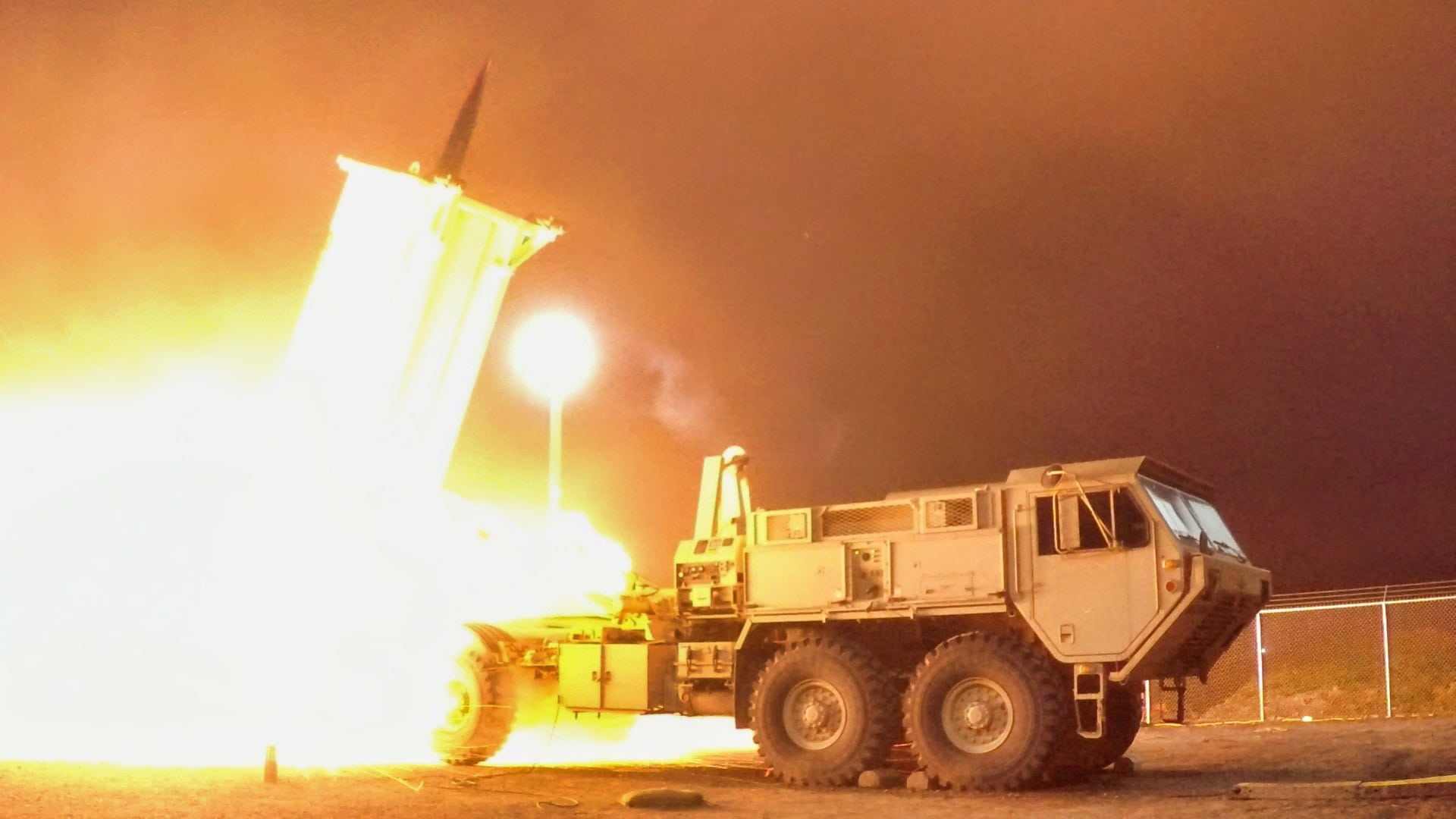
THAAD. Image Credit: Department of Defense.
The Weapon That Cannot Finish the War
Netanyahu called the Oval Office meeting one of the best he has ever had. The White House called it productive. Whatever they settle will be carried out by soldiers, diplomats, and an American logistics chain, because the nuclear arsenal cannot do that work. It shaped the war’s outer edge. The problems Netanyahu and Trump had to solve lay beneath it.
That is the shape of it, and it will not change. Israel should keep its nuclear arsenal; it answers the one threat that would end the country, and a state without strategic depth cannot responsibly do without it. But the threat it answers is the rarest thing Israel faces. The wars that fill the days are the strip Israel cannot govern by force, the militia it cannot disarm without a bargain, the adversary it can beat in every exchange and still not be rid of. Those are the wars a nuclear power spends its life fighting, and the weapon that makes it a nuclear power reaches only their outer edge. It governs the catastrophe neither side wants and settles nothing beneath it.
About the Author: Dr. Andrew Latham
Andrew Latham is a professor of international relations and political theory at Macalester College in Saint Paul, MN. You can follow him on X: @aakatham.