
The Korean Peninsula is essential to America’s strategy for deterring—and, if necessary, defeating—the emerging Axis of Dictatorships: the de facto alignment of China, Russia, Iran, and North Korea. The DMZ running across the Peninsula functions both as the frontline against North Korean aggression and as a critical component of regional deterrence vis-à-vis China. It also represents a potential flashpoint that could force American forces to reallocate resources from other areas. Therefore, the primary security threat to both the United States and South Korea is not just North Korea’s military strength but also the danger that multiple crises in different regions could overwhelm American military capacity and undermine global deterrence. Washington is already engaged—both directly and indirectly—in two regions: Europe and the Middle East, where the latter is demanding resource shifts.
While most attention has remained focused on the Indo-Pacific, Korea could become the critical tipping point if multiple crises happen simultaneously.
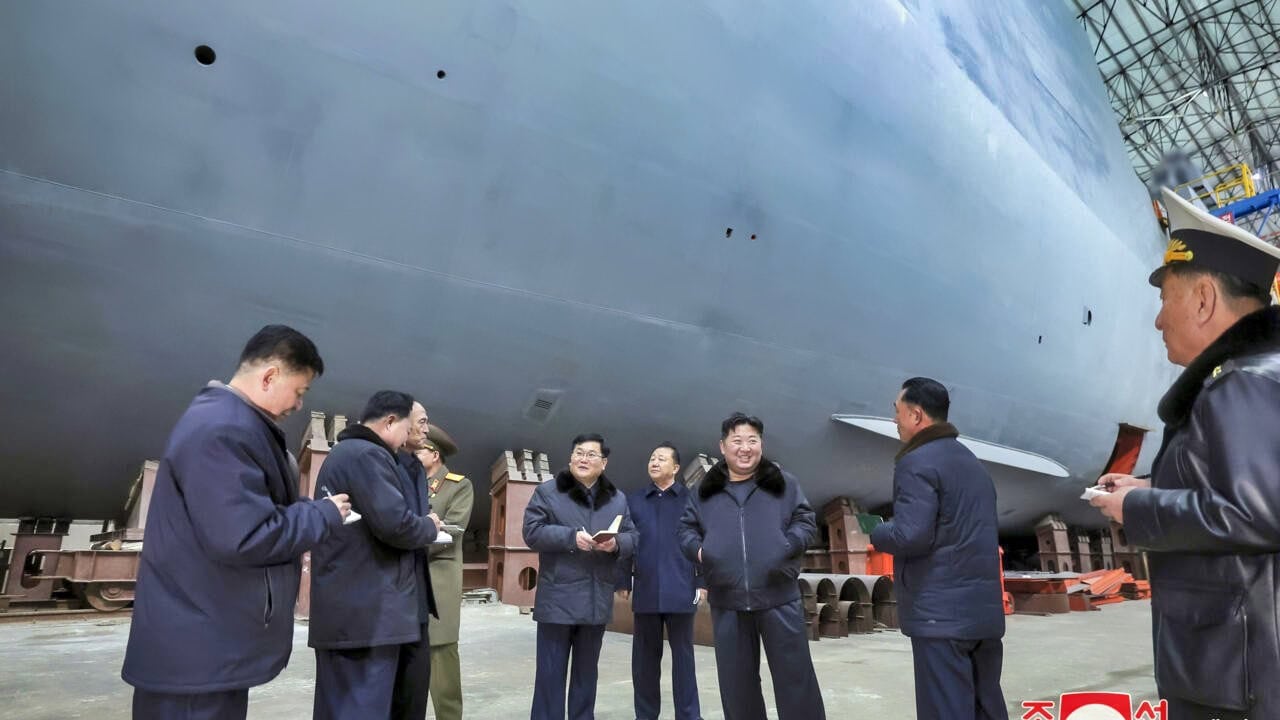
North Korea Submarine KCNA Media Photo.
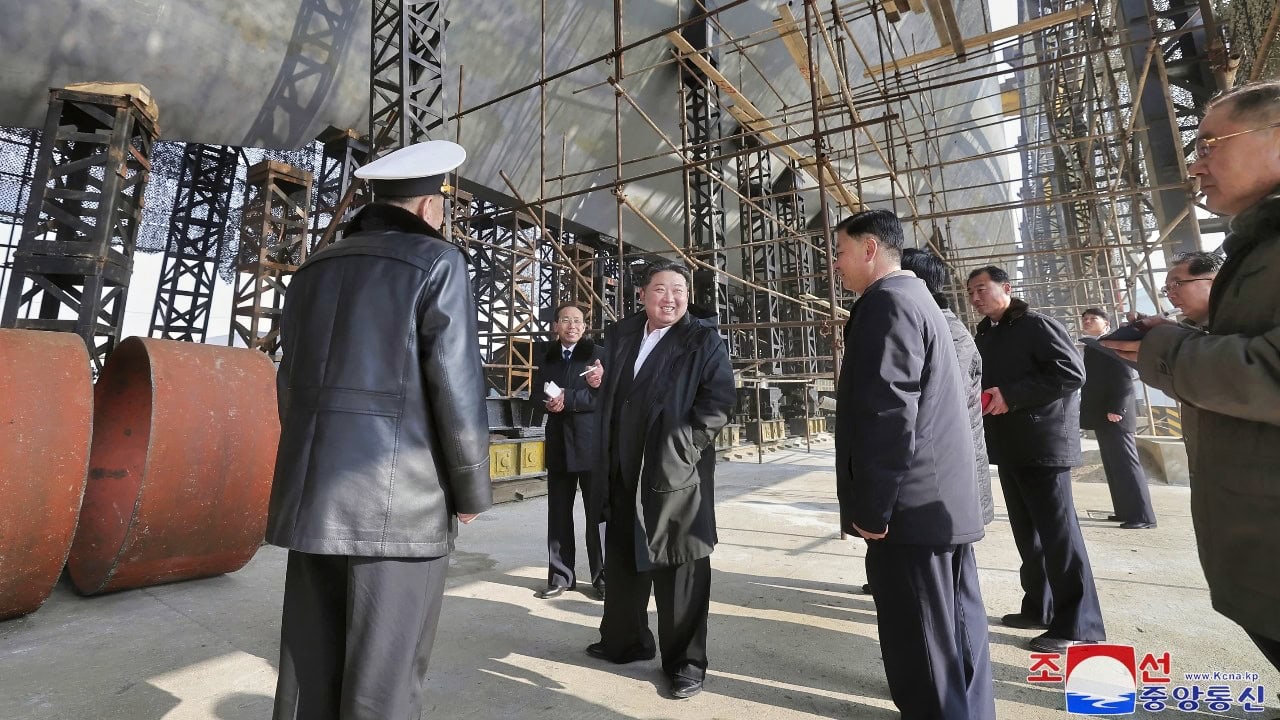
North Korea Nuclear Submarine. Image Credit: KCNA.
How Pyongyang Plans to Fight
Although Western analysts mainly focus on North Korea’s nuclear and missile programs, Pyongyang’s biggest threat to US forces in Korea isn’t a single weapon but its ability to combine mass, surprise, and precision long-range fires during the early hours of a conflict. North Korea’s strategy seeks to inflict maximum US casualties quickly, hinder reinforcements, and create political pressure before the United States and South Korea can fully respond.
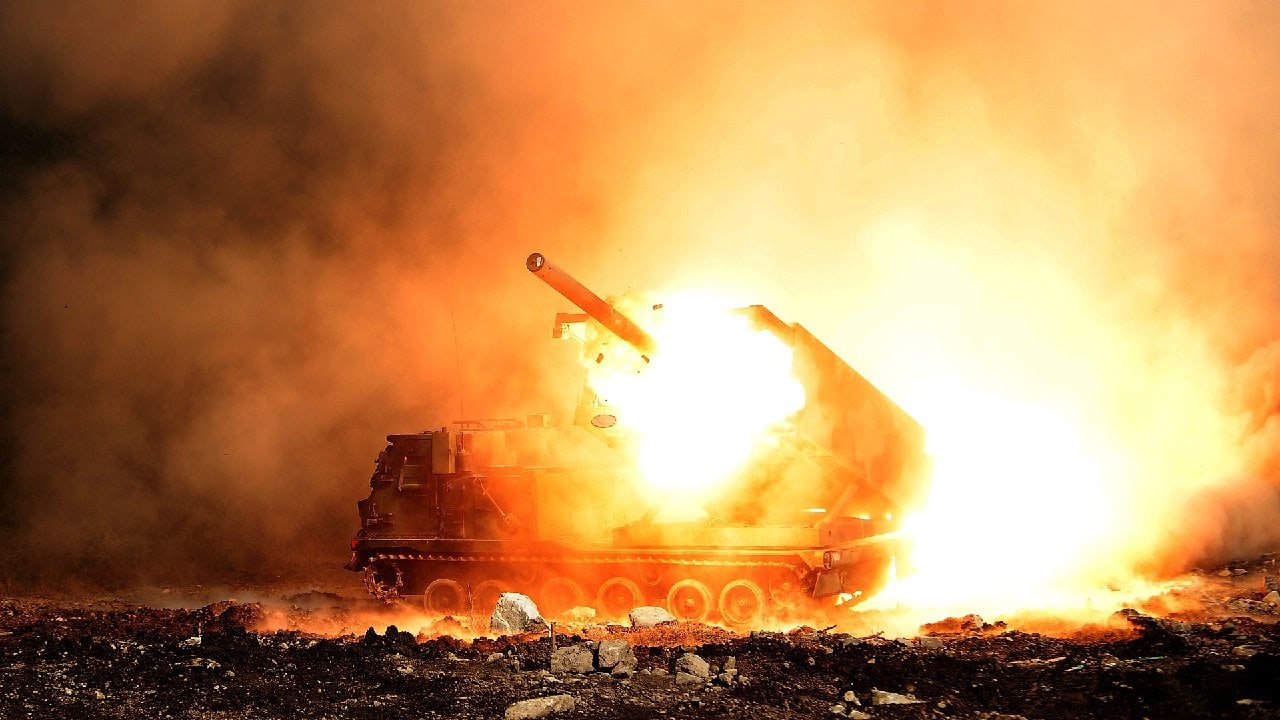
Over the past few years, North Korea has deployed thousands of tube artillery pieces and multiple-launch rocket systems within range of the Demilitarized Zone (DMZ), many hidden in fortified underground bunkers. With these, it could strike US installations at Camp Humphreys and Osan Air Base simultaneously, disrupt Korean logistics hubs and airfields, saturate US and Korean AMD systems with thousands of rounds in the initial hours, and most importantly, launch ballistic and cruise missile attacks deep into Korea. It could also expand the theater at will by attacking US installations in Japan.
The United States has significantly strengthened its posture over the past twenty years to counter the North Korean threat, and the overall balance should give US planners reason for optimism, as long as any future conflict on the Korean Peninsula is contained to the theater or at least sequenced with other key theaters.
The greatest risk across every major theater is increasingly one of simultaneity, with multiple theaters catching fire at once. It is further aggravated by Pyongyang’s persistence in pursuing and integrating battlefield nuclear weapons into its strategy rather than focusing on strategic deterrence. The Korean theater becomes exponentially more dangerous if tactical nuclear weapons are factored in, targeting US carrier strike groups, troop concentrations, and command centers.
One of the World’s Largest Militaries
North Korea maintains one of the largest conventional militaries in the world—recent open-source assessments estimate it at 1.2 to 1.3 million active-duty personnel, along with around 600,000 reservists and approximately 5.7 to 5.9 million paramilitary civil defense forces.
North Korea also commands one of the world’s largest special operations forces—estimated at over 100,000 personnel—whose mission in the initial phase of any future conflict would be to sabotage airfields, assassinate political and military leaders, attack communication nodes, and disrupt logistics. With assistance from China and Russia, in recent years, North Korea has also become a sophisticated cyber actor. Lastly, North Korea has reportedly rotated thousands of personnel back from Ukraine as instructors, bringing real combat experience to training programs.
No Longer a Standalone Theater
The Korean theater holds a unique place in US strategy because a war with North Korea would immediately require American reinforcements from other parts of the Indo-Pacific, Europe, and the Middle East. A conflict on the Peninsula could morph into a global confrontation overnight, as China would almost certainly have to account for instability on its border and likely respond.
Additionally, Russia’s increasing military cooperation with North Korea has established a direct link between European and Asian security. Therefore, Korea is no longer a standalone theater; it is the point where the security systems of Europe, the Middle East, and the Indo-Pacific meet.
The Peril of Simultaneity
Strategic timing has been decisive in every major industrial war, including the last two global conflicts, and it could be just as crucial if a major, multi-theater war breaks out. The gravest danger is not a war in Korea alone.
Instead, it is a situation where the United States faces multiple crises at the same time: a Russian escalation in Europe, renewed conflict involving Iran in the Middle East, rising tensions over Taiwan, and North Korean coercion on the peninsula.
Recent assessments of U.S. military readiness indicate that stocks of precision-guided munitions, missile interceptors, and other critical systems may fall short during extended, multi-region operations. Additionally, replenishment timelines that take years rather than months highlight a major weakness in America’s defense-industrial base, while Europe will need at least a decade to significantly increase weapons and munitions production. These production timelines increase the likelihood that adversaries could exploit a period of Western vulnerability, thereby raising the risk of four simultaneous conflicts sooner rather than later and allowing China and Russia to exploit the West’s lack of preparation.
The main reason to take a North Korean attack seriously is not just the capabilities Pyongyang has gathered and continues to develop. If uncontested, the United States could reinforce the Korean Peninsula early enough to eliminate North Korea’s numerical advantage.
However, this all assumes that containment or the sequencing of threats in different regions can be maintained. The scenario might look quite different, however, if Russia and China launch two simultaneous attacks—one in Europe and another in Asia.
Given the US and NATO’s limited military resources, Korea would no longer be a secondary theater. It could become the decisive theater in a system-changing war.
About the Author: Dr. Andrew Michta
Andrew A. Michta is Professor of Strategic Studies at the Hamilton School at the University of Florida, a Nonresident Senior Fellow at the Atlantic Council in Washington, D.C., and a Visiting Fellow at the Hoover Institution at Stanford University. The views expressed here are his own.