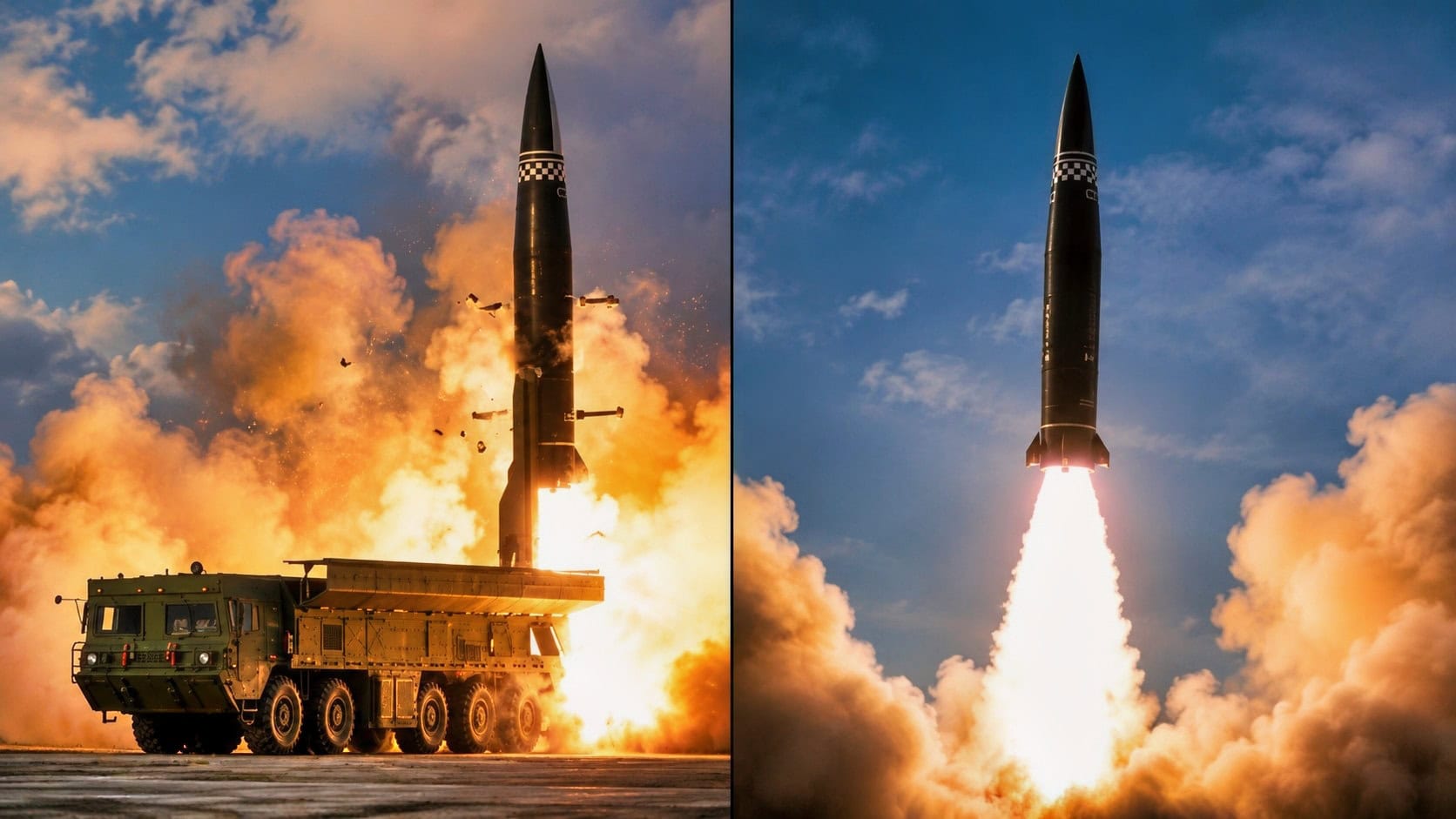
North Korea’s KN-23 is a short-range ballistic missile that was publicly revealed in 2019. It drew attention thanks to how similar — and strikingly so — it is to Russia’s Iskander-M missile. The KN-23 is one of the most important weapons that Pyongyang has delivered to Russia during the ongoing war in Ukraine. But the war there has also been important for the KN-23, as it has seen its first real large-scale combat test — and one that appears to be honing the missile’s accuracy.
The KN-23
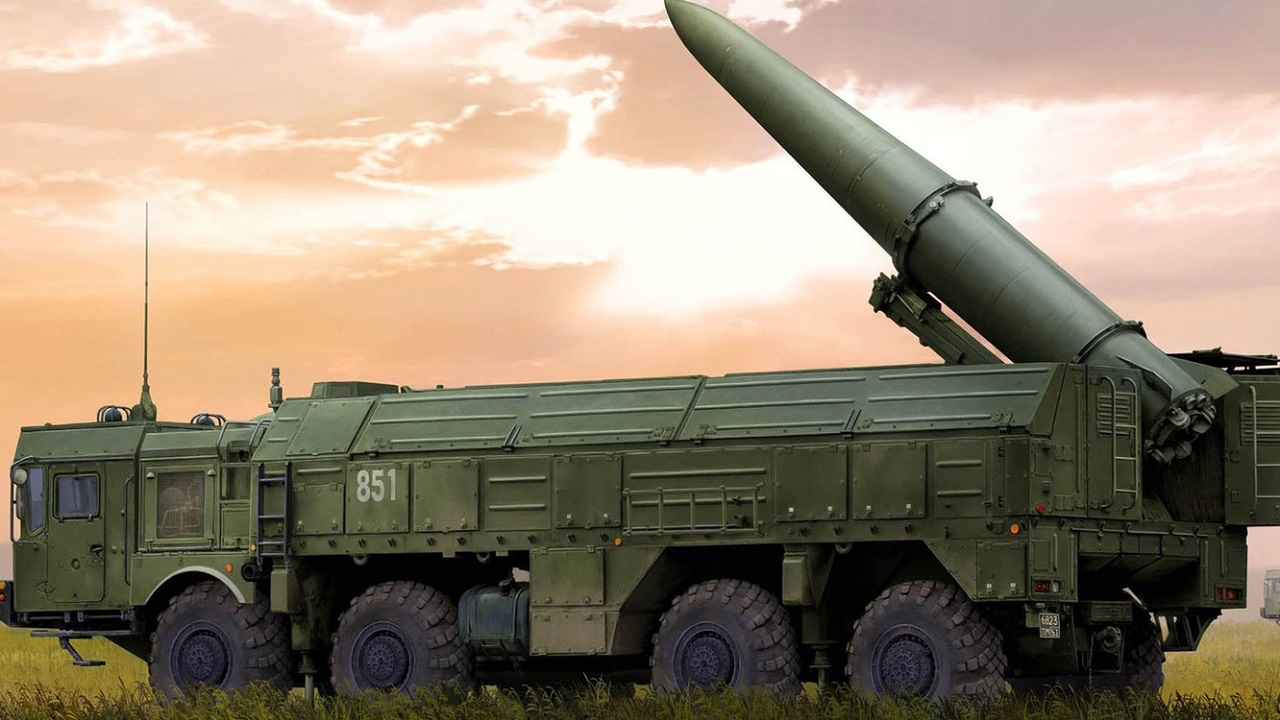
Iskander Missile. Image Credit: Creative Commons.
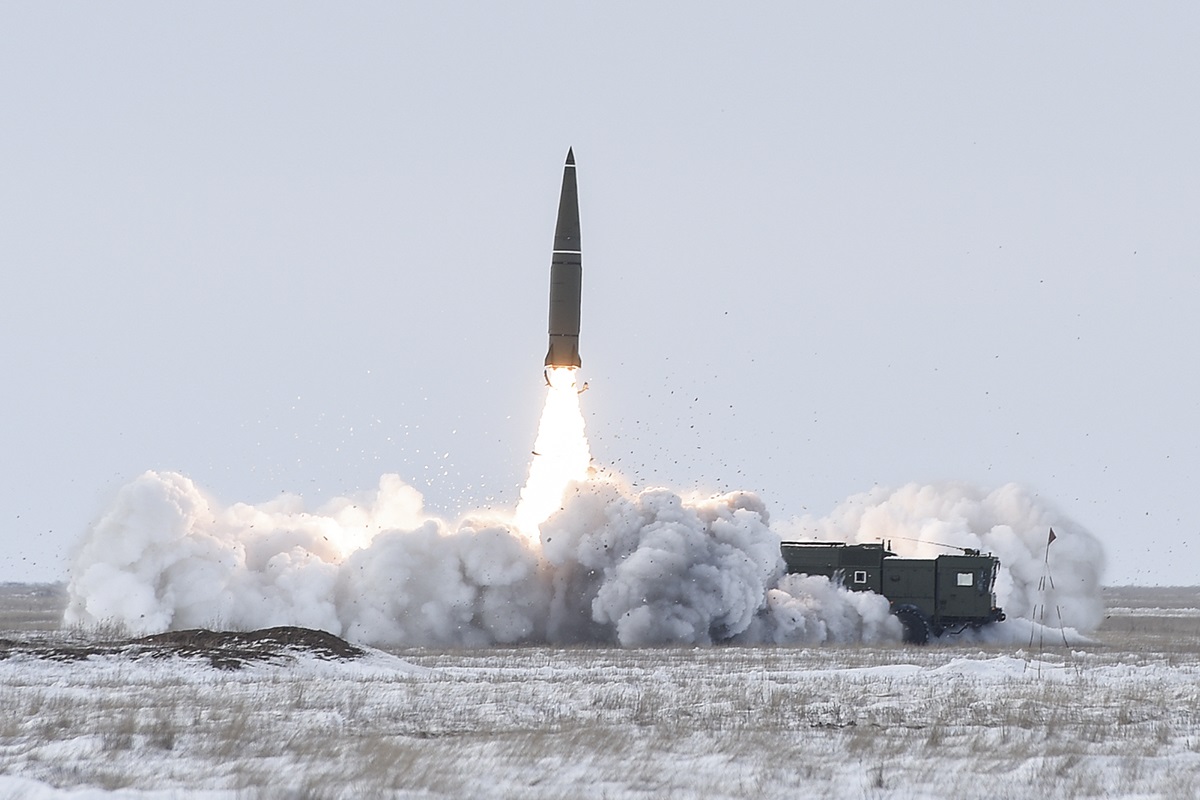
Iskander missile system. Image Credit: Creative Commons.
Also known as the Hwasong-11A, the North Korean missile is solid-fueled and therefore road-mobile, with a range estimated at 450 to 690 kilometers, depending on payload. But unlike a conventional ballistic missile that follows a relatively predictable arc, the KN-23 flies a depressed, quasi-ballistic trajectory and can also maneuver while in flight, making interception more difficult.
Operationally speaking, the missile occupies a niche similar to that of the Russian Iskander missile as a theater-wide strike weapon, targeting a high-value set that includes command centers, airfields, logistics hubs, ammunition depots, and other vital nodes behind the front lines.
Iskander Copy?
One of the questions central to the KN-23 is if it is, in fact, a copy — or perhaps a close relation — of Russia’s Iskander missile. Several factors say yes. Firstly, the KN-23’s external appearance, its dimensions, flight profile, and maneuvering behavior during its terminal flight phase are quite similar to Russia’s Iskander-M.
Since 2019, analysts have discussed the possibility that North Korea received direct technical assistance from Moscow or that Pyongyang independently pilfered and reverse-engineered the Iskander in part or entirely.
The similarities between the Iskander and KN-23 are difficult to ignore, but there is evidence of notable differences in the KN-23’s construction and geometry, with one Ukrainian analysis describing the North Korean missile as closer to an Iskander-derived concept than a one-to-one clone of the Russian missile.
There could be a degree of coincidence in the missile’s outward resemblance, however, as the KN-23 also shares some characteristics with the Hyunmoo-2 series made in South Korea.
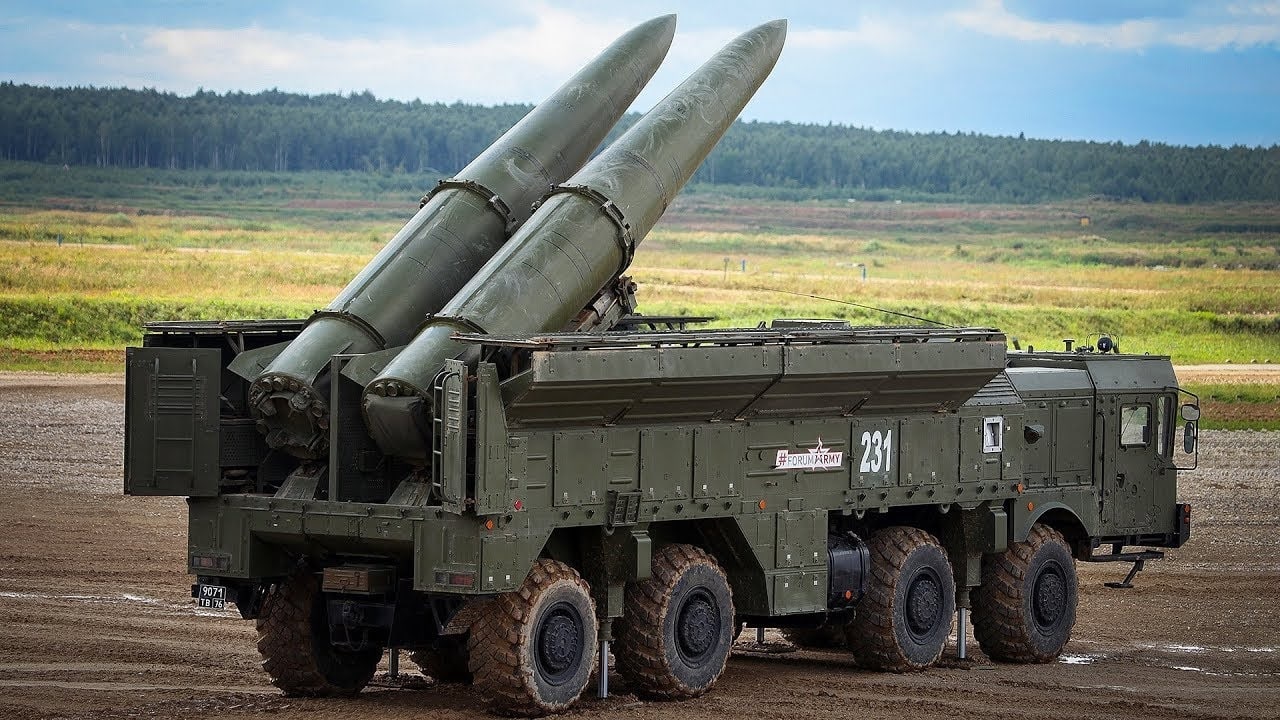
Iskander ballistic missile. Image Credit: Creative Commons.
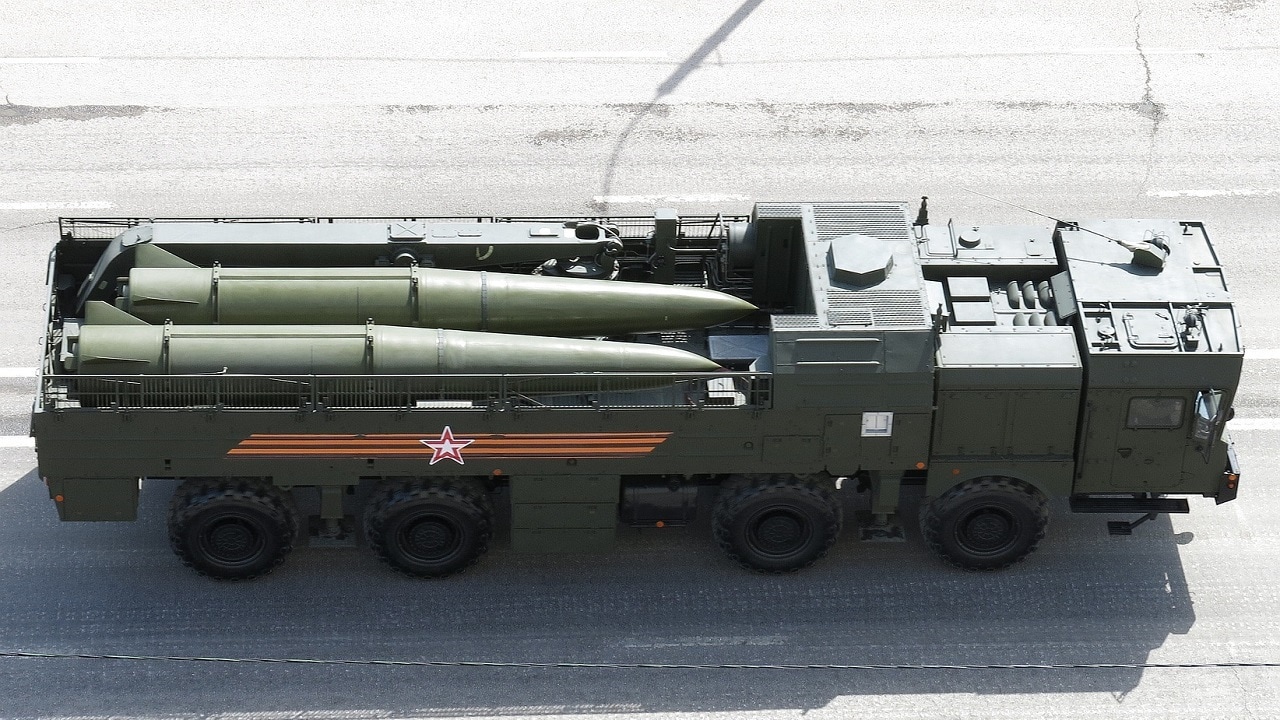
Iskander Transport Loader 9T250
In reality, it is entirely possible that the North Korean KN-23 absorbed design features from multiple foreign missile designs and was optimized for the North Korean industrial base.
The Ukrainian Angle: Improving Accuracy?
Russia is believed to have begun using North Korean ballistic missiles in late 2023 and early 2024. At first, the results were not particularly impressive. Ukrainian officials characterized many early KN-23 strikes as inaccurate. Some missiles seemingly deviated substantially from their intended targets, and Ukrainian authorities publicly displayed examples that appeared to be significantly less accurate than Russia’s own Iskander missiles.
Remarkably, Ukrainian assessments of the KN-23’s accuracy during the missile’s early use were incredibly poor — accuracy was thought to be in the one- to three-kilometer range. It was a shocking revelation for a weapon of that class.
While the missile’s large warhead could certainly cause a significant amount of destruction, a miss by three kilometers negates the missile’s destructive power almost entirely. But in February 2025, Ukrainian officials began to notice a change.
Citing senior Ukrainian sources, Reuters reported that North Korea’s ballistic missiles had become significantly more accurate. According to these assessments, missiles that had previously missed their intended targets by one or more kilometers improved, landing roughly 50 to 100 meters from their targets. The improvement in accuracy is substantial.
Why the Improvement in Accuracy?
The real reason for North Korea’s KN-23 transforming into a precision strike asset is probably known only to select intelligence agencies.
But several theories have been put forward. Firstly, the KN-23 appears to benefit from improved navigation. Improved inertial navigation systems, better calibration procedures, or more effective satellite-aided guidance could, in theory, translate into significant gains in accuracy.
But another possibility is that Russia provided the North Koreans with technical assistance after witnessing the missile’s abysmal performance in combat. Ukrainian intelligence chief Kyrylo Budanov has previously suggested that Russian specialists helped correct the missile’s previous accuracy hiccups.
Another alternative is simply operational lessons learned during combat.
Prior to the missile’s applications to Ukrainian battlefields, North Korea had not conducted tests of the missile under real, wartime conditions. Russia has fired large numbers of missiles against real targets, generating valuable telemetry data that sheds light on flight behavior, potential manufacturing defects, guidance systems, and other related factors — a feedback loop that is vital to any weapons program.
Battlefield Testing, Real-world Applications
The war in Ukraine has proven to be an invaluable testing ground for a variety of systems. Land, sea, and air drones, new operational concepts, and ballistic missiles. And for the United States, Japan, and South Korea, the latter may be the most worrying development. Each KN-23 launch generates data that will assuredly benefit future generations of North Korean weaponry.
About the Author: Caleb Larson
Caleb Larson is an American multiformat journalist based in Berlin, Germany. His work covers the intersection of conflict and society, focusing on American foreign policy and European security. He has reported from Germany, Russia, and the United States. Most recently, he covered the war in Ukraine, reporting extensively on the war’s shifting battle lines in the Donbas and writing about its civilian and humanitarian toll. Previously, he worked as a Defense Reporter for POLITICO Europe. You can follow his latest work on X.