
Summary and Key Points: General Dynamics Electric Boat and Newport News can build only so many Virginia-class attack submarines a year, and the U.S. Navy is spending its most expensive undersea platforms on missions a far cheaper vessel could handle. As Congress weighs the next multi-billion-dollar submarine budget, allied navies from Japan to Australia are buying exactly the kind of diesel-electric boats America has refused to build for itself. The question facing Washington is no longer just how many submarines the industrial base can produce — it is whether the Navy is buying the right ones at all.
The Problem for the Navy
The U.S. Navy does not have too many missions for its nuclear attack submarines because those boats are weak. It has too many missions for them because they are America’s best undersea platforms, and Washington has learned to spend them on almost everything.
That habit now has a cost.
The U.S. Navy’s Submarine Crisis Is Real

The Virginia-class submarine USS Vermont (SSN 792) makes her way up the Thames River and past Fort Trumble and the Coast Guard Cutter Borque Eagle as she returns home to Submarine Base New London on Thursday, December 24, 2020. The nineteenth and newest Virginia-class submarine she is the third U.S. Navy ship to be named for the Green Mountain State. (U.S. Navy Photo by John Narewski/Released)
A Virginia-class submarine is one of the most valuable military assets in the American arsenal. It can move fast, stay under for months, hunt other submarines, threaten surface ships, strike targets ashore, and operate in places where most ships would be dead or useless. There is a reason the Navy loves them. There is also a reason it cannot build enough of them.
That is where air-independent propulsion submarines deserve a more serious look. Not as a cheap imitation of an SSN. Not as a miracle answer to China. Not as a way to make the nuclear submarine less important. The point is simpler and more annoying than that. Some jobs now assigned to nuclear boats could be done by a quieter, cheaper, shorter-legged submarine built for a narrower purpose.
The Navy’s problem is not prestige. It is scarcity.
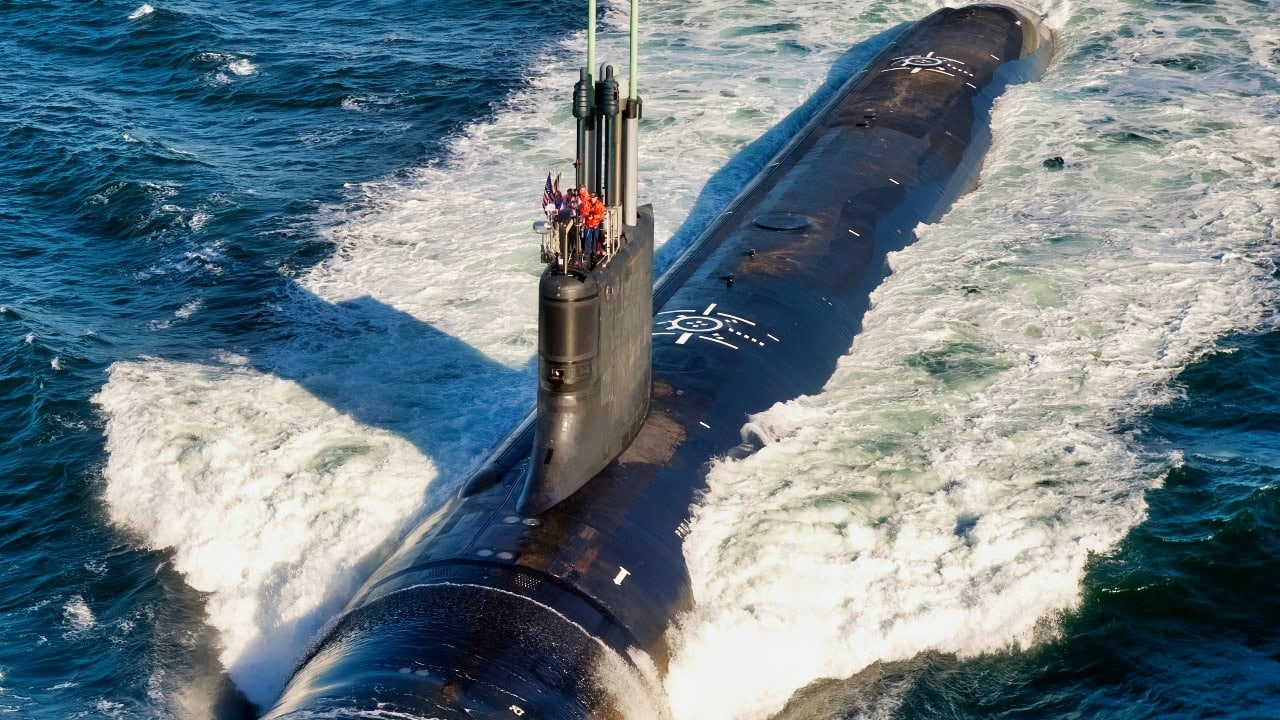
Virginia-Class Submarine.
The SSN Shortage Is Already Here: Industrial Challenges
Washington talks about submarine production as if the next decade will eventually rescue the present one. Maybe it will. That does not help much now.
The attack submarine force remains below the Navy’s own requirement. Virginia-class production is still short of the desired two-per-year pace. Recent reporting has put deliveries closer to 1.3 boats per year, with the two-per-year mark pushed into the early 2030s. The Congressional Budget Office has warned that Virginia-class boats are averaging about 4 years behind the delivery dates set in their original contracts.
Those numbers are not a footnote in procurement. They shape strategy.
China is building naval power at scale. Taiwan remains the most dangerous flashpoint in the world. The Western Pacific is full of waters where submarines matter. AUKUS adds another pull on the same stressed American submarine base. Australia’s future nuclear-submarine force may be strategically sensible, but the near-term pieces still have to come out of a U.S. system that is already straining.
The usual answer is to spend more and build faster. That is necessary. It is also late. A Navy that needs more undersea presence before the early 2030s has to ask whether every undersea job really needs a nuclear boat.
A Different Kind of Submarine: The Business and Industrial Case
AIP submarines are easy to oversell, so the case for them should start with what they cannot do.
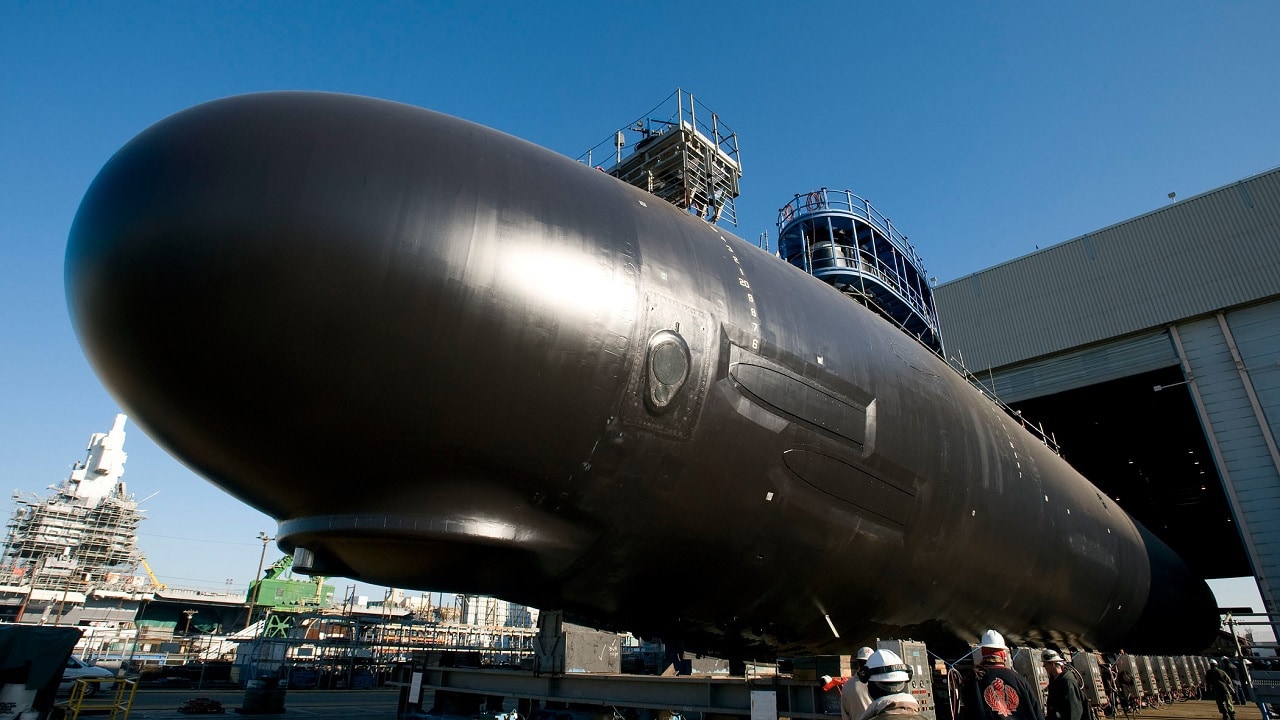
Virginia-Class. Image Credit: Creative Commons.
They cannot sprint across the Pacific like a nuclear attack submarine. They cannot stay on station with the same freedom. They cannot carry the same payload or perform the same range of missions. In a blue-water chase, the SSN wins the argument before it begins.
That misses the real issue. AIP boats are not built for every ocean. They are built for geography.
Put one in the right water, and the story changes. A quiet, conventional submarine waiting near a chokepoint, within a constrained sea, or along an expected line of movement creates a local problem that can grow larger than it is. It does not need to dominate the whole battlespace. It needs to make a piece of water dangerous enough that the other side must treat it as contested.
The Swedes have understood this for a long time because the Baltic teaches unforgiving lessons. Japan and South Korea have built their own versions of the same logic. Smaller submarines can be deadly when the mission is bounded, and the water does not reward long transits.
The U.S. Navy should care because America is running out of slack. Sending a Virginia to do work a conventional submarine could handle is not toughness. It is bad accounting with a very expensive hull.
The China Scenario
The Pacific objection is real. An AIP submarine based in the continental United States is not going to solve a Taiwan crisis. Distance matters. Basing matters. Logistics matter. So does politics.
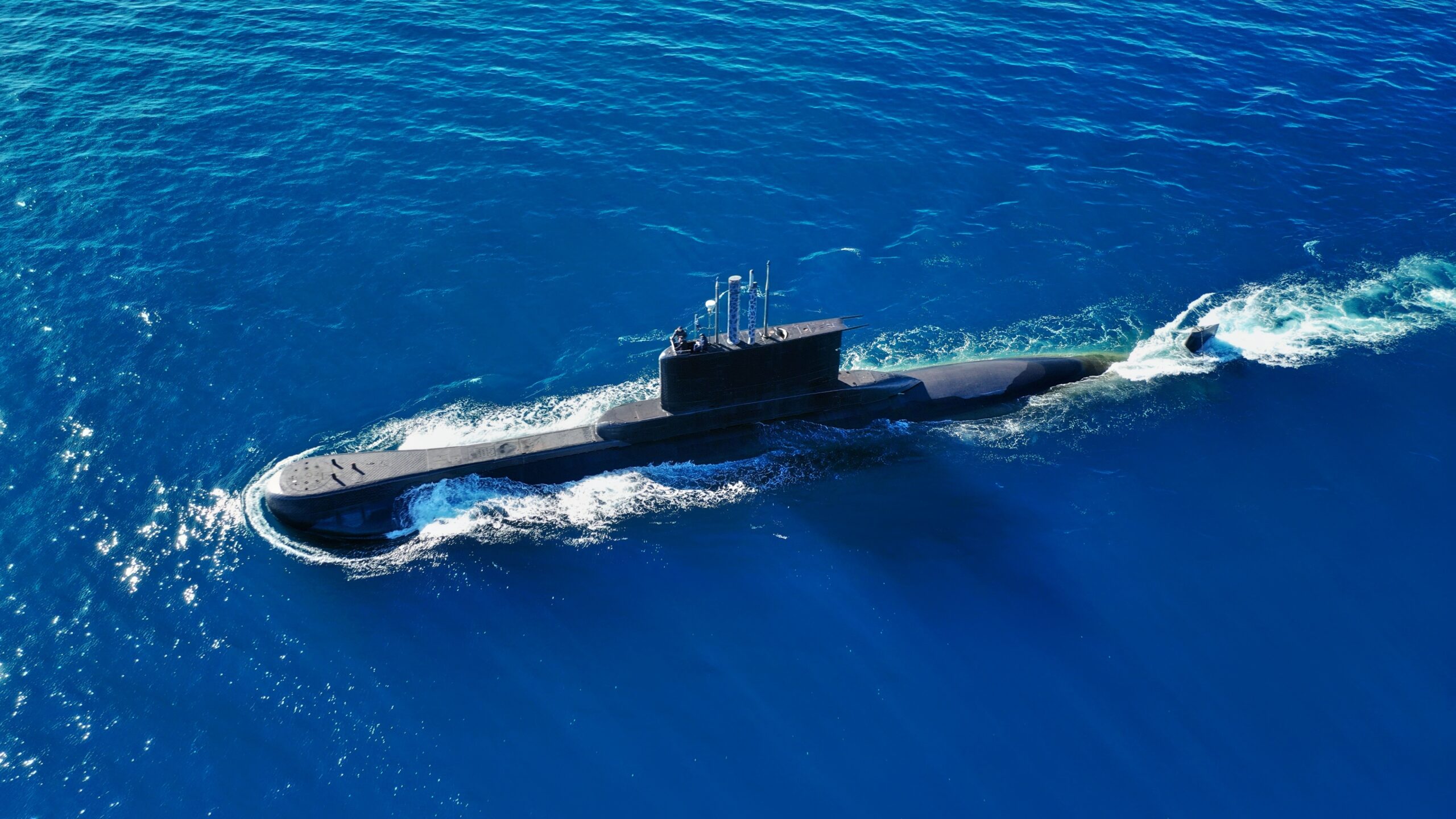
AIP Submarine from Germany. Image Credit: Creative Commons.
That does not make the idea useless. It makes the design problem stricter.
An American AIP force, if it ever made sense, would have to be forward-based, mission-specific, and tied tightly to allies. It would have to live where the missions are. Guam, Japan, parts of Australia, and perhaps other access points would matter more than any brochure claim about range. The Navy would have to think like a regional sea-denial force for once, rather than treating every submarine as a global instrument.
This is where the deterrence value appears. China’s navy does not have to fear that every AIP boat is a war-winning platform. It has to worry that the waters it needs to move through quickly may contain quiet boats waiting for a chance. That worry forces escorts, searches, delays, and caution. It complicates planning. In a crisis over Taiwan, complications are not small.
A nuclear submarine can do more. It can also be in only one place at a time.
Allies Already Know This
There is an awkward alliance point here. Many American allies have kept conventional submarines because they never had the luxury of pretending geography no longer mattered.
Japan, South Korea, Sweden, Germany, and others have built or operated serious non-nuclear boats because their naval problems begin close to home. They need to make nearby seas dangerous. They need boats that fit their waters, their budgets, and their strategic circumstances.
The United States does not have to blindly copy them. It should at least stop treating the conventional submarine as a lesser species. In a more multipolar world, alliance strategy has to be more than asking allies to spend more while Washington keeps doing the same things in the same way.
There is a version of this that relies mainly on allied submarines. There is another version that includes a small American AIP force. Either way, the serious question is the same: how many nuclear-submarine days can be returned to missions that truly require nuclear propulsion?
That should be the test.
The Pentagon Could Ruin This
The danger is obvious. Give the Pentagon a modest platform idea, and it may come back with a gold-plated program that takes fifteen years, costs too much, and satisfies nobody.
That would kill the case for AIP.
If the Navy insists on designing a perfect American conventional submarine from scratch, the idea should probably die early. If it loads the boat with every mission the Virginia already performs, the point is null. If it competes directly with the nuclear industrial base, it becomes part of the problem.
The better approach would be narrow and almost deliberately unglamorous. Look hard at allied designs. Consider licensed production or co-production. Build around specific missions in specific waters. Keep the requirements tight enough that the program cannot turn into another monument to Pentagon taste.
This is not about giving up on nuclear submarines. It is about protecting them from misuse.
The U.S. Navy’s nuclear attack submarines are too important to become the answer to every undersea shortage. They should be held for the work only they can do. That will require a little humility from a Navy that has every reason to be proud of its submarine force. It will also require a strategic culture willing to admit that the best tool in the box is sometimes the wrong one to reach for first.
About the Author: Dr. Andrew Latham
Andrew Latham is a professor of international relations and political theory at Macalester College in Saint Paul, MN. You can follow him on X: @aakatham.