
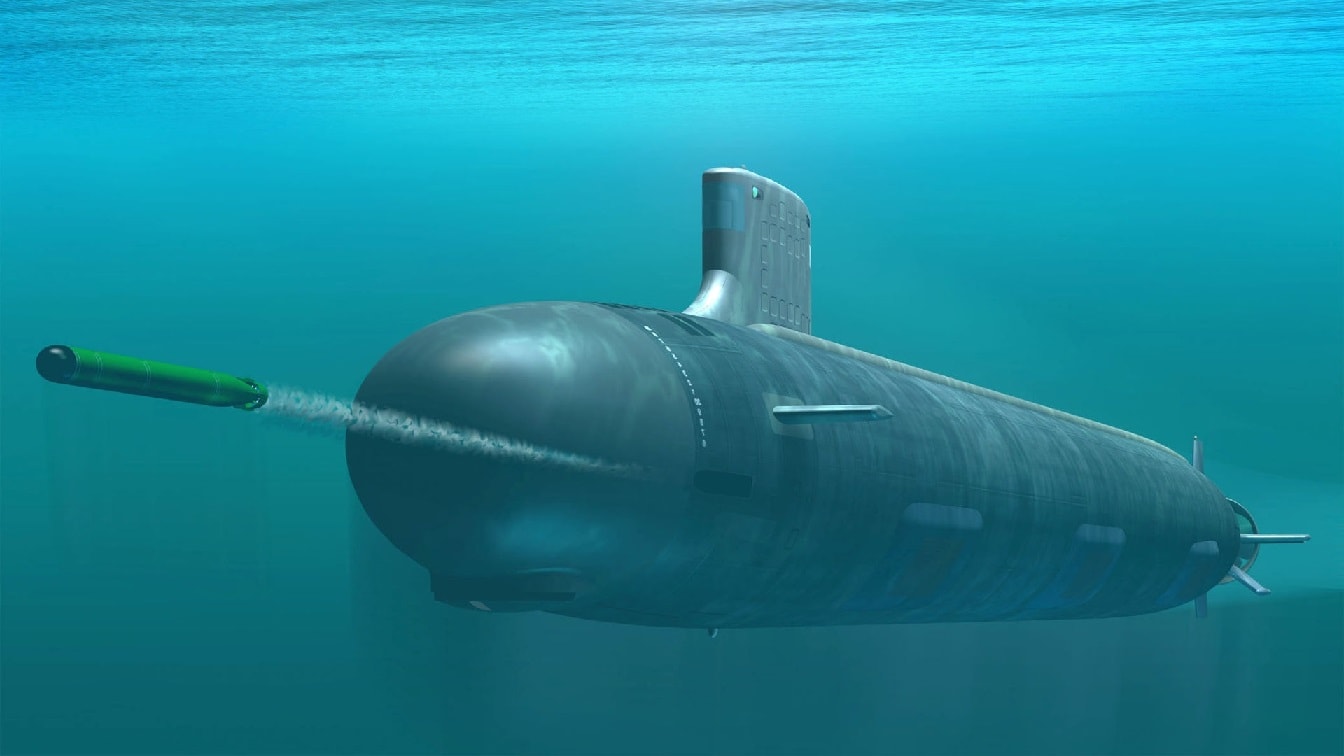
Virginia-class SSNs have been the backbone of the US Navy’s attack submarine fleet since the early 2000s, with each production “Block” introducing incremental improvements in cost, maintenance, sensors, or weapons. The upcoming Block VI is billed as one of the largest upgrades yet, allowing future Virginias to become multi-role platforms capable of long-range strike, unmanned operations, and seabed missions—all in addition to the primary mission of hunting enemy submarines.
Introducing the Virginia-Class Submarines
The Virginia-class is a nuclear-powered fast attack submarine (SSN) designed after the Cold War to replace the Los Angeles-class. The primary mission of the Virginia is anti-submarine warfare, intelligence collection, special operations support, and land attack with cruise missiles. More affordable and versatile than the larger (and discontinued) Seawolf-class, the Virginia has become the Navy’s principal attack submarine.
The Virginia has continued to evolve through multiple Blocks.
Starting with Block I and II, the original Virginias were simply focused on replacing aging Cold War submarines.
Block III featured a redesigned bow and introduced the Virginia Payload Tubes, which replaced multiple individual launch tubes. This Block also reduced construction costs, making the platform more sustainable in effect.
Block IV increased maintenance efficiency and reduced major overhaul periods, allowing each submarine to conduct more deployments over its service life. More recently,
Block V offered the biggest changes so far, adding the 84-foot Virginia Payload Module (VPM), which increased Tomahawk capacity from roughly 12 missiles to around 40. This helped offset the retirement of the Ohio-class guided missile submarines.
Introducing Block VI
Block VI isn’t about improving efficiency; it’s about improving operational capability. The Block represents an evolution toward a more networked undersea force. Expected improvements include greater payload flexibility, enhanced acoustic stealth, expanded unmanned vehicle operations, improved communications, and new undersea mission sets.
Block VI is expected to retain the VPM introduced in Block V. The VPM is important, featuring four large-diameter payload tubes that dramatically expand the platform’s magazine depth. This capability preserves the Virginia’s role as a major Tomahawk strike platform. Reports also suggest that upcoming Virginia variants could be linked to the Navy’s Conventional Prompt Strike (CPS) hypersonic weapon program, though details on this remain limited.
If integrated, the Virginia could launch conventional hypersonic weapons capable of striking high-value targets at very long range while remaining hidden underwater. This represents another step toward submarines becoming strategic strike platforms, rather than just submarine hunters.
Growing into Unmanned Systems
Undersea warfare increasingly includes autonomous vehicles. Future Virginia variants are expected to deploy unmanned underwater vehicles (UUVs), reconnaissance drones, mine countermeasure systems, and seabed sensors.
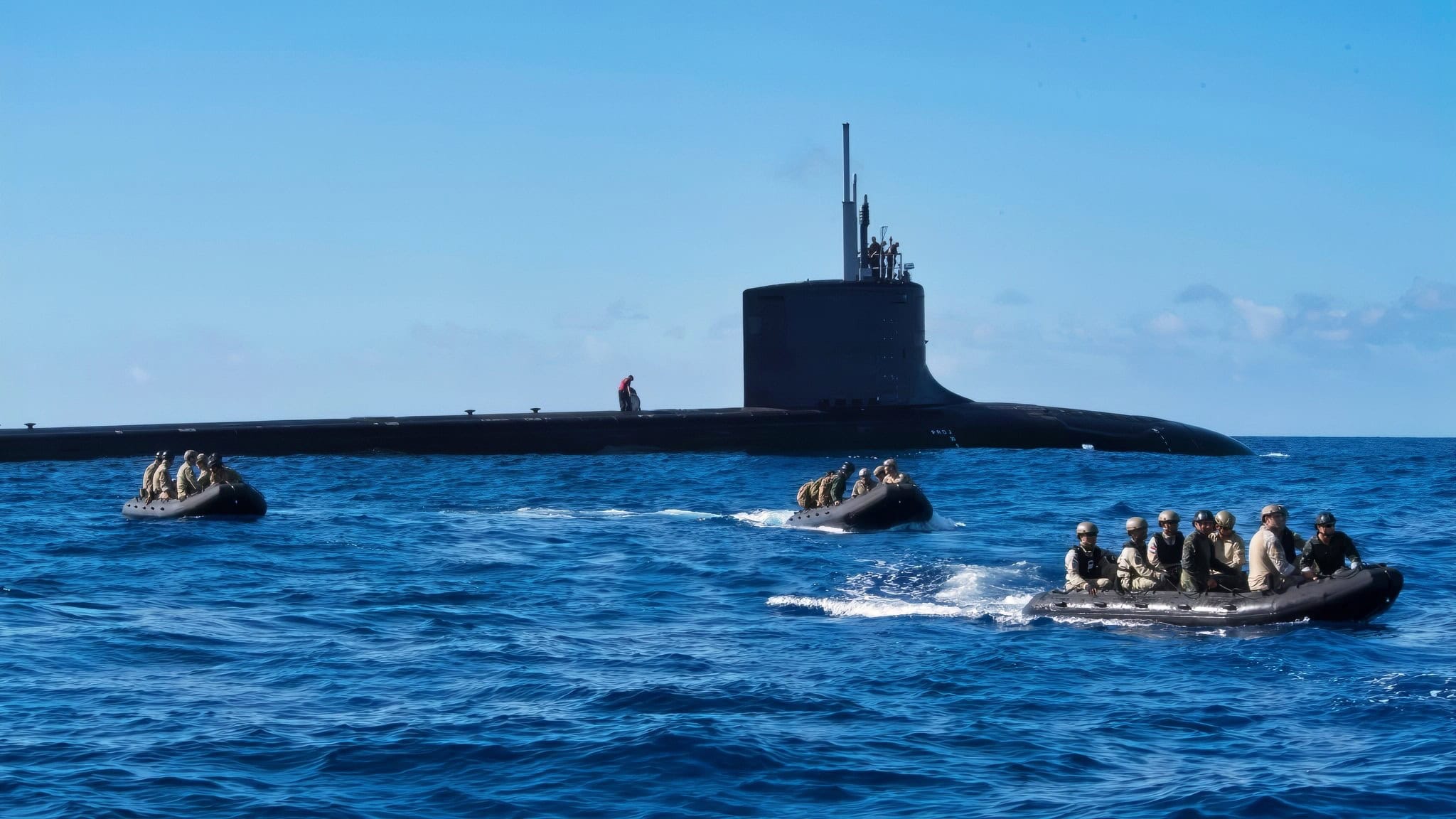
PEARL HARBOR (July 9, 2018) – Multi-national Special Operations Forces (SOF) participate in a submarine insertion exercise with the fast-attack submarine USS Hawaii (SSN 776) and combat rubber raiding craft off the coast of Oahu, Hawaii during Rim of the Pacific (RIMPAC) exercise, July 9. Twenty-five nations, 46 ships and five submarines, about 200 aircraft, and 25,000 personnel are participating in RIMPAC from June 27 to Aug. 2 in and around the Hawaiian Islands and Southern California. The world’s largest international maritime exercise, RIMPAC provides a unique training opportunity while fostering and sustaining cooperative relationships among participants critical to ensuring the safety of sea lanes and security of the world’s oceans. RIMPAC 2018 is the 26th exercise in the series that began in 1971. (U.S. Navy photo by Lt. j.g. Michelle Pelissero)
Many of these unmanned systems can be deployed from torpedo tubes, which provide flexible launch and recovery capabilities. This allows the submarine to extend its sensing and surveillance far beyond the hull itself, which fits the broader Navy emphasis on human-machine teaming.
Seabed warfare is also emerging as a mission, as undersea infrastructure has become increasingly important. Critical assets include fiber-optic internet cables, pipelines, sensor networks, and offshore energy infrastructure.
Recent incidents have highlighted vulnerabilities of subsea infrastructure. Future submarines may increasingly conduct missions to inspect, protect, monitor, or potentially disrupt undersea infrastructure. This reflects the growing importance of the seabed as a military domain.
Growing Quieter
Quieting remains the defining feature of any attack submarine. Expected improvements include refined pump-jet propulsion, additional acoustic treatments, quieter machinery, and improved vibration isolation. The goal remains reducing detectability by passive sonar, so small reductions in acoustic signature can produce significant operational advantages.
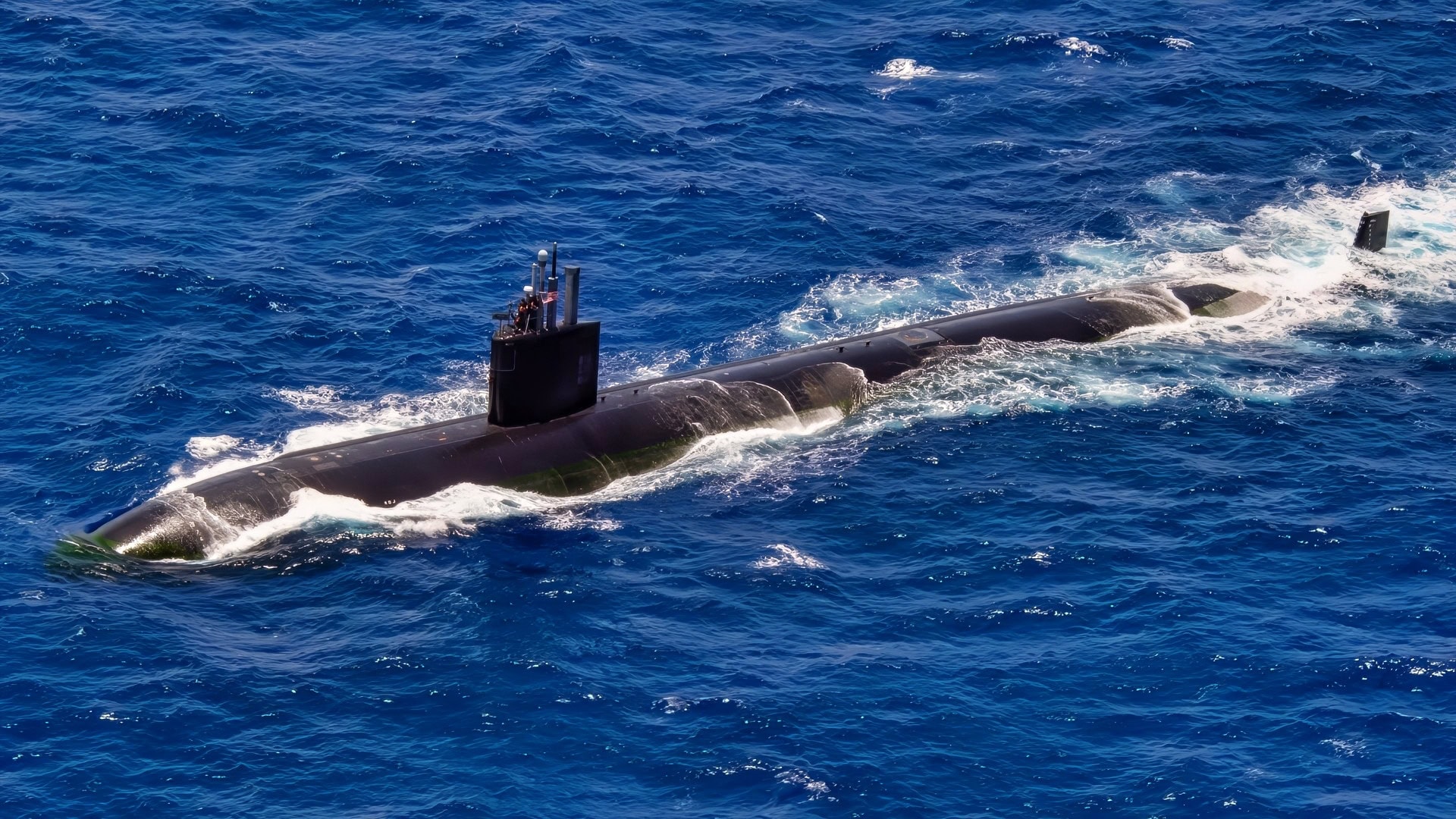
Virginia-class submarine USS North Carolina (SSN-777) sails during the at-sea phase of Exercise Rim of the Pacific (RIMPAC) 2024.
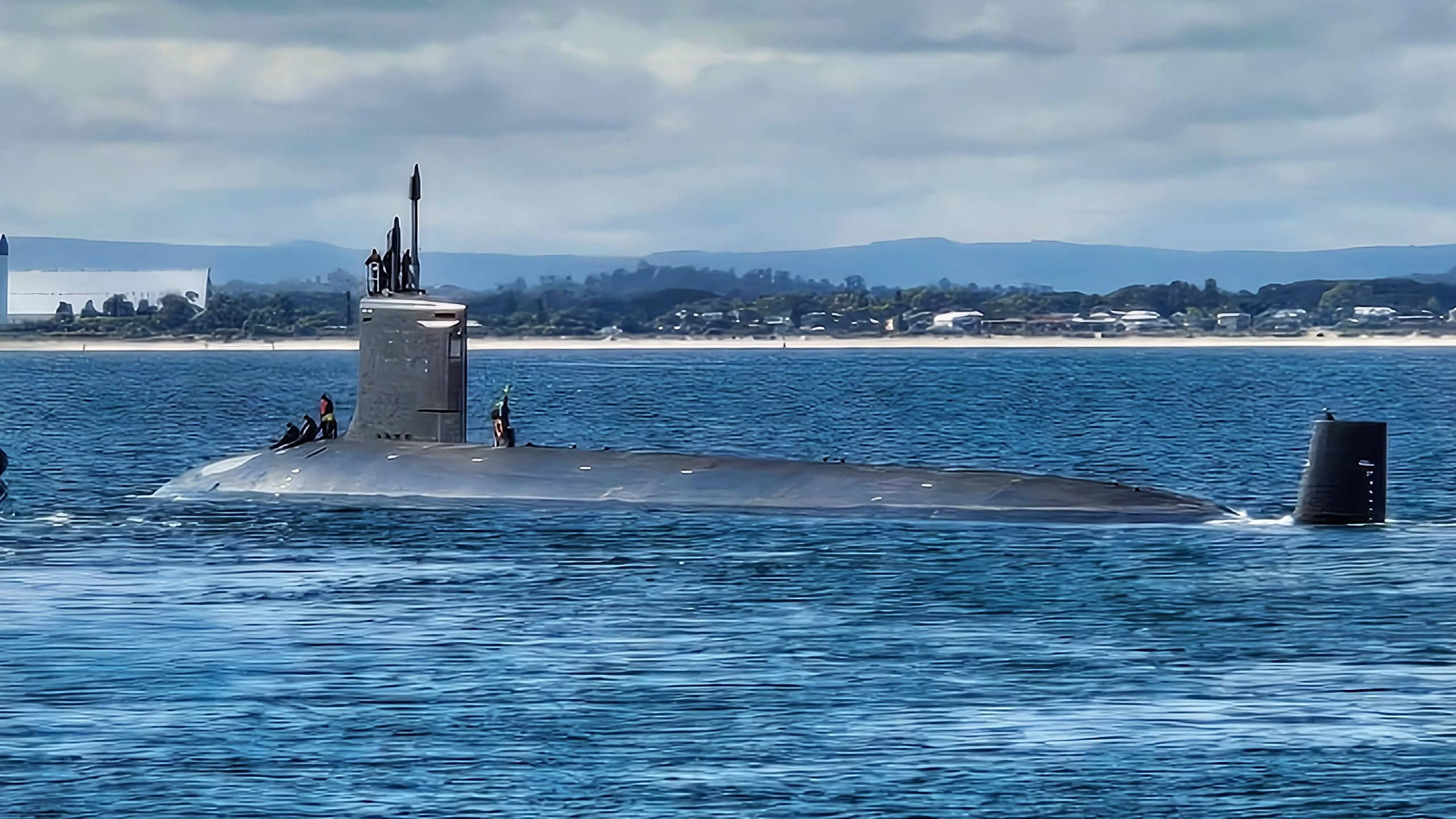
HMAS STIRLING, Western Australia, Australia (Sep. 10, 2024) — USS Hawaii (SSN 776) departs HMAS Stirling Sept. 10, marking the conclusion of a historic submarine maintenance period in Western Australia. As part of the Australia, United Kingdom, United States (AUKUS) Pillar 1 effort, Royal Australian Navy personnel assigned to submarine tender USS Emory S. Land (AS 39) worked alongside their U.S. Navy counterparts to make repairs on the U.S. Virginia-class SSN in Australia during a multi-week Submarine Tendered Maintenance Period, or STMP. (U.S. Navy photo by Rory O’Connor)
Modern submarines are also being used increasingly to operate as nodes within larger joint networks. Future improvements are expected to enhance secure communications, sensor fusion, integration with unmanned systems, and real-time information sharing.
This helps support distributed maritime operations across the Indo-Pacific.
Can They Be Built?
However, the Navy continues to struggle to produce Virginia-class boats at the desired rate. Workforce shortages, supplier bottlenecks, and construction delays have affected multiple submarines.
Simultaneous demand—for Virginia production, Columbia-class ballistic missile submarines, and future AUKUS commitments—set against the US’s limited shipbuilding capacity, has hampered production rates. Strategically, the production lag will likely prove consequential as competition in the Indo-Pacific increasingly favors stealthy undersea platforms.
About the Author: Harrison Kass
Harrison Kass is a writer and attorney focused on national security, technology, and political culture. His work has appeared in Tablet, City Journal, The Hill, The Spectator, and The Cipher Brief. He holds a JD from the University of Oregon and a master’s in Global & Joint Program Studies from NYU. More at harrisonkass.com.