

In the English spring of 1944, before crowds of 15,000 soldiers, a general in a polished helmet and gleaming cavalry boots delivered the most famous address an American commander has ever given his men, and he did it without so much as a note card. Its opening is carved into the culture: “No bast*** ever won a war by dying for his country.” “You won it by making the other poor dumb bast*** die for his country.”
And in the honest tradition of this series, the provenance first, because it deepens everything: there is no single Speech. George S. Patton delivered it at least four and perhaps six times to different Third Army divisions between late May and early June 1944, extemporaneously, varying it each time; no official transcript was ever made, and the canonical text is a reconstruction stitched from what soldiers scribbled and remembered, with the famous opening best attested from the May 31 delivery to the 6th Armored Division, while June 5, the eve of the invasion, fixed the traditional date.
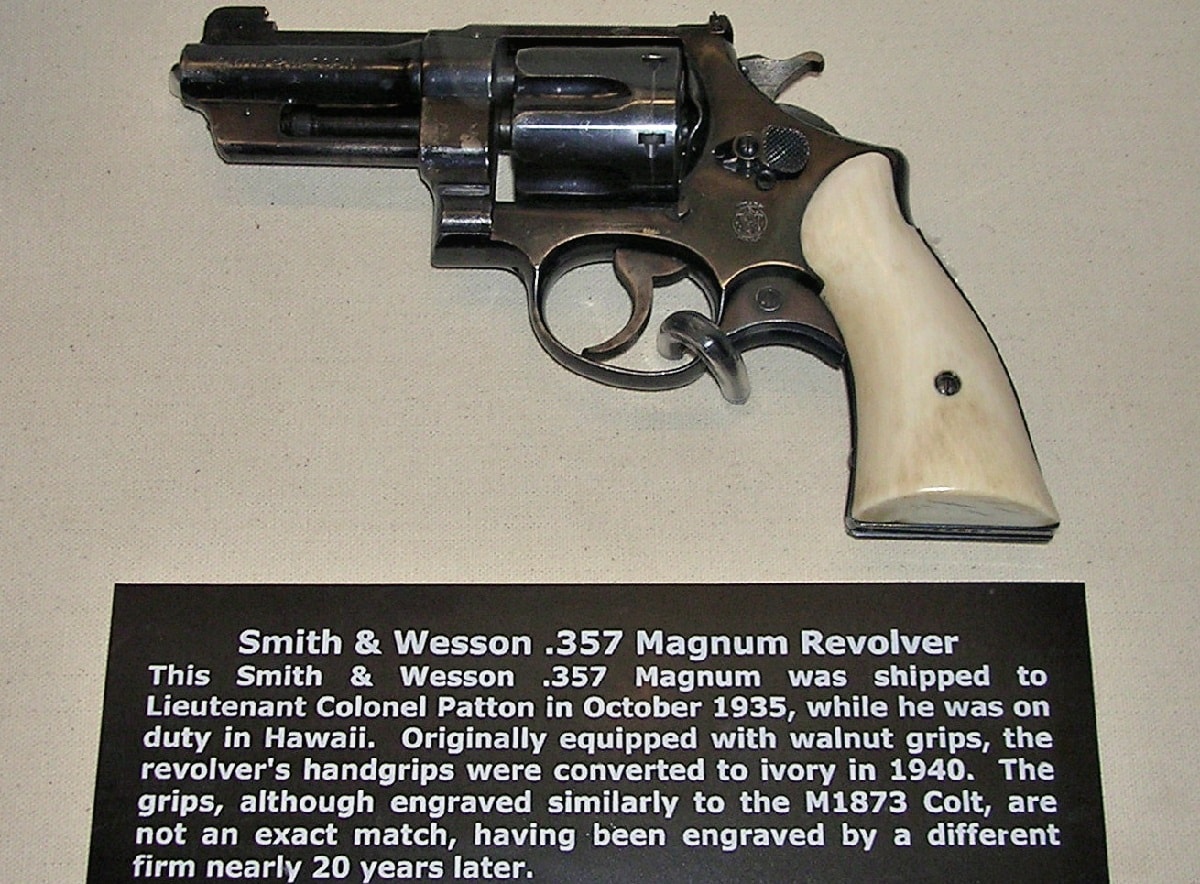
Patton’s well-known custom ivory-handled revolver.
One listener’s shorthand version even survives from a delivery at a Worcestershire camp.
And buried in the provenance is the key to the man: he spoke entirely from memory because reading had likely been the enemy of his whole life.
The most famous warrior America ever produced was not born.
He was built by four decades of labor and hard work, and the Speech, 82 years old this summer, is, at least for me, the finished product.
George Patton: The Boy Who Could Not Read
Patton was dyslexic in an age with no word for it, a bright California boy who could not reliably read until years after his classmates.
When he reached West Point by way of the Virginia Military Institute, the deficit nearly ended him at the start: he failed the mathematics requirement and was turned back to repeat his entire first year.
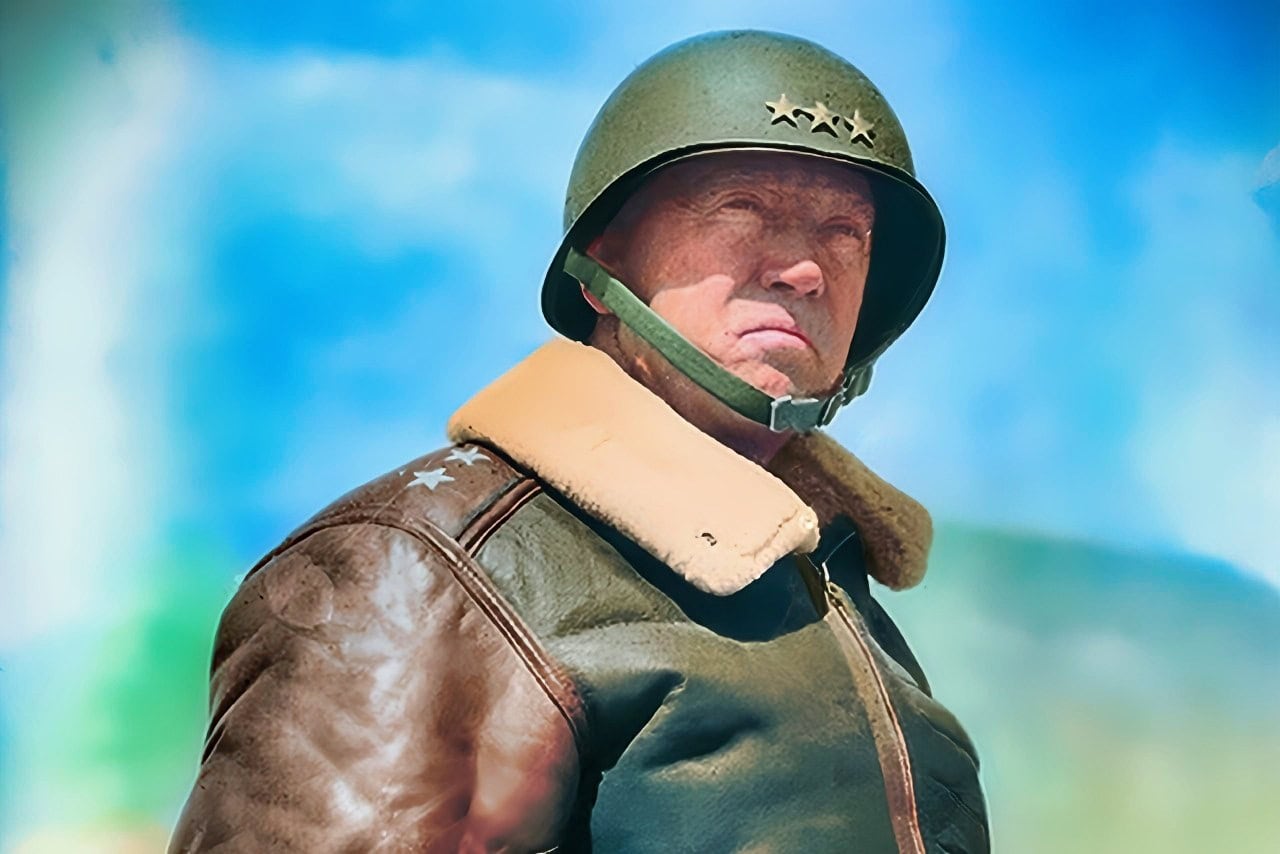
George Patton U.S. Army Photo
He stayed. He compensated with brute memorization, reciting what other cadets skimmed, grinding through five years of a four-year course to graduate in 1909, and the experience installed the operating principle of his career: whatever came naturally to other men would have to be manufactured, in him, by work.
It is the fact that reframes every famous thing about him.
The seemingly effortless command of military history, the fluent quotation of Napoleon and the ancients, the speeches delivered flawlessly without notes to crowds of thousands, all of it was the visible surface of a compensation system built by a boy who could likely not trust his own eyes on a page.
The Complete Professional
What Patton did with his body and his hours over the next thirty years amounts to the most thorough self-education in the pre-war Army.
In 1912, he represented the United States in the modern pentathlon at the Stockholm Olympics, the all-around soldier’s event of riding, fencing, shooting, swimming, and running, and finished fifth of 42 competitors against the military athletes of the world.
He then studied swordsmanship at the French cavalry school, reported to Fort Riley, and became the U.S. Army’s first officer to hold the title Master of the Sword, designing the Model 1913 cavalry saber, the Patton sword, and writing its doctrine while technically still a student at the school where he was teaching. He read military history with the hunger of the formerly starved, building an annotated working library he carried through every posting, and he wrote for the service journals, an officer doing homework in an army that mostly did not.
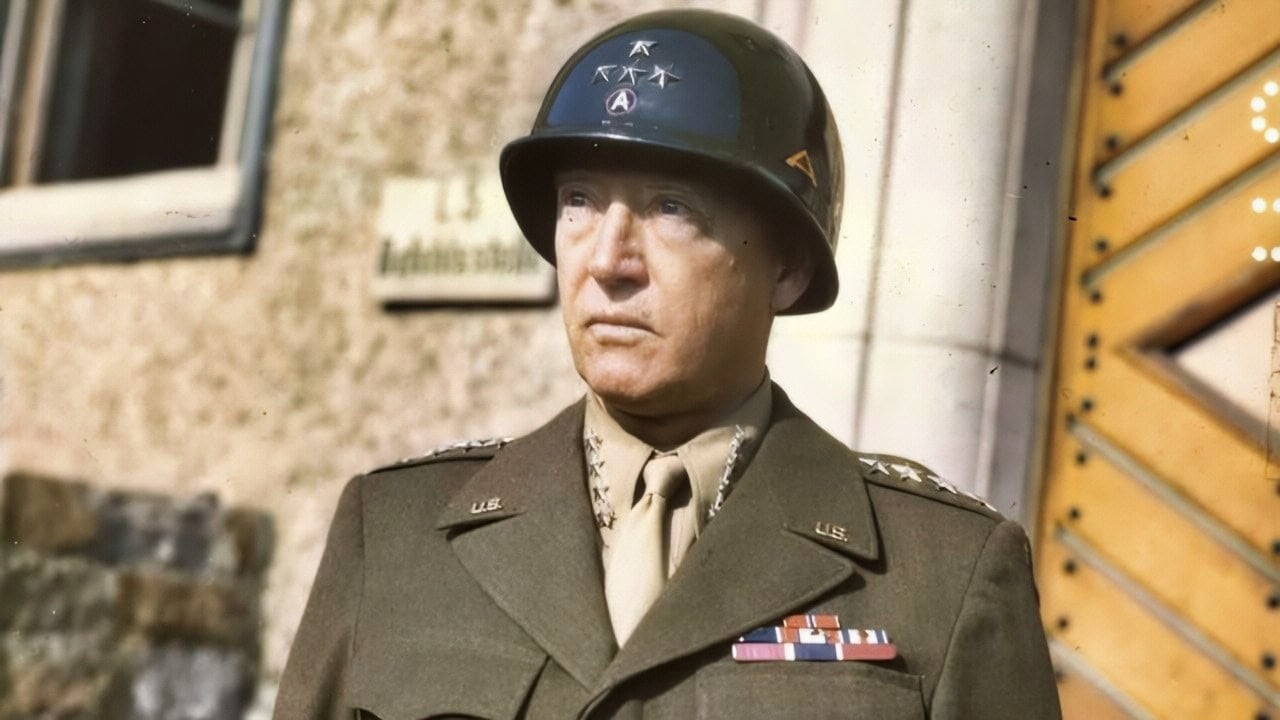
General George Patton U.S. Army Photo
And when the new weapon appeared, he chased it: in World War I he organized the American Army’s first tank school in France, commanded the 304th Tank Brigade at St. Mihiel and in the Meuse-Argonne, and was badly wounded at Cheppy in September 1918, advancing on foot ahead of his tanks.
Through the lean interwar decades, when armor was institutionally marginal and the horse still ruled the budget, Patton, alongside his friend Dwight Eisenhower, kept studying, writing, and arguing for the mechanized war both were certain was coming. Twenty years of unfashionable preparation were waiting in him when it came.
The Speech Was the System
Read against that biography, the Speech ceases to be a performance of temper and reveals itself as an act of engineering.
The profanity was calculated: Patton reasoned that soldiers facing death deserved the language of the barracks, not the chapel, and his men received it exactly that way even as some fellow officers winced.
The costume was calculated, the helmet, boots, and riding crop assembled over years into a recognition symbol visible from the back of a crowd.
And the message was his professional doctrine compressed for privates: glory is not the mission; dying is not the mission; winning is the mission, and winning means the other man does the dying.
The Speech’s less famous sibling line, delivered in the same season to the same army, completes the thought: “A pint of sweat will save a gallon of blood.”
That is not a warrior’s boast. It is a workman’s equation, the dyslexic cadet’s hard-won arithmetic scaled up to an army: preparation is the currency that buys lives back.
The general who drove his men harder than any commander in the theater did so on the conviction, borne out by the ledgers of his campaigns, that speed and training spent fewer of them per mile than caution did.
The Proof
The proof came fast. Activated in Normandy on August 1, 1944, the Third Army broke out and ran across France at a pace that rewrote staff assumptions, and in December came the masterpiece only the whole forty-year apparatus could have produced.
When the Germans smashed through the Ardennes and surrounded Bastogne, Patton arrived at Eisenhower’s crisis conference having already ordered his staff to draft contingency plans for exactly that pivot, and promised the unthinkable: he would disengage three divisions from one battle, wheel an entire army ninety degrees, and attack north through freezing weather within days.
The room doubted; the staff work held; the 4th Armored Division broke into Bastogne on December 26. It looked like a dash. It was homework.
The honest ledger records the flaw as well: in Sicily in 1943, he slapped two hospitalized soldiers suffering combat fatigue, a disgrace that cost him nearly a year in the wilderness and almost his war, and it is part of his story too.
He ended the war having led the Third Army across France, over the Rhine, and deep into Germany, and he did not long survive the peace, dying in December 1945 after a road accident. He is buried where he asked to be, at the American cemetery at Hamm in Luxembourg, under a standard-issue headstone, in the ranks of the Third Army dead, the men of the Speech.
82 Years On
The Speech survives in competing versions because it was never a document; it was a man, delivered live, and the man was the least accidental great commander America ever fielded. The 1970 film sanitized it in front of a giant flag and made him a folk legend, but the legend gets the causation backward.
The fury was not a gift that made the work unnecessary.
The work came first, forty years of it, and the fury was its delivery system, built by a boy who could not read, who memorized what he could not decode, who taught the Army’s swordsmen while still a student and its tankers before it wanted tanks, and who stood in front of 15,000 men at a time in the spring of 1944, without a note, and told them, in the language they spoke, exactly how professionals survive a war.
The other poor dumb bast*** never had a chance. That was the point of all of it.
About the Author: Harry J. Kazianis
Harry J. Kazianis (@Grecianformula) was the former Senior Director of National Security Affairs at the Center for the National Interest (CFTNI), a foreign policy think tank founded by Richard Nixon based in Washington, DC. Harry has over a decade of experience in think tanks and national security publishing. His ideas have been published in the NY Times, The Washington Post, The Wall Street Journal, CNN, and many other outlets. He has held positions at CSIS, the Heritage Foundation, the University of Nottingham, and several other institutions related to national security research and studies. He is the former Executive Editor of the National Interest and the Diplomat. He holds a Master’s degree focusing on international affairs from Harvard University.

