
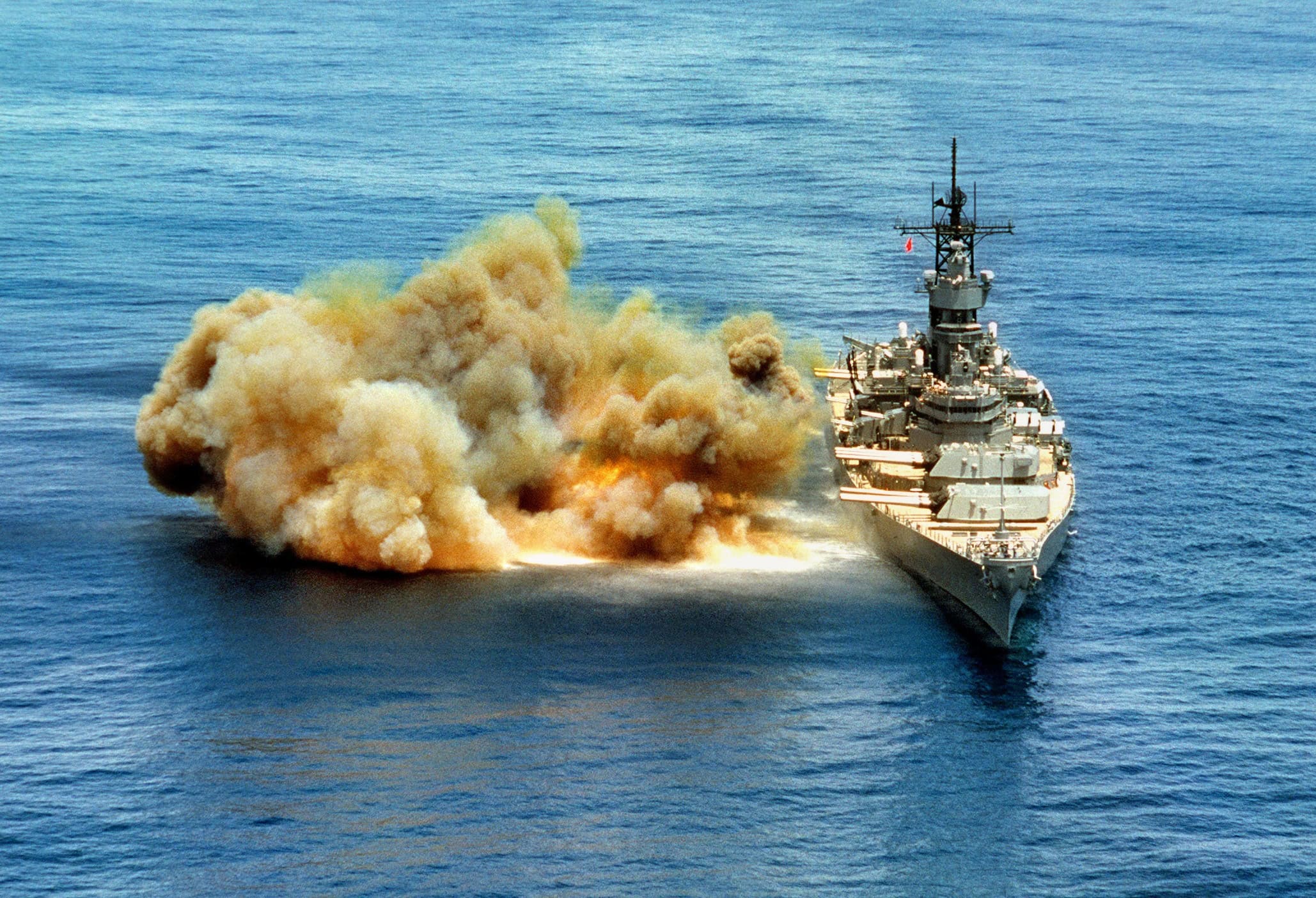
On March 20, 1942, at a small railway station called Terowie in South Australia, a crowd and a handful of reporters gathered around an exhausted American general who had spent the previous nine days running a Japanese blockade in a wooden boat and crossing a continent by bomber and train. Douglas MacArthur told them why the President had ordered him out of the Philippines: to organize the offensive against Japan, whose primary object was the relief of the islands he had been forced to abandon. Then he gave them the sentence, seven words in its full form, three in the form the world kept: “I came through and I shall return.”
Washington pressed him to amend it to “we shall return.”
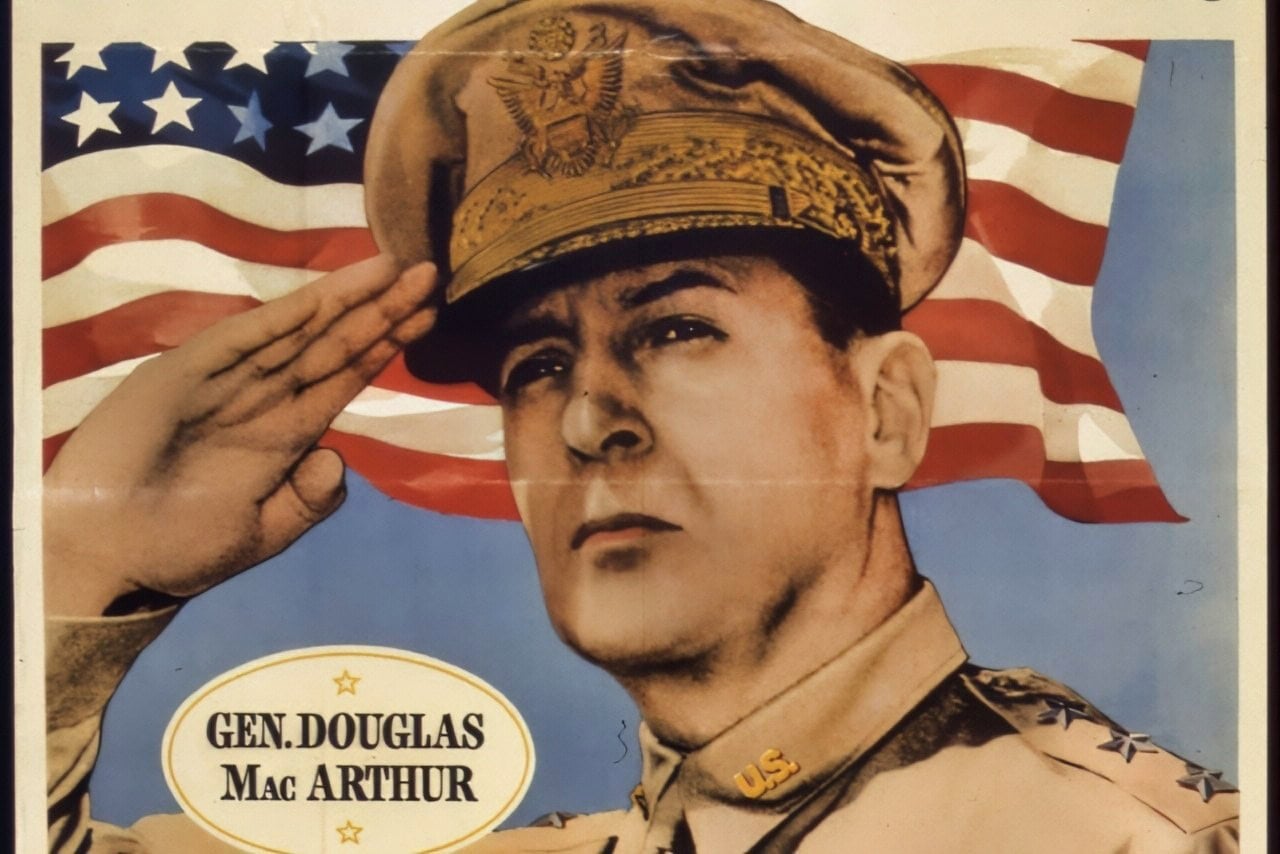
Douglas MacArthur. Image Credit: Creative Commons.
He refused.
Eighty-four years later, it remains the most famous vow an American commander has ever made, and the history on both sides of it, the defeat that made it necessary and the campaign that made it true, is worth telling plainly.
The Defeat
MacArthur had been recalled to active duty in July 1941 to command American and Filipino forces, and the war reached him within hours of Pearl Harbor.
On December 8, local time, Japanese aircraft caught much of his Far East Air Force on the ground at Clark Field, destroying nearly half the American warplanes there despite roughly nine hours of warning.
Responsibility for that failure is argued to this day, and an honest account records both the debate and the result: Japanese air supremacy from the first morning.
The invasion followed at Lingayen Gulf, MacArthur’s forward beach defense collapsed, and the old plan he had discarded, withdrawal into the Bataan Peninsula, had to be improvised in retreat.
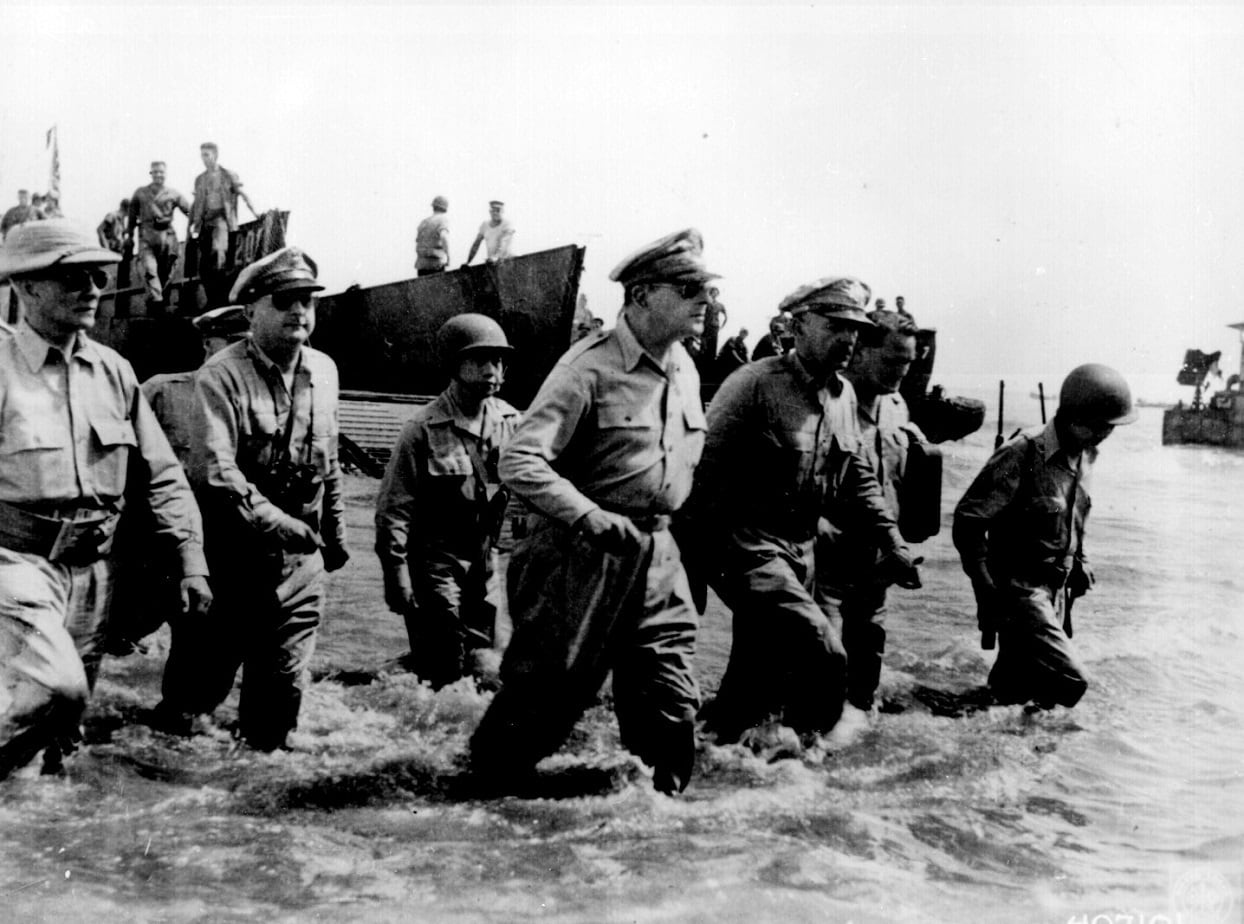
“General Douglas MacArthur wades ashore during initial landings at Leyte, P.I.” October 1944.
The improvisation carried a cost that shaped everything that followed: the food and medicine stockpiled for a Bataan siege had been dispersed to the beaches, and the peninsula was filled with troops the supplies could no longer feed. Bataan’s defenders fought on half rations and then quarter rations, riddled with malaria, while MacArthur directed the defense from the fortress island of Corregidor. He visited the peninsula once.
The starving men noticed, and their bitter name for him, Dugout Doug, is part of the record too. On February 22, 1942, President Roosevelt ordered him to Australia, judging that America’s most famous general could not be allowed to fall into enemy hands. MacArthur delayed, then obeyed.
On the night of March 11, he left Corregidor with his wife, his four-year-old son, and his staff aboard Lieutenant John Bulkeley’s four battered PT boats, ran the blockade through heavy seas to Mindanao, and flew out by B-17.
Bataan surrendered on April 9, Corregidor on May 6, the largest capitulation in American military history, and of the men left behind, only one-third would live to see him keep his word.
The Vow
The famous pronoun was not an accident of ego, and its origin is better documented than most famous lines this series has examined.
According to William Manchester’s biography, the phrase began with Carlos Romulo, the Filipino journalist serving on Corregidor, when MacArthur’s chief of staff suggested the slogan for the islands should be “we shall return.”
Romulo objected that after the failed relief of Bataan, “America has let us down” and would not be trusted, but that the Filipino people still had confidence in MacArthur himself. The promise had to be personal to be believed.
So when Washington, preferring the institutional pledge, asked the general to change his words, he was not merely indulging his famous first person; he was defending the entire logic of the vow.
He ignored the request. The Office of War Information turned the three words into a weapon of psychological warfare, and American submarines supplying the Filipino guerrilla movement carried in cigarettes, matchboxes, chewing gum, and pencils stamped with the promise.
Across three years of brutal occupation, the resistance kept the words alive, and the words helped keep the resistance alive.
That year, MacArthur also received the Medal of Honor for the defense of the Philippines, an award General Marshall backed partly to blunt enemy propaganda about a commander who had left his command, one more thread in the complicated fabric of the promise.
The Road Back
Keeping the vow required winning both a strategy argument and a war.
The Navy favored a central Pacific drive toward Formosa that would bypass the Philippines entirely; MacArthur, advancing along the New Guinea coast through 1943 and 1944 in leapfrogging operations that jumped past Japanese strongholds and left them to wither, argued that America had a moral obligation to the Filipino people and to his own promise, that strategy could not ignore.
At Pearl Harbor in July 1944, he made the case to Roosevelt in person, and the Philippines went back on the timetable.
In September, standing on Morotai and looking north, he told an aide: “They are waiting for me there. It has been a long time.”
On October 20, 1944, the Sixth Army landed on Leyte, and a few hours behind the assault waves, MacArthur went in toward Red Beach, where the landing craft grounded short, and the general walked the last distance through knee-deep surf, a wade recorded by Signal Corps photographer Gaetano Faillace in one of the most reproduced images of the war.
On the beach, by mobile transmitter, he delivered the address he had waited thirty-one months to give. It was the statement of a United States general in official capacity, long in the public record:
“People of the Philippines: I have returned. By the grace of Almighty God our forces stand again on Philippine soil, soil consecrated in the blood of our two peoples.”
The radio address called the islands to rally as the fight moved inland. Within days the surrounding waters produced the Battle of Leyte Gulf, the largest naval battle in history, which broke the Japanese fleet.
The campaign that followed was long and terrible: Luzon in January 1945, and in February and March the battle for Manila, where the trapped Japanese garrison and American firepower together destroyed the city and killed some 100,000 civilians, part of a war that cost the Philippines as many as a million civilian lives in all.
Bataan and Corregidor were retaken that same season, and when the colors went up over the recaptured Rock in March 1945, MacArthur ordered that no enemy ever be allowed to haul them down.
At the surrender ceremony aboard USS Missouri that September, he handed one of the signing pens to Jonathan Wainwright, the gaunt general who had endured three years of captivity after surrendering the islands MacArthur had been ordered to leave.
The Vow at 84
The promise holds its place in memory because every part of it was real.
The defeat was real, and partly his own, as this publication’s recent biography of the general records without flinching.
The refusal to say “we” was real, grounded in a Filipino journalist’s hard advice about which promises occupied people’s beliefs.
About the Author: Harry J. Kazianis
Harry J. Kazianis (@Grecianformula) was the former Senior Director of National Security Affairs at the Center for the National Interest (CFTNI), a foreign policy think tank founded by Richard Nixon and based in Washington, DC. Harry has over a decade of experience in think tanks and national security publishing. His ideas have been published in the NY Times, The Washington Post, The Wall Street Journal, CNN, and many other outlets. He has held positions at CSIS, the Heritage Foundation, the University of Nottingham, and several other institutions related to national security research and studies. He is the former Executive Editor of the National Interest and the Diplomat. He holds a Master’s degree focusing on international affairs from Harvard University.

