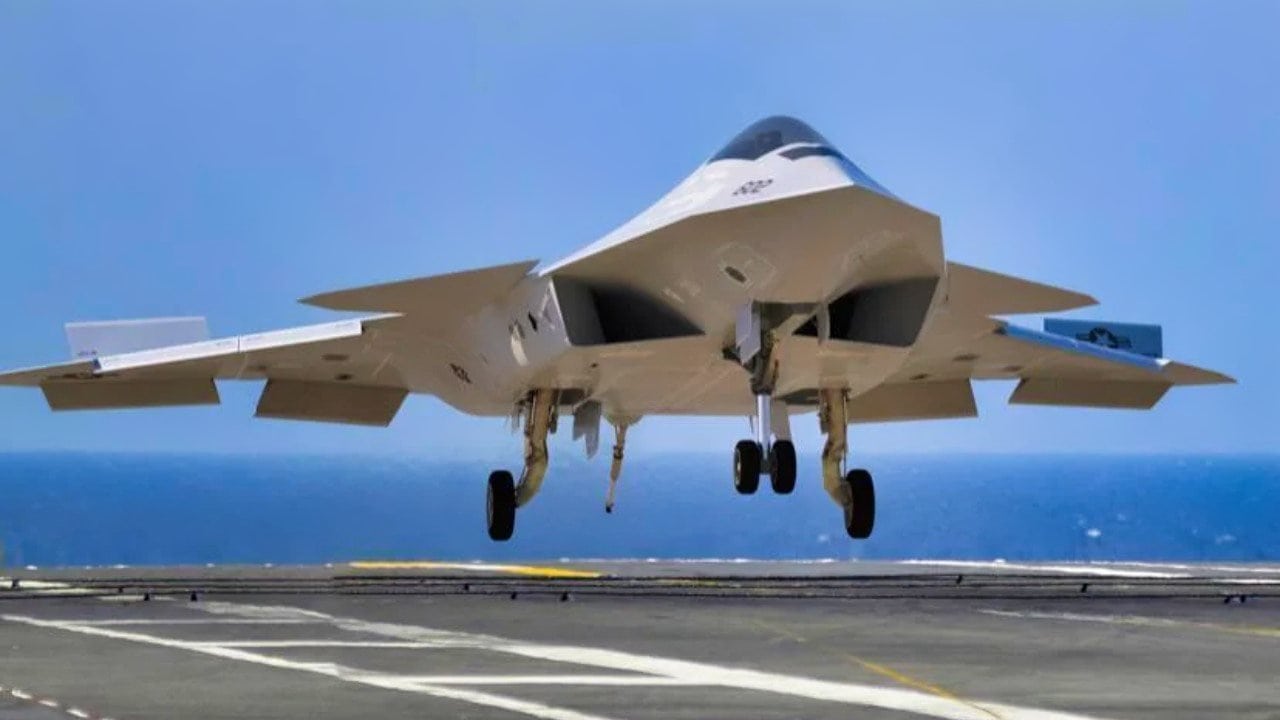
Boeing and Northrop Grumman are competing for the engineering and manufacturing development contract for the Navy’s new, sixth-generation stealth warplane, the F/A-XX. Navy leaders announced earlier this year that they intend for the F/A-XX’s new builder to be announced in August of this year.
Well, August is rapidly winding down. So, either the Navy is about to make a big announcement in the next week, or there’s been a delay.
Almost Go-Time?
On August 22, the Chief of Naval Operations, Adm. Daryl Caudle, told reporters that the Navy had completed its work and that the decision resided with Secretary of War Pete Hegseth and his team.
Caudle admitted he was unsure exactly when the War Secretary would announce it, despite the Navy completing its work in mid-August and submitting it to the Office of the Secretary of War at the time.
In 2025, Lockheed Martin, the current builder of America’s two fifth-generation warplanes, the F-35 Lightning II and the F-22 Raptor, was eliminated from the race.
Both Boeing and Northrop Grumman recently released concept art for their respective proposals, leaving aviation enthusiasts swooning.
Yet there are no official acknowledgments of the accuracy of this artwork or of the actual capabilities of the warplanes presented by the two legendary American defense contractors.
F/A-XX will replace the Navy’s aging fourth-generation F/A-18E/F Super Hornet, which has served as the main warplane for the Navy since the retirement of the F14 Tomcat in 2006.
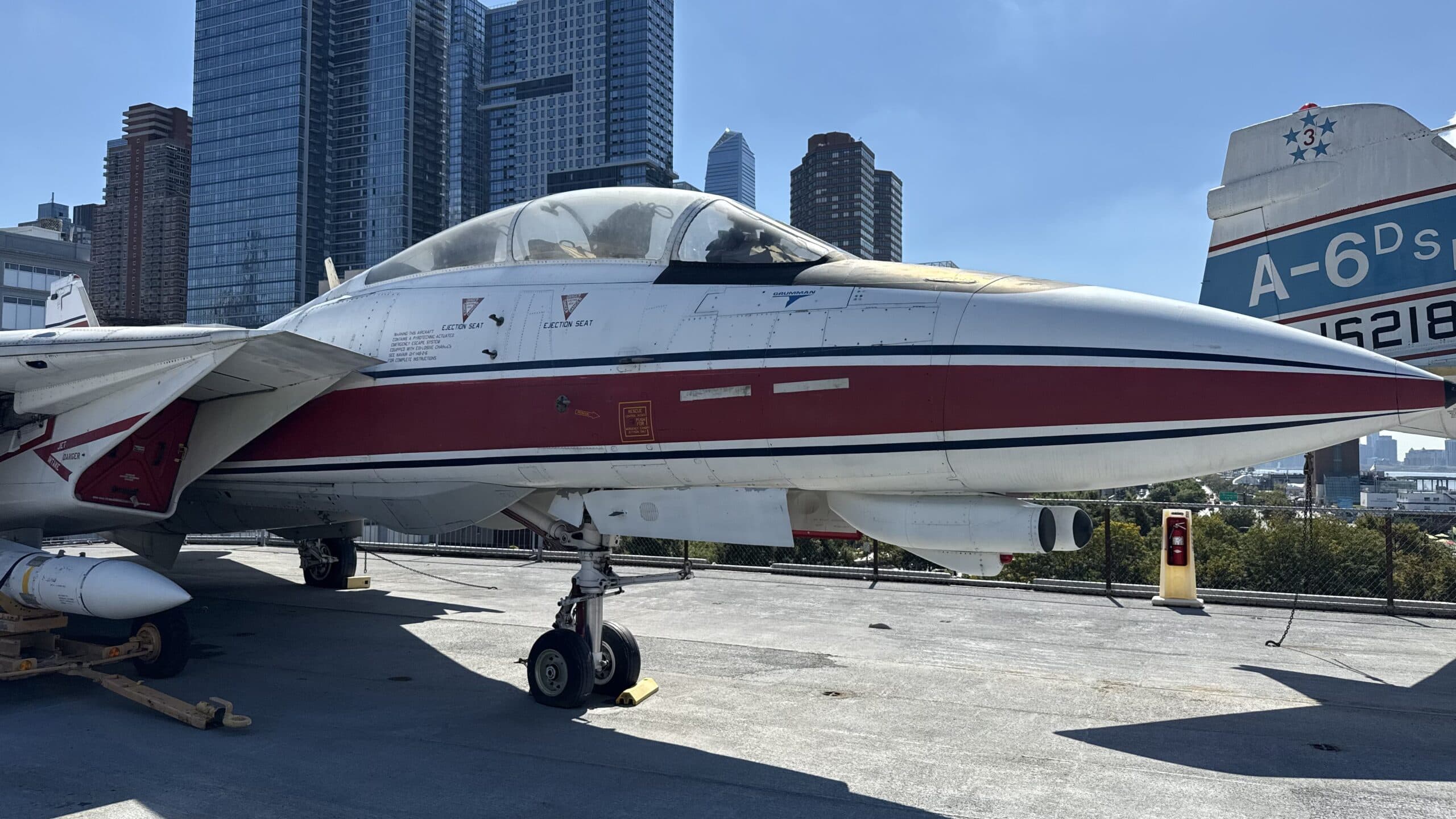
F-14 Tomcat. Image Taken by 19FortyFive.com
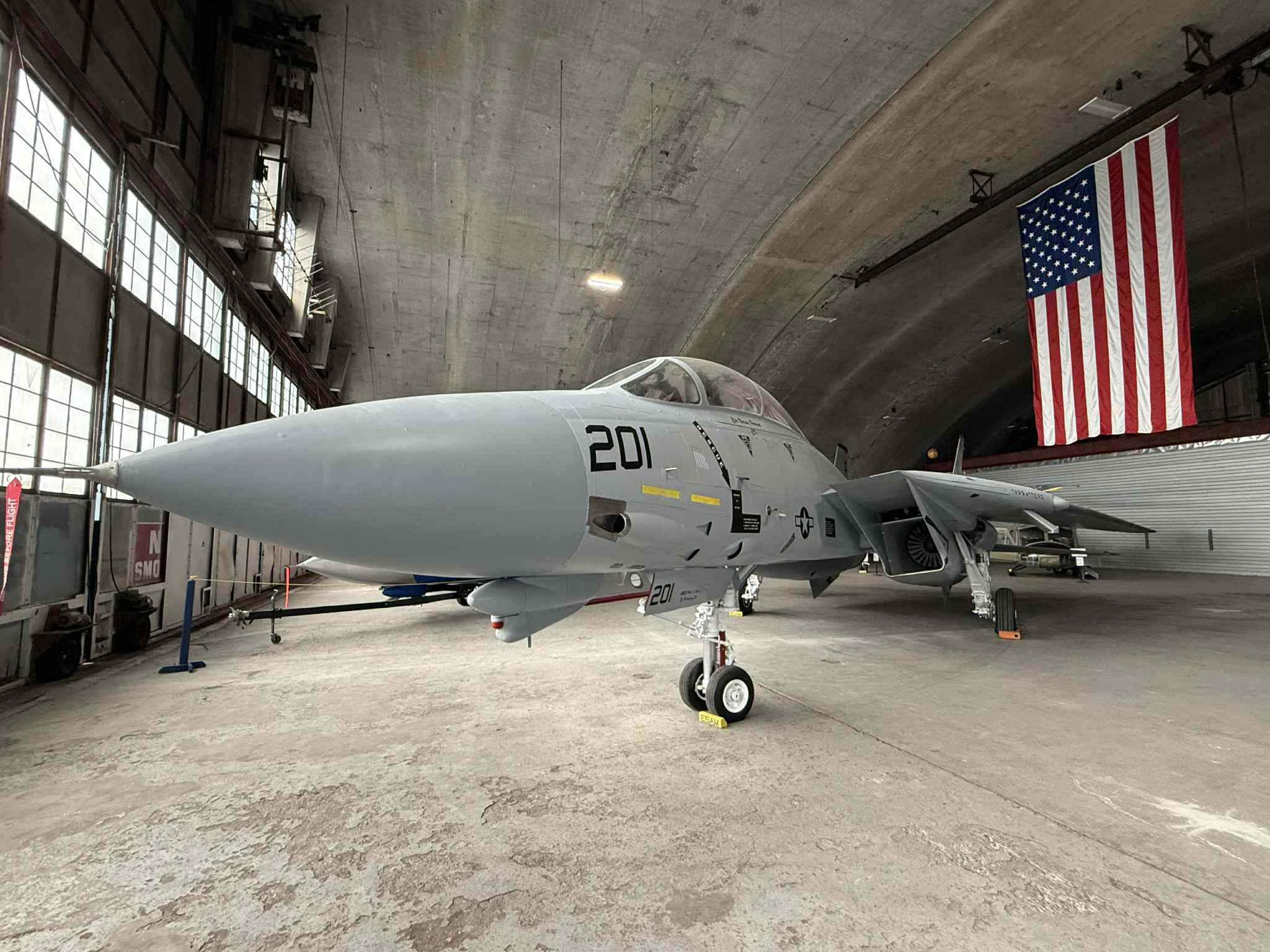
F-14 Tomcat. Image Taken by 19FortyFive.com
The new aircraft is expected to operate alongside the F-35C Lightning II rather than replace the relatively new fifth-generation warplane. The F/A-XX will operate with any of the future uncrewed aircraft proposals that the Navy is presenting.
Unique Requirements
One of the most important requirements of the F/A-XX is range.
The Iran War reminds us all that the traditional method of American air war going forward will be insufficient, given the rise of anti-access/area-denial (A2/AD) capabilities, and is simply impossible.
So, US warplanes will need to strike from farther away.
Although both the Iran War and the War in Ukraine have demonstrated this painful new reality in which American forces must adapt, a potential conflict with China is what naval planners are concerned about.
You see, China possesses a growing inventory of long-range anti-ship weapons that has made traditional US carrier flight operations dangerous for the US Navy.
Aircraft carriers will be required to operate farther from defended coastlines, meaning the aircraft they launch will have to fly longer distances to reach their intended targets.
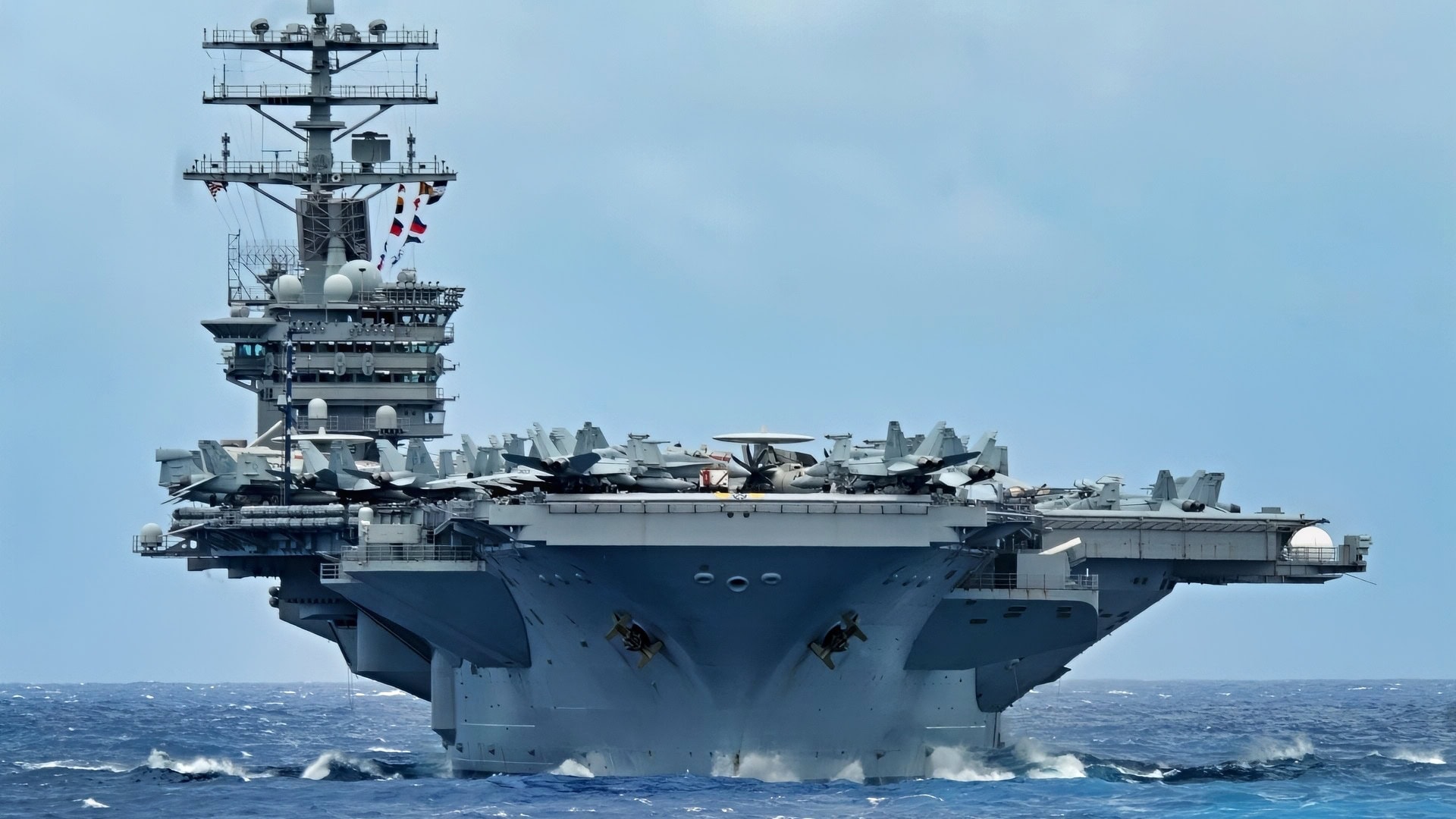
(July 18, 2012) – The aircraft carrier USS Nimitz (CVN 68) moves into formation for a photo exercise during the Great Green Fleet Demonstration as part of Rim of the Pacific (RIMPAC) 2012. Nimitz is currently underway participating in RIMPAC. Twenty-two nations, more than 40 ships and submarines, more than 200 aircraft and 25,000 personnel are participating in RIMPAC exercise from Jun. 29 to Aug. 3, in and around the Hawaiian Islands. The world’s largest international maritime exercise, RIMPAC provides a unique training opportunity that helps participants foster and sustain the cooperative relationships that are critical to ensuring the safety of sea lanes and security on the world’s oceans. RIMPAC 2012 is the 23rd exercise in the series that began in 1971. (U.S. Navy photo by Mass Communication Specialist 2nd Class Eva-Marie Ramsaran/RELEASED)
So, the F/A-XX must have greater range than the Super Hornet–while also combining stealth, advanced sensors, and advanced electronic warfare (EW) capabilities.
Boeing vs. Northrop
What makes the Boeing vs. Northrop Grumman race so interesting is that both bring unique capabilities to the table.
Northrop has made the F/A-18E/F Super Hornet and its sister bird, the EA-18G Growler, for decades. That firm therefore has extensive experience building carrier-based warplanes.
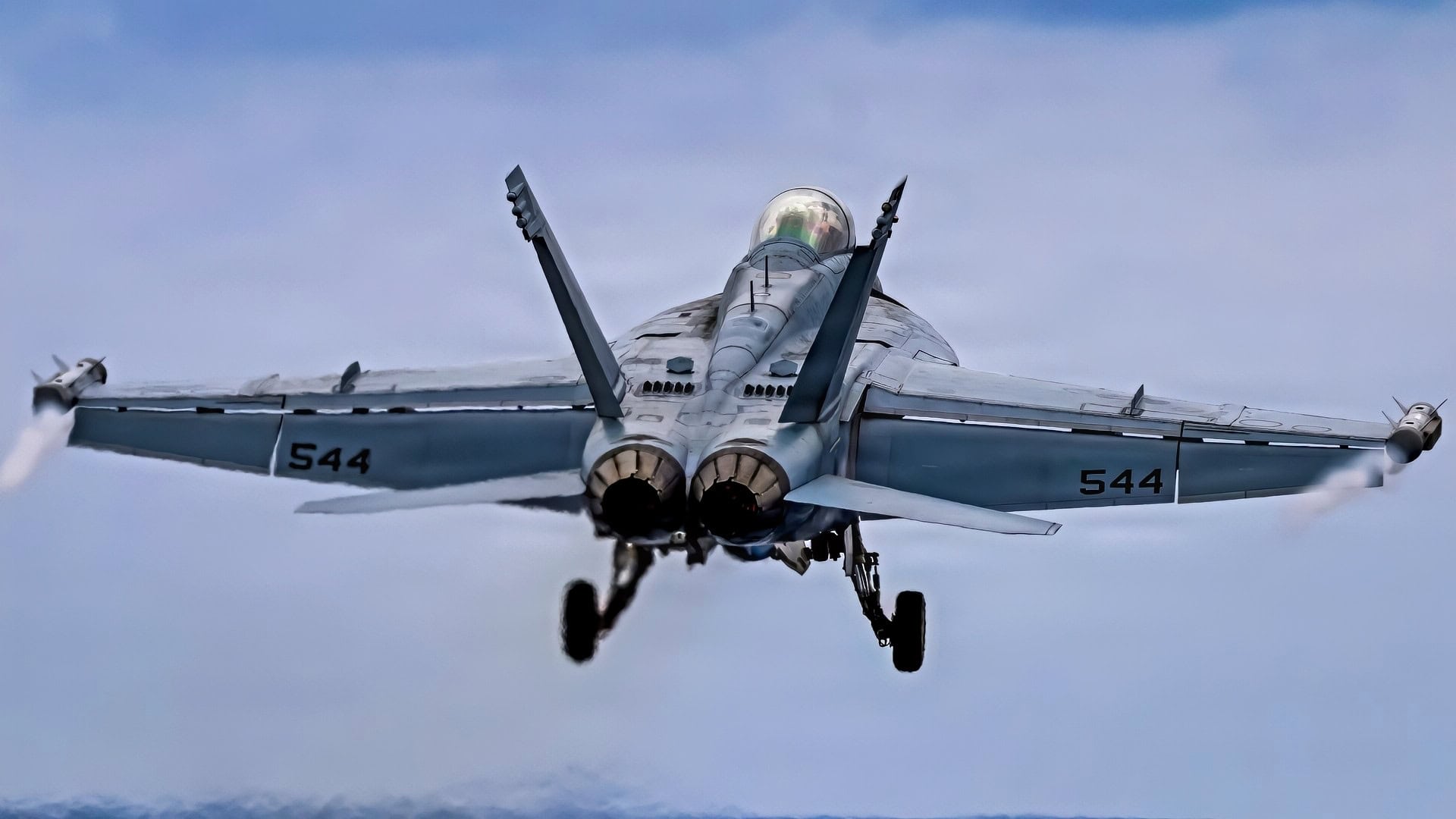
PACIFIC OCEAN (March 31, 2026) –U.S. Navy Capt. William Mathis, commanding officer of the Nimitz-class aircraft carrier USS Theodore Roosevelt (CVN 71), pilots a E/A-18G Growler assigned to Electronic Attack Squadron (VAQ) 129, March 31, 2026. Theodore Roosevelt, flagship of Carrier Strike Group (CSG) 9, is underway conducting exercises to bolster strike group readiness and capability in the U.S. 3rd Fleet area of operations. (U.S. Navy Photo by Mass Communication Specialist 2nd Class Ryan Holloway)
In fact, now that Lockheed is out of the race, Boeing is the only maker with that kind of experience.
Plus, Boeing is building the Air Force’s F-47 sixth-generation fighter.
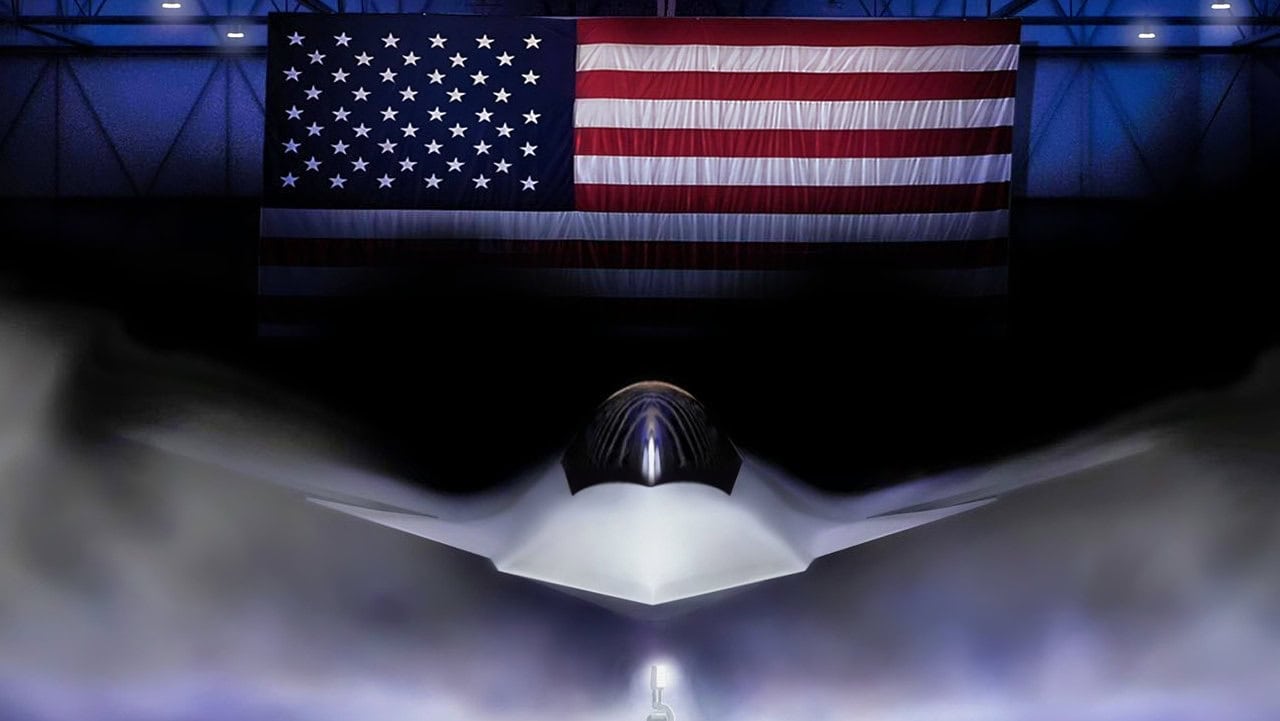
F-47 Fighter from U.S. Air Force.
Alternatively, Northrop Grumman has developed the B-2 Spirit long-range stealth bomber and is developing the B-21 Raider long-range stealth bomber. So Northrop has unique experience with low-observable aircraft, advanced materials, and long-range stealth designs. Those capabilities could be essential for an F/A-XX that requires longer range and survivability.
Adm. Caudle previously warned that industrial constraints on Northrop might preclude them from reliably competing for the bid.
That’s because the company’s production line is prioritizing the B-21 Raider’s development for the Air Force, and the Navy worries that Northrop will essentially be preoccupied for the foreseeable future with that onerous project.
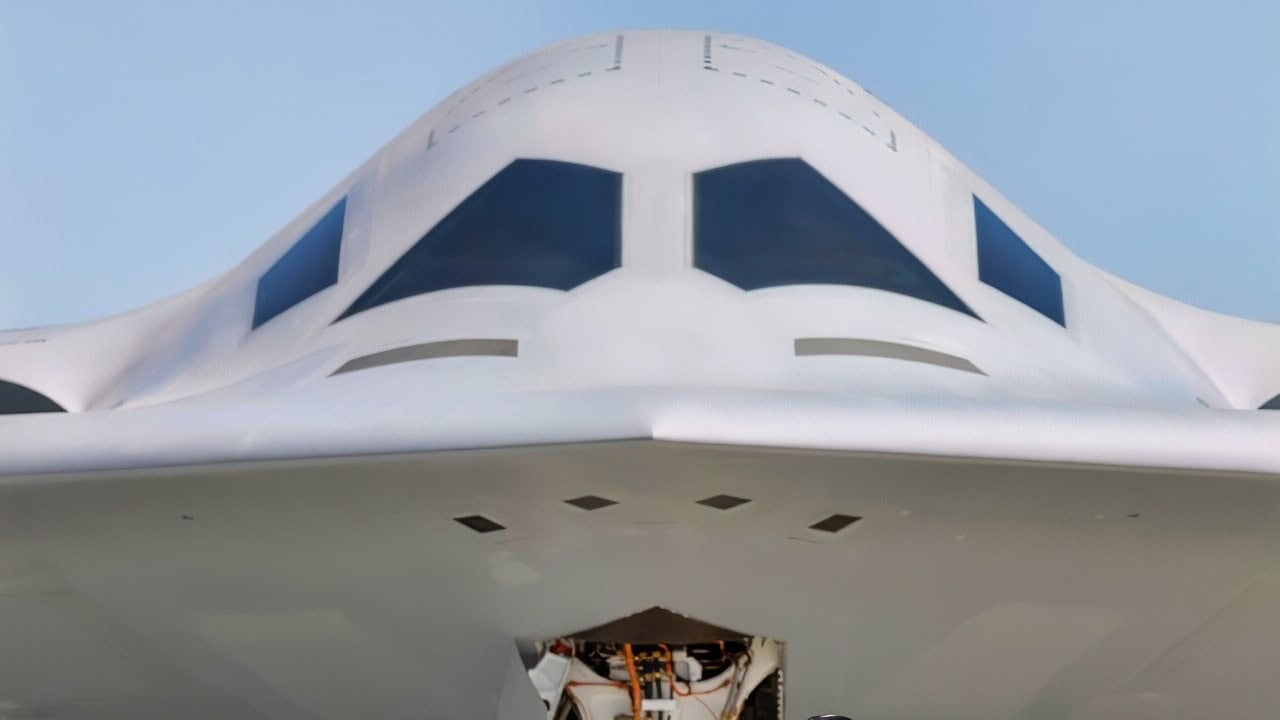
U.S. Air Force Airmen with the 912th Aircraft Maintenance Squadron prepare to recover the second B-21 Raider to arrive for test and evaluation at Edwards AFB, Calif., Sept. 11, 2025. The arrival of a second test aircraft provides maintainers valuable hands-on experience with tools, data and processes that will support future operational squadrons. (U.S Air Force photo by Kyle Brasier)
Concerns Over Budgeting and Timeline
Navy leaders like Caudle worry the program has already lost time due to budgetary woes over the last two years and that Northrop might not be able to deliver.
The Navy is currently requesting another $140 million for the F/A-XX in fiscal year 2027. But the bigger defense budget remains problematic.
Caudle believes further delays will compound the delays already caused by uncertain budgeting. Thus, the longer the F/A-XX takes to arrive, the more the Navy will depend on the F-35C, while keeping existing, rapidly aging Super Hornets in operation long after they were meant to serve.
The Navy has already conducted technical evaluations of the two firms’ proposed planes.
If the Navy meets its timeline, we should learn within the week whether Boeing or Northrop got the contract.
MORE – Germany Is Becoming Ukraine’s Most Important Ally in Europe — and Poland Is Paying the Price
About the Author: Brandon J. Weichert
Brandon J. Weichert is the Senior National Security Editor at 19FortyFive.com. He also manages The Weichert Brief on Substack. Weichert also hosts “National Security Talk” on Rumble. He is the author of four bestselling national security books, the most recent of which is A Disaster of Our Own Making: How the West Lost Ukraine (Encounter Books). Follow him via Twitter/X @WeTheBrandon.