
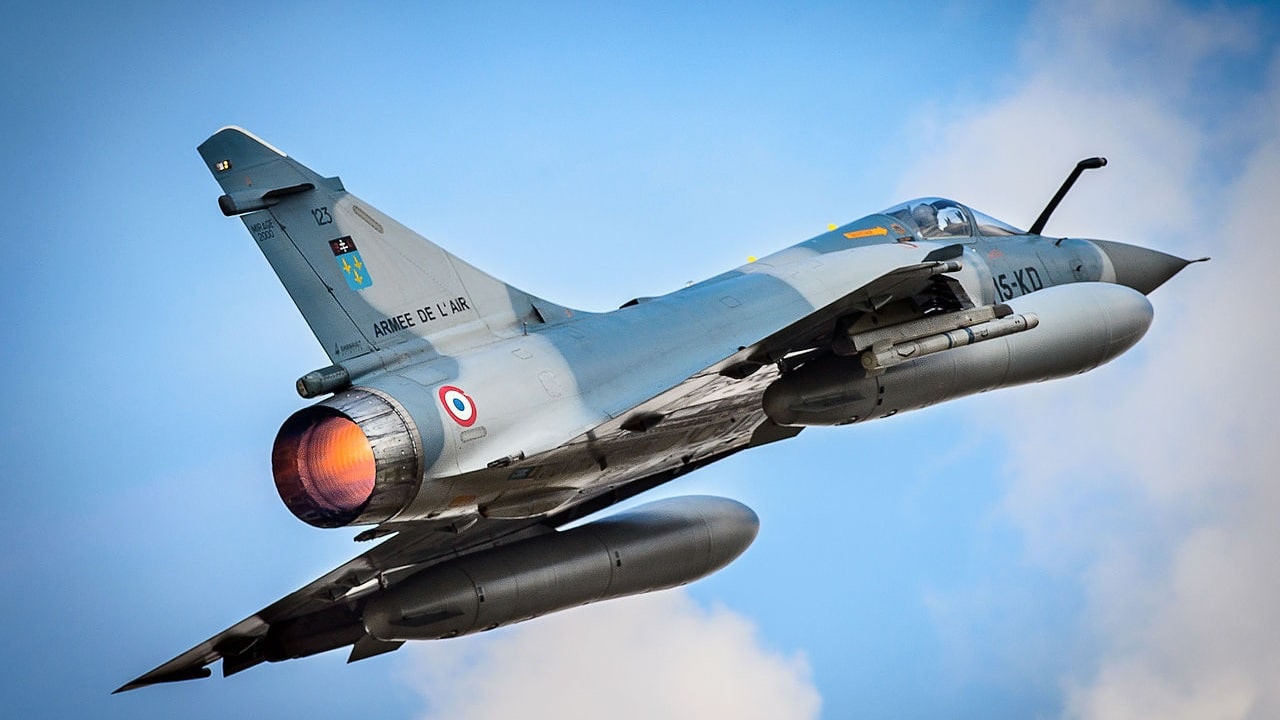
Mirage 2000: The Cold War Interceptor That Became Ukraine’s Cruise-Missile Hunter – More than 42 years after entering French service, the Dassault Mirage 2000 remains in frontline combat. France delivered the first modified Mirage 2000-5 fighters to Ukraine on February 6, 2025, and Ukraine’s Ministry of Defence said on March 4, 2026, that additional aircraft were expected. Neither government has disclosed the current operational total.
Dassault reports that 600 Mirage 2000s were produced, with half exported to eight countries. A single SNECMA M53-P2 afterburning turbofan produces 98 kilonewtons of maximum thrust. The fighter reaches more than Mach 2.2, climbs at up to 60,000 feet per minute, and has an operational ceiling of 60,000 feet.
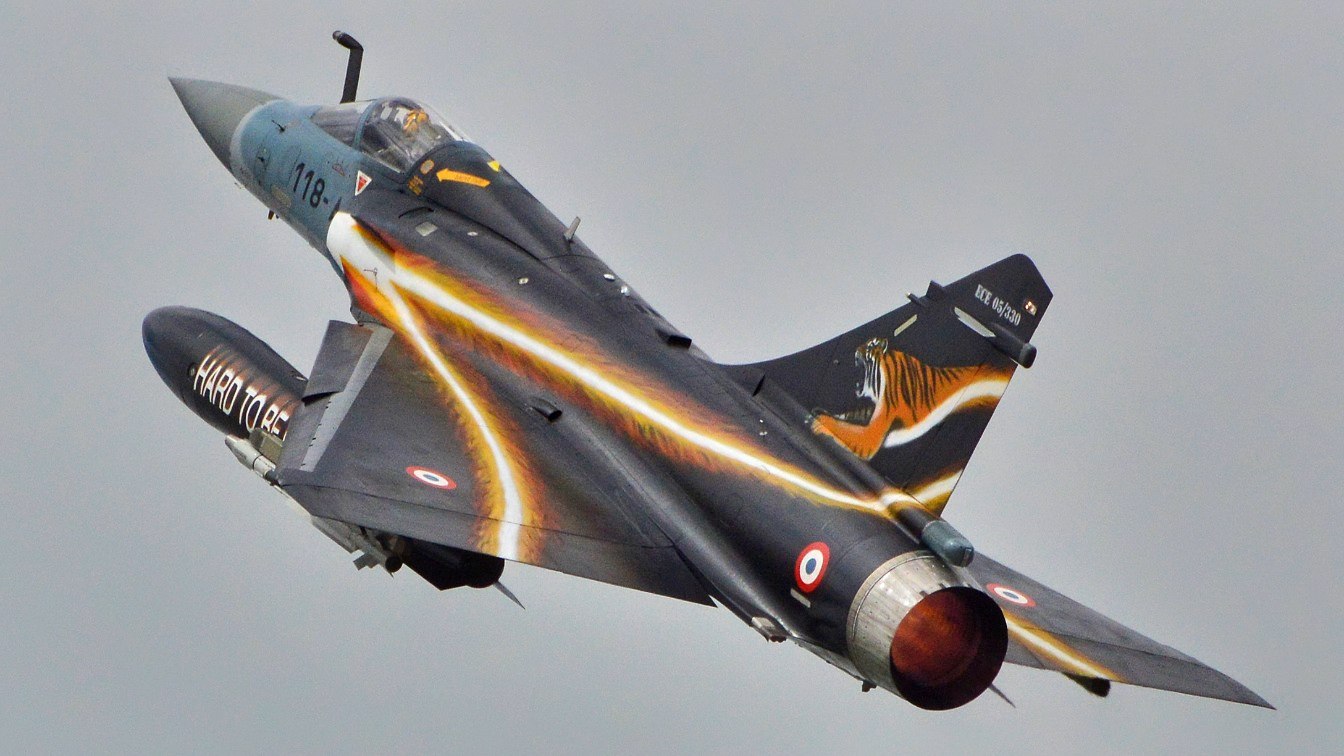
Dassault Mirage 2000-5. Image Credit: Creative Commons.
France chose the Mirage 2000 after abandoning a larger twin-engine combat aircraft project in 1975. The new fighter returned to Dassault’s familiar delta-wing layout while adding computerized flight controls and modern radar. The first prototype flew at Istres on March 10, 1978, and the air-defense Mirage 2000C entered operational service in 1984.
The Mirage 2000 is not a stealth aircraft and should not be treated like an F-35 inside dense air defenses. Its speed, altitude, radar performance, mature weapons, and manageable support demands still make it suitable for air defense, precision strike, and cruise-missile interception.
France Chose a Smaller Fighter After the ACF Became Too Expensive
The Mirage 2000 emerged from a procurement reversal. France had pursued the Avion de Combat Futur, a large twin-engine design intended for demanding strike and air-superiority missions. Cost and complexity overtook it. Dassault’s smaller Delta 2000 proposal offered a more affordable interceptor built around one M53 engine.
The tailless delta wing supplied low drag at high speed, generous internal fuel volume, and enough wing area for strong maneuvering performance. Earlier deltas such as the Mirage III paid for those advantages with difficult low-speed handling. Dassault addressed that weakness with leading-edge slats, relaxed stability, and fly-by-wire controls. The company describes the Mirage 2000 as its first mass-produced all-electric flight-control aircraft.
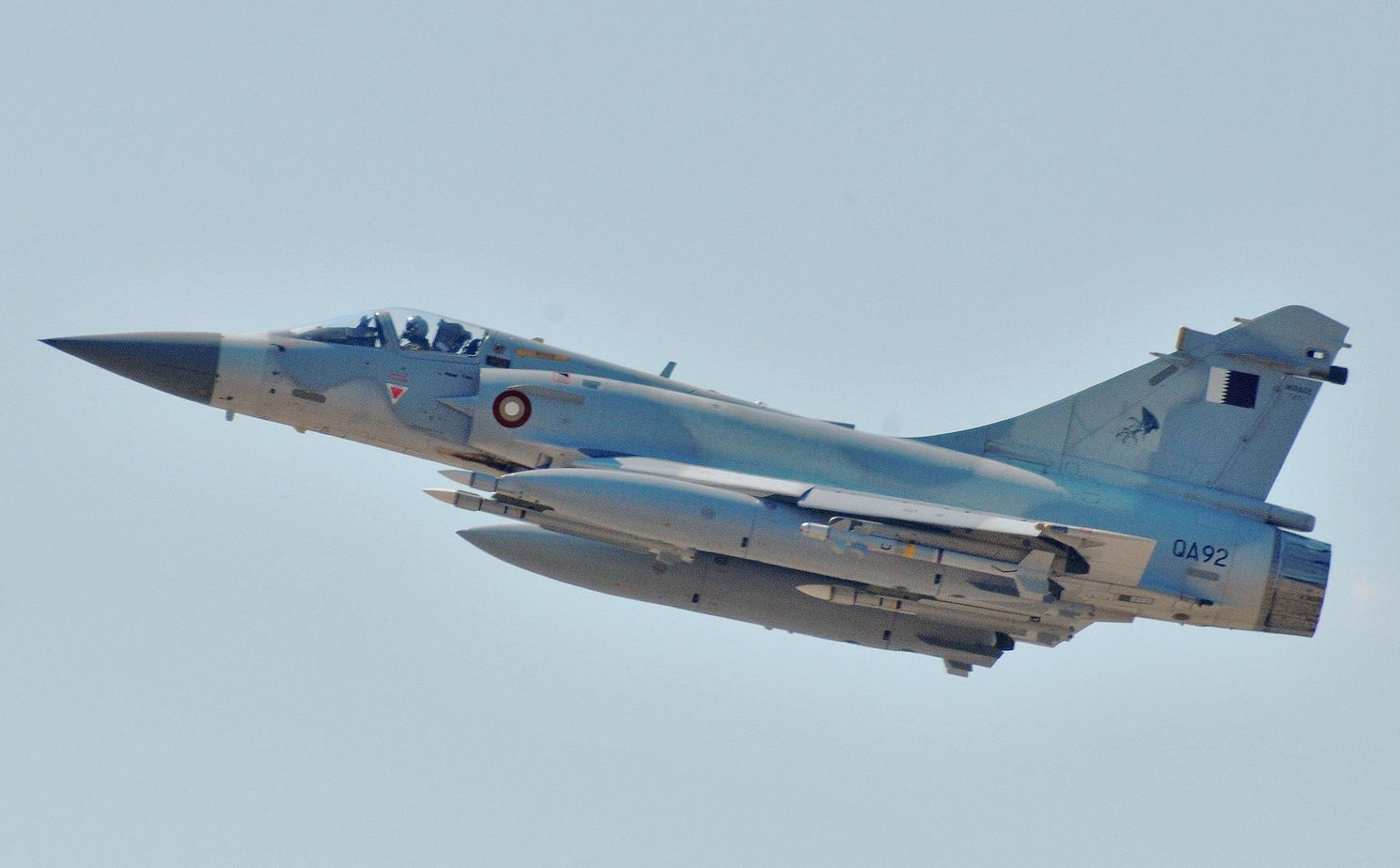
Mirage 2000-5.
The fighter measured 47 feet long, spanned 29.9 feet, and weighed about 21,000 pounds. Maximum takeoff weight reached 38,500 pounds. Its compact dimensions gave France a high-performance interceptor without the procurement and maintenance burden of a twin-engine heavy fighter.
Mach 2.2 and Nine Hardpoints Defined the Basic Airframe
The single-seat versions carried two internal 30 mm cannons. Nine external stations supported air-to-air missiles, fuel tanks, guided bombs, reconnaissance equipment, and standoff weapons, with the exact load depending on the variant. Published technical data indicate a maximum external payload of nearly 6.3 metric tons.
Dassault lists a 140-knot approach speed and an 830-nautical-mile combat radius in a specific profile using six MICA missiles and external tanks, which are discarded before combat. Real range changes with altitude, speed, weapons, and fuel. A fixed refueling probe extended endurance on many versions.
Those figures explain much of the Mirage 2000’s continued appeal. It was fast enough for interception, responsive in combat, and adaptable enough to accept new sensors and weapons for decades.
The Mirage 2000 Family Split Into Interceptor, Nuclear, and Strike Aircraft
The original Mirage 2000C was a single-seat interceptor, while the 2000B provided two-seat conversion training. Early French fighters used RDM, and later RDI radars with Magic II short-range missiles and Super 530F or Super 530D radar-guided weapons.
The Mirage 2000N entered service in 1988 as a two-seat, low-level nuclear strike aircraft built around terrain-following navigation and the ASMP standoff missile. The conventional Mirage 2000D was used during the 1990s, using the same basic arrangement for all-weather precision attack.
The Mirage 2000-5 delivered the major air-defense upgrade. Its RDY multimode radar tracked several targets, a glass cockpit reduced pilot workload, and the MICA family replaced the older medium-range missile arrangement. Dassault lists a six-MICA load using radar-guided and infrared versions. The French 2000-5F standard became the basis for the aircraft transferred to Ukraine after further modification.
Export customers extended the family. The United Arab Emirates acquired the Mirage 2000-9, equipped with improved sensors and multirole weapons. India upgraded its Mirage 2000H fleet to the Mirage 2000I/TI standard, with new radar, electronic warfare systems, avionics, and MICA missiles. Other operators integrated Exocet anti-ship missiles and national communications equipment.
The Mirage 2000 Built a Combat Record From Iraq to the Himalayas
French Mirage 2000s flew during the 1991 Gulf War and later served over Bosnia, Kosovo, Afghanistan, Libya, the Sahel, Iraq, and Syria. The missions moved far beyond the interceptor role that had justified the aircraft in the 1970s.
India supplied one of the clearest demonstrations of the design’s adaptability during the 1999 Kargil War. Mirage 2000s used laser-designation pods and laser-guided bombs against fortified positions at extreme altitude. India’s air chief later said the targeting-pod and guided-bomb integration work had been completed in 12 days.
Production continued until 2007. The 600-aircraft run created a multinational base of trained crews, engines, spares and upgrade experience long after France began replacing Mirages with Rafales.
France Completed Its Final Mirage 2000D Upgrade in 2026
France retired the original Mirage 2000C from operational service in 2022 and had withdrawn the nuclear 2000N in 2018. The 2000-5F and two-seat 2000D survived because their missions still justified modernization.
On June 16, 2026, the French Air and Space Force received the 50th and final Mirage 2000D upgraded under the Rénovation Mi-Vie program. The work added refreshed cockpit electronics, open architecture, MICA infrared missiles for self-defense, GBU-48 and GBU-50 guided bombs, the TALIOS targeting pod and a CC422 pod carrying a 30mm cannon. France expects the renovated strike aircraft to serve until about 2035.
The upgrade retained the M53-P2 engine, basic radar architecture and non-stealth airframe. It preserved a useful strike fleet while Rafale numbers grew, extending a modernization path begun decades earlier.
Ukraine Uses the Mirage 2000-5 as an Air-Defense Fighter
President Emmanuel Macron announced the transfer on June 6, 2024, and said pilot training normally required five to six months. France modified the jets before delivery for air-to-ground missions, while Ukraine describes the aircraft as carrying modern electronic-warfare equipment. Reuters reported that a French parliamentary document identified six of France’s 26 Mirage 2000-5s for transfer, though the first-batch number remained secret.
Ukraine recorded the type’s first combat use on March 7, 2025, during a large Russian missile and drone attack. The Ukrainian Air Force said a Mirage 2000 engaged a Kh-101 cruise missile. That mission fits the aircraft’s cruise-missile interception role: high speed, a capable radar and infrared-guided missiles against targets following routes toward Ukrainian cities and infrastructure.
Ukraine says its Mirages are compatible with Storm Shadow/SCALP cruise missiles, AASM Hammer guided bombs, and other NATO-standard weapons. Public reporting has not established the complete loadout or how often they have flown strike missions. A small force is better suited to selected air-defense patrols and standoff attacks than repeated penetration of Russian surface-to-air missile coverage, a limitation examined in earlier assessments of the deployment.
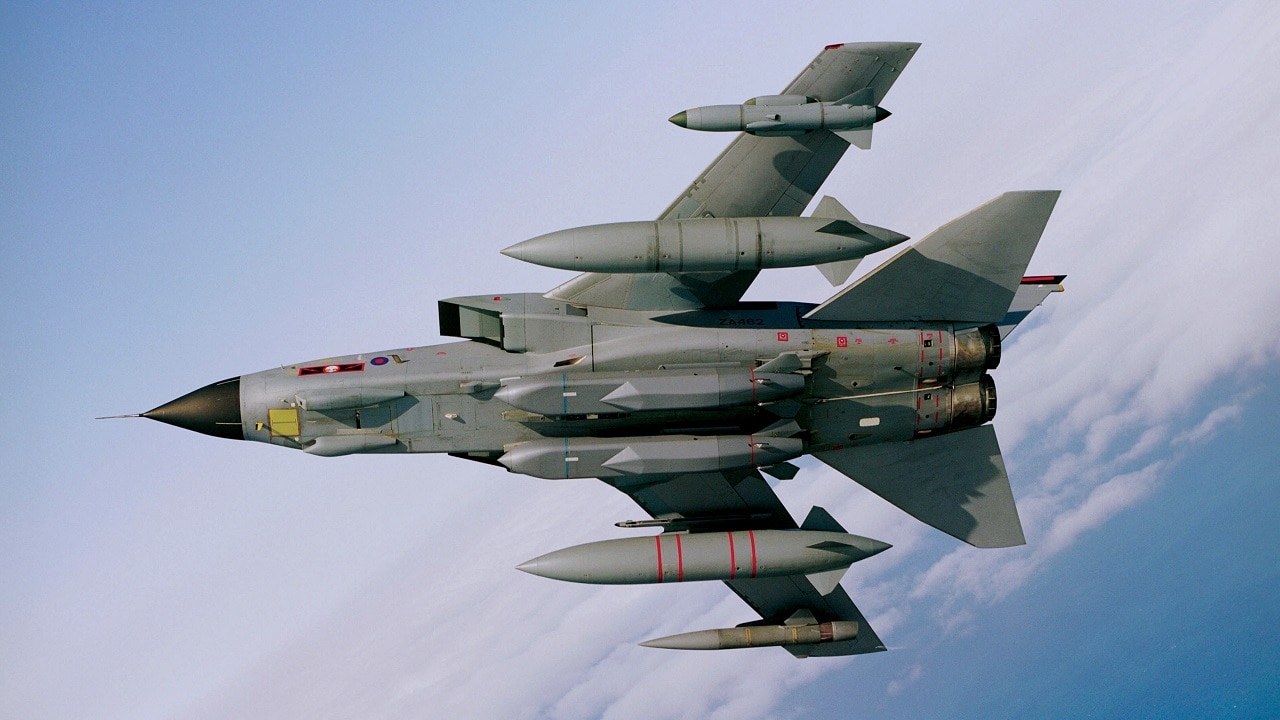
An RAF Tornado GR4 aircraft carrying two Storm Shadow missiles under the fuselage. Creative Commons Photo.
The fleet suffered its first confirmed loss on July 22, 2025. Ukraine reported an equipment failure during a mission; the pilot ejected safely, and no one on the ground was hurt. The aircraft was not reported lost to Russian fire, an important distinction in the official account of the crash.
Keeping the remaining aircraft active requires M53 engine support, French spare parts, trained ground crews, and dispersed operating locations protected from Russian strikes. The operational record of Ukraine’s Mirage force reflects careful mission selection as much as aircraft performance.
Ukraine’s Ministry of Defence said on March 4, 2026, that additional Mirage 2000-5s were expected. As of publication, neither Paris nor Kyiv had published the number of still-operational aircraft or the delivery date for the next aircraft.
About the Author: Harry J. Kazianis
Harry J. Kazianis (@Grecianformula) was the former Senior Director of National Security Affairs at the Center for the National Interest (CFTNI), a foreign policy think tank founded by Richard Nixon based in Washington, DC. Harry has over a decade of experience in think tanks and national security publishing. His ideas have been published in the NY Times, The Washington Post, The Wall Street Journal, CNN, and many other outlets worldwide. He has held positions at CSIS, the Heritage Foundation, the University of Nottingham, and several other institutions related to national security research and studies. He is the former Executive Editor of the National Interest and the Diplomat. He holds a Master’s degree focusing on international affairs from Harvard University.